
Trump commission can resume collecting voter data, federal judge rules

A federal judge on Monday cleared the way for President Donald Trump‘s commission on election fraud to resume collecting detailed voter roll information from the states. The commission asked states last month to provide publicly available data including registered voters’ names, birth dates and partial Social Security numbers, but it later told them to hold off until a judge ruled on a lawsuit filed by the Electronic Privacy Information Center in Washington. U.S. District Court Judge Colleen Kollar-Kotelly, in the District of Columbia, denied the advocacy group’s request to block the data collection in a ruling that commission vice chairman Kris Kobach called “a major victory for government accountability, transparency and the public’s right to know about the integrity of our elections processes.” “The commission requested this publicly available data as part of its fact-gathering process, which is information that states regularly release to political candidates, political parties and the general public,” said Kobach, the Republican secretary of state in Kansas. “We look forward to continuing to work with state election leaders to gather information and identify opportunities to improve election integrity.” The privacy group had argued that the commission should have completed an assessment of privacy concerns before making the request. The judge found that the group had standing to make that argument but said the commission is not an agency and therefore is not required to do such assessments. The judge also found the group failed to show that its members would be harmed by the data collection. “The only practical harm the plaintiff’s advisory board members would suffer … is that their already publicly available information would be rendered more easily accessible by virtue of its consolidation on the computer systems that would ultimately receive this information on behalf of the commission,” the judge said. She did not say that any states must comply with the commission’s request. The privacy group said it will be watching closely to see what the commission does next. “The commission cannot evade privacy obligations by playing a shell game with the nation’s voting records,” EPIC president Marc Rotenberg said. Similar lawsuits are pending in Texas, Florida and New Hampshire. The New Hampshire lawsuit, brought by two lawmakers and an American Civil Liberties Union chapter, was put on hold pending the outcome of the Washington case. Trump, a Republican, created the Presidential Advisory Commission on Election Integrity in May to investigate his allegations, offered without evidence, that millions of people voted illegally in 2016. At the panel’s first meeting last week, he questioned the motives of states that have refused to comply with the commission’s request, suggesting they had something to hide. Before the commission paused data collection earlier this month, an Associated Press count of states’ responses found 17 plus Washington, D.C., didn’t plan to provide any information. Election officials in some of those states questioned the commission’s intent to search for voter fraud; in some states, the main concern was voters’ privacy. Thirty states said they would provide limited information that was considered public already. And some of those states said the commission would have some hoops to jump through such as paying for the data or filling out additional request forms. Alabama, Hawaii and Idaho had not announced decisions about whether to comply. Republished with permission of The Associated Press.
John Merrill questions Donald Trump voter data request
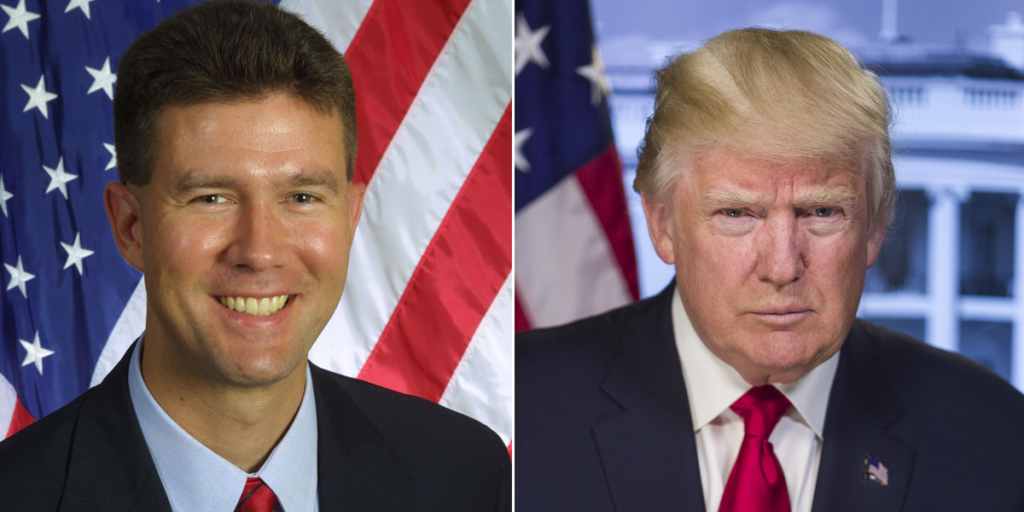
Alabama Secretary of State John Merrill said he’s waiting for answers from the White House before turning over Alabama voter data to President Donald Trump’s commission investigating possible voter fraud. Merrill’s office said in a press release Friday he “understands that voter fraud is an incredibly important issue that citizens of this state take seriously” and that the Secretary is “committed to doing everything in his power to ensure that the integrity and the security of the elections process is secure.” “This office will not share any information not already available to the public,” Merrill said. “The Secretary of State’s Office will comply with the request if we are convinced that the overall effort will produce the necessary results to accomplish the Commission’s stated goal without compromising the integrity of the voter rolls and the elections process in Alabama.” President Trump’s commission on election integrity has asked all 50 states to provide all publicly available voter roll data, going back through 2006, be sent to the White House by July 14 ahead of the panel’s first meeting. Requested data includes names, birth dates and partial Social Security numbers of all registered voters in an effort to look into voter fraud and other election irregularities. Merrill says much of the information being sought is already publicly available “for purchase from the Alabama Secretary of State’s Office, will be used to improve voter roll integrity.” Alabama is among over 40 states that are questioning the request.
