
Across the bridge: Terri Sewell carries torch for voting bill
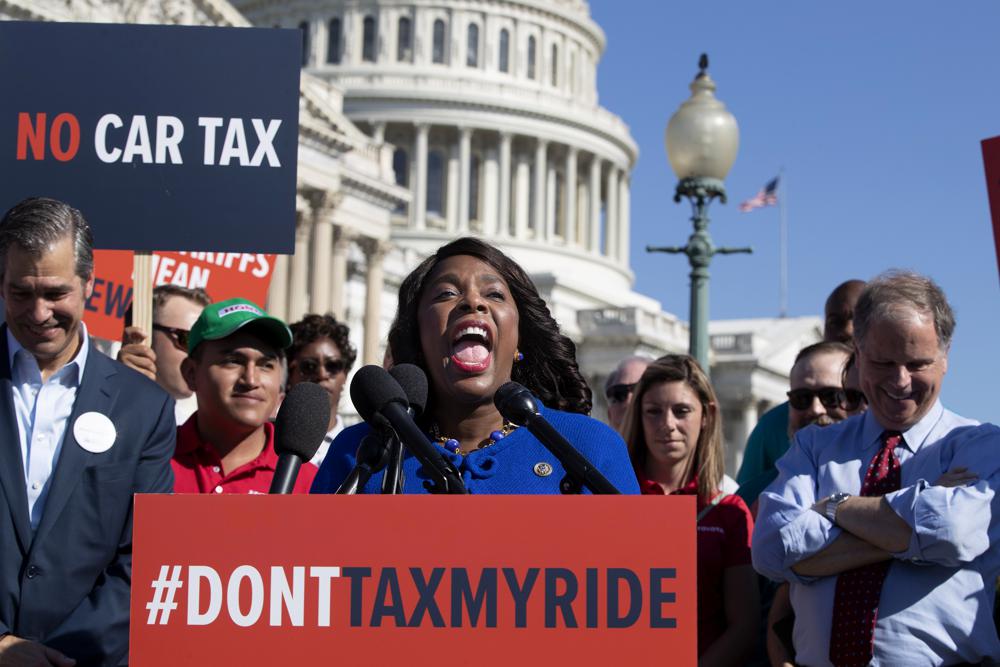
Growing up in the civil rights epicenter of Selma, Alabama, Terri Sewell heard all the stories. About the police violence during the “Bloody Sunday” march at the Edmund Pettus Bridge. About the beating of the young man who went on to become Rep. John Lewis. About the blood that was shed and the lives undone to ensure Black people would finally have the right to vote when the Voting Rights Act of 1965 became law. As she set out for the Ivy League, law school, and eventually Congress, Sewell focused on the civil rights battles to come. Income inequality, she thought, would be her work for the new era. Then the Supreme Court gutted the Voting Rights Act. And the fight of her parents’ and teachers’ and neighbors’ generation suddenly became her own. “Never in a million years did I think that I — 57 years later — would have the cause for which John Lewis and those foot soldiers marched become my cause, too,” Sewell said in an interview. “We fought that. They were bludgeoned on a bridge for the right to vote — the equal right of every American to vote,” she said. “But so it is.” The Democratic congresswoman’s journey from rural Selma to the halls of Congress offers a vivid portrait of the nation’s progress toward ending voter discrimination, but also of accumulating setbacks in the long campaign for voting rights. Her work trying to restore the Voting Rights Act is testing the resolve of a nation that celebrates its civil rights heroes of the past but cannot muster support in Congress to update what has historically been a popular, bipartisan law. Since the Supreme Court in 2013 struck down part of the law, many states free from federal oversight have been imposing new rules, changing polling times, and even installing limits on handing out water for those waiting in line — changes that voter advocates say could make it more difficult to cast ballots in this year’s elections. Wade Henderson, interim president of the Leadership Conference on Civil and Human Rights, said of Sewell: “She’s emerged as someone who is uniquely qualified to play the role that history seems to have given her.” Elected in 2010 as the first Black congresswoman from Alabama, Sewell arrived at the Capitol about as backbench as it gets, among a new handful of Democrats in a Republican tea party wave. That was a tough start for the first Black valedictorian at Selma High School and someone who can boast of attending college with both Obamas, Michelle Obama at Princeton, and the future president at Harvard Law. Coming from a long line of “preachers and teachers,” she confides she really wanted to be an actor but recalled her late father’s admonitions: “We’re not eating cornflakes for dinner for you to be majoring in theater at Princeton University.” Her family’s church in Selma was the historic Brown Chapel AME Church, the starting point for the historic voting rights marches and the place that Lewis — the future congressman, who died in 2020 — and others would return years later to commemorate “Bloody Sunday.” Her mother was the city’s first Black city councilwoman. “For me, growing up in Selma, Alabama, I didn’t have to read in the history books about these amazing foot soldiers,” said Sewell, who is 57. Many of them were “ordinary Alabamians,” she said, and once the marches were over, and the voting rights bill became law, “They went on with their lives, and many of them were my neighbors and my church members.” In Congress, Sewell put her public finance law background to work trying to preserve the historic civil rights sites in her district, which stretches across the state’s Black Belt to her current home in Birmingham. One bill she steered into law awarded the Congressional Gold Medal to the four Black girls killed in the 1963 bombing at the city’s 16th Street Baptist Church. The region has been so underserved that when “Selma” the movie opened in 2014, her mom pointed out there was no movie theater open in town for a screening. Residential yard sewage remains a stubborn problem because of lagging public investment in wastewater systems. “We can’t just come to Selma and walk across that bridge and keep on walking,” she said ahead of next month’s anniversary of the marches. “It’s a city that is dying on the vine, a city that needs economic revitalization.” Two years after Sewell took office, the Supreme Court’s stunning decision to reject the Voting Rights Act’s “preclearance” formula governing state election changes thrust the congresswoman to the forefront alongside Lewis to try to salvage the law, which had been seen as among the most enduring achievements of the Civil Rights era. Since the court’s decision, every session of Congress, she has introduced legislation, now called the John R. Lewis Voting Advancement Act. It failed in the Senate in January, part of a broader bill halted by a Republican filibuster and two Democrats unwilling to change the rules for passage. For Sewell, it was a reminder of how the battle of the earlier civil rights generation has swiftly, intractably become her own. “That’s very much part of the experience of Black leaders,” said Sherrilyn Ifill, the president and director-counsel of the NAACP Legal Defense and Educational Fund. “If you are a Black person in leadership, and you care about and love your community, the circumstances in which Black people live in this country will compel you, sooner or later … to become a civil rights activist.” Alabama is again at the center of the nation’s voting rights debate. Shelby County, not far from Selma, brought the court case in which Chief Justice John Roberts writing for the conservative majority, argued, “Our country has changed in the past 50 years.” The Roberts court will hear another Alabama case, expected later this year. The state, where one in four voters is Black, is asking the high court to reject the creation of a second, mostly Black congressional seat, despite a lower court’s finding that having just
GOP scrutiny of Black districts may deepen after court move
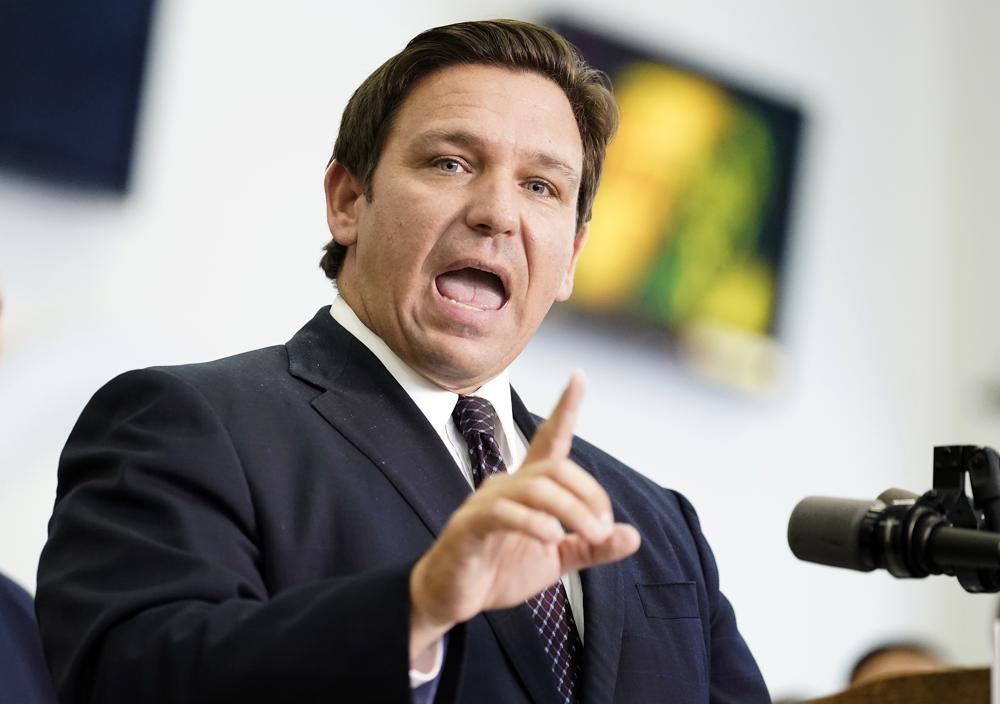
For decades, Democratic Rep. Al Lawson’s Florida district has stretched like a rubber band from Jacksonville to Tallahassee, scooping up as many Black voters as possible to comply with requirements that minority communities get grouped together so they can select their own leaders and flex their power in Washington. But the state’s Republican governor, Ron DeSantis, is taking the unusual step of asking Florida’s Supreme Court whether Lawson’s plurality-Black district can be broken up into whiter — and more Republican — districts. That type of request might typically face steep hurdles under state and federal laws that are meant to protect representation of marginalized communities in the nation’s politics. But the ground rules may be shifting after the U.S. Supreme Court sided this week with Republicans in Alabama to block efforts to ensure that Black voters are adequately represented in Congress by adding a second majority-Black district in the state. The ruling stunned civil rights groups, who have watched the court’s conservative majority steadily eat away at the Voting Rights Act for decades. While the law’s rules governing how to draw legislative lines based on race still stand, advocates worry the justices are prepared to act with renewed fervor to eliminate remaining protections in the landmark civil rights legislation. That, some worry, could embolden Republicans in places like Florida to take aim at districts like Lawson’s and ultimately reduce Black voters’ influence on Capitol Hill. “That has had an effect, as we’ve seen, on Black political power at all levels of government,” Kathryn Sadasivan, an NAACP Legal Defense Fund attorney who worked on the Alabama case, said of prior erosions of the Voting Rights Act. Republicans argue that the Alabama case is about providing clarity on redistricting rules. As it stands, mapmakers can be sued if they consider race too much but also if they fail to consider it the way the Voting Rights Act mandates and omit districts with certain shares of a minority population. “In the last 15 years, the court has said if race predominates, your map is going to be struck down, but if you don’t look” at race properly, you violate the Voting Rights Act, Jason Torchinsky, general counsel to the National Republican Redistricting Trust, said on a call with reporters on Wednesday. “The court has been very inconsistent with its guidance to legislators here, and we hope the Alabama decision brings some clarity.” Torchinsky is representing DeSantis in his case before the Florida Supreme Court and would not comment on the case. Republicans contend it is legally different from Alabama. The first hurdle is not the Voting Rights Act but rather Florida’s own state redistricting law, which prioritizes racial equity in similar ways. Torchinsky and other lawyers for DeSantis have argued that courts have to provide a clear legal standard for whether mapmakers can contort district lines in a quest for racial fairness. “After all,” Desantis’ attorneys wrote to the Florida Supreme Court of the rationale for Lawson’s district, “governmental actions based on race are presumptively unconstitutional.” The Florida case is becoming the latest test of how states’ court systems handle the politically charged redistricting battle. A decade ago, Florida’s Supreme Court struck down maps drawn by the state’s GOP-controlled Legislature because they violated the state’s ban on partisan redistricting. This cycle, the state Senate proposed maps that mostly kept the status quo in the state’s current 27 congressional seats while adding a 28th district that should favor Republicans. But, with Democrats doing better than expected in redistricting nationwide, DeSantis, a possible 2024 presidential contender, pushed for a more aggressive approach that could net the GOP three seats. But the state’s Supreme Court a decade ago was overwhelmingly Democratic. Now it’s dominated by Republican appointees. The question in Florida, said David Vicuna of the anti-gerrymandering group Common Cause, is “will courts put aside whatever are their own personal party preferences and adhere to the law?” Similar questions swirl around the nation’s highest court and its 6-3 conservative majority. Under the 1965 Voting Rights Act, mapmakers are required to draw districts with a plurality or majority of African Americans or other minority groups if they’re in a relatively compact area with a white population that votes starkly differently from them. For decades, the GOP went along with this approach because it led to states, particularly in the South, having a handful of districts packed with Democratic-leaning African American voters, leaving the remaining seats whiter and more Republican. But a series of adverse legal decisions over recent decades and increased Democratic aggressiveness have turned the tables. “Now we see kind of a flipping of this, where Democrats and voting rights plaintiffs are saying, ‘You have to create more majority-minority districts,’ and Republicans are saying, ‘Then we’re taking race too much into account,’” said Rick Hasen, a law professor at the University of California-Irvine. The issues came to a head in Alabama, where civil rights groups and Democrats joined forces to argue that the state’s GOP-drawn maps were unconstitutional because they packed most Black voters into only one of seven congressional districts. A three-judge panel agreed, potentially opening the door to similar new plurality-Black districts in states with similar demographics like Louisiana and South Carolina. But the Supreme Court on Monday stayed that order in a 5-4 decision, saying it would hear full arguments in its fall term and issue a ruling after that, presumably next year. Justice Elena Kagan, writing for two other dissenting liberal justices, warned that the court was already reinterpreting the Voting Rights Act by stopping the lower court’s order. Civil rights attorneys, while hopeful they can persuade the court’s six-justice conservative majority to maintain the standards they’ve used for decades, acknowledge that the Voting Rights Act has been hollowed out over the years. In 2013, the court ruled the federal government could no longer use the VRA to require certain states with a history of discrimination to run voting and map changes by the Justice Department first to ensure they’re not discriminatory. Two of the states that
William Haupt III: Know your rights and how to protect them
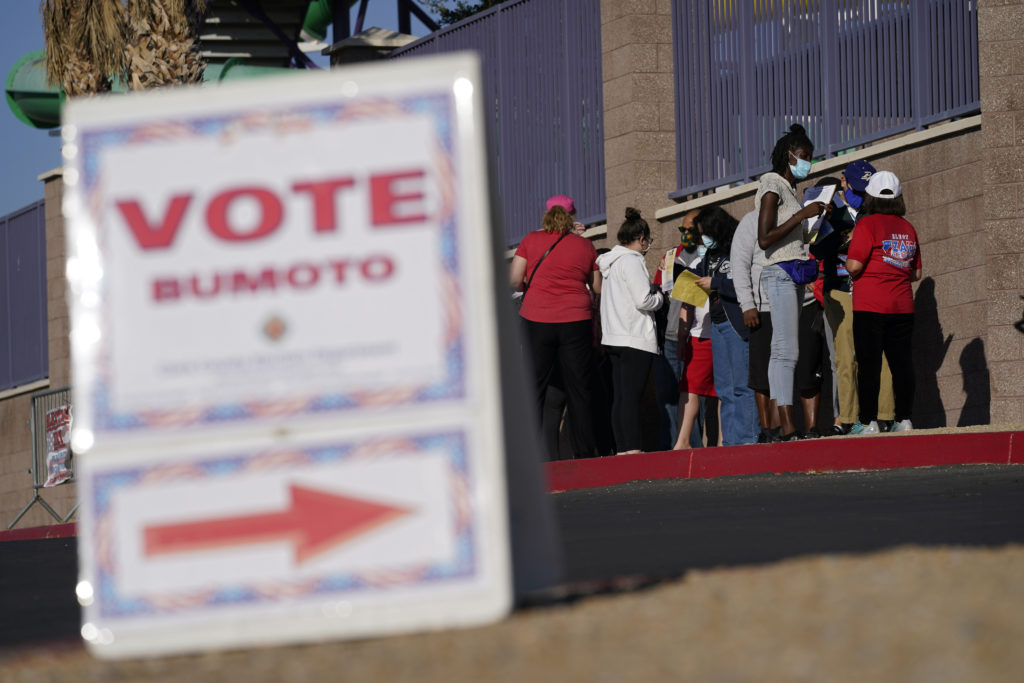
“At one time, getting passing grades in civics and U.S. history were prerequisites for high school graduation. Our biggest mistake was to adopt common core and abandon this.” – Michael Polelle Over five decades ago, Congress passed the Voting Rights Act of 1965. It established standards to protect the voting rights of all qualified U.S. voters. Contrary to liberal psychosis, the Voting Rights Act applies to every voter equally. It set parameters for each state to engrain within its voting laws. To ensure equality, the Civil Rights Act of 1964 was passed to protect the rights of ethnic minorities. But its core provisions, like the Voting Rights Act, protects the civil rights of all Americans equally. Contrary to leftist logic, neither of these gave more rights to one group and less rights to another. Five decades later, many Americans don’t know the Civil Rights Act protects all citizens from age, gender, ethnic and religious discrimination, in addition to minority groups. Government cannot give any form of preference to one group without abridging the same rights that others are entitled to. As Boomers began to feel the pinch of age prejudice, many forgot that age discrimination is a key provision in the Civil Rights Act. And very few seniors ever filed complaints with the Department of Justice about this. “We are marching for the civil rights of the Negros and those of all Americans.” – Martin Luther King Jr Even fewer Americans know why our states were obliged to update their voting laws after the last election. All states laws must comply with provisions in the Voting Rights Act to protect “all voters.” In response to the mayhem during the 2020 election, when blue states made up new laws as they went along, 43 states updated voting laws to prevent a repeat of the insane bedlam that took place in 2020. Citizens asked state lawmakers to ensure that nobody could ever question how anybody who couldn’t get elected dogcatcher in his own state get the most votes in U.S. presidential history. Since the Constitution obligates states to enforce the Voting Rights Act, after the last election, they reviewed all mail-in voting, counting ballots received after Election Day and ballot drop-boxes. All these issues truncated the intent of the Constitution and Voting Rights Acts. Yet in the woke world, if you don’t win the brass ring or can’t hijack it, you bellyache that your voting rights were violated! By law, states are responsible for updating existing election laws when they do not comply with the Voting Rights Act that protects all individual voting rights. Yet progressives and identity groups are squealing like pigs in a bacon factory? Why are they upset with states trying to protect their rights? The woke society is built on double standards. It can’t exist any other way. Wokes make up laws to justify breaking laws they don’t like. Either play the game their way, or they will take their ball away. “I learned that being ‘woke’ is being brainwashed by extremist liberal propaganda.” – Lillian Fang Until the presidential election of 2000, the merits of the Voting Rights Act were seldom questioned. But the fiasco in Florida proved, if progressives want to win badly enough, no law will ever stand in their way. After five weeks of trying to turn Al Gore into a winner, the choice of our nation’s new leader came not from the citizens, but from a 5-4 majority of U.S. Supreme Court justices. Liberal contempt for our voting rights began long before the 2000 election when blue states started moving to all mail-in voting. They had the national media’s pump primed; there was no way Al Gore could possibly lose. When the media abruptly called the election for Gore, they ended up with egg on their faces, and progressives and their liberal attorneys around the U.S. cried out election fraud! “Hi. I’m Al Gore, and I used to be the next president of the United States of America.” – Al Gore Although liberal media pollsters and pundits had been predicting a landslide victory for Al Gore, in the real world Pew Research, Gallop, and other independent groups pictured a much tighter race. They forecasted that fallout from the Clinton-Lewinsky sex scandal would mobilize conservatives against the left’s loose morality. Al Gore lost the entire south and even his home state, Tennessee. In reaction to allegations about voter fraud, hanging chads, and especially mail-in ballots that were supposedly miscounted, Democrats petitioned Washington to review U.S. voting rights again. The 2005 Commission on Election Reform, chaired by liberals Jimmy Carter and former Secretary of State James Baker, concluded that the biggest threat to voting integrity was with mail-in ballots. “We conclude that mail-in voting remains the largest source of potential voter fraud.” – Jimmy Carter Concerns about vote tampering have a long history in the U.S. They helped drive the move to the secret ballot, which all U.S. states adopted between 1888 and 1950. Secret ballots made it harder to intimidate voters and to monitor which candidate a voter had voted for. One University of Florida study found complaints about fraud fell by an average of 14% after states adopted secret ballots. In woke America, facts are an “inconvenient truth.” There have never been more complaints about denial of individual rights, violations of voting rights, and claims of “systematic racism” coming from people who don’t know the rights “they have” and “do not have” than any time in American history. “I have faith in the United States and our ability to make good decisions based on facts.” – Al Gore In 1865, following the Civil War, the 13th, 14th, and 15th Amendments and the 19th Amendment in 1920 guaranteed equal rights and universal suffrage for all Americans. The Civil Rights Act of 1964 and the Voting Rights Act of 1965 protected those rights. That is why we must have voter ID laws. Every illegal vote cast nullifies the votes of the legitimate voters. Still,
Senate Dems push new voting bill, and again hit GOP wall
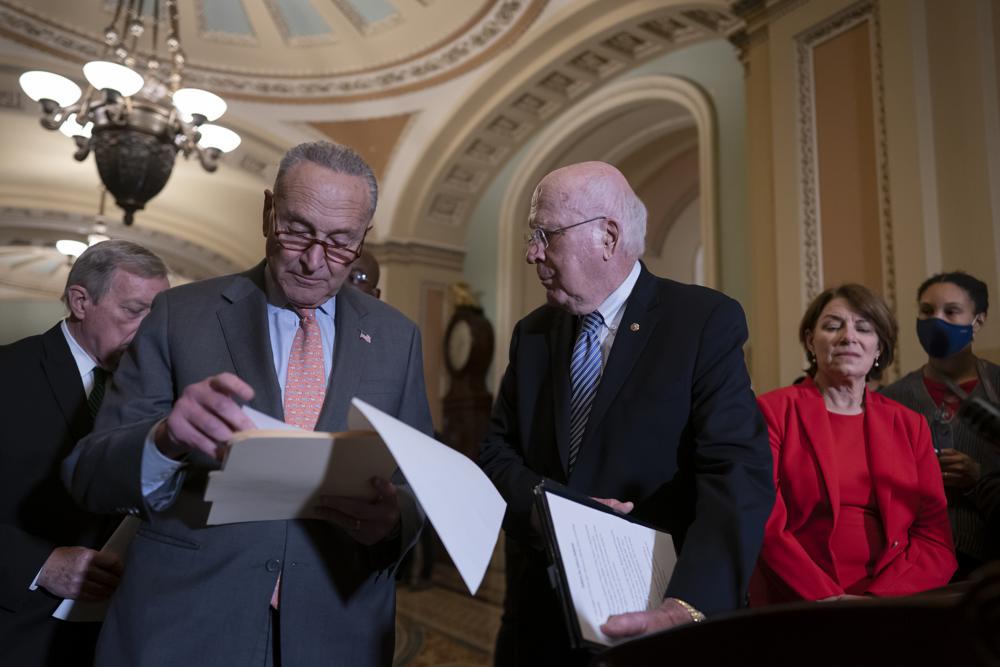
If at first you don’t succeed, make Republicans vote again. That’s the strategy Senate Majority Leader Chuck Schumer appears to be pursuing as the New York Democrat forced another test vote Wednesday on legislation to overhaul the nation’s election laws. For the fourth time since June, Republicans blocked it. Democrats entered the year with unified, albeit narrow, control of Washington, and a desire to counteract a wave of restrictive new voting laws in Republican-led states, many of which were inspired by Donald Trump’s false claims of a stolen 2020 election. But their initial optimism has given way to a grinding series of doomed votes that are meant to highlight Republican opposition but have done little to advance a cause that is a top priority for the party ahead of the 2022 midterm elections. The Senate voted against debating voting legislation Wednesday, with Republicans this time filibustering an update to the landmark Voting Rights Act, a pillar of civil rights legislation from the 1960s. GOP senators oppose the Democratic voting bills as a “power grab.” “This is a low, low point in the history of this body,” Schumer said after the failed vote, later adding, “The Senate is better than this.” The stalemate is forcing a reckoning among Senate Democrats about whether to make changes to the filibuster rule, which requires 60 votes for legislation to advance. That could allow them to muscle legislation through but would almost certainly come back to bite them if and when Republicans take back control of the chamber. Earlier Wednesday, Schumer met with a group of centrist Democrats, including Sens. Jon Tester of Montana, Angus King of Maine, and Tim Kaine of Virginia, for a “family discussion” about steps that could be taken to maneuver around Republicans. That’s according to a senior aide who requested anonymity to discuss private deliberations. But it’s also a move opposed by moderate Sens. Kyrsten Sinema of Arizona and Joe Manchin of West Virginia. Without their support, Democrats won’t have the votes needed to make a change. Time is ticking down. Redistricting of congressional districts (a once-in-a-decade process Democrats want to overhaul to make less partisan) is already underway. And the Senate poised to split town next week for a home-state work period. “Senate Democrats should stay in town and focus on the last act in this battle,” said Fred Wertheimer, who leads the good government group Democracy 21. The latest measure blocked by Republicans Wednesday is different from an earlier voting bill from Democrats that would have touched on every aspect of the electoral process. It has a narrower focus and would restore the Justice Department’s ability to police voting laws in states with a history of discrimination. The measure drew the support of one Republican, Alaska Sen. Lisa Murkowski after Democrats agreed to make changes that she sought. But all other Republicans opposed opening debate on the bill. “Every time that Washington Democrats make a few changes around the margins and come back for more bites at the same apple, we know exactly what they are trying to do,” said Senate Minority Leader Mitch McConnell, who slammed the vote as “political theatre” on a trumped-up a “go-nowhere bill.” Murkowski, too, said she still had underlying issues with the bill as written while criticizing Schumer’s decision to force repeated “show votes.” “Let’s give ourselves the space to work across the aisle,” she said Wednesday. “Our goal should be to avoid a partisan bill, not to take failing votes over and over.” The Democrats’ John Lewis Voting Rights Advancement Act, named for the late Georgia congressman who made the issue a defining one of his career, would restore voting rights protections that have been dismantled by the Supreme Court. Under the proposal, the Justice Department would again police new changes to voting laws in states that have racked up a series of “violations,” drawing them into a mandatory review process known as “preclearance.” The practice was first put in place under the Voting Rights Act of 1965. But it was struck down by a conservative majority on the Supreme Court in 2013, which ruled the formula for determining which states needed their laws reviewed was outdated and unfairly punitive. The court did, however, say that Congress could come up with a new formula. The bill does just that. A second ruling from the high court in July made it more difficult to challenge voting restrictions in court under another section of the law. The law’s “preclearance” provisions had been reauthorized by Congress with overwhelming bipartisan support five times since it was first passed decades ago. But after the Supreme Court’s 2013 ruling, Republican support for the measure cratered. Though the GOP has shown no indication that its opposition will waver, there are signs that some of the voting changes Democrats seek aren’t as electorally advantageous for the party as some hope. Republican Glenn Youngkin’s victory in Virginia’s Tuesday gubernatorial election offers the latest test case. Democrats took control of all parts of Virginia’s government in 2019 and steadily started liberalizing the state’s voting laws. They made mail voting accessible to all and required a 45-day window for early voting, among the longest in the country. This year they passed a voting rights act that made it easier to sue for blocking ballot access. But those changes didn’t hurt Youngkin, who comfortably beat Democrat Terry McAuliffe, a popular former governor seeking a valedictory term. That’s still unlikely to change Republicans’ calculus. “Are we all reading the tea leaves from Virginia? Yes, absolutely,” Murkowski said. “Will it be something colleagues look to? It’s just one example.” Democratic frustration is growing, meanwhile leading to increasingly vocal calls to change the filibuster. “We can’t even debate basic bills,” said Minnesota Sen. Amy Klobuchar, a Democrat. “The next step is to work on ideas to restore the Senate.” Republished with the permission of the Associated Press.
Alabama House approves new congressional district lines
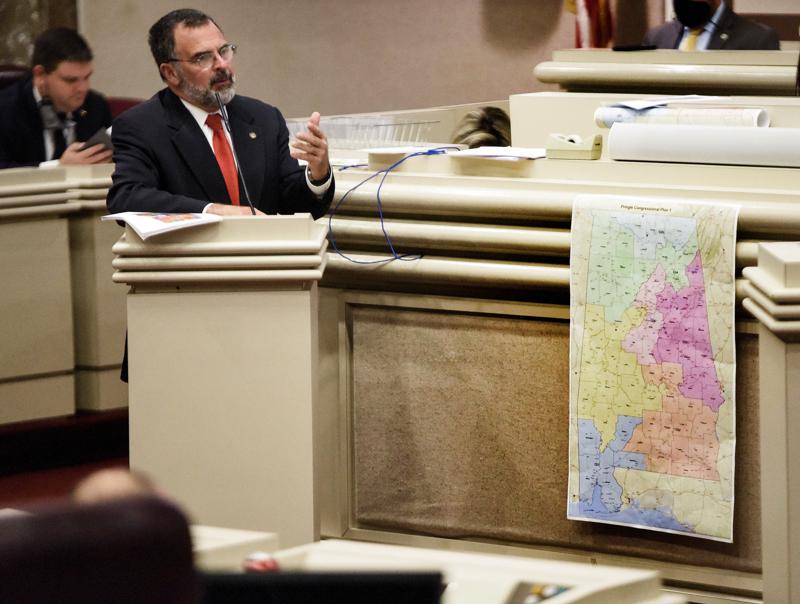
The Alabama House of Representatives on Monday approved new lines for the state’s seven congressional districts as lawmakers try to get required new maps in place for the 2022 elections. Representatives approved the plan on a 65-38 vote with about 10 Republicans joining with Democrats to oppose the new boundary lines for the seven districts. The plan now moves to the Alabama Senate. Some Democrats raised concerns that the process was rushed and that the map packs many Black voters into a single congressional district, preventing them from affecting elections in other districts. The handful of opposed Republicans expressed concern about various changes to the lines. Republican Rep. Chris Pringle, the co-chairman of the redistricting committee and the sponsor of the districting plan, said that lawmakers were careful to comply with the Voting Rights Act and court rulings. “It complies with the law. It complies with our guidelines to the committee. It’s a good plan. It’s a fair plan. It’s an equitable plan,” Pringle, R-Mobile said. Democrats have argued that Alabama, whose population is about 26% Black, should have a second congressional district with a significant African American or minority population. The seven-member delegation has for decades included a single African American, elected from the only district with a majority Black population. The district is now represented by Rep. Terri Sewell, the only Democrat in the state’s congressional delegation. The Republican-supported plan keeps Sewell’s District 7 with a population that is about 55% Black, while the other six districts are overwhelmingly white. “It also serves the other purpose to make sure that those folks can’t go into the Sixth Congressional district and have any real impact on what goes on there,” Democratic Rep. Chris England of Tuscaloosa said of the GOP-backed plan. Representatives in the evening also began debating new district lines for themselves. Several lawmakers in both parties argued that the process had been rushed. “It’s discouraging to me because we’re hurrying. We really don’t have the adequate, accurate information to make the kind of momentous decisions that we’re being asked to make,” said Republican Rep. Mike Holmes of Wetumpka. Pringle said lawmakers are under a time crunch to get the maps ready in time for next year’s elections after receiving their Census data late. The House of Representatives was resuming debate Monday evening. The GOP-controlled Legislature in 2017 had to redraw legislative maps under court order to fix racial gerrymandering in 12 districts. The ruling came after Black lawmakers filed a lawsuit challenging the maps as “stacking and packing” Black voters into designated districts to make neighboring districts whiter and more likely to elect conservative Republicans. Pringle said in drawing the lines this year that they did so without looking at race, based on the existing map and population changes. He said they later calculated the racial composition of districts. The Alabama Senate advanced new lines for state Senate and state school board districts. State senators voted 25-7 for new state Senate lines and 24-4 for new Board of Education lines. Those bills now move to the Alabama House of Representatives. Republished with the permission of the Associated Press.
Alabama lawmakers begin special session on redistricting

The Alabama Legislature convened Thursday for a special session on drawing the state’s legislative, school board, and congressional districts, although many expect the issue will ultimately be headed for federal court. The Legislature is expected to maintain a firm Republican majority under the proposed maps, but some Democrats have raised concerns that the proposed lines don’t reflect a state that has grown more diverse. “We’ve done our best. It’s a balancing act on getting the votes and complying with the courts,” said Republican Sen. Jim McClendon, the co-chair of the Joint Legislative Reapportionment Committee. There is already an existing lawsuit arguing that the state, which has a population that is about 26% Black, should have a second congressional district with a significant African-American population. The seven-member delegation has for decades consisted of a single African American, elected from the only district with a majority Black population. The district is now represented by Rep. Terri Sewell. The GOP-controlled Legislature in 2017 had to redraw legislative maps under court order to fix racial gerrymandering in 12 districts. The ruling came after Black lawmakers filed a lawsuit challenging the maps as “stacking and packing” Black voters into designated districts to make neighboring districts whiter and more likely to elect conservative Republicans. House Minority Leader Anthony Daniels said there are concerns about the proposed districts in the House of Representatives, noting that almost all Republican districts have no less than 60% of one race. “Is that not packing?” Daniels asked. Daniels said that if the goal is to have a community where “no one really sees race and color long term,” then “we have to make sure that our representatives have constituencies that reflect what the future of this state and this country is going to be.” This will be the first full redistricting process that doesn’t require pre-clearance from the Department of Justice, a condition that was instituted under the Voting Rights Act in 1965 in mostly Southern states with a history of voting rights violations. The U.S. Supreme Court effectively ended the requirement in 2013 when it ruled the federal government was using an outdated method to decide which states were subject to it. McClendon said that, even without the requirement, lawmakers were careful to comply with the Voting Rights Act and related court rulings. House Speaker Mac McCutcheon acknowledged that, as in past years, there will probably be some court challenges to the plan. “We’re going to allow the process to work. We’re listening to everyone,” he said.
Terri Sewell to host congressional forum on current state of U.S. voting rights
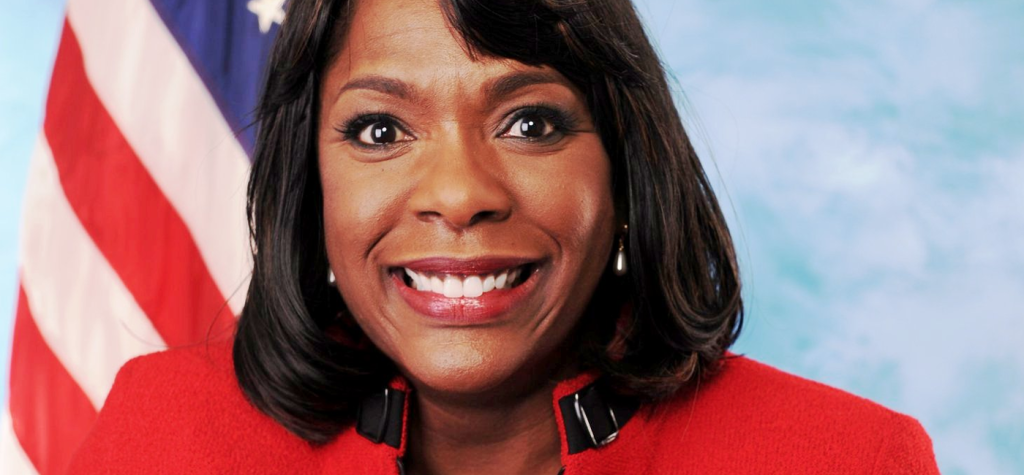
In an effort to to raise awareness about the importance of protecting voting rights and to urge Congress to support legislation to restore the Voting Rights Act of 1965, Rep. Terri Sewell (AL-07) will host “Restore the Vote: A Congressional Forum on the Current State of Voting Rights in America” on Saturday. Joined by 11 of her House colleagues — Rep. Sheila Jackson Lee (TX-18), Rep. Hank Jonson (GA-04), Rep. Stacy Plaskett (VI), Rep. Barbara Lee (CA-13), Rep. Karen Bass (CA-37), Rep. Marc Veasey (TX-33), Rep. John Lewis (GA-05), Rep. Jim Clyburn (SC-06), Rep. John Conyers (MI-13), Rep. G.K. Butterfield (NC-01) — Sewell will hear directly from voters about their concerns and modern-day challenges to voting. According to Sewell’s office, issues that will be discussed include the effects of the Shelby decision, current barriers to the ballot box and the need for Congress to act to protect the right to vote for all Americans The event will take place at the Birmingham City Council Chambers at City Hall from 1 to 3 p.m.
Terri Sewell honors Black History Month
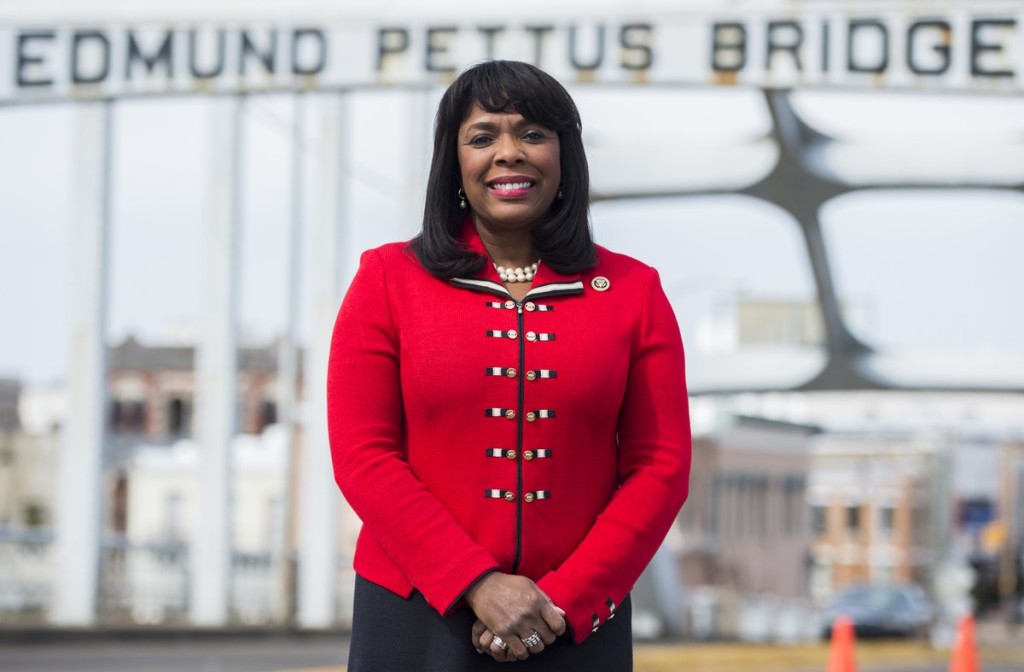
Feb. 1 marks the first day of Black History Month, and Alabama U.S. Rep. Terri Sewell (AL-07) is calling for a continued fight for equality. “Our nation has made much progress since the passage of the landmark Civil Rights Act of 1964 and the Voting Rights Act of 1965,” Sewell said. “We owe it to ourselves, our children, and those who came before us to continue to break down any barriers that divide our society and in its place build new foundations for understanding and reconciliation.” Originally established as a weeklong celebration by Dr. Carter Woodson in 1926, former President Gerald R. Ford expanded Black History Month into an month-long opportunity to celebrate the immeasurable contributions of African Americans – from science and technology to education to business to politics and beyond — in our society. “This month, we pause to remember and honor the sacrifices the Foot Soldiers of the Civil and Voting Rights movements made in order to make our nation a more equal, just, and fair society,” Sewell continued. “The story of Alabama and the 7th Congressional District cannot be told without remembering those who sought to free our land from racial animosity and discrimination.” “In keeping with the theme for the 2016 Black History Month is ‘Hallowed Grounds: Sites for African-American Memories,’ my office has been working with local, state, and federal officials to discuss how to best protect and preserve the historic Civil Rights sites across Alabama’s 7th Congressional District. Our district is the birthplace of the fight for equality, and we owe it to future generations to preserve this rich legacy. “We should all commemorate this month by fulfilling the promise of our nation’s democracy, and committing ourselves to uplifting our communities. By standing as one people, one nation, we can bring about change.”
NAACP sues Alabama over its voter ID law
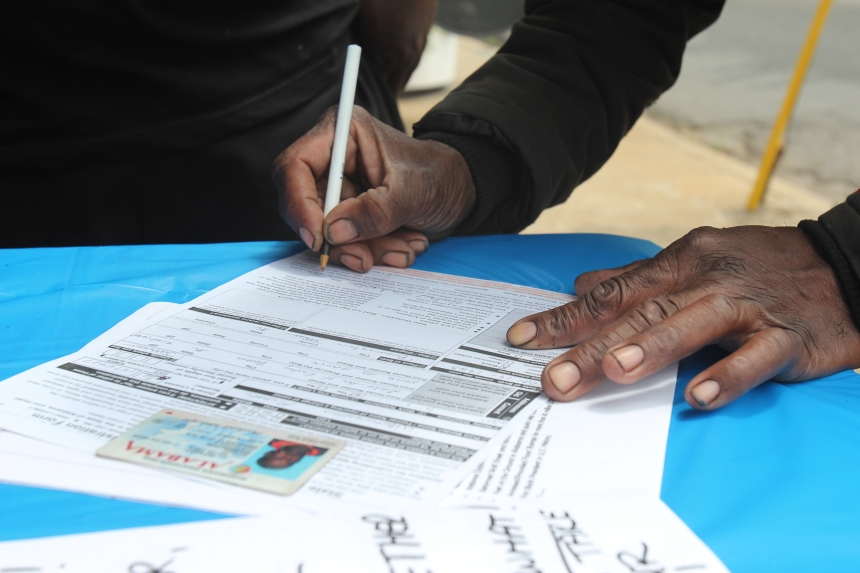
A civil rights group has filed a lawsuit against the state of Alabama, claiming that its law requiring voters to have photo identification will prevent thousands from casting ballots. The National Association for the Advancement of Colored People and Greater Birmingham Ministries filed the federal lawsuit Wednesday. The lawsuit cites state estimates that at least 280,000 people will be disenfranchised because of the law. The complaint says those affected are disproportionately black and Hispanic, and it says that amounts to intentional racial discrimination. The state attorney general’s office had no immediate comment. A requirement that went into effect last year requires voters to show valid, state-issued photo identification at polling places. The state’s Republican-controlled Legislature approved the law in 2011, saying it was meant to prevent fraud. Republished with permission of The Associated Press.
KKK distributed “recruitment flyers” in advance of Selma march 50th anniversary
Civil rights supporters were not the only people observing the 50th anniversary of the march on Selma. The KKK also left about 4,000 flyers throughout Montgomery and Selma to mark “Bloody Sunday.” Robert Jones, grand dragon of the Loyal White Knights of the KKK, told reporters that the group had been distributing flyers for about two weeks before the event held Sunday, March 8. “We pretty much put out fliers, some against King and some against immigration,” Jones told Emily Hill of AL.com. “It’s time for the American people to wake up to these falsehoods that they preach about MLK.” KKK members drove by random homes, tossing bags with a flier and a rock onto doorsteps. Jones said the rocks were like “paperweights.” The KKK was not “upset” about the Selma gathering, Jones said. “Everybody has a right to gather in this country, freedom of speech,” he added, although he did admit “frustration” over support for Martin Luther King, Jr. People are “supporting a man they don’t know about,” he said. The purpose of the flyers was to way attract new members by reminding the community that the Klan is still out there,” Jones told AL.com. “The Klan is still out there and we are watching,” CBS 8 Montgomery reported that Selma Avenue residents notified the news station about the KKK fliers after calling police. Several municipalities nationwide have recently reported finding Klan recruitment flyers, including Hamilton, Ohio; Alexandria, Louisiana; and Spokane Valley, Washington. Many of flyers encouraged residents to report neighborhood troubles to a 24-hour “Klanline.” Louisiana’s The Town Talk website says that one flyer gives a number with a recording saying the KKK is “unapologetically committed to the interests and values of the white race.” Callers can also leave messages; ask for information, media inquiries or check on Klan applications. Thousands gathered on March 8 to walk across the Edmund Pettus Bridge as Selma celebrated the 50th anniversary of the conflict between police and civil rights activists. The protests led directly to the Voting Rights Act of 1965 signed by President Lyndon Johnson.
