
On its 53rd anniversary, Terri Sewell says Voting Rights Act must be restored
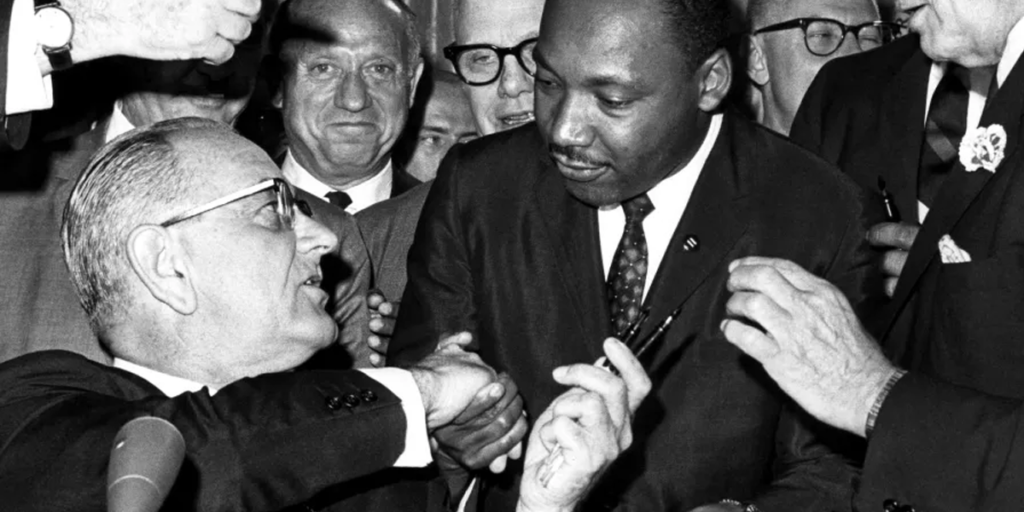
Monday, August 6, marks the 53rd anniversary of the enactment of the Voting Rights Act of 1965 (VRA). The VRA abolished restrictions on black Americans voting in federal, state and local elections. In 2013, key components of the law were removed by the Supreme Court in its Shelby County v. Holder decision. Alabama 7th District U.S. Rep. Terri Sewell on Monday said the the law must be restored. “Today’s anniversary is a reminder that foot soldiers in Alabama and across the country fought, bled, and died for our right to vote,” saidSewell. “Right now, their work is under attack as states across the country pass strict voter ID laws, gerrymander electoral districts, and purge voters from their voter rolls. As we recognize the impact that Shelby County v. Holder has had on our democracy and its damaging effect on voter access, let us recommit to action in the face of voter suppression. We must restore the full protections of the Voting Rights Act to keep our elections free and fair. In June 2017, Sewell sponsored the Voting Rights Advancement Act (VRAA), which seeks to restore full protections to the Voting Rights Act of 1965 following Shelby County v. Holder. To address the Supreme Court’s concerns with the VRA, the VRAA would create a new coverage formula which requires federal oversight of states with repeated voting rights violations in the last 25 years. If passed, 13 states nationwide, including Alabama, would be subject to federal election oversight due to a recent history of voter discrimination. It would also require states with a recent history of voter discrimination to seek approval from the Department of Justice before making any changes to their electoral laws.
Supreme Court upholds Ohio decision, says states can purge voters
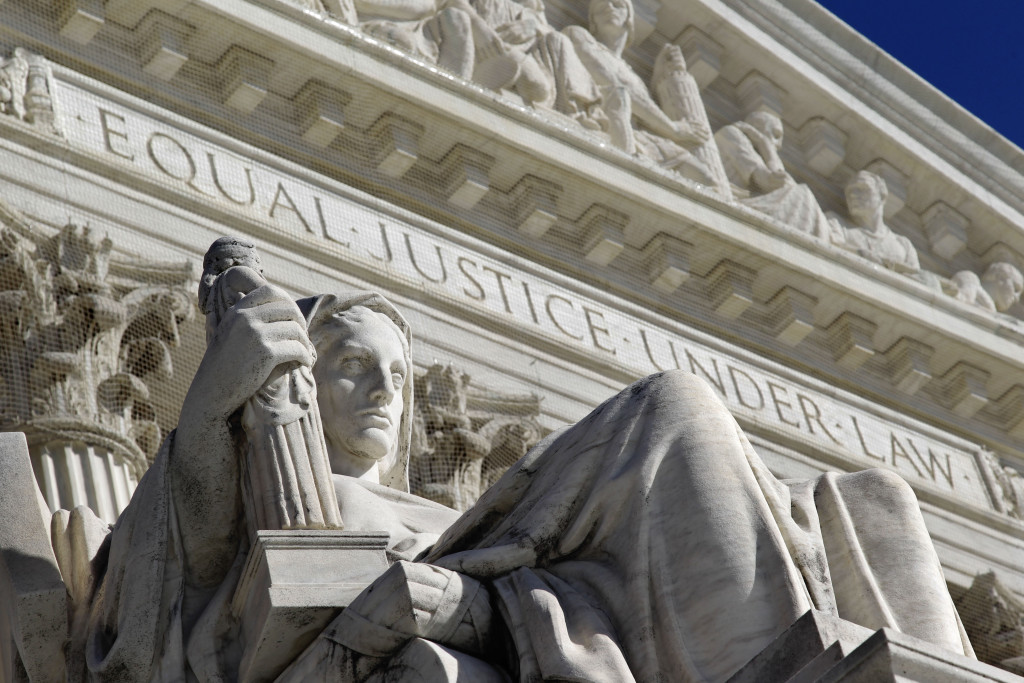
A divided U.S. Supreme Court upheld an Ohio election law giving state officials the power to purge individuals from the voters rolls who fail to vote for six years and failed to respond to notices from election officials to confirm their residency. Writing for the majority in a 5-4 decision Monday, Justice Samuel Alito wrote an estimated one in eight voter registrations in the United States are invalid or inaccurate. “A state violates the failure-to-vote clause only if it removes registrants for no reason other than their failure to vote,” Alito said. By contrast, he said, Ohio waits six years before removal, following federal law “to the letter.” Alito said Ohio’s voter removal system is not in violation of federal laws approved in 1993 and 2002 by Congress. “We have no authority to second-guess Congress or to decide whether” [Ohio’s law] “is the ideal method for keeping its voting rolls up to date,” Alito wrote. “The only question before us is whether it violates federal law. It does not.” Disagreement Not everyone agrees with the majority decision. Justice Stephen Breyer wrote an 18-page dissent. There, he argued a voter’s failure to respond to a notice “is an irrelevant factor in terms of what it shows about whether that registrant changed his or her residence.” “To add an irrelevant factor to a failure to vote, say, a factor like having gone on vacation or having eaten too large a meal, cannot change Ohio’s sole use of ‘failure to vote’ into something it is not,” penned Breyer. Alabama U.S. Rep. Terri Sewell also disagrees with the high court’s decision, saying voting is not a “use it or lose it right.” “Voting is not a use it or lose it right. It is a permanent right guaranteed by our Constitution,” explained Sewell. “The Supreme Court’s misguided decision today opens the door for states to disenfranchise voters just because they did not cast their ballot. Already we have seen the impact of this voter suppression tactic in Ohio where more than 7,000 votes were thrown out because of the state’s recent voter purge. In our democracy, your vote is your voice, and we cannot allow lawmakers to silence the voice of the people. Today, we must recommit ourselves to fighting voter suppression tactics, from voter purges to restrictive voter ID laws, wherever they exist.” Sewell is the lead sponsor of the Voting Rights Advancement Act (VRAA), legislation which would restore protections for voters in states with a recent history of discrimination. Five years after the Supreme Court’s decision to gut the Voting Rights Act in Shelby County v. Holder, the VRAA addresses a wave of voter ID laws, racial gerrymandering, and other voter suppression tactics enacted at the state level.
Terri Sewell holds Speak Out, introduces legislation to restore Voting Rights Act
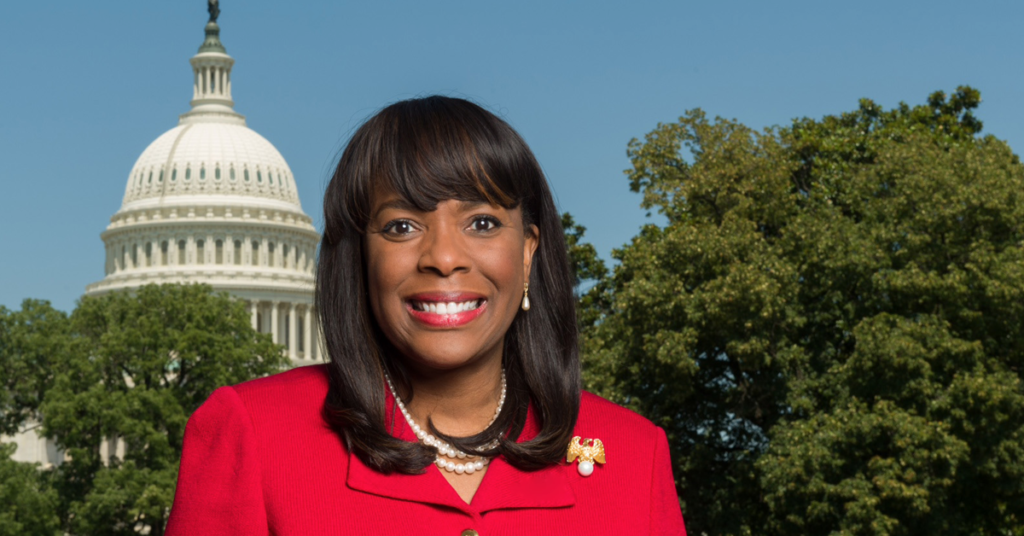
Four years after the Supreme Court’s decision to roll back provisions of Voting Rights Act, Alabama 7th District U.S. Rep. Terri Sewell and a handful of her House colleagues congregated outside of the U.S. Capitol on Thursday for a Speak Out to introduce legislation to restore protections for voters in states with a recent history of discrimination. According to Sewell, H.R. 2978: the Voting Rights Advancement Act (VRAA) addresses a wave of voter ID laws, racial gerrymandering, and other voter suppression tactics enacted at the state level. “Today, I’m introducing the Voting Rights Advancement Act because I believe that the right to vote is one of the most fundamental rights in our democracy,” said Sewell. “As state after state create new barriers to the polls, our work to prevent discrimination and protect the rights of all voters has taken on a new urgency. The time to restore the vote is now.” Sewell continued, “On the eve of the 50th anniversary of the signing of the Voting Rights Act of 1965, I urge my colleagues to recommit ourselves to restoring the promise of voter equality. We cannot silence any voices in our electorate. Our nation will cease to be a democracy if we limit access to voting.” The VRAA seeks to restore full protections to the Voting Rights Act of 1965. If passed, 13 states nationwide would be subject to federal election oversight due to a recent history of voter discrimination. It would also require states with a recent history of voter discrimination to seek approval from the Department of Justice before making any changes to their electoral laws. “We know that we stand on the shoulders of amazing people. We know that we have the rights and freedoms that we enjoy because of other’s sacrifice. And we know that freedom is not free. So it’s important that we amplify our voices,” Sewell added at the Speak Out. “I’m asking millennials to use snapchat and all of the other social media that you have to amplify your voices to get your generation involved. So here’s the thing, your vote is your vote. And if you allow your vote to be suppressed, you’re allowing your voice to be suppressed.” Reps. John Lewis, Judy Chu, Michelle Lujan Grisham, James Clyburn, Joseph Crowley, Sen. Patrick Leahy, NAACP Washington Bureau Director Hilary Shelton, The Leadership Conference President Vanita Gupta, ACLU Political Director Faiz Shakir, and AAJC Director of Census and Voting Programs Terry Ao Minnis were also in attendance. Watch Sewell’s live-stream of the event below:
