
Walker County grabs national headlines as a hot spot for painkiller abuse

Walker County is usually nowhere to be found in the pages of The Washington Post. But this week, the rural county one hour away from Birmingham was front and center in a long-form story about a family torn asunder by pill mills and opioid addiction. With a dateline from the county seat of Jasper, population 14,222, the article details in depth the suffering of thousands of mostly white, low-income Alabamians resigned to a life that revolves around the cycle of drug abuse, poverty, and recovery. Everyone, writes Anne Hull in Saturday’s version of The Post, has a theory of how things got so bad that painkillers like OxyContin and Roxicodone are commonly used as currency traded for everyday items like lawn mowers and clothing. It was the global economy that took away the coal-mining jobs. It was Purdue Pharma marketing OxyContin as a less-addictive painkiller. It was greedy doctors who needed to pay for their beach condos in Gulf Shores. It was the druggies and scammers abusing the system. It was God being taken out of the schools. It was the government allowing Medicaid patients to get $800 worth of painkillers for a $6 copay. It was too few jobs and too many with headsets. It was 21st-century America, a place so lonely for some that only pills could fill the void. The crisis, in particular, has struck women like a 33-year-old profiled by Hull: The void runs deepest in one group — white, working-class women in rural areas. In the past 15 years, their death rate has risen more sharply than any other demographic in the United States, studies show. Opioid drugs, alcohol and suicide have been the main contributors, with assistance from economic isolation, anxiety over a loss of security and the comfort offered by Purdue Pharma. … Two generations of prescription painkillers have changed the way people die here. Even more, they have changed the way people live. Great-grandparents are now raising the children of addicted parents and grandparents. Four out of 5 arrests in the county are drug-related. Every week a local newspaper called Just Busted publishes the arrest photos, the exhausted faces on display in most minimarts next to the $14.99 synthetic urine products guaranteed to fool drug screenings. Stuck in this landscape where she has spent her whole life, Jessica Kilpatrick drove home from the courthouse on a two-lane road. She had a splitting headache but feared aspirin might show up in her urine so she rubbed her temples. The employee discount hamburger on the seat beside her was for her husband. In four days, he was leaving for prison. Jessica had just found out. “They say God won’t give you more than you can handle,” she said as she turned into the driveway. “I’m beginning to wonder.” Kilpatrick became addicted after a volleyball injury for which doctors would prescribe her 330 pills a month. Now years later, her husband Jeremy now faces four years in prison for a drug-related violent crime, after an extended period of peaceful sobriety. In the meantime, Jessica sustains herself — and distracts herself from a gloomy outlook — by working at a Burger King in town. Her hopes, and so much of Walker County’s hopes, depend on getting her 18-month period of sobriety to last just one more day. And then another. Read the full story here.
Alabama Power customers set to see rate decreases, despite new EPA regulations
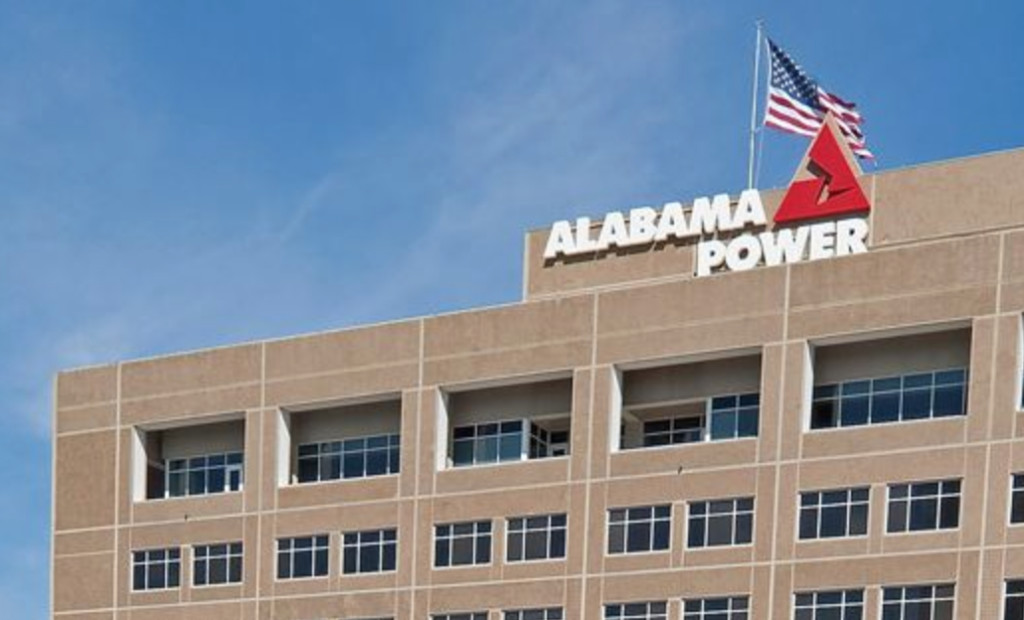
Though EPA regulations are closing in on state-backed energy firm Alabama Power, ratepayers throughout the state are nonetheless likely to see decreases in their energy bills in 2016. The firm’s newly-diversified portfolio of energy sources, along with lower prices in the coal and natural gas markets, led the firm to cut rates by 2 percent throughout 2016. “There’s no question – costs related to federal environmental mandates and other governmental regulations continue to be a concern for us,” said Nick Sellers, Alabama Power’s vice president for Regulatory and Corporate Affairs on Tuesday. “Regulatory costs related to coal-fired generation, in particular, are going to continue to rise as more environmental rules come in to play,” added Sellers. “For now, we’re pleased that our fuel flexibility is helping blunt the negative impact of these federal mandates.” The enactment of new federal environmental rules, meanwhile, have caused the shuttering of three coal power plants run by, according to a release from the utility. Alabama Power says new rules enforced by the Environmental Protection Agency necessitated the closure of Plant Gorgas Units 6-7 in Walker County, as well as Plant Barry in Mobile County, where “Unit 3 has produced its last megawatt of power.” The units, which were actively producing power for customers as recently as early this winter, were effective at providing power for Alabamians. “From a reliability standpoint, Gorgas 6 and 7 were top of the line,” said Billy McKay, an operations team leader at Gorgas. “They were really great units.” The Walker County facility that housed Gorgas 6 and 7 now serves as temporary storage, the cavernous plant now essentially a holding pen for equipment and supplies. While the plants were producing plenty of power, they lacked the full suite of environmental controls that coal-fired power plants must now have to meet the latest federal regulations, says Alabama Power. With the deadline looming to add costly technology or close the units, the company chose the latter. The company said that while they have spent some $4 billion in the last dozen year complying with EPA regulations, including $1 billion in the last year ahead of the ramp-up of the Obama administration’s Clean Power Plan initiative, the numbers for keeping their plants open just don’t add up. Other facilities, like at Plant Barry and Plant Gadsden, have stopped using coal and switched to natural gas. The number of coal-fired units will ultimately fall from 23 to 10 due to new environmental rules. Alabama Power’s vice president of Environmental Affairs Matt Bowden says the outright closures above may not be the last ratepayers see. “These regulations are forcing us to make costly changes in how we generate electricity for our customers,” said Bowden. “And there are more regulations coming.”
