
How today’s loudest progressives are nothing like those who fought for civil rights

“Unlike the civil rights movement of the 1950s and ’60s, when protesters wore their Sunday best and carried themselves with heroic dignity, today’s liberal marches are marked by incoherence and downright lunacy — hats designed to evoke sexual organs, poems that scream in anger yet have no point to make, and an hysterical anti-Americanism.” That quote came from a Wall Street Journal op-ed by Shelby Steele an author and current Stanford University fellow titled “The Exhaustion of American Liberalism: White guilt gave us a mock politics based on the pretense of moral authority.” Steele’s post pulls no punches as he addresses, head on, the fallacy of “white guilt,” and I appreciate that. An acquaintance of mine, Javacia Bowser — a teacher, blogger and all around boss lady — frequently ask questions of the day (QOTD) to her loyal tribe of fellow writers, bloggers on See Jane Write. On February 13 she queried: Is there a topic you completely avoid writing about? If so, what is it and why? I didn’t answer her question online that day but I haven’t stopped thinking about it. The truth is there is a topic I’ve started and stopped writing about too many times to count — it’s race and the idea of “white privilege.” The most recent instance included me starting and stopping, writing and revising a blog when Senator Doug Jones named his chief of staff and all the headlines blared that he hired a black man (including calling my own Managing Editor to complain, just to find out she wrote the very same story). Why didn’t they blare that he hired a highly qualified man? Why did leaders within the black community write letters emphasizing that Jones should hire black senior staffers rather than saying that he needed to hire the best and most qualified staff who would work to make Alabama better for everyone? I called friends black and white and even a former colleague I hadn’t talked to in years (a young successful black male who I hired to replace me when I left my job on the Hill) about my strong feelings but at the end of the day I couldn’t get it right. I don’t know that it wasn’t that I wasn’t articulating my strong thoughts and feelings so much as I could just envision all the ways things could go wrong if it were misinterpreted and I was labeled “racist”. I’ve researched this, whites writing or talking about subjects ranging from the Black Lives Matters movement, to crime and poverty, and of course white privilege. It seems that nearly every time even the most middle of the road approaches add opposing views are met with cries of not getting it because they’re racist and out of touch. I feel Steele nails the way I feel nearly every time I see someone talk about privilege without addressing actual solutions. I mean tangible action items, as in they plan to put their money where their mouths are in accomplishing what they’re talking about. Here’s what he wrote, White guilt is not angst over injustices suffered by others; it is the terror of being stigmatized with America’s old bigotries—racism, sexism, homophobia and xenophobia. To be stigmatized as a fellow traveler with any of these bigotries is to be utterly stripped of moral authority and made into a pariah. The terror of this, of having “no name in the street” as the Bible puts it, pressures whites to act guiltily even when they feel no actual guilt. White guilt is a mock guilt, a pretense of real guilt, a shallow etiquette of empathy, pity and regret. I’ve said multiple times that the differences between the civil rights movement and many of the liberal movements happening today is huge. The biggest difference is that the former was about peace and equality, and the latter about hate and division. During the civil rights movement leaders were fighting the “us vs. them” mentality; today the leaders of liberal movements emphasis the “us vs. them.” The best those of in the “us” category can do is apologize loudly and often for their/our us-ness whether that be race, wealth, education, backgrounds, beliefs, the list goes on. In the civil rights movement, it was about doing the right thing with clear goals in mind that would move our nation forward. Today’s liberal movement it’s about screaming how conservatives or independents who don’t share their view are evil, wrong and just mean-spirited with no end in sight. If the fight is being led by blacks – you join or agree or you’re racist. If the fight is being led by women – you join or agree or you’re sexist. Don’t believe me, look at how pro-life women were welcomed at the “Women’s March.” Steel closes his post with thoughts I’ve expressed in the past. So long as there’s no real conversations that can be had by progressives and conservatives on race, inequality and poverty without name calling, blame and fear we can’t solve the problems that really matter. No one wins when we can’t talk and there’s so many who want to talk but won’t because of the way the conversation is currently being framed. Today’s liberalism is an anachronism. It has no understanding, really, of what poverty is and how it has to be overcome. It has no grip whatever on what American exceptionalism is and what it means at home and especially abroad. Instead it remains defined by an America of 1965—an America newly opening itself to its sins, an America of genuine goodwill, yet lacking in self-knowledge. This liberalism came into being not as an ideology but as an identity. It offered Americans moral esteem against the specter of American shame. This made for a liberalism devoted to the idea of American shamefulness. Without an ugly America to loathe, there is no automatic esteem to receive. Thus liberalism’s unrelenting current of anti-Americanism. Let’s stipulate that, given our history, this liberalism is understandable. But American liberalism never acknowledged that
Ivanka Trump defends paid leave plan in Wall Street Journal
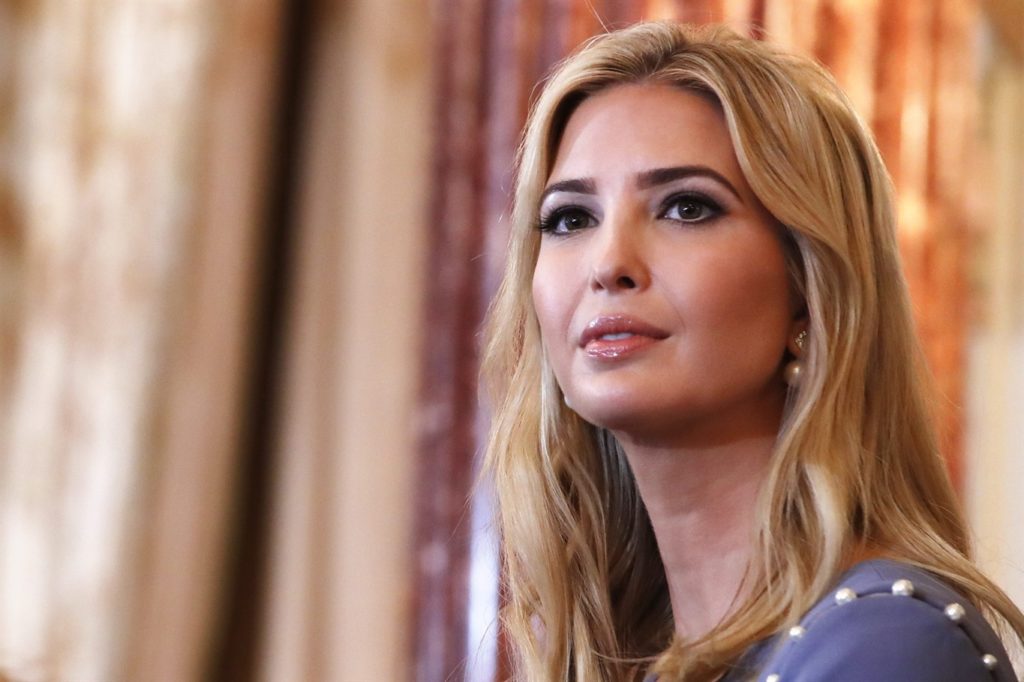
First daughter Ivanka Trump is defending a White House proposal to mandate paid leave for new parents in a letter to the editor published Wednesday in The Wall Street Journal. The paper had previously criticized the Trump administration plan “as bad policy and worse politics” that would increase taxes on business. The plan would be funded through unemployment insurance. But Ivanka Trump says in a response that: “Providing a national guaranteed paid-leave program-with a reasonable time limit and benefit cap-isn’t an entitlement, it’s an investment in America’s working families.” Ivanka Trump has met with Democratic and Republican lawmakers on the issue. The program has limited GOP backing, but more modest tax policies could be included in a Republican tax overhaul effort. Republished with permission of The Associated Press.
Samford ranked top Alabama university by Wall Street Journal
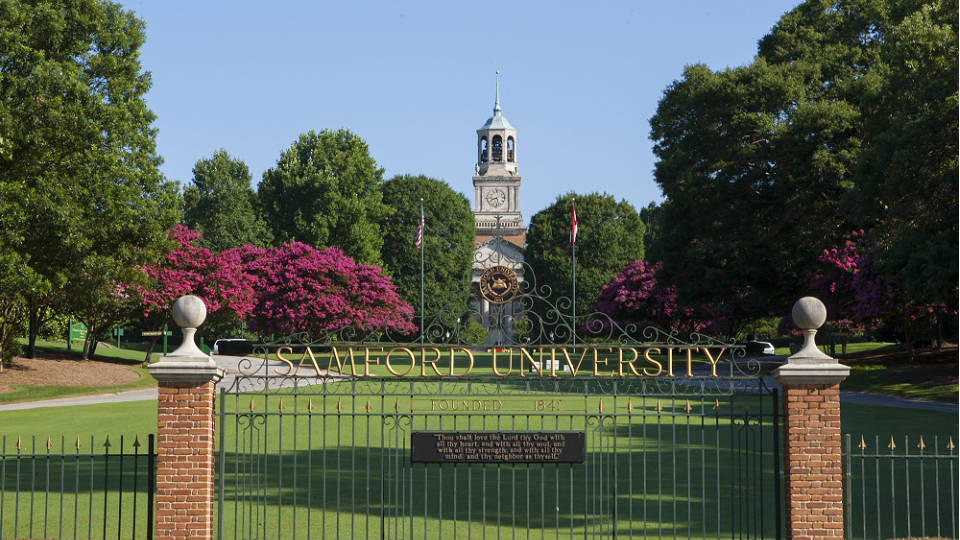
Birmingham’s Samford University takes home the Yellowhammer State’s top spot in the inaugural Wall Street Journal-Times Higher Education survey of more than 1,000 U.S. colleges and universities released on Tuesday. Samford ranked the top university in the state, while ranking 218th overall out of the 1,061 U.S. universities and colleges considered. The ranking is drawn from 15 performance indicators in four categories — student outcomes, school resources, student engagement and the learning environment (diversity) — that have been selected in order to answer the questions that matter the most when choosing a university. Forty percent of each school’s overall score comes from student outcomes, including how they fare after leaving campus, 30 percent from the school’s resources, 20 percent from how well it engages its students and 10 percent from the learning environment. Samford scored highest in student engagement, based on survey results. The university also has a three-year average of 93 percent of its undergraduates having jobs or being in graduate school within six months of graduation. Samford’s student-faculty ratio is a relatively low 13 to 1. “Rankings are just one measure of a university’s effectiveness and reputation, but it is especially rewarding to be so highly ranked in our state and nationally by an organization as prestigious as The Wall Street Journal,” said Samford President Andrew Westmoreland. “Because student engagement and outcomes are key to these rankings, it affirms the work of our faculty and staff in providing the rigorous academic preparation our students need to be successful in the marketplace.” Here’s a look at how all of Alabama’s college included in the rankings fared:
Club for Growth Action begins $1.5 million ad campaign to bring down Donald Trump in Florida
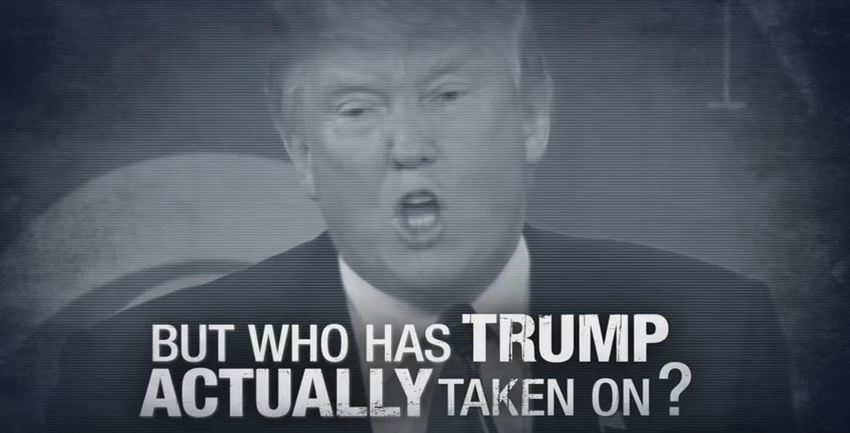
Can Club for Growth ads prevent Donald Trump from winning Florida in 13 days? After his superior effort on Super Tuesday, in which he captured seven states, it appears that nothing can prevent “Teflon Don” from his improbable run to the Republican nomination for president. However, Trump did not run the table, with Oklahoma going to Ted Cruz unexpectedly (Cruz also took Alaska and Texas, while Marco Rubio won Minnesota). Club for Growth Action, the group’s super PAC, ran ads against Trump in Oklahoma, as they did in Iowa, another state where Trump lost out to Cruz. David McIntosh, Club for Growth’s president, told Kimberly Strassel of The Wall Street Journal on Friday that their ads are targeting the 10 to 15 percent of the Republican electorate intrigued by Trump’s brashness, but who ultimately back away upon learning more about his background. The group on Wednesday began a $1.5 million ad campaign against Trump in Florida. The ad, called, “Trump: He’s no tough guy,” attacks Trump for his use of eminent domain and bankruptcy filings. “Trump picks on workers and widows. He won’t do a thing to China and Mexico,” the ad’s narrator says. The Club for Growth isn’t the only super PAC going after Trump in Florida. The Journal also reports that One Principles PAC, a stop-Trump group, is investing in a seven-figure TV ad campaign in Florida, Michigan and Illinois that blasts Trump’s now defunct Trump University.
Donald Trump has double-digit lead over Ted Cruz in NBC News/WSJ poll

Donald Trump has a double-digit lead over the Republican field, according to a new NBC News/Wall Street Journal poll. Trump is at 33 percent among national Republican primary voters, the poll found. Ted Cruz is at 20 percent; while Marco Rubio is at 13 percent. The poll found Ben Carson is at 12 percent, while Chris Christie and Jeb Bush are tied with 5 percent. Trump’s lead over the Texas senator has increased since last month. In December, the NBC News/Wall Street Journal poll found Trump was at 27 percent, while Cruz was at 22 percent. In a three-way race between the Top 3 candidates, the New York businessman received 40 percent among GOP primary voters. In that scenario, Cruz was at 31 percent; while Rubio was at 26 percent. When GOP voters were asked, however, to choose between Trump and Cruz, the Texas senator came out on top with 51 percent, compared to Trump’s 43 percent. In a matchup between Trump and Rubio, the Florida senator received 45 percent to Trump’s 52 percent. Public Opinion Strategies, a Republican polling firm, and Hart Research Associates, a Democratic polling firm, conducted the poll from Jan. 9 through Jan. 13. Four hundred Republican primary voters were polled, and the margin of error is 4.9 percent.
Financier Hank Greenberg gives pro-Jeb Bush super PAC $10 million boost
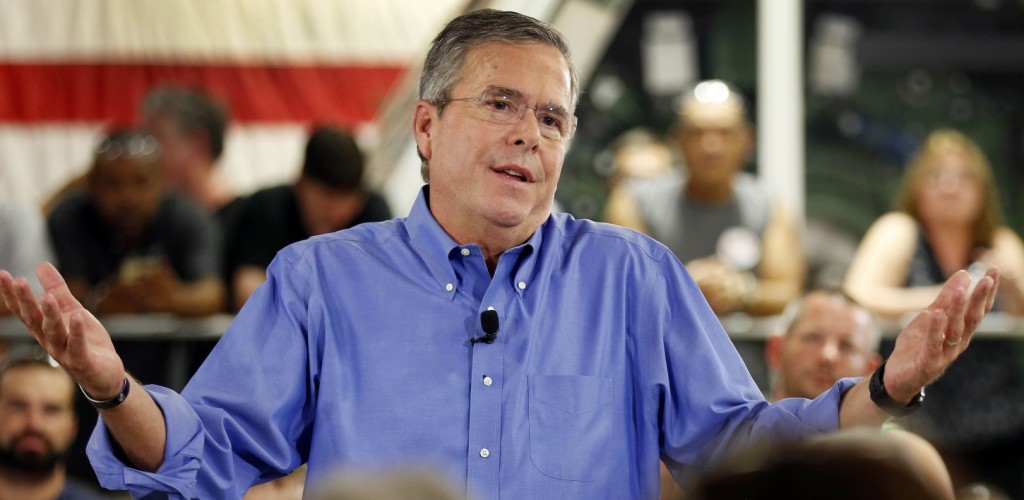
Facing single-digit polling numbers and a lack of momentum compared to other establishment rivals, Jeb Bush is succeeding on one front, by way of a major figure from the financial sector. As reported Thursday in The Wall Street Journal, former AIG CEO Maurice “Hank” Greenberg has given $10 million to the pro-Bush super PAC “Right to Rise Super USA.” In an interview with the WSJ, Greenberg would not elaborate, but did not deny making the contribution. But despite Right to Rise’s massive spending on ad buys — as much as $47 million — Bush’s numbers have done little but melt since announcing his candidacy. Consistent advertising from “Right to Rise USA” has done little to build the momentum necessary to stand out in a crowded GOP field dominated by Donald Trump, who seems to be a media magnet. Greenburg’s donation could not have arrived at a better time for Bush, writes the Journal’s Beth Reinhard. The boost comes in the weeks before high-stakes Iowa caucuses and the New Hampshire primary, where Bush and his supporters need support more than ever, if there is any hope of making headway with primary voters and move away from his recent struggles.
What the media is saying about Tuesday night’s GOP debate
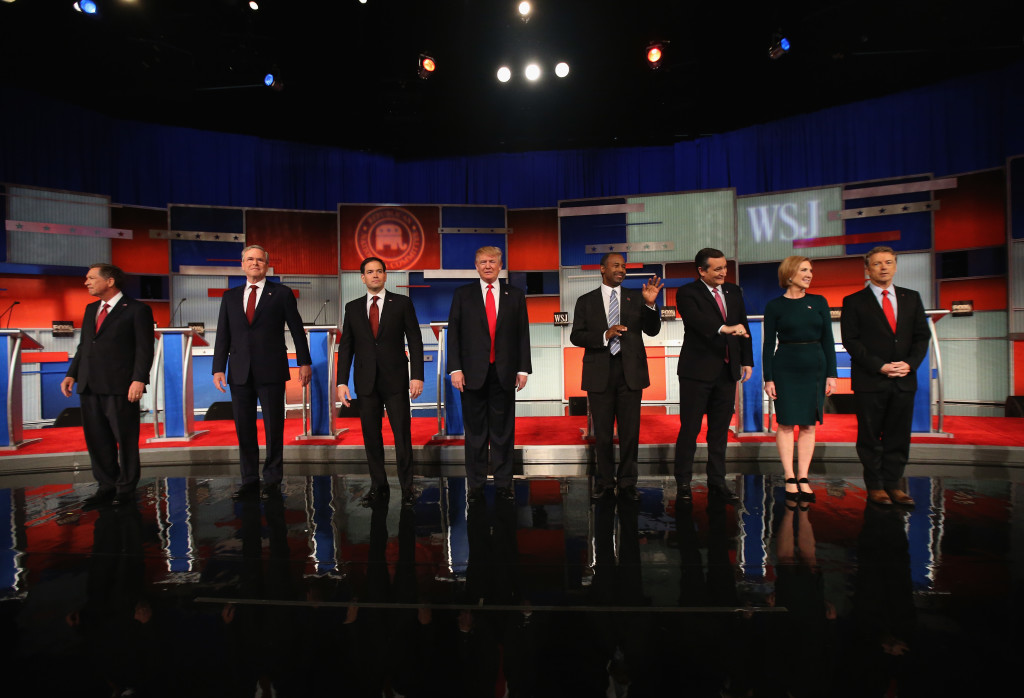
The Republican White House hopefuls took the stage in Milwaukee Tuesday night for their fourth debate face-off. Featuring the top eight candidates, the FOX Business network and Wall Street Journal GOP debate went in-depth on issues impacting the economy, including jobs, taxes, and international and domestic policy. Here’s what the media is saying about the Republican candidates’ Tuesday night performances: Jeb Bush: Frank Luntz, Fox News: Jeb Bush had one of the best responses of the night when he went after President Obama’s record … “We need to repeal every rule Obama has…” Cruz did even better when he went after Hillary Clinton for being “the embodiment of cronyism in Washington.” Chris Cillizza, The Washington Post: Bush’s first answer pledging to repeal all of President Obama’s executive actions was a very good one and tapped into Republican voters’ anger about what they perceive as unlawful overreaches of power coming out of the White House. And throughout the debate, Bush steered questions away from comparisons between himself and other GOP candidates and toward the potential matchup between him and Hillary Rodham Clinton. Bush’s strongest message — and the one he seems genuinely convinced of — is that he is the most electable candidate in the Republican field. For the first time in a debate setting, he was able to punch that message through effectively. Steve Holland and Emily Stephenson, Reuters: A steady performance by Jeb Bush in Tuesday’s Republican debate has halted the sense of desperation around his U.S. presidential campaign and may buy him time to counter the rise of chief rival Marco Rubio. Robert Garret, Dallas Morning News: For once, he stood up to Trump. “Thank you, Donald, for allowing me to speak at the debate,” Bush deadpanned. “What a generous man you are.” Bush was articulate on his tax plan, banking regulation, foreign policy and, especially, a path to citizenship for illegal immigrants. He challenged the Trump-Cruz hard line. Why, though, does one suspect with each passing debate that he’s not a red-meat Republican? Ben Carson: Robert Garret, Dallas Morning News: His canned response to a predictable question about trust fell flat. It came a week after it was disclosed he’d hyped his bio, claiming to have been offerred a West Point “scholarship.” In effect, he said, I’m an honest guy. Carson performed more strongly on his plan for a “tithing” flat tax. It would eliminate deductions for mortgage interest and charitable giving. “The fact is, people had homes before 1914,” he said. Eli Stokolos, Politico: But Ben Carson turned in his shakiest performance yet, struggling with a debate that focused more on substantive policy questions and taking up the least amount of speaking time despite his position in the center of the stage. Maeve Reston, CNN: The calm, cool and collected Ben Carson returned to the Republican presidential race on Tuesday. After a week of lashing out at the press for scrutinizing shifting aspects of his biography, Carson took a lighter touch at the GOP presidential debate sponsored by Fox Business. He brushed off questions about inconsistencies in his personal story with humor and an artful pivot to Hillary Clinton’s role in Benghazi. “Well, first of all, thank you for not asking me what I said in the 10th grade, I appreciate that,” Carson said to laughter. The Economist: Mr Carson seemed out of his depth on foreign policy. But otherwise the paediatric neurosurgeon had a relatively good debate, in spite of his soporific style. Ted Cruz: Jonathan Martin and Patrick Healy, New York Times: Mr. Cruz also argued repeatedly for big government changes, but stumbled notably when he pledged to eliminate five major federal agencies and then struggled to name them — a moment that recalled another Texan, then-Gov. Rick Perry, in a debate during the 2012 presidential race. “Five major agencies that I would eliminate: the I.R.S., the Department of Commerce, the Department of Energy, uh, the Department of Commerce and HUD, and then 25 specific programs,” Mr. Cruz said. Robert Garret, Dallas Morning News: Did we hear a Texan running for president stumble about which federal agencies he’d shutter? We did. It was no Perryesque “oops” moment, though. Cruz simply mentioned the Department of Commerce twice. Cruz went back to media-bashing. If illegal immigrants were taking journalists’ jobs, he sniped, there’d be more coverage of the economic consequences of a porous border. He was effective in warning that the GOP will lose if it’s a “party of amnesty.” Jeremy Diamond, CNN: The firebrand conservative slammed critics who dub his hardline position on illegal immigration as “anti-immigrant,” calling that “offensive”; he staked out the middle ground as Rubio and Paul argued for opposing degrees of American intervention in Middle East conflicts; and he played to his base by slamming moderate, establishment Republicans. Carly Fiorina: Robert Garret, Dallas Morning News: Fiorina’s repeated assault on “crony capitalism” burnishes the image — preposterous though it might seem for a former Hewlett Packard CEO — that she’s a populist outsider. “It’s about actually challenging the status quo called government,” she said, speaking of jobs. Her delivery is so crisp, few listeners notice when she ignores a question. Also, she got an assist when Trump whined, “Why does she keep interrupting everybody?” Jeremy Diamond, CNN: She’s back. The former Fortune 500 CEO reclaimed her spot as one of the field’s most effective and hard-hitting debaters — a quality that first hoisted her onto the main debate stage after a stand-out performance in the cycle’s first primary debate. Fiorina played to her strengths as a business executive, status as an outsider and displayed her command of the biggest foreign policy issues confronting the U.S. John Kasich: Erick Erickson, Fox News: Lastly, John Kasich is just an insufferable, angry man. Kasich tried to stand out by yelling and interrupting, but it did not work for him. He came across as a temper tantrum prone child while claiming to be the adult in the room by dismissing any new ideas. John Zogby, Forbes: John Kasich – was able to explain his experience, his success in DC and Ohio, and for being a compassionate conservative. He also carved
Bradley Byrne: Time to lift oil export ban

Last year, Russian President Vladimir Putin orchestrated a major power play in an effort to exert control over Ukraine, a sovereign nation to Russia’s west. After the citizens of Ukraine ousted their Russian-backed president, Putin sent Russian troops into Ukraine and eventually annexed a portion of Ukraine, known as Crimea. Throughout this conflict, Vladimir Putin threatened to shut off Ukraine’s energy supply unless they complied with Russian demands. This was a perfect opportunity for the United States to step in, provide Ukraine with energy resources, and assist a country who was trying to stand up against communism. Unfortunately, a 40 year old ban prevented the United States from exporting our crude oil. The ban is a relic of the past that was instituted in 1975 by President Gerald Ford in response to the Arab oil embargo. Times have clearly changed and the ban is no longer needed. This debate over lifting the oil export ban comes as the United States is producing more oil than ever before. Over the last decade, the United States has become the leading producer of oil and natural gas in the world. Unfortunately, President Barack Obama is opposed to Congress lifting the crude oil export ban because he believes the decision should be left up to the federal Department of Commerce. In other words, the Obama Administration would rather an unelected federal agency make the decision instead of the democratically-elected Congress. By standing in the way, President Obama is tying our hands both domestically and around the globe. A key national security tool is being able to ensure our allies have dependable access to affordable energy. Former Secretary of Defense Leon Panetta recently wrote in the Wall Street Journal that repealing the oil export ban is a “powerful, nonlethal tool” to help spread democracy abroad. Russia is a clear example of why the United States should repeal the ban. A number of countries like Finland and Bulgaria depend on Russia for more than 50% of their oil. In the Middle East, Iran uses its energy supply to raise revenue that can then be funneled to terrorist organizations. The United States should offer an energy alternative to these bad actors. The benefits of lifting the ban are not limited to foreign policy. In fact, there are clear economic benefits. Studies show that lifting the ban would create an additional 630,000 U.S. jobs by 2019. This economic growth would also allow manufacturers to expand and boost our gross domestic product. The Government Accountability Office also found that lifting the ban would lower gas prices right here in the United States by 1.5 cents to 13 cents per gallon. Even President Obama’s own Department of Energy found that increased oil exports would help lower gas prices at home. A recent survey found that 69% of Americans support lifting the ban, and numerous editorial boards from both conservative and liberal papers like the Wall Street Journal, Washington Post, Detroit News, and the Washington Times have called for the ban to be lifted. With this mind, I was proud to vote recently in favor of a bill to repeal the outdated oil export ban. The bill passed the House by a vote of 261 to 159, with 26 Democrats joining with the Republican majority to pass this commonsense legislation. This is clearly an issue on which Republicans and Democrats can find common ground. So, I call on President Obama to reconsider his veto threat and to look at the clear economic and national security benefits of repealing the oil export ban. It is critically important that America once again lead on the world stage. Bradley Byrne is a member of the U.S. Congress representing Alabama’s 1st Congressional District.
Jeb Bush releases ad pushing his tax cut plan
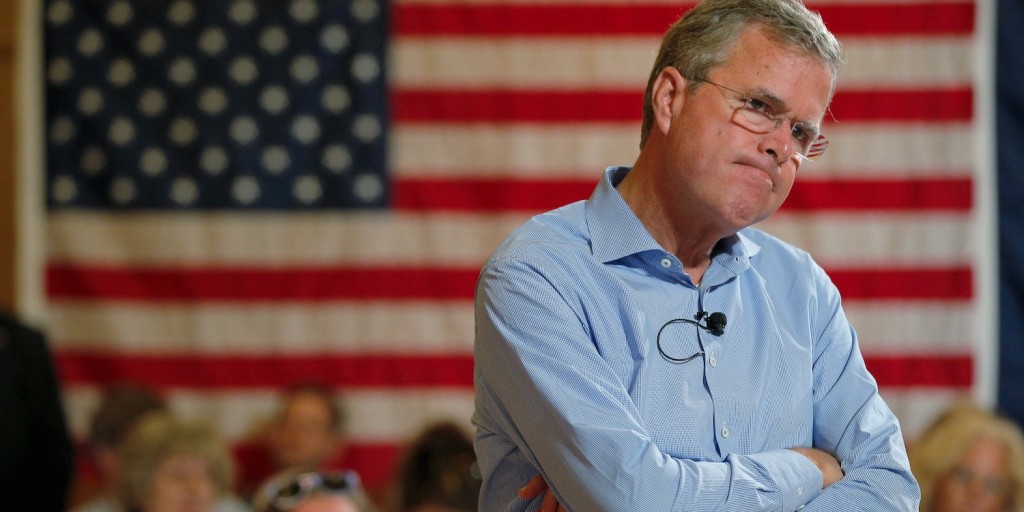
Jeb Bush unveiled his tax plan last week at a poultry-cooling equipment facility in North Carolina, and his campaign team has edited footage from that event into a new ad they released on Sunday. The plan would reduce the number of tax brackets that Americans pay into from seven to three, reducing the lowest amount that anyone would pay to 28 percent, which was the highest level when Ronald Reagan left office in 1988. Middle-class tax rates would fall to 10 percent for families with incomes up to $89,000 and to 25 precent for incomes up to $163,800. Corporate, capital gains and dividend taxes would all fall to 20 percent, while the estate tax is eliminated. Bush also would provide immediate expensing of plant and equipment for businesses, which the Tax Foundation says is the most pro-growth tax fix to create jobs and higher incomes. In a nod to the economic populism, he would also eliminate the advantage for private-equity and other high-dollar financial managers known as the “carried interest” loophole. “For years, wealthy individuals have deducted a much greater share of their income than everyone else,” Bush wrote in a Wall Street Journal op-ed. “We will retain the deductibility of charitable contributions but cap the deductions used by the wealthy and Washington special interests, enabling tax-rate cuts across the board for everyone.” Check out the video below:
The not-so-sunny truth about rooftop solar subsidies
This week The Wall Street Journal printed an op-ed “The Hole in the Rooftop Solar-Panel Craze.” The bottom line of the article is clear, “Without subsidies, rooftop solar isn’t close to cost-effective.” This is something that free market advocates have been saying for a long time. Policies that promote solar over cheaper more affordable alternatives shift cost to everyone else. Subsidies keep solar prices low enough to look like they’re more cost effective but the fact is they’re not. Here’s an eye-opening excerpt from the piece: Increasingly, utilities across the country have been calling attention to the problems with rooftop solar. They’ve been urging the pursuit of large-scale solar and other renewables, the moderation of rooftop-solar subsidies, and a restructuring of electric rates to encourage new technologies. They’ve been vilified by armies of PR consultants armed with sound bites about how utilities want to kill solar. Yet the federal subsidies for solar amount to about $5 billion a year, with more than half of that amount going to rooftop and other, more expensive, non-utility solar plants. If the federal government spent the $5 billion instead subsidizing only utility-scale solar plants, I estimate that it could increase the amount of solar power installed in this country every year by about 65%. And without net metering and all of the other nonsensical state and local subsidies for rooftop solar, we could save this country billions of dollars every year. I’m all for free-market, unsubsidized or non-mandated solar. If you want to put panels on your roof and then pay your fair share of the grid go for it. I just don’t want to pay increased costs for my neighbor’s choice. Don’t worry; my aversion for paying for other people’s personal choices isn’t limited to energy. I’m all for you driving a beautiful BMW or the latest Lexus if you can afford one, but while I drive a 12-year-old Chevy I don’t want to subsidize the cost of your new car. More specific to the energy discussion and analysis, I don’t want to pay more for you to put premium unleaded gasoline in your luxury sedan. That’s your value judgment. And I applaud your ability to make it because it’s the American way. But it’s not fair and it’s not right for the elderly person on a fixed income trying to fill up behind you to pay more for their gas because of your personal choice. That’s also the American way. We are responsible for the actions we take and the products and services we choose. Our choices should have as little impact as possible on the next person, and that’s the crux of this debate. Oh, and by the way, that regular unleaded 87 octane gasoline I’m putting in my Chevrolet meets all federal regulations for clean air. There are groups in Alabama who will cry foul at the reality of the solar situation. They’ll say that if you take the free-market position you must be for big utilities. It’s as if those who support solar subsidies and mandates think consumers are too dumb to do simple math or are too naive to question the actual motives behind those pushing for more and more tax incentives that benefit an industry that otherwise couldn’t stand on its own. I’ve heard all the arguments before but the fact is if environmentalists really wanted to create change in the utility market, they’d promote utility grade solar based on a free market.
