
Is Alabama’s hostility to gambling finally fading?

Situated firmly in the Bible Belt, Alabama has long been against legalizing gambling. That is perhaps changing, as Alabama voters nominated candidates for governor — Republican Kay Ivey and Democrat Walt Maddox — who both favor creating a state lottery. “The resistance is now openly fraying, suggesting that gambling is no longer a potent moral issue that animates voters and politicians the way it once did,” wrote New York Times reporter Alan Blinder. Christian leaders change their perspective The New York Times says the hostility toward gambling may be decreasing as Christian leaders are no longer prioritizing the issue the way they used to. “The biggest priority right now for me is reminding evangelicals of why we are opposed to gambling, which means teaching a biblical view of economic stewardship and a biblical view of concern for the poor,” Russell Moore, who leads the Southern Baptist Convention’s public policy arm and is a native of the casino-dotted Mississippi coast told the New York Times. “I’m not concerned that evangelicals are changing their position on gambling, as much as I’m concerned that there’s often a kind of fatalism that assumes that gambling is going to be part of every economy.” The gambling debate Alabama has long struggled with the issue of gambling, as lawmakers faced several bills in recent sessions of the legislature aimed at loosening gambling laws, allowing the state to take part in the lucrative gaming industry. But state lawmakers haven’t voted on legalizing gambling in nearly 19 years as recent efforts have stalled. Last it happened was under then-Gov. Don Siegelman. In August 2016, the Greene County Circuit Court sided with the state of the of Alabama over controversial seizures of electronic bingo machines at the Frontier Bingo of Knoxville. In March 2014, Alabama law enforcement officers raided several casinos in Greene County, seizing cash and more than 1,000 illegal bingo machines. The raids and subsequent ending of bingo operations were “extremely detrimental to the quality of life” in the region, according to some community leaders. Another salvo in the battle over gambling was fired by the VictoryLand Casino, which reopened despite a ruling by the Alabama Supreme Court shutting down electronic bingo operations for nearly three years, The Shorter casino has been shuttered since 2013 when a raid by the state took 1,615 gambling machines and $260,000 in cash. And in March 2016, the Supreme Court said casino owners were passing off games as “bingo,” and the machines were illegal. In November 2015, Bentley rescinded an executive order disbanding his predecessor’s gambling task force, transferring enforcement powers to the office of Attorney Gen. Luther Strange. Strange had also pushed hard against gambling, mainly daily fantasy sports (DFS) leagues operating in the state. Earlier this year, Strange had sent cease and desist letters to FanDuel and DraftKings, calling DFS “illegal gambling.” They have not operated in the state ever since, despite lawmaker’s attempts at legalizing DFS. Least gambling-addicted state For a state that’s constantly debating whether or not to institute a state lottery as a means to generate revenue, Alabama should probably consider a 2017 report that ranks the Yellowhammer State as the least gambling-addicted state in the country. In personal finance website WalletHub’s latest report of 2017’s Most Gambling-Addicted States, analysts found Alabama is neither gambling-friendly nor do its residents have the need to seek treatment for gambling addiction. Perhaps it’s simply a matter of access, but Alabamians are able to avoid the economic consequences of a gambling addiction, which affects slightly more than 2 percent of all U.S. adults. According to the Mayo Clinic, “gambling can stimulate the brain’s reward system much like drugs such as alcohol can, leading to addiction.” That addiction can lead to serious economic consequences. On a societal level, compulsive gambling costs an estimated $6 billion per year, according to a study by the National Council on Problem Gambling.
Alabama ranks 2018’s 7th least safe state in America

It’s National Safety Month, and unfortunately for Alabamians, the state is not ranked very high in safety. On Tuesday, personal finance site WalletHub ranked Alabama as the 7th least safe state in its “2018 Safest States in America” report. The site compiled its list in effort help families find the most secure places to settle down. Safety in Alabama (1= safest; 25= avg.) 47th: Murders and non-negligent manslaughters per capita 44th: Assaults per capita 40th: Loss amounts from climate disasters per capita 21st: Job security 39th: Fatal occupational Injuries per 100,000 full-time workers 43rd: Fatalities per 100 million vehicle miles of tavel 34th: Sex offenders per capita 31st: Share of uninsured population Considering safety is a basic human need required in some form or fashion, such as personal and financial protection in every part of our daily lives, Alabamians are more likely to feel secure outside of the Yellowhammer State. Methodology WalletHub analysts compared the 50 states across five key dimensions in order to find the most safe state: 1) Personal & Residential Safety, 2) Financial Safety, 3) Road Safety, 4) Workplace Safety, and 5) Emergency Preparedness. They evaluated those dimensions using 48 relevant metrics ranging from assaults per capita to unemployment rate to total loss amounts from climate disasters per capita. See how Alabama compares to the rest of the country: Source: WalletHub
Huntsville on track to become Alabama’s largest city
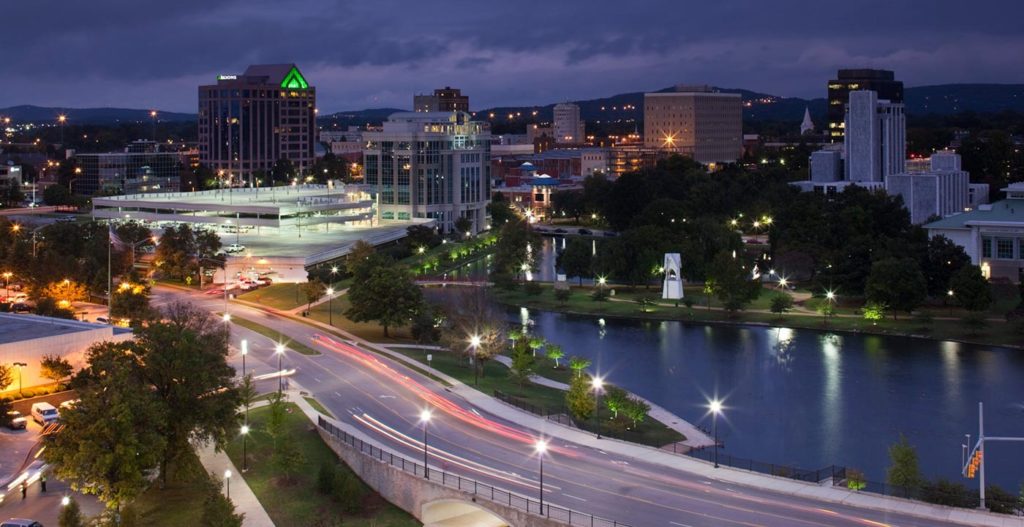
According to new population estimates released by the U.S. Census on Thursday, Huntsville, Ala. saw a surge in population growth from 2016 to 2017, adding the most people of any major Alabama city and putting the city on track to become the states largest metropolitan area, within the next six years. Census data shows that the Huntsville population has grown 8.04 percent since the last census was taken in 2010, and with companies like Toyota and Mazda joining the area, the city should experience even more growth in the coming years. But Huntsville Mayor Tommy Battle said he isn’t as concerned with the quantity of people moving into the city; but the quality of life the city has to offer its inhabitants. “We’re proud of Huntsville’s success, but for us it’s more about quality than quantity,” Battle told AL.com. “Yes, we’ve generated more than 62 percent of the jobs in the state in the past decade, and yes, that brings in more people, but more importantly for us the jobs we’ve brought in are the ones that attract the best and the brightest. That’s what matters – making your citizens quality of life better – not bigger. We’re a smart city, we’re a Google city, we’re an aerospace city. I would rather talk about that than size.” Last week, Wallethub proclaimed the city one of the top 100 places to start a career, and according to MoneyWatch, Huntsville’s has the third most technical workforce in the country with nearly 17 percent of the workforce working in a STEM field. “People are learning about Huntsville’s secret, and that’s a big reason for our continued growth,” Marketing and communications director for the Huntsville/Madison County Chamber of Commerce, Claire Aiello told AL.com. “Our city is a smart place to live, work and play. We offer a great quality of life, a highly educated workforce and good paying jobs to match.
Birmingham, Huntsville rank among America’s top 100 places to start a career

With graduation season upon us and employers planning to hire four percent more graduates from the Class of 2018 than they did from the Class of 2017, the personal-finance website WalletHub on Tuesday released its report on 2018’s Best & Worst Places to Start a Career. According to the report, which lists the top 182 U.S. cities to start a career, two Alabama cities made it into the top 100 places to start a career: Birmingham ranked 68th and Huntsville 76th. In order to determine the best cities in which to launch a career, WalletHub analysts compared the 182 cities — including the 150 most populated U.S. cities, plus at least two of the most populated cities in each state — across two key dimensions, “Professional Opportunities” and “Quality of Life.” Birmingham has far more professional opportunities than Huntsville, coming in 33rd place with Huntsville ranked 88. But when it comes to quality of life, Huntsville surpasses Birmingham. Ranked 77th, while Birmingham takes home an abysmal 158th. Meanwhile, Mobile, Ala. was ranked among the worst cities studied, coming in 172nd place — ranked 160th for professional opportunities and behind Birmingham on quality of life, ranked 171st. See how Birmingham and Huntsville compare to the rest of the country: Source: WalletHub
Three of Alabama’s Big 5 cities rank in top 4% of cities with the most student debt
College graduates owe around $1.521 trillion in student loans — a depressing figure for the many graduates who leave school with debt that exceeds their income. Among those American cities with most student loan debt are three of Alabama’s Big 5 cities. According to a new study by personal finance website WalletHub, Tuscaloosa, Montgomery and Montgomery rank among the top four percent of American cities with the most student loan debt. Taking the top spot of the most student debt in the Yellowhammer State is Tuscaloosa. Ranked in the 98th percentile of cities studied (99th percentile is the highest). Following closely behind each in the 96th percentile are Birmingham and Montgomery. To determine the cities where Americans are most over-leveraged on their college-related debts, WalletHub analysts divided the median student-loan balance in 2017 by the median earnings of adults age 25 and older with a bachelor’s degree in 2,515 U.S. cities. Here’s what they found in Alabama: Student debt in Tuscaloosa (99th percentile = highest): Median student-loan balance: $25,993 Median earnings of Bachelor’s degree holders: $41,257 Ratio of student debt to median earnings of Bachelor’s degree holders: 63.00% (98th percentile) Student debt in Montgomery (99th percentile = highest): Median student-loan balance: $25,490 Median earnings of Bachelor’s degree holders: $42,964 Ratio of student debt to median earnings of Bachelor’s degree holders: 59.33% (96th percentile) Student debt in Birmingham (99th percentile = highest): Median student-loan balance: $24,514 Median earnings of Bachelor’s degree holders: $41,335 Ratio of student debt to median earnings of Bachelor’s degree holders: 59.30% (96th percentile) Other key findings 42% of students say credit card debt worries them more than student loan debt. 63% of college students say their school is not doing enough to educate them about personal finance. 1 in 3 college students think they’ll be worse off financially than their parents. 1 in 4 students say excellent credit is worth more than a college degree.
Alabama is 2018’s third worst state for working moms
Working mothers in the Yellowhammer State deserve the hard-earned break and gifts headed to them this Mother’s Day. But unfortunately, according to a new study from personal finance site WalletHub, 2018’s Best & Worst States for Working Moms, the state ranks as the third worst state in the nation for working moms. That’s up from being the worst state in the nation in 2017. By using data from the U.S. Census Bureau, the Bureau of Labor Statistics, the and the Equal Employment Opportunity Commission, the study found several key methods to determine the scores of each state, including: child care, professional opportunities and work-life balance. The state had very low scores for all three methods, ranking 42nd in child care, 50th in professional opportunities and 43rd in Work-life balance. Alabama also ranked in the bottom five for several categories, worst day care systems, highest gender pay gap, and lowest female executive to male executive ratio. The state ranks 31st in average length of a woman’s workweek, 36.1 hours, 29th for women’s average commute time, 22.8 minutes, and 40th in terms of friendly laws for parental leave. Mobile-Democrat State Rep. Adline Clarke introduced a bill in the 2018 legislative session to close the wage gap in Alabama, but it failed to pass. When asked what else local governments could do to help support working mothers, Elizabeth F. Chapman, Associate Professor of Management at Mercer University said “ensure that there are adequate, quality, affordable child care facilities and excellent public schools. Support can also include efforts to close the wage gap between women and men, while providing development and educational opportunities for women to enter into high-paying positions.” “Governments should have a fair representation of women and men in political positions,” Chapman continued, and with 2018 being called the “Year of the Woman” in Alabama politics, we might actually see some progress for women in the state.
Alabama among states benefiting most by Trump’s tax overhaul
The Yellowhammer State is among the states reaping the most benefits from President Donald Trump‘s recently enacted federal tax overhaul. According to a new report from personal-finance website WalletHub, Alabama takes home the no. 2 spot on the list of 2018’s States Most Affected by Tax Reform. While the changes to the tax law won’t affect most Americans’ 2018 filings for the 2017 fiscal year, 2019 will be a much different story. Citizens of certain states will benefit more than others, too. In Alabama, high-income earners will benefit more so than in any other state. Average tax change in Alabama (1= benefiting the most, 25= avg.): 47th: Low-income families 15th: Middle-income families 1st: High-income families The study also concluded red states are benefiting slightly more than blue states from tax reform as red states received an average ranking of 24.17 versus blue states’ 24.62. Along with Alabama, the states reaping the most benefits from tax reform are Alaska, Tennessee, District of Columbia and Nevada. The states found to be least affected by the overhaul are West Virginia, Connecticut, New York, Maryland and New Jersey. In order to determine which states will get the best tax breaks going forward, WalletHub compared the 50 states and the District of Columbia based on the state-specific average tax change for low, middle and high-income families. Here’s how Alabama compares to the rest of the country: Source: WalletHub
New study ranks Alabama 5th worst state for women
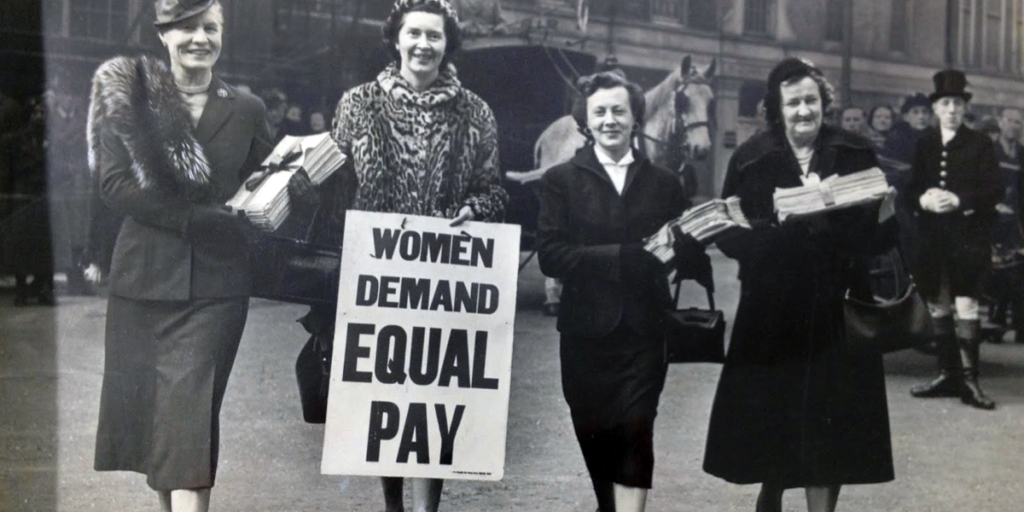
With women’s issues on the forefront of nearly every major news source in America today, and March being Women’s History Month, personal finance site WalletHub released a new study on Monday, detailing the Best and Worst States for Women in 2018. Turns out, Alabama is the 5th worst in the nation when it comes to ranking the most women-friendly states. The state came in 47th place in the nation overall, followed only by Oklahoma, Mississippi, Arkansas, and in last place, Louisiana. WalletHub’s study compared all fifty states and the District of Columbia across 23 key indicators including; unemployment rate for women, share of women-owned businesses, High School graduation rate for women, and women’s life expectancy at birth. Woman-friendliness of Alabama (1= best, 25= avg.): 29th: Median earnings for female workers (adjusted for cost of living) 42nd: Unemployment rate for women 46th: Share of women in poverty 26th: Share of women-owned businesses 47th: High school graduation rate for women 41st: Share of women who voted in 2016 presidential election 32nd: Female uninsured rate 50th: Women’s life expectancy at birth 31st: Quality of women’s hospitals 24th: Women’s preventive health care Perhaps one of the reasons for these rankings is the supreme lack of women’s representation in the Alabama Legislature. Although our governor is a female, currently only 15 percent of Alabama legislators are women. “It’s sad that we are 52 percent of the population, but we hold so few state legislative seats,” Birmingham-Democrat Sen. Linda Coleman-Madison, told AL.com. Se is one of the four females occupying a seat in Alabama’s 35 member Senate. With a bevy of women running for state office, if there was ever a year for things to change for women in Alabama, it’s 2018 According to Steve Flowers, the 2018 election year might just be the year of the woman in Alabama politics. “Currently, Kay Ivey is the favorite in the governor’s race. Twinkle is the favorite in the Lt. Governor’s race. Alice Martin or Troy King is favored in the Attorney General’s race. If you made me bet right now, I would bet that Alabama would at least have a governor and Lt. Governor that are women,” opined Flowers. Here’s a look at how Alabama compares to the rest of the country: Source: WalletHub
Alabama is the 10th most affected state by the government shutdown
The shutdown of the federal government entered its third day Monday, with little progress toward reaching a deal over the weekend. With the U.S. government closed for business for the 19th time since 1976 and a lot of blame going back and forth, the personal-finance website WalletHub on Monday released its report on the States Most & Least Affected by the 2018 Government Shutdown to add some hard data to all the rhetoric. According to their findings, Alabama is the 10th most affected state by the closing of the federal governments. Impact of the government shutdown on Alabama (1= most affected, 25= avg.): 7th: Federal contract dollars per capita 10th: Share of federal jobs 10th: % of children under CHIP 27th: Access to national parks To determine whose homes a government shutdown strikes closest to, WalletHub compared the 50 states and the District of Columbia across six key metrics. They range from each state’s share of federal jobs and contracts to the percentage of kids covered by the Children’s Health Insurance Program (CHIP). Here are the 10 states that will be hit the hardest by the shutdown: 10. Alabama Total score: 42.33 9. California Total score: 44.37 8. Oklahoma Total score: 45.65 7. Montana Total score: 47.96 6. New Mexico Total score: 48.87 5. Hawaii Total score: 51.86 4. Alaska Total score: 58.29 3. Virginia Total score: 67.67 2. Maryland Total score: 70.41 1. District of Columbia Total score: 70.42 Here’s a look at how Alabama compares to the rest of the country: Source: WalletHub The Senate is scheduled to have a key vote on Monday at noon on a bill to reopen the government and fund it for three weeks, though it’s unclear if enough Democrats will join their Republican counterparts to pass the measure.
Retire in Alabama? New analysis says state is among worst for retirees

Are you looking for the perfect place to retire? Then you may want to look some place other than the Yellowhammer State — it was ranked the tenth-worst state to retire in a new study released Tuesday. With almost 30 percent of all non-retired adults having no retirement savings or pension, the personal-finance website WalletHub released its report on 2018’s Best & Worst States to Retire. To help retirees find a safe, enjoyable and wallet-friendly place to call home, WalletHub analysts compared the 50 states across three key dimensions 1) Affordability, 2) Quality of Life and 3) Health Care, broken down further by 41 key indicators of retirement-friendliness ranging from adjusted cost of living, to mildness of weather to health care providers per capita. Here’s a look at how Alabama ranked in retiring (1= best; 25= avg.) 19th: % of population aged 65 & older 38th: Property-crime rate 38th: Health-care facilities per capita 44th: Elderly-friendly labor market 49th: Life expectancy Among the best states for retirement were Florida, Colorado, South Dakota, Iowa, Virginia, Wyoming, New Hampshire and Idaho. And the worst? Kentucky, New Jersey, Rhode Island, Mississippi, Arkansas, West Virginia, Louisiana, New Mexico and Hawaii round out the top nine (in order of ranking). See how Alabama compares to the rest of the country: Source: WalletHub The states were compared and ranked with data gleaned from various public and other records including the U.S. Census Bureau, Federal Bureau of Investigation, Council for Community and Economic Research, U.S. Bureau of Labor Statistics, Retirement Living Information Center, Genworth Financial, United Health Foundation, County Health Rankings, Centers for Disease Control and Prevention, Centers for Medicare & Medicaid Services, Charity Navigator, Gallup Healthways, GolfLink, The Tax Foundation, America’s Scenic Byways, NOAA Office for Coastal Management, U.S. News & World Report, Institute for Health Metrics and Evaluation, and WalletHub research.
Alabama cities rank among some of the worst in America to find a job

Even with the national unemployment rate at a 17-year low and employers expecting to hire 4 percent more college graduates from the Class of 2018 than from the previous graduating cohort, Alabama’s biggest cities might not be the best places for job-seekers to look for employment in 2018. According to a new study by personal financial website WalletHub, 2018’s Best Places to Find a Job, Birmingham ranked the 5th worst city in America to find a job, closely followed by Montgomery ranked 9th, and Mobile ranked 10th. Huntsville, Ala. fared little better than the state’s southern cities, ranking the 20th worst on the list. To determine the strongest local job markets in the U.S., WalletHub compared more than 180 cities across 26 key metrics. The data set ranges from job opportunities to employment growth to monthly average starting salary. Finding work in Birmingham (1= best; 91= avg.) 31st: Housing affordability 64th: Job opportunities 74th: Industry variety 74th: Avg. work and commute time 127th: Monthly average starting salary* 136th: Employment growth 162nd: % of workforce living in poverty 164th: Median annual income* 170th: Unemployment rate *Adjusted for cost of living Finding work in Montgomery (1= best; 91= avg.) 48th: Housing affordability 146th: Job opportunities 148th: Industry variety 58th: Avg. work and commute time 173rd: Monthly average starting salary* 98th: Employment growth 135th: % of workforce living in poverty 98th: Median annual income* 143th: Unemployment rate *Adjusted for cost of living Finding work in Mobile (1= best; 91= avg.) 87th: Housing affordability 157th: Job opportunities 84th: Industry variety 84th: Avg. work and commute time 138th: Monthly average starting salary* 102nd: Employment growth 134th: % of workforce living in poverty 133th: Median annual income* 170th: Unemployment rate *Adjusted for cost of living Here’s how Alabama compares to the rest of the country: Source: WalletHub
Birmingham ranks in top 15 neediest cities in America
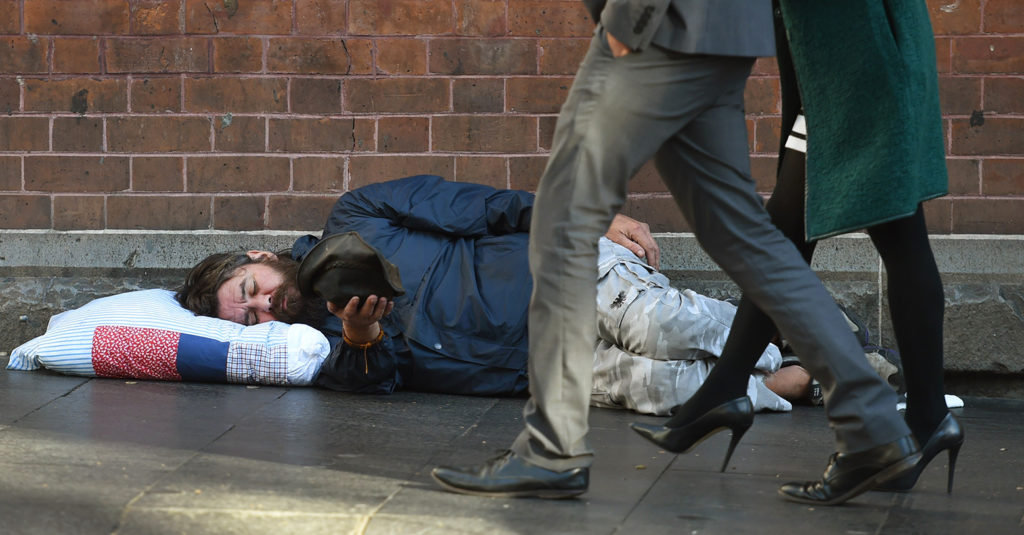
‘Tis the season of giving and giving back to those in need, and a new report reminds us we can often find those in need suffering from poverty, homelessness and hunger in our own backyards. That’s certainly the case in Birmingham, which ranked as the 14th neediest city in America in WalletHub‘s list of 2017’s Neediest Cities. But Birmingham wasn’t the only needy city in the Yellowhammer State. Not far behind the Magic City was Montgomery (24) and Mobile (25). Huntsville was the only major Alabama city to fare slightly better, ranking as the 87th neediest. f The data set ranges from child poverty rate to food-insecurity rate to uninsured rate. Neediness in Birmingham (1= neediest; 91= avg.) 5th: Child poverty rate 18th: Adult poverty rate 87th: Unemployment rate 31st: Food Insecurity rate 55th: Uninsured rate 15th: % of Homes with inadequate plumbing 86th: % of Homes with inadequate kitchens Here’s how Alabama compares to the rest of the country: Source: WalletHub Top 15 neediest cities in America: Detroit, Mich. Cleveland, Ohio Newark, N.J. Memphis, Tenn. Jackson, Miss. Atlanta, Ga. Fresno, Cali. Los Angeles, Cali. St. Louis, Mo. Indianapolis, Ind. Gulfport, Miss. Philadelphia, Pa. Brownsville, Texas Birmingham, Ala. Little Rock, Ark.
