
Wal-Mart agrees to pay state $44 million opioid settlement

Alabama Attorney General Steve Marshall announced on Monday a $44 million statewide agreement with Walmart to fund opioid abatement in Alabama’s cities and counties. This is the fifth settlement negotiated by the Attorney General to address the opioid crisis in Alabama and comes with the promptest payout for local governments. “Many of Alabama’s cities and counties have been pummeled by an epidemic that began with prescription opioids and has intensified to illicit opioids like heroin and fentanyl,” Marshall said. “In fact, this year, fentanyl and other opioids were recorded as the number one greatest drug threat in the State of Alabama. The agreement we have reached with Walmart will accelerate another funding stream to our locals, providing immediate aid to their fight against addiction and overdose.” According to the terms of the agreement, Walmart will pay $35.7 million dollars to Alabama’s local governments for the purpose of opioid abatement, while three million dollars will be dedicated to improving the connectivity and integration of Alabama’s local court systems. “I am especially pleased that Walmart has agreed to fund technological improvements for our local courts,” said Marshall. “Our district and circuit courts have borne a great share of the burden of navigating this epidemic. After conversations with judges in some of the hardest-hit areas of our state, I was determined to recover funding for this effort. Fortunately, Walmart recognized the lasting value of what we are trying to build.” The total value of the agreement is $44.2 million, less $5.5 million for attorneys’ fees. The State of Alabama was not a plaintiff in the case against Walmart. Instead, the Attorney General negotiated the statewide deal on behalf of local entities, many of which had sued Walmart as Walmart pharmacies filled many of the opioid prescriptions that were prescribed to Alabamians by unscrupulous physicians. Many Alabamians who are addicted to these pain pills have since gone to the black market to feed their addictions. According to the Centers for Disease Control and Prevention (CDC) over 107,622 Americans died from drug overdoses in 2021. 71,238 of those deaths were attributed to fentanyl which is being smuggled in mass across the lawless southern border. To date, Attorney General Marshall has sued seven opioid-related defendants and has finalized settlements valued at more than $300 million for the state and its local governments to combat the scourge of opioids across Alabama. Last week Walmart, CVS, and Walgreens agreed to pay $13.8 billion for their role nationally in the opioid crisis that has killed hundreds of thousands of Americans and left many more struggling with dependency issues. Marshall was a longtime district attorney in Marshall County. He was appointed AG by then-Gov. Robert Bentley in 2017 and elected to his own term as AG in 2018. He is running for a second term on Tuesday, where he faces Democratic nominee Tarrant Police Chief Wendell Major. The polls will open at 7:00 am and close at 7:00 pm. To connect with the author of this story, or to comment, email brandonmreporter@gmail.com.
Virus vaccine available at dozens of Alabama Walmart stores

Vaccines against COVID-19 will soon be available at more than 70 Walmart and Sam’s Club stores across Alabama, the company and the state announced. The Arkansas-based retailer said people who meet the state’s eligibility requirements can begin signing up for appointments, and the immunizations begin Friday. Part of the program is meant to get the vaccine into areas without adequate medical services, the company said. That includes the south Alabama town of Brewton, which the company said was chosen to get the vaccine because other immunization sites are so far away. More than 1,000 Walmart and Sam’s Club pharmacies in Alabama and 21 other states are receiving federal vaccine allocations this week. Gov. Kay Ivey said the state was grateful for the doses but urged patience since each store will have a limited supply of vaccine. The state on Monday expanded vaccine eligibility to include everyone 65 and older; school workers; grocery store employees; some manufacturers; public transit workers; agriculture employees; state legislators and constitutional officers. As many as 1.5 million people now qualify for shots, up from about 700,000 previously. Republished with the permission of the Associated Press.
Walmart introduces new gun restrictions but will they help?
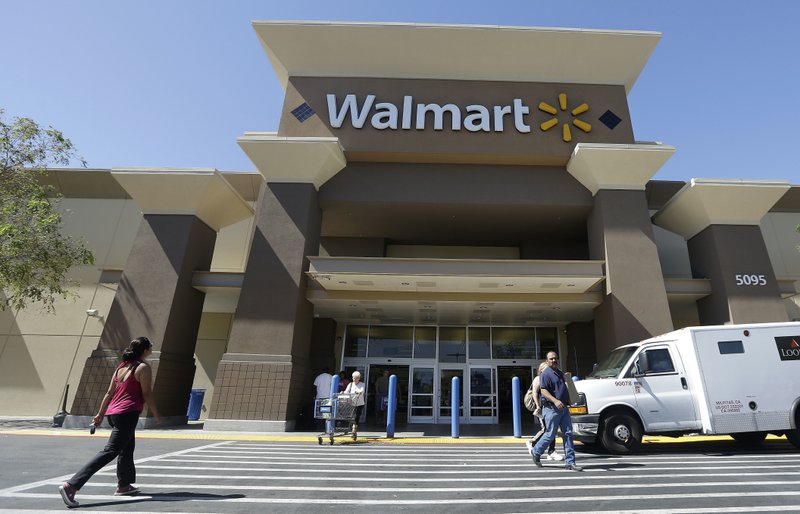
Walmart has won praise from gun control advocates for its decision to discontinue sales of certain gun ammunition and request that customers no longer openly carry firearms in its stores. But whether the moves will translate into fewer guns on the street remains an open question. The announcement Tuesday follows similar steps by other retailers responding to public pressure to restrict gun and ammunition sales. In March, Dick’s Sporting Goods said it would stop selling firearms and ammunition at 125 of its 700-plus locations. Meanwhile, Starbucks, Target, Wendy’s and most recently Kroger have also asked customers not to openly carry guns when visiting their stores. Supporters of stricter gun laws say that as the nation’s largest retailer, Walmart will have outsized influence on the gun debate, sending a strong message to Congress as well as other corporations to also take action. “Walmart deserves enormous credit for joining the strong and growing majority of Americans who know that we have too many guns in our country and they are too easy to get,” said Igor Volsky, executive director and founder of Guns Down America, in a statement. “That work doesn’t end with Walmart’s decision today. As Congress comes back to consider gun violence, Walmart should make it clear that it stands with Americans who are demanding real change.” Still, most firearms sales come from thousands of unaffiliated gun shops or gun shows, not big retail chains, so it’s not clear how much difference Walmart’s moves will make. About half of its more than 4,750 U.S. stores sell firearms, or only around 2 percent of all U.S. firearms. The Bentonville, Arkansas-based discounter said Tuesday it will stop selling handgun ammunition as well as short-barrel rifle ammunition, such as the .223 caliber and 5.56 caliber used in military style weapons, after it runs out of its current inventory. That in turn will reduce Walmart’s market share of ammunition from around 20 percent to a range of about 6 percent to 9 percent, according to a memo by the company CEO Doug McMillon. Walmart will also discontinue handgun sales in Alaska. Walmart stopped selling handguns in the mid-1990s in every state but Alaska. The latest move marks its complete exit from that business and allows it to focus on hunting rifles and related ammunition only. The retailer is further requesting that customers refrain from openly carrying firearms at its Walmart and Sam’s Club stores unless they are law enforcement officers. However, it said that it won’t be changing its policy for customers who have permits for concealed carry. Walmart says it will be adding signage in stores to inform customers of those changes.Walmart’s announcement comes just days after a mass shooting claimed seven lives in Odessa, Texas and follows two other back-to-back shootings last month, one of them at a Walmart store. Last month, a gunman entered a Walmart in El Paso, Texas, and killed 22 people with an AK-style firearm that the retailer already bans the sale of, marking the deadliest shooting in Walmart’s history. A second unrelated shooting that same day in Dayton, Ohio killed nine people . A few days before that, two Walmart workers were killed by another worker at a store in Southaven, Mississippi. “In a complex situation lacking a simple solution, we are trying to take constructive steps to reduce the risk that events like these will happen again,” according to McMillon’s memo. “The status quo is unacceptable.” The National Rifle Association posted a tweet attacking Walmart’s announcement Tuesday. “It is shameful to see Walmart succumb to the pressure of the anti-gun elites. Lines at Walmart will soon be replaced by lines at other retailers who are more supportive of America’s fundamental freedoms,” it said. Walmart took an initial step of ordering workers in stores nationwide to remove video game signs and displays that depict violence as a way to be more sensitive to customers in the aftermath of the El Paso shooting. Still, that fell well short of demands for the retailer to stop selling firearms entirely. Critics have also wanted Walmart to stop supporting politicians backed by the NRA. The retailer has long found itself in an awkward spot with its customers and gun enthusiasts. Many of its stores are located in rural areas where hunters depend on Walmart to get their equipment. Walmart is trying to walk a fine line by trying to embrace its hunting heritage while being a more responsible retailer. With its new policy on “open carry,” McMillon noted in his memo that individuals have tried to make a statement by carrying weapons into its stores just to frighten workers and customers. But there are well-intentioned customers acting lawfully who have also inadvertently caused a store to be evacuated and local law enforcement to be called to respond. Like other companies, Walmart is not enforcing an outright ban because they don’t want to put their employees in confrontational situations. Walmart says it hopes to help other retailers by sharing its best practices in background checks. And the company, which in 2015 stopped selling assault rifles like the AR-rifles used in several mass shootings, urged more debate on the reauthorization of the assault weapons ban while also calling for the government to strengthen background checks. Walmart sent letters Tuesday to the White House and the Congressional leadership seeking action on these “common sense” measures. Over the last 15 years, Walmart had expanded beyond its hunting and fishing roots, carrying items like assault rifles in response to increasing demand. But particularly since 2015, often coinciding with major public mass shootings, the company has made moves to curb the sale of ammunition and guns. Walmart announced in February 2018 that it would no longer sell firearms and ammunition to people younger than 21 and also removed items resembling assault-style rifles from its website. Those moves were prompted by the mass shooting at a high school in Parkland, Florida, that killed 17 people. In 2015, Walmart stopped selling semi-automatic weapons like the AR-15 style rifle,
Walmart opens $135 million distribution center in Alabama
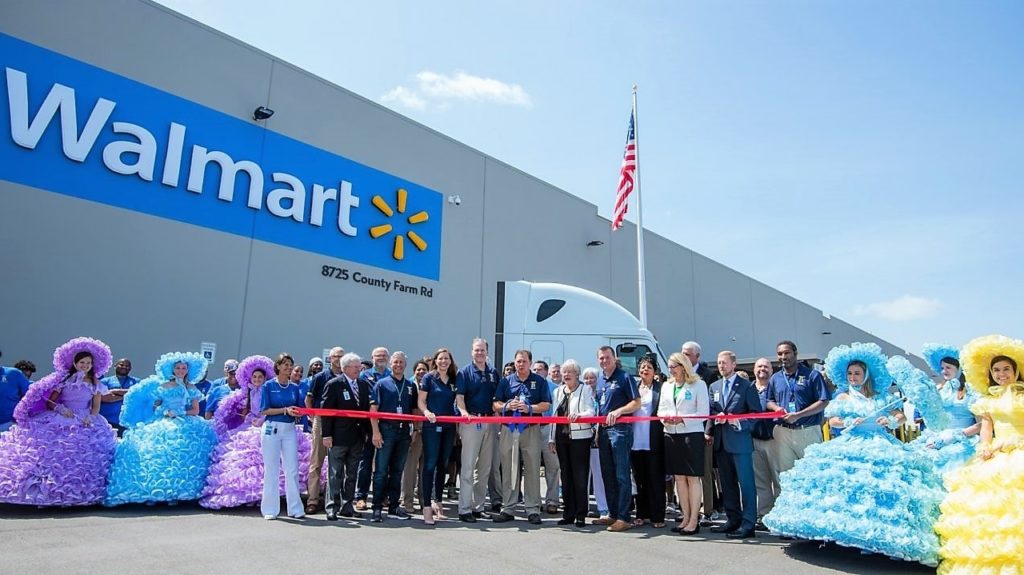
Walmart on Tuesday officially marked the opening of a $135 million distribution center in Mobile that will create 750 jobs and strengthen the retailer’s supply chain network. During a grand opening ceremony, Gov. Kay Ivey highlighted how the new facility will contribute to economic growth in the region while providing career opportunities for residents. “Walmart proves to be a great corporate partner to the state of Alabama, year after year, by investing in its stores, its employees and the surrounding community,” Ivey said. “Their commitment cannot be better proven than by the opening of this new distribution center, which, when fully operational, will provide approximately 750 quality jobs in the Mobile area. “We are grateful to Walmart for supporting the economic health of the Port City, and for the large role they play in propelling our great state forward.” The new Walmart Import Distribution Center will bring a lot of business to the Alabama State Port Authority. [Photo Credit: Walmart] ‘Warm welcome’ The Arkansas-based retailer announced plans for the 2.6 million-square-foot facility in March 2017. It will supply several regional distribution centers that support approximately 700 Walmart stores in Alabama, Mississippi and beyond. “We are excited about how this facility will help us better serve our customers across the South and beyond, while creating a positive economic impact locally through job creation and future development,” said Jeff Breazeale, Walmart vice president, direct import logistics. “We are grateful to the State of Alabama, Mobile County, the City of Mobile, the Mobile Area Chamber of Commerce and the Alabama State Port Authority for the warm welcome we have received here, and we look forward to a strong partnership with the community for years to come.” The Mobile facility employs 575 full-time workers, with plans calling for a total of 750 once it’s fully operational. Pay for associates starts at $16.50 an hour, while managers earn $50,000 a year or more and are eligible for additional annual incentives. Republished with permission from the Alabama NewsCenter.
Report: 2017 projects generate nearly 15,500 new jobs across Alabama
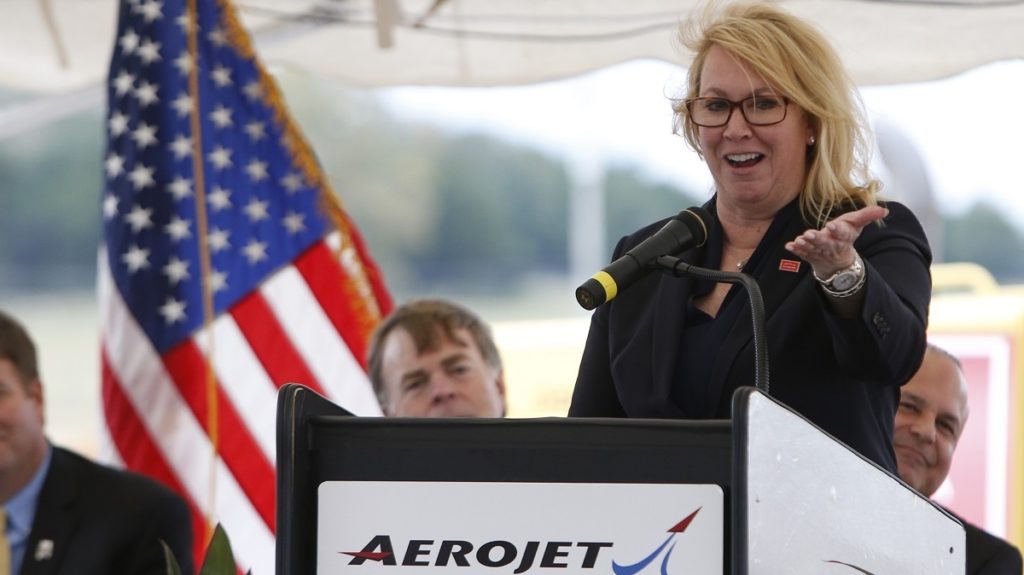
Companies planning new facilities or expanding existing operations in Alabama announced nearly 15,500 new jobs and more than $4.4 billion in capital investment during 2017, according to a comprehensive report detailing economic development activity in the state last year. The 2017 New & Expanding Industry Report, released by Gov. Kay Ivey and the Alabama Department of Commerce, shows that key industrial sectors such as automotive and aerospace continue to expand. The important forest product and food production sectors also turned in strong performances last year. “I’m committed to creating high-paying jobs that transform the lives of Alabamians and bring new levels of prosperity to communities across the state,” Ivey said. “For Alabama to continue our recent success of job creation, it’s vitally important that we continue to pursue 21st-century jobs for our people. “Momentum is on our side, and I will continue leading the charge in helping every Alabama family achieve their goals,” she said. Key findings in the report include: Alabama’s economic development efforts resulted in securing 317 projects last year, resulting in 15,465 new and future jobs and $4.41 billion in new capital investment. Those totals exceed 2016’s figures – 14,707 jobs and $4.2 billion in investment. Jefferson led all Alabama counties in job growth from 2017 projects, with 2,200 anticipated jobs. Rural Dallas County led in new capital investment in 2017, with $556.2 million. Alabama attracted foreign direct investment from 16 countries, generating 3,391 new and future jobs, as well as more than $1.2 billion in investment. South Korea was the top source for jobs, with 1,216 anticipated positions. The momentum from a solid 2017 in economic development in Alabama has carried over into this year. Already in 2018, the state has landed major projects including a Toyota-Mazda auto assembly plant that will create 4,000 jobs in Huntsville and a Kimber firearms factory that will create 366 jobs in Troy. “We’re going to be energetically pursuing more of these projects because we want to bring jobs home to Alabama,” Ivey said. Goal: job creation Greg Canfield, secretary of the Alabama Department of Commerce, said the 2017 results outlined in the report align with the priorities of Accelerate Alabama 2.0, the state’s updated economic development growth plan. “Our economic development strategy has centered on developing longstanding relationships with high-caliber companies from the U.S. and around the world so that they will put down roots in the state and grow through expansions over many years,” Canfield said. “Our primary goal is to create top-quality jobs and meaningful opportunities for people all across the state.” The largest 2017 project, based on jobs created, was Aerojet Rocketdyne’s expansion in Huntsville. The California-based company is building a new manufacturing facility for its AR1 rocket engine and relocating many functions related to its defense business to Alabama, creating a total of 800 jobs. Other large job-creating projects included: Autocar announced plans to open an assembly facility for heavy-duty work trucks in Birmingham, creating 746 jobs. Walmart announced that it will open an import distribution center in Mobile with 550 jobs. Mercedes-Benz broke ground on a Global Logistics Center in rural Bibb County that will be staffed with 502 workers. (The automaker also announced plans for a battery plant, but the dimensions of that project are not yet final.) John Soules Foods plans to create 500 jobs in Chambers County as it expands its production capacity. Project breakdown A detailed look at the 2017 New & Expanding Industry Report shows that a majority of the projects involved expansions of existing facilities in Alabama. There were 256 expansion projects last year, involving $2.7 billion in capital investment and 8,367 anticipated jobs. The 61 projects involving new facilities are expected to create almost as many jobs – 7,098, according to the report. New capital investment tied to these projects approached $1.7 billion. Following Jefferson, the top counties for project-related job creation in 2017 were: Madison: 1,828 Montgomery: 1,056 Mobile: 797 Chambers: 585 Counties ranking behind Dallas for the most new investment were: Morgan: $516.3 million Madison: $492.2 million Mobile: $339.1 million Bibb: $281.5 million Republished with the permission of the Alabama Newscenter.
How a Supreme Court case could affect your online purchases

Do businesses have to collect sales tax on purchases made on the internet? The answer right now is: It depends. But a Supreme Court case being heard Tuesday could change that. Some questions and answers about the issue and the case: Q: Who charges sales tax online right now?: A: Large retailers such as Apple, Macy’s, Target and Walmart, which have brick-and-mortar stores nationwide, generally collect sales tax from their customers who buy from them online. But other online sellers can often sidestep charging sales tax. If a business is shipping to a state where it doesn’t have an office, warehouse or other so-called physical presence, it doesn’t have to collect the state’s sales tax. Q: Where does the physical presence rule come from? A: The rule is the result of two decades-old Supreme Court cases. The court first adopted its physical presence rule on sales tax collection in a 1967 case dealing with a catalog retailer. At the time, the court was concerned in part about the burden collecting sales tax would place on the catalog company. The court reaffirmed the rule in 1992. Q: What are examples of online retailers that don’t collect sales tax nationwide? A: Jewelry website Blue Nile, pet products site Chewy.com, clothing retailer L.L. Bean, electronics retailer Newegg, internet retailer Overstock.com and home furnishings site Wayfair are among the sites that don’t collect sales tax nationwide. Sellers on eBay and Etsy, which provide platforms for smaller sellers, also don’t collect tax nationwide. Amazon.com has since 2017 collected sales tax in every state that imposes one, but third-party sellers who sell goods on the site don’t have to. Q: How does this affect states? A: States say they’re losing out on billions of dollars in tax revenue each year because of the Supreme Court’s physical presence rule. States generally require residents who weren’t charged sales tax on a purchase to pay it themselves, often through self-reporting on their income tax returns. But states have found that few people comply. States say their losses mean cuts to critical government programs and that those losses compound as online shopping grows. More than 40 states are asking the Supreme Court to get rid of the physical presence rule. Q: What is the case for businesses that don’t currently collect sales taxes nationwide? A: Sellers who defend the current rule say collecting sales tax nationwide would be costly and extraordinarily complex, especially for small sellers. Tax rates and rules vary not only by state but also by city and county. Taxes can even vary within a zip code. Sellers who want the court to keep the current rule say free or inexpensive software touted as a cure for the challenges of tax collection isn’t accurate. They say more sophisticated software is expensive and collecting taxes nationwide would also subject them to potentially costly audits. Q: Why is the Supreme Court taking up this issue now? A: South Dakota passed a law in 2016 designed to challenge the Supreme Court’s physical presence rule. The law requires out-of-state sellers who do more than $100,000 of business in the state or more than 200 transactions annually with state residents to collect and turn over sales tax to the state. It’s South Dakota’s law that’s now at the center of the case at the Supreme Court. Republished with the permission of the Associated Press.
Supreme Court hearing case about online sales tax collection
The Supreme Court is hearing arguments about whether a rule it announced decades ago in a case involving a catalog retailer should still apply in the age of the internet. The case on Tuesday focuses on businesses’ collection of sales tax on online purchases. Right now, under the decades-old Supreme Court rule, if a business is shipping a product to a state where it doesn’t have an office, warehouse or other physical presence, it doesn’t have to collect the state’s sales tax. Customers are generally supposed to pay the tax to the state themselves, but the vast majority don’t. States say that as a result of the rule and the growth of internet shopping, they’re losing billions of dollars in tax revenue every year. More than 40 states are asking the Supreme Court to abandon the rule. Large retailers such as Apple, Macy’s, Target and Walmart, which have brick-and-mortar stores nationwide, generally collect sales tax from their customers who buy online. But other online sellers that only have a physical presence in a few states can sidestep charging customers sales tax when they’re shipping to addresses outside those states. Sellers who defend the current rule say collecting sales tax nationwide is complex and costly, especially for small sellers. That complexity was a concern for the Supreme Court when it announced the physical presence rule in a case involving a catalog retailer in 1967, a rule it reaffirmed in 1992. But states say software has now made collecting sales tax easy. The case the court is hearing has to do with a law passed by South Dakota in 2016, a law designed to challenge the Supreme Court’s physical presence rule. The law requires out-of-state sellers who do more than $100,000 of business in the state or more than 200 transactions annually with state residents to collect and turn over sales tax to the state. The state wanted out-of-state retailers to begin collecting the tax and sued Overstock.com, home goods company Wayfair and electronics retailer Newegg. The state has conceded in court, however, that it can only win by persuading the Supreme Court to do away with its current physical presence rule. Republished with the permission of the Associated Press.
Chambers County solar project now serving Walmart
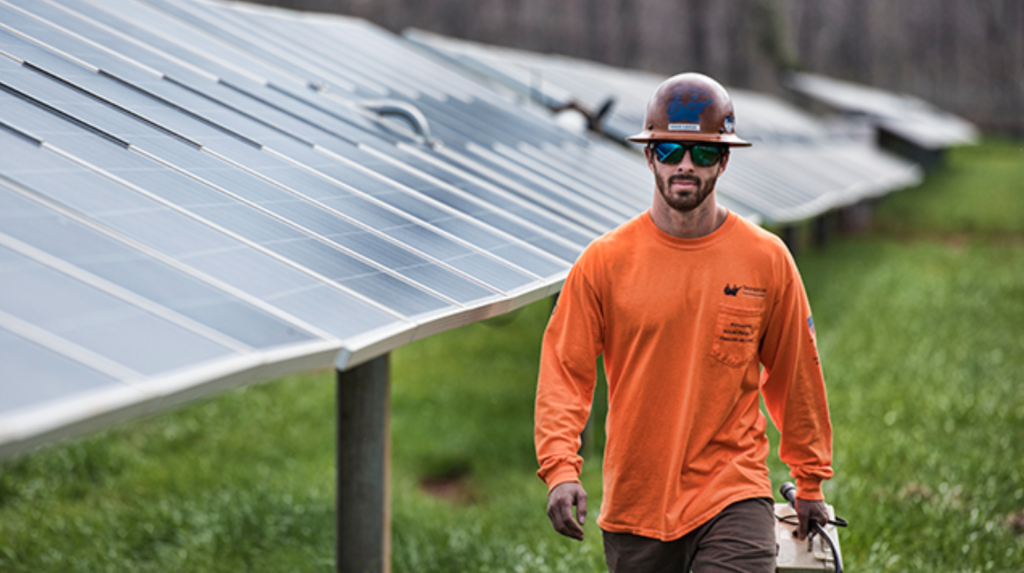
After months of construction, one of the state’s largest solar energy facilities, built in partnership with Alabama Power, is up and running in Chambers County. The 72-megawatt Alabama Solar A project sits on 1,400 rolling acres, just south of LaFayette. Seventy-two megawatts is an amount of energy equivalent to what is typically needed to power about 18,000 homes. Most of the renewable energy attributes from Alabama Solar A are going to serve Walmart through a long-term contract, to help the retailer meet its renewable energy goals. Alabama Power is marketing the remaining energy and renewable energy attributes from the project to other customers interested in supporting new renewable generation in the state. The project is operated by Boise, Idaho-based Clenera and was built by Swinerton Renewable Energy, based in San Diego. Alabama Power has a long-term power-purchase agreement with the primary owner of the facility, Houston-based Centaurus Renewable Energy, to receive all the energy and environmental attributes from the solar farm, which it can then use for its own customers or resell to others – as in the contract with Walmart. The long-term agreements make the project cost-effective for Alabama Power customers, while also supporting Walmart, one of the state’s most important retailers and employers. “This project is great for Alabama Power customers because it puts downward pressure on rates. It also helps our partner, Walmart, meet its sustainability goals. And it supports the local economy in Chambers County. It’s a win-win-win,” said John Kelley, Alabama Power’s director of Forecasting and Resource Planning. Work began in February on the $140 million project, which began generating electricity a few days ago. More than 450 people were employed at the site during peak construction, many of them local workers. The facility’s permanent employees also are being hired locally. The site, which stretches across gentle, rolling hills, uses more than 338,000 solar panels that automatically track the sun for optimum efficiency. About 57,000 pilings were installed in 4,000 rows to create the solar energy facility. The project was built with sensitivity to the environment. Detention ponds capture rainwater, helping prevent erosion and protecting water quality. Tree stumps removed during construction were ground into mulch and used across the site to also prevent erosion, until grass planted throughout the facility had a chance to sprout and grow. “It’s been a great partnership, all around,” said Vince Longo, project engineer for Swinerton, who hails from Sacramento, Calif. It was the first time Longo was involved in constructing a solar facility in the deep South. He said local officials were helpful throughout the build-out, and treated him and other out-of-towners warmly. “Southern hospitality is real,” he said. “It really has been a good relationship, with all the partners,” said Kevin Winchell, field service manager for Clenera. “Everyone has worked well together, to get this project done.” Alabama Solar A is the third solar project connected to Alabama Power to begin operating in 2017. Earlier this year, Alabama Power unveiled company-owned solar facilities on two of the state’s military bases, Anniston Army Depot and Fort Rucker. The company also has rights to the generation from two wind farms in the Midwest and markets the renewable energy attributes from all these projects to interested parties. Alabama Power also produces clean, renewable hydro power at 14 hydroelectric facilities on the Coosa, Tallapoosa and Black Warrior rivers. “Alabama Power was founded on renewable energy, and we support new renewable energy projects where they make sense for our customers,” Kelley said. He said the company is looking for other opportunities to expand its use of renewable energy for the benefit of customers and the state. Alabama Solar A – Fun Facts $140 million investment 1,400 acres More than 450 workers at peak construction 338,662 solar panels 89 miles of direct-current, underground conductors 26 miles of medium voltage underground conductor 9 miles of fiber cable 34 detention basins for protection of water quality Republished with permission from the Alabama NewsCenter.
Alabama business roundup: Headlines from across state – 6/16/16 edition

Which mega-retailer now allows Alabama shoppers to pay with their smartphones? Are you familiar with the new Alabama tax laws that could affect your company? Answers to all of these questions and more in today’s business roundup: Birmingham Business Journal: North Alabama megasite primed for development A 1,252-acre site off Powell Road in Limestone County was certified as a Tennessee Valley Authority megasite, rendering the site more competitive when it comes to large-scale development. The Chamber of Commerce of Huntsville/Madison County said the site – which sits in the same area as other recent large scale manufacturing projects like Polaris Industries and GE Aviation- can now compete globally to land a major manufacturer. It’s the first TVA certification of its kind in Alabama. “The certification is our international calling card telling global manufacturers we are open for business and a prime place for industry and jobs,” Huntsville Mayor Tommy Battle said. “This site should attract a high-tech, high-end company for worldwide customers.” The TVA has seen its certified mega sites go on to land major projects, as five of the seven certified locations have brought a collective capital investment total of more than $5 billion. AL.com: Alabama Walmart customers can now pay with their smartphones Starting today, customers at the more than 120 Walmart locations across Alabama can check out using their smartphones. Walmart Pay was already available in Arkansas, Oklahoma and Texas and today rolled out in four Southern states, including Georgia, Louisiana and Mississippi, according to company spokeswoman Molly Blakeman. The service will soon be available nationwide. Here’s how it works: Open: Visit any register, open the Walmart app and choose Walmart Pay. Activate the camera. Scan: At any time during checkout, simply scan the code displayed at the register. Walmart Pay is now connected. Done: Associate scans and bags the items and it’s done. An eReceipt will be sent to the app and can be viewed at any time. The service, first announced in December, makes Walmart “the only retailer to offer its own payment solution that works with any iOS or Android device (that can download the Walmart app), at any checkout lane, and with any major credit, debit, pre-paid or Walmart gift card – all through the Walmart mobile app,” according to a press release. “We can’t wait to hear what our customers and associates in Alabama think of Walmart Pay. The service was built to make shopping easier and faster, something we know our customers want,” said Daniel Eckert, senior vice president, Services, Walmart U.S. “Walmart Pay is a powerful addition to our app, a tool that we’re using to transform the shopping experience by seamlessly connecting our online assets and our stores for customers. The service opens the door to new and better ways we can serve the 140 million customers who shop our stores each week.” Alabama NewsCenter: Gulf Coast facility helps keep saltwater fishing afloat in Alabama Marie Head works long hours monitoring conditions and tending to the fish at the Claude Peteet Mariculture Center in Gulf Shores. She shares on-call duties on weekends and holidays for a facility that requires constant attention. Being a biologist’s aide isn’t a high-paying job, either. And there’s nowhere else she’d rather be than the hatchery that grows saltwater fish for research and stock enhancement. “I love it,” Head said with a smile. “We watch them hatch out under a microscope. We feed them and grow them so that they can be released and fishermen can fish. You get to see life right here in this building.” Despite Alabama’s small coastline, recreational saltwater fishing is a $900-million-plus business for the state. The Alabama Department of Conservation Division of Marine Resources oversees both recreation and commercial fishing in saltwater. Its hatchery spearheads efforts to make sure anglers have plenty of fish to pursue down at the Gulf. “We’re two-fold,” said Josh Neese, hatchery manager. “We do research and raise fish in mass numbers to release at one inch long.” Completed in January 2015, the hatchery, tucked away behind the Gulf Shores Airport, includes a brood stock room, a fry room, grow-out tanks, an algae room where food for the larval and fish fry is grown, a pond production area and 35 one-fifth-acre ponds, said Chris Blankenship, director of Marine Resources. Raw water lines connect the facility to the Intracoastal Waterway Canal, where it draws its brackish water, and the Gulf of Mexico at Gulf State Park Pier, where it gets its pure salt water. Read the rest of the article here. Birmingham Business Journal: Alabama tax law changes your company needs to know The Alabama Legislature concluded a relatively productive 2016 regular session on May 4. The 2017 Regular Session will begin next February, although there is a good possibility of the governor calling a special session this fall to address his prison plan, increased Medicaid funding, how to spend the BP settlement funds awarded to the state and perhaps another vote on the popular historic renovation tax credit legislation. Here is a look at the some noteworthy state tax bills that were signed into law: Act #2016-412 – Federal/State Filing Date Conformity Bill: Conforms the state income tax return filing dates for corporations and pass-through entities to the inverted filing dates established by Congress last year. CPAs across the state breathed a sigh of relief. Act #2016-345 – HSA Conformity Bill finally passes: Generally conforms the state income tax rules for creating a health savings account to the federal tax rules, but not until 2018. Beginning that year, taxpayers can claim a state income tax deduction for contributions to HSAs, limited to the annual cap imposed by federal tax law (currently $3,350 for individuals and $6,750 for families). Alabama was one of only three states with an income tax that didn’t conform to the federal rules. Many Alabama employers offer this useful option to their employees. Act #2016-406 – Additional restrictions on private auditing firms: Clarifies that the statutory ban on contingent fee audits includes unwritten agreements between counties or
Daniel Sutter: Walmart, greeters and an economics lesson
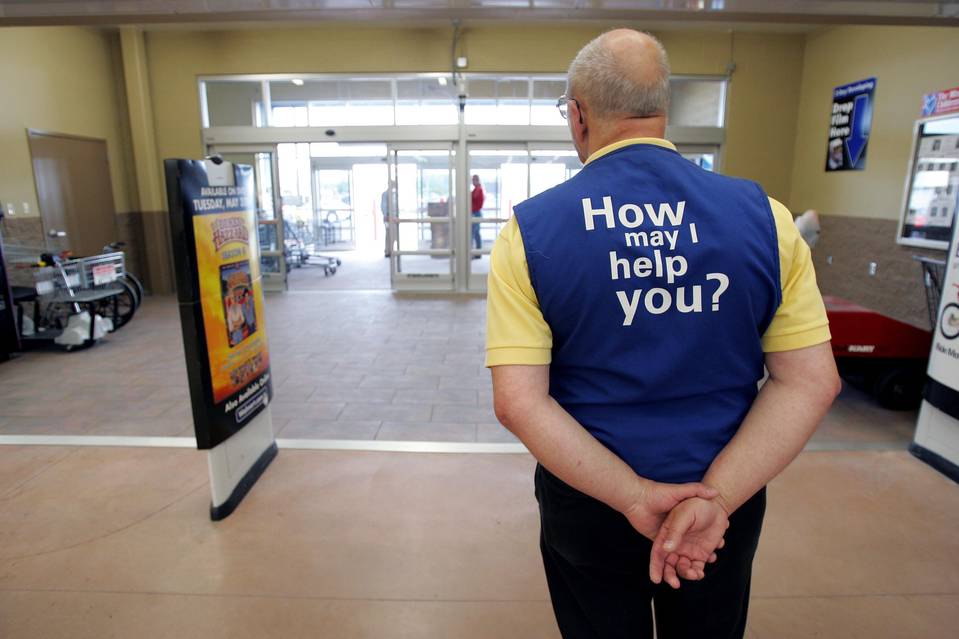
Walmart is bringing back greeters. This story illustrates the difficult decisions businesses face in a market economy, and should caution anyone against thinking that they know too much about the economy. Walmart phased out greeters in 2012 as a cost-cutting measure. Cost control and efficient management of its supply chain have been keys to Walmart’s great success. But no company ever succeeds for long by keeping costs as low as possible. A successful business will incur costs to generate value in terms of performance, product quality, and customer satisfaction. All retailers must guard against theft by customers and employees; Walmart’s losses to theft total about one percent of sales annually. But in controlling theft, retailers must not offend honest customers and employees by treating them like thieves. Walmart instituted greeters across the company after founder Sam Walton observed them at a store in Louisiana in 1980. The store used greeters to control theft: the greeters both welcomed shoppers and watched for customers trying to exit without paying for merchandise. Mr. Walton thought that this was more customer-friendly than security guards at the exits, and adopted greeters company-wide, despite the additional labor costs. Was Walmart’s decision to drop greeters in 2012 a mistake? Perhaps, but businesses must balance costs and value creation using the best available information, and with recognition that what worked yesterday may not work today. Greeters might have been an effective way to control theft in the 1980s but not 2012. Documenting the value created by any one element of a business’ operations is extremely difficult. If Walmart had evidence that greeters were no longer cost effective, I would hesitate to label their phase out a mistake. Greeters provide a concrete illustration of the enormous role of discovery in economics. Economic knowledge is very different from knowledge in the physical or natural sciences. Scientists can uncover “laws” of nature, which we know are true generally. By contrast, economic knowledge is not general and depends on local circumstances, as economist Friedrich Hayek first recognized. Economic knowledge concerns the types of products or quality of service that millions of people want and expect. Our likes and dislikes are not always logical or consistent. And because we differ, what one person perceives as reasonable security another might consider an intolerable insult. Typically we discover what creates value for people through trial and error. No scientific formula will tell a retailer that a search by security guards might offend customers and make them shop elsewhere. Wise business managers are aware that they may always discover something new and valuable even if they haven’t studied economics. Mr. Walton exhibited such an awareness when he quickly recognized how something he hadn’t thought of – greeters – could create value for his company. The pervasiveness of discovery also suggests that we should be relatively forgiving of mistakes. No business is perfect, so correcting and learning from mistakes ends up being crucial. Greeters illustrate the difficulty government experiences in controlling the costs of its programs. Cost data reveal far less than one might imagine. Consider some of the different measures retailers take to control shoplifting: security devices in the packaging, locked display cases, searches of customers’ purses and bags, security cameras, and guards. Walmart can say how much they spent on security last year, but the cost data does not reveal how much different measures reduce losses or offend customers. What is true about greeters applies throughout the economy. Choosing between greeters, security guards and security cameras may appear hard, but is child’s play compared to balancing doctors, nurses, laboratories, home health care, and the hundreds of components of our health care system. In an election year, politicians of both parties will tell us that they know how to manage the economy. But Walmart’s greeters help us understand why government struggles to control the cost of programs like Medicare and Medicaid. ••• Daniel Sutter is the Charles G. Koch professor of economics with the Manuel H. Johnson Center for Political Economy at Troy University and host of Econversations on TrojanVision.
CPI study: There are six lobbying entities to every Alabama lawmaker

A recent study by The Center for Public Integrity (CPI) has detailed the reach that national lobbying groups enjoy across the country. According to the study, 20 lobbying entities have access to all 50 states, including Aflac, the National Rifle Association (NRA), Pfizer, Wal-Mart and Anheuser-Busch. While all of these agencies and more are licensed to lobby in all 50 states, and a laundry list of others are allowed to lobby in fewer, the biggest lobbying presence in Alabama comes from the Alabama Education Association, Southern Company, AT&T, the Business Council of Alabama and Blue Cross/Blue Shield of Alabama. A lot of work has obviously been done on the part of these lobbying groups, as Alabama lawmakers have made great strides in expanding technology, providing tax breaks to small businesses and providing robust increases to the state’s education budget. But other entities are seemingly at work influencing other Alabama legislation as well. Among the bills on this week’s Senate calendar is SB296 from Sen. Tim Melson (R-Florence), which would allow epinephrine auto-injectors to be administered by “non-medical persons” at “summer camps, day care centers, restaurants, places of employment, and other entities.” The CPI study lists Mylan, Inc. among the entities which has significantly expanded operations over recent years. Mylan lobbies for EpiPens to be available in schools and restaurants and has expanded its lobbying efforts into 36 states since 2010 – one of which is Alabama. Another group which has expanded its lobbying efforts across the country is Uber Technologies, Inc., which has expanded into 35 states since 2010 and has recently seen its operations approved in Huntsville, Birmingham and Montgomery. Other groups include Excellence in Education National, which pushes for the establishment of charter schools and expanded technology access for students, and Xerox Corporation, which has pushed its state government services like speed cameras and state health insurance exchange software. Still other entities have decreased their presence across the country but remain active in Alabama. Reckitt Benckiser Group PLC has reduced its reach by four states due to a decision to allow competitors to make generic versions of its opioid-addiction drug Suboxone. SB280 from Sen. Priscilla Dunn (D-Bessemer), which also appears on this week’s calendar, would allow drug prescribers to indicate that a “generic equivalent drug” should not be used for participants in the Public Education Employees Health Insurance Program (PEEHIP). Currently, PEEHIP enrollees must receive a generic drug when available, assumedly for cost-saving purposes. While it is unclear that lobbying efforts have had any impact on the aforementioned legislation, the CPI study notes that there are six lobbying entities to every Alabama lawmaker.
