
Donald Trump will own the war in Afghanistan that bedeviled predecessors
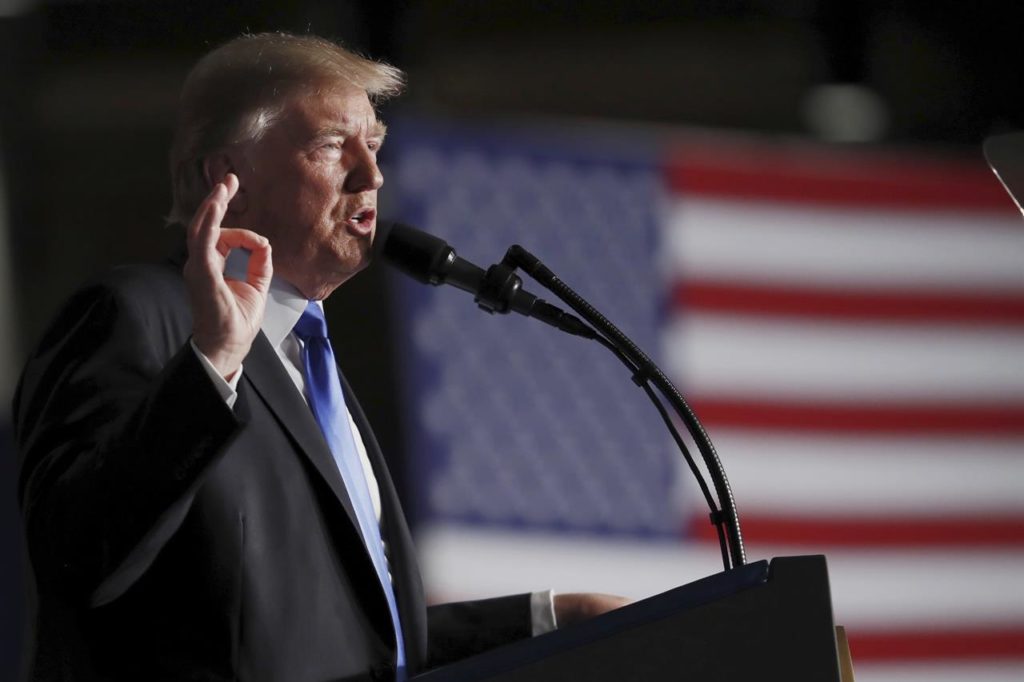
President Donald Trump is vowing to win what has seemed to be an unwinnable war. How he plans to do so is still murky despite the months of internal deliberations that ultimately persuaded Trump to stick with a conflict he has long opposed. In a 26-minute address to the nation Monday, Trump alluded to more American troops deploying to Afghanistan, but refused to say how many. He said victory would be well-defined, but outlined only vague benchmarks for success, like dismantling al-Qaida and preventing the Taliban from taking over Afghanistan. He said the U.S. would not offer Afghanistan a “blank check,” but provided no specific timetable for the end of an American commitment that has already lasted 16 years. Instead, Trump projected an “I got this” bravado that has become a hallmark of his presidency. “In the end, we will win,” he declared of America’s longest war. Victory in Afghanistan has eluded Trump’s predecessors: President George W. Bush, who launched the war after the Sept. 11, 2001 attacks, and President Barack Obama, who surged U.S. troop levels to 100,000, but ultimately failed in fulfilling his promise to bring the conflict to a close before leaving office. As Trump now takes his turn at the helm, he faces many of the same challenges that have bedeviled those previous presidents and left some U.S. officials deeply uncertain about whether victory is indeed possible. Afghanistan remains one of the world’s poorest countries and corruption is embedded in its politics. The Taliban is resurgent. And Afghan forces remain too weak to secure the country without American help. “When we had 100,000 U.S. troops in Afghanistan, we couldn’t secure the whole country,” said Ben Rhodes, who served as Obama’s deputy national security adviser. Trump offered up many of the same solutions tried by his predecessors. He vowed to get tough on neighboring Pakistan, to push for reforms in Afghanistan and to moderate ambitions. The U.S. will not be caught in the quagmire of democracy-building abroad, he said, promising a “principled realism” focused only on U.S. interests would guide his decisions. Obama promised much of the same. By simply sticking with the Afghan conflict, Trump’s plan amounts to a victory for the military men increasingly filling Trump’s inner circle and a stinging defeat for the nationalist supporters who saw in Trump a like-minded skeptic of U.S. intervention in long and costly overseas conflicts. Chief among them is ousted adviser Steve Bannon, whose website Breitbart News blared criticism Monday of the establishment’s approach to running he war. After Trump’s speech, one headline on the website read: “‘UNLIMITED WAR.” Another said: “What Does Victory in Afghanistan Look Like? Washington Doesn’t Know.” Now Trump leads Washington and that question falls for him to answer. As a candidate, he energized millions of war-weary voters with an “America First” mantra and now faces the challenges of explaining how that message translates to U.S. involvement in a war across the globe, likely for years to come. In a rare moment of public self-reflection, Trump acknowledged that his position on Afghanistan had changed since taking office and sought to sway his supporters who would normally oppose a continuation of the war. “My original instinct was to pull out,” Trump said. “But all my life I’ve heard that decisions are much different when you sit behind the desk in the Oval Office, in other words, when you’re president of the United States.” Trump pointed to “three fundamental conclusions” about U.S. interests in Afghanistan – all of which appeal to patriotism and nationalistic pride. The president said the nation needs to seek “an honorable and enduring outcome worthy of the tremendous sacrifices” made by U.S. soldiers – a line that harkened back to promises made by Richard Nixon during the 1968 campaign to bring “an honorable end” to the war in Vietnam. Trump also warned that a rapid exit would create a vacuum that terrorists like the Islamic State group and al-Qaida would fill, leading to conditions similar to before the Sept. 11, 2001, attacks. And he noted that the security threats in Afghanistan are “immense,” and made the case that it is key to protecting the U.S. The U.S. currently has about 8,400 troops in Afghanistan. Pentagon officials proposed plans to send in nearly 4,000 more to boost training and advising of the Afghan forces and bolster counterterrorism operations against the Taliban and an Islamic State group affiliate trying to gain a foothold in the country. To those U.S. service members, Trump promised nothing short of success. “The men and women who serve our nation in combat deserve a plan for victory,” he said. “They deserve the tools they need and the trust they have earned to fight and to win.” Republished with permission of The Associated Press.
Democrat wins panel vote to debate new authorization for war
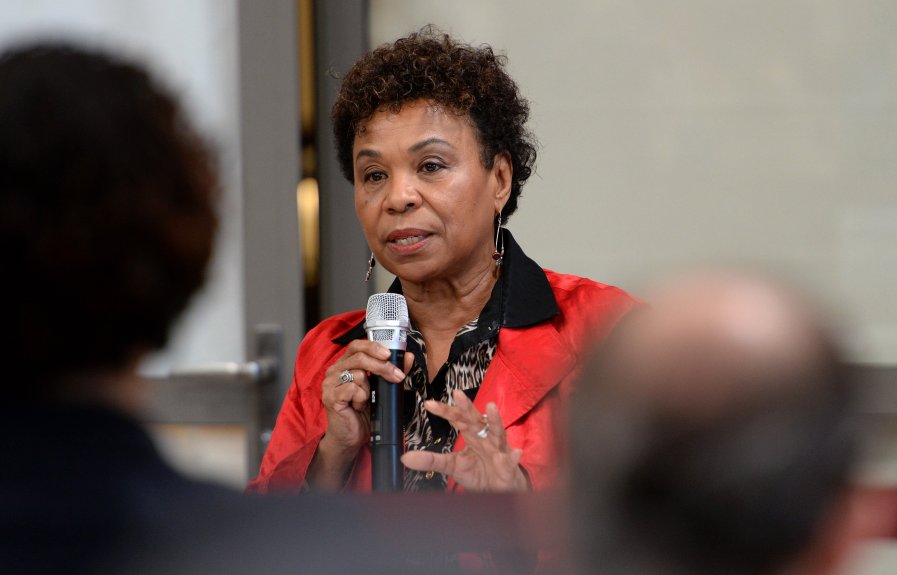
A GOP-controlled House committee unexpectedly agreed Thursday to a proposal by a strongly anti-war Democrat to force a debate on a new war authorization. The proposal would cut off the sweeping 2001 authorization to use military force against terrorism. The move by California Democrat Barbara Lee unexpectedly won voice vote approval by the House Appropriations Committee as it debated a Pentagon funding bill. Lee wants to force a debate on a new war authorization, and some Republicans agree that debate is a good idea. A surprised Lee took to Twitter to claim victory. “Whoa. My amdt to sunset 2001 AUMF was adopted,” Lee tweeted, using Washington code for authorization of military force. “GOP & Dems agree: a floor debate & vote on endless war is long overdue.” Lee’s amendment would repeal the 2001 law – which has been broadly interpreted to permit military operations beyond those contemplated at the time – 240 days after the bill is enacted, which Lee said in a statement “would allow plenty of time for Congress to finally live up to its constitutional obligation to debate and vote on any new AUMF.” The proposal has a long way to go before becoming law. For starters, it would likely be knocked out of the spending bill on procedural grounds during floor debate since spending bills technically aren’t supposed to carry policy language. The 2001 force authorization was enacted in the days after the Sept. 11 attacks to give the president greater powers to respond. It was very broadly drafted to authorize “all necessary and appropriate force against those nations, organizations, or persons he determines planned, authorized, committed, or aided the terrorist attacks that occurred on September 11, 2001.” A separate authorization for the war in Iraq was enacted just before the 2003 invasion. “It is far past time for Congress to do its job and for the speaker to allow a debate and vote on this vital national security issue,” Lee said. Republished with permission of The Associated Press.
Barack Obama legacy: Handing Donald Trump a broad view of war powers
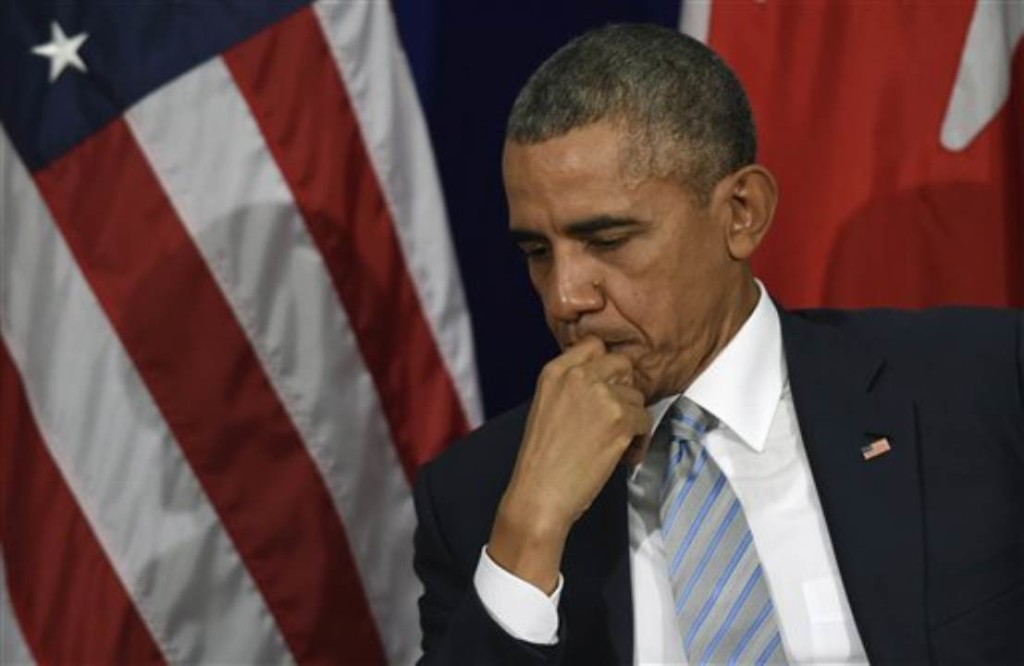
After eight years as a wartime president, Barack Obama is handing his successor an expansive interpretation of the commander in chief’s authority to wage war around the globe. And that reading has continued to grow even as Obama prepares to pass control to Donald Trump. In his final weeks in office, Obama has broadened the legal scope of the war on extremism, the White House confirmed Monday, as it acknowledged for the first that the administration now asserts it is legally justified to take on the extremist group al-Shabab in Somalia. The determination is based on an expanded application of a 9/11-era use of force authorization, a statute Obama has repeatedly leaned on to justify military operations. That rationale has raised concerns about how Trump might use Obama’s precedent to justify other overseas entanglements – without consulting Congress. The White House staunchly defends Obama’s use of military power, arguing in a detailed report Monday that all operations have been firmly grounded in domestic and international law. White House counsel Neil Eggleston called the report – the first of its kind – a demonstration of how Obama has ensured “that all U.S. national security operations are conducted within a legal and policy framework that is lawful, effective and consistent with our national interests and values.” Yet the report, which Obama said should be updated annually, also reveals how his administration has relied overwhelmingly on the 2001 authorization, which even Obama acknowledges is outdated. Though the law’s targets were al-Qaida and the Taliban, a clause in the bill includes “associated forces” of al-Qaida, in Afghanistan or beyond. That clause is now being used as a catch-all for military action in Yemen, Iraq, Syria, Somalia and Libya, the report shows, plus the basing of U.S. troops in other countries. As for al-Shabab, until recently, the U.S. determined only that its individual leaders were linked to al-Qaida, which limited targeting of those individuals. Now the broader group is included. Trump has promised a more muscular and militaristic approach to counterterrorism, occasionally using expletives to suggest he’d aggressively bomb ISIS militants, although he has been vague on details. Deborah Pearlstein, a former White House official and international law professor at Yeshiva University, said it’s likely the next administration will use Obama’s framework as its starting point. “By practice and long history, those opinions tend to stand,” she said. For Obama, the heavy reliance on 9/11-era authorities is a powerful illustration of how his campaign pledges to construct limits on the president’s war-making powers were confounded by difficulties of dealing with Congress and the pressures of rapidly evolving threats. Obama came into office aiming to reverse what he argued were the overreaches of his predecessor, George W. Bush. Obama had built a national name opposing the unpopular Iraq War and pledging safeguards to ensure mistakes in that conflict weren’t repeated. In the first days of his presidency, he signed executive orders prohibiting secret CIA “black site” prisons and ending harsh interrogation techniques considered by many to be torture. Yet Obama quickly discovered that imposing strict constraints made it harder to pursue his preferred approach to counterterrorism. Wary of major overseas entanglements, he turned increasingly to surgical, stealthy operations like drone strikes that have traditionally operated under a murky legal framework. In a nod to that approach, Obama planned to visit U.S. Special Operations Command headquarters Tuesday in Tampa, Florida, to pay tribute to special ops forces. Obama’s challenges were exacerbated by extremist groups whose attacks bear little resemblance to traditional state-versus-state warfare. Meanwhile, Congress displayed little appetite for politically controversial votes to authorize new uses of force. So even when Obama, in 2014, announced the U.S. would target ISIS with airstrikes, he said the 2001 law gave him authority because the group had grown out of al-Qaida. Months later, he asked Congress to pass a new war powers resolution to address ISIS more specifically and replace the outdated law. Congress never acted. Obama, unbowed, stuck by his legal argument that the 2001 version was still sufficient. Not everyone agrees. “If a president can’t convince Congress, as the proxy for the people, of the need to do this such that they will pass an authorization to do it, then we ought not to be using force abroad,” said Scott Roehm, vice president of the Washington-based Constitution Project. Obama did take other steps to try to strengthen the checks on a president’s military power. In 2013, he notably pulled back from impending U.S. airstrikes in Syria, and instead sought formal approval from Congress that never materialized. And under pressure from civil liberties advocates, he put in place tougher rules for drone strikes, aiming to limit civilian casualties. “It’s not a legacy that is gonna score a lot of political points. It’s imperfect,” Obama said in a recent interview with New York Magazine. But Americans will have a better idea “their president is going to have to be more accountable than he or she otherwise would have been.” Some of those details are outlined in the 61-page White House report, the most comprehensive explanation to date of the policies the Obama administration has applied for drone strikes, detention of terrorists and access by humanitarian groups like the International Committee of the Red Cross. Republished with permission of The Associated Press.
Afghanistan: The war Donald Trump and Hillary Clinton have ignored
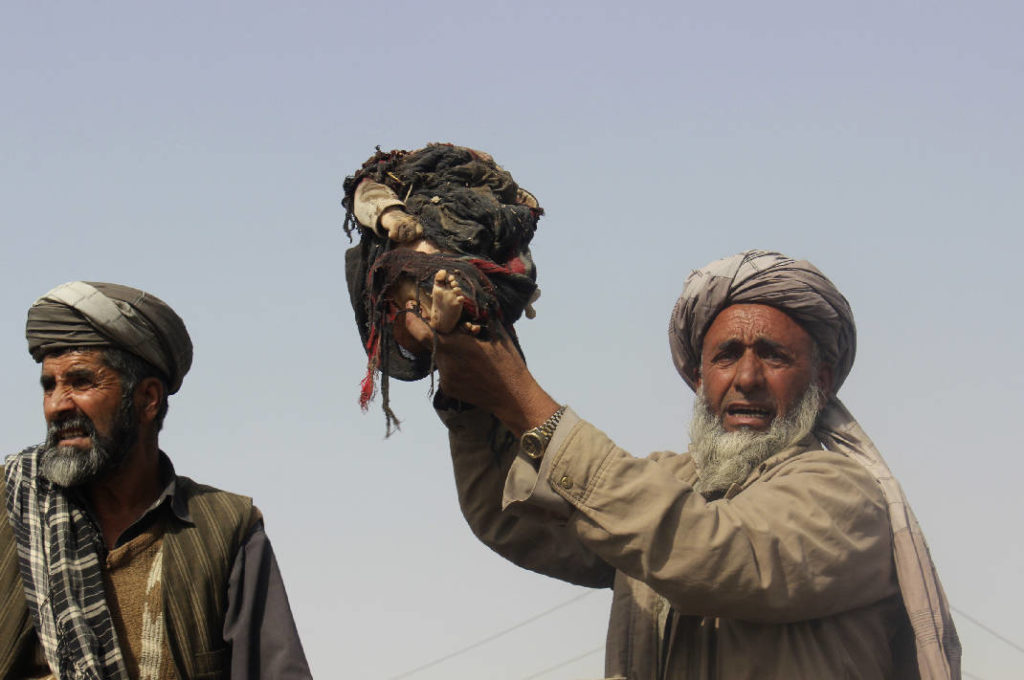
Donald Trump and Hillary Clinton have said next to nothing about how they would handle the war in Afghanistan. That’s remarkable, given the enormous U.S. investment in blood and treasure over the past 15 years – including two American deaths on Thursday – the resilience of the Taliban insurgency and the risk of an Afghan government collapse that would risk empowering extremists and could force the next president’s hands. In addition to the two service members killed on Thursday, four others were wounded while assisting Afghan forces in the northern city of Kunduz. President Barack Obama escalated the war shortly after he took office, but he fell short of his goal of compelling a political settlement between the Taliban and the Afghan government. The next president will face a new set of tough choices on Afghanistan early in his or her term, including whether to increase or reduce U.S. troop levels and, more broadly, whether to continue what might be called Obama’s minimalist military strategy. The difficulty of these choices may explain, at least in part, why Trump and Clinton have been largely silent on Afghanistan. They ignore it while campaigning; it came up only in passing during the first Trump-Clinton debate and was not mentioned at all during second and third debates. OBAMA’S FAILED MISSION If Obama’s eight-year struggle is a guide, his successor will not have an easy time disentangling the U.S. military from Afghanistan. Nor is there an obvious way in which a bigger U.S. military role could end the war. Neither Trump nor Clinton has offered more than broad clues about their intentions toward Afghanistan. Trump has called for an end to U.S. “nation-building” efforts. Clinton has said she would “deal with” the Islamic State affiliate in Afghanistan and “stem the flow of jihadists” to and from Afghanistan. Neither of the candidates’ websites, which usually go into detail on policy matters, have a mention of the U.S. military presence in Afghanistan or what to do about it. Shortly after entering the White House in 2009, Obama undertook a lengthy review of U.S. policy on Afghanistan and Pakistan with the eye toward fixing what he saw as U.S. failures there. He pushed U.S. troop levels in Afghanistan to 100,000, but the surge did not force the Taliban to the negotiating table. The war dragged on. Obama ended the U.S. combat role in December 2014 and said that by January 2017 the military would be reduced to only a “normal embassy presence.” But in October 2015 he put the skids on a full withdrawal, saying 5,500 troops would stay to support Afghan forces and to continue counterterrorism operations against al-Qaida. In July, with about 10,000 U.S. troops still there, he scrapped the 5,500 target. He pledged to keep 8,400 troops through the end of his term to continue training and advising Afghan forces and to maintain a counterterrorism mission. — AFGHANISTAN ‘AT RISK’ Washington has praised Afghan President Ashraf Ghani as a more effective U.S. partner than his predecessor, Hamid Karzai. But the political dimensions of Afghanistan’s problems are in some ways as worrisome as those on the military and security side. The so-called unity government set up in 2014 is led by Ghani and Chief Executive Abdullah Abdullah, who have been bickering since they took office. The rift has threatened to send the country further into chaos. Afghans are increasingly convinced the double-headed government cannot endure. National Intelligence Director James Clapper earlier this year told Congress that Afghanistan is “at serious risk of a political breakdown in 2016.” On the other hand, Afghan officials say the country’s progress since 2001 is often overlooked or underestimated. Hamdullah Mohib, the Afghan ambassador to Washington, in September ticked off several examples: More women are serving in government positions than at any time in Afghan history, anti-corruption measures have produced a 22 percent increase in national revenue and more rural families have access to electricity. — NO END IN SIGHT One measure of the intractable nature of the war is the language American officials have used to describe it. As far back as February 2009 the top American commander in Afghanistan said the U.S. and its Afghan partners were “at best, stalemated” against the Taliban. Seven years later, in September 2016, Gen. Joseph Dunford, chairman of the Joint Chiefs of Staff, told a congressional committee the war was “roughly a stalemate.” Just a few days after Dunford’s comments, the current commander in Afghanistan, Gen. John Nicholson, said the government and the Taliban had “reached some sort of equilibrium” on the battlefield. “This is a positive,” Nicholson said, in the sense that the government controls nearly 70 percent of the population. One might also say it’s a negative in the sense that nearly one-third of the population is NOT under government control, even after years of fighting a Taliban group that in December 2001 was seemingly defeated. There is no consensus view on how much longer the U.S. would need to keep troops there to help Afghan forces avoid defeat. The inattention to Afghanistan during the presidential campaign is seen by Stephen Walt, professor of international affairs at Harvard university, as symptomatic of Americans’ “war amnesia.” Writing for the Foreign Policy website, Walt called Afghanistan a conflict “we seem readier to forget than to end.” Republished with permission of the Associated Press.
Once lauded a peacemaker, Barack Obama’s tenure fraught with war
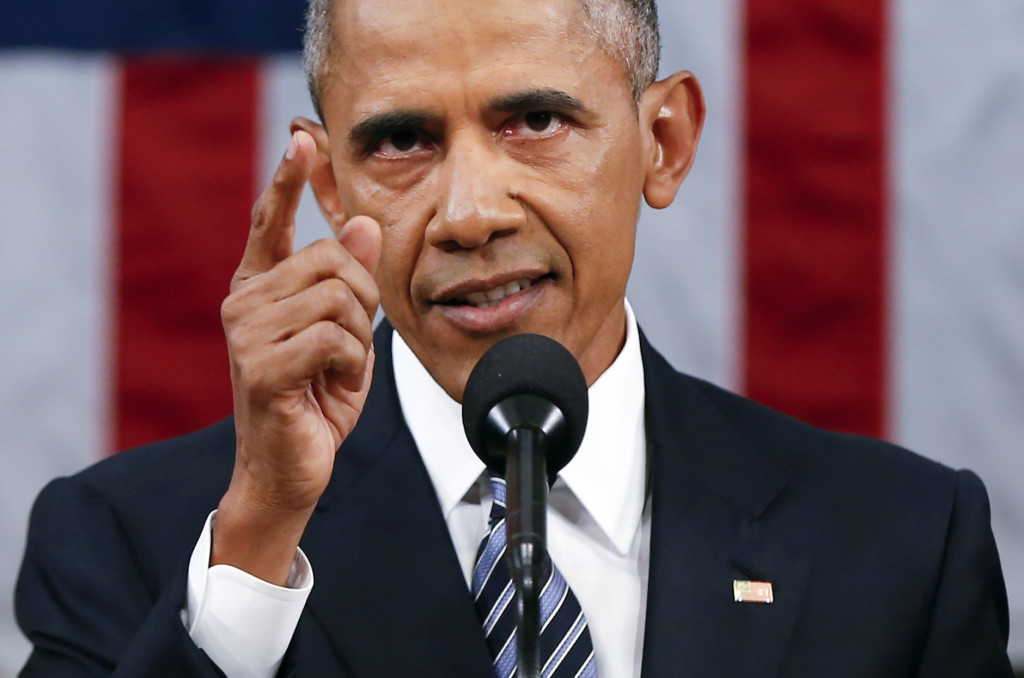
Seven years ago this week, when a young American president learned he’d been awarded the Nobel Peace Prize barely nine months into his first term – arguably before he’d made any peace – a somewhat embarrassed Barack Obama asked his aides to write an acceptance speech that addressed the awkwardness of the award. But by the time his speechwriters delivered a draft, Obama’s focus had shifted to another source of tension in his upcoming moment in Oslo: He would deliver this speech about peace just days after he planned to order 30,000 more American troops into battle in Afghanistan. The president all-but scrapped the draft and wrote his own version. The speech Obama delivered – a Nobel Peace Prize lecture about the necessity of waging war – now looks like an early sign that the American president would not be the sort of peacemaker the European intellectuals of the Nobel committee had anticipated. On matters of war and peace, Obama has proven to be a confounding and contradictory figure, one who stands to leave behind both devastating and pressing failures, as well as a set of fresh accomplishments whose impact could resonate for decades. He is the erstwhile anti-war candidate, now engaged in more theaters of war than his predecessor. He is the commander-in-chief who pulled more than a hundred thousand U.S. troops out of harm’s way in Iraq, but also began a slow trickle back in. He recoiled against full-scale, conventional war, while embracing the brave new world of drone attacks. He has championed diplomacy on climate change, nuclear proliferation and has torn down walls to Cuba and Myanmar, but failed repeatedly to broker a lasting pause to more than six years of slaughter in Syria. If there was consensus Obama had not yet earned his Nobel Peace Prize when he received it in 2009, there’s little such agreement on whether he deserves it today. “I don’t think he would have been in the speculation of the Nobel committee now, in 2016, even if he had not already won,” said Kristian Berg Harpviken, director of the Peace Research Institute of Oslo, and a close watcher of the Nobel committee. Harpviken said he views Obama’s foreign policy as more conventional and limited than he expected, particularly regarding his use of multilateral cooperation and institutions. When it comes to finding new instruments for peace, he said, “Obama has been stuck in the old paradigm.” By some sobering measures, the case for Obama the peacemaker is difficult to make. Analysts who track conflict, refugee populations, terrorist attacks and political upheaval say the world has only become less peaceful during Obama’s tenure, a trend that began just before he took office. Instances of terrorism have peaked, deaths in battle around the world are at a 25-year high, and the number of refugees and displaced people has reached a level not seen in sixty years, according to the 2016 Global Peace Index, a report on international stability produced by the nonpartisan think-tank the Institute for Economic and Peace. The researchers attributed the trends to the expanded warfare in the Middle East and North Africa and broad ripples across the region and in Europe. Few would blame global strife on one man, even the commander of the world’s most powerful military. And if anything, Obama’s legacy- and his supporters would say his strength – is a steady wariness of limits of using that military without triggering unintended consequences. That wariness has led to a seven-year debate over whether the president has used the tools of war to try to make peace too much or little. The president’s Nobel acceptance speech delivered to Oslo in December 2009 is something of a roadmap to Obama’s thinking on use of force. In it, the president affirmed his readiness to wage war in self-defense and called for new thinking on the concept of “just war.” “More and more, we all confront difficult questions about how to prevent the slaughter of civilians by their own government, or to stop a civil war whose violence and suffering can engulf an entire region,” Obama said, years before war broke out in Syria. “Inaction tears at our conscience and can lead to more costly intervention later. That’s why all responsible nations must embrace the role that militaries with a clear mandate can play to keep the peace.” Critics do not see Obama heeding his own call to responsible nations. Obama’s refusal to use force to depose Syrian President Bashar Assad, cripple his air force or more aggressively engage in diplomatic efforts to end the fighting have been a steady source of criticism. Many view it as an unfortunate overcorrection from the George W. Bush-era Iraq war. “The president correctly wanted to move away from the maximalist approach of the previous administration, but in doing so he went to a minimalist, gradualist and proxy approach that is prolonging the war. Where is the justice in that?” said Ret. Lt. Gen. Jim Dubik, a senior fellow at the Institute for the Study of War and the author of the book, “Just War Reconsider.” Obama should have worked harder to rally a coalition around a shared vision of a stable Middle East:, he believes. “Part of the requirement of leadership,” Dubik said, “is to operate in that space between where the world is and where the world ought to go.” The president’s advisers contend such criticism comes from a misguided presumption that more force yields more peace. Cold-eyed assessments of the options in Syria show no certainty of outcomes, they say, only risk of broader conflict. “In Syria, there is no international basis to go to war against the Assad regime. Similarly, there’s no clearly articulable objective as to how it would play out. What is the end that we’re seeking militarily?” said deputy national security adviser Ben Rhodes. “The president doesn’t believe you can impose order through military force alone.” But Obama has in many other cases been willing to use limited force to
GOP candidate Donald Trump goes after John McCain’s war record

Republican presidential candidate Donald Trump criticized Arizona Sen. John McCain‘s military record Saturday, saying he was a “war hero because he was captured.” Speaking at a conference of religious conservatives in Iowa, Trump was pressed on his recent description of the 2008 Republican presidential nominee as “a dummy.” McCain served as a Navy pilot during the Vietnam War. He was captured after his plane was shot down and was held more than five years as a prisoner of war. The moderator, Republican pollster Frank Luntz, described McCain as “a war hero.” Trump said McCain “is a war hero because he was captured. I like people who weren’t captured.” The comment drew some boos from the audience. During a news conference after his appearance, Trump did not apologize but sought to clarify his remarks. “If a person is captured, they’re a hero as far as I’m concerned. … But you have to do other things also,” Trump said. “I don’t like the job John McCain is doing in the Senate because he is not taking care of our veterans.” A spokesman for McCain, Brian Rogers, said no comment when asked about Trumps remarks. Trump said he avoided service in the Vietnam War through student and medical deferments, adding that he did not serve because he “was not a big fan of the Vietnam war. I wasn’t a protester, but the Vietnam war was a disaster for our country.” The comments about McCain drew rapid criticism from other 2016 hopefuls. In a statement, former Texas Gov. Rick Perry said the remarks make Trump “unfit to be commander-in-chief.” Former Florida Gov. Jeb Bush tweeted: “Enough with the slanderous attacks. @SenJohnMcCain and all our veterans – particularly POWs have earned our respect and admiration.” Louisiana Gov. Bobby Jindal, South Carolina Sen. Lindsey Graham and Wisconsin Gov. Scott Walker were also quick to condemn the remarks. Texas Sen. Ted Cruz called McCain an American war hero, but sidestepped when asked whether he would condemn the remarks. “I recognize that folks in the press love to see Republican on Republican violence,” Cruz said. “You want me to say something bad about Donald Trump or bad about John McCain or bad about anyone else and I’m not going to do it.” Trump was among 10 GOP presidential candidates on Saturday’s program for the Family Leader Summit. Republished with permission of The Associated Press.
