
Americans offer hope, prayer in assessing Donald Trump’s 100 days

They are young and old: a high school student who can’t yet vote, a Vietnam vet who did so proudly. They hail from all corners of the United States and very different walks of life: a “downhome boy” from Kentucky, a third-generation Mexican-American from Texas, a stay-at-home mom in Pennsylvania, an Iranian immigrant in Los Angeles. Some oppose Donald Trump and all that he stands for, while others voted enthusiastically for him. Now, they are critiquing him. One hundred days into Trump’s presidency, The Associated Press returned to some of the everyday people interviewed these past months to ask them to write a letter to the president, evaluating the job he’s done so far and looking ahead to the months to come. One supporter tells the president he “might have fallen a little short” — on Obamacare, in particular — but he signs off “with hope.” A refugee implores Trump to “make America more friendly,” but finds optimism in the president’s reaction to this month’s chemical attack in Syria: “I hope this is a turning point.” A Trump objector calls his biggest accomplishment “waking up the public to fight.” She offers this advice: “Make decisions with your heart. It will give you wisdom.” ___ FROM RURAL AMERICA, A SUPPORTER SEES HOPE IN TRUMP’S PRESIDENCY Alan Halsey, 31, is a self-described “downhome boy” from Campton, Kentucky, who along with his wife owns and operates The Swift Creek Courier, a weekly newspaper, and Halsey’s Country Store, “a small business that is a chunk of 1950 set down in 2017.” He says he works seven days a week to try to provide for his family, but is struggling and tired of government regulation and red tape. He wrote: ” … I supported you quite strongly in the 2016 election, even to the point of hanging one of your signs on the front door of my business. I particularly related to your foreign policy of ‘America First,’ and your promise to bring business back to the United States. So far, I believe you’re heading in the right direction on that front, and I find a glimmer of hope in the future of the American economy. “Overall, I think you might have fallen a little short on your first 100 days, but I don’t put a lot of weight into a time frame that small. Provided you serve two terms, 100 days is about 4 percent of that. I still feel that something needs to be done with the Affordable Care Act, although I’m not certain exactly what. … I know many ACA recipients that visit a doctor more than once a week, while those that purchase their own insurance wait until a visit to a doctor is imperative to their survival. There must be a middle to that scenario. …” He signed his letter: “With Hope.” ___ CANCER SURVIVOR WORRIES OVER TRUMP’S PROPOSED BUDGET CUTS, BUT PRAYS FOR HIM Rebecca Esparza, 45, is a freelance writer in Corpus Christi, Texas, who didn’t vote for Trump. A cancer survivor, Esparza fears proposed budget cuts targeting the nation’s premier medical research institution, the National Institutes of Health, will hurt Americans who battle illness. She wrote: “. I cannot say I’m proud of your work so far. However, I have respect for the Office of the President, even if I disagree with your political aspirations. … I could write a dissertation on the many ways I disagree with your political ideals. I’m a third-generation Mexican-American, born and raised in South Texas. Your disdain for Mexico, its descendants and immigrants in general troubles me. Your plan to dismantle the Affordable Care Act, leaving millions of Americans with no other health insurance options, leaves me anguished. “But what distresses me most is your plan to cut nearly $6 billion in funding from the National Institutes of Health (NIH). On Thanksgiving Day in 2001, at age 30, I was diagnosed with ovarian cancer. … Cancer research saved my life. … The cuts you are proposing are disconcerting not only for cancer survivors, but for millions of Americans suffering from many types of chronic and rare diseases. … “I’ll be praying for you, President Trump. … I pray you will carefully consider how your decisions have life or death consequences for hard-working Americans.” Read more about Esparza. ___ ONE-TIME OBAMA VOTER FEELS PRIDE IN TRUMP’S WORK Laverne Jones Gore, 60, owns an executive leadership development company in Cleveland and voted for Trump after previously supporting Barack Obama. Gore calls herself a “middle-class American who happens to be black” and says she felt uncomfortable voicing her opinion during the Obama years, but Trump has “made me proud to be an American again.” Part of a military family — her deceased husband was a Marine and a son graduated from West Point — Gore’s one hesitation these past 100 days is over Trump’s airstrike in Syria. She wrote: ” … Mr. President you have absolutely met my expectations. I actually believe you have shown a strength that I had not given to you, and I am surprised by your willingness to meet head on the challenges and resistance within your governing bodies. I don’t believe you have been afforded an opportunity to really show us what you have to offer in the form of leadership of our nation. “I have no issue with you as it relates to ‘Russians.’ I personally believe most of it was contrived. I have no issue with you as it relates to immigration. I think the issues were in need of control. … I have some reservations about your use of Twitter, but I understand the difficulty you have getting your intended message out. “Yes, you surprised me with the Syria strike and I am not certain how I feel about another war or thought of war. I am still contemplating your action and observing the responses to come from the world theatre as they absorb your full intent.” ___ ‘YOUR SIGNATURE CRUSHED MY FAMILY’ Marjan Vayghan, 32, an artist and writer
FBI reviews handling of terrorism-related tips
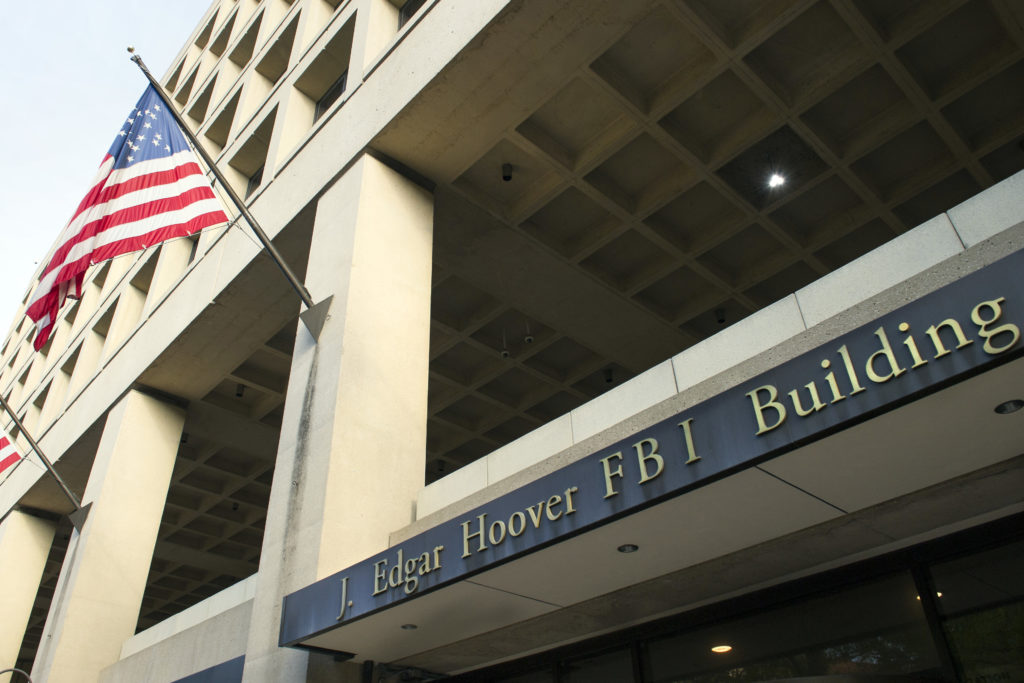
The FBI has been reviewing the handling of thousands of terrorism-related tips and leads from the past three years to make sure they were properly investigated and no obvious red flags were missed, The Associated Press has learned. The review follows attacks by people who were once on the FBI’s radar but who have been accused in the past 12 months of massacring innocents in an Orlando, Florida, nightclub, injuring people on the streets of New York City, and gunning down travelers in a Florida airport. In each case, the suspects had been determined not to warrant continued law enforcement scrutiny months and sometimes years before the attacks. The internal audit, which has not been previously reported, began this year and is being conducted in FBI field offices across the country. A senior federal law enforcement official described the review as an effort to “err on the side of caution.” The audit is essentially a review of records to ensure proper FBI procedures were followed. It’s an acknowledgment of the challenge the FBI has faced, particularly in recent years, in predicting which of the tens of thousands of tips the bureau receives annually might materialize one day into a viable threat. Investigations that go dormant because of a lack of evidence can resurface instantly when a subject once under scrutiny commits violence or displays fresh signs of radicalization. FBI Director James Comey has likened the difficulty to finding not only a needle in a haystack but determining which piece of hay may become a needle. Though there’s no indication of significant flaws in how terrorism inquiries are opened and closed, the review is a way for the FBI to “refine and adapt to the threat, and part of that is always making sure you cover your bases,” said the law enforcement official, who was not authorized to discuss the matter by name. The pace of the FBI’s counterterrorism work accelerated with the rise of the Islamic State group, which in 2014 declared the creation of its so-called caliphate in Syria and Iraq and has used sophisticated propaganda to lure disaffected Westerners to its cause. By the summer of 2015, Comey has said, the FBI was “strapped” in keeping tabs on the group’s American sympathizers and identifying those most inclined to commit violence. Social media outreach by IS has appealed to people not previously known to the FBI but also enticed some who once had been under scrutiny to get “back in the game,” said Seamus Hughes, deputy director of George Washington University’s Program on Extremism. “The fact that there was a physical location and a caliphate announced, it helped kind of drive folks back in when they might have drifted away,” Hughes said. The review covers inquiries the FBI internally classifies as “assessments” — the lowest level, least intrusive and most elementary stage of a terror-related inquiry — and is examining ones from the past three years to make sure all appropriate investigative avenues were followed, according to a former federal law enforcement official who spoke on condition of anonymity to discuss the process. Assessments are routinely opened upon a tip — whether from someone concerned about things such as activity in a neighbor’s garage, a co-worker’s comments or expressions of support for IS propaganda — and are catalogued by the FBI. The bureau receives tens of thousands of tips a year, and averages more than 10,000 assessments annually. FBI guidelines meant to balance national security with civil liberties protections impose restrictions on the steps agents may take during the assessment phase. Agents, for instance, may analyze information from government databases and open-source internet searches, and can conduct interviews. But they cannot turn to more intrusive techniques, such as requesting a wiretap or internet communications, without higher levels of approval and a more solid basis to suspect a crime or national security threat. The guidelines explicitly discourage open-ended inquiries and say assessments are designed to be “relatively short,” with a supervisor signing off on extension requests. Many assessments are closed within days or weeks when the FBI concludes there’s no criminal or national security threat, or basis for continued scrutiny. The system is meant to ensure that a person who has not broken the law does not remain under perpetual scrutiny on a mere hunch that a crime could eventually be committed. But on occasion, and within the past year, it’s also meant that people the FBI once looked at but did not find reason to arrest later went on to commit violence. In the case of Omar Mateen, that scrutiny was extensive, detailed and lengthy. Mateen, who shot and killed 49 people at an Orlando nightclub in June, was investigated for 10 months in 2013 and interviewed twice after a co-worker reported that Mateen had claimed connections to al-Qaida. As part of a preliminary investigation, agents recorded Mateen’s conversations and introduced him to confidential sources before closing the matter. That kind of investigation is more intensive than an assessment and permits a broader menu of tactics, but it also requires a stronger basis for suspicion. Mateen was questioned again in 2014 in a separate investigation into a suicide bomber acquaintance. Comey has said he has personally reviewed that inquiry’s handling and has concluded it was done well. The FBI in 2014 also opened an assessment on Ahmad Khan Rahimi, who last September was charged in bombings in Manhattan and New Jersey, based on concerns expressed by his father. The FBI said it closed the review after checking databases and travel and finding nothing that tied him to terrorism. Esteban Santiago, the man accused in the January shooting at the Fort Lauderdale, Florida, airport that killed five people, had also been looked at by the FBI. He had walked into the bureau’s office in Anchorage, Alaska, two months earlier and claimed his mind was being controlled by U.S. intelligence officials. In that case, too, the FBI closed its assessment after interviewing family members and checking databases. Each act of
Analysis: For Donald Trump, the weight of world’s problems sink in
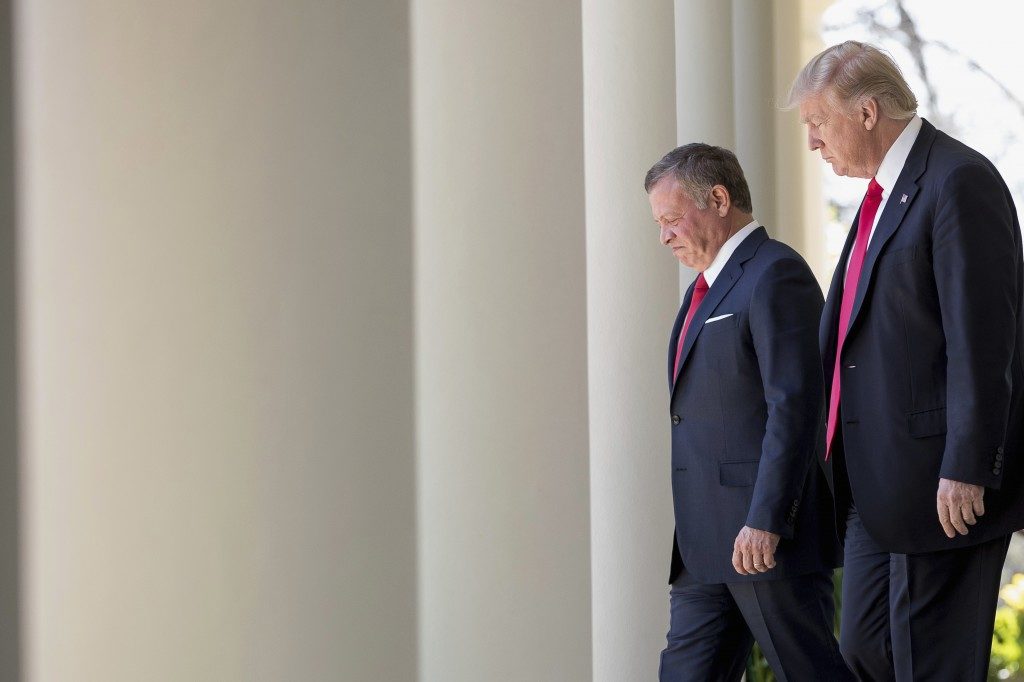
For Donald Trump, the reality of the world’s problems may be starting to sink in. Standing in the sunny White House Rose Garden, the president said Wednesday that the gruesome chemical weapons attack in Syria had changed his views on the quagmire of a conflict that he’d previously indicated he wanted to steer clear of. He mourned the deaths of the youngest victims — “innocent children, innocent babies” — and said brutality had “crossed a lot of lines for me.” “It is now my responsibility,” he declared. The president’s words were far from a declaration that he intends to act, and he notably avoided discussing what retaliatory options he would be willing to consider. Ultimately, his rhetoric may well land among the litany of harsh condemnations of Syrian President Bashar Assad by Barack Obama and other world leaders that did little to quell the six-year civil war. Yet Trump’s willingness to accept that he now bears some responsibility for a far-away conflict marked a significant moment for an “America First” president who has vowed to focus narrowly on U.S. interests. His comments also suggested a growing awareness that an American president — even an unconventional one like him — is looked to as defender of human rights and a barometer of when nations have violated international norms. The bloodshed in Syria is just one of the intractable international problems piling up around Trump. North Korea appears intent on building up its nuclear program, despite vague threats from his administration. The Islamic State group is still wreaking havoc in Iraq and Syria, while a Pentagon review of U.S. strategy sits on his desk. Trump conceded Wednesday that of all the world’s problems, the Middle East is one area he would rather avoid. His decision to at least rhetorically take a measure of responsibility was all the more striking given his frequent shoveling of blame for problems big and small onto anyone but himself. In public, he faults Obama for leaving him “a mess” and says his campaign opponent Hillary Clinton is behind the flood of revelations possibly linking his campaign to Russia. In private, he berates his staff for failing to fix the self-made crises that have battered the White House, including his pair of travel bans blocked by the courts and the failure to pass health care legislation. Trump initially took the same blame-shifting approach in addressing the deadly attack in Syria. In a short written statement Tuesday, he said the carnage was “a consequence of the past administration’s weakness and irresolution.” In 2013, Obama pulled back from planned airstrikes against Syria following a chemical weapons attack, despite having declared that the deployment of deadly gases would cross a “red line” for him. Obama’s decision was widely criticized in the U.S. and by Middle Eastern allies, and undermined later attempts to compel Assad to leave office. “The regrettable failure to take military action in 2013 to prevent Assad’s use of chemical weapons remains a blight on the Western world,” said Sen. Bob Corker, R-Tenn., the chairman of the Senate Foreign Relations Committee. Still, foreign policy officials within the Trump administration were irritated by the president’s eagerness to focus on his predecessor in his first reaction. Some wanted him to focus more on condemning Assad and highlighting U.S. resolve. Their objections did little to sway the president at the time. But just a day later, Trump appeared more willing to embrace the gravity of the situation and his new role in it. His posture may well have been impacted by the fact that his remarks in the Rose Garden came after meeting with Jordan’s King Abdullah, whose country has borne the brunt of the refugee crisis spurred by the Syrian war. Jordan is among Washington’s most important partners in the region and is significantly dependent on the United States. Abdullah, who worked closely with Obama, enthusiastically embraced Trump’s condemnation of the chemical weapons attack. During a joint news conference, he said to Trump, “I believe under your leadership we will be able to unravel this very complicated situation.” Eliot Cohen, a Trump critic who served in the State Department under President George W. Bush, said that whether Trump intended to or not, he now has put himself in the same position as Obama, raising the stakes for action in Syria, perhaps without having thought out whether he plans to follow through. “The deep irony here is you may see a lot of the same failures that the Obama administration had except delivered with a different style,” Cohen said. Republished with permission of The Associated Press.
World jittery about Donald Trump’s ‘America first’ inaugural speech

President Donald Trump‘s inaugural speech promised “America first” policy led by a forceful executive, in contrast to the coalition building and international conferences which have featured strongly in past administrations. The billionaire businessman and reality television star — the first president who had never held political office or high military rank — promised to stir a “new national pride” and protect America from the “ravages” of countries he says have stolen U.S. jobs. “This American carnage stops right here,” Trump declared. In a warning to the world, he said, “From this day forward, a new vision will govern our land. From this moment on, it’s going to be America first.” A look at some reactions from around the world: ___ AFGHANS DISAPPOINTED BUT HOPEFUL Like many in the Afghan capital of Kabul, restaurant owner Mohammad Nahim watched the presidential inauguration ceremonies but was disappointed to not hear any mention of Afghanistan. “Trump did not mention a word about Afghanistan in his speech and the salaries of the Afghan army and police are paid by the U.S.,” he said. He added that if the U.S. stops helping Afghanistan, “our country will again become a sanctuary to terrorists. I hope Trump will not forget Afghanistan.” Mohammed Kasim Zazi, a shopkeeper whose home is in eastern Afghanistan’s Khost province, where the feared Haqqani network is prominent, said he expected Trump to stay focused on Afghanistan. “Trump said he will finish the terrorists in the world and that has to mean that Afghanistan will remain in the sights of the U.S.” said Zazi. Chief Executive Abdullah Abdullah said he was encouraged by Trump’s speech to soldiers in Bagram. “There he announced his support to the troops and the continuation of support for their troops here and strengthening their troops, which is a good and elegant step and I am sure that our cooperation in other areas will continue as well.” ___ SPEECH RESONATES IN MEXICO Perhaps no country was watching the speech more closely than Mexico. Trump has made disparaging remarks about immigrants who come to the United States illegally and sought to pressure companies not to set up shop in Mexico by threatening a border tariff on goods manufactured there and exported to the United States. So Trump’s talk of “protect(ing) our borders,” ”America first” and “buy American and hire American” had particular resonance in America’s southern neighbor. Ricardo Anaya Cortes, president of the conservative opposition National Action Party, called for “the unity of all Mexicans, unity in the face of this protectionist, demagogic and protectionist speech we just heard. Unity against that useless wall, against deportations, against the blockade of investment.” “The challenge is enormous. … We demand the federal government leave aside tepidity, that it tackle with absolute firmness and dignity the new relationship with the United States,” Anaya said. The United States is by far Mexico’s largest commercial partner, buying some 80 percent of its $532 billion in exports in 2015. Mexico is the second-largest market for U.S. exports. “At least the word ‘Mexico’ was not heard in the speech. Nevertheless one can expect the United States to launch a hyper-protectionist project,” said Ilan Semo Groman, a researcher at Iberoamericana University. If Trump truly moves to block or drive away U.S. investment in Mexico, Semo said Mexico should focus its commercial efforts on other countries. “There are very clear possibilities,” Semo said. Mexican President Enrique Pena Nieto sent three tweets after Trump’s inaugural speech Friday: — “I congratulate @realDonaldTrump on his inauguration. We will work to strengthen our relationship with shared responsibility.” — “We will establish a respectful dialogue with the government of President @realDonaldTrump, to Mexico’s benefit.” — “Sovereignty, national interest and the protection of Mexicans will guide the relationship with the new government of the United States.” ___ PAKISTAN WORRIES ABOUT MUSLIM COMMENTS A group of retired government officials gathered after morning prayers for a walk in a sprawling park in the heart of the federal capital of Islamabad and the topic of their conversation was President Trump’s inaugural speech. They expressed concern that Trump would target the Islamic world, particularly Pakistan, because of his campaign rhetoric about Muslims as well as his inaugural speech in which he promised to eradicate Islamic terrorism worldwide. Pakistan has often been accused of harboring militant insurgents and declared terrorist groups that have targeted neighboring India, against whom Pakistan has fought three wars, as well as Afghanistan. Pakistan denies the charges. “Likely there is more trouble in store for the Islamic world and our country will take the most brunt of the harsh treatment from President Trump administration,” said Mohammad Afzal. His sentiments were echoed by Shafiq Khan, who said “the one main thing that the new president mentioned about the world outside America is to tackle Islamic radicalism and that should be the matter of concern for all of us.” Amanaullah, a school teacher in Islamabad, feared Trump’s reference to eliminating radical Islamic terrorism. “I think under this name he wants to malign and eliminate Islam,” he said. Umair Khan, an engineer, said of Trump: “Let him taste the burden of government and get settled, I am sure he will calm.” ___ CONCERN IN TOKYO Some Tokyo residents are worried that Trump’s “America first” policy will usher in an era of populism and protectionism at the expense of the rest of the world. Tadashi Gomibuchi, who works in the manufacturing industry, recorded Trump’s inauguration speech overnight as he was keen to hear what the new president had to say. “Trump is trying to make big changes to the way things are. Changes are good sometimes, but when America, the most powerful, loses stability … it’s a grave concern,” he said. “If you take his words literally, it may destabilize the world going forward and I’m really worried. I hope things will lead to a soft landing.” Retiree Kuninobu Inoue, who lived in the U.S. during the 1990s, is concerned about trade frictions between Japan and the U.S, citing Trump’s decision
Cuba’s Fidel Castro, who defied U.S. for 50 years, dies at 90

Former President Fidel Castro, who led a rebel army to improbable victory in Cuba, embraced Soviet-style communism and defied the power of 10 U.S. presidents during his half-century rule, has died at age 90. With a shaking voice, President Raul Castro said on state television that his older brother died at 10:29 p.m. Friday. He ended the announcement by shouting the revolutionary slogan: “Toward victory, always!” Castro’s reign over the island-nation 90 miles (145 kilometers) from Florida was marked by the U.S.-backed Bay of Pigs invasion in 1961 and the Cuban Missile Crisis a year later that brought the world to the brink of nuclear war. The bearded revolutionary, who survived a crippling U.S. trade embargo as well as dozens, possibly hundreds, of assassination plots, died 10 years after ill health forced him to hand power over to Raul. Castro overcame imprisonment at the hands of dictator Fulgencio Batista, exile in Mexico and a disastrous start to his rebellion before triumphantly riding into Havana in January 1959 to become, at age 32, the youngest leader in Latin America. For decades, he served as an inspiration and source of support to revolutionaries from Latin America to Africa. His commitment to socialism was unwavering, though his power finally began to fade in mid-2006 when a gastrointestinal ailment forced him to hand over the presidency to Raul in 2008, provisionally at first and then permanently. His defiant image lingered long after he gave up his trademark Cohiba cigars for health reasons and his tall frame grew stooped. “Socialism or death” remained Castro’s rallying cry even as Western-style democracy swept the globe and other communist regimes in China and Vietnam embraced capitalism, leaving this island of 11 million people an economically crippled Marxist curiosity. He survived long enough to see Raul Castro negotiate an opening with U.S. President Barack Obama on Dec. 17, 2014, when Washington and Havana announced they would move to restore diplomatic ties for the first time since they were severed in 1961. He cautiously blessed the historic deal with his lifelong enemy in a letter published after a month-long silence. Obama made a historic visit to Havana in March 2016. Carlos Rodriguez, 15, was sitting in Havana’s Miramar neighborhood when he heard that Fidel Castro had died. “Fidel? Fidel?” he said, slapping his head in shock. “That’s not what I was expecting. One always thought that he would last forever. It doesn’t seem true.” “It’s a tragedy,” said 22-year-old nurse Dayan Montalvo. “We all grew up with him. I feel really hurt by the news that we just heard.” Fidel Castro Ruz was born Aug. 13, 1926, in eastern Cuba’s sugar country, where his Spanish immigrant father worked first recruiting labor for U.S. sugar companies and later built up a prosperous plantation of his own. Castro attended Jesuit schools, then the University of Havana, where he received law and social science degrees. His life as a rebel began in 1953 with a reckless attack on the Moncada military barracks in the eastern city of Santiago. Most of his comrades were killed and Fidel and his brother Raul went to prison. Fidel turned his trial defense into a manifesto that he smuggled out of jail, famously declaring, “History will absolve me.” Freed under a pardon, Castro fled to Mexico and organized a rebel band that returned in 1956, sailing across the Gulf of Mexico to Cuba on a yacht named Granma. After losing most of his group in a bungled landing, he rallied support in Cuba’s eastern Sierra Maestra mountains. Three years later, tens of thousands spilled into the streets of Havana to celebrate Batista’s downfall and catch a glimpse of Castro as his rebel caravan arrived in the capital on Jan. 8, 1959. The U.S. was among the first to formally recognize his government, cautiously trusting Castro’s early assurances he merely wanted to restore democracy, not install socialism. Within months, Castro was imposing radical economic reforms. Members of the old government went before summary courts, and at least 582 were shot by firing squads over two years. Independent newspapers were closed and in the early years, homosexuals were herded into camps for “re-education.” In 1964, Castro acknowledged holding 15,000 political prisoners. Hundreds of thousands of Cubans fled, including Castro’s daughter Alina Fernandez Revuelta and his younger sister Juana. Still, the revolution thrilled millions in Cuba and across Latin America who saw it as an example of how the seemingly arrogant Yankees could be defied. And many on the island were happy to see the seizure of property of the landed class, the expulsion of American gangsters and the closure of their casinos. Castro’s speeches, lasting up to six hours, became the soundtrack of Cuban life and his 269-minute speech to the U.N. General Assembly in 1960 set the world body’s record for length that still stood more than five decades later. As Castro moved into the Soviet bloc, Washington began working to oust him, cutting U.S. purchases of sugar, the island’s economic mainstay. Castro, in turn, confiscated $1 billion in U.S. assets. The American government imposed a trade embargo, banning virtually all U.S. exports to the island except for food and medicine, and it severed diplomatic ties on Jan. 3, 1961. On April 16 of that year, Castro declared his revolution to be socialist, and the next day, about 1,400 Cuban exiles stormed the beach at the Bay of Pigs on Cuba’s south coast. But the CIA-backed invasion failed. The debacle forced the U.S. to give up on the idea of invading Cuba, but that didn’t stop Washington and Castro’s exiled enemies from trying to do him in. By Cuban count, he was the target of more than 630 assassination plots by militant Cuban exiles or the U.S. government. The biggest crisis of the Cold War between Washington and Moscow exploded on Oct. 22, 1962, when President John F. Kennedy announced there were Soviet nuclear missiles in Cuba and imposed a naval blockade of the island. Humankind held its
Updates from the 1st presidential debate

The Latest on the first of three presidential debates between Democrat Hillary Clinton and Republican Donald Trump (all times EDT): 10:45 p.m. Both candidates concluded the first presidential debate by saying they will accept the outcome if the other wins. Hillary Clinton spoke directly to viewers and said, “It’s not about us, it’s about you.” Donald Trump initially dodged the same question, saying he would make a “seriously troubled” America “great again.” He added: “I’m going to be able to do it. I don’t believe Hillary Clinton will.” But Trump finished his answer by saying that if Clinton wins, “I will absolutely support her.” ___ 10:43 p.m. Hillary Clinton is punching back at Donald Trump’s assertions that she doesn’t have the “stamina” to be president. Trump has questioned whether Clinton has the physical fitness to be president and he repeated the criticism to her directly during the debate. Clinton’s response? Trump shouldn’t talk about stamina until he’s tried out the busy schedule she kept up as secretary of state. Trump didn’t answer moderator Lester Holt’s original question about his past comments that Clinton doesn’t have the “presidential look.” Clinton suggested the remarks were about gender, and she reminded the crowd of Trump’s past comments calling women “pigs” and other derogatory names. ___ 10:42 p.m. Donald Trump says NATO needs to “go into the Middle East with us” to combat the Islamic State group. And he is taking credit for NATO focusing resources on combating terrorism. In fact, the alliance agreed in July to contribute aircraft and conduct training in Iraq and has increased intelligence coordination there. And NATO set up an anti-terrorism program in 2004 — years before Trump criticized them as a presidential candidate. Earlier this year, Trump criticized NATO for not focusing on terrorism. He said that afterward, he saw an article reporting that NATO was opening a new, major anti-terrorism division. He said Tuesday that NATO’s action was “largely because of what I was saying, and my criticism of NATO.” ___ 10:40 p.m. Donald Trump is avoiding a specific declaration on how he would use nuclear weapons if he’s elected president. The Republican nominee said during the first presidential debate that he “would not do first strike” because “once the nuclear alternative happens, it’s over.” That statement suggests he would not authorize a nuclear attack unless the U.S. was struck first. But in the same answer Trump said he “can’t take anything off the table.” He mentioned adversary nations such as North Korea and Iran. President Barack Obama has considered changing existing policy to state clearly that the United States would not deploy nuclear weapons without first being attacked by nuclear weapons. But he met resistance and has elected not to make such a shift. ___ 10:38 p.m. Hillary Clinton is accusing Donald Trump of being too easily provoked to keep the United States from going to war — perhaps even one involving nuclear weapons. Trump says: “I have much better judgment than she does. I have much better temperament.” That drew laughs from some in the debate crowd, and prompted Clinton to exclaim: “Woo! OK!” Clinton then pivoted to policy, defending the U.S.-led war in Afghanistan. Clinton said Iran was “weeks away” from a nuclear bomb when she became secretary of state — and says the Obama administration thwarted that progress. She continued that Trump didn’t have “good judgment or the right temperament” because he could take the country to war over small issues, like being mocked on Twitter. ___ 10:35 p.m. Donald Trump is continuing to insist he opposed the Iraq War before the U.S. invasion despite evidence to the contrary. Trump says during the debate that he “did not support the war in Iraq,” calling that charge “mainstream media nonsense.” But there is no evidence Trump expressed public opposition to the war before the U.S. invaded. Trump was asked in September 2002 whether he supported a potential Iraq invasion in an interview with Howard Stern. Trump briefly hesitated, then responded: “Yeah, I guess so.” Presented with the comment during the debate, Trump responds: “I said very lightly, I don’t know, maybe, who knows.” He’s also telling reporters to call Fox News host Sean Hannity to confirm private conversations he said they had about the war. Hannity is a top Trump supporter. Clinton voted in favor of the invasion in 2002 while she was a New York senator. She has since said it was a mistake. ___ 10:27 p.m. Donald Trump is interrupting the moderator of the first presidential debate to insist he has the best temperament for the office. Trump repeatedly made the assertion after clashing with moderator Lester Holt over his early support for the Iraq War. Then he segued to his temperament. “I think my strongest asset by far is my temperament,” Trump said. “I know how to win.” Clinton and her allies have repeatedly hit Trump over his temper and inability to take criticism. ___ 10:23 p.m. Hillary Clinton says one key to fighting terrorism in the United States is working closely with Muslims living here. Clinton says Donald Trump has “consistently insulted Muslims abroad, Muslims at home.” She says Muslim people can provide information that law enforcement may not be able to obtain anyplace else. Both candidates were asked to explain how they would combat terrorism in the U.S. Clinton says her plan includes an intelligence surge to obtain “every scrap of information” and to “do everything we can to vacuum up intelligence from Europe, from the Middle East.” ___ 10:20 p.m. Hillary Clinton says defeating the Islamic State group and taking out its leaders would be a top priority as president. Clinton says she’s hopeful the Islamic State group would be pushed out of Iraq by the end of the year. She says the U.S. could then help its allies “squeeze” the terrorist group in Syria. Clinton says she would do everything possible to take out the group’s leaders, and make that one of her administration’s organizing principles
