
Bradley Byrne: Staying focused in a crazy Washington
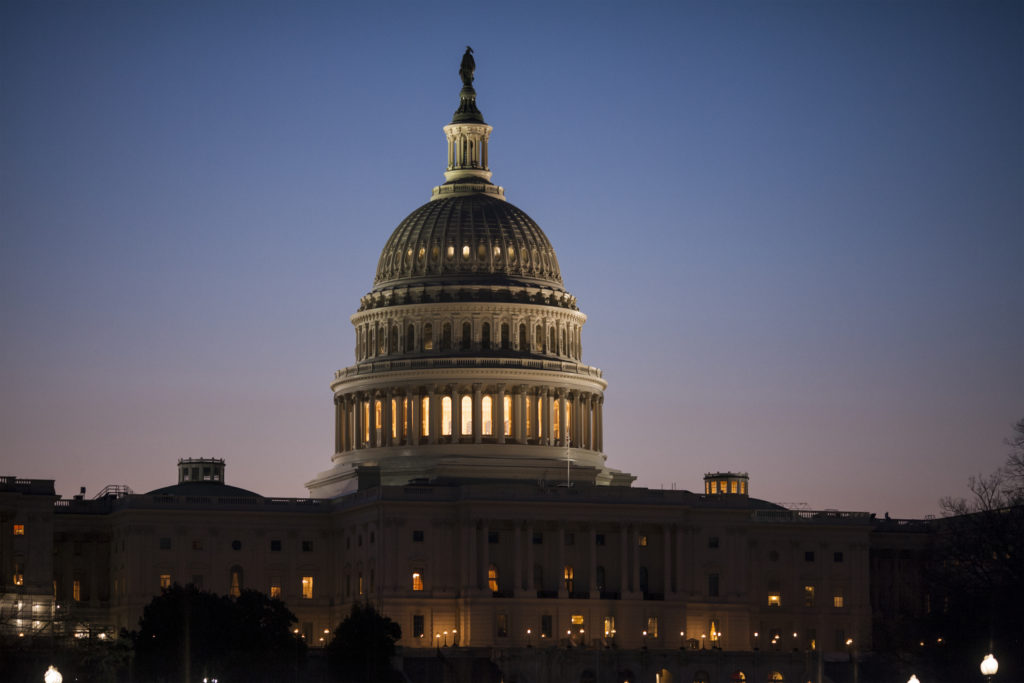
Before the new Congress began at the start of this year, I made a prediction: with the new Democrat majority, we could expect crazy season from the left, with Democrat members taking every chance they could to undermine President Donald Trump. I don’t claim to have a crystal ball, but I think I hit the nail on the head in this case. So far in just the first month and a half of the 116th Congress, the Democrat Party has become the Obstructionist Party: they have stood in the way of strong national security measures, our American values, and President Trump. We saw a prime example of this just last week when the President was left with no other option to secure our borders and get a handle on the national security crisis there than to declare a national emergency. Ensuring the safety of the American people is a fight worth fighting, and while I wish it hadn’t come to this point, the Democrats have left President Trump with no choice. We must secure the border and build the wall. But it seems that Democrat craziness is totally unbounded this year, not just when it comes to border security but on issues of abortion, the environment, and the Second Amendment. They have completely lost sight of our core American values and are not listening to the millions of Americans who still hold fast to those values. As long as I am in Congress, I will continue to do everything in my power to keep focus in a crazy Washington. I remain dedicated to the issues that matter most to Alabamians, and I will continue to fight for you. The crisis at the southern border is real, yet Democrats seem intent on doing everything they can to push their open border policies. They want to put a cap on the number of people ICE can detain, but they don’t want to do anything to secure the border. In other words, it seems they just want to let criminals get away without any consequences. We are a nation of laws, and they need to be enforced. A few weeks ago, House Democrats blocked Representative Steve Scalise (R-LA) from testifying during a committee hearing on gun violence. Democrats are pushing new gun laws that would restrict the Second Amendment rights of law-abiding Americans without doing anything to actually prevent crime. As a victim of gun violence himself, it only seemed appropriate that Congressman Scalise should share his views. The issue, however, was that he still believes in supporting the Second Amendment, as do I, but this was not what the Democrats wanted to hear. Then we have the “Green New Deal,” which is nothing more than unserious, unfocused political messaging, proposed at the expense of the American people. This plan is poorly thought out, horribly expensive, and puts partisan politics over the American people. Let’s call it out for what it is. And far too many Democrats in Congress have made it clear they support infanticide, either with outright statements of support for radical abortion measures, or through their silence in not condemning late-term and live-birth abortion. In fact, we have attempted to pass a bill to ensure a baby born alive after an attempted abortion receives appropriate medical care, but Democrats even object to that bill. On every one of these issues, it seems commonsense has lost out and Democrats are most interested in pandering to the far left than solving problems. No matter how out-of-touch, crazy, and disconnected Washington, D.C., and the Democrats get, I will remain steadfast in fighting for the values we hold dear in Alabama. • • • Bradley Byrne is a member of U.S. Congress representing Alabama’s 1st Congressional District.
Martha Roby: Spreading the word on constituent services

As your representative in Congress, one of my top priorities is assisting the people of Alabama’s Second District with various issues that may arise with the federal government in addition to offering numerous other resources. My offices offer a number of constituent services, and I’d like to take a moment to share a few of them with you so that you can take full advantage of the assistance my offices can provide. Perhaps most importantly, my district offices in Montgomery, Dothan, and Andalusia help our constituents with casework. This means if you’ve placed an inquiry with a federal agency like the VA or Social Security Administration and haven’t received an answer in a timely fashion, or if you feel you have been treated unfairly, my district offices might be able to help resolve the problem or provide information you need. If you’re currently experiencing issues with one of the federal agencies, I encourage you to contact one of my offices as soon as possible so we can do our best to get the issue resolved. Secondly, if you are planning a trip to Washington, D.C., my staff is available to help you obtain tickets for tours of the U.S. Capitol building and other attractions, such as the White House, the Supreme Court, the Library of Congress, and more. Of course, please be advised that advance notice is often necessary, especially when requesting to tour the White House. If you are planning to visit our nation’s Capital, I hope you’ll contact my Washington office as early as possible. We want to help you have a wonderful experience. Third, did you know that you can purchase an American flag through my office? You also have the option to request that your flag be flown over the Capitol building before it is sent to you. I believe this is a really unique, special way to commemorate any important occasion for yourself or a loved one. If you’re interested in taking advantage of this particular service, make sure you contact my office in Washington, and we would be happy to make it happen. There are many other services available through my office, including service academy nominations, congressional commendations, presidential greetings, assistance with federal grant applications, and more. I am glad to offer these services, and I hope you will pass this information along to your friends and family so they are aware of what’s available to them, too. Below you will find the contact information for all of my offices, and of course, all of this information can be found on my website – just visit roby.house.gov/constituent-services. My staff and I work for you, and we look forward to assisting you in the future. Washington office: 442 Cannon House Office Building Washington, D.C. 20515 (202) 225-2901 Montgomery office: 401 Adams Avenue, Suite 160 Montgomery, AL 36104 (334) 262-7718 Dothan office: 217 Graceland Drive, Suite 5 Dothan, AL 36305 (334) 794-9680 Andalusia office: City Hall 505 E. Three Notch Street, Suite 322 Andalusia, AL 36420 (334) 428-1129 ••• Martha Roby represents Alabama’s Second Congressional District. She lives in Montgomery, Alabama, with her husband Riley and their two children.
Trump administration to rescind Obama-era guidance on affirmative action
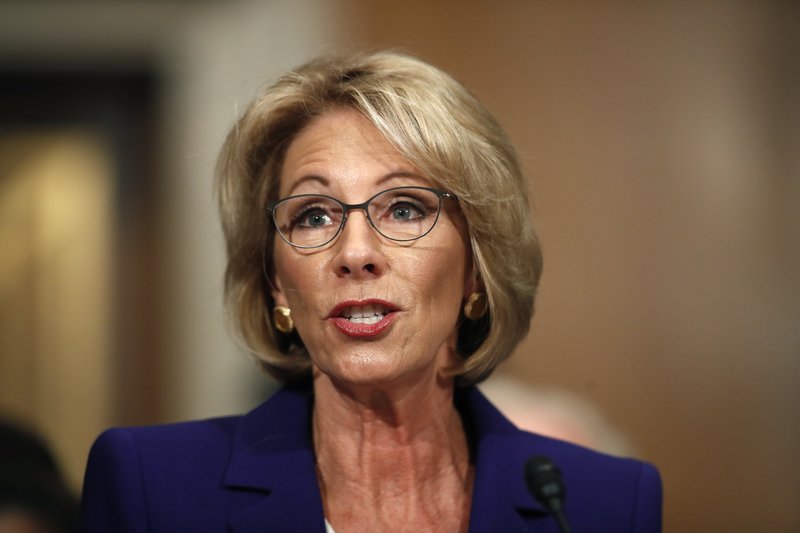
The Trump administration is rescinding Obama-era guidance that encouraged schools to take a student’s race into account to encourage diversity in admissions, a U.S. official said Tuesday. The shift would give schools and universities the federal government’s blessing to take a race-neutral approach to the students they consider for admission. Such guidance does not have the force of law, but schools could use it to help defend themselves against lawsuits over their admission policies. The action comes amid Supreme Court turnover expected to produce a more critical eye toward schools’ affirmative action policies. The high court’s most recent significant ruling on the subject bolstered colleges’ use of race among many factors in the college admission process. But the opinion’s author, Anthony Kennedy, announced his resignation last week, giving President Donald Trump a chance to replace him with a justice who will be more reliably skeptical of affirmative action. A formal announcement was expected later Tuesday from the Justice and Education departments, according to the official, who spoke on condition of anonymity because the official was not authorized to speak on the record. The guidance from the Obama administration gave schools a framework for “considering race to further the compelling interests in achieving diversity and avoiding racial isolation.” In a 2011 policy document, the administration said schools have a “compelling interest” in ensuring a diverse student body, and that while race should not be the primary factor in an admission decision, schools could lawfully consider it in the interest of achieving diversity. “Institutions are not required to implement race-neutral approaches if, in their judgment, the approaches would be unworkable,” the guidance said. “In some cases, race-neutral approaches will be unworkable because they will be ineffective to achieve the diversity the institution seeks.” The administration issued a similar guidance document in 2016 aimed at giving schools a framework for “considering race to further the compelling interests in achieving diversity and avoiding racial isolation.” The Obama approach replaced Bush-era policy from a decade earlier that discouraged affirmative action programs and instead encouraged the use of race-neutral alternatives, like percentage plans and economic diversity programs. The Trump administration signaled Tuesday that it planned to reinstate the Bush administration’s philosophy. Civil liberties groups immediately decried the move, saying it went against decades of court rulings that permit colleges and universities to take race into account. “We condemn the Department of Education’s politically motivated attack on affirmative action and deliberate attempt to discourage colleges and universities from pursuing racial diversity at our nation’s colleges and universities,” Kristen Clarke, president and executive director of the Lawyers’ Committee for Civil Rights Under Law, said in a statement. In 2016, the Supreme Court, in an opinion written by Kennedy, granted affirmative action policies a narrow victory by permitting race to be among the factors considered in the college admission process. Kennedy wrote that the University of Texas’ admission plan was in line with past court decisions that allowed for the consideration of race to promote diversity on college campuses. The ruling bitterly disappointed conservatives who thought that Kennedy would be part of a Supreme Court majority to outlaw affirmative action in education. Justice Antonin Scalia died after the court heard arguments in the case but before the decision was handed down. Eight states already prohibit the use of race in public college admissions: Arizona, California, Florida, Michigan, Nebraska, New Hampshire, Oklahoma and Washington. The Wall Street Journal first reported the move. Republished with the permission of the Associated Press.
Two years later, 7 Alabama counties still not issuing marriage licenses to same-sex, other couples

Two years after same-sex marriage became legal throughout the United Sates, such couples still cannot get married in parts of Alabama. On the second anniversary of the U.S. Supreme Court decision in Obergefell v. Hodges, which legalized same-sex marriages nationwide, seven Alabama counties have still not issued marriage licenses to any couples since June 26, 2015. Political statistic website Ballotpedia notes the counties not issuing marriage licenses are Autauga, Clarke, Cleburne, Covington, Geneva, Pike and Washington. The remaining 60 counties comply with the Obergefell ruling Before the decision, 15 states had same-sex marriage bans in place or stayed by courts, and many local government officials in charge of issuing marriage licenses did not comply with the ruling. In the immediate aftermath of Obergefell, delays and refusals in license issuing led to protests, one clerk’s resignation and another — Kim Davis of Rowan County, Kentucky — going to jail. Even now, the tension continues in several communities. As of June 2017, Ballotpedia reports that a single county in Texas is refusing to clarify whether they would issue licenses to same-sex couples if such a couple would apply. Other counties in a handful of states, licenses have been issued, but marriage ceremonies were no longer held in the county offices. In 2016, after instructing Alabama probate judges to defy the federal orders on same-sex marriage, Alabama Supreme Court chief justice Roy Moore was suspended for the rest of his term for violating judicial ethics. Moore later resigned his position April 26, 2017, to run for the U.S. Senate seat now held by former Alabama Attorney General Luther Strange. Alabama counties not issuing licenses in subsequent two years justify the decision by saying Alabamians can file marriage licenses in any county, regardless of residence. However, officials in Bibb County, one of the eight counties that stopped issuing licenses, but later reversed course, told Ballotpedia at least one individual from the couple who are applying for the license must be a resident of the county.
GOP’s control of Washington carries risks
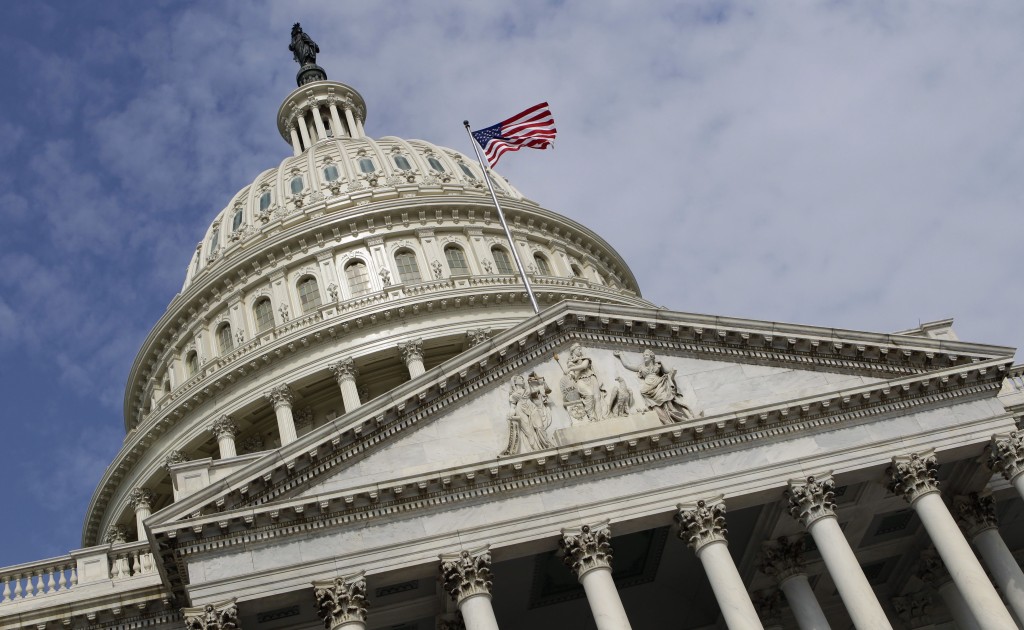
For Republicans, there will be no one left to blame. As they prepare to take control of the White House and both chambers of Congress next year, Republicans are celebrating the opportunity to enact a new agenda for the country, including lowering taxes, securing the border and repealing President Barack Obama‘s health care law. But with that opportunity comes massive political risk: If President-elect Donald Trump and congressional Republicans don’t deliver, they will face a serious reckoning with voters. That could begin with the 2018 midterm elections, when every House member and one-third of the Senate will be up for re-election. “The American public has clearly said that they want to go a different direction,” said Republican Rep. Ken Buck of Colorado. “And if we are not effective in moving in that different direction, they will take the opportunity away from us, and they will return it to the Democrats.” Said Sen. Ted Cruz of Texas, speaking Friday at the Federalist Society: “It’s time to put up or shut up. There are no excuses.” That sobering reality has been sinking in for GOP members of the House and Senate as they begin the early stages of planning an agenda for next year. Republicans point out that although they will control a majority in the Senate with 52 votes, that’s well short of the 60-vote supermajority needed to advance most major initiatives, including Supreme Court nominees. So although Republicans would be able to use a legislative maneuver to send a health care repeal to Trump’s desk with just a simple majority, other major objectives, including immigration and border enforcement, would require some degree of cooperation from minority Democrats. That could give Senate Democrats’ new leader, Chuck Schumer of New York, veto power over major chunks of Trump’s agenda. And it’s led to a call from some House Republicans for their Senate colleagues to try to push through a rules change to eliminate the 60-vote filibuster barrier. “They’re either going to have to modify that rule, or they’re going to have to face the wrath of the voters,” said Rep. Matt Salmon, R-Ariz., who is retiring at the end of this year. Senate Majority Leader Mitch McConnell, R-Ky., is an institutionalist who has shown no enthusiasm for such a move. But Republicans fret that a shortage of votes in the Senate is not likely to be a winning political excuse to most voters who picked an outsider in Trump to bring wholesale change to Washington, and now want to see that happen. “We can talk about not having 60 in the Senate, but I think that our time to show that we can govern is now,” said GOP Rep. Tom Rooney of Florida. The Republican role on health care seems particularly risky to some in the party. Democrats have suffered severe political consequences for pushing through the Affordable Care Act in 2010. They lost control of the House in that year’s midterm elections, and Republicans have used the health care issue ever since to rally their base and attack Democrats. But if Republicans repeal it, as they are determined to do, they will be the ones responsible for whatever comes next. And given the enormous complexity of the U.S. health care system, which accounts for fully one-sixth of the U.S. economy, the potential for complications looks immense. Even after six years, Republicans have failed to unite around a single alternative to Obamacare, or a solution to ensure that the 20 million Americans who gained health coverage under the law don’t suddenly lose it. Schumer warned in an interview Friday that repealing the health care law would turn into “a political nightmare” for Republicans. And even while cheering the opportunity to undo the health law, House Speaker Paul Ryan acknowledged in a news conference this past week that, “It’s too early to know the answer to, ‘How fast can Obamacare relief occur?’ “ Many Republicans believe Democrats overreached in the early years of the Obama administration, when they controlled the White House and both chambers of Congress. Voters took Democrats’ majorities away, and now Republicans are mindful of making the same mistake themselves. Rather than a rightward lurch, “It’s paramount right now in American politics to build a plurality coalition, because we are still a country of great diversity,” argued Paul Schumaker, who was North Carolina GOP Sen. Richard Burr‘s chief re-election consultant this year. And even as Republicans prepare to enact a governing agenda, it’s unclear in some cases what that agenda will be, because some of Trump’s promises clash with goals set out over the years by Ryan and other congressional Republicans. For example, Trump has promised to protect Medicare; Ryan has proposed turning it into a voucher-like program for future retirees. Trump is proposing a $1 trillion infrastructure bill; most conservatives balk at major new government spending. As for Democrats, even from their defensive crouch they’re eyeing the political upside that could result from full Republican control of the nation’s capital. House Minority Leader Nancy Pelosi, who is facing a rare leadership challenge from Democratic colleagues distraught about the election results, tried to reassure her caucus this past week that midterm elections in an opposition president’s first term offer a singular chance for political gain. “Trump is president, we have a bigger opportunity to take the Congress, just following history, in our generation of being involved in politics,” said the California Democrat. Republished with permission of the Associated Press.
Venturing to Mexico, Donald Trump defends right to build huge wall

On Mexican soil for the first time as the Republican presidential nominee, a firm but measured Donald Trump defended the right of the United States to build a massive border wall along its southern flank, standing up for the centerpiece of his immigration plan in a country where he is widely despised. Trump, who previously derided Mexico as a source of rapists and criminals, praised Mexicans Wednesday as “amazing people” following a closed-door meeting at the official residence of the country’s president, Enrique Pena Nieto. Trump and the Mexican president, who has compared the New York billionaire to Adolf Hitler, addressed reporters from adjacent lecterns before a Mexican flag. The trip, 10 weeks before America’s presidential Election Day, came just hours before Trump was to deliver a highly anticipated speech in Arizona about illegal immigration. That has been a defining issue of his presidential campaign, but also one on which he’s appeared to waver in recent days With political risks high for both men, Trump stayed on script, declining to repeat his promise to force Mexico to pay for a wall along the border between the two countries when pressed by reporters. While he and Pena Nieto talked about the wall, Trump said they didn’t discuss who would pay for a cost of construction pegged in the billions. “Having a secure border is a sovereign right and mutually beneficial,” Trump said, reading from prepared remarks. “We recognize and respect the right of any country to build a physical barrier or wall on any of its borders to stop the illegal movement of people, drugs and weapons. Cooperation toward achieving this shared objective — and it will be shared — of safety for all citizens is paramount to both the United States and to Mexico.” Trump’s presence on Wednesday, his first meeting with a head of state abroad as a presidential candidate, sparked anger and protests across Mexico’s capital city. Former Mexican President Vicente Fox bluntly told the celebrity businessman that, despite Pena Nieto’s hospitality, he was not welcome. “We don’t like him. We don’t want him. We reject his visit,” Fox said on CNN, calling the trip a “political stunt.” Pena Nieto was less combative as he addressed reporters alongside Trump. He acknowledged the two men had differences and defended the contribution of Mexicans working in the United States, but he described the conversation as “open and constructive.” He and Trump shook hands as the session ended. Pena Nieto’s performance came in for immediate condemnation from his many critics in Mexico. “Pena ended up forgiving Trump when he didn’t even ask for an apology,” said Esteban Illades, the editor of Nexos magazine. “The lowest point of the most painful day in the history of the Mexican presidency.” After saying during his Republican primary campaign he would use a “deportation force” to expel all of the estimated 11 million people living in the United States illegally, Trump suggested last week he could soften that stance. But he still says he plans to build a huge wall — paid for by Mexico — along the two nations’ border. He is under pressure to clarify just where he stands in the Wednesday night speech, which had been rescheduled several times. Trump’s running mate, Indiana Gov. Mike Pence, told CBS earlier in the day that Trump would make clear “that there will be no path to legalization, no path to citizenship. People will need to leave the country to be able to obtain legal status or obtain citizenship.” The buildup to the speech was abruptly interrupted Tuesday night by the news that Trump would visit Mexico, accepting on short notice an invitation offered last week by Pena Nieto. The newspaper El Universal wrote in an editorial that Trump “caught Mexican diplomats off guard.” Campaigning in Ohio earlier in the day, Democrat Hillary Clinton jabbed at Trump’s Mexican appearance as she promoted her own experience working with foreign leaders as the nation’s chief diplomat. “People have to get to know that they can count on you, that you won’t say one thing one day and something totally different the next,” she told the American Legion in Cincinnati. “And it certainly takes more than trying to make up for a year of insults and insinuations by dropping in on our neighbors for a few hours and then flying home again.” Trump has promised, if elected, to deport millions of immigrants who are in the United States illegally, force Mexico to pay for the construction of a wall to secure the nearly 2,000-mile border and renegotiate the NAFTA trade agreement to make it more favorable to the United States. Pena Nieto suggested there was room to improve the trade deal, which Trump described as unfair to American workers. The New York businessman promised to promote trade deals that would keep jobs in the Western Hemisphere. Pena Nieto made his invitation to both Trump and Clinton, who met with him in Mexico in 2014. The inclusion of Trump puzzled many in Mexico, who said it wasn’t clear why their own unpopular president would agree to meet with someone so widely disliked in his country. Pena Nieto has been sharply critical of Trump’s immigration policies, particularly the Republican’s plans to build a wall and have Mexico pay for it. In a March interview, he said that “there is no scenario” under which Mexico would do so and compared Trump’s language to that of dictators Hitler and Benito Mussolini. Pena Nieto did not repeat such criticism on Wednesday, but acknowledged Trump’s comments had “hurt and affected Mexicans.” “The Mexicans deserve everyone’s respect,” he said. Republished with permission of The Associated Press.
Big spending expected for state legislative races in 2016
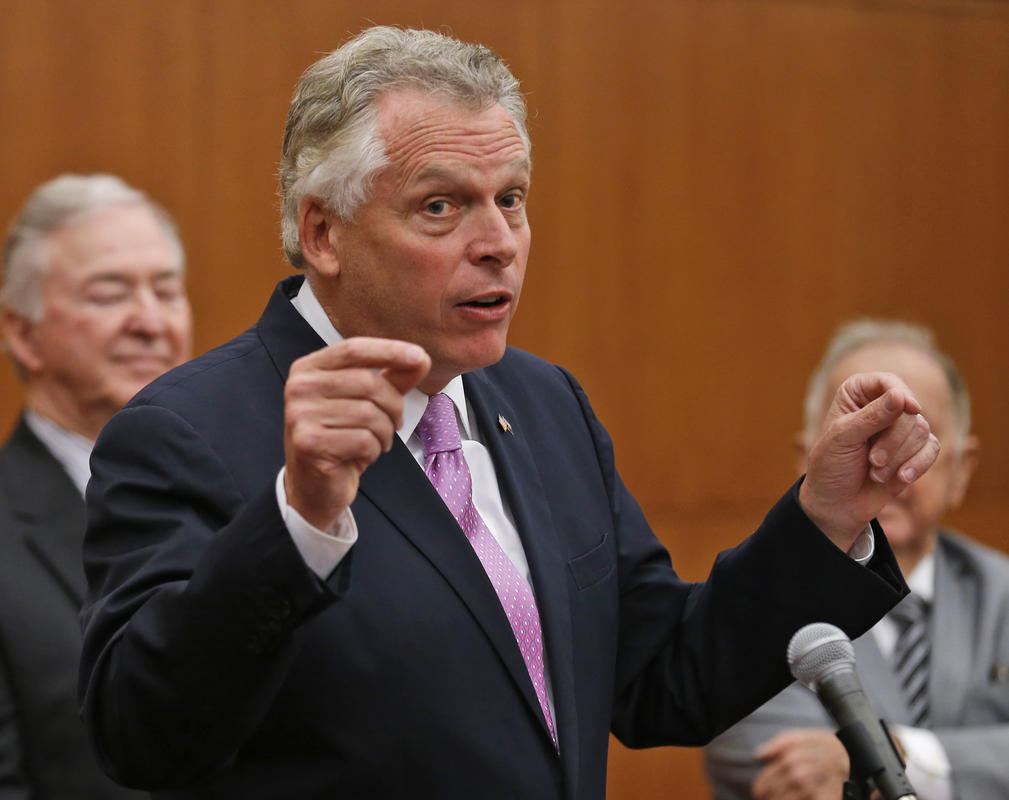
While the presidential campaign commands the public’s attention, political parties and financial contributors are quietly preparing for another less glitzy yet significant set of elections a year from now — battles to determine control of dozens of state legislative chambers. National Republican and Democratic groups have set record-high fundraising goals as they try to influence the outcome of 2016 state legislative races. Independent political committees appear likely to join the fray. With Congress frequently paralyzed by partisanship, legislative elections are gaining attention because states are the ones pushing change. In recent years, state legislatures have been addressing gun control, infrastructure, education standards, renewable energy, marijuana and transgender rights. The races also are critical to political parties because legislatures in most states are responsible for drawing the boundaries for congressional and state legislative districts. The party in charge can help ensure favorable districts — and thus potentially remain in power — for a decade to come. In the 2012 elections, for example, Democratic candidates for the U.S. House received about 1.4 million more votes than their Republican opponents, yet the GOP won a 33-seat majority in that chamber, partly because GOP-dominated state legislatures drew political maps to favor their party. While the next round of redistricting in 2021 may seem far away, it often takes several elections for parties to build a majority or chip away at one. That’s why some Democrats have described next year’s state legislative elections as vital if they are to begin reversing recent Republican gains. The GOP controls 69 of the nation’s 99 state legislative chambers, its most ever. “We are definitely looking at all of this in a multicycle way,” said Missouri Democratic Party Chairman Roy Temple. “That’s something that Democrats — not just in Missouri, but nationally — have not been particularly very good at historically.” The Democrats’ attempt to roll back GOP supermajorities in the Missouri Legislature is expected to be countered by heavy Republican spending, after both parties combined to spend more than $6 million on legislative races two years ago. Winning just a handful of seats, Temple said, can make a difference in the redistricting process and, ultimately, in enacting or blocking new laws. Nationally, the Democratic Legislative Campaign Committee hopes to raise $20 million for the 2016 state legislative races, which would set a record for the group. An additional $20 million is expected to be spent by an affiliated super political action committee, Advantage 2020, which is focused on gaining Democratic state legislative majorities ahead of the next round of redistricting. The rival Republican State Leadership Committee has its own record fundraising goal of $40 million. The Republican and Democratic groups each are targeting more than two dozen state legislative chambers, including 19 listed as priorities by both parties. Republicans will be trying to flip Democratic-led House chambers in Colorado, Kentucky and Washington as well as Senate chambers in Iowa, Minnesota and New Mexico. Democrats will be trying to reverse Republican control of 13 chambers, including one-seat Senate margins in such states as Colorado, Nevada and Washington. In Illinois and Massachusetts, Republicans are hoping to cut into Democratic supermajorities that can override the vetoes of Republican governors. The Democrats’ Advantage 2020 PAC is hoping to chip away at Republican legislative majorities in a half-dozen states won at least once by President Barack Obama — Florida, Michigan, North Carolina, Ohio, Pennsylvania and Wisconsin. The parties’ national efforts will be supplemented by state political parties and like-minded groups. Independent expenditures on state legislative races have been on the rise since the U.S. Supreme Court’s 2010 ruling in the Citizens United case, which allowed unions and corporations to spend unlimited amounts on political campaigns. From 2010 to 2012, the total amount of independent expenditures on state legislative races shot up 75 percent to $94 million, according to data compiled by the National Institute on Money in State Politics, a Helena, Montana-based nonprofit. It is still compiling nationwide figures for the 2014 elections. Outside interest groups already were spending big in this fall’s legislative races in New Jersey and Virginia, a potential sign of things to come. The Everytown for Gun Safety Action Fund, backed by former New York Mayor Michael Bloomberg, spent at least $2.2 million to help two Democratic candidates in a battle for control of the closely divided Virginia state Senate. One candidate won while the other lost. The Republican State Leadership Committee also poured more than $1 million into the Virginia Senate races. All told, more than $43 million had been spent on Virginia state Senate races a week before the election, surpassing the high mark set four years earlier, according to the Virginia Public Access Project, which tracks campaign spending. The result was the status quo, with Republicans maintaining the same 21-19 majority they held before Tuesday’s elections. In New Jersey, outside groups spent at least $8.5 million on this year’s state Assembly elections. That was nearly five times what groups spent during the state’s last non-gubernatorial elections in 2011. Most of that money came from two Democratic-leaning groups, the General Majority PAC and Garden State Forward, a political arm of the New Jersey Education Association. Democrats gained several seats in Tuesday’s elections, achieving the party’s largest Assembly majority in almost four decades. Other groups already have been raising money with an eye on 2016. “You have what will be a highly contentious presidential election cycle,” said Matt Walter, president of the Republican State Leadership Committee. So the group set a record-high fundraising goal, he said, “to make sure we cut through the clutter and make sure that these state-level races get the attention that they deserve.”
