
GOP states press voter photo ID rules, with unclear effects
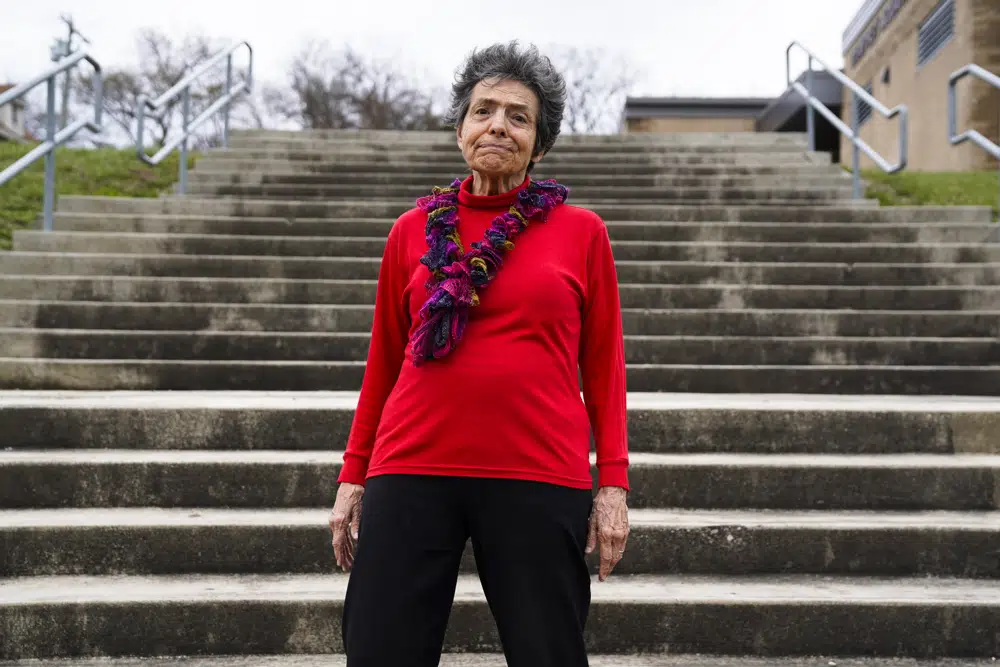
As Ohio’s primary approaches, a strict new photo ID requirement is stirring concerns for military veterans and out-of-state college students, in Amish communities, and among older voters. Other Republican-led states are moving in the same direction as they respond to conservative voters unsettled by unfounded claims of widespread fraud and persistent conspiracy theories over the accuracy of U.S. elections. Critics characterize such requirements as an overreaction that could end up disenfranchising eligible voters. Ruth Kohake is among those caught up in the confusion over Ohio’s law, which is going into effect this year. The retired nurse from Cincinnati gave up her driver’s license and her car in 2019. Now 82, she thought she might never have to step foot in another state license agency. But Ohio now requires an unexpired photo ID in order for someone to vote, and she’ll have to get that at the Bureau of Motor Vehicles. The law adds passports as valid ID but eliminates nonphoto documentation such as a bank statement, government check, or utility bill for registration and in-person voting. Military IDs also are no longer acceptable when registering to vote. “I’m very, very, very concerned that people are not going to know. They’re going to come to vote, and they’re not going to be able to, or they’re going to have to vote provisional,” she said. “It’s just a very upsetting time. Us old people, we have other things to worry about.” Of 35 states that request or require a photo ID to vote, Ohio is now the ninth Republican-controlled state to move to a strict law allowing few to no alternatives, according to the National Conference of State Legislatures. Fifteen states allow other ways voters can verify their identity, such as an electric bill, bank statement, or signature match. The number of states where voters face strict photo ID requirements is poised to rise in the coming months. Nebraska lawmakers are in the process of establishing a new photo ID program after voters approved a requirement in November. In North Carolina, a photo ID requirement declared unconstitutional just three months ago could be revived by the state Supreme Court that has a new Republican majority. Meanwhile, a new Idaho law, which prohibits students from using college IDs at the polls, drew a recent legal challenge. Wendy Weiser, vice president for democracy at the Brennan Center for Justice, said the new Ohio law undercuts the Republican narrative about the state having a record of clean and well-run elections. “Ohio election officials have long been adamant that this wasn’t needed, that Ohio had a good system for vetting and rooting out any fraud, and the proof was in the pudding,” she said. Republican state Sen. Theresa Gavarone, a supporter of the law, said the change will make it harder to cheat. It already has led to frustration and confusion, in part because of the fast-approaching state primary on May 2. Republican Secretary of State Frank LaRose ordered counties to begin implementing the fast-tracked law so it would be in effect for the primary, though its start date falls within the early voting period. Waiting until fall, LaRose said, “would result in a clear violation of Ohio law.” That decision is not without complications. The free state photo IDs the law provides won’t be available until April 7, the law’s effective date, despite military and overseas voting already having begun and early, in-person voting set to start April 4. At the same time, a legal challenge to the law by a Democratic law firm remains unresolved. The lawsuit alleges the law creates “needless discriminatory burdens,” including by requiring photo IDs, making it harder to correct minor mistakes on ballots, and restricting mail balloting. Veterans’ organizations and county recorders, particularly in the populous, Democratic-leaning counties that include Columbus, Cleveland, and Cincinnati, have been vocal about the law excluding county-issued veteran photo IDs, though it does allow military IDs, to vote. They cost less and are valid longer — 10 years — than a driver’s license. “People find reasons to fix something that doesn’t need to be fixed,” said Larry Anderson, 85, a veteran from Columbus who has found the veteran ID card a convenience. “Veterans could come back from the wars and not have a driver’s license and not drive a car, and it just creates more problems for them.” AMVETS Executive Director Don McCauley said the issue has been brought to lawmakers’ attention, and he hopes to see it resolved before the next election. Access issues also have arisen among the roughly 37,000 Amish in Ohio’s Holmes County, where the largely conservative voters reject being photographed and often lack other forms of government ID. Lawmakers allowed for religious exceptions through an affidavit that the law’s supporters say will be easy to use, but Holmes County Elections Director Lisa Welch is worried that confusion and extra paperwork could add to the workloads of already stressed boards of elections. “My biggest concern is the first time through, we get a whole bunch of provisionals (that must be processed separately later),” she said. “I’m the only full-time person in the office right now, and we can’t do everything.” Holmes County Commissioner Joe Miller fears the new process could deter some voters. “I want honest voting, I understand that, but a lot of the Amish don’t have the photo ID and won’t do a photo ID,” he said. “So what the Amish do usually — they’re pacifists, they don’t fight anybody — they just walk away.” Ohio State University has advised its roughly 16,000 out-of-state students against voting in person on Election Day — for fear that obtaining the necessary state ID card could invalidate their driver’s license in their home state and disrupt their financial aid and residency status. The schools suggests such students casting Ohio ballots do so by mail. Backers of the photo ID requirements have widely moved away from the argument that such laws prevent voter fraud, which happens only rarely. The conservative Heritage Foundation’s database lists only 26 convictions for voter impersonation fraud — the type deterred by photo ID requirements — anywhere
Voting rights ruling increases pressure on Democrats to act
Congressional Democrats are facing renewed pressure to pass legislation that would protect voting rights after a Supreme Court ruling Thursday made it harder to challenge Republican efforts to limit ballot access in many states. The 6-3 ruling on a case out of Arizona was the second time in a decade that conservatives on the Supreme Court have weakened components of the Voting Rights Act of 1965, a landmark Civil Rights-era law. But this opinion was released in a much different political climate, in the aftermath of President Donald Trump’s lie that last year’s election was stolen. Trump’s fabrications spurred Republicans in states such as Georgia and Florida to pass tougher rules on voting under the cloak of election integrity. Democrats on Capitol Hill have already tried to respond with a sweeping voting and elections bill that Senate Republicans united to block last week. A separate bill, the John Lewis Voting Rights Advancement Act, which would restore sections of the Voting Rights Act that the Supreme Court previously weakened, has been similarly dismissed by most Republicans. Those setbacks, combined with the Supreme Court’s decision, have fueled a sense of urgency among Democrats to act while they still have narrow majorities in the House and Senate. But passing voting legislation at this point would almost certainly require changes to the filibuster, allowing Democrats to act without GOP support. “Absolutely this increases the pressure to take a very hard look at whether the Senate is an institution that will allow itself to be rendered powerless and dysfunctional,” said Rep. John Sarbanes, a Maryland Democrat who sponsored a voting bill that passed the House in March. Change won’t be easy. A group of moderate Democratic senators, including Sens. Joe Manchin of West Virginia and Kyrsten Sinema of Arizona, have ruled out revisions to the filibuster. In an evenly divided Senate, their rejection denies the votes needed to move forward with a procedural change. Thursday’s ruling was on a case in Sinema’s home state. In an opinion by Justice Samuel Alito, the court reversed an appellate ruling in deciding that Arizona’s regulations — on who can return early ballots for another person and on refusing to count ballots cast in the wrong precinct — are not racially discriminatory. Sinema assailed the decision in a statement, saying it would “hurt Arizonans’ ability to make their voices heard at the ballot box.” She reiterated her support for the bill yet said nothing about her opposition to the filibuster changes. That opposition stands in the way of the bill passing. Democrats, who say the issue is an existential one for democracy and who need the support of voters of color in next year’s midterms, quickly condemned the decision. “If you believe in open and fair democracy and the principle of one person, one vote, today is one of the darkest days in all of the Supreme Court’s history,” said Senate Majority Leader Chuck Schumer. House Speaker Nancy Pelosi called the ruling an “unprecedented assault” that “greenlights the brutal, accelerating campaign of voter suppression.” Speaking in Florida, President Joe Biden said he would have “much more to say” soon, but largely sidestepped comment. For their part, Republicans show no sign of willingness to engage with Democrats on the issue. “The states created the federal government, and it’s not up to Chuck or Nancy or anyone else in Washington, D.C., to tell Arizona or anyone else how they should conduct an election,” Arizona Attorney General Mark Brnovich, who was a party in the case, said on Fox News. Many Republicans other have dismissed a series of recent hearings on the John Lewis bill as “theater.” “They are using this issue because they see a political opportunity,” said Rep. Mike Johnson, a Louisiana Republican who sits on the House Judiciary Committee. “The more they advance this narrative that it’s us versus them, and oppressors versus the oppressed, and black versus white, it divides the country.” Questions hang over existing lawsuits challenging voting laws. While experts generally agree that Thursday’s decision will make legal challenges under Section 2 of the Voting Rights Act more difficult, many of the lawsuits pending against GOP-backed laws this year make separate, constitutional claims. So those lawsuits will proceed. The U.S. Justice Department’s recent lawsuit against Georgia’s new voting law does make a Section 2 challenge, although it was narrowly written and alleges an intent by Republican state lawmakers to discriminate against minority voters. In the Arizona case, the legal challenge centered on whether there was a discriminatory effect of the laws. Still, advocates of voting rights protections were surprised by the breadth of the ruling. “This ruling is much worse than we had anticipated,” said Wendy Weiser, an attorney for the Brennan Center for Justice. “This is going to put a lot of pressure on Congress and the White House to pass the voting bills.” And it could embolden more Republican-led states to pursue further restrictions. Judicial Watch President Tom Fitton, who supports the ruling, said: “States can be confident that they can go full speed ahead to strengthen elections and protect voting rights with security measures such as voter ID and other sensible measures to make it harder to steal elections.” Republished with the permission of the Associated Press.
Donald Trump’s tactics to overturn election could have staying power
Even after he exits the White House, President Donald Trump’s efforts to challenge the legitimacy of the election and seeking to overturn the will of voters could have staying power. Trump’s tactics are already inspiring other candidates and have been embraced by a wide array of Republicans. Supporters include congressional candidates, state lawmakers, party chairs, conservative legal groups, and appointees to previously little-known state vote-certification boards. The breadth of support for Trump’s effort could be a troubling sign for future elections. “What this president is doing is poisoning democracy,” former Michigan Gov. Jennifer Granholm said. “And, yes, he is setting a precedent, suggesting that it is OK to violate these norms that have made our country great.” Granholm, a Democrat, joined with former New Jersey Gov. Christine Todd Whitman, a Republican, to raise concerns about Trump’s refusal to concede and efforts to undermine the integrity of elections. “This is not who we are as Americans, and we don’t want the public coming away from this thinking this is the norm,” said Whitman, who served in President George W. Bush’s administration. Trump and his allies have pushed conspiracies involving voting machines manipulated by dead foreign leaders and tens of thousands of fraudulent mail ballots that somehow escaped layers of security and scrutiny by election workers across the country. They have filed lawsuits without evidence, tried to pressure state lawmakers into seating their own presidential electors, and sought to influence low-level party members who sit on the state and local boards that certify election results. This is despite the fact that the federal government’s own cybersecurity arm declared the presidential election “the most secure in American history,” and Attorney General William Barr said the Department of Justice uncovered no evidence that would change the outcome. Even so, Trump has found friendly lawmakers and party officials willing to bolster his claims and adopt his tactics. On Friday, a group of 64 GOP lawmakers in Pennsylvania signed a statement urging Congress not to accept the state’s slate of electors for Democrat Joe Biden. They cited a litany of complaints over how the election was conducted. “A number of people have shown themselves willing to go along or at least being perceived of going along instead of just condemning the entire operation,” said Wendy Weiser with the Brennan Center for Justice at New York University Law School. “It was not written off as it should have been.” In recent days, lawmakers in battleground states have provided friendly forums for Trump allies to air their suspicions. A group of GOP state lawmakers in Arizona held an unofficial meeting where Trump’s lawyers repeated claims of irregularities with the state’s vote count but provided no evidence of widespread fraud. The chairwoman of the Arizona GOP asked a court to overturn Biden’s win in the state. The effort then shifted to Michigan, where Trump lawyer Rudy Giuliani appeared at a four-hour legislative hearing to argue that fraud had occurred. “Throughout this hearing, my colleagues continued to speak in circles about ‘getting to the bottom of this.’ But we’re already at the bottom, and there’s nothing down here,” said Michigan state Rep. Darrin Camilleri, a Democrat. “Down here at the bottom of all this, it’s just a dark, empty place.” On Thursday, a legislative committee in Georgia received testimony from a Trump campaign attorney about purported irregularities despite a hand count and machine audit that revealed no major problems with the vote. Election law experts say time will tell whether Trump’s approach and the support it has generated in the GOP represent a shift in how candidates handle defeat. “Next time could be worse,” constitutional law expert Edward B. Foley warned in an op-ed last week while offering praise for the few Republicans willing to stand up to Trump. Those included Georgia Secretary of State Brad Raffensperger, who certified his state’s election amid calls for his resignation from fellow Republicans and threats, and Aaron Van Langevelde, one of two Republicans on the Michigan board that certified that state’s results. While the other Republican on the Michigan board abstained, Van Langevelde said he was required under state law to certify Biden’s win. The result, Foley noted, could have easily been different if other Republicans more open to Trump’s arguments had occupied those same positions. “What makes this year’s narrow escape so unnerving is how far the plot to overthrow the election got with so little factual ammunition,” Foley said. Others believe Trump’s behavior is more of a fluke and unlikely to result in any lasting damage to the electoral process. “Everybody knows that it’s just because they lost,” said Pennsylvania Lt. Gov. John Fetterman, a Democrat. “There isn’t anyone from the president on down that genuinely believed that there was any real fraud. That’s what makes it so disingenuous.” A few candidates have followed Trump’s lead, refusing to concede and seeking extraordinary measures to address their concerns. A Pennsylvania congressional candidate who lost his race has yet to concede and signed on to a lawsuit challenging the validity of all mail ballots cast this year. A Republican candidate for U.S. Senate in Michigan called on the state to take the unprecedented step of delaying certification so an audit could be done — despite an extensive county canvassing process that did not find significant irregularities. He ultimately conceded. Using the 2020 election as a springboard to create more trust in the process would help, said David Carroll, head of the democracy program at the Carter Center, founded by former President Jimmy Carter and his wife, Rosalynn. That could involve requiring state and local election officials to be nonpartisan and appointed rather than elected by party, clarifying vague election laws, implementing federal standards for parts of the process, and ensuring more training for election workers and volunteers. “There was a lot of discussion before the election that the process might not be credible. Those are the things we see around the world where democracy is weak,” Carroll said. “It will be important for us to sit down as a nation and as a society and say we don’t want this
Election limbo as coronavirus outbreak upends US primaries
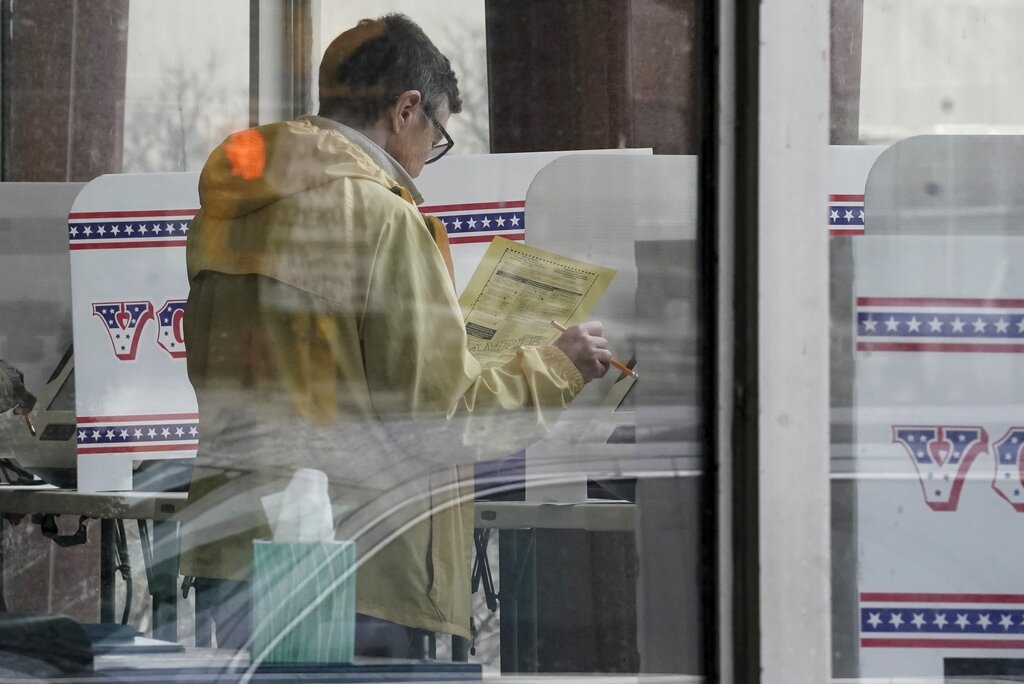
States that have yet to hold their primaries find themselves in a seemingly impossible situation.
