
Donald Trump restores some Cuba penalties, rejecting ‘oppressors’
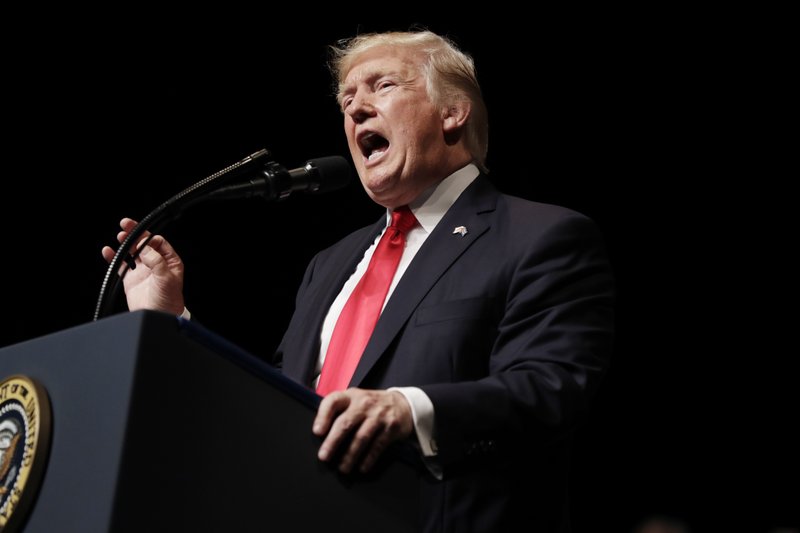
President Donald Trump declared Friday he was restoring some travel and economic restrictions on Cuba that were lifted as part of the Obama administration’s historic easing. He challenged the communist government of Raul Castro to negotiate a better deal for Cubans and Cuban-Americans. Announcing the rollback of President Barack Obama’s diplomatic opening during a speech in Miami, Trump said Cuba had secured far too many concessions from the U.S. in the “misguided” deal but “now those days are over.” He said penalties on Cuba would remain in place until its government releases political prisoners, stops abusing dissidents and respects freedom of expression. “America has rejected the Cuban people’s oppressors,” Trump said in a crowded, sweltering auditorium. “They are rejected officially today — rejected.” Though Trump’s announcement stops short of a full reversal of the Cuba rapprochement, it targets the travel and economic engagement between the countries that has blossomed in the short time since relations were restored. The goal is to halt the flow of U.S. cash to the country’s military and security services in a bid to increase pressure on Cuba’s government. Embassies in Havana and Washington will remain open. U.S. airlines and cruise ships will still be allowed to serve the island 90 miles south of Florida. The “wet foot, dry foot” policy, which once let most Cuban migrants stay if they made it to U.S. soil but was terminated under Obama, will remain terminated. Remittances to Cuba won’t be cut off. But individual “people-to-people” trips by Americans to Cuba, allowed by Obama for the first time in decades, will again be prohibited. And the U.S. government will police other such trips to ensure there’s a tour group representative along making sure travelers are pursuing a “full-time schedule of educational exchange activities.” Trump described his move as an effort to ramp up pressure to create a “free Cuba” after more than half a century of communism. “I do believe that end is in the very near future,” he said. Trump’s move was a direct rebuke to Obama, for whom the diplomatic opening with Cuba was a central accomplishment of his presidency. The new president’s action is broadly opposed by American business groups. “U.S. private sector engagement can be a positive force for the kind of change we all wish to see in Cuba,” said Myron Brilliant, the U.S. Chamber of Commerce executive vice president and head of international affairs. “Unfortunately, today’s moves actually limit the possibility for positive change on the island and risk ceding growth opportunities to other countries that, frankly, may not share America’s interest in a free and democratic Cuba that respects human rights.” In Cuba, Granma, the official organ of the nation’s Communist Party, covered Friday’s speech in a real-time blog, saying “Trump’s declarations are a return to imperialist rhetoric and unilateral demands, sending relations between Havana and Washington back into the freezer.” On the stage in Miami, Rep. Mario Diaz-Balart, R-Fla., said the U.S. would no longer have to witness the “embarrassing spectacle” of an American president glad-handing with a dictator. “President Trump will treat the Castro regime as a malevolent dictatorship that it is,” Diaz-Balart said. “Thank you, President Trump, for keeping your commitments. You have not betrayed us — you kept your promise.” Obama announced in December 2014 that he and Cuban leader Raul Castro were restoring diplomatic ties between their countries, arguing that a new approach was needed because the policy the U.S. had pursued for decades had failed to democratize the island. Less than a year later, the U.S. Embassy in Havana re-opened. The U.S. severed ties with Cuba in 1961 after Fidel Castro’s revolution, and spent subsequent decades trying to either overthrow the Cuban government or isolate the island, including by toughening an economic embargo first imposed by President Dwight D. Eisenhower. The trade embargo remains in place under Trump. Only the U.S. Congress can lift it, and lawmakers, especially those of Cuban heritage, like Sen. Marco Rubio, another Florida Republican, have shown no interest in doing so. Rubio staunchly opposed Obama’s re-engagement with Cuba, and he lauded Trump as he took the stage. “Today, a new president lands in Miami to reach out his hand to the people of Cuba,” Rubio said. Republished with permission of The Associated Press.
Barack Obama ends visa-free path for Cubans who make it to US soil
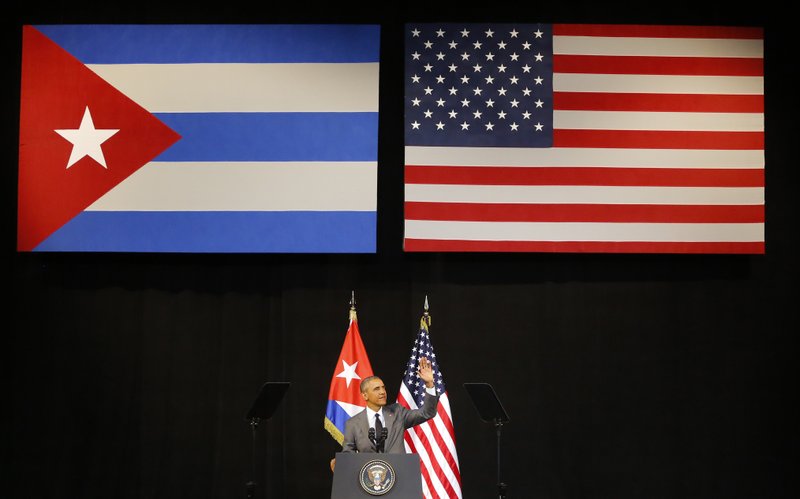
President Barack Obama announced Thursday he is ending a longstanding immigration policy that allows any Cuban who makes it to U.S. soil to stay and become a legal resident. The repeal of the “wet foot, dry foot” policy is effective immediately. The decision follows months of negotiations focused in part on getting Cuba to agree to take back people who had arrived in the U.S. “Effective immediately, Cuban nationals who attempt to enter the United States illegally and do not qualify for humanitarian relief will be subject to removal, consistent with U.S. law and enforcement priorities,” Obama said in a statement. “By taking this step, we are treating Cuban migrants the same way we treat migrants from other countries. The Cuban government has agreed to accept the return of Cuban nationals who have been ordered removed, just as it has been accepting the return of migrants interdicted at sea.” The Cuban government praised the move. In a statement read on state television, it called the signing of the agreement “an important step in advancing relations” between the U.S. and Cuba that “aims to guarantee normal, safe and ordered migration.” Obama is using an administrative rule change to end the policy. Donald Trump could undo that rule after becoming president next week. He has criticized Obama’s moves to improve relations with Cuba. But ending a policy that has allowed hundreds of thousands of people to come to the United States without a visa also aligns with Trump’s commitment to tough immigration policies. President Bill Clinton created “wet foot, dry foot” policy in 1995 as a revision of a more liberal immigration policy that allowed Cubans caught at sea to come to the United States become legal residents in a year. The two governments have been negotiating an end to “wet foot, dry foot” for months and finalized an agreement Thursday. A decades-old U.S. economic embargo, though, remains in place, as does the Cuban Adjustment Act, which lets Cubans become permanent residents a year after legally arriving in the U.S. Under the terms of the agreement, Cuba has agreed to take back those turned away from the U.S., if the time between their departure from Cuba and the start of deportation hearings in the U.S. is four years or less. Officials said the timeframe is required under a Cuban law enacted after Congress passed the Cuban Adjustment Act. “For this to work, the Cubans had to agree to take people back,” said Ben Rhodes, Obama’s deputy national security adviser. Administration officials called on Congress to repeal the Cuban Adjustment Act. Officials said the changes would not affect a lottery that allows 20,000 Cubans to come to the U.S. legally each year. But Rhodes cast the shift as a necessary step toward Cuba’s economic and political development. “It’s important that Cuba continue to have a young, dynamic population that are clearly serving as agents of change,” he said. Rhodes also cited an uptick in Cuban migration, particularly across the U.S.-Mexico border — an increase many have attributed to an expectation among Cubans that the Obama administration would soon move to end their special immigration status. Since October 2012, more than 118,000 Cubans have presented themselves at ports of entry along the border, according to statistics published by the Homeland Security Department, including more than 48,000 people who arrived between October 2015 and November 2016. Relations between the United States and Cuba were stuck in a Cold War freeze for decades, but Obama and Cuban President Raul Castro established full diplomatic ties and opened embassies in their capitals in 2015. Obama visited Havana last March. Officials from both nations met Thursday in Washington to coordinate efforts to fight human trafficking. Obama said the Cuban Medical Professional Parole Program, which was started by President George W. Bush in 2006, is also being rescinded. The measure allowed Cuban doctors, nurses and other medical professionals to seek parole in the U.S. while on assignments abroad. The president said those doctors can still apply for asylum at U.S. embassies around the world. “By providing preferential treatment to Cuban medical personnel, the medical parole program … risks harming the Cuban people,” Obama said. People already in the United States and in the pipeline under both “wet foot, dry foot” and the medical parole program will be able to continue the process toward getting legal status. Reaction to the announcement in Havana was muted Thursday afternoon. “This was bound to happen at some point,” said taxi driver Guillermo Britos, 35. “It could impose a more normal dynamic on emigration, so that not so many people die at sea, but it could also take an escape valve away from the government, which was getting hard currency from the emigrants.” Anti-Castro Cubans in Miami were mixed in their responses, with some expressing anger at Obama for what they called another betrayal of ordinary Cubans. Others said they thought the measure would increase pressure for change in Cuba. “People who can’t leave, they could create internal problems for the regime,” said Jorge Gutierrez, an 80-year-old veteran of the Bay of Pigs invasion. But he added, “From the humanitarian point of view, it’s taking away the possibility of a better future from the people who are struggling in Cuba.” Rep. Illeana Ros-Lehtinen, a Florida Republican who emigrated from Cuba as a child, decried the elimination of the medical parole programs, calling it a “foolhardy concession to a regime that sends its doctors to foreign nations in a modern-day indentured servitude.” Republish with permission of The Associated Press.
A conversation with Marco Rubio on Cuba, family ties
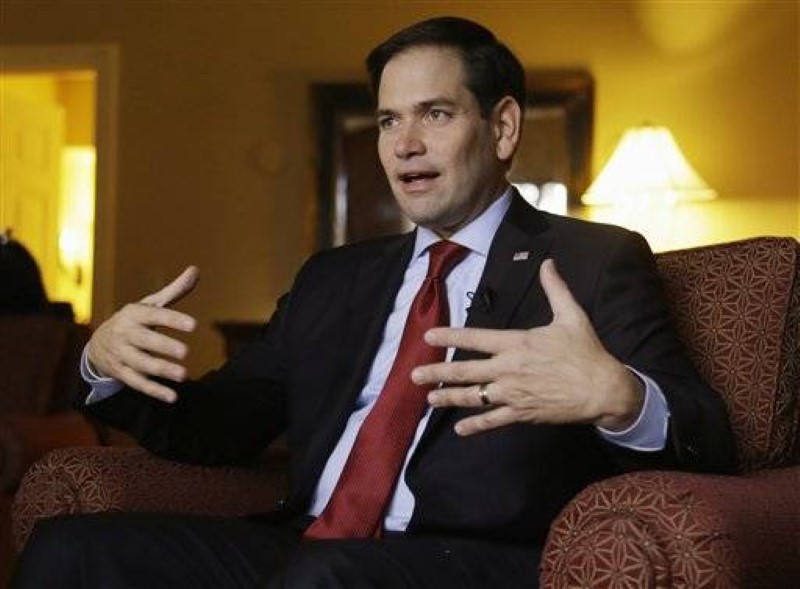
As Marco Rubio campaigns for the Republican presidential nomination, he’s pledging to bring generational change to Washington. Yet Rubio’s policy toward Cuba hinges on reinstating a half-century-old diplomatic freeze that failed to unseat the communist government on the island where his parents were born. The Florida senator sees no contradiction between his pledge to usher in new ideas and his call to restore an old, punitive relationship with Cuba. “People think it’s because we’re being stubborn or holding on to old policies,” Rubio, 44, said in an interview with The Associated Press. “I’m prepared to change strategies toward Cuba, but it has to be one that yields results.” In the traditional litany of promises candidates pledge to fulfill on “Day One” in the White House, rolling back President Barack Obama‘s detente with Cuba is near the top of Rubio’s list. He’d downgrade the newly opened American Embassy in Havana to a diplomatic interests section — the status of bilateral relations before Obama’s rapprochement with Cuba — and put back in place tougher limits on U.S. government and business dealings with the island. Still, Rubio says there are ways to move forward. He would be willing to allow U.S. companies to invest in telecommunications in Cuba in exchange for free and unfettered Internet access on the island. He can envision restoring full diplomatic relations with Havana, but only if the government there allows opposition political parties and gives them freedom to organize. Rubio says he’s also open to modifying the Cuban Adjustment Act, more commonly known as the “wet foot, dry foot” policy. For Cubans fleeing to the U.S., it grants those who reach land permanent residency after one year, while most of those caught in the waters between the two countries are sent back. Rubio won’t say what he would replace it with, but he calls the policy “hard to justify” when Cuban-Americans now have more ability to travel back and forth to the island. “When you have people who are coming and a year and a day later are traveling back to Cuba 15 times a year, 12 times, 10 times, eight times, that doesn’t look like someone who is fleeing oppression,” Rubio said. “And other people turn to us and say, `What’s the justification for this special status?’ That’s a very legitimate point.” Rubio speaks about Cuba with practiced fluency. It’s little surprise, given that his ties to the island have been central to his political rise. In his hometown of Miami, he forged political alliances with the city’s Cuban-American kingmakers and rose to be speaker of the Florida House, then U.S. senator. In a presidential race where he’s gaining momentum, his family’s history gives his campaign a sweeping emotional core. The outlines of that history are by now well-known. He rarely lets an event pass without mentioning his parents’ decision to leave Cuba and how they worked to give their children a better life in the U.S., his father a bartender, his mother a maid. “For them, Cuba was a place that had painful memories, but also obviously it was their homeland and they had love for it,” Rubio said. The story of the Rubio family’s arrival in the U.S. has evolved. Rubio previously referred to himself as the son of exiles, using the words of those who fled the island after Fidel Castro took power in 1959. Under questioning from journalists, Rubio later changed the timeline, saying his parents came to the U.S. in 1956, before Castro’s revolution. Rubio’s father died in 2010, but his mother still lives in Miami. The senator, his Colombian-American wife, Jeanette, and four children live in a home not far from where he grew up. The senator has never traveled to Cuba, but he said he tries to keep the country’s traditions alive for his young children. Meals at the Rubio house often include croquetas and other Cuban dishes. The family’s main Christmas celebration is on Dec. 24 and includes a whole pig roast, a tradition many Cubans who fled have continued in their new homeland. Still, even in a city like Miami that pulses with Cuban culture, Rubio sees the ways his children are becoming more a part of the country they live in than the one where their elders came from. “America is a very powerful culture with very powerful values and traditions,” he said. “You can see it. You see it within one generation, certainly by two generations.” Republished with permission of the Associated Press.
