
U.S.-China trade talks center on rivalry over technology

A high-powered U.S. delegation arrived in Beijing on Thursday for talks with Chinese officials on defusing tensions that are propelling the world’s two largest economies toward a trade war. Treasury Secretary Steven Mnuchin is leading the group, which includes Commerce Secretary Wilbur Ross and U.S. Trade Representative Robert Lighthizer. Liu He, President Xi Jinping’s top economic adviser, was heading the Chinese side in the talks, which analysts say appear unlikely to yield a breakthrough given the two sides’ intensifying rivalry in strategic technologies. President Donald Trump said he expected relations with Beijing to stay on an even keel. “Our great financial team is in China trying to negotiate a level playing field on trade!” he said on Twitter late Wednesday. “I look forward to being with President Xi in the not too distant future. We will always have a good (great) relationship!” Trump is seeking to cut the chronic U.S. trade deficit by $100 billion and gain concessions over policies that foreign companies say force them to share technology with Chinese partners in order to gain market access. His administration has threatened to impose new tariffs on roughly $150 billion in Chinese goods — prompting China to announce its own tariffs on U.S. goods. The dispute has deepened as China stepped up efforts to overtake western industry leaders in advanced technologies, especially for semiconductors, the silicon brains required to run smartphones, connected cars, cloud computing and artificial intelligence. Under Xi, a program known as “Made in China 2025” aims to make China a tech superpower by advancing development of industries that in addition to semiconductors includes artificial intelligence, pharmaceuticals and electric vehicles. The plan mostly involves subsidizing Chinese firms. But it also does require foreign companies to provide key details about their technologies to Chinese partners. Beijing looks unlikely to cede any ground on that strategic blueprint. “The Made in China 2025 industrial policy concerns China’s long-term development plan, so the overall direction won’t change at all,” said Yu Miaojie, professor at Peking University’s National School of Development. Yu says China would rather cut the trade deficit by importing high-tech products from the U.S. that are currently tightly restricted. Striking an adamant tone, the state-run Global Times newspaper said Thursday in a commentary that it’s “our sovereign right to develop high-tech industry and it is connected to the quality of rejuvenation of the Chinese nation. It will not be abandoned due to external pressure.” Both sides have shown a diversity of opinions, with China recently moving to loosen a restriction on foreign ownership of automakers to minority stakes. But the rival views in Washington, reflected in the makeup of the U.S. team, could undermine the U.S. negotiating stance, the consulting firm Eurasia Group said in a research note. “The U.S. delegation headed to Beijing is too large and unwieldy to accomplish much; it is a reflection of inter-agency rivalry on the U.S. side and this will produce more posturing than actual negotiations with the Chinese,” the firm said. “The trip will produce few results and increases the risk that tariffs are adopted in the near future,” it added. Washington’s recent decision to ban Chinese telecom gear maker ZTE from importing U.S. components in a sanctions-related case drove home to Beijing its costly vulnerability to foreign sources for advanced microchips. The “Made in China 2025” plan calls for domestic producers to supply 70 percent of the country’s chip demand. The Trump administration’s efforts may actually spur China to ramp up efforts to develop its domestic industry as it strives to fulfill Xi’s vision, said Jian-Hong Lin, an analyst at research firm TrendForce. China now consumes nearly 60 percent of the world’s semiconductors but supplies only about 16 percent, according to PWC. The country spends more than $200 billion a year on foreign-made semiconductors, which in 2015 surpassed crude oil as the country’s biggest import. Experts say Chinese chipmakers are five years behind their U.S. and Asian rivals and that increasingly high technological hurdles and a meager talent pool are hindering the effort to catch up with dominant U.S., Japanese, South Korean and Taiwanese manufacturers. As Chinese researchers and chipmakers strive to catch up, the technology is evolving, with new materials transforming the future landscape of the electronics industry. The latest advanced chips are highly complex to make because of their increasingly tiny “nodes,” measured in nanometers, that make them faster and more power-efficient. Beijing has been backing up its towering ambitions in the semiconductor sector with money and tax breaks. The government set up the National Integrated Circuit Industry Investment Fund in 2014, seeded with 140 billion yuan ($22 billion) in capital to invest in chip companies. A second round of fundraising for as much as 200 billion yuan is underway, Chinese media report. The state-controlled Tsinghua Unigroup project, associated with Tsinghua University — China’s equivalent of MIT — has emerged as a national champion. It’s building two massive memory chip factories, including a $30 billion facility in Nanjing that will churn out 100,000 wafers a month and is expected to exert a “siphon effect,” drawing microchip industry suppliers and experts to the area. It’s unclear how successful those efforts will be as foreign regulators push back against Beijing’s strategy of acquiring overseas chipmaking-related firms. Washington has scuppered multiple China-linked bids for semiconductor-related firms following a call from a White House advisory panel to do more to protect the U.S. industry because of China’s industrial policies. Market leaders like Samsung, Intel and Taiwan Semiconductor Manufacturing are investing aggressively as they fight for market share. “Even though they’ve (the Chinese) committed a lot of money to the investment fund, the reality has sunk in that it’s harder than just throwing money at the problem. The Samsungs of the world, the TSMCs have a large head start,” said Alexander Wolf, an economist at Aberdeen Standard Investments. “Certain products, you can’t really reverse engineer.” Companies like Huawei and ZTE are avidly pursuing advanced semiconductor technology, but experts say overall Chinese research and development
Trump gives thumbs-down to comic who roasted his spokeswoman
The reviews are in: President Donald Trump gave a thumbs-down Sunday to the comedian who roasted his chief spokeswoman at the annual White House Correspondents’ Association dinner, offending present and past members of his administration, including one who walked out in protest. The organization’s leader said she regretted that Michelle Wolf’s routine may end up defining an evening that was designed to rally around journalism. WHCA President Margaret Talev said she has “heard from members expressing dismay with the entertainer’s monologue and concerns about how it reflects on our mission.” She said she will work with the incoming president of the group and take comments from members on their views “on the format of the dinner going forward.” Trump joined in the criticism. “Everyone is talking about the fact that the White House Correspondents Dinner was a very big, boring bust…the so-called comedian really ‘bombed,’” Trump tweeted Sunday. The president, who regularly lobs sharp attacks at the news media, including individual news organizations and reporters, declined to attend the journalism awards dinner for the second consecutive year. He instead held a campaign rally in Michigan. Wolf is known as a contributor on Comedy Central’s “The Daily Show With Trevor Noah.” But some of her jokes, particularly a series of barbs about White House press secretary Sarah Huckabee Sanders as Sanders sat just feet away, seemed to spark the most outrage. Sean Spicer, who preceded Sanders at the White House lectern, tweeted after dinner that the night “was a disgrace.” Others, including Ed Henry, chief national correspondent for Fox News and a former association president, and MSNBC’s “Morning Joe” co-host Mika Brzezinski, called on the association to apologize to Sanders. Brzezinski has been the subject of personal attacks by Trump. Henry also called on Wolf to apologize. Matt Schlapp, chairman of the American Conservative Union, tweeted that he and his wife, Mercedes Schlapp, director of strategic communications at the White House, walked out of the dinner. “Enough of elites mocking all of us,” he said. Talev, Bloomberg News’ senior White House correspondent, said she didn’t want a dinner celebrating the constitutional right to free speech to be overshadowed by the ensuing uproar over Wolf’s jokes. “My only regret is that to some extent those 15 minutes are now defining four hours of what was a really wonderful unifying night and I don’t want the cause of unity to be undercut,” Talev said Sunday on CNN’s “Reliable Sources.” Talev said she spoke to Sanders after Wolf’s routine and “I told her that I knew that this was a big decision whether or not to attend the dinner, whether to sit at the head table and that I really appreciated her being there.” “I thought it sent an important message about the role of government and the press and being able to communicate with one another and work together,” Talev added. No Trump administration officials attended the dinner last year after Trump decided to skip it. Many were in the audience Saturday night, however, including counselor Kellyanne Conway, herself a target of Wolf, and Commerce Secretary Wilbur Ross. Sanders sat at the head table with association board members. Talev said that, by tradition, the association does not review the comedian’s monologue before it is delivered. “We don’t censor it. We don’t even see it,” she said. Wolf tweeted “thank you” to Spicer. As he did last year, Trump flew to a Republican-friendly district to rally supporters in an attempt to counter the dinner. He assured the audience in Washington Township, Michigan, a state he won in 2016, that he’d rather be there than at “that phony Washington White House Correspondents’ Dinner.” Wolf’s act, which also included abortion jokes, had some in the audience laughing. Others sat in stony silence. Among Wolf’s less off-color one-liners: —“Just a reminder to everyone, I’m here to make jokes, I have no agenda, I’m not trying to get anything accomplished, so everyone that’s here from Congress you should feel right at home.” —“It is kinda crazy that the Trump campaign was in contact with Russia when the Hillary campaign wasn’t even in contact with Michigan.” —“He wants to give teachers guns, and I support that because then they can sell them for things they need like supplies.” Wolf closed by saying, “Flint still doesn’t have clean water,” a reference to the Michigan city where lead-tainted tap water flowed into homes for 18 months before a disaster was declared in 2015. The state recently decided to end distribution of free bottled water in Flint, saying the tap water was now as “good or better” than in many communities. Republished with the permission of the Associated Press.
Republican attorneys general support citizenship question on census
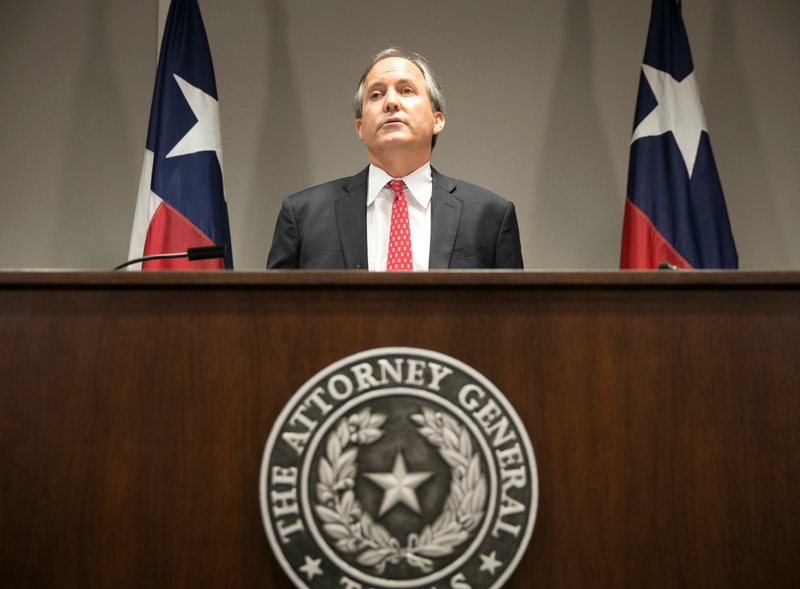
A Trump administration plan to ask people if they are U.S. citizens during the 2020 census has prompted a legal uproar from Democratic state attorneys general, who argue it could drive down participation and lead to an inaccurate count. Yet not a single Republican attorney general has sued — not even from states with large immigrant populations that stand to lose if a census undercount of immigrants affects the allotment of U.S. House seats and federal funding for states. In fact, many GOP attorneys general had urged Trump’s census team to add a citizenship question. “We always are better off having a more accurate count of citizens versus non-citizens. I see no downside in this,” said Texas Attorney General Ken Paxton, vice chairman of the Republican Attorneys General Association. The diverging views of top Republican and Democratic state attorneys highlight how even the most basic data collection decisions can quickly split along partisan lines amid the intense debate about immigration policies. Concerns among immigrants have risen as President Donald Trump’s administration has cracked down on so-called sanctuary jurisdictions, increased arrests by federal immigration officers, called the National Guard to the border with Mexico and sought to limit travel to the U.S. from certain predominantly Muslim countries. U.S. Commerce Secretary Wilbur Ross announced last month that the 2020 census distributed to every U.S. household will include a citizenship question for the first time since 1950. He said the question was needed in part to help the government enforce the Voting Rights Act, the 1965 law that was intended to protect the political representation of minority groups. He said it will provide a more accurate tally of voting-eligible residents than is currently available from a smaller sampling survey that includes the citizenship question. In a letter explaining his decision, Ross said the U.S. Census Bureau estimated that as many as 630,000 additional households might not respond if a citizenship question is included. Yet he acknowledged the administration did not know what the actual consequences might be because it hasn’t tested the change. The nation’s only dress rehearsal for the 2020 census, currently taking place in Providence, Rhode Island, does not include the citizenship question on the survey forwarded to residents. Nevertheless, Ross determined the benefits of including the question outweigh any concerns. California Attorney General Xavier Becerra, a Democrat, filed a federal lawsuit immediately after Ross announced the question would be added. The nation’s most populous state also has the highest number of foreign-born residents, most of whom are naturalized U.S. citizens or hold some other legal status. Last week, New York Attorney General Eric Schneiderman led a coalition of 17 Democratic attorneys general, the District of Columbia, six cities and the bipartisan U.S. Conference of Mayors in filing a second federal lawsuit. They contend the citizenship question will deter participation and illegally inhibit the Constitution’s requirement for an “actual enumeration” of residents. A third lawsuit was filed this past week by a group of seven Maryland and Arizona residents who say adding the question could lead to an undercount that could diminish federal funding and congressional representation for their states. The Constitution requires representation in the U.S. House to be based on a count of the total residents in each state, not just citizens. The census, undertaken every 10 years, also is used to determine how much money to distribute to local communities through various federal programs. “If we don’t count all the people who live in our city — all the residents we have — it could mean that our community doesn’t get our fair share of moneys or aid,” said Steve Adler, mayor of Austin, Texas, and a Democrat who is on the board of the U.S. Conference of Mayors. “It could also mean that we don’t get the representation in government at all levels. The impacts could be huge.” The George Washington University Institute of Public Policy recently analyzed how a hypothetical 1 percent undercount beyond the figures reported in the 2010 census would have affected 2015 federal funding for Medicaid and several other social programs in each state, assuming the undercount occurred only in that state. The largest financial hits would have been to the Republican-led states of Texas, Florida and Ohio, the swing state of Pennsylvania and the traditionally Democratic state of Illinois, the report found. Democratic-led California and New York would not have been affected because their Medicaid reimbursement rates already are at minimum levels. Estimates of those living in the U.S. illegally range from 11 million to a little over 12 million people. Census data is not shared with immigration enforcement authorities. Yet immigrant advocates believe a citizenship question could discourage even some who are lawfully present from responding, partly because of fears the government could track down relatives living in the U.S. illegally. The U.S. has about 44 million residents who were not citizens at birth, comprising 13.5 percent of the total population, according to the most recent Census Bureau information. More than half of all immigrants live in California, Texas, New York or Florida. Last week, a Democratic state senator in Florida formally asked the state’s attorney general, Republican Pam Bondi, to join the New York lawsuit challenging the citizenship question. That’s unlikely because Bondi was among 11 Republican state attorneys general and two governors who signed a March 13 letter urging the Commerce Department to include a citizenship question. Minority Democrats in the Arizona Legislature also urged GOP Attorney General Mark Brnovich to join the lawsuit. But his spokesman said that won’t happen, just as he refused to sign onto the Republican letter urging the question be included. “We have concerns this issue has been overly politicized,” Brnovich spokesman Ryan Anderson said in a statement. The letter from Republican state officials said a census citizenship question could help minority communities by allowing those drawing legislative districts to ensure there are enough voting-eligible citizens in a particular district for minorities to be able to elect a candidate of their choice under
Bradley Byrne, Gulf colleagues ask Trump Administration for longer red snapper season

Members of the U.S. House of Representatives aren’t giving up on their fight to extend the number of days for the 2017 red snapper season in federal waters. On Monday, Alabama 1st District U.S. Rep. Bradley Byrne, along with four other Members of Congress representing districts on the Gulf Coast, sent a letter to Secretary of Commerce Wilbur Ross urging him to extend the number of days. Currently, the season is scheduled to run from June 1-3, making it the shortest red snapper season ever in the Gulf of Mexico. “A three day red snapper season is simply not acceptable, especially given how many red snapper there are in the Gulf right now. Anyone who knows anything about Gulf Coast fisheries would agree that the red snapper fishery is incredibly healthy,” Byrne said of his request. “By bringing other Gulf Coast Congressmen together, I am hopeful we can get the Trump Administrative and Secretary Ross to provide some relief for our recreational fishermen ahead of the 2017 federal season.” In asking for a longer season, the Gulf Coast congressmen — Louisiana-Republican Garrett Graves, Texas-Republicans Randy Weber and John Carter, and Mississippi-Republican Steven Palazzo — pointed to the inaccurate data the National Marine Fisheries Service used to set the 2017 data. “Our recreational fishermen are being penalized by NOAA for a statistical anomaly,” the letter stated. “Currently, NOAA’s data says that recreational fishermen exceeded last year’s quota by 129,906 pounds. However, 129,000 pounds represents less than .02 percent of the recreational quota.” Read the full text of the letter below: Dear Secretary Ross, We write today to express our disappointment in the recent announcement from the National Marine Fisheries Service (NMFS) of a three day recreational Red Snapper season. It is unacceptable. We ask that you reevaluate this decision and extend the number of days for the 2017 season. On March 21st, we wrote to you about the importance of access to adequate fishing resources in the Gulf of Mexico, and namely Red Snapper. You responded that the Red Snapper fishery is a high priority for you and your department, and therefore it is time for more than three days. Our recreational fishermen are being penalized by NOAA for a statistical anomaly. Currently, NOAA’s data says that recreational fishermen exceeded last year’s quota by 129,906 pounds. However, 129,000 pounds represents less than .02 percent of the recreational quota. This decision has no bearing on the health of the stock, and there is no chance NOAA is representing the number with any degree of accuracy. At the state level, we continue to see report numbers that do not match NMFS’s data, caused by the lack of real-time information. For example, in Alabama, preliminary estimates for 2016 show a total of approximately 821,000 pounds counted by Alabama’s Snapper Check Program. NOAA’s estimates for the same time show approximately 2 million pounds accounted for. Mississippi’s data shows the opposite problem. According to data from Mississippi’s Tails n’ Scales Program, almost 40,000 pounds were accounted for, yet NOAA’s data claims there were zero pounds taken. It is time for recreational anglers to stop being penalized for NOAA’s bad science and lack of coordination. In short, there is serious doubt that federal data is accurately reflecting the number of Red Snapper in the Gulf. For that reason, we feel revaluating your agency’s decision for the 2017 season is warranted, and we urge you to continue working with us to develop a long-term solution to address these issues impacting our recreational fishermen and coastal communities. Thank you for your attention to this matter. We look forward to hearing from you.
Billionaire Wilbur Ross heads toward confirmation as Commerce secretary
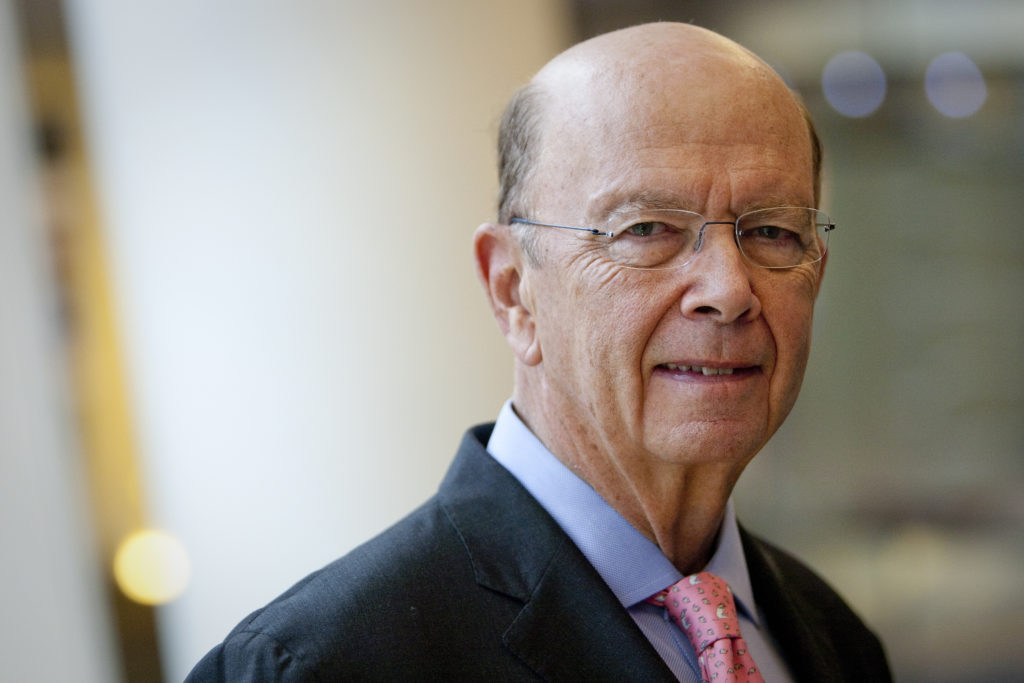
Billionaire investor Wilbur Ross is headed toward confirmation as Commerce secretary in President Donald Trump‘s administration. The Senate is set to vote on Ross’ nomination Monday evening. Ross easily cleared the Senate Commerce Committee and a procedural vote by the full Senate. Senators also are expected to move forward on Trump’s nomination of Montana Rep. Ryan Zinke to lead the Interior Department. If Zinke clears a procedural vote set for late Monday a final vote on confirmation could occur on Tuesday or Wednesday. Ross’ confirmation has gone much smoother than other Trump nominees’ approval. Former Commerce secretaries have praised him, including one who served under former President Barack Obama. Senators from both political parties were deferential to Ross at his nearly four-hour confirmation hearing, which was much more subdued than the confirmation hearings of other Trump nominees. “I believe his extensive management experience in the private sector, and his understanding of the challenges faced by workers and businesses alike, will equip him well for the job of leading the Department of Commerce,” said Sen. John Thune, R-S.D., chairman of the Commerce Committee. Breaking with Republican orthodoxy, Ross said the Trump administration will work quickly to re-do the North American Free Trade Agreement, a massive trade pact with Canada and Mexico that has boosted trade but still stings laid-off workers across the Midwest. Ross said all free trade agreements should be systematically re-opened every few years to make sure they are working in the best interests of the U.S. Ross said he is pro-free trade but noted his close relationship with the United Steelworkers union as proof that he will fight to protect American jobs. The union has endorsed him. NAFTA was negotiated and signed by President Bill Clinton, with broad support among Republicans in Congress. Worth an estimated $2.9 billion, Ross has extensive business ties around the globe. In 2000, he founded WL Ross & Co., a private equity firm. As part of his ethics agreement, Ross will divest from the firm, if confirmed. The commerce secretary has several roles in promoting American business interests in the U.S. and abroad. The department handles trade issues, working to attract foreign investment to the U.S. The department also oversees agencies that manage fisheries, weather forecasting and the Census Bureau, which will conduct a count in 2020. Ross said he has experience at that agency; he was a census-taker while he attended business school. Republished with permission of The Associated Press.
Commerce nominee Wilbur Ross declares he is pro-trade, pro-union
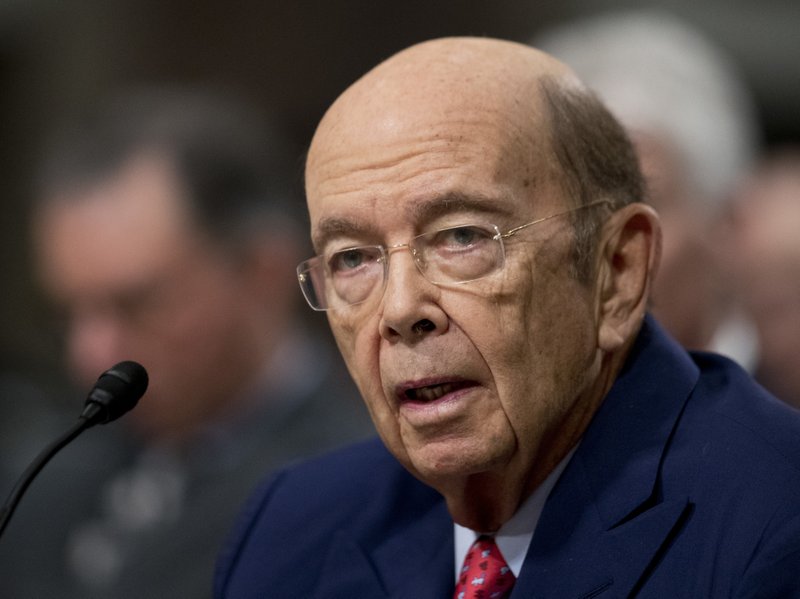
President-elect Donald Trump‘s pick for commerce secretary said Wednesday that he favors “sensible trade,” is pro-union and believes his vast business dealings have given experience fighting other countries’ unfair trade practices. Billionaire investor Wilbur Ross cited his relationship with the United Steelworkers Union, which has endorsed him for the Cabinet post, as proof that he will work to protect American jobs. “I’m pro-trade. But I’m pro-sensible trade, not trade that is detrimental to the American worker and to the domestic manufacturing base,” Ross told the Senate Commerce, Science and Transportation Committee. “I think I’ve probably had more direct experience than any prior cabinet nominee has had with unfair trade in the steel business, in the textile business, in the auto parts business and other sectors,” Ross said. Worth an estimated $2.9 billion, Ross has extensive business ties around the globe. Supporters say that makes him ideal to represent American business interests abroad. “I believe his extensive management experience in the private sector, and his understanding of the challenges faced by workers and businesses alike, will equip him well for the job of leading the Department of Commerce,” said Sen. John Thune, R-S.D., the committee chairman. During Ross’ hearing, Thune revealed that Ross had a household employee from 2009 to 2016 who could not provide documentation that he or she was in the U.S. legally. Ross said the employee provided a driver’s license and a Social Security number when hired. Ross said he rechecked the documentation for all of his household employees after he was nominated, and the employee could not provide it. Ross said the employee was fired. “We did the best that we thought we could do in order to verify the legality of the employment and it turned out that was incorrect,” Ross said. “But we did pay all the withholdings, so did that employee.” Such transgressions have derailed cabinet nominees in the past. But Sen. Bill Nelson of Florida, the top Democrat on the committee, questioned Ross only briefly about it. Trump has said Ross will play a big role in American trade policy. Trump’s views on trade are at odds with many congressional Republicans. He has pledged to re-negotiate existing trade deals and scrap a pending one with Asian countries. Ross said the North American Free Trade Agreement, involving the U.S., Canada and Mexico, “is logically the first thing for us to deal with.” “That will be a very, very early topic in this administration,” Ross added. The commerce secretary has several roles in promoting American business interests in the U.S. and abroad. The department works on trade issues, working to attract foreign investment in the U.S. The department also oversees agencies that manage fisheries, weather forecasting and the Census Bureau, which will conduct a census in 2020. Ross said he has unique experience at that agency; he was a census-taker while he attended business school. Unlike the president-elect, Ross has agreed to divorce himself from a vast financial empire. Ross has signed an ethics agreement with the Office of Government Ethics. In it, he agrees to divest from 40 different businesses and investments within 90 days of being confirmed. He agreed to divest from 40 more within 180 days. Among the businesses he will separate himself from is WL Ross & Co., the private equity firm he founded in 2000. Trump has had a run-in with the head of the ethics agency because he says he won’t completely divest himself from his business empire. Instead, Trump says he will turn control of his business over to his sons. Walter Shaub Jr., who directs the office, said Trump’s plan is insufficient to avoid conflicts of interest. Nelson praised Ross for divesting from most of his personal holdings. “I believe that’s the right thing to do and it tells me you’re committed to doing the job the right way by placing the public’s interests ahead of your own,” Nelson said. “It’s my hope that President-elect Trump will follow your lead and the example you set.” Republished with permission of The Associated Press.
Donald Trump urging GOP to talk up Jeff Sessions ‘strong’ civil rights record
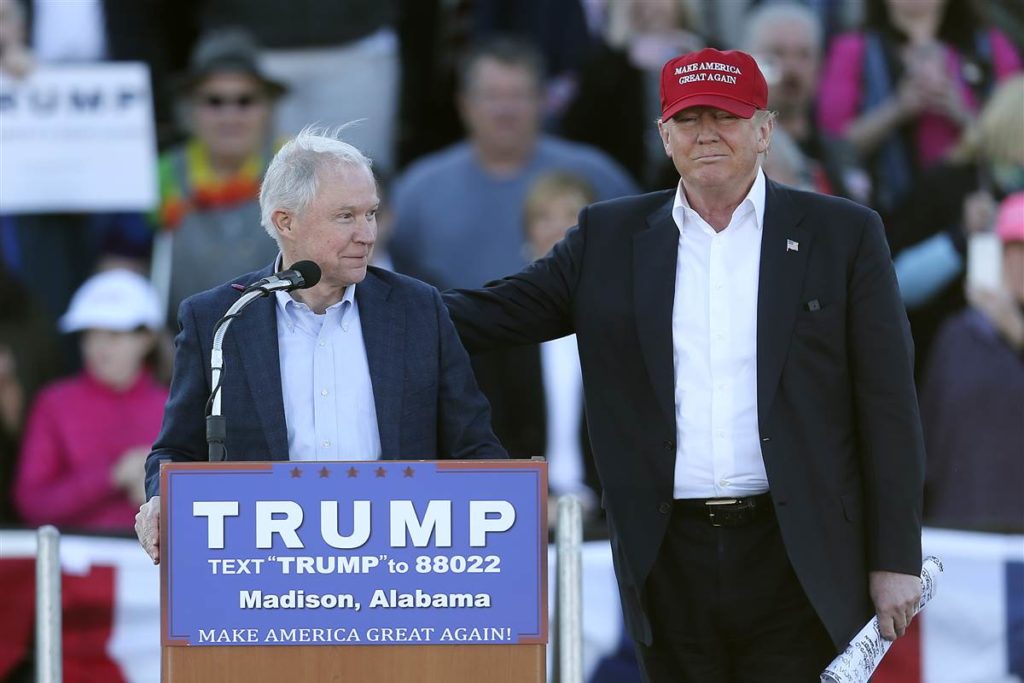
Donald Trump’s transition team is encouraging GOP Senators to talk up Alabama Sen. Jeff Sessions “strong civil rights record” and Justice Department experience during his confirmation hearings next year. The talking points, obtained by Politico, mention Sessions’ large role in Trump’s campaign and that the longtime Senator “is known for his deep respect and adherence to the rule of law, the cornerstone of American democracy.” The memo also highlights that Sessions filed “a host of desegregation lawsuits” during his time as a U.S. Attorney in Alabama, voted in favor of the 30-year extension of the Civil Rights Act, voted to confirm former Attorney General Eric Holder and his efforts to award the Congressional Gold Medal to Rosa Parks. One of the marks on Sessions’ record is his failed confirmation to a federal judgeship due to allegations of racist comments, but the memo includes a talking point that individuals who voted against Sessions’ confirmation in 1986 “ultimately regretted it.” The memo includes a quote late Sen. Arlen Specter, who said his “vote against candidate Sessions for the federal court was a mistake because I have since found that Sen. Sessions is egalitarian.” The memo also includes talking points on other Trump appointees, such as former Goldman Sachs executive Steven Mnuchin, who the administration emphasizes is a “world-class financier.” The talking points also highlight his Secretary of Commerce pick Wilbur Ross’ “extraordinary business career,” Secretary of Transportation pick Elaine Chao as “one of the most successful Cabinet officials in American history,” and Secretary of Health and Human Services pick Tom Price as a “renowned physician” and “tireless problem solver.”
