
William Haupt III: If all government is local, so are elections
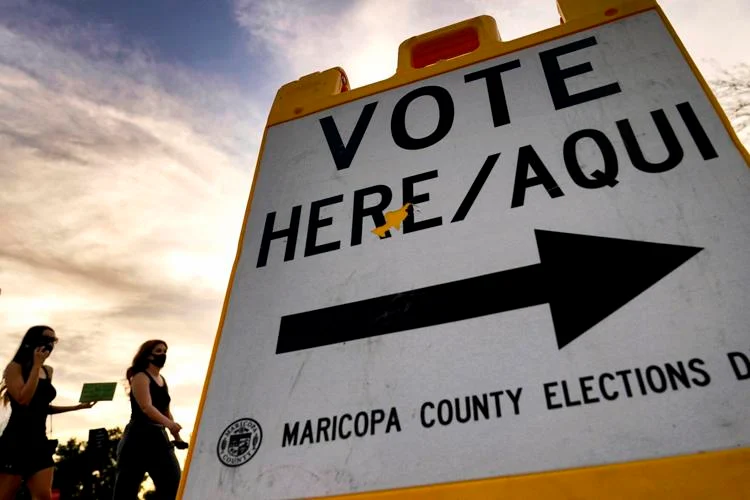
“In local government, you are only a few blocks away from those that you serve.” – Valerie Jarrett When you have a street light that goes belly up, a stop sign that’s hidden behind an untamed tree, or an intersection you cross daily with a prayer in heart, who do you turn to for help? Rather than shift through volumes of unfriendly municipal websites, you contact your local county or city official. When local elections are held with no state or federal races, they are a mere afterthought. Voters either don’t know there is an election or don’t care. Even when they are held during the general election in November, far too often, it is only special interests that know the issues and know the candidates. Turnout for presidential elections is considered low when it dips below 60% and in midterms when it is less than 40%. Yet local elections that draw a shameful 10% or 20% turnout are common across our nation. Turnout for local elections has always been historically low, but recent data show that it is getting even worse. “Elections are determined by people who don’t show up.” – Larry Sabato If it is so important who serves on your county commission or on city council, why is there such a low voter turnout for these offices? The number one reason why turnout is low for local elections is simply: most voters don’t even know there is an election, who is running, or where or when to vote? The 1965 Voting Rights Act states it is disenfranchisement not to inform voters of an election. Yet counties and cities either don’t know this or care. A Portland State University study finds the few who always vote are older and more affluent, while all others make up a fraction of the electorate. The Portland study found less than a third of voters cast ballots during a local election. This is easy to comprehend when voters aren’t notified of an election. If the election is not held during a general election, less than 50% of the electorate is even aware there is a local election and who is running. Our system doesn’t make it particularly easy to vote. It’s a familiar story. Most municipal elections are held during odd-numbered years, far away from November. Only five states, Arkansas, Oregon, Kentucky, Nebraska, and Rhode Island, hold local elections in November or with general elections. If local elections are held during a primary or general election, it is the candidates who are notifying voters about the election – begging people to vote for them, not the county or the city governments. “The only people bound by campaign promises are those who believe them.” – Christopher Hitchens Local governments started holding elections separately from state and federal elections during the 20th century Progressive Era. They hoped this would keep state and local elections from being overshadowed by national partisan races. That’s still an argument used today. But if we look closer, the devil is in the details. As the late, great Paul Harvey use to say, “Now for the rest of the story.” In her book, “Timing and Turnout,” Berkeley political scientist Sarah Anzia notes that not much has changed in local elections. “A small subset of voters who tend to be wealthier and older are those who vote during stand-alone municipal elections.” This enables special interest groups to “capture” local elections. “If something is broken but works for the right people, they won’t fix it?” – Gary Martin Rice University’s Melissa Marschall, head of the Local Elections Project, noted local governments are in no hurry to reform local elections. “When the political machines ran municipalities, isolated elections decreased the influence of immigrants breaking the political machines. When fewer non-English speakers turned out, this effectively allowed governments to shelter the political machines.” Marschall noted it is no accident that many “local school district elections” are held in standalone years. Since these elections draw so few voters to the polls, it is far easier to elect union-friendly candidates. She notes by isolating school district elections, they can limit turnout to supporters. The average teacher salary is 3% higher in these districts than in those that hold concurrent elections. Marschall believes that, “Holding local elections on separate dates has outlived its usefulness.” And although there is a growing interest for states and municipalities to move local elections to coincide with general elections, there is a lot of local resistance. This is especially true for special interests. Last month the California Assembly approved a bill to force localities with low turnout of less than 25% to move local elections to overlap with state or federal contests. What sounds like a good idea is not welcomed by everyone. There is steep resistance from school boards and local politicians. California State Rep. David Hadley is arguing against holding concurrent elections. He claims that this will hurt those vying for local support since it, “Forces them to compete with state and federal races for money, volunteers, and for voter attention. I believe this will hurt us more than help us.” During the 18th and 19th centuries, “political machines” ran large U.S. cities. They helped organize and build big cities, but they also controlled them. Special interests, business, and elected officials were all intricate parts in the machines. The key to their success was controlling the local elections. “The appearance of the law must be upheld – especially when it’s being broken.” – Boss Tweed Although the “political machines” of the past are gone, they’ve been replaced with political parties. The politics of local elections continues to favor incumbents, and they control local elections. Many of these offices are billed as “nonpartisan.” Party politics or not, it will always be politics as usual. Robert Ingersoll told us, “Ignorance is not bliss; it is punishment.” We hear about what is going on in Congress each day and what our state reps are doing also. But if we want to find
William Haupt III: Know your rights and how to protect them
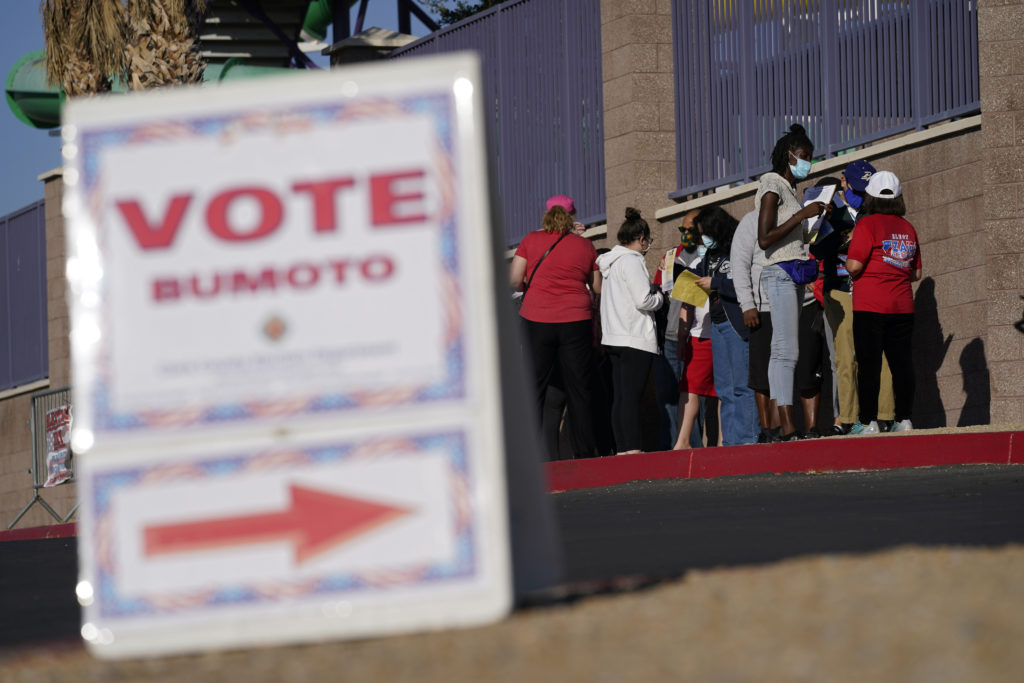
“At one time, getting passing grades in civics and U.S. history were prerequisites for high school graduation. Our biggest mistake was to adopt common core and abandon this.” – Michael Polelle Over five decades ago, Congress passed the Voting Rights Act of 1965. It established standards to protect the voting rights of all qualified U.S. voters. Contrary to liberal psychosis, the Voting Rights Act applies to every voter equally. It set parameters for each state to engrain within its voting laws. To ensure equality, the Civil Rights Act of 1964 was passed to protect the rights of ethnic minorities. But its core provisions, like the Voting Rights Act, protects the civil rights of all Americans equally. Contrary to leftist logic, neither of these gave more rights to one group and less rights to another. Five decades later, many Americans don’t know the Civil Rights Act protects all citizens from age, gender, ethnic and religious discrimination, in addition to minority groups. Government cannot give any form of preference to one group without abridging the same rights that others are entitled to. As Boomers began to feel the pinch of age prejudice, many forgot that age discrimination is a key provision in the Civil Rights Act. And very few seniors ever filed complaints with the Department of Justice about this. “We are marching for the civil rights of the Negros and those of all Americans.” – Martin Luther King Jr Even fewer Americans know why our states were obliged to update their voting laws after the last election. All states laws must comply with provisions in the Voting Rights Act to protect “all voters.” In response to the mayhem during the 2020 election, when blue states made up new laws as they went along, 43 states updated voting laws to prevent a repeat of the insane bedlam that took place in 2020. Citizens asked state lawmakers to ensure that nobody could ever question how anybody who couldn’t get elected dogcatcher in his own state get the most votes in U.S. presidential history. Since the Constitution obligates states to enforce the Voting Rights Act, after the last election, they reviewed all mail-in voting, counting ballots received after Election Day and ballot drop-boxes. All these issues truncated the intent of the Constitution and Voting Rights Acts. Yet in the woke world, if you don’t win the brass ring or can’t hijack it, you bellyache that your voting rights were violated! By law, states are responsible for updating existing election laws when they do not comply with the Voting Rights Act that protects all individual voting rights. Yet progressives and identity groups are squealing like pigs in a bacon factory? Why are they upset with states trying to protect their rights? The woke society is built on double standards. It can’t exist any other way. Wokes make up laws to justify breaking laws they don’t like. Either play the game their way, or they will take their ball away. “I learned that being ‘woke’ is being brainwashed by extremist liberal propaganda.” – Lillian Fang Until the presidential election of 2000, the merits of the Voting Rights Act were seldom questioned. But the fiasco in Florida proved, if progressives want to win badly enough, no law will ever stand in their way. After five weeks of trying to turn Al Gore into a winner, the choice of our nation’s new leader came not from the citizens, but from a 5-4 majority of U.S. Supreme Court justices. Liberal contempt for our voting rights began long before the 2000 election when blue states started moving to all mail-in voting. They had the national media’s pump primed; there was no way Al Gore could possibly lose. When the media abruptly called the election for Gore, they ended up with egg on their faces, and progressives and their liberal attorneys around the U.S. cried out election fraud! “Hi. I’m Al Gore, and I used to be the next president of the United States of America.” – Al Gore Although liberal media pollsters and pundits had been predicting a landslide victory for Al Gore, in the real world Pew Research, Gallop, and other independent groups pictured a much tighter race. They forecasted that fallout from the Clinton-Lewinsky sex scandal would mobilize conservatives against the left’s loose morality. Al Gore lost the entire south and even his home state, Tennessee. In reaction to allegations about voter fraud, hanging chads, and especially mail-in ballots that were supposedly miscounted, Democrats petitioned Washington to review U.S. voting rights again. The 2005 Commission on Election Reform, chaired by liberals Jimmy Carter and former Secretary of State James Baker, concluded that the biggest threat to voting integrity was with mail-in ballots. “We conclude that mail-in voting remains the largest source of potential voter fraud.” – Jimmy Carter Concerns about vote tampering have a long history in the U.S. They helped drive the move to the secret ballot, which all U.S. states adopted between 1888 and 1950. Secret ballots made it harder to intimidate voters and to monitor which candidate a voter had voted for. One University of Florida study found complaints about fraud fell by an average of 14% after states adopted secret ballots. In woke America, facts are an “inconvenient truth.” There have never been more complaints about denial of individual rights, violations of voting rights, and claims of “systematic racism” coming from people who don’t know the rights “they have” and “do not have” than any time in American history. “I have faith in the United States and our ability to make good decisions based on facts.” – Al Gore In 1865, following the Civil War, the 13th, 14th, and 15th Amendments and the 19th Amendment in 1920 guaranteed equal rights and universal suffrage for all Americans. The Civil Rights Act of 1964 and the Voting Rights Act of 1965 protected those rights. That is why we must have voter ID laws. Every illegal vote cast nullifies the votes of the legitimate voters. Still,
William Haupt III: A resolution Congress must make and keep in 2022
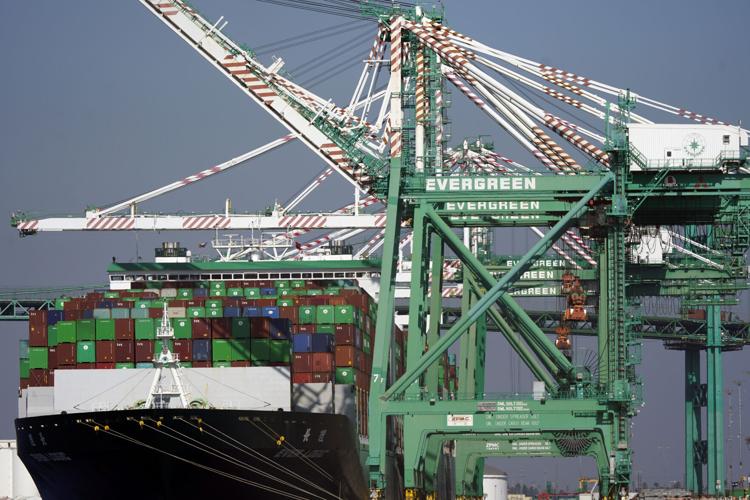
“Some friends ask about your new year’s resolutions. Good friends don’t say too much about them. Your best friends don’t mention them at all, since they know you will never keep them.” – Jay Leno Between December 26 and January 2, people make an existential U-turn. The season of goodwill, visiting, and gift-giving morphs into a neurotic self-improvement aeon as we confront our disquieting anxieties. Which of my habits to stop? Who do I want to be? What do I wish to look like and more? It’s a fact; many New Year’s resolutions are outlandish, unattainable, and even ridiculous. Most are frivolously made after over-imbibing on the “bubbly” during celebrations. It’s uncanny that few really expect to keep them. And some people don’t even remember resolutions they made the next day? While “great expectations” have plagued mankind for centuries, since most people are forgiving by nature, we do not normally burn anyone at the stake for not keeping the resolutions that they made on New Year’s. We even tend to forgive those that politicians always make and never plan to keep. “By God, I will govern for everyone in America; even for those who did not vote for me.” – Joe Biden It is daunting when our list of New Year’s resolutions is longer than our holiday shopping lists. And it’s even more frustrating not being able to keep even one resolution by late January. According to Lynn Bufka, Ph.D., “People have a habit of setting overwhelming goals instead of attainable goals.” Each year, every member of Congress and the White House promises to cut our trade deficit with China, yet it continues to grow each year faster than Pinocchio’s nose grows every time he fibs. Is our federal government telling us what they think we want to hear? Or are these half-truths just grandiose New Year’s resolutions? “A lie told often enough becomes the truth.” – Vladimir Lenin If we learned anything from the pandemic, it is how vulnerable our supply chain is to the impulses of Red China. Although recently America has not been acting like a superpower, it is considered a dominant player in global affairs. Isn’t it also the world’s strongest nation with the most influence? If America is “too big to fail” and dictates policy to the world, then why did we allow Red China to maneuver our economy for four decades? Since the 1979 Accord signed by Jimmy Carter and Deng Xiaoping that legitimized Red China, we’ve become dependent on China for economic survival. The 1979 Accord opened the door for manufactures to recover lost profits due to union demands for egregious wages and benefits. Many had closed their doors. Others were merging to survive. Chinese cheap “labor” has fueled innovative product creation at the expense of U.S. engineering and development, utilizing U.S. resources. Since China has no respect for international intellectual property rights, they clone everything they make for us and compete against us in our own nation. “Communists must always put the interests of Communists first in order to survive.” – Mao Zedong A Federal Reserve report shows the U. S. is running a record trade deficit with China. Companies that used to make products in the U.S., from Levi’s to Master Locks, shut down their factories and moved to China. The report noted we buy more clothing and shoes from China than the U.S. A former Perry Ellis plant is now home to a Walmart plant that puts parts into TVs made in China. It’s time Joe Biden quits blaming our supply chain problems and high inflation on the pandemic! We are not only “overly dependent” on imports from countries that don’t share our political beliefs and policies; countries like Red China are competing with us using technology that they stole from us. “When it comes time to hang the capitalists, we will use the rope they sold us.” – Vladimir Lenin It’s scary the U.S. has placed its economic fate in Red China at the expense of democratic nations likes Mexico and India? Although Ford has a plant in Mexico, India’s Sun Pharmaceuticals is the largest generic drug supplier in the world. And India has the ability to do anything that China does. Economist Matt Slaughteg reminds us: for years, we had production contracts with Mexico, India, and Eastern Europe. But when China opened their free markets, American companies flocked to China because they had no unions, no labor laws, low taxes, and fewer government regulations. We are all aware of our dependence on rogue nations for energy and what they’ve done to us for years. Not only are we forced to turn to inferior, costly technology for energy, this threatens our national security. And it is a socioeconomic nightmare for every U.S. citizen and business as well. “Our supply chain is strained because we depend on so many critical imports.” – Jerome Powell Psychologists agree, when people set overwhelming goals on New Year’s, they seldom keep them. This is what Congress and the president vow to do every year with our trade deficit. This year we have an opportunity to hold their feet to the fire and make them do it with midterms coming soon. U.S. Sens. Marco Rubio (R-FL) and Chris Coons (D-DE) introduced a bill for government to invest $1 billion to mitigate future supply chain issues. It will identify manufacturing and distribution issues and will strengthen our supply chains, and reduce our reliance on imports, especially from China. The National Manufacturing Guard Act (NMGA) will help the Department of Commerce prepare us for future import crises. Most importantly, this bill will help the DOC identify supply chain problems and manufacturing issues. It also allows the DOC to partner with private industry and promotes the establishment of apprenticeship programs that will help increase US manufacturing and production. “The pandemic showed us how vulnerable our supply chains are; its time to fix them.” – Marco Rubio Ronald Reagan once said, “Capitalism is the most powerful weapon against
