
Historian Doris Kearns Goodwin to visit Birmingham on September 19
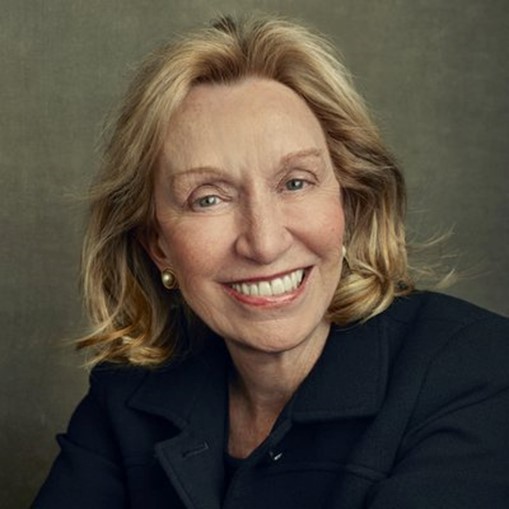
The Public Affairs Research Council of Alabama (PARCA) is hosting historian Doris Kearns Goodwin for “An evening of cocktails, discussion, and a special book signing” in Birmingham on Tuesday, September 19. Doris Kearns Goodwin is a world-renowned presidential historian, public speaker, and Pulitzer Prize-winning New York Times #1 best-selling author. PARCA is a 501c3 nonprofit whose mission is to work to inform and improve the decision making of state and local leaders in Alabama through objective research and analysis. PARCA studies state and local finances and taxes, school performance, workforce development, and government operations. Since 2020, she has worked as the executive producer for the History Channel’s miniseries events “Washington,” “Abraham Lincoln,” and “Theodore Roosevelt,” with more projects in the pipeline. The event will include a reception for all guests, a private cocktail reception with Goodwin, a fireside chat, a book signing, and a dessert reception. Priska Neely, the regional managing editor for the Gulf States Newsroom, will be the moderator. Goodwin is a frequent news media and late-night TV guest to discuss leadership and provide historical context for current issues, including the impact of the COVID-19 global pandemic, presidential politics, and the 2022 Russian invasion of Ukraine. Ms. Goodwin’s seventh book, “Leadership In Turbulent Times,” was an instant bestseller and published to critical acclaim in Fall 2018. Focusing on Presidents Abraham Lincoln, Theodore Roosevelt, Franklin Roosevelt, and Lyndon Baines Johnson, the book provides an accessible and essential road map for aspiring and established leaders in every field and for all of us in our everyday lives. Goodwin graduated magna cum laude from Colby College. She earned a Doctor of Philosophy degree in Government from Harvard University, where she taught Government, including a course on the American Presidency. Goodwin has been a critic of former President Donald Trump. Goodwin previously authored six critically acclaimed and New York Times bestselling books, including the Carnegie Medal winner “The Bully Pulpit: Theodore Roosevelt, William Howard Taft, and the Golden Age of Journalism,” which is in part the basis for a film being developed about Ida Tarbell, the famous muckraking journalist of the era. Ms. Goodwin’s award-winning “Team of Rivals: The Political Genius of Abraham Lincoln” was the inspiration for Steven Spielberg’s film “Lincoln,” which earned 12 Academy Award® nominations, including an Academy Award for actor Daniel Day-Lewis for his portrayal of the 16th president. Ms. Goodwin earned the Pulitzer Prize in History for “No Ordinary Time: Franklin and Eleanor Roosevelt: The Home Front in World War II.” Her “The Fitzgeralds and the Kennedys” was adapted into an award-winning television miniseries. Goodwin worked with President Johnson in the White House and later assisted him in the writing of his memoirs. She then wrote “Lyndon Johnson and the American Dream,” which became a national bestseller and achieved critical acclaim. It was re-released in Spring 2019, highlighting LBJ’s accomplishments in domestic affairs. Goodwin has served as a consultant and has been interviewed extensively for PBS and HISTORY’s documentaries on Presidents Johnson, Roosevelt, and Lincoln, the Kennedy family, and on Ken Burns’ “The History of Baseball” and “The Roosevelts: An Intimate History.” She was a consultant on HBO Films’ “All the Way,” starring Bryan Cranston as President Johnson. She played herself as a teacher to Lisa Simpson on” The Simpsons” and a historian on “American Horror Story.” The event will be held at the Birmingham Red Mountain Theatre Arts Campus. Proceeds for this event will go toward PARCA’s mission to inform and improve the decision-making of state and local leaders in Alabama through objective research and analysis. General admission tickets start at $100. PARCA is a 501c3 nonprofit whose mission is to work to inform and improve the decision making of state and local leaders in Alabama through objective research and analysis. PARCA studies state and local finances and taxes, school performance, workforce development, and government operations. To connect with the author of this story or to comment, email brandonmreporter@gmail.com.
Barry Moore says Democrats “have been out to get Trump since he came down the escalator”
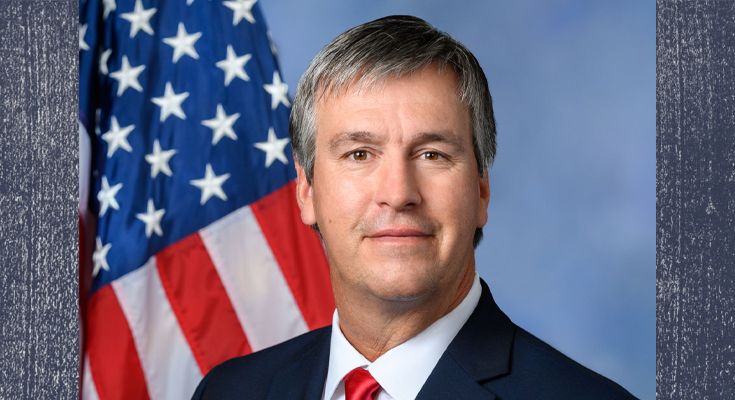
On Monday night, former President Donald Trump was indicted by a Fulton County, Georgia grand jury for charges dating back to 2020, accusing the former President and 18 of his attorneys, advisors, and affiliates of conspiring to unlawfully overturn the results of the 2020 election. Congressman Barry Moore (R-AL02) – who has endorsed Trump for President – took to Twitter on Tuesday to denounce the prosecution of Trump and his team. “The United States had never before indicted a former president, and now Biden’s Department of Justice and weaponized blue state prosecutors have indicted President Trump four times in a matter of months,” Moore said on Twitter. As they continue their quest to throw their chief political opponent in jail, Democrats have joined the likes of Maduro and Noriega,” Rep. Moore wrote on Twitter. “They have been out to get President Trump since he came down the escalator, and Americans can see through this desperate sham.” Moore, a member of the House Judiciary Committee that is investigating alleged influence peddling by the President’s son, Hunter Biden, and allegations that Biden himself may have received payoffs from foreign sources while he was Vice President – has suggested that the indictments of Trump are part of a plan by Democrats to distract attention from those hearings. “JUST IN: The Biden family received more than $20 million from oligarchs in Russia, Ukraine, and Kazakhstan while he was VP,” said Moore on Twitter. “Biden dined with these oligarchs and spoke with them on the phone 20 separate times. The indictments are just a distraction from the real story.” Most Republicans dismiss the Trump indictments as partisan politics. U.S. Senator Tommy Tuberville (R-Alabama) called them a “sham” and a “witch hunt” in a statement on Tuesday. Some Trump opponents, on the other hand, claim that he should not be allowed on the ballot due to the legal controversy. William Baude and Michael Stokes Paulsen claim that by challenging the results of the 2020 election, Trump is guilty of participating in an insurrection between the election and the certification of the Electoral College votes on January 9, 2021, and is thus barred from holding public office under the post-Civil War Fourteenth Amendment. Trump has already made history as only the third President in the country’s history to be impeached by the House of Representatives and the only President to be impeached twice. Like Bill Clinton and Andrew Johson before him, Trump was not convicted by the Senate. Trump is the sixth one-term President since 1900 to lose reelection. The others are William Howard Taft in 1912, Herbert Hoover in 1932, Gerald Ford in 1976, Jimmy Carter in 1980, and George H. Bush in 1992. If Trump wins the Republican nomination for President and then is elected to a nonconsecutive term in 2024, he would be the first to accomplish that since Grover Cleveland. Moore is serving in his second term representing Alabama’s Second Congressional District. To connect with the author of this story or to comment, email brandonmreporter@gmail.com.
Darryl Paulson: It’s now or never for #NeverTrump
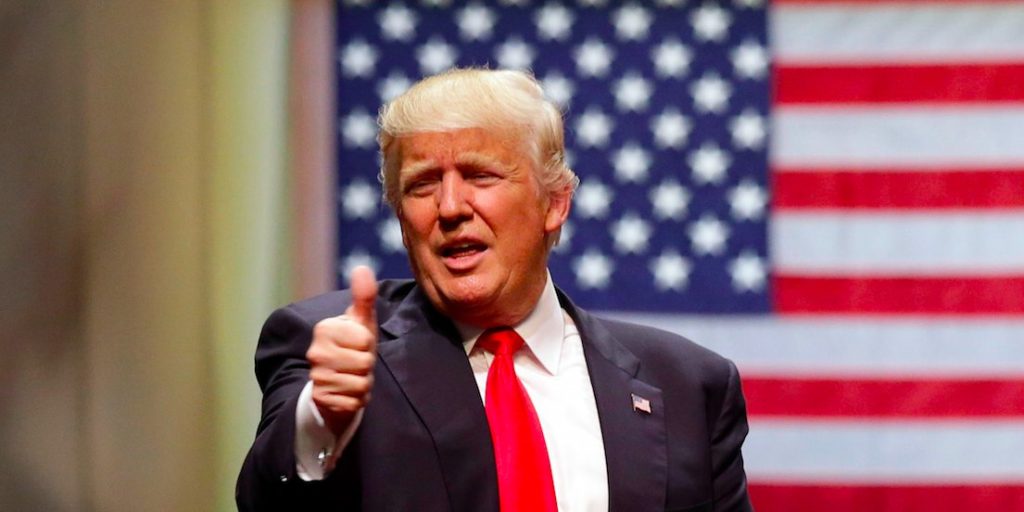
The opposition to Donald Trump has been constant from the start of the 2016 presidential campaign. However, it has been unfocused and essentially leaderless. Many Trump opponents believed he would not enter the race. When he entered, they believed he had no chance of winning. Now that Trump has won the nomination, they believe he can be stopped by an independent or third party campaign. As early as December 2015, before the first caucus or primary, Mike Fernandez, a Coral Gables, Florida health care executive and financial backer of Jeb Bush, took out full-page ads in the Miami Herald and other newspapers stating that he would support Hillary Clinton over Donald Trump. Fernandez described Trump as a narcissistic ”Bullyionaire” with a hunger to be adored. Fernandez was critical of fellow Republicans “blinded by the demagoguery” of Trump. In January 2016, National Review devoted an issue to conservative writers who made the case that Trump was not a conservative, and his nomination would do long-term damage to conservatism and the Republican Party. The issue contributed to the formation of the #NeverTrump movement, but it failed to stop Trump from winning the GOP nomination. With Trump having secured the nomination, many Republicans now look at the race as a binary choice: Donald Trump or Hillary Clinton. Most Republicans, unlike Mike Fernandez, see Trump as the preferred option. Foster Friess, a Wyoming financier and supporter of Republican candidates and causes, said Trump was not his first choice, but “he’s better than Hillary.” During the presidential primaries, even Jeb Bush stated that “Anybody is better than Hilary.” Some of Trump’s strongest critics have now jumped aboard the bandwagon. Texas Governor Rick Perry, who called Trump a “cancer” on the GOP who would lead the party to “Perdition,” has now offered to help Trump win the election. Oh, by the way, he would also be interested in being Trump’s Vice President. Many Republicans believe it is now a question of party loyalty. As Republican strategist Ford O’Connell observes, “political parties are not meant to be ideological vessels, but competing enterprises whose job is to win elections.” Rick Wilson, one of the most vehement anti-Trumpers, described the party loyalty argument as nothing more than “the DC establishment rolling over and becoming the Vichy Republicans we all know they would.” The last hope of the #NeverTrump movement is recruiting an independent or third-party candidate to provide an alternative to Trump and Clinton. RNC Chair Reince Priebus calls such efforts a “suicide mission.” Supporters argue that an independent candidate would not only give discontented voters a choice, but they believe such a candidate could win. At the very least, such a candidate could siphon off enough electoral votes to throw the election into the House, where the Republican majority could select someone other than Trump or Clinton. Supporters of an independent option argue that recent polls show 58 percent of voters are not happy with their choices, and 55 percent say they support an independent candidate. Historically, the idea of an independent candidate is more appealing than the reality. Teddy Roosevelt and his Bull Moose Party is widely regarded the most effective third-party movement. Roosevelt actually came in second and swamped incumbent Republican President William Howard Taft. Roosevelt received 27.4 percent of the vote and 88 electoral votes to only 23.2 percent and 8 electoral votes for Taft. In 1948, Governor Strom Thurmond of South Carolina won only 2.4 percent of the national vote but, because it was concentrated in a few Deep South states where Truman’s name did not appear on the ballot, Thurmond captured the electoral votes of four states. Twenty years later, Governor George Wallace replicated much of Thurmond’s success in winning 13.5 percent of the vote and 46 electoral votes in five southern states. In 1992, Texas businessman Ross Perot and his Reform Party won almost one out of five votes, but failed to capture a single state. At one point, Perot led both George H. W. Bush and Bill Clinton but, as Election Day approached, many of his supporters returned to support their traditional party. To run as an independent or third-party candidate, there is one important requirement: you need a candidate. So far, the #NeverTrump movement has not found a willing person to oppose Trump. Among the possible candidates are Mitt Romney, the 2012 Republican presidential nominee. Romney has name recognition and money, and would likely qualify for the debates. Romney was opposed by many conservatives in his 2012 race which would once again be a problem. In addition, Romney’s enthusiastic acceptance of Trump’s endorsement in that campaign would be another concern. Marine Corps General James Mattis seriously considered running before backing out. Mattis would have commanded support as a military figure and a political outsider. But, Mattis is not an Eisenhower and is an unknown commodity. Marco Rubio‘s name is being tossed about as a possible candidate. Rubio is young, charismatic and has appealed to woman and minority voters. The downside is that Rubio won only in Puerto Rico, Minnesota and the District of Columbia, and badly lost his home state of Florida to Trump. In addition, Rubio signed the pledge to support the Republican nominee “and I intend to keep it.” Ben Sasse, a first-term Republican Senator from Nebraska, has been a leader in the #NeverTrump movement. Sasse is only in his second year as a senator, which will raise questions about his experience. He also is unknown outside of Nebraska. Finally, former House member and Senator Tom Colburn has expressed interest in running and is highly respected by conservatives for his attempts to cut federal spending. Colburn has stated that Trump “needs to be stopped,” but recently said he would not be the candidate. One of the maxims of politics is that it takes something to beat nothing. So far, nothing looks like he has the race all wrapped up. ___ Darryl Paulson is Professor Emeritus of Government at USF St. Petersburg.
