
Donald Trump’s list of possible SCOTUS nominees include two from Alabama
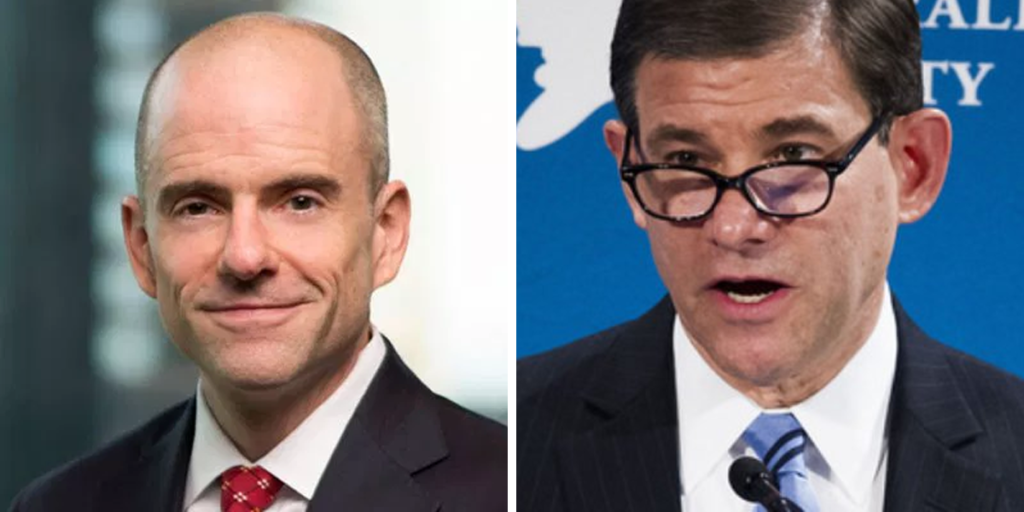
Justice Anthony Kennedy, a member of the Supreme Court, announced Wednesday he will retire, giving President Donald Trump his second opportunity to fill a seat on the high court. According to a senior White House staffer, Trump is choosing his nominee from a list of 25 well-qualified judges. William Pryor Among them is Judge William Pryor. An Alabama-based judge on the 11th U.S. Circuit Court of Appeals, who met with Trump back in January 2017 before he ultimately selected Neil Gorsuch for the seat. His resume is impressive too. He was Alabama’s attorney general from 1997 to 2004. He’s also is a member of the U.S. Sentencing Commission, an independent agency that sets sentencing guidelines for the federal courts. Also in his corner is his opinion on Roe v. Wade. Kennedy often supported abortion rights during his time on the court, and Trump wants to choose justice who want to overturn the landmark abortion rights case, and Pryor once called the 1973 decision, the “worst abomination in the history of constitutional law.” He’s also a prime age for a potential nominee 54. Typically, presidents seek nominees who have the potential for a long tenure in the lifetime appointment, and thus look for nominees under 60 years old. Kevin Newsom 45-year-old Birmingham attorney Kevin Newsom was nominated by Trump to the U.S. Court of Appeals for the 11th Circuit back in May 2017. Alabama’s former solicitor general, who prior to his confirmation chaired the appellate group at Bradley Arant Boult Cummings in Birmingham, is also on Trump’s possible SCOTUS nominee list. He graduated from Harvard Law School in 1997, where he served as Harvard Law Review’s articles editor. He earned his undergraduate degree at Birmingham’s Samford University in 1994, graduating summa cum laude with a 4.0. After graduating law school, Newsom clerked for Judge Diarmuid O’Scannlain of the U.S. Court of Appeals for the 9th Circuit, and then for U.S. Supreme Court Justice David Souter from 2000-2001. Newsom later joined Covington & Burling’s Washington-based appellate litigation practice group, where he served for two years before becoming Alabama solicitor general in 2003, appointed by then-Alabama Attorney General Bill Pryor. In 2004, Pryor was named to the 11th Circuit, and was on Trump’s list of potential U.S. Supreme Court nominees. A biography online says Newsom personally argued four cases before the U.S. Supreme Court, and over 19 federal appellate court cases, as well as several in state appellate courts. In 2007, Newsom stepped down as solicitor general to join Bradley Arant, calling the “the SG gig … the job of a lifetime.” Others Below are the 25 names of possible contenders for the vacancy being considered by the President: Amy Coney Barrett of Indiana, U.S. Court of Appeals for the Seventh Circuit Keith Blackwell of Georgia, Supreme Court of Georgia Charles Canady of Florida, Supreme Court of Florida Steven Colloton of Iowa, U.S. Court of Appeals for the Eighth Circuit Allison Eid of Colorado, U.S. Court of Appeals for the Tenth Circuit Britt Grant of Georgia, Supreme Court of Georgia Raymond Gruender of Missouri, U.S. Court of Appeals for the Eighth Circuit Thomas Hardiman of Pennsylvania, U.S. Court of Appeals for the Third Circuit Brett Kavanaugh of Maryland, U.S. Court of Appeals for the District of Columbia Circuit Raymond Kethledge of Michigan, U.S. Court of Appeals for the Sixth Circuit Joan Larsen of Michigan, U.S. Court of Appeals for the Sixth Circuit Mike Lee of Utah, United States Senator Thomas Lee of Utah, Supreme Court of Utah Edward Mansfield of Iowa, Supreme Court of Iowa Federico Moreno of Florida, U.S. District Court for the Southern District of Florida Kevin Newsom of Alabama, U.S. Court of Appeals for the Eleventh Circuit William Pryor of Alabama, U.S. Court of Appeals for the Eleventh Circuit Margaret Ryan of Virginia, U.S. Court of Appeals for the Armed Forces David Stras of Minnesota, U.S. Court of Appeals for the Eighth Circuit Diane Sykes of Wisconsin, U.S. Court of Appeals for the Seventh Circuit Amul Thapar of Kentucky, U.S. Court of Appeals for the Sixth Circuit Timothy Tymkovich of Colorado, U.S. Court of Appeals for the Tenth Circuit Robert Young of Michigan, Supreme Court of Michigan (Ret.) Don Willett of Texas, Supreme Court of Texas Patrick Wyrick of Oklahoma, Supreme Court of Oklahoma
Five things you need to know about Troy King
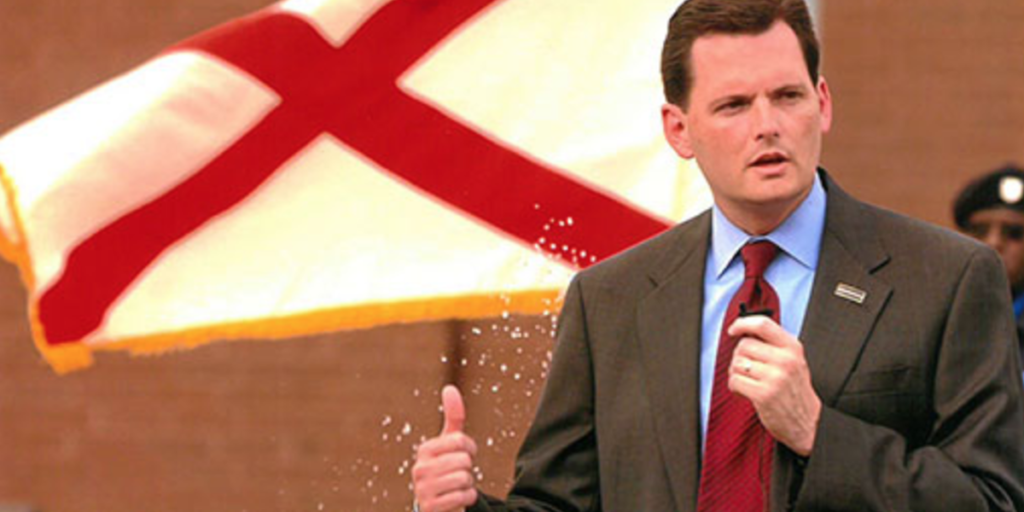
The primary elections are over, but some highly sought spots still remain open due to the primary races resulting in runoffs. One of those races is for the Attorney General’s seat. In a highly contested and publicized race, Incumbent Steve Marshall and former Alabama Attorney General Troy King both garnered enough support to tip the race into a a runoff election set for July 17. With that in mind, here are five things you need to know about Troy King: 1. He was Alabama’s Attorney General in from 2004 to 2010. It’s safe to say King knows a thing or two about the day-to-day proceedings of the Alabama Attorney General’s office. He was first appointed attorney general in 2004 by former Gov. Bob Riley, after William Pryor left the office to accept federal judge position with the Eleventh Circuit Court of Appeals. In 2006, King defeated democratic nominee John M. Tyson in the November general election of that year. He served as Attorney General for one term after his election, and was defeated by Luther Strange in the 2010 Republican primary; but now he’s back and ready to ultimately find victory as the Party’s nominee. 2. He was instrumental in bringing changes to the Yellowhammer State’s sex offender laws. While serving as Attorney General, King made it his mission to bring new laws regarding sex offenders to the state. Specifically he wanted the state to require that Alabama’s sex offenders who were released wear an electronic monitoring bracelet (such as those used for those on house arrest or parole) to monitor the sex offenders whereabouts. He was so adamant about his position that he wore an electronic monitoring bracelet himself during the 2005 legislative session, until the law was changed. 3. Although he is very opposed to gambling of any kind in Alabama, he’s accepted campaign donations from out of state gambling interests. During his time as Attorney General, not only did he introduce anti-gambling legislation every year of his time in public office, he also prosecuted several electronic gambling sites, opposed a gambling expansion for the Native American tribes in Alabama, and even requested that the United States Department of the Interior deny the Poarch Band of Creek Indian’s application to broaden their gambling operations in the state. But a recent report by AL.com claims King has received “about $90,000 from five South Carolina companies and individuals with links to gaming.” According to the report, one of the major donors from South Carolina, Keith Gray, is involved in the gambling business, with one of his businesses being prosecuted in 2017 by the state of Alabama. Gray reportedly used his own name, names of family members, and business associates to donate to King’s campaign, including two companies called Open Ocean Investments and Sycamore Investments. Which have, “disconnected phone numbers, [and] share a post office box in Piedmont, South Carolina.” 4. He was the first Attorney General to sue BP after Deepwater horizon. On April 20, 2010, an explosion on an oil rig off the coast of Luisiana, called Deep Water Horizon, started a chain of events which eventually led to around 4.9 million barrels of oil being pumped into the Gulf of Mexico. The spill caused massive amounts of damage to coastal ecosystems and communities located near the gulf. Under King’s leadership, Alabama was the first state impacted by the Deep water Horizon oil spill to file a lawsuit against the oil rig’s owners, BP. “BP is now on notice,” King told CNN. “Alabama intends to hold you good to your word and to make you put our state back the way you found it.” King’s actions led to a settlement with BP in which the state was awarded $1.3 billion to be paid out over 14 years. 5. His favorite musician is Johnny Cash (at least on Facebook anyway). According to King’s campaign Facebook page, his favorite music to listen to is Johnny Cash. Cash is a very famous country artist best known for his songs “Boy Named Sue” and “Ring of Fire.”
Donald Trump intends to announce his Supreme Court pick on Feb. 2
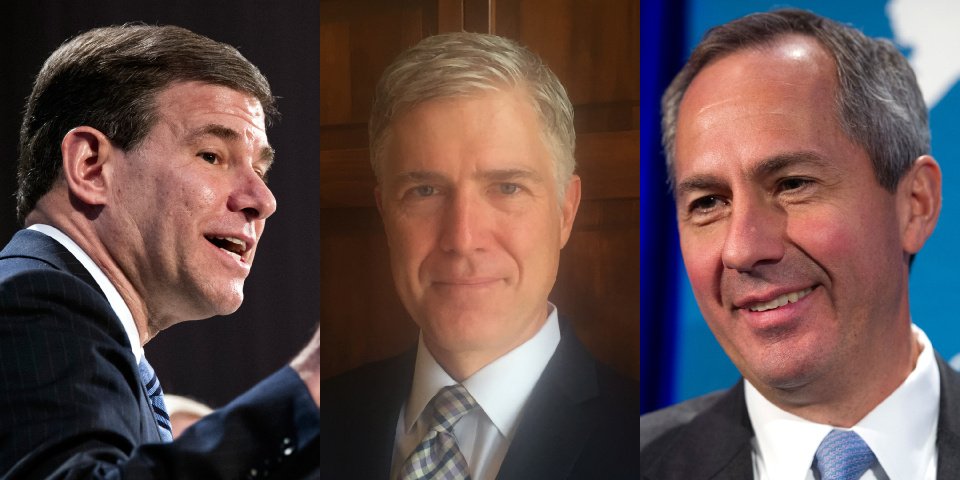
President Donald Trump said Wednesday he intends to announce his nominee for the Supreme Court on Feb. 2, and three federal appeals court judges are said to be the front-runners to fill the lifetime seat held by the late Justice Antonin Scalia, a conservative icon. The leading contenders, who have met with Trump, are William Pryor, Neil Gorsuch and Thomas Hardiman, according to a person familiar with the process who was not authorized to speak publicly about internal decisions and discussed the search on condition of anonymity. The three, ranging in age from 49 to 54, were on the list of 21 potential high court picks Trump announced during his presidential campaign. Pryor, 54, is an Alabama-based judge on the 11th U.S. Circuit Court of Appeals. Gorsuch, 49, is on the Denver-based 10th U.S. Circuit Court of Appeals. Hardiman, 51, is based in Pittsburgh for the 3rd U.S. Circuit Court of Appeals. All were nominated by President George W. Bush for their current posts. In a tweet Wednesday morning, Trump said he will make his high court pick next Thursday. Trump has promised to seek someone in the mold of conservative icon Antonin Scalia, who died nearly a year ago after serving on the Supreme Court for more than 29 years. Senate Republicans prevented President Barack Obama from filling the seat, a political gamble that paid off when Trump was elected. It’s hard to know what might persuade Trump to choose one instead of the others, said John Malcolm, a senior lawyer at the conservative Heritage Foundation. “He’s got to feel comfortable with the guy. It’s a part of his legacy, a very important part of his legacy,” Malcolm said. Justices often serve for decades after the president has chosen them leaves office. The longest serving justice currently on the bench, Anthony Kennedy, was a Ronald Reagan appointee who joined the court in 1988. Democrats and liberal interest groups, fuming over the Republican refusal to consider Obama’s nomination of Judge Merrick Garland to the court, are ready to fight any Trump nominee who is “outside the mainstream,” Senate Democratic leader Chuck Schumer said after a White House meeting about the court vacancy Tuesday. Conservatives said the contenders all share Scalia’s commitment to the text and meaning of the Constitution. “These are not stealth candidates. Their records are there for everyone to see and to understand. Their judicial philosophy is well within the mainstream of American legal thought,” said Leonard Leo, a conservative lawyer who has been advising Trump on the filling the vacancy. Of the three leading candidates, only Pryor faced significant opposition when nominated to the appeals court. Senate Democrats refused to allow a vote on his nomination, leading Bush initially to give Pryor a temporary recess appointment. In 2005, the Senate confirmed him 53-45, after senators reached an agreement to curtail delaying tactics for appellate judgeships. Gorsuch was approved by a voice vote in 2006. Schumer and Feinstein were among the 95 senators who voted for Hardiman’s confirmation in 2007. Hardiman is a colleague of Trump’s sister, Judge Maryanne Trump Barry. Pryor has a reputation as staunch conservative with a taste for academic rigor. He once called the landmark 1973 decision legalizing abortion the “worst abomination in the history of constitutional law.” As Alabama attorney general, he also angered some conservatives for urging a judicial discipline panel to remove Alabama Chief Justice Roy Moore from office after he refused to obey a court order take down a Ten Commandments monument from the lobby of the state judicial building. Some conservatives also have recently criticized Pryor for his vote in 2011 in favor of a transgender woman who sued for sex discrimination. Gorsuch is the closest on Trump’s list to a Washington insider — the son of former EPA administrator Anne Gorsuch, educated in the Ivy League and at Oxford, law clerk to Justice Anthony Kennedy and Bush-era Justice Department official. His opinions and outside writings, praised for their clear, colloquial style, include a call for courts to second-guess government regulations, defense of religious freedom and skepticism toward law enforcement. He has contended that courts give too much deference to government agencies’ interpretations of statutes. He sided with groups that held religious objections to the Obama administration’s requirements that employers provide health insurance that includes contraception. Hardiman has sided with jails seeking to strip-search inmates arrested for even minor offenses and has supported gun rights, dissenting in a 2013 case that upheld a New Jersey law to tighten requirements for carrying a handgun in public. Last year, he joined two 3rd Circuit colleagues in affirming the $1 billion settlement of NFL concussion claims, rejecting complaints that men with depression and mood disorders were left out of the deal. A Massachusetts native, he settled in Pittsburgh, where his wife comes from a family of prominent Democrats. Republished with permission of The Associated Press.
Donald Trump meets with Supreme Court candidate from Alabama
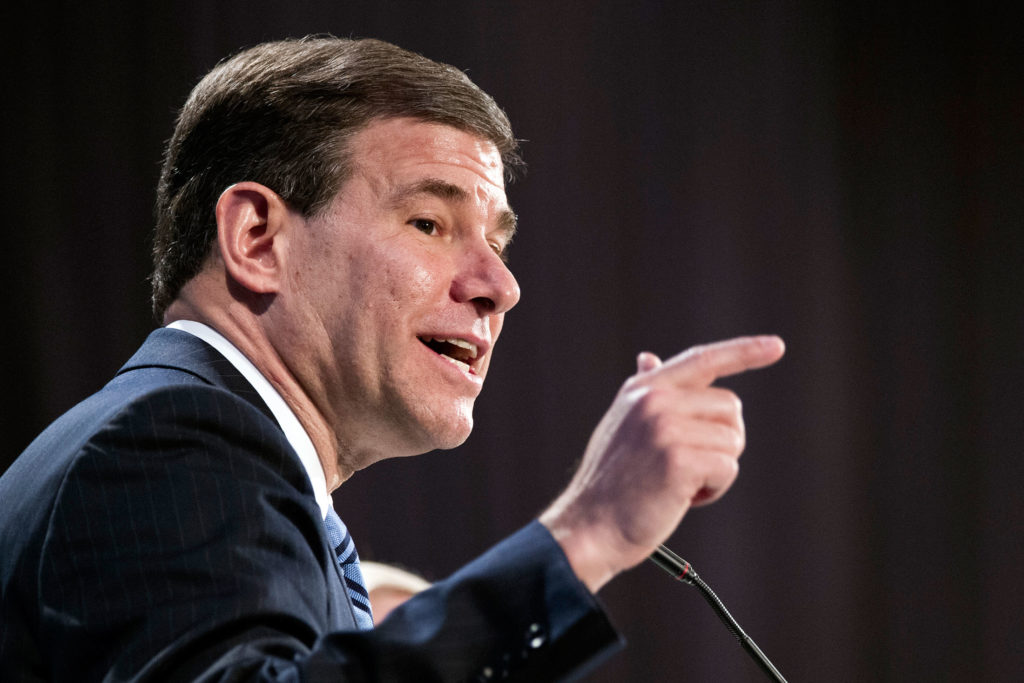
President-elect Donald Trump has met with one of the judges on his short list for potential Supreme Court nominees, less than two weeks before he is expected to announce his choice for the nation’s highest court. Judge William Pryor, an Alabama-based judge on the 11th U.S. Circuit Court of Appeals, met with Trump in New York on Saturday, said two people familiar with the meeting. They spoke on condition of anonymity because the meeting had not been publicly announced. Trump said last week that he would select a candidate to fill the seat of the late Justice Antonin Scalia within his first two weeks in office. He has promised to seek someone in the conservative’s mold and said he is working from a list of 21 people, mainly conservative state and federal judges in their 50s. For nearly a year, the court has had only eight justices, which means they can deadlock at 4-4 deadlock on decisions. The likely confirmation of Trump’s choice by a Republican-controlled Senate would restore a fifth vote for conservative outcomes in cases involving voting rights, the power of unions and in class-action lawsuits, lost with Scalia’s death. Trump also has said he wants an abortion opponent on the bench, although it would take a second Trump appointee to bring about dramatic change on that issue. Other potential Trump nominees include state Supreme Court judges Allison Eid of Colorado, Joan Larsen of Michigan, David Stras of Minnesota and Don Willett of Texas, and federal appellate judges Steven Colloton, Thomas Hardiman, Raymond Kethledge and Diane Sykes. Trump hinted last February that he had two favorites on the list of 21, Pryor and Sykes, although there is no indication that he’s made a final decision. Many factors come into play in choosing a Supreme Court justice, including age and gender. Typically, presidents seek nominees who have the potential for a long tenure in the lifetime appointments, seeking nominees under 60 years old. Pryor is 54. Trump’s victory rewarded Senate Majority Leader Mitch McConnell‘s strategy of refusing all year even to consider President Barack Obama‘s nomination of Judge Merrick Garland to take Scalia’s seat. McConnell announced on the night that Scalia died that the vacancy should be filled not by Obama, but by the next president. The Kentucky Republican was criticized for his stance by Obama, other Democrats and many legal scholars. Pryor also is a member of the U.S. Sentencing Commission, an independent agency that sets sentencing guidelines for the federal courts. He was the Alabama’s attorney general from 1997 to 2004. His predecessor in that job, Sen. Jeff Sessions, is Trump’s pick for U.S. attorney general, and the two – both natives of the city of Mobile, are said to have a close working relationship. In a statement in 2005 following Pryor’s nomination to the Eleventh Circuit, Sessions hailed Pryor as someone who “personally does not believe in abortion. He does not believe it is right. He believes it is wrong.” Pryor once called the 1973 landmark abortion decision, Roe v. Wade, the “worst abomination in the history of constitutional law.” He has also warned against the danger of “activist judges” influenced by personal beliefs. When he was appointed to the Eleventh Circuit, he said he would put his personal feelings aside and follow legal precedent. Locally, Pryor had a reputation as a scholarly attorney general, more interested in the law than rough-and-tumble politics. After getting a ninth justice on the court, the next big question will be whether liberal Justices Ruth Bader Ginsburg and Stephen Breyer, and Justice Anthony Kennedy, the pivotal vote closest to the court’s center, will retire during a Trump administration or try to stay on the bench in the hope that Trump is not re-elected in 2020. Ginsburg is 83, Kennedy is 80 and Breyer is 78. Republished with permission of The Associated Press.
Email insights: Former Alabama Attorney General makes Donald Trump’s Supreme Court short-list
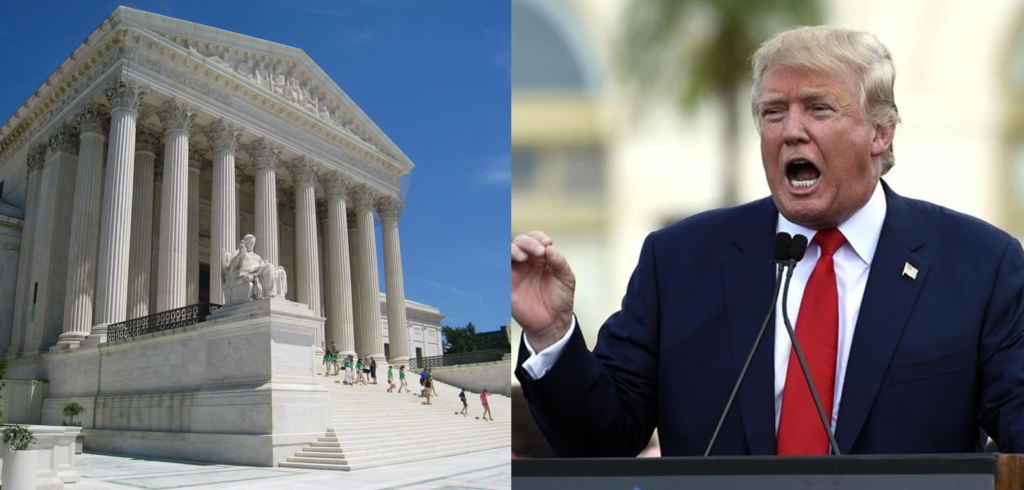
Presumptive Republican presidential nominee Donald Trump unveiled a list Wednesday of 11 federal and state judges he would consider nominating to fill the vacant seat of late Justice Antonin Scalia on the Supreme Court, including former Alabama Attorney General William Pryor. The list also includes: Steven Colloton of Iowa, Allison Eid of Colorado, Raymond Gruender of Missouri, Thomas Hardiman of Pennsylvania, Raymond Kethledge of Michigan, Joan Larsen of Michigan, Thomas Lee of Utah, David Stras of Minnesota, Diane Sykes of Wisconsin and Don Willett of Texas. A highly unusual move for a presidential candidate, the announcement comes as Trump is working to unite a highly fractured Republican Party and win over conservatives still skeptical of his candidacy and views. Trump told Fox News Wednesday: “I have a lot of people that are conservative that really like me, love everything I stand for, but they really would like to know my view, because perhaps outside of the defense of our country, perhaps the single most important thing the next president is going to have to do is pick Supreme Court justices.” In the announcement, Trump said he planned to use the list “as a guide to nominate our next United States Supreme Court Justices” and said the names are “representative of the kind of constitutional principles I value.” Read Trump’s full email announcement below: (New York, NY) May 18, 2016 — Today Donald J. Trump released the much-anticipated list of people he would consider as potential replacements for Justice Scalia at the United States Supreme Court. This list was compiled, first and foremost, based on constitutional principles, with input from highly respected conservatives and Republican Party leadership. Mr. Trump stated, “Justice Scalia was a remarkable person and a brilliant Supreme Court Justice. His career was defined by his reverence for the Constitution and his legacy of protecting Americans’ most cherished freedoms. He was a Justice who did not believe in legislating from the bench and he is a person whom I held in the highest regard and will always greatly respect his intelligence and conviction to uphold the Constitution of our country. The following list of potential Supreme Court justices is representative of the kind of constitutional principles I value and, as President, I plan to use this list as a guide to nominate our next United States Supreme Court Justices.” Steven Colloton Steven Colloton of Iowa is a judge of the U.S. Court of Appeals for the Eighth Circuit, a position he has held since President George W. Bush appointed him in 2003. Judge Colloton has a résumé that also includes distinguished service as the U.S. Attorney for the Southern District of Iowa, a Special Assistant to the Attorney General in the Justice Department’s Office of Legal Counsel, and a lecturer of law at the University of Iowa. He received his law degree from Yale, and he clerked for Chief Justice William Rehnquist. Judge Colloton is an Iowa native. Allison Eid Allison Eid of Colorado is an associate justice of the Colorado Supreme Court. Colorado Governor Bill Owens appointed her to the seat in 2006; she was later retained for a full term by the voters (with 75 percent of voters favoring retention). Before her judicial service, Justice Eid served as Colorado’s solicitor general and as a law professor at the University of Colorado. Justice Eid attended the University of Chicago Law School, and she clerked for Justice Clarence Thomas. Raymond Gruender Raymond Gruender of Missouri has been a judge of the U.S. Court of Appeals for the Eighth Circuit since his 2004 appointment by President George W. Bush. Judge Gruender, who sits in St. Louis, Missouri, has extensive prosecutorial experience, culminating with his time as the U.S. Attorney for the Eastern District of Missouri. Judge Gruender received a law degree and an M.B.A. from Washington University in St. Louis. Thomas Hardiman Thomas Hardiman of Pennsylvania has been a judge of the U.S. Court of Appeals for the Third Circuit since 2007. Before serving as a circuit judge, he served as a judge of the U.S. District Court for the Western District of Pennsylvania since 2003. Prior to his judicial service, Judge Hardiman worked in private practice in Washington, D.C. and Pittsburgh. Judge Hardiman was the first in his family to attend college, graduating from Notre Dame. Raymond Kethledge Raymond Kethledge of Michigan has been a judge of the U.S. Court of Appeals for the Sixth Circuit since 2008. Before his judicial service, Judge Kethledge served as judiciary counsel to Michigan Senator Spencer Abraham, worked as a partner in two law firms, and worked as an in-house counsel for the Ford Motor Company. Judge Kethledge obtained his law degree from the University of Michigan and clerked for Justice Anthony Kennedy. Joan Larsen Joan Larsen of Michigan is an Associate Justice of the Michigan Supreme Court. Justice Larsen was a professor at the University of Michigan School of Law from 1998 until her appointment to the bench. In 2002, she temporarily left academia to work as an Assistant Attorney General in the Justice Department’s Office of Legal Counsel. Justice Larsen received her law degree from Northwestern and clerked for Justice Antonin Scalia. Thomas Lee Thomas Lee of Utah has been an Associate Justice of the Utah Supreme Court since 2010. Beginning in 1997, he served on the faculty of Brigham Young University Law School, where he still teaches in an adjunct capacity. Justice Lee was Deputy Assistant Attorney General in the Justice Department’s Civil Division from 2004 to 2005. Justice Lee attended the University of Chicago Law School, and he clerked for Justice Clarence Thomas. Justice Lee is also the son of former U.S. Solicitor General Rex Lee and the brother of current U.S. Senator Mike Lee. William Pryor William H. Pryor, Jr. of Alabama is a judge of the U.S. Court of Appeals for the Eleventh Circuit. He has served on the court since 2004. Judge Pryor became the Alabama Attorney General in 1997 upon Jeff Sessions’s election to the U.S. Senate. Judge Pryor
