
Alabama political scientist Bill Stewart dies at 80

In Alabama politics, there are players and there are observers. And then, every once in a while, someone comes along to help make sense of it all. William H. “Bill” Stewart Jr. was among the best of the latter, spending the most of five decades educating students, reporters, and the voting public alike on the complexities that influenced state and local politics. Alabama lost that voice on Sunday when Stewart, after battling illness, died at the age of 80. A Hartselle native who taught political science as a University of Alabama professor for more than 40 years, Stewart continued to teach will beyond his retirement, serving as a professor emeritus in the political science department, where he was recognized as an expert on Alabama politics. Across his career, his students have gone on to hold elected offices at the highest levels, said his wife, Connie. “He was always mentoring students. That was his passion,” she said. “And he was just so proud of all of his students and the achievements that they made.” Counted among those students included governors, including Alabama’s last Democratic governor, Don Siegelman, and numerous Alabama legislators. But his influence wasn’t reserved to just one party, as Alabama’s own Republican Secretary of State, John Merrill, can attest. Merrill never had Stewart as a professor during his years as a student in the 1980s. Rather, their relationship – and his influence on Merrill’s own approach to politics – began after Merrill’s graduation, usually over dinners at an Olive Garden in Tuscaloosa. “There’s no doubt I was a better political science student (because of) Bill Stewart, even though I never had him for a class,” Merrill said. “The loss of Bill Stewart is a loss for all who aspire to have quality representatives in our local, county, state, and federal government positions. “As one of the most knowledgeable and insightful observers of politics, he was a voice of reason and objectivity that cannot be replaced.” Beyond politics, Stewart was an avid runner – he participated in several marathons and 5K runs, his wife said – and a devout Christian, attending the University Church of Christ for more than 50 years. Stewart’s son William H. Stewart III, who goes by Trey, said he didn’t catch the politics bug from his dad. Rather, it was the educator and spiritual leader that swayed him most. Trey Stewart, 38, attributed both his earning of a Ph.D. in educational psychology and his concerns for her fellow man to his dad’s guidance. “My dad was a Christian – a person of faith, sincere faith – and, for me, as his son, a lot of who I am I got from him in terms of my own religious faith,” Trey Stewart said. “And I try to be an empathetic person. Those aspects of my character I would say I got, to a large degree, from him.” But for scores of others across Alabama’s political landscape, Stewart’s legacy will be his approach to political analysis that was rooted not just in the events of the day, but also in the history of Alabama and how the echoes of years past were influencing current decisions. Much of that perspective came from Stewart growing up under his father, William H. Stewart Sr., who served in the Alabama Legislature. “That’s where he got this love of politics from,” Connie Stewart said. “He saw how the political machinations worked here in the state and was fascinated by it. And he really loved it. It was in his blood.” Republished with the permission of the Associated Press.
Fundraising and ethics upfront in lieutenant governor’s primary
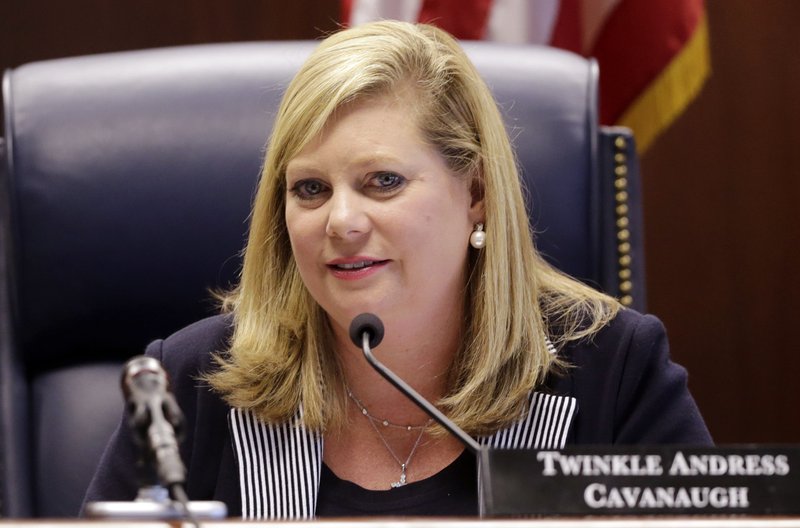
Three million dollars have poured into the Alabama lieutenant governor’s race as four candidates vie for a statewide position with limited responsibilities other than succeeding the governor. In the Republican primary, Alabama Public Service Commission president Twinkle Andress Cavanaugh is running against two state legislators: Rep. Will Ainsworth from Guntersville and Sen. Rusty Glover from Mobile. The lieutenant governor presides over the state Senate, but only casts a vote in the event of a tie. He or she serves on two dozen committees and appoints more than 400 state positions. The primary responsibility is succeeding the governor if he or she dies, resigns or is impeached. A failed Senate bill this year attempted to strip the lieutenant governor’s powers and criticized the role as simply a political stepping stone to the governor’s office. The lieutenant governor position has been vacant since April 2017 when Kay Ivey succeeded Robert Bentley as governor. Bentley quit while embroiled in a sex scandal. If Ivey wins election in November, she will be Alabama’s oldest governor at 74. Analyst and former University of Alabama politics professor William Stewart said Ivey would be unlikely to run for a second term. “The lieutenant governor race is more significant this year,” Stewart said. “More money has gravitated toward the race because it seems to be a foregone conclusion that whoever is elected as lieutenant governor this year, that person will almost automatically become the favorite for the governorship four years from now.” Stewart said Cavanaugh has name recognition advantage as an already elected statewide official. The Republican nominee will face Democrat Will Boyd, a minister who lost the U.S. Senate special election primary against Doug Jones last year. The four candidates are vying for funds ahead of the June 5 primary. As of April 19, Ainsworth and Cavanaugh have both raised just shy of $900,000. Cavanaugh started the campaign with more than $500,000 and Ainsworth loaned himself the same amount to match her. The most recent filings show that Cavanaugh outstripped her opponents by raising more than $70,000 in March, although Ainsworth still boasts more than $1 million currently in hand. Glover trails significantly, having raised just around $125,000. Boyd has raised less than $4,400. Beyond fundraising, ethics is a top issue in the race as the Legislature looks to review the state’s ethics law next year and lawmakers currently face corruption charges. GOP contenders are trumpeting their integrity and staunch conservatism. Cavanaugh, a seasoned politician, touts her six-year record as the Alabama Public Service Commission president. She said she has regulated ethics and cut costs, never taking a state car. She hands out her personal cellphone number because she believes elected officials should be approachable. Cavanaugh was on the ticket for governor last year but told The Associated Press that after meeting with Ivey, she decided she would run for “second-string quarterback” instead. “We need a very strong, ethical, honest and Christian public servant if necessary. We always pray that our governor is in good health and doing a good job, but we have to be prepared,” she said. In a private interview, Cavanaugh steered controversial subjects such as racial profiling toward her Christian faith and belief that Alabama has a “bright future” — a reference to her campaign slogan playing off her unique first name. Ainsworth, the owner of a sportsman’s lodge and founder of a prominent hunting and fishing expo, said his comparative lack of experience is a good sign that he’s not a corrupt career politician. “I don’t believe we’re going to solve problems that have plagued us for decades by hiring the same people. I think we’re a fresh face,” Ainsworth said. In his one term in the House of Representatives, Ainsworth sponsored bills to impose term limits and let voters recall elected officials who don’t keep campaign promises. This year, Ainsworth introduced a bill to arm trained teachers after a shooting at a high school in Parkland, Florida. He ran his first campaign ad using the catchphrase “teachers can’t arm themselves with a number 2 pencil.” Three-term state Sen. Glover is the only candidate with experience in the legislative body that the lieutenant governor leads. Glover is most well-known for introducing a resolution to stop changing clocks under daylight saving time. He said that as lieutenant governor he would promote education, and economic and workforce development. “I want to preside over the Senate in a fair way and be an honest person,” Glover said. “I want to be someone people can trust.” Boyd, the uncontested Democratic candidate, said he is fighting for education, health care and social equality. The primary is June 5. Republished with the permission of the Associated Press.
