
Will Sellers: A Veterans Day to remember
America’s Veterans Day is recognized in other English-speaking countries as Remembrance Day. With the 80th anniversary this month of both the Battle of El Alamein and the North Africa “Torch” Landings, the observance has an added meaning. Eighty years ago, for all intents and purposes, the outcome of World War II hung in the balance. On all fronts, the Axis forces were advancing while the Allies suffered setbacks in almost every theater of combat. But momentum began to shift; if November 1942 began with pessimism and despair, it ended in a cautious optimism that the Allied cause had commanders who could win. In an amazing feat of coordination and cooperation, the Allied forces, under the command of Gen. Dwight D. Eisenhower, made five surprise amphibious landings on North African beaches hundreds of miles apart. This would be America’s initial entrance into the European phase of the war. Most of the American troops boarded vessels in the United States and steamed away without being detected. The North Africa landings would raise the profile of Gen. George Patton and set in motion the liberation of the Vichy French colonies. While the initial resistance to the landings came from French troops, they were persuaded to surrender and join the Allied cause. This disrupted the French chain of command and caused the Nazis to realize the fickle commitment of Vichy France. Even more significantly, to prevent the repurposing of the French Fleet as Nazi vessels, the entire French Navy was scuttled. The landings in French North Africa were the beginning of the gradual pacification of Axis hegemony. Prior to the landings, the Italians, and later the Nazis, were doing their best to prevent the British from controlling North Africa from Libya to Egypt. When the Italians were within a whisper of losing their toehold, Adolf Hitler sent reinforcements in the form of Erwin Rommel. His active duty in the desert would earn him the sobriquet “Desert Fox.” So even before the Torch landings, the British were directly engaged with Rommel and his Afrika Korps. And, for the most part, the Nazis were on the offense, pushing the British almost to Cairo. Tired of organized retreats, Winston Churchill sacked one commanding officer and, through circumstances, identified Gen. Bernard Montgomery to lead the British 8th Army. Montgomery, too, would make his mark in the desert. While the desert war was frustratingly slow, Montgomery took his time to build up his troops, making sure he had the necessary supplies and, by surprise, took the offensive. Rommel, on the other hand, was having a hard time acquiring the supplies necessary to keep his troops fed and his equipment serviceable. The British enjoyed significant naval resources to limit shipping in the Mediterranean, and the Royal Air Force had almost complete air superiority. Waiting for the best time to engage allowed Montgomery to build up his resources and served to diminish Nazi supplies and troop morale. Eighty years ago, when Montgomery did attack, he caught the enemy by surprise. Rommel had returned to Germany to fully recover from an illness, but his forces were no match for the well-supplied British joint operations. Superiority in tanks, aircraft, and armor-piercing artillery, ground the Nazi war machine down into a full retreat. Having to fight a defensive battle, Rommel turned to land mines to prevent British tanks and troops from attacking his flanks. As a countermeasure, Polish engineers developed an electronic mine detector that allowed minefields to be cleared in record time. This Polish invention allowed Allied troops to surreptitiously cut paths through minefields, which further surprised the Afrika Korps. Montgomery’s victory at El Alamein caused Churchill to famously remark that while the battle was not the beginning of the end, it was “the end of the beginning.” From this point on, the British would win battle after battle, pursuing the Nazis from North Africa to Sicily and, eventually, to Rome. As we celebrate our Veterans Day, the British will honor their war dead on Remembrance Day. At El Alamein, there will be a remembrance, as well, for it was 80 years ago that the might of the British Empire asserted itself and started the roll-up of Nazi forces in Europe. There is a cemetery at El Alamein for all the Commonwealth soldiers who died there. It is beautiful in its simplicity, and the symmetry of the marble headstones is a stark reminder of the cost of war. To walk through the graves and read the short phrases on each marker is a moving and somber experience. There is a quiet reverence to be on hallowed ground. There are countless markers of teenagers who died for their country, but the most sobering headstones of all simply read, “Known but to God.” In past years, families of the dead would gather to remember their sons, brothers, and husbands who made the ultimate sacrifice. Like so many other war cemeteries, it is the last touchstone many families have, and their trek to El Alamein is a pilgrimage to remember. Years ago, a father asked that his family spread his ashes at the tomb of his only son. While frowned upon, I am told this was not an infrequent occurrence. At the Commonwealth cemetery, there is an old Egyptian warden who keeps watch over the graves. His English is slight, but he takes his job seriously and guides families to the graves of their relatives in a most reverent and respectful manner. Of all the times in the Middle East when a tip or baksheesh might be in order, he refuses all gratuities and, completely against type, acts insulted at the offer. Remembering veterans this month is a good time to remember that 80 years ago in North Africa, American troops first engaged the enemy, and the British soundly defeated the Desert Fox while paving the way for ultimate victory. The cemetery at El Alamein reminds us of sacrifice and provides an object lesson in the cost of freedom. Will Sellers is a graduate of Hillsdale College
Queen Elizabeth II mourned by Britain and world at funeral
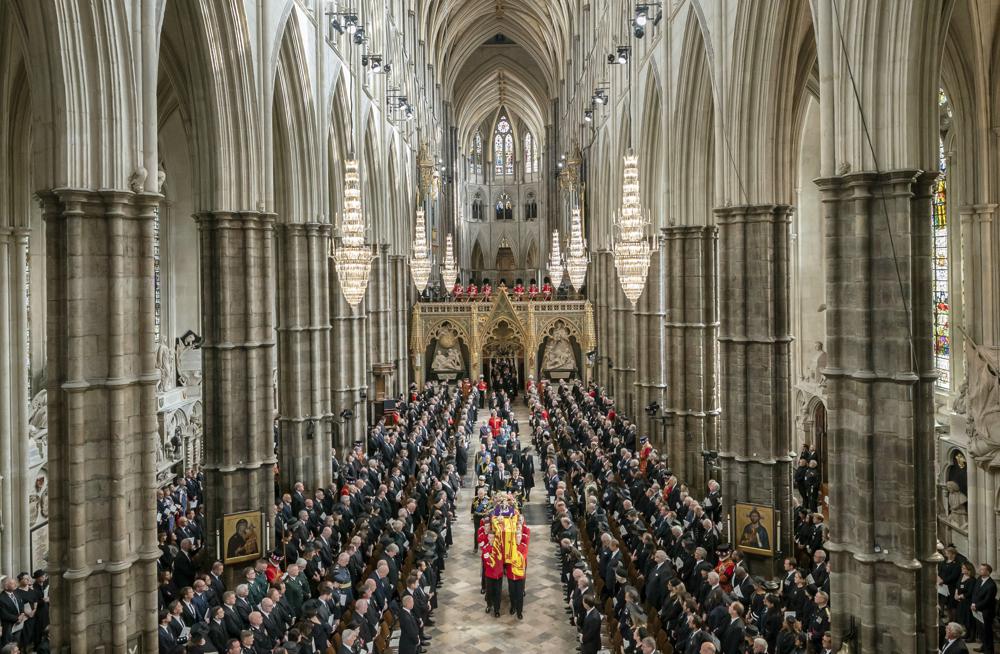
The United Kingdom and the world bade farewell to Queen Elizabeth II on Monday with a state funeral that drew presidents and kings, princes and prime ministers — and crowds in the streets of London and at Windsor Castle — to honor a monarch whose 70-year reign defined an age. In a country known for pomp and pageantry, the first state funeral since Winston Churchill’s was filled with spectacle: Before the service, a bell tolled 96 times — once a minute for each year of Elizabeth’s life. Then, 142 Royal Navy sailors used ropes to draw the gun carriage carrying her flag-draped coffin to Westminster Abbey, where pallbearers carried it inside, and about 2,000 people ranging from world leaders to health care workers gathered to mourn. The trappings of state and monarchy abounded: The coffin was draped with the Royal Standard, and atop it was the Imperial State Crown, sparkling with almost 3,000 diamonds and the sovereign’s orb and scepter. But the personal was also present: The coffin was followed into the church by generations of Elizabeth’s descendants, including King Charles III, heir to the throne, Prince William, and 9-year-old George, who is second in line. On a wreath atop the coffin, a handwritten note read, “In loving and devoted memory,” and was signed Charles R — for Rex, or king. “Here, where Queen Elizabeth was married and crowned, we gather from across the nation, from the Commonwealth, and from the nations of the world, to mourn our loss, to remember her long life of selfless service, and in sure confidence to commit her to the mercy of God our maker and redeemer,” the dean of the medieval abbey, David Hoyle, told the mourners. The service ended with two minutes of silence observed across the United Kingdom, after which the attendees sang the national anthem, now titled “God Save the King.” The day began early when the doors of Parliament’s 900-year-old Westminster Hall were closed to mourners after hundreds of thousands had filed in front of her coffin. Monday was declared a public holiday in honor of Elizabeth, who died September 8 — and hundreds of thousands of people descended on central London to witness history. They jammed sidewalks to watch the coffin wend its way through the streets of the capital after the service. As the procession passed Buckingham Palace, the queen’s official residence in the city, staff stood outside, some bowing and curtseying. Mark Elliott, 53, who traveled from the Lake District in northern England with his wife and two children to watch the procession, got up at 1:30 a.m. to stake out a good viewing location near the palace. “I know we don’t know the queen, but she’s been our head of state for 70 years. You feel as though you know her; you feel as though she’s part of the family. It is kind of moving,” he said. Archbishop of Canterbury Justin Welby said in his sermon at Westminster Abbey that “few leaders receive the outpouring of love we have seen” for the queen. More people lined the route the hearse took from the capital to Windsor Castle, and many tossed flowers at the cortege as it passed. Millions more tuned into the funeral live, and crowds flocked to parks and public spaces across the U.K. to watch it on screens. Even the Google doodle turned a respectful black for the day. As the coffin arrived at the castle, there were poignant reminders of her love of animals: A groom stood at the roadside with one of her ponies, Emma, and another member of staff held the leashes of two of her beloved corgis, Sandy and Muick. During the committal ceremony in St. George’s Chapel on the castle grounds, Dean of Windsor David Conner praised Elizabeth for her “life of unstinting service” to the nation but also her “kindness, concern and reassuring care for her family and friends and neighbors.” Then the crown and the orb and scepter were removed from atop the coffin and placed on the altar — separating them from the queen for the last time. Her coffin was lowered into the royal vault through an opening in the chapel’s floor. Charles looked weary and emotional as mourners sang the national anthem. At a private family service, the queen was later laid to rest with her husband, Prince Philip. The mourners at Westminster Abbey included U.S. President Joe Biden, French President Emmanuel Macron, all of the living former British prime ministers, and European royalty. In Japan, whose Emperor Naruhito also attended, several people sipped beer and watched the service at The Aldgate British pub in Tokyo’s fashionable Shibuya district. “The queen had an especially long history in a country that boasts a long history, and so she deserves deep respect,” said one of them, Tomotaka Hosokawa. The global outpouring of sympathy touched the king, who, on the eve of the funeral, issued a message of thanks to people in the U.K. and around the world, saying he and his wife, Camilla, the queen consort, have been “moved beyond measure” by the large numbers of people who have turned out to pay their respects. Jilly Fitzgerald, who was in Windsor, said there was a sense of community among the mourners as they prepared to wait hours to see the procession carrying the queen’s coffin. “It’s good to be with all the people who are all feeling the same. It’s like a big family because everyone feels that … the queen was part of their family,” she said. Republished with the permission of The Associated Press.
Queen Elizabeth II, a monarch bound by duty, dies at 96
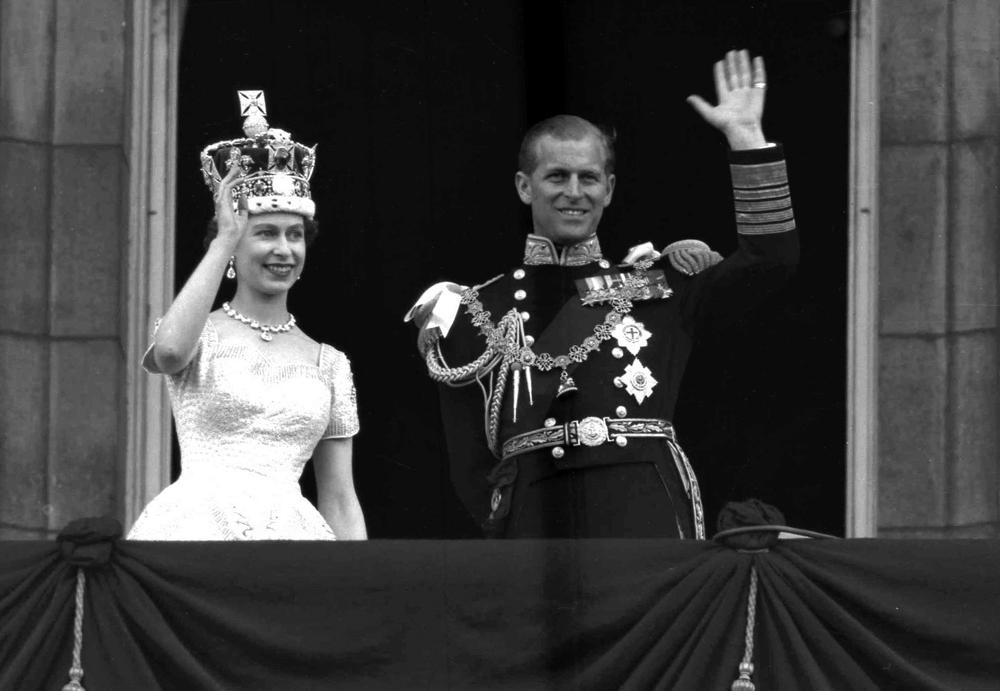
On her 21st birthday in 1947, Princess Elizabeth went on the radio and made a promise to Britain and its Commonwealth nations: She pledged that “my whole life, whether it be short or long, will be devoted to your service.” Over her very long life, Queen Elizabeth II fulfilled that vow. Through 15 prime ministers, from Winston Churchill to Liz Truss. Through Britain’s postwar deprivations, crippling labor unrest, and Brexit. Through the messy divorces, embarrassments, and scandals of her family. She endured through it all — a reassuring anchor in a fast-changing world. The longest-reigning monarch that Britain has ever known, Elizabeth died Thursday at 96 at Balmoral Castle, her beloved summer home in Scotland, after having steadied and modernized the royal institution through seven decades of huge social change. Her passing ends an era, the modern Elizabethan age. Her 73-year-old son, Charles, automatically became king upon her death. He will be known as King Charles III, although his coronation might not take place for months. Through countless public events in her 70 years as monarch, Elizabeth likely met more people than anyone in history. Her image — on stamps, coins, and banknotes — was among the most reproduced in the world. But her inner life and opinions remained mostly an enigma. The public saw only glimpses of her personality: her joy watching horse racing at Royal Ascot or being with her beloved Welsh corgi dogs. Yet Elizabeth had an intuitive bond with many of her subjects that seemed to strengthen over time, keeping a sense of perspective that served her well in most instances, said royal historian Robert Lacey. “A lot of it comes from her modesty, the fact that she’s very conscious that she’s not important, that she’s there to do a job, that it’s the institution that matters,” he said. She strongly felt the burden of her role as queen, though she was not destined for the crown from birth. Elizabeth Alexandra Mary Windsor was born in London on April 21, 1926, the first child of the Duke and Duchess of York. Her father’s elder brother, Prince Edward, was first in line for the throne, to be followed by any children he had. But in 1936, when she was 10, King Edward VIII abdicated to marry twice-divorced American Wallis Simpson, and Elizabeth’s father became King George VI. Her younger sister, Princess Margaret, recalled asking Elizabeth whether this meant that she would one day be queen. ”‘Yes, I suppose it does,’” Margaret quoted Elizabeth as saying. “She didn’t mention it again.” Like many of her generation, Elizabeth was shaped by World War II. She was barely in her teens when Britain went to war with Germany in 1939. While the king and queen stayed at Buckingham Palace during the Blitz and toured the bombed-out neighborhoods of London, Elizabeth and Margaret stayed for most of the war at Windsor Castle, west of the capital. Even there, 300 bombs fell in an adjacent park, and the princesses spent many nights in an underground shelter. Her first public broadcast, made in 1940 when she was 14, was a wartime message to children evacuated to the countryside or overseas. “We children at home are full of cheerfulness and courage,” she said with a blend of stoicism and hope that would echo throughout her reign. “We are trying to do all we can to help out gallant soldiers, sailors, and airmen. And we are trying, too, to bear our own share of the danger and sadness of war. We know, every one of us, that in the end, all will be well.” In 1945, after months of urging her parents to let her do something for the war effort, the heir to the throne became Second Subaltern Elizabeth Alexandra Mary Windsor in the Auxiliary Territorial Service. She enthusiastically learned how to drive and service heavy vehicles. On the night the war ended in Europe, May 8, 1945, she and Margaret managed to mingle, unrecognized, with celebrating crowds in London — “swept along on a tide of happiness and relief,” as she told the BBC decades later. She described it as “one of the most memorable nights of my life.” Two years later, at Westminster Abbey in November 1947, she married Royal Navy officer Philip Mountbatten, a prince of Greece and Denmark whom she had first met in 1939 when she was 13 and he 18. Postwar Britain was experiencing austerity and rationing, and so street decorations were limited, and no public holiday was declared. But the bride was allowed 100 extra ration coupons for her trousseau. The marriage lasted more than 73 years, until Philip’s death in 2021 at age 99. The first of their four children, Prince Charles, was born on November 14, 1948. He was followed by Princess Anne on August 15, 1950, Prince Andrew on February 19, 1960, and Prince Edward on March 10, 1964. Besides them, the queen is survived by eight grandchildren and 12 great-grandchildren. Elizabeth and Philip lived for a time in Malta, where he was stationed, and Elizabeth enjoyed an almost-normal life as a navy wife. Then in February 1952, George VI died in his sleep at age 56 after years of ill health. Elizabeth, on a visit to Kenya, was told she was now queen. “In a way, I didn’t have an apprenticeship,” Elizabeth told a BBC documentary in 1992 that gave a rare view into her emotions. “My father died much too young, and so it was all a very sudden kind of taking on and making the best job you can.” Her coronation took place more than a year later at Westminster Abbey, a grand spectacle viewed by millions through the new medium of television. Prime Minister Winston Churchill’s first reaction to the king’s death was to complain that the new queen was “only a child,” but he was won over within days and became an ardent admirer. “All the film people in the world, if they had scoured the globe, could
Will Sellers: The terrors of justice
Eighty years ago this month, with the stroke of a pen, President Franklin Roosevelt in Executive Order 9066 effectively relegated 120,000 Japanese Americans to internment camps. Many of these American citizens were afforded no rights to object to their removal, and there was no procedure to prove loyalty to the United States. These citizens were interned solely because of their ancestry, nothing else. In the aftermath of Pearl Harbor, there was widespread fear that the Empire of Japan might invade the West Coast. No doubt people were scared and on high alert, and, certainly, there was anxiety that turned rational people into frenzied xenophobes. But rather than deal with the reality of the situation, political leaders galvanized the country into transferring all these concerns into a government campaign to round up almost the entire population of Japanese Americans and relocate them. Granted, they were not sent to concentration camps organized along the German or Soviet models. There was no plan to cleanse America of Japanese influence by premeditated death through forced labor. Nevertheless, these citizens were forced to leave their homes, abandon their businesses, and take their entire families to detention centers surrounded by barbed wire, guards, and dogs. And all of this was accomplished through legal and judicial means. Congress had passed an act giving the President broad and sweeping emergency powers to organize the country for total war. These wartime powers had precedent as Abraham Lincoln also used similar powers to suspend the writ of habeas corpus and incarcerate pro-secessionists. Ironically enough, Chief Justice Roger Taney, who authored the Dred Scott decision, warned Lincoln that such actions potentially violated his oath of office and could mean that citizens were no longer living under a government respecting the rule of law. War, like other national emergencies, set in motion a series of restrictions subjugating the rights of individuals to the needs of the state. Fighting a war and making the decisions necessary to win cannot be done by consensus but must be determined by leaders who have both national support and critical judgment to implement a plan for victory. Roosevelt’s almost dictatorial power was derived from legislative mandate, not usurpation. The hindsight of history clearly shows that he, like Winston Churchill, was the man for the times. But the internment of loyal Americans was perhaps an excessive use of presidential authority and a blot on American values. The need to systematically detain these citizens was no doubt a knee-jerk reaction to Pearl Harbor. But leadership is more than succumbing to situational whims and should be based on evidence or some proof that a threat existed. In fact, the exact opposite was true. Military intelligence and the FBI found no disloyalty among the Japanese Americans. They uncovered no organized network of spies or saboteurs ready to support an invasion. The only reason for the detention was a suspicion based upon fear and a complete misunderstanding of Japanese American culture. With no basis in fact, an assumption was made that anyone of Japanese ancestry would remain loyal to the Emperor. Like all foundations of racism, there is an assumption that people of similar backgrounds and appearance must share other, monolithic traits attributed to them by imaginary, irrational views. Political and military leaders simply agreed that these citizens would be disloyal, were probably spies, and posed a threat even though no evidence existed to support these assumptions. Thus, the President who told his country that “all we had to fear is fear itself” incorporated a racist fear into his policies that detained 120,000 Americans. Despite the fact that this incident was humiliating and demeaning, almost 35,000 Japanese American men and women demonstrated their loyalty as United States citizens by serving in the military during World War II. In some cases, sons and daughters fighting for Roosevelt’s four freedoms had relatives detained by the same Uncle Sam. Units comprising these Japanese American troops were sent to the European Theater and distinguished themselves in battle. If there can be any humor to both the internment and the war, there was a story that Germans fighting in Italy were captured by one of these units and thought that the Japanese had changed sides and joined with the Americans to defeat the Third Reich. Perhaps one of the most interesting aspects of deporting people based on race was the number of prominent liberals who blindly went along with the procedure. It is easy to see that military commanders on the West Coast truly believing that an invasion was imminent would want to evacuate civilians from a potential war zone. But it is difficult to understand how leaders normally inclined to support the rights of minorities, expand civil liberties and limit the powers of government would so easily embrace wholesale deportation without a hint of due process. Despite the fact that this incident was humiliating and demeaning, almost 35,000 Japanese American men and women demonstrated their loyalty as United States citizens by serving in the military during World War II. In some cases, sons and daughters fighting for Roosevelt’s four freedoms had relatives detained by the same Uncle Sam. Units comprising these Japanese American troops were sent to the European Theater and distinguished themselves in battle. If there can be any humor to both the internment and the war, there was a story that Germans fighting in Italy were captured by one of these units and thought that the Japanese had changed sides and joined with the Americans to defeat the Third Reich. Perhaps one of the most interesting aspects of deporting people based on race was the number of prominent liberals who blindly went along with the procedure. It is easy to see that military commanders on the West Coast truly believing that an invasion was imminent would want to evacuate civilians from a potential war zone. But it is difficult to understand how leaders normally inclined to support the rights of minorities, expand civil liberties and limit the powers of government would so easily
Will Sellers: The perpetual winner
In the blood sport of electoral politics, losers are forgotten and rarely rewarded; in British politics, even winners experiencing their peak of success can be defeated. As a result, dealing with the humiliation of loss and muddling through toward future success is perhaps the hallmark of a successful leader. Winston Churchill’s come from behind win 70 years ago this month ranks among history’s greatest political resurrections, but this accomplishment, improbable as it was at the time, is sweeter when understood in the context of his catastrophic loss some six years earlier. It is almost unthinkable that a world leader at the absolute apex of power and influence could lose a popular election. Few analogies can give full scope of how a politician could see his political fortunes fall only a few weeks after achieving victory over the Nazis. Churchill’s misfortune, though, was not a slow stumble, but, rather, a rapid free-fall that ended in a dramatic landslide defeat. Few sports figures, military leaders, or business titans have ever seen their fortunes turn sour so fast. To have celebrated the emancipation of Europe with the royal family at Buckingham Palace and then losing a national election less than two months later seems too fantastic to be true. Parliamentary elections are, after all, a referendum on party leadership, and no analysis, regardless of how keen and cross tabbed, could reach a conclusion other than the British people had soundly and firmly rejected their victorious wartime leader. Many would have considered this defeat an omen that it was time to quit and head home, and it would have been easy for Churchill to exit the public stage and use his international popularity to personal advantage. That he remained in Parliament as leader of the Conservative Party reveals the unique character of someone who in his own times and in his own words never accepted defeat and never gave up. And so it was from 1945 to 1951 that Sir Winston practiced what he preached and staunchly opposed the socialism of Labour Party Prime Minister Clement Atlee. Churchill would use his time in opposition to advocate for a more aggressive approach against Soviet encroachment in Europe. He recognized the dangers and influence of communism and the devastating impact any alliance with Russia caused adjacent countries. His Iron Curtain speech, delivered at Missouri’s small Westminster College, served as a wake-up call that while victory against Adolf Hitler and his fascist allies was secured, the dark cloud of Soviet Communism had taken its place and must also be parried. The Atlee government pursued policies of nationalizing industries and advocated a more robust role for government in commerce and trade. Creating a national health system was a part of a cradle-to-grave welfare state implemented by the Labour Government. These changes were dramatic, and, while initially well-received, as nationalization moved forward to encroach on private industries and as more benefits for workers were added, the costs of this change skyrocketed. Opposing the move toward a more collective state, Churchill accurately predicted that the resulting costs would not be sustainable and over time, the inefficiencies of nationalization would lead to subsidies necessary to prop up government-owned companies and their employees. The austerity occasioned by the War continued to support the Atlee government policy of nationalization and social benefits. While benefits and conditions for workers did improve, the lives of middle-class families were mired in stagnation as most of the increased tax burden fell firmly upon their shoulders. Gradually, the Labour Party suffered from a leadership drain as infirmities, age, and resignations over policy disagreements took their toll. Proposed budgets continued to require sacrifices, but, unlike in wartime when an objective to rationalize the austerity is clear, there seemed no end to financial hardship and struggle. When an election was called in October of 1951, Atlee ran on his record of advocating for a demand economy and expanding the welfare state with a vague reference to creating a “just society.” Churchill’s conservatives challenged the nationalization of industries and promised to repeal acts to control the steel and coal industries. Without directly challenging the welfare state, the conservatives messaged their belief in traditional British values and the need for these traditions to be respected and restored. When the election results were tallied, the conservatives achieved a majority of just 17 seats, but it was enough to return Churchill as prime minister. So, roughly six-and-a-half years after leading the allies to victory in World War II and suffering a subsequent agonizing electoral defeat, Winston was back. At 77-years-old he was once again resident of Number 10 Downing Street and would continue for almost four years. He would be the first of Elizabeth II’s 14 prime ministers and would help her develop and transition as an effective monarch. Churchill decided not to change the national health system. It had worked for several years, people expected the benefit, and altering it would be a distraction from Churchill’s main focus of foreign affairs. As for domestic policy, he initiated an aggressive home-building program, worked on improving safety in industries, and expressed grave concern about immigration. To his regret, he would preside over the wanning of the Empire and witness British colonies gain independence or dominion status by revolting. Expressing great concern over growing militarization, Churchill was horrified at the destructive power of the hydrogen bomb. After Stalin’s death, he attempted to assert British power by forcing a summit with the United States and Soviets, but Secretary of State John Foster Dulles was not in favor of it, and with Churchill in declining health, the possibility of rapprochement with Russia was never realized. Churchill would resign as prime minister in 1955 at age 81. Countless books and articles explore the Churchill legacy, but perhaps his greatest attribute is that he followed on his own advice and never gave up, gave in, or considered quitting; even in the face of public humiliation, he continued to fight. Will Sellers is a 1985 graduate of Hillsdale College and
Will Sellers: Loyalty still matters
Always the catch-all political crime, an accusation of treason is used to punish rivals and remove them from civic engagement. Autocrats use the insinuation of treason with brutal efficiency to banish, if not execute, a political problem or inconvenient idea. While treason is bandied about to characterize someone with whose political beliefs we disagree, our founders made treason a particularly difficult crime to prove. As with so much of the Constitution, the terms were specifically written to prevent abuses witnessed by colonials. Article III, Section 3 not only provides safeguards that treason not be used to silence political opponents, but it also limits the extent of any punishment. Because of these strictures, we often forget what real treason looks like and fail to fully appreciate loyalty to country or creed. While national ties are not unlike family bonds, this intrinsic loyalty to place or relations is often weakened by opportunity or ideology. Few people today really know a traitor to their country. There may be disagreements on any number of levels, but seldom do acts fully rise to the level of treason within the Constitutional definition. Treason in the United States is more than a lazy term of derision occasioned by mere policy disagreements. Seventy years ago, when highly placed British diplomats surreptitiously defected to the Soviet Union, treason was made manifest. In May 1951, the Cold War was escalating between the capitalist West and the communist East. The United States had witnessed hearings before the House Un-American Activities Committee, and citizens were rocked by allegations of Soviet agents operating within our nation’s government. Alger Hiss had been convicted of perjury, which fanned the flames that other government employees had divided loyalties and worked for the Russians. But many of the accused denied any involvement in espionage; for every accusation, there was denial and not always crystal-clear evidence of treason. In a sensational trial held in March 1951, Julius and Ethel Rosenberg were convicted of espionage, but there was hardly uniform consensus that they were significantly guilty, and there was enough evidence to question the appropriateness of the death penalty. In similar cases, the accused were defiant and vociferously expressed innocence. Thus, the county was divided about whether the treason was actual and if those accused were more political dissenters than disloyal Americans. The actions of the British diplomats and the subsequent revelations after their defection left no doubt that our former allies, the Russians, had for years spied on us and penetrated both British and American governments at a very high level. At Cambridge University in the 1930s, several undergraduates, including Guy Burgess and Donald MacLean, were recruited by the Soviets to provide information about Great Britain. They were from privileged families and considered among the elite attending a premier university. Nothing in their background gave the slightest hint that their loyalties had shifted from King and Country to Joseph Stalin and the Bolsheviks. MacLean joined the British foreign office in 1934 and almost immediately began supplying information to the Russians. Until his defection in 1951, he delivered more than 4,500 documents to his Soviet handlers. Burgess was initially employed by the BBC and British Secret Service and, later, with the foreign office. While working as a spy, he supplied the Soviets with more than 4.600 confidential or top-secret documents. Using information obtained from MacLean, the Russians leaked a copy of a letter from Winston Churchill to President Harry Truman, which included an embarrassing assessment of Stalin. The FBI believed the leak had come from the British Embassy and suspected MacLean, but they were unable to confirm their suspicions. Later, as Western intelligence services began decrypting old Soviet traffic between Washington and Moscow, MacLean emerged as a leading suspect, given his access to a host of sensitive documents about the US, British, and Canadian committee on the development of atomic weaponry. Recalled to London, MacLean was tipped off by fellow Cambridge spy Kim Philby (who was stationed in DC with knowledge of the investigation) that he was under suspicion. Given the stress of his dual identity, MacLean started drinking heavily and was viewed as so unstable that, once accused, he would confess and implicate others. Not wanting to risk exposure, Burgess and Philby explained to Moscow that MacLean must leave Britain, and Burgess began making plans for MacLean to defect. At this same time, Burgess was dismissed from the foreign service based on conduct unrelated to his espionage. With his career at an end, he decided to accompany MacLean. Moscow felt a dual defection with mutual support could be successful. Others disagreed and argued that 2 defections would prompt counterintelligence to begin connecting dots to uncover seemingly loyal British citizens who served Stalin’s workers’ paradise. By a series of feints and head fakes, Burgess and MacLean successfully defected and were noticeably absent, prompting the secret service and other agencies to assess the situation. They soon realized their slow response to American inquiries had given the spies time to depart without exposing their accomplices. The situation quickly began to unravel as guilt by association caused suspicion to fall on others who had served with Burgess and MacLean. Most importantly, trust between the U.S. and British intelligence agencies deteriorated, which may have been even more significant than the disclosure of state secrets. The instability caused by these defections led both the CIA and MI-6 into a frenzied self-examination, placing former colleagues under suspicion and disrupting normal operations in search of disloyalty. An inordinate amount of time was consumed by Western allies chasing spies who either did not exist or were not in positions to supply actionable intelligence. Burgess, MacLean, and their ilk committed treason by being unambiguously disloyal to their country. There remains no question that their actions lead to deaths and seriously compromised military and diplomatic secrets. They also sowed seeds of discord among Western security agencies. While many in the
