TechBirmingham helps kids prepare to join digitally literate workforce
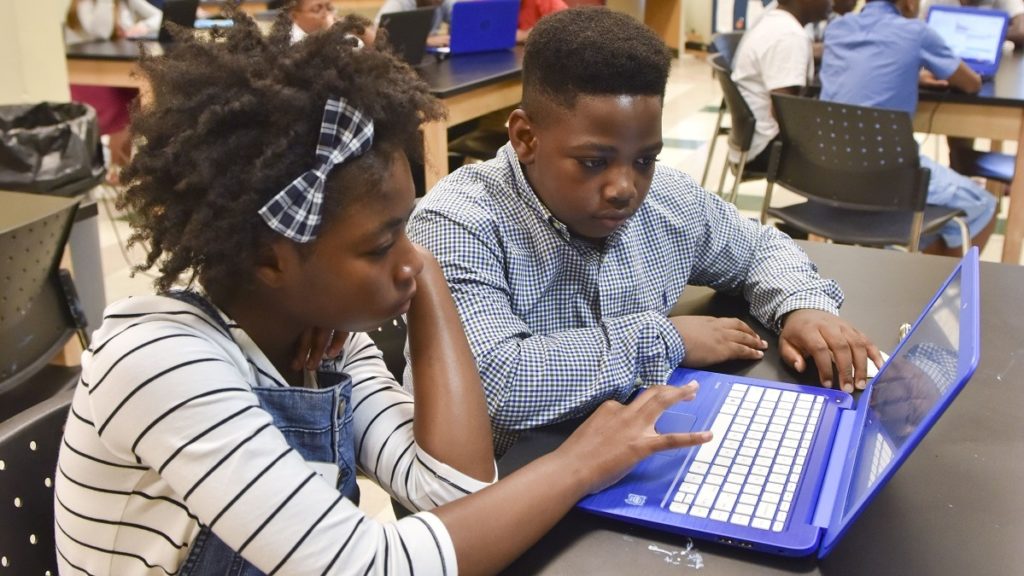
Every second Sunday of each month, Luke Robinson, 15, and his dad, Jason, travel about 80 miles from Winfield to the McWane Science Center in downtown Birmingham to participate in TechBirmingham’s coding class. The Robinsons are motivated to travel for two hours and devote another hour and a half on Sunday afternoons not only because of the lack of youth-oriented coding camps in Winfield but also because Luke is interested in computer animation. “I’m pretty passionate about computers,” Luke said. “Back home, they don’t really have any coding classes like this. This is my opportunity to do coding with other people.” Young people like Luke are taking advantage of coding camps and classes that will position them for careers in a world that’s becoming more high-tech. Computer coding — which involves writing programming language that makes computer software, apps and websites operate — is considered one of the fastest-growing fields in the job market. Computer coding “We need a digitally literate workforce,” said Deon Gordon, president of TechBirmingham. “In a lot of ways, every company now is a tech company.” “A lot of people 30 years ago thought we were going to be taken over by robots,” said Nicole Mubarak, director of Women Who Code Birmingham. “But we’ve been taken over more by software as opposed to hardware.” TechBirmingham’s Kids Code class teaches and encourages students to learn and experiment with computer code. (Frank Couch/The Birmingham Times) Because most companies and businesses rely heavily on computer software, the need for coding analysts and specialists is not just limited to jobs in the tech industry. “So many banks, insurance companies and health care providers are concerned about protecting the privacy of their clients’ information, they need to learn how to encrypt their important data,” said Christina Smith, TechBirmingham’s science, technology, engineering and mathematics (STEM) coordinator. TechBirmingham’s coding class, offered since 2015 at McWane, is designed to encourage digital literacy among children in grades three through 12. The free class, offered on the second Sunday of each month from 1:30 p.m. to 3 p.m., operates during the school year. Nearly 40 students participated in its August class. “What we want to do is give all kids access to the skills they’ll need for future jobs,” Smith said. “A lot of it is just learning basic coding skills and the fundamentals, the foundations of what they’re going to need if they want to pursue a career in computer software engineering.” Wave of the future Jajuana Smith of Birmingham said her 10-year-old son, Jalen, had taken a coding class previously, but he didn’t connect with the instructor’s personality and teaching style. She wanted to rekindle his interest before he lost it, so she brought him to the TechBirmingham class. “I needed him to get back in there,” she said. “I need him to grow with it because technology is the wave of the future. You have to be well versed in a lot of things for the new market. Technology is going to be on every career path no matter what you do. I need him to have a strong foundation, so if that’s what he chooses to do, he can do it.” During the coding class, students were divided into two groups. In one class, students learned basic coding encryption; in the other, they learned to use the basic language of Java to build apps. Students work on computer coding during a Kids Code class at McWane Science Center. (Frank Couch/The Birmingham Times) In Jalen’s class, he and another student learned how to crack a simple code. “I really like the fact that you get to interact with other people, meet new friends and still figure something out,” he said. “I’ve done coding, but I’ve never tried to crack a code.” In the app-development class, students created apps to produce music accompanied by dancing tigers and robots. Eight-year-old Sofia Aelterman was disappointed because she couldn’t get her robot to perform popular dance moves. “We were trying to make the robot dab (popularized a few years ago in music by songs like ‘Look at My Dab’ by Atlanta hip-hop group the Migos and in sports by NFL star Cam Newton), but it just wouldn’t dab. It wouldn’t floss, either (another dance that’s performed by characters in video games like Fortnite). We’ll get it next time,” she said. Mubarak, who serves as a volunteer instructor with TechBirmingham’s coding class, said incorporating coding with fun activities keeps kids engaged and sparks their interest. One exercise involved letting students create an app that flushed their homework down a toilet. “The kids get really creative,” she said. “They start seeing what they can do, they get their minds into it and that’s what they come up with — exploding homework and homework that flushes down the toilet. I just look at them and say, ‘Virtually, this is fine. In reality, don’t do it.’” For more information about TechBirmingham and its coding class, visit www.techbirmingham.com or contact Christina Smith at christina@techbirmingham.com. For more information about Women Who Code, visit womenwhocode.com/birmingham or follow them on Twitter @WWCBirmingham. This story originally appeared in The Birmingham Times. Republished with permission from the Alabama NewsCenter.
Martha Roby: Meeting the demands of our growing workforce

Last month’s jobs report showed that job openings are at a record high, confirming our country’s continued positive economic progress. For the first time since the year 2000, the number of job openings is larger than the number of people unemployed. Our country’s gross domestic product also grew at a 4.1 percent pace in the second quarter of this year, marking the fastest rate of growth since 2014. This is great news for the American people, and our focus moving forward must be to continue this momentum. As I have said many times before, over the last year and a half, our unified Republican government has worked very hard to deliver meaningful results on the economic front. I am proud of our efforts to foster economic growth and opportunity, and I believe it is critical that we provide a well-trained workforce to meet the demands. That’s why I am glad to report that Congress has officially sent the Strengthening Career and Technical Education for the 21st Century Act, an important workforce development bill, to the President’s desk for his signature. This important piece of legislation reauthorizes the Perkins funding that supports career tech programs at the state and local levels. The bill also makes needed improvements to the system to ensure these crucial dollars are spent effectively and efficiently. In addition, this legislation updates the federal investment in career tech education to provide increased flexibility to states to ensure these CTE programs are high quality, engaging, and above all, successful. As you know, our state is fortunate to have a very strong network of community colleges that offer a wide variety of career training. Alabama’s Community College System has more than 79,000 students enrolled in career tech programs, and more than 70 public high schools in our state offer CTE courses. They are working in lockstep with industries to ensure the educational training matches the jobs that will be waiting for these students when they complete their coursework. Our district is home to quite a few excellent career tech programs, including those at Trenholm State Community College in Montgomery, Wallace Community College in Dothan and their Sparks Campus in Eufaula, the Enterprise State Community College campuses in Enterprise and Ozark, Ingram State Technical College in Deatsville, Reid State Technical College in Evergreen, and the Lurleen B. Wallace Community College campuses in Andalusia, Opp, and Greenville. To broaden this extensive network even more, many high schools enjoy partnerships with nearby community colleges to offer students courses closer to home. Over the years, I have had the opportunity to visit many of these campuses and see firsthand the quality training they offer. Most recently, I stopped by Lurleen B. Wallace’s MacArthur Campus in Opp for a tour, and I was truly blown away by the wide variety of courses available. There’s no question that in Alabama, our current CTE system is working well, but that shouldn’t stop us from making every effort to improve it. The Strengthening Career and Technical Education Act for the 21st Century, which I hope will soon be signed into law, provides proper investment in quality career tech programs – but this is about so much more than just funding. This important bill provides greater flexibility to states and program administrators on the ground so they are able to adjust to ever-changing needs. The bill also improves accountability to require CTE programs to deliver results. Career tech programs are so important because they meet the demands of our steadily changing workforce by equipping students with the skills, knowledge, and experience they need to be competitive and fill these roles. Rest assured as your Representative in Congress, I will always support measures to improve and strengthen the CTE programs throughout our state and nation. And as always, I am hopeful that we will continue to see increased numbers of job openings and opportunities for all Alabamians and all Americans. ••• Martha Roby represents Alabama’s Second Congressional District. She lives in Montgomery, Alabama, with her husband Riley and their two children.
Governor Kay Ivey appointments: Infrastructure/workforce related
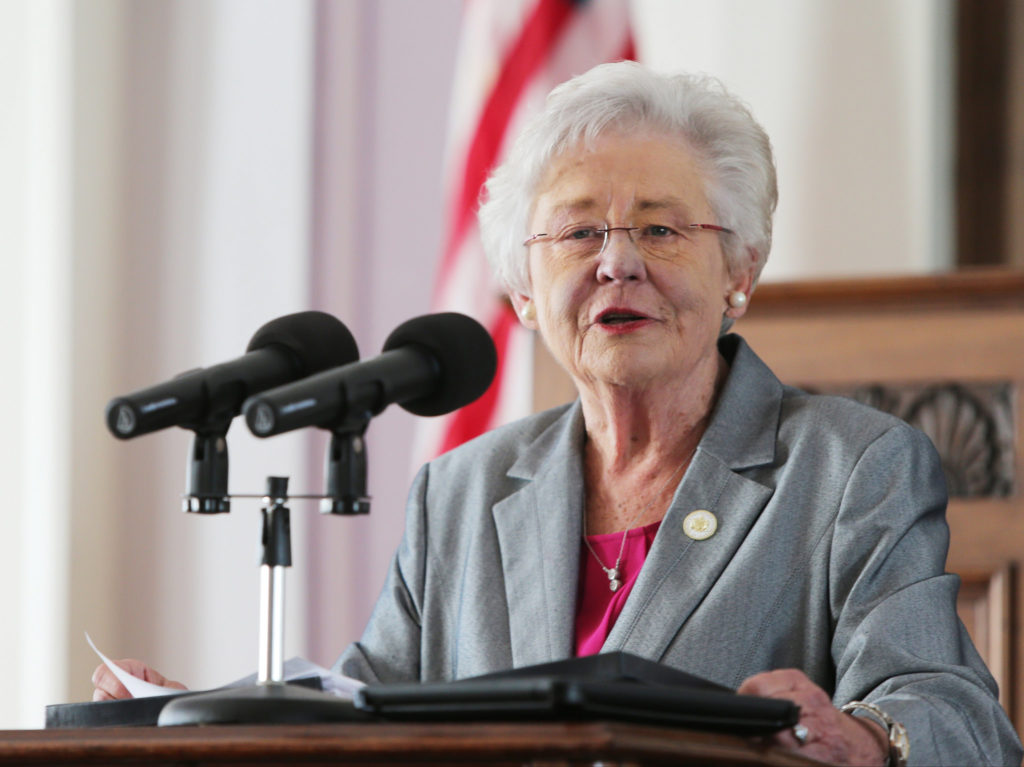
We are still at it. Culling through and reporting on Governor Kay Ivey‘s appointments list — of those Alabamians she has appointed to boards, commissions and committees — since she took office. The date of appointment is next to the name. We started with her healthcare related appointments earlier this week and will be ticking off by board and commission issues by group. Here are the infrastructure/workforce related ones and up next are judiciary, local then misc. additional ones. Keeping with our efforts to shine light on what’s going on behind the scenes at all levels of government this will be a regular column once again in the coming weeks. Information on open board positions is on the appointments webpage. Southern Rail Commission Wiley Blankenship: 08/10/2017 Toll Road, Bridge & Tunnel Authority Steve Pelham: 09/20/2017 Jon Barganier: 09/20/2017 Onsite Wastewater Board Michelle Stephens: 10/01/2017 David Mastin, Jr.: 10/20/2017 Lana Langley: 10/20/2017 State Oil & Gas Board Charles Pearson: 11/01/2017 Alabama Surface Mining Commission Edward White: 12/04/2017 Alabama Rail Safety Commission William Casey Camp: 07/31/2017 Mary Katherine Chimelewiski: 07/26/207 Jane Covington: 06/26/2017 Elizabeth Kennedy Lawlor: 06/26/2017 Mike Russell: 07/26/2017 Brandon Schott: 07/26/2017 Alabama Construction BOD Jerry Grissom: 07/26/2017 Alabama Workforce Development Board Rita Moore: 07/18/2017 Brooks Kracke: 08/10/2017 David Mullins: 08/10/2017 Tony Townsend: 07/18/2017 Jim McClellan: 08/10/2017 Lynn Foster: 07/18/2017 Jessica Horsley: 07/18/2017 Daniel Michael: 07/18/2017 Don McClellan: 08/10/2017 Lynne Stokley: 08/10/2017 Mikki Ruttan: 08/10/2017 Susan Parrish: 07/18/2017 Jennifer Robinson: 07/18/2017 Ryan Richards: 08/10/2017 Workforce Council Allen Harris: 07/18/2017 Amy Bryan: 07/18/2017 Chuck Smith: 07/18/2017 Jennifer Himburg: 07/18/2017 Randy Skagen: 07/18/2017 Scott Bowers: 09/14/2017 Joe Patton: 09/14/2017 Charles DiLaura: 07/18/2017 Christy Knowles: 07/18/2017 Jeff Lynn: 07/18/2017 Dr. Jim Purcell: 07/18/2017 Sandra Koblas: 07/18/2017 John Hackett: 09/14/2017
Ivanka Trump to talk workforce issues with lawmakers

Ivanka Trump is heading back to Capitol Hill to discuss workforce issues with Republican lawmakers. A spokesman for House Majority Leader Kevin McCarthy says she will meet with McCarthy and other lawmakers for “a discussion on improvements to our workplace and workforce.” Ivanka Trump appeared with President Donald Trump last week to promote a White House effort to expand apprenticeships. This is her second visit to the Capitol this week. On Tuesday she met with Sen. Marco Rubio and other GOP lawmakers for a conversation that included expanding the child tax credit and paid family leave. Republished with permission of The Associated Press.
Bradley Byrne: The 21st century workforce
A lot has changed since the 1930s. For example, in 1938, Franklin Roosevelt was President, and you could buy a loaf of bread for ten cents. Since then, the Internet was invented, more jobs are based in technology, and almost every American has a cell phone. Sadly, some of our nation’s most important labor laws, like the Fair Labor Standards Act, date back to the 1930s. One could argue that the needs of the workforce have changed a lot in just the last decade, but they have most certainly changed over the last eighty years. Clearly, something is still holding our economy back. Since 2009, the economy has grown at an average annual pace of just 1.5 percent. Wage growth remains largely stagnant, as the average hourly earnings for today’s worker is roughly the same as they were in 2009. Meanwhile, 7.6 million Americans are searching for work, and nearly six million individuals are working part-time hours when they really want full-time jobs. Our outdated labor laws and policies play a significant factor in limiting economic growth, and it is time we examine how to reform these important laws to allow for more flexibility for workers in the 21st Century. This is a topic I covered last week in my first hearing as Chairman of the House Subcommittee on Workforce Protections. The American workforce has transformed dramatically since some of our labor laws were passed, and the challenges facing workers and employers today are substantially different than they were in the 1930s. However, our labor policies have failed to adapt. Our confusing and outdated labor policies are especially harmful to small businesses. Big businesses and large corporations often have entire divisions and lawyers set aside to figure out how to comply with rules and regulations. Smaller businesses, which make up the overwhelming majority of our economy in Southwest Alabama, do not have the same resources. When small businesses suffer, American workers suffer. It is clear our nation’s labor rules were designed for another era and no longer reflect the realities of the 21st Century workforce. That’s why it is so disappointing the Obama Administration missed an opportunity to streamline and modernize these important worker protections. Instead, the previous administration spent its time and resources advancing an extreme and partisan agenda that would stifled workplace flexibility and limited opportunities for career advancement. We must do better. Thankfully, we are in a new era now, and I am optimistic the Trump Administration will pursue policies that benefit American workers. Just last week, President Trump announced his nomination of Alexander Acosta to serve as Secretary of Labor. From his time on the National Labor Relations Board to his service as a U.S. Attorney, Mr. Acosta has a clear record of protecting American workers and upholding the law. As Chairman of the Workforce Protections Subcommittee, I am committed to working with Mr. Acosta to find solutions to update our labor and workplace laws and help bring them into the 21st Century. Just as important, I want to find ways to eliminate confusion and uncertainty that make it harder for small businesses to grow and expand. We cannot accept the economic struggles of the last few years as the new normal. The American people have clearly spoken, and they expect their leaders in Washington to put the country on a better path and finally get the economy moving again, which means more and better paying jobs. That is a top priority for me and our unified Republican government. I look forward to making a positive impact on behalf workers in Southwest Alabama and across the country. • • • Bradley Byrne is a member of U.S. Congress representing Alabama’s 1st Congressional District.
Fitzgerald Washington: Alabama’s workforce continues to grow
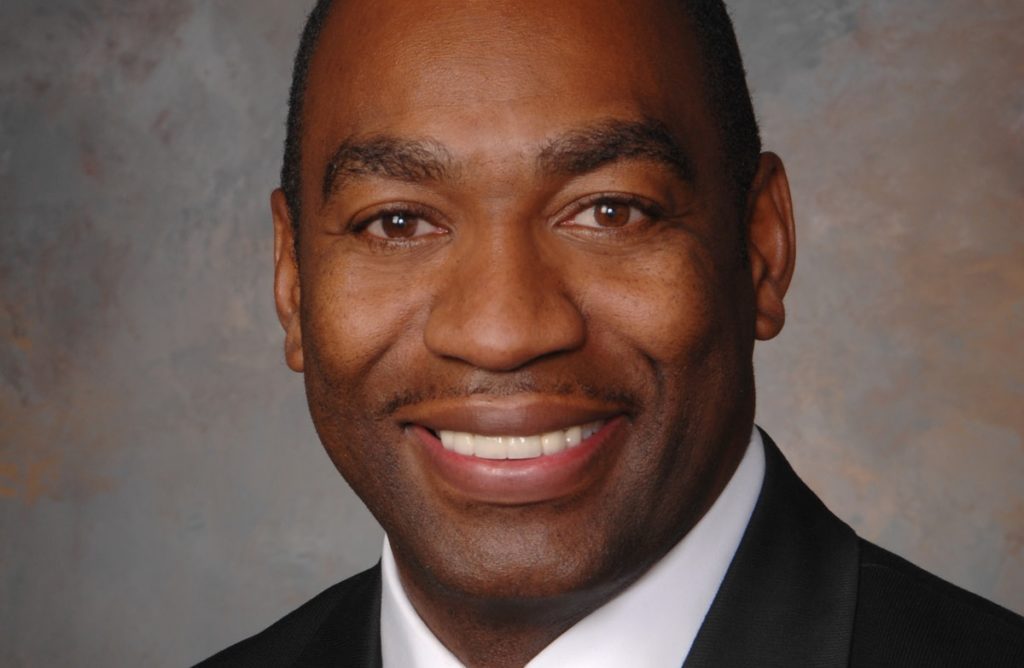
We’re at the beginning of another year, and ready to see continued improvement in our economy. At the Alabama Department of Labor, we are busy wrapping up the facts and figures for 2016. There were many improvements last year, and I’d like to let people know about them. We ended the year with our wage and salary employment only 17,000 jobs away from reaching two million. I can’t emphasize how great this news is! The last time our economy supported two million jobs was back in 2007, before the recession, before tens of thousands of Alabamians were relying on unemployment compensation to help support their families, and before our unemployment levels reached record highs. A wage and salary employment level of two million is considered to be a benchmark employment figure. I’m hopeful that we’ll reach that milestone in 2017. As employers’ confidence was sustained and hiring rose, Alabamians continue to join the workforce. We ended 2016 with the largest workforce we’ve had in more than five years. Additionally, more people were working in December 2016 than at any time since April 2008. Employers are hiring, and workers are working. Those who don’t have jobs are looking for jobs, which tells us they believe there are jobs to be had. All of these are positive signs for our economy. Our manufacturing industry continues to lead our economy. In 2016, Alabama ranked third nation-wide in manufacturing employment growth (year over year December). These competitive, sought-after jobs carry wages of more than $20 an hour. As far as unemployment compensation goes, the amount we are paying in benefits and the number of people filing for those benefits are at seven year lows. Those who are receiving benefits are only doing so, on average, for around 14 weeks, which is significantly less than during the recession, when up to 99 weeks were available and some were using all of them. Last year, we paid out over $183 million in Work Opportunity Tax Credits, more than $71 million higher than in 2015. These are credits that employers can take advantage of when they hire certain individuals, such as the long-term unemployed and food stamp recipients, among others. These are dollars that are going right back into our economy to spur spending and encourage hiring. Job orders on the state’s free jobs database, joblink.alabama.gov, were at five year highs, with several months registering more than 30,000 orders! With all of these positives, we still realize that there is work to be done. Even though there are more people working now than in nearly a decade, there are still more than 130,000 Alabamians who are out of work. Our mission, just like that of Governor Robert Bentley, is to make sure that these citizens have the opportunity to get a job, to support their families, and to live a quality life. In order to meet these obligations, we’re setting a few goals: First, we’re aiming to keep 2017’s yearly average unemployment rate below the yearly average unemployment rate of 2016 (5.9%). In order to keep the unemployment rate low, it’s important that we maintain employment levels. This means working with the Governor, state agencies, economic development groups, and local governments in order to keep jobs in Alabama and recruit new ones. Since taking office in 2011, Governor Bentley’s administration recruited 92,000 jobs to the state. These cooperative agreements are beneficial to all involved. We’re also focusing our efforts to surpass economists’ estimates for job growth in 2017. In January of this year, economists predicted that Alabama will gain 18,700 jobs in 2017. We hope to surpass that number, as we have for the past three years. In 2016, the prediction was for growth of 29,450. For the period covering January 2016 to December 2016, jobs grew by 49,600, bypassing the predictions by 20,150! Again, as employers maintain their confidence in the economy and continue to hire, hopefully, this goal will be an easy one to meet. We want to increase awareness of free, valuable services available at our 49 Career Centers located throughout the state. Our Career Centers offer so many wonderful services for both jobseekers and employers. The best part is that they are offered at no charge! Nearly half a million Alabamians were served in 2016, and we hope to increase that number this year. Our regional job fairs, hosted in Montgomery, Dothan, and Birmingham last year, drew more than 12,000 jobseekers to speak with more than 400 employers. We’re bringing our job fairs to other regions of the state this year. Come out and see us! Find out more information about any of our services at labor.alabama.gov. ••• Fitzgerald Washington is the Secretary of the Alabama Department of Labor
Donald Trump, Justin Trudeau to discuss women in workforce

President Donald Trump and Canadian Prime Minister Justin Trudeau will participate in a roundtable discussion about women in the workforce Monday, showing the rising policy influence of the first daughter who has stressed her commitment to issues like child care. A White House official said the two countries would launch a new task force called the United States Canada Council for the Advancement of Women Business Leaders-Female Entrepreneurs. The official said Trudeau’s office reached out to discuss working on a joint effort, noting that this was seen as an area of shared interest between both leaders. Ivanka Trump, who has been a vocal advocate for policies benefiting working women, was involved in recruiting participants and setting the agenda for the meeting and will attend, the official said. Ivanka Trump stressed the importance of maternity leave and child care on the campaign trail, and has recently been meeting with business leaders to discuss those issues. The White House official said that Trump’s economic agenda will include a “focus on ensuring women enter and stay in the work force and addressing barriers facing female entrepreneurs.” The official requested anonymity to provide details in advance of the meeting. Advancing women has been a clear priority for Trudeau. In late 2015, he drew attention for naming a Cabinet that was 50 percent women, saying that he chose a group that “looks like Canada.” Trump did not promise to appoint a gender-balanced Cabinet and has named a smaller number of women and minorities to top jobs. “Our team reached out and suggested as it is an important part of the prime minister’s agenda and of our economic growth plan,” a Canadian official said. “It seemed like a natural fit given their commitments in their platform as well.” The official requested anonymity to discuss the meeting in advance. Trump has offered a childcare plan and has signaled an interest in working on those issues. The business round table will be part of an itinerary that includes a bilateral meeting and a working lunch. The visit is crucial for Canada, which relies heavily on the United States for trade. Trump has said he wants to discuss his plan to overhaul the North American Free Trade Agreement, which involves the United States, Canada and Mexico. There are fears Canada could unintentionally be sideswiped as Trump negotiates with Mexico. Female executives from the United States and Canada are expected for the round table, including General Electric Canada CEO Elyse Allan, TransAlta Corp. CEO Dawn Farrell, Linamar Corp. CEO Linda Hasenfratz, T&T Supermarket Inc. Tina Lee and Schnitzer Steel Industries CEO Tamara Lundgren. Also expected are Julie Sweet, CEO-North America for Accenture, NRStor CEO Annette Verschuren, Monique Leroux, chair of the board of directors for Investissement Québec. Carol Stephenson, of the board of directors for General Motors Co. will attend in place of the GM CEO. Additionally, the meeting will include Katie Telford, Trudeau’s chief of staff, Canadian Foreign Minister Chrystia Freeland and Dina Powell, assistant to the president and senior counselor for economic initiatives. Powell, Telford and Freeland were involved in setting up the council and recruiting the CEOS. The council includes many of the meeting attendees, as well as Mary Barra, General Motors CEO, GE Vice Chair Beth Comstock and Catalyst CEO Deborah Gillis. Topics at the event will likely include issues like providing maternity leave and childcare, how to recruit and retain women and how to better support women entrepreneurs. Ivanka Trump does not have an official White House role. But her husband, Jared Kushner, is a senior adviser to the president and she stepped away from her executive positions at the Trump Organization and her lifestyle brand to move her family to Washington. She has been at several public White House events so far and has been privately sitting down with CEOs and thought leaders as she weighs how to pursue her policy interest. Republished with permission of the Associated Press.
Women’s group: 45 percent of Alabama workers get no paid sick days

The National Partnership for Women & Families has published a new fact sheet that examines the state of sick leave policy on Alabama’s workforce. The study shows workers in the state have slightly less access to paid days off when they are or their children are sick, in keeping with a troublesome national fact of life for workers. “In Alabama, an estimated 671,099 private sector workers, or 44.6 percent of the workforce, cannot earn a single paid sick day to use to recover from common illnesses or seek medical care,” reads the report, released Wednesday. “Nationwide, more than 43 million private sector workers – nearly 40 percent of the workforce – cannot earn paid sick time.” “When workers do not have access to paid sick days, the consequences can be significant. For a typical family in the United States without paid sick days, for example, 3.5 days lost to illness are equivalent to the family’s entire monthly grocery budget,” the studied continued. Among the study’s findings: More than 145,000 people in Alabama work in restaurants – an industry in which, nationally, 90 percent of workers cannot earn paid sick days; Overall, 35.6 percent of Alabama jobs are considered low wage, and few low-wage jobs allow workers to earn paid sick days; and More than 700,000 children in Alabama live in families in which all parents work, but parents with paid sick days often cannot use them to care for children. The study also says sick-leave policies adverse to workers both in Alabama and nationally disproportionately affect minority populations. The state is home to some 960,000 African-American workers, whose rate of access to paid sick days is even lower than the statewide 45 percent. Moreover, the Partnership says, paid sick days are good for industry as well as workers. “Employee turnover is expensive – on average, one fifth of an employee’s annual salary,” the report said. “Paid sick days result in reduced turnover,18 which leads to reduced hiring and training costs for businesses.” They also help reduce unnecessary health care costs, which lowers cost pressure on taxpayers and policyholders. “Universal access to paid sick days would eliminate an estimated 1.3 million emergency room visits each year, saving $1.1 billion annually in costs to individuals, private insurers and public programs, such as Medicare and Medicaid.” The National Partnership entitled their release containing the new findings “What Does It Mean When Nearly 45 Percent of Alabama’s Workers Cannot Earn a Single Paid Sick Day?” Debra Ness, the Washington, D.C.-based nonpartisan advocacy group’s president, was quick to fill in the blanks. “Our nation’s failure to establish a paid sick days standard is harming people in Alabama and across the country,” Ness said. “It is absolutely unacceptable that so many hardworking people and their families risk grave financial hardship if they get the flu, strep throat or another common illness because they cannot earn basic paid sick days, even after years at their jobs. Lawmakers at all levels need to look closely at what is at stake and take action.”