
Elliot Wang: Supporting Taiwan’s participation in the WHO

As the world enters the fourth year of the COVID-19 pandemic, most border restrictions have been lifted, and global health governance has shifted from pandemic response to post-pandemic recovery. Taiwan fully supports health-related SDGs and the World Health Organization’s triple billion targets and is willing and able to share its experience to help the international community work toward the realization of the SDGs related to health and well-being. During the COVID-19 pandemic, Taiwan effectively mitigated the spread of the disease, leveraging its comprehensive public healthcare system, well-trained anti-pandemic personnel, border control policies, coordinated distribution of medical resources, and a patient transfer system to prevent and contain the pandemic. When compared with the 38 Organizations for Economic Co-operation and Development member states and Singapore, Taiwan ranks sixth-lowest in COVID-19 mortality and case-fatality rates. The COVID-19 pandemic helped the international community recognize the importance of regional cooperation and digitization in healthcare. Taiwan established National Health Insurance (NHI) in 1995, which is a prime example of universal health coverage, offering financial protection and access to a wide range of essential services. Taiwan is committed to promoting digital health and innovation to enhance the accessibility and quality of healthcare services, including plans for a next-generation NHI program, successfully echoing the Director-General of WHO’s five priorities for the subsequent five years, which were outlined last year. Taiwan has not been invited to the World Health Assembly since 2017. The COVID-19 pandemic is abating, and dialogue on strengthening health systems worldwide is accelerating. Taiwan should not be left out. Taiwan can help, and Taiwan’s inclusion would make the world healthier, more sustainable, and more equitable. Taiwan urges WHO and all relevant stakeholders to support Taiwan’s inclusion in the World Health Assembly as an observer, as well as Taiwan’s full participation in WHO meetings, mechanisms, and activities. Taiwan will continue to work with the world to help ensure the fundamental right to health enshrined in the WHO Constitution. In the spirit of the SDGs, no country should be left behind—especially not Taiwan, which has made significant contributions to global public health. Elliot Wang is the Director-General of the Taipei Economic and Cultural Office in Atlanta.
Mike Rogers reintroduces bill to withdraw the U.S. from United Nations and WHO
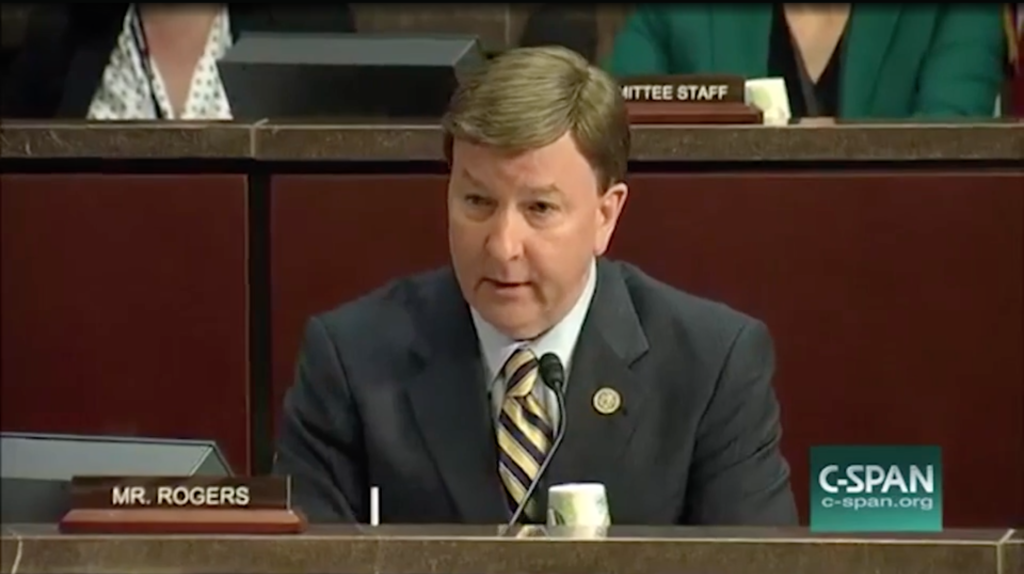
U.S. Rep. Mike Rogers announced he has reintroduced the American Sovereignty Restoration Act of 2022. The legislation would withdraw the United States from the United Nations (UN) and the World Health Organization(WHO). Specifically, the bill would revoke any money given to either organization. Additionally, it would repeal The United Nations Environment Program Participation Act of 1973. Rogers originally introduced the legislation in 2017. Rogers described UN Commissioner Michelle Bachelet as a “puppet” and said the organization was “utterly useless.” “The United Nations has repeatedly proven itself to be an utterly useless organization. The UN’s founding charter states the UN’s mission ‘to reaffirm faith in fundamental human rights, in the dignity and worth of the human person, in the equal rights of men and women and of nations large and small.’ However, the UN High Commissioner for Human Rights Michelle Bachelet has proven herself to be nothing more than a puppet for the Chinese Communist Party – aiding the CCP in playing down the very real and horrifying genocide being carried out against Uyghur’s,” Rogers stated. “It’s unconscionable that China continues to sit on the UN Human Rights Council even as it carries out this disturbing genocide on top of its numerous and daily violations of basic human rights. It’s clear the UN has abandoned the ideals set in its founding charter and that’s why, among many other reasons, I’ve reintroduced legislation to withdraw the United States from the UN,” he continued. Rogers also singled out the WHO for helping China cover up what he called “the origins of COVIDE-19.” “This legislation would also withdraw the United States from the corrupt World Health Organization. The WHO lost all credibility when they chose to put public health second to the Chinese Communist Party by helping the CCP cover up the origins of COVID-19,” Rogers concluded.
Under pressure to ease up, Joe Biden weighs new virus response

Facing growing pressure to ease up on pandemic restrictions, the White House insisted Wednesday it is making plans for a less-disruptive phase of the national virus response. But impatient states, including Democratic New York, made clear they aren’t waiting for Washington as public frustration grows. Gov. Kathy Hochul announced that New York will end its COVID-19 mandate requiring face coverings in most indoor public settings — but will keep it for schools. Illinois announced the same. Earlier this week, New Jersey, Connecticut, and Delaware all disclosed plans to join states that have lifted or never had mask requirements for their schools, and Massachusetts will follow suit at the end of the month. All but Massachusetts have governors who are Democrats, like President Joe Biden. Biden, who has long promised to follow to “follow the science” in confronting the pandemic, is hemmed in, waiting for fresh guidance from federal health officials, who so far still recommend that nearly all Americans wear masks in most indoor settings. Defending Biden, press secretary Jen Psaki acknowledged that while people are tired of masks and “we understand where the emotions of the country are,” the administration is following the advice of medical experts who rely on scientific evidence. “That doesn’t move at the speed of politics; it moves at the speed of data,” she said. Clearly feeling the pressure, the White House, for the first time, acknowledged movement in its planning, saying conversations have been underway privately to develop plans for guiding the country away from the emergency phase of the pandemic. Federal COVID-19 coordinator Jeff Zients said officials are consulting with state and local leaders and public health officials on potential next steps. But as governors and local officials press for clearer federal guidelines for easing or ending restrictions, states, cities, and school boards are adopting an awkward patchwork of policies that differ widely from one place to the next. “We are working on that guidance,” Centers for Disease Control and Prevention Director Dr. Rochelle Walensky said in a White House teleconference Wednesday. “As we’ve been encouraged by the current trends, we are not there yet.” The White House offered no timetable for the review or an indication of what it will recommend. And some critics say that’s not good enough. “The tragic thing is that these are governors that would probably have followed the White House’s guidance,” said Dr. Leana Wen, a former Baltimore health commissioner. “They wanted CDC input and asked for it, but without a clear timeline, at some point, they had to decide that they couldn’t wait any more. The fault is not theirs, but the CDC’s and by extension, President Biden’s, which, with each passing day, is making itself less and less relevant.” Asked whether Biden appears to be out of touch with the country, Psaki defended his caution. “As a federal government, we have the responsibility to rely on data on science, on the medical experts,” she said. Pressed on whether Americans should follow less-restrictive state or local rules or the stricter federal guidance, she repeated the White House’s daily counsel: “We would advise any American to follow the CDC guidelines.” New York’s Hochul and others aren’t waiting. They are ending or easing many broad mandates, though her state will keep masking rules in schools and health facilities. “Given the declining cases, given the declining hospitalizations, that is why we feel comfortable to lift this, in effect tomorrow,” Hochul said Wednesday. Even allies of the administration have argued that Biden should at least lay out a roadmap for moving back toward normalcy. He has been hesitant, aides say, in part because of the sting of his fleeting “declaration of independence” from the virus last summer, which proved premature in the face of the delta and then omicron strains. Now, though, cases and hospitalizations from COVID-19 have dropped markedly since they peaked earlier this year amid the spread of the highly transmissible omicron variant, and the vast majority of Americans are protected against the virus by effective vaccines and boosters. Still, more than 2,000 people infected with the virus die in the U.S. each day, and there is concern within the administration about letting up while deaths remain high. And Psaki noted that many Americans support continued mask-wearing. Some in the White House point to the consternation that was voiced in December after the CDC shortened the isolation time for Americans who test positive. While Biden and other administration officials emphasize that the threat from the virus is far diminished from a year ago, before the wide roll-out of vaccines and booster shots and the approval of rapid at-home tests and highly effective therapeutics, administration officials acknowledge that most federal guidelines have been slow to keep up. The CDC continues to recommend indoor mask-wearing in places of “substantial or high transmission” of the virus, which as of Wednesday was all of the U.S. but 14 rural counties. State and local leaders, nevertheless, have announced plans to ease virus restrictions in the coming weeks as omicron cases fall, citing the protections offered by vaccines as well as the increased availability of at-home testing kits and therapeutics for those who do catch the virus. Many of the restrictions eased last year, only to be reinstated as omicron swept the country. After more than a year of a top-down federally driven response, the emerging shift marks a return to the historical norm, where states have typically had the first say in how they handle public health emergencies. The CDC can advise them and issue general guidance for the nation, but in most situations, it cannot order them what to do. While the Biden administration has pushed back strongly against efforts by GOP governors to prohibit mask-wearing requirements, it is indicating that it will take a more flexible approach to jurisdictions that make their own choices. Policies lifting mask requirements “are going to have to be made at the local level” depending on case rates, Walensky said. Despite the encouraging reports in the Americas, Western Europe, and some
World Health Organization warns new virus variant poses ‘very high’ risk
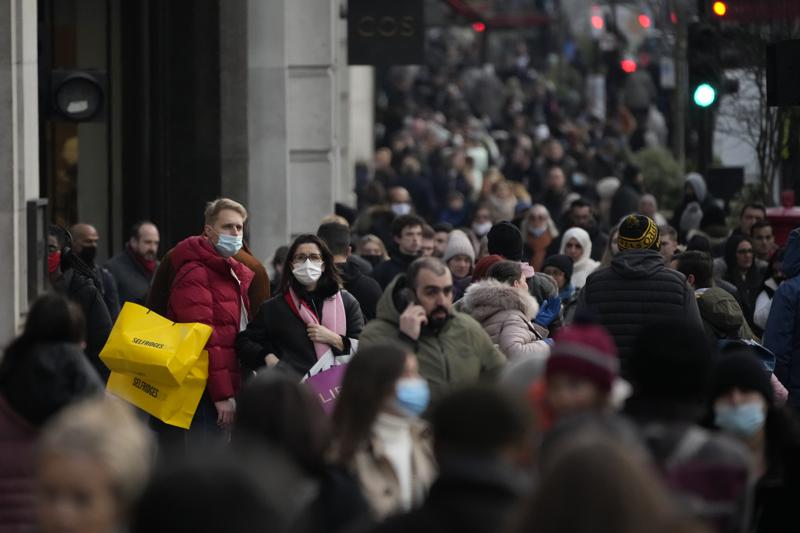
The World Health Organization warned Monday that the global risk from the omicron variant is “very high” based on the early evidence, saying the mutated coronavirus could lead to surges with “severe consequences.” The assessment from the U.N. health agency, contained in a technical paper issued to member states, amounted to WHO’s strongest, most explicit warning yet about the new version that was first identified days ago by researchers in South Africa. It came as a widening circle of countries around the world reported cases of the variant and moved to slam their doors in an act-now-ask-questions-later approach while scientists race to figure out just how dangerous the mutant version might be. Japan announced it is barring entry to all foreign visitors, joining Israel in doing so. Morocco banned all incoming flights. Other countries, including the U.S. and members of the European Union, have moved to prohibit travelers arriving from southern Africa. WHO said there are “considerable uncertainties” about the omicron variant. But it said preliminary evidence raises the possibility that the variant has mutations that could help it both evade an immune-system response and boost its ability to spread from one person to another. “Depending on these characteristics, there could be future surges of COVID-19, which could have severe consequences, depending on a number of factors, including where surges may take place,” it added. “The overall global risk … is assessed as very high.” The WHO stressed that while scientists are hunting evidence to better understand this variant, countries should accelerate vaccinations as quickly as possible. While no deaths linked to omicron have been reported so far, little is known for certain about the variant, including whether it is more contagious, more likely to cause serious illness, or more able to evade vaccines. Last week, a WHO advisory panel said it might be more likely to re-infect people who have already had a bout with COVID-19. Scientists have long warned that the virus will keep finding new ways to exploit weaknesses in the world’s vaccination drive, and its discovery in Africa occurred in a continent where under 7% of the population is vaccinated. “The emergence of the omicron variant has fulfilled, in a precise way, the predictions of the scientists who warned that the elevated transmission of the virus in areas with limited access to vaccine would speed its evolution,” said Dr. Richard Hatchett, head of CEPI, one of the founders of the U.N.-backed global vaccine sharing initiative COVAX. Spain on Monday became one of the latest countries to report its first confirmed omicron case, detected in a traveler who returned Sunday from South Africa after making a stopover in Amsterdam. While the majority of omicron infections recorded around the world have been in travelers arriving from abroad, cases in Portugal and Scotland have raised fears that the variant may already be spreading locally. “Many of us might think we are done with COVID-19. It’s not done with us,” warned Tedros Adhanom Ghebreyesus, WHO’s director-general. Days after the variant sent a shudder through the financial world nearly two years into the pandemic that has killed over 5 million people, and markets had a mixed reaction Monday. European stocks rebounded, and Wall Street steadied itself, while Asian markets fell further. U.S. President Joe Biden called the omicron variant a cause for concern but “not a cause for panic.” He said he is not considering any widespread U.S. lockdown and instead urged mask-wearing and vaccinations, even as a federal judge blocked his administration from enforcing a requirement that thousands of health care workers in 10 states get the shot. Dr. Rochelle Walensky, director of the U.S. Centers for Disease Control and Prevention, reacted to the potential threat by urging everyone 18 and older to get booster shots because “strong immunity will likely prevent serious illness.” Earlier this month, the U.S. opened boosters to all adults but recommended them only for those 50 and older or people in long-term care. The omicron infections have underscored the difficulty in keeping the virus in check in a globalized world of jet travel and open borders. Yet many countries are trying to do just that, against the urging of the WHO, which noted that border closings often have limited effect and can wreak havoc on lives and livelihoods. Some have argued that such restrictions can buy valuable time to analyze the new variant. While the initial global response to COVID-19 was criticized as slow and haphazard, the reaction to the omicron variant came quickly. “This time, the world showed it is learning,” said EU Commission President Ursula von der Leyen, singling out South African President Cyril Ramaphosa for praise. “South Africa’s analytic work and transparency and sharing its results was indispensable in allowing a swift global response.” Late last week, von der Leyen successfully pushed the 27-nation EU to agree to ban flights from seven southern African nations, similar to what many other countries are doing. Cases have been reported in such places as Canada, Germany, Britain, Belgium, Denmark, the Netherlands, and Portugal, where authorities identified 13 omicron infections among members of the Belenenses professional soccer team. Taking no chances, Japan, which has yet to detect any omicron cases, reimposed border controls that it had eased earlier this month. “We are taking the step as an emergency precaution to prevent a worst-case scenario in Japan,” Prime Minister Fumio Kishida said. Israel likewise decided to bar entry to foreigners, and Morocco said it would suspend all incoming flights for two weeks. Britain reacted by expanding its COVID-19 booster program to everyone 18 and older, making millions more people eligible. Up until now, booster shots were available only to those 40 and over and people particularly vulnerable to the virus. The U.K. has reported about a dozen omicron cases. Despite the global worry, doctors in South Africa are reporting patients are suffering mostly mild symptoms so far. But they warn that it is early. Also, most of the new cases are in people in their 20s and 30s,
U.S. to swiftly boost global vaccine sharing, Joe Biden announces
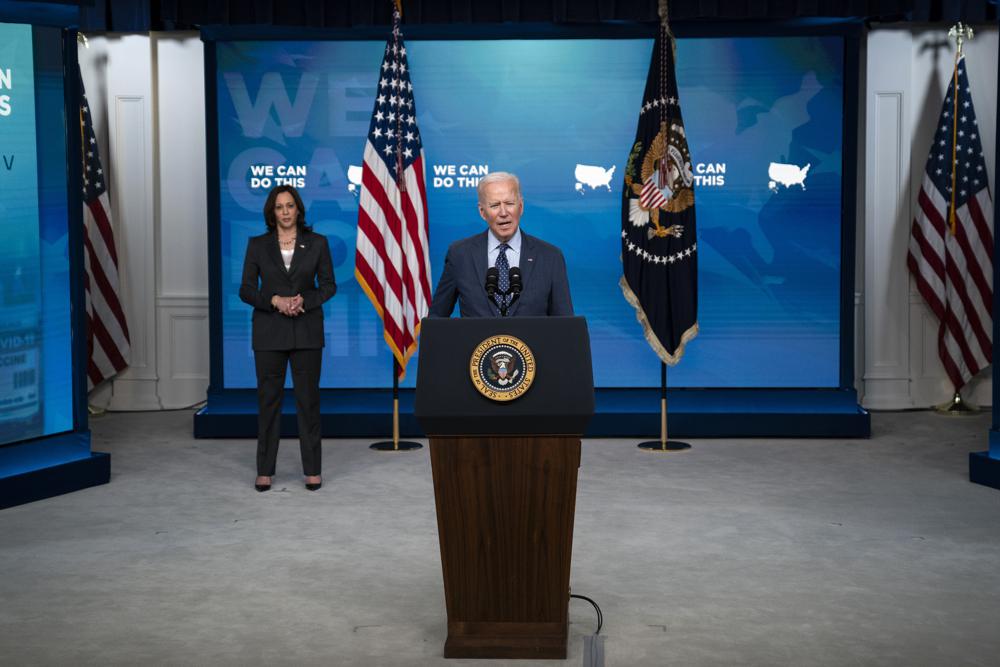
President Joe Biden announced Thursday the U.S. will swiftly donate an initial allotment of 25 million doses of surplus vaccine overseas through the United Nations-backed COVAX program, promising infusions for South and Central America, Asia, Africa, and others at a time of glaring shortages abroad and more than ample supplies at home. The doses mark a substantial — and immediate — boost to the lagging COVAX effort, which to date has shared just 76 million doses with needy countries. The announcement came just hours after World Health Organization officials in Africa made a new plea for vaccine sharing because of an alarming situation on the continent, where shipments have ground to “a near halt” while virus cases have spiked over the past two weeks. Overall, the White House has announced plans to share 80 million doses globally by the end of June, most through COVAX. Officials say a quarter of the nation’s excess will be kept in reserve for emergencies and for the U.S. to share directly with allies and partners. Of the first 19 million donated through COVAX, approximately 6 million doses will go to South and Central America, 7 million to Asia, and 5 million to Africa. “As long as this pandemic is raging anywhere in the world, the American people will still be vulnerable,” Biden said in a statement. “And the United States is committed to bringing the same urgency to international vaccination efforts that we have demonstrated at home.” U.S. National Security Adviser Jake Sullivan said the U.S. “will retain the say” on where doses distributed through COVAX ultimately go. But he also said: “We’re not seeking to extract concessions, we’re not extorting, we’re not imposing conditions the way that other countries who are providing doses are doing. … These are doses that are being given, donated free and clear to these countries, for the sole purpose of improving the public health situation and helping end the pandemic.” The remaining 6 million in the initial distribution of 25 million will be directed by the White House to U.S. allies and partners, including Mexico, Canada, South Korea, West Bank and Gaza, India, Ukraine, Kosovo, Haiti, Georgia, Egypt, Jordan, Iraq, and Yemen, as well as for United Nations frontline workers. The White House did not say when the doses would begin shipping overseas, but press secretary Jen Psaki said the administration hoped to send them “as quickly as we can logistically get those out the door.” Vice President Kamala Harris informed some U.S. partners they will begin receiving doses in separate calls with Mexican President Andres Manuel López Obrador, President Alejandro Giammattei of Guatemala, Indian Prime Minister Narendra Modi, and Prime Minister Keith Rowley of Trinidad and Tobago. Harris is to visit Guatemala and Mexico in the coming week. The long-awaited vaccine sharing plan comes as demand for shots in the U.S. has dropped significantly — more than 63% of adults have received at least one dose — and as global inequities in supply have become more pronounced. Scores of countries have requested doses from the United States, but to date, only Mexico and Canada have received a combined 4.5 million doses. The U.S. also has announced plans to share enough shots with South Korea to vaccinate its 550,000 troops who serve alongside American service members on the peninsula. White House COVID-19 coordinator Jeff Zients said that 1 million Johnson & Johnson doses were being shipped to South Korea Thursday. The U.S. has committed more than $4 billion to COVAX, but with vaccine supplies short — and wealthy nations locking up most of them — the greater need than funding has been immediate access to actual doses to overcome what health officials have long decried as unequal access to the vaccines. The U.S. action means “frontline workers and at-risk populations will receive potentially life-saving vaccinations” and bring the world “a step closer to ending the acute phase of the pandemic,” said Dr. Seth Berkley, CEO of Gavi, which is leading the COVAX alliance. However, Tom Hart, the acting CEO of The ONE Campaign, said that while Thursday’s announcement was a “welcome step, the Biden administration needs to commit to sharing more doses. “The world is looking to the U.S. for global leadership, and more ambition is needed,” he said. Biden has committed to providing other nations with all 60 million U.S.-produced doses of the AstraZeneca vaccine, which has yet to be authorized for use in America but is widely approved around the world. The AstraZeneca doses have been held up for export by a weeks-long safety review by the Food and Drug Administration, and without them, Biden will be hard-pressed to meet his sharing goal. The White House says the initial 25 million doses announced Thursday will be shipped from existing federal stockpiles of Pfizer, Moderna, and Johnson & Johnson vaccines. More doses are expected to be made available to share in the months ahead. Mexican President Andrés Manuel López Obrador said via Twitter that Harris had informed him before the White House announcement of the decision to send 1 million doses of the single jab Johnson & Johnson vaccine. “I expressed to her our appreciation in the name of the people of Mexico,” he wrote. Guatemala’s Giammattei said Harris told him the U.S. government would send his country 500,000 doses of COVID-19 vaccine. As part of its purchase agreements with drug manufacturers, the U.S. controlled the initial production by its domestic manufacturers. Pfizer and Moderna are only now starting to export vaccines produced in the U.S. to overseas customers. The U.S. has hundreds of millions more doses on order, both of authorized and in-development vaccines. The White House also announced that U.S. producers of vaccine materials and ingredients will no longer have to prioritize orders from three drugmakers working on COVID-19 shots that haven’t received U.S. approval — Sanofi, Novavax, and AstraZeneca — clearing the way for more materials to be shipped overseas to help production there. Republished with the permission of the Associated Press.
University of Alabama Honors College student takes research abroad
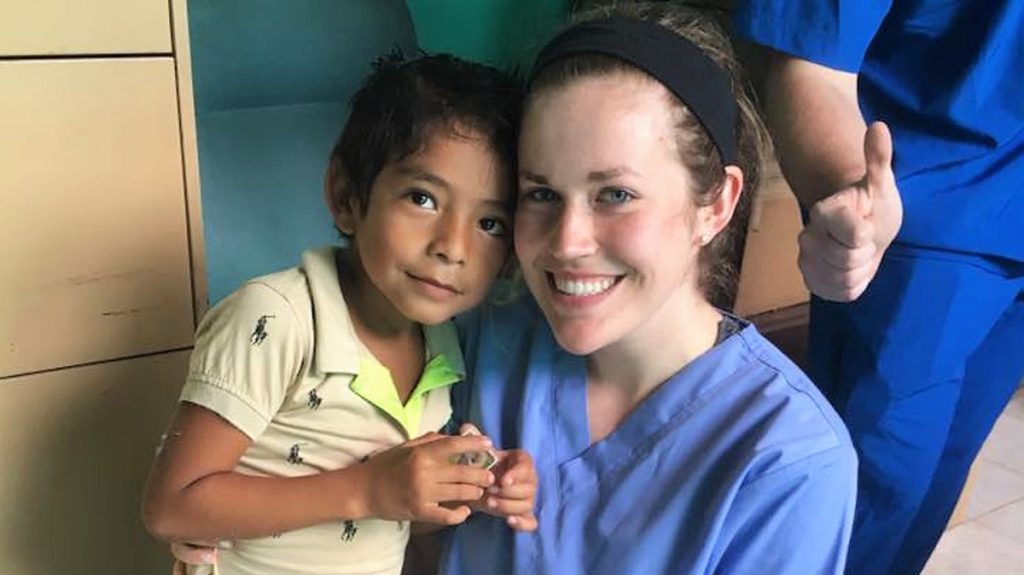
Alex Huechteman arrived at the University of Alabama with an idea of what she wanted to study, but the Honors College student soon discovered a path that would take her to Nicaragua to study a segment of rural population for the first time. A track and soccer athlete in high school, the Frisco, Texas, native started her academic career majoring in kinesiology with plans of physical therapy school. But during her freshman year, she became intrigued by a different medical field. “I took a chemistry class and was fascinated by anatomic-level processes and internal medicine,” said Huechteman. “I liked the challenges it presented, and I decided to switch my major to public health during my second semester.” Huechteman selected public health because she loves to talk about various areas of health care, including epidemiology and patterns of disease, among others. She also had the opportunity to research one of today’s hotly debated medical topics. “After taking several classes, I discovered I was passionate about health care systems and the politics of health care and health insurance,” said Huechteman. “I started to think about how I’m going to enter the field as a provider one day and quickly became interested in health care policy.” A clinical experience in Nicaragua When Huechteman was a sophomore and Honors College ambassador, she saw a blurb in a newsletter about the Nicaragua Clinical Experience, an Honors College program that allows UA students to learn and serve at La Clinica Alabama-Granada in Granada, Nicaragua. She immediately was intrigued because the program involved a combination of medicine, underserved communities and intercultural interaction. She was accepted into the program and lived with a host family for two weeks following her sophomore year. Huechteman’s days were split between working in the volunteer-run clinic in the morning and taking Spanish classes in the afternoon. At the clinic, she would shadow physicians, collect vital signs, monitor diabetic patients and help dispense medication in the pharmacy. “Alex excelled in patient care and interaction,” said Dr. Alyssia Miller, faculty director of the Nicaragua Clinical Experience. “She constantly looked for opportunities to interact with patients, and she truly cares for the patient as a person and sees them as more than just a sickness or treatment.” And while Huechteman enjoyed her Spanish classes, she says the time spent with her host family allowed her to fully immerse herself into the culture. “I learned more Spanish living with my host family than all of my Spanish classes combined,” said Huechteman. “I spent each day meeting vibrant, compassionate people gaining far more out of life with much less. At the close of the trip, I already knew I wanted to go back.” When she was able to apply, Huechteman quickly jumped at the opportunity to be a student facilitator, a role that normally involves assisting the program’s faculty leader with lectures and preparing students before their trip abroad, all while on campus. But not long after they were selected, Dr. Ross Bryan, assistant dean of the Honors College, gave the group of three student facilitators a rare opportunity to develop a research project and travel back to Nicaragua. “When we looked at literature about Nicaraguan health, all of the national data came from hospitals and labs in the capital of Managua,” said Huechteman. “We serve a rural population, and there wasn’t much published information about the people we see at the clinic in Granada.” An opportunity for international research Because health care information was lacking in rural communities like Granada, the group designed a community needs assessment based on a World Health Organization survey to better understand health behaviors, access to health care and demographics of patients visiting the clinic. While most of the research was qualitative, Huechteman said they added some thematic coding because most of the patients told stories. “We learned that while poverty is a big issue in the community, their needs go far beyond a problem of not being able to eat healthy foods or having access to hospitals,” Huechteman said. “They’re experiencing political issues and social support deficits as well.” According to Miller, the student facilitators were the first team to conduct international research at the Nicaraguan clinic. “Our goal is to get the information to donors and nongovernmental and missions organizations that serve the country to better allocate resources,” Huechteman said. “We want to bring awareness to the community’s needs.” Huechteman’s experiences in the Honors College and Nicaragua have not only forged a path for her future, but they will also be an inspiration for future UA Honors College students. She recently co-authored a chapter in the Honors College’s “Common Book” centered on her time abroad and dedicated to engaged scholarship and service. “My goal for college was to feel prepared for physician assistant school when I graduated. I absolutely feel I’m ready because of my time inside and beyond the classroom at UA,” Huechteman said. After graduation in May, Huechteman will enroll in the physician assistant program at the Baylor College of Medicine in Houston. She chose the program because of its emphasis on health care for Spanish-speaking populations. Republished with the permission of Alabama Newscenter.
