
Will Sellers: Avoiding Saigon’s quagmire in Manila
Seventy years ago, the Philippines came within a whisper of being the pre-game for Vietnam. But much like the dog that didn’t bark or the accident that didn’t happen, few people appreciate how close the Philippines came to communist domination. That this didn’t happen is testimony to the effective combination of American soft power and ethical local leaders who captured the hearts and minds of the people. As in many countries during World War II, all sorts and conditions of indigenous resistance fighters challenged the occupying Axis powers. Included among these patriotic guerrilla fighters were committed communists who saw the fascists as another hurdle in the struggle to achieve the workers’ paradise. Once the war ended, these various revolutionary movements became the spawning ground for political leaders. As is so often the case, most pro-western groups quickly declare victory and move forward to cash their peace dividend while forgetting the need for eternal vigilance and continuous engagement. The communists never do this because their version of peace is only a steppingstone toward total control and ultimate domination of the political machinery of government. The Philippines had been an American territory and, prior to the war, was well on its way to independence. The Japanese occupation delayed this, but once American forces liberated the country, civil government was restored. In fact, General Douglas MacArthur insisted that civilian administration, as opposed to military governance, be returned immediately to avoid any appearance of imperialism. Ultimately on July 4, 1946, the Philippines became a sovereign state and no longer a U.S. commonwealth. Regrettably, several political factions that had proven so effective in fighting the Japanese refused to lay down their arms and participate in a constitutional government. And as the Philippines was recovering from the devastation of war, aid of all sorts flooded into the country to begin the process of reconstruction. As critical as this foreign aid was to revive the economy, the magnitude of the funding created an environment of political corruption as many in the ruling party personally benefited from the largess. As a war-torn, third-world country with limited experience in self-government, the leadership of the Philippines on many levels became abusive as position, power, and pesos were used to maintain control. Somewhere along the way, the constitutional ideas about popular elections and consent of the governed gave way to fraudulent elections and a power structure that forgot about the people. And as the citizenry witnessed rampant corruption, they lost faith in the government and were easily swayed to revolutionary ideas which promised the usual equity and equality for all. Into this deadly combination stepped the communist guerrilla leader Luis Taruc, who used his military skills and personal charisma to charm the peasants into joining his revolution to end their exploitation. Because of corruption, the Philippine army was as ineffective as it was demoralized. Given the amount of military assistance, the armed forces became an employment agency such that maintaining national security and fighting the revolutionaries took a back seat to graft, corruption, and social engineering. Those who had fought the Japanese and wanted to maintain their independence saw their army overrun by Taruc’s Huk insurgents. The army had the resources it needed, but with low morale, it was difficult to maintain the discipline necessary to win. But some leaders of the Philippines understood the threat and realized their country was on the brink of disaster that would send them backwards, gutting their independence and voiding their constitution. Sensing this clear and present danger, Congressman Ramon Magsaysay developed a plan to fight the communists. He realized that corruption, especially within the army, had to be stopped. Initially, the ruling government would not listen to his ideas, but once the success of the insurgents carried them to the outskirts of Manila, the leadership changed tack, and Magsaysay was appointed defense minister. In this position, he very quickly reformed the armed forces and rooted out corruption. Using skills learned as an insurgent against the Japanese, he realized that winning the countryside and making the peasants his allies was critical to successfully defeating the communists. His efforts to both defeat communism and embrace the peasants were aided by an American Air Force Colonel, Edward Lansdale. Rather than have American aid siphoned off to line the pockets of corrupt officials, Lansdale used funds to help the peasantry with food, advocated land reform, and provided the people with the means to sustain themselves. Using psychological warfare tactics, he reduced the effectiveness of communist forces by not only cutting off rural support but also re-educating captured terrorists to secure their acceptance of Magsaysay’s reforms. The team of Magsaysay and Lansdale was wildly successful. By restoring the people’s confidence in a constitutional government and standing against corruption, they paved the way for a reform movement that started in November 1951, with the elections of an anti-corruption and reformist Philippine senate. This election became a referendum on Filipino leadership and was significant in sweeping in a government that would fully support Magsaysay’s plans for development. This election marked a turning point as national support receded against corrupt officials in both the government and the armed services. Once the army was restored as a fighting force and not a social benefit organization, the communist Huk’s days were numbered. When the government showed respect for the peasants by giving them ownership of their land and not abusing them, they gained allies and eliminated the fertile ground which nurtured and sustained the communist threat. This combination of government reforms and military action allowed the Philippines to avoid the terrors of internal revolution that could further devastate their developing country. The success of Magsaysay’s plans to provide for the people and defeat the communists made him so popular that two years later, he would be elected president. That the Philippines did not become a communist quagmire is a testament to Magsaysay’s success in respecting the people, eliminating the prestige of corruption, and establishing the foundation for a strong democratic republic. Will Sellers
Team aims to find site of missing Tuskegee Airman’s plane
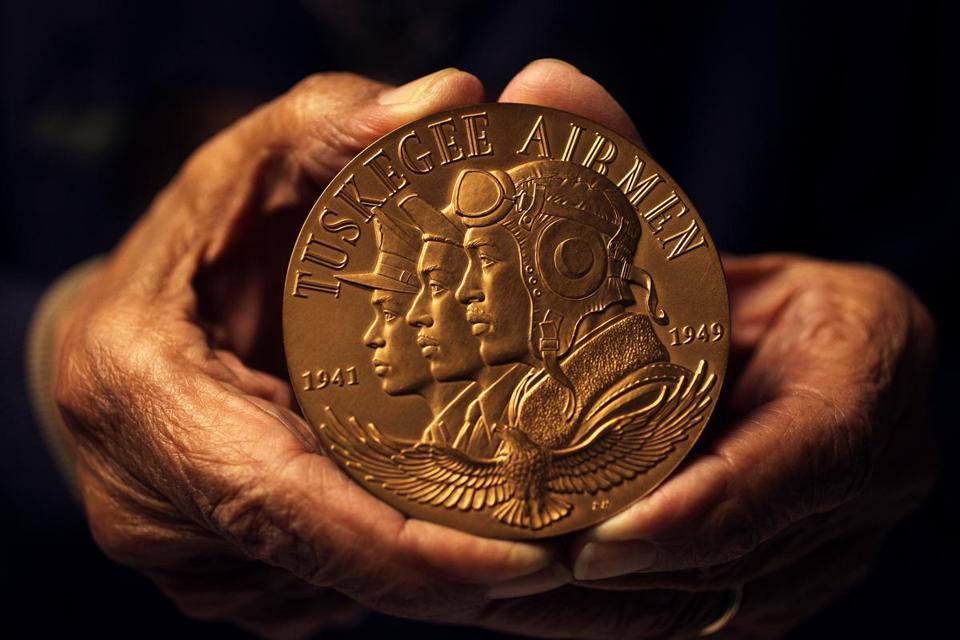
Unless they’re named Indiana and wear a fedora, archaeologists typically don’t attempt to solve historical mysteries in a single summer. But that’s exactly what University of New Orleans archaeologist D. Ryan Gray is hoping to do this summer when he leads a team of students and others to southern Austria, to investigate a site where they believe one of the famed Tuskegee Airmen went down near the end of World War II. The site, close to the Italian border and the Austrian town of Villach, is near the last reported sighting of Capt. Lawrence Dickson, a pilot with the 332nd Fighter Group of the 100th Fighter Squadron. Just after midday Dec. 23, 1944, Dickson was flying a reconnaissance mission in his P-51D when he radioed his wingman, 2nd Lt. Robert Martin, that he was having problems and was going to have to eject. Martin told authorities that he saw Dickson’s canopy jettison but never saw Dickson’s parachute, though possibly because it blended with the snow covering the ground. Since then, Dickson has been classified as missing. Dickson and Martin were both black pilots in World War II, when the U.S. armed forces were still segregated. The 332nd Fighter Group was made up of black pilots who had trained at the Tuskegee Institute in Alabama and became known as the Tuskegee Airmen. Officials with the Defense POW/MIA Accounting Agency, whose mission is to account for all missing U.S. service members, won’t confirm that the crash site Gray will be investigating is suspected to be Dickson’s. But a review of documents, as well as accounts from locals who said they witnessed the crash, has led some experts to believe the site is worth exploring. Gray said he is excited about the challenge of excavating an aircraft from World War II, something he’s never done before. And there is the added bonus of perhaps being able to bring a war hero home. “We are hoping to resolve this case this summer,” he said of a five-week dig season. Unlike typical archaeological excavations, which are painstakingly meticulous and intentionally slow in order to be comprehensive, this one has a different objective: to confirm the type of plane that crashed there and then identify any human remains that may be found. If that is accomplished, then the POW/MIA agency will begin the process of preparing a proper recovery. Gray and the 13 UNO students will have ample help in their efforts. They will be joined by two students from the University of Innsbruck, in Austria, as well as academic staff there who have a special interest in World War II and aircraft archaeology. They also will get help from Tom Czekanski, a senior curator at the National World War II Museum in New Orleans who is an expert on P-51s, the plane Dickson flew. Czekanski said he plans to look for the P-51’s notable characteristics: a Packard-built Merlin engine, a type of propeller known as a Hamilton Standard or the type of wheels and struts that formed the landing gear. “Those are all distinctive for the P-51,” he said. And though Czekanski is excited about maybe finding the plane, he is even more hopeful that the team can bring some closure to the 70-year-old case. “I think the most rewarding part will be if we can find the remains of an individual who’s been lost and be able to bring him home,” he said. “That’s the meaningful point of this.” Republished with permission of The Associated Press.
Gary Palmer presents medals to family of fallen 6th District solider
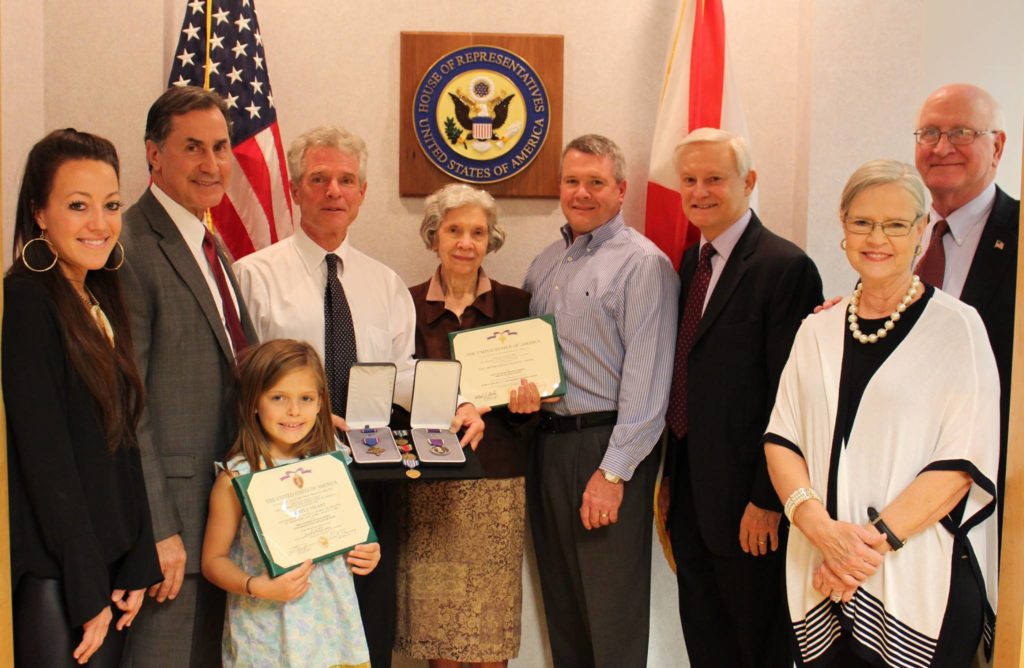
Alabama 6th District U.S. Rep. Gary Palmer and former Alabama U.S. Rep. Spencer Bachus presented several awards and medals to the family of one of Alabama’s fallen war heroes, Melvin Spruiell this week. The long overdue recognition was given for Spruiell’s part in the World War II D-Day Invasion of Europe. In the summer of 1944, Spruiell served as a Forward Artillery Observer with the 377th Parachute Field Artillery Battalion, First Lt. He exposed himself to enemy fire to locate a working radio in order to call in artillery to suppress and dislodge the enemy from their defensive position. He then volunteered as an infantryman, separating himself from his battalion, and led a charge across an open field to take out an enemy machine gun nest. During that action, First Lt. Spruiell was killed. “His actions are in keeping with the highest traditions of military service and reflect great credit upon himself, the 101st Airborne Division, and the Army of the United States,” Palmer said in a Facebook post. Spruiell graduated from Auburn University with a degree in chemical engineering, received a Masters at Tennessee, and a Doctorate at OSU. First Lt. Spruiell’s family was presented with the following medals: the American Campaign Medal the European-African-Middle Eastern Campaign Medal with Arrowhead Device one Bronze Service Star the World War II Victory Medal the Purple Heart the Distinguished Service Cross. “Men like First Lt. Spruiell are the reason America remains the home of the free and the land of the brave,” Palmer concluded.
Dominic M. Calabro: Take time to remember sacrifices of soldiers on Memorial Day
I remember my Dad telling me stories of World War II when I was a kid. He told me about his friends who died to preserve the American way of life and to rid the world of a madman. Stories like my Dad’s remind me that nothing in our life in America comes without a price. Men and women of all backgrounds fought and died because they took an oath to defend their country from those who wished to harm it. My Dad and I participated in the Tallahassee Honor Flight in 2013. It was an honor to accompany my Dad on this journey to meet his fellow veterans and visit the World War II Memorial. I began thinking about all those men who died fighting in that war. Every country has men that will die for their country. But these men didn’t just die for the United States. They died for an idea; an idea of American exceptionalism in a dark world, built on the foundation of a constitutional republic that protects the rights of all its citizens. That is why on Memorial Day we honor our brave soldiers who died in the line of duty. Many will spend Memorial Day relaxing from work. Others will celebrate the beginning of summer with hot dogs and swimming trunks. But take some time out of your day to remember our fallen soldiers. Attend a local Memorial Day ceremony. Volunteer with local veterans’ groups. Learn about a local soldier who passed away during battle. Keeping their memories alive is how we can ensure that their sacrifice did not go in vain. I’m proud to be the son of a veteran and I’m sure many in our great state are proud of all of our Florida-born soldiers and all of their sacrifices. We should be glad that we live in a state that has taken steps to help our veterans and has given them expanded educational and professional opportunities to succeed in civilian life. Our commitment to our veterans honors the memories of those we lost and never will forget. To all those who have fought and continue to fight for American freedom, thank you. ___ Dominic M. Calabro is president and CEO of Florida TaxWatch.
Bob Driver: Adolf Hitler and Donald Trump (a comparison)

Donald Trump, who may very well become our next president, is being accused of Hitlerism. By the time this column appears, the charges may have been dismissed. Or confirmed. Whichever way it goes, it behooves all of us to think about Hitler and Trump, and how they compare. For younger readers and those who may have heard vague reports about World War II and other related events, a little history: Adolf Hitler was a German soldier and political activist who climbed to power in Germany in the 1920s and 1930s. His National Socialist (Nazi) Party took full control in 1933. In September 1939, Germany invaded Poland, which triggered the beginning of World War II. Not long afterward, Hitler invaded the Soviet Union. Bad move. Within a few years the USA, United Kingdom, Russia and other Allied nations reduced Germany to a bombed-out starving wasteland. Enough history. Let’s see how, or whether, Donald Trump and Adolf Hitler resemble each other: WEALTH. Trump was born with a platinum spoon in his mouth. Initially, Hitler was poor as a church rat but later enjoyed many creature comforts. At his death, he owned an extensive underground bunker in Berlin. SPEAKING STYLE. Hitler was a dynamic orator. His high-pitched voice and passionate utterances excited his followers and drove them to the edge of madness, especially when he revealed that most of Germany’s (and the universe’s) woes could be blamed on the Jewish people. He was a student of government and politics, and easily listed dozens of twisted reasons why he should lead Germany. Donald Trump also speaks in a penetrating, passionate manner to his overflow crowds, most of whom would cheer themselves hoarse even if Trump uttered nothing more than “Fish for sale!” Rather than referring to specific facts to support his beliefs, he relies on repetition of a few mostly inflammatory thoughts. He also uses various insults to thwart anyone who disagrees with him. This sets him far above Hitler, who dealt with opponents by having them shot. PHYSICAL ATTRIBUTES. Hitler was not much to look at. He was fairly short, and seldom smiled. It was rumored that he was born with only one testicle. If true, this did not keep him from scaring the tar out of thousands of more fully equipped males in Germany and elsewhere. Trump’s most notable physical deficiency is a paucity of hair on the forward half of his scalp. He also has a habit of pursing his lips and defiantly tilting his chin upward, much like the Italian fascist dictator Benito Mussolini did in his Roman balcony harangues. ROMANCE AND MARRIAGE. Hitler didn’t have much luck with the ladies. He is believed to have connected with several young women, but the hookups did not endure, partially because a number of the women committed suicide. Hitler’s longest romance was with blond Eva Braun. They did not marry until late April 1945 when Russian troops were turning Berlin into a morgue. Two days after the wedding ceremony, Adolf and Eva killed themselves. Their bodies were burned. Donald Trump’s personal life has been somewhat cheerier. He has married three attractive women (although not all at the same time). They have given him five children, all of whom reportedly think highly of their father. RELIGIOUS BELIEFS. The Donald (as Trump’s many friends sometimes call him) is a (non-devout) Presbyterian, reflecting his Scottish roots. He has maintained good relations with other religious adherents, until recently when he uttered some unkind words about militant Muslims. Hitler’s thoughts about religion were vague, except for his lifelong anti-Semitic fervor. He liked to think of a heaven where everyone resembled Norse gods and goddesses and was enraptured by the music of Richard Wagner. Hitler did not believe in an eternal hell. Instead, he created it on earth, to the tune of 29 million victims of Nazi ambitions. IMMIGRATION POLICIES. Hitler did not welcome newcomers to Germany unless they were Aryan, enjoyed book-burning and wept copiously as they sang “Deutschland Uber Alles” while smashing the windows of Jewish shopkeepers. Hitler’s final solution to the presence of unwanted citizens was to emigrate them to concentration camps. As I write these words on Dec. 9, Donald Trump is saying various things about U.S. immigration and anti-terrorism policies. They can be summed up as “Send the illegal bad guys back to where they came from, and don’t let Muslims inside our land until they are officially purified.” CONCLUSION. All aspects considered, I’d much rather have Donald Trump in the White House than Adolf Hitler. However, this should not be considered my endorsement of Trump, except to say I hope he stays in the race until the very end. Rightly or wrongly, Trump is the personification of the First Amendment – freedom of speech – at a time when many in our land want to bend it, cripple it or shut it down. Bob Driver writes for Tampa Bay Newspapers. He is a former editorial page editor for the Clearwater (Florida) Sun. For more state and national commentary visit Context Florida.
Martin Dyckman: The road to Middle East stability isn’t through war
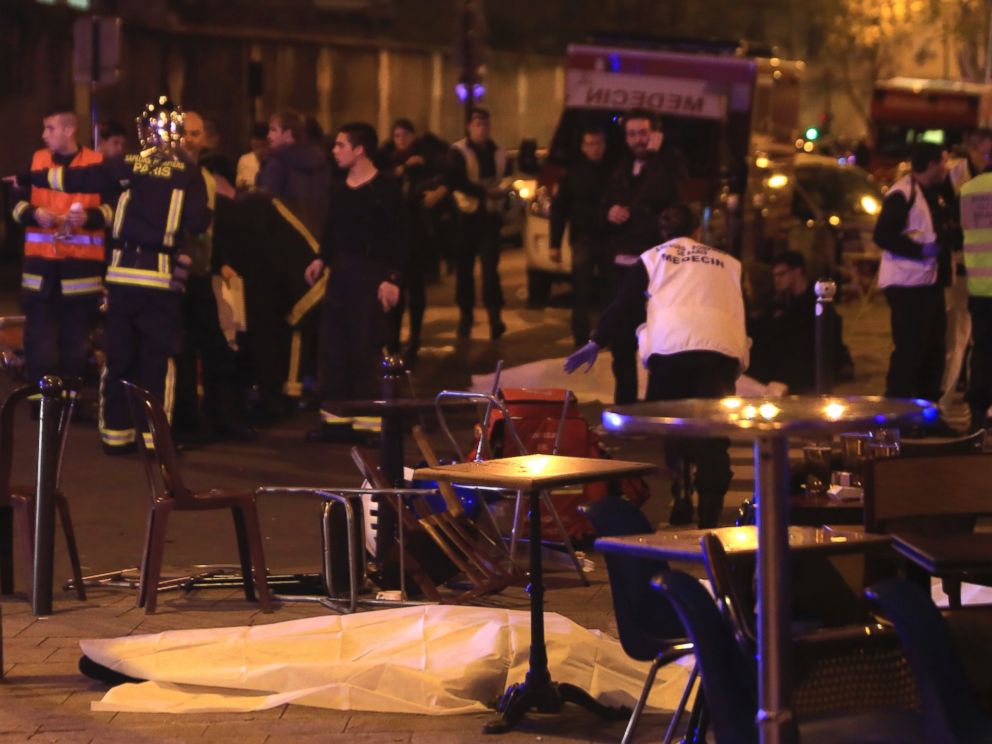
Remember “freedom fries?” That was how some Americans expressed their spite toward France when that nation, with vastly more experience than ours in the Middle East, wisely declined the opportunity to participate in George W. Bush‘s ego-driven war on Iraq. There was a congresswoman from Florida who called for exhuming our military graves and bringing the remains home. She was ignorant of the fact that a grateful France had ceded those sites to the United States forever. The heartbreakingly beautiful cemetery atop the Normandy beachhead is as much American soil as Arlington itself. But in Paris on Friday, France paid a terrible price for the chaos we created when we invaded Iraq and destroyed its government with no thought of history or of the consequences beyond the premature boast, “Mission accomplished.” The evil we didn’t know proved to be worse than the evil we did. Saddam Hussein, for all his crimes, was a stabilizing influence on Iraq and an effective counterweight to Iran – which, unlike Iraq, had declared its enmity of the U.S. and remains an essential ally of the Syrian dictatorship that provides the so-called Islamic State with a plausible raison d’etre. When Bush’s civilian viceroy sacked the entire Iraqi army, he created legions of recruits for al-Qaida and its successor, the Islamic State of Iraq and Syria – aka ISIS. Our failure in nation-building created a corrupt prime minister, Nouri Kamal al- Maliki, whose refusal to renew the status of forces agreement gave President Obama no choice, whatever other he might have chosen, but to bring all our troops home. No president of either party could have left them there exposed to Iraqi laws, arrests and prosecutions. To understand this history is to be warned against repeating it. But America doesn’t learn that lesson very well. Vietnam should have taught us the difficulty of imposing our values on a different culture and to be leery of war where our national interest is not at stake. But the only lesson the politicians took to heart from that unpopular lost war was to abandon the draft and fight the next one with a volunteer force, a force that has been cruelly abused with too many successive combat deployments. In the aftermath of the Paris massacres, we will be hearing again, from the usual suspects, that it’s time to unleash American military might to whatever extent it takes to exterminate ISIS. But even if we could do that – and we can’t – something else would take its place, just as the burgeoning ISIS supplanted a decapitated al-Qaida. The Democratic presidential candidates were right as they agreed, in their separate ways Friday night, that the fight against ISIS must be led by the Muslim states that are the radical movement’s primary intended victims. The United States can help, and should. We are helping already, as are the French, and there is surely more that we can do, short of sending sophisticated weapons to dubious allies who might surrender them to ISIS. But it cannot be seen as an American war, or as French or British. The more important point is that the ultimate solution can not be military. That can only prolong the strife and suffering. By coincidence, the Imam of Asheville’s Muslim community, Egyptian-born Mohamed Taha, was the scheduled speaker Sunday at a brunch sponsored by the Brotherhood of my Reform Jewish congregation. It was well-attended. He talked mainly about the beliefs of Islam and its many similarities to Judaism, and its devotion to peace. But the slaughter at Paris hovered over the morning. “These people,” he said, speaking of ISIS and its ilk, “they are extremists. The majority of Muslims don’t consider these people as Muslims. Mohamed warned against such people … they take some verse of the Koran and they twist its meaning. “They don’t,” he added, “consider us as Muslims.” To defeat the jihadists, he said, requires overcoming the conditions they exploit. “They live in poverty,” he said of the populations where the jihadists enlist most of their support. “They have nothing. We have to help them to establish good countries, good communities. They have nothing in this life, so the extremists promise them everything in the next life.” The solution is not military. The wiser of our American experts on the Middle East, notably including The New York Times columnist Thomas Friedman, have been saying that for years. After World War II, the United States deployed a non-military solution, the Marshall Plan, to help a ravaged Europe rise to its feet in democracy rather than communism. We surely could use a Marshall plan for the Middle East. But how to help the people there to their feet without having the assistance stolen by the corruption that is endemic among the rulers there? I asked that question. Taha acknowledged the difficulty. It begins, he said, with affording an American education, steeped in American traditions and values, to Middle Eastern students who want to study here. Inevitably, perhaps, some few of those students will have other values in mind, like those who prepared here for 9/11. And in the aftermath of Paris, there are politicians who would slam the door, to students as well as refugees, for fear of the few who would exploit our hospitality. But that would be a mistake. It would betray that our values are not, in truth, what we would wish them to be. It would postpone the redemption of the Middle East and perpetuate a war that cannot be won by arms alone. Martin Dyckman is a retired associate editor of the newspaper formerly known as the St. Petersburg Times. He lives in Asheville, North Carolina.
Tuscaloosa Veterans greeted by Richard Shelby during Honor Flight to D.C.
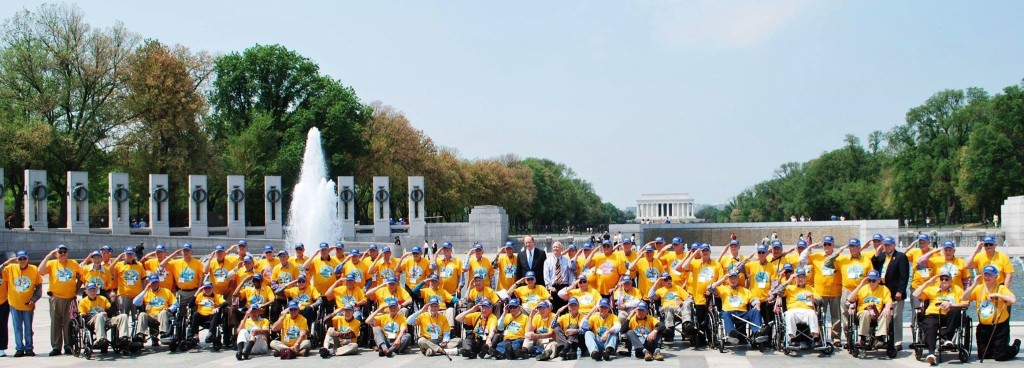
Veterans of World War II and the Korean War arriving in Washington, D.C., via the Honor Flight from Tuscaloosa were greeted by a familiar face. U.S. Sen. Richard Shelby met them at the World War II Memorial on Wednesday “Today, I had the honor of meeting with and paying tribute to World War II and Korean War veterans from Tuscaloosa participating in their Honor Flight,” Shelby said. “This experience was both humbling and exciting, as these Alabama veterans had the opportunity to view the national memorials dedicated to their selfless service to our country. The valor and patriotism of our service members must never be forgotten nor taken for granted.” The Honor Flight helps veterans from across the country visit Washington, D.C., to see the memorials built in their honor. Flights are funded by donations from organizations and individuals. This particular trip was funded by the the Tuscaloosa Rotary Club, which has previously taken 423 veterans to the nation’s capital.
