
Lawsuit challenges Alabama’s ‘de facto ban’ on freestanding birth centers
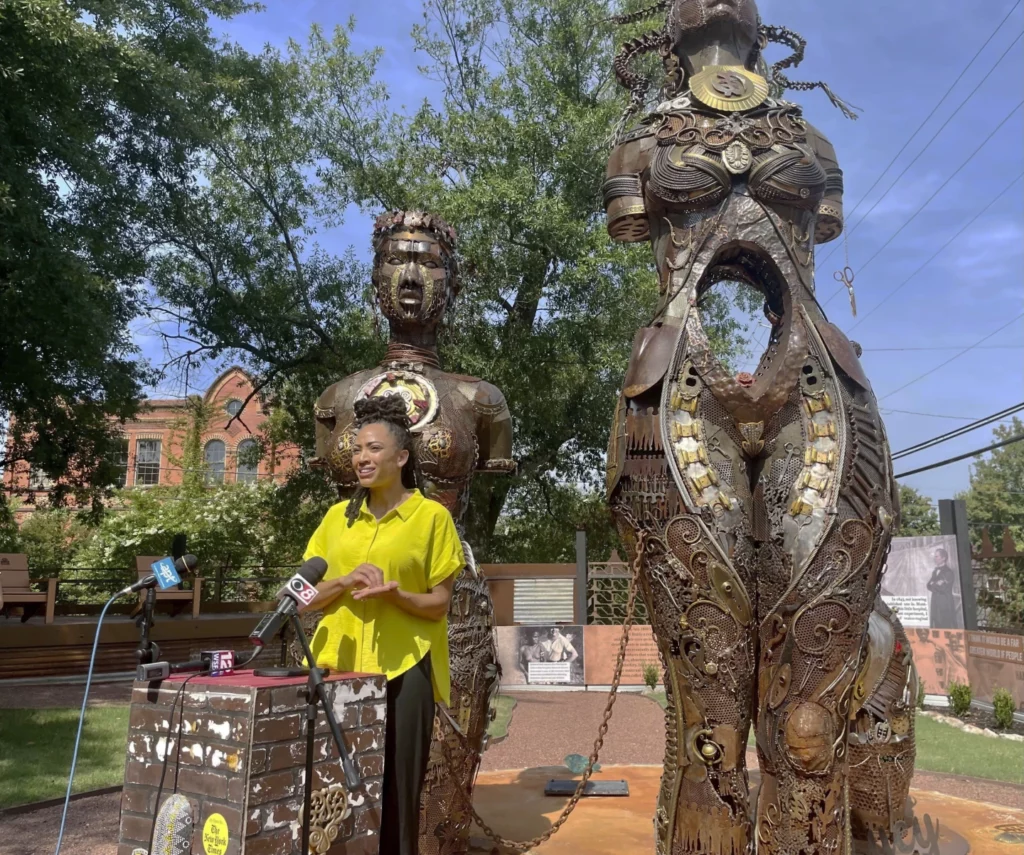
A group of midwives and doctors on Tuesday filed a lawsuit challenging what they described as Alabama’s de facto ban on freestanding birth centers by requiring the facilities be licensed as hospitals. The lawsuit — filed by the operators of one birth center that closed and two others that paused plans to open — asks a judge to block the Alabama Department of Public Health from requiring the facilities be licensed as hospitals. The suit argues the facilities, where low-risk patients can receive prenatal care and give birth, do not constitute hospitals under Alabama law and that the state health department has no authority to regulate them as such. “The department is imposing this illegal ban on birth centers in the middle of a maternal and infant health crisis in Alabama that is disproportionately harming Black mothers and babies,” Whitney White, a staff attorney with the American Civil Liberties Union Reproductive Freedom Project, said during a Tuesday press conference. The freestanding birth centers, which provide an option between home and hospital births, would fill a crucial need, the providers argued. Many women in rural areas live far away from a hospital, or they may prefer to give birth outside of the hospital for financial or personal reasons, they said. The Health Department did not have an immediate comment on the lawsuit. “The Alabama Department of Public Health has just recently learned of the filing of this lawsuit and has not had opportunity to review it fully. ADPH does not otherwise comment on active litigation,” a department spokeswoman wrote in an emailed response. While lay midwives attended births for centuries, Alabama has only made midwifery legal in recent years. Alabama lawmakers voted in 2017 to legalize midwifery, and the state began issuing licenses in 2019. Stephanie Mitchell, a certified professional midwife who is building a freestanding birth center in Sumter County, said she serves a region where people may drive a roundtrip of 75 or more miles (120 kilometers) to receive prenatal care. “Having to drive that far can be a serious obstacle and may prevent some people from getting care during their pregnancy at all. People shouldn’t be forced to go without pregnancy care,” said Mitchell, a plaintiff in the case. “Expanding access to midwifery and birth centers in places like Sumter County is a life and death situation for many families.” Dr. Heather Skanes, who founded the Oasis Family Birthing Center in Birmingham, and Dr. Yashica Robinson, founder of the Alabama Birth Center in Huntsville, are also plaintiffs in the case. The Birmingham facility closed, and the two others paused plans to start deliveries because of regulatory issues. Alabama consistently has one of the highest infant mortality rates in the nation, with 7.6 deaths per 1,000 live births in 2022. The mortality rate for Black babies in the state — 12.1 deaths per 1,000 live births — is twice that of white babies, according to statistics from the Alabama Department of Public Health. Tuesday’s press conference was held beneath a towering art installation known as the “Mothers of Gynecology,” which pays tribute to three enslaved Black women who were subjected to experimental surgery by a 19th century physician celebrated for advancing women’s health. JaTaune Bosby, executive director of the ACLU of Alabama, said that “history still follows us today in policymaking where we see marginalized communities consistently not given adequate health care.” “This monument reminds us of why we are here advocating for people who have been disregarded, who are solely asking for quality health care and dignity, and for individuals who are committed to giving that to them,” Bosby said. Republished with the permission of The Associated Press.
Alabama health care providers sue over threat of prosecution for abortion help
Health care providers in Alabama, where abortion is almost entirely illegal, filed a lawsuit Monday against the state’s attorney general that seeks to prevent him from prosecuting people who help women travel outside the state to receive an abortion. The providers say Attorney General Steve Marshall has made statements suggesting that anti-conspiracy laws could be used against groups that provide assistance for Alabama women to travel to states where abortion is legal. The lawsuit, filed in federal court by two former abortion clinics and an obstetrician, seeks a legal ruling that state laws can’t be used to prosecute people who provide referrals and appointment help. A similar lawsuit filed Monday by Yellowhammer Fund, a group that once provided financial assistance to women seeking abortions, seeks to clarify it can’t be prosecuted for providing monetary help. “What the attorney general has tried to do via these threats is to effectively extend Alabama’s abortion ban outside of its borders for Alabama residents,” Meagan Burrows, a lawyer with the American Civil Liberties Union, which is representing the providers in the lawsuit. The lawsuits seek to block Alabama from using prosecution, or the threat of it, to hinder efforts to help state residents obtain abortions where it remains legal. In a separate case, advocacy groups and an attorney sued Idaho earlier this month over a law that makes it illegal to help minors to travel to another state to get an abortion without their parent’s consent. Marshall has not prosecuted anyone for providing abortion assistance, but he has made statements saying that his office would “look at” groups that provide help. “Attorney General Marshall will continue to vigorously enforce Alabama laws protecting unborn life which include the Human Life Protection Act. That includes abortion providers conspiring to violate the Act,” Marshall’s office said in an emailed response to the lawsuit. His office did not respond to an email asking to clarify if actions such as providing financial assistance could be prosecuted. Those statements have had a chilling effect on abortion rights advocates, who already feel like they live with a legal target on their back, providers said. The suit was filed by the West Alabama Women’s Center in Tuscaloosa, the Alabama Women’s Center in Huntsville, and Dr. Yashica Robinson, an obstetrician. Robinson said she once made referrals for patients seeking abortions, coordinating health history information for medically complex patients, but no longer does so because of the fear of prosecution. “Tragically, banning abortion in Alabama seems to not have been enough,” Robinson said in a statement. “Those in power want to muzzle providers like me to prevent us from sharing information with our pregnant patients about the options they have.” The phone rings at least once a day at the former clinic in Tuscaloosa as women — sometimes crying and often desperate — try to find where they can go in other states to end an unwanted pregnancy, the clinic director said. “We get a lot of the anger — and we know that it’s not us that they are angry at,” said Robin Marty, operations director for the West Alabama Women’s Center. “It’s the situation, but it is very, very hard for my staff. They want to be able to help them.” After the U.S. Supreme Court overturned Roe v. Wade and handed authority on abortion law to the states, the Deep South quickly became an area of limited abortion access. Alabama bans abortion at any stage of pregnancy, with no exceptions for rape and incest. The only exemption is if it’s needed because pregnancy seriously threatens the health of the woman. Nineteen states have enacted restrictions, and many southern states have near-complete bans. Marty said that means women often have to travel long distances to receive care, which can bring financial and logistical hardship. Marty said most people who reach out to the clinic know “there is no abortion in Alabama. What they aren’t aware of is how far that extends.” Republished with the permission of The Associated Press.
Alabama virus cases top 2,000, more than 50 deaths

The number of infections in Alabama rose by several hundred.
