
Mike Pompeo: US stands ‘with Israel’ in fight against Iran
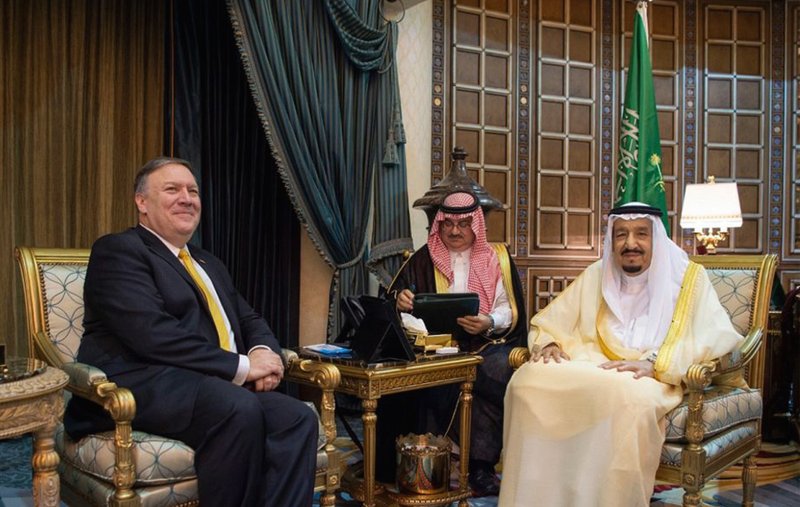
Secretary of State Mike Pompeo on Sunday gave a warm boost of support to Israel in its standoff against Iran, saying “the United States is with Israel in this fight.” Pompeo has been using the Middle East leg of his first trip abroad as America’s top diplomat to call for concerted international action to punish Iran for its missile programs. The tough line was welcomed in Israel, which considers Iran its greatest threat and has been leading calls for the international community to revise its 2015 nuclear deal with Iran. He arrived after visiting Saudi Arabia, another fierce rival of Iran. “We remain deeply concerned about Iran’s dangerous escalation of threats to Israel and the region and Iran’s ambition to dominate the Middle East remains,” Pompeo said after a nearly two-hour meeting with Israeli Prime Minister Benjamin Netanyahu. “The United States is with Israel in this fight.” Israel has called for tough international action against Iran, citing its hostile rhetoric, support for anti-Israel militant groups and development of long-range missiles. It also has complained the 2015 nuclear deal does not do enough to prevent Iran from developing a nuclear-weapons capability, and expressed growing concerns about Iran’s involvement in the civil war in neighboring Syria. It says it will not allow Iran to establish a permanent military presence in Syria, fearing the Iranians will launch attacks. President Donald Trump is to decide by May 12 whether to remain in the nuclear deal. Pompeo repeated the Trump position that “if we can’t fix it, he is going to withdraw.” Netanyahu welcomed the tough U.S. line. “Iran must be stopped, its quest for a nuclear bomb must be stopped, its aggression must be stopped and we’re committed to stopping it together,” he said. Netanyahu also welcomed the U.S. recognition of Jerusalem as Israel’s capital, and the scheduled move of its embassy from Tel Aviv on May 14. Pompeo said the U.S. is “incredibly proud” of the embassy move. The Palestinians, who claim Israeli-annexed east Jerusalem as their capital, have harshly criticized the U.S. move and all but cut off ties with the White House. Earlier in Saudi Arabia, Pompeo also took aim at Iran. “Iran destabilizes this entire region,” Pompeo said in brief remarks to journalists with Saudi Foreign Minister Adel al-Jubeir. He also urged the Saudis and their neighbors to resolve a festering dispute with Qatar that U.S. officials say Iran is exploiting to boost its influence in the region, including in Yemen and Syria. Pompeo on Sunday met with Saudi King Salman, whose country, along with Bahrain, Egypt and the United Arab Emirates, is embroiled in a row with Qatar that had hobbled Gulf Arab unity and frustrated the U.S. as it seeks to blunt growing Iranian assertiveness. “I think they would all agree that it’s in everyone’s best interests that the Gulf states all figure out how to be together,” Pompeo told reporters as he traveled to Israel. “We’ve got a common challenge in Iran I think they all recognize that. We’re hopeful that they will in their own way figure out their dispute between them.” The ex-CIA chief arrived in Riyadh a day earlier, shortly after Iranian-backed Houthi rebels in Yemen fired missiles at Saudi Arabia’s southern city of Jizan, killing one person and underscoring what U.S. officials said is a growing threat emanating from Iran. Senior U.S. officials traveling with Pompeo blamed Iran for smuggling the missiles into Yemen. They said the incident highlighted the importance of the Trump administration’s push to counter Iran in the region. Iran has also provided crucial support to Syrian President Bashar Assad. Al-Jubeir said the kingdom “supports the policy of the Trump administration against Iran and to improve the terms of the nuclear agreement with Iran.” Pompeo’s meetings in Saudi Arabia and Israel, to be followed by discussions in Jordan, come just weeks ahead of several key dates that could bring further volatility to the region. Trump has set a May 12 deadline to decide whether to pull out of the Iran nuclear deal, something he appears likely to do despite heavy pressure to stay in from European and other parties. In London, British Prime Minister Theresa May’s office said that she discussed the deal with her French and German counterparts. It said they agreed that the deal should remain intact, even while addressing shortcomings. The countries “agreed that there were important elements that the deal does not cover, but which we need to address — including ballistic missiles, what happens when the deal expires, and Iran’s destabilizing regional activity,” the statement said. On May 14 comes the U.S. Embassy move, marking a significant shift in decades of American policy toward Israel and the Palestinians. The next day the Palestinians will mark the anniversary of what they term the “catastrophe,” when hundreds of thousands of Palestinians fled or were driven from their homes during the 1948 war that surrounded Israel’s creation. Dozens of Palestinians have been killed by Israeli fire during recent protests along border between Israel and Gaza. Those protests, spearheaded by the Islamic militant Hamas movement, are expected to peak on May 15. Also looming over the trip is uncertainty over Trump’s policy on Syria, which has shifted between a speedy all-out withdrawal of American forces and leaving a lasting footprint to deter Iran from completing a land bridge from Tehran to Beirut. Pompeo also is taking a leading role in Trump’s preparations for an expected summit in May or early June with North Korean leader Kim Jong Un. Pompeo, while en route to Israel, was asked whether a U.S. withdrawal from the Iran nuclear deal would complicate negotiations “I don’t think Kim Jung Un is staring at the Iran deal and saying, ’Oh goodness, if they get out of that deal, I won’t talk to the Americans anymore. There are higher priorities, things he is more concerned about than whether the Americans stay” in the accord, Pompeo said. Republished with the permission of the Associated Press.
Supreme Court permits full enforcement of Donald Trump travel ban
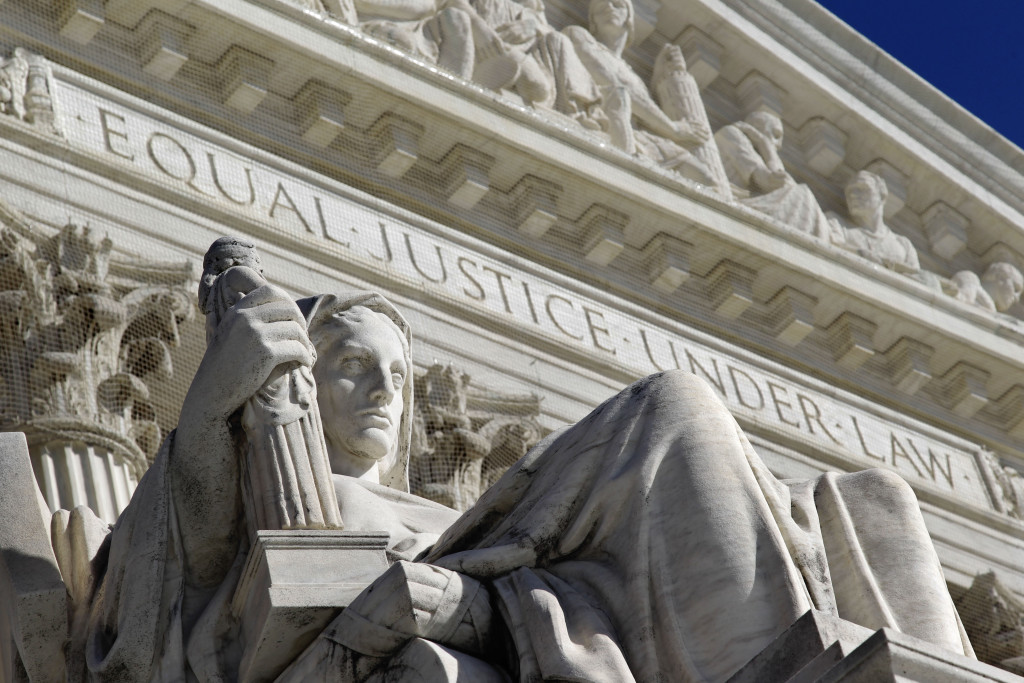
The US Supreme Court on Monday issued an order permitting full enforcement of President Donald Trump’s revised travel ban to go into effect while legal challenges continue to be argued in lower courts. While not a final ruling, the court is allowing the Trump administration enforce a ban on travel to the U.S. by residents of six mostly Muslim countries — Syria, Chad, Iran, Libya, Somalia and Yemen. The only dissent from the court came from Justices Ruth Bader Ginsburg and Sonia Sotomayor who would have left the lower court order in place had they not had the minority opinion on the court. White House Deputy Press Secretary Hogan Gidley responded to the court’s decision and called the ban “lawful and essential to protecting our homeland.” “We look forward to presenting a fuller defense of the proclamation as the pending cases work their way through the courts,” Gidley added. What happens next? Federal appeals courts in San Francisco, California, and Richmond, Virginia, will hear arguments this week on whether the Trump’s third executive order of the travel ban policy is lawful. The Supreme Court noted it expects those lower courts to reach decisions “with appropriate dispatch.” Meaning the case will eventually end up back in the Supreme Court, likely by the end of June.
Donald Trump replaces 90-day ban with new travel restrictions
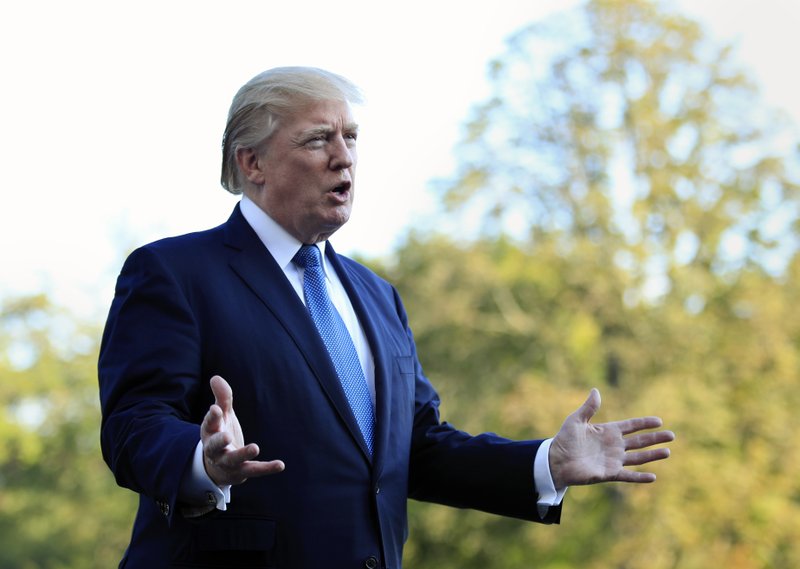
President Donald Trump has signed a proclamation imposing strict new restrictions on travelers from a handful of countries, including five that were covered by his expiring travel ban. Administration officials say the new measures are required to keep the nation safe. The indefinite restrictions apply to citizens of Chad, Iran, Libya, Somalia, Syria, Yemen and North Korea. As part of the presidential proclamation signed Sunday, the U.S. will also bar the entry of certain Venezuelan government officials and their immediate families. The changes will take effect October 18. The announcement came the same day that Trump’s temporary ban on visitors from six Muslim-majority countries was set to expire, 90 days after it went into effect. That ban had barred citizens of Iran, Libya, Somalia, Sudan, Syria and Yemen who lacked a “credible claim of a bona fide relationship with a person or entity in the United States” from entering the U.S. Only one of those countries, Sudan, will no longer be subject to travel restrictions. “Making America Safe is my number one priority. We will not admit those into our country we cannot safely vet,” Trump tweeted late Sunday after the new policy was announced. Unlike the first iteration of Trump’s travel ban, which sparked chaos at airports across the country and a flurry of legal challenges after being hastily written with little input outside the White House, officials stressed they had been working for months on the new rules, in collaboration with various agencies and in conversation with foreign governments. To limit confusion, valid visas would not be revoked as a result of the proclamation. The order also permits, but does not guarantee, case-by-case waivers for citizens of the affected countries. The restrictions are targeted at countries that the Department of Homeland Security says fail to share sufficient information with the U.S. or haven’t taken necessary security precautions. DHS has spent recent months working to develop a new security baseline, which includes factors such as whether countries issue electronic passports with biometric information, report lost or stolen passports to INTERPOL, an international law enforcement body, and share information about travelers’ terror-related and criminal histories. Citizens of countries that don’t meet the standard will face restrictions until they make changes to bring them into compliance. The new rules include the suspension of all immigrant visas for nationals of Chad, Iran, Libya, North Korea, Syria, Yemen and Somalia, and the suspension of non-immigrant visas, such as for business and tourism, to nationals of Chad, Libya, North Korea, Syria and Yemen. Citizens of Iran will not be eligible for tourism and business visas, but remain eligible for student and cultural exchange visas if they undergo additional scrutiny. Such additional scrutiny will also be required for Somali citizens applying for all non-immigrant visas. Critics have accused Trump of overstepping his legal authority and violating the U.S. Constitution’s protections against religious bias each time he has ordered new travel restrictions. And the inclusion of Venezuela and North Korea appeared to be an attempt to block challenges from advocacy groups and others who have called the restrictions a ban on Muslims. Trump during his campaign called for a “total and complete shutdown of Muslims entering the United States.” The U.S. had already imposed wide-ranging sanctions on certain high-ranking Venezuelan government officials to protest the government’s attempts to consolidate power. “The fact that Trump has added North Korea — with few visitors to the U.S. — and a few government officials from Venezuela doesn’t obfuscate the real fact that the administration’s order is still a Muslim ban,” said Anthony D. Romero, executive director of the American Civil Liberties Union, which has been challenging the ban in court. “President Trump’s original sin of targeting Muslims cannot be cured by throwing other countries onto his enemies list.” But administration officials argue the measure is necessary to keep Americans safe. Republished with permission from the Associated Press.
Alabama joins 15-state coalition in amicus brief supporting Donald Trump’s travel ban

A team of state attorneys general submitted an amicus brief to the U.S. Supreme Court on Thursday in support of the Trump administration’s efforts to restrict travel to the United States by providing a 90-day delay of travelers entering America from Iran, Libya, Somalia, Sudan, Syria and Yemen due to national security concerns regarding those countries. Alabama Attorney General Steve Marshall joined 15 other states in the brief the Court to uphold the travel ban to protect American citizens from terrorism. “The President is rightfully exercising his legal authority to restrict the entry of those who may endanger the safety and security of Americans,” said Marshall. “The restricted countries have a strong record of violent acts and terrorism, and it is vital and appropriate that the President’s provisions stand to properly vet travelers from these areas for the protection of our citizens.” The brief relates to an executive order Trump signed March 6, a revision to an earlier travel ban he signed January 27, a week into his presidency. Federal judges subsequently prevented both versions from being fully implemented, dealing a major legal setback to the new administration’s immigration policy. The Trump administration appealed the injunctions to the Supreme Court, which allowed a limited version of the ban to take effect and will hear full arguments in October. Thursday’s amicus brief was filed by the State of Texas and joined by Alabama, Arizona, Arkansas, Florida, Kansas, Louisiana, Missouri, North Dakota, Ohio, Oklahoma, South Carolina, South Dakota, Tennessee, and West Virginia, along with Gov. Phil Bryant of Mississippi.
Supreme Court ruling in travel ban case leaves many questions
The Supreme Court’s decision to partially reinstate President Donald Trump‘s temporary travel ban has left the effort to keep some foreigners out of the United States in a murky middle ground, with unanswered questions and possibly more litigation ahead. The justices ruled Monday in an unsigned opinion they would hold a full hearing on the case in October. In the meantime, the administration can bar travelers from six majority-Muslim countries from the U.S. if they don’t have a “credible claim of a bona fide relationship” with someone or some entity in the country. It’s unclear what will ultimately constitute a “bona fide relationship,” though the ruling suggested that an American job, school enrollment or a close relative could meet that threshold. Equally unclear is how many foreigners will be affected from the six countries: Syria, Sudan, Iran, Yemen, Libya and Somalia. The ruling was seen as at least a partial victory for Trump in the biggest court case of his presidency. Trump claims the temporary ban is needed to prevent terrorist attacks. Opponents reject that and argue it’s a backdoor way to bar Muslims from entering the United States, as Trump promised in his campaign. The early indications are that the administration will use the decision to take a tough line on travelers from those countries. A senior U.S. official familiar with the situation said the Trump administration has plans in place to relaunch the stalled ban and tourists will be among those kept out. Under these plans, largely orchestrated by White House adviser Stephen Miller, tourists from those countries and any academics, lecturers or others invited to speak or make presentations in the U.S. will be barred. Those groups are regarded as unable to show a substantial and pre-existing tie to a person or institution in the United States. The official who described the plans was not authorized to discuss them publicly by name and spoke on condition of anonymity. But some immigration lawyers and advocates said relatively few people would fall under the ban because these travelers tend to have sufficient relationships with people or institutions in the United States. Jamal Abdi, policy director for the National Iranian American Council, said most Iranians who visit the United States have relatives here or are coming to work or study. He said his group has no idea how the administration plans to judge family relationships and a hard line could mean a significant number of Iranians will be kept out the country for the time being. It could also mean more lawsuits if advocates for immigrants believe the administration is going beyond the Supreme Court’s guidelines in barring visitors to the United States. Like the fate of would-be tourists and scholars, the immediate future for refugees is murky. In its opinion, the court partially reinstated Trump’s temporary prohibition on refugees from any country, using criteria similar to that used in the travel ban. The effect on refugees could be greater because they are less likely to have family, school or business relationships in the United States. Lavinia Limon, CEO of the U.S. Committee for Refugees and Immigrants, said she was dismayed by the ruling, but insisted that her agency has “an existing relationship with incoming refugees, certified and arranged through the Department of State.” “Travel plans are in process, beds have been made and staff around the country plan to meet new Americans at the airports today, tomorrow and in the coming weeks and months,” Limon said. Trump’s initial travel ban caused panic and chaos at airports around the world in late January as it took effect immediately after being signed. Refugees, legal U.S. residents and visa holders were turned back at airports or barred from boarding U.S.-bound planes. A federal court blocked it about a week later. There may be less confusion as the ban is partially reinstated. The administration has revised its travel ban to exclude legal residents and visa holders. Also, the government said last week the ban would go into effect 72 hours after the Supreme Court ruling – which would be Thursday morning in Washington. Republished with permission of The Associated Press.
Donald Trump travel ban partly reinstated; fall court arguments set
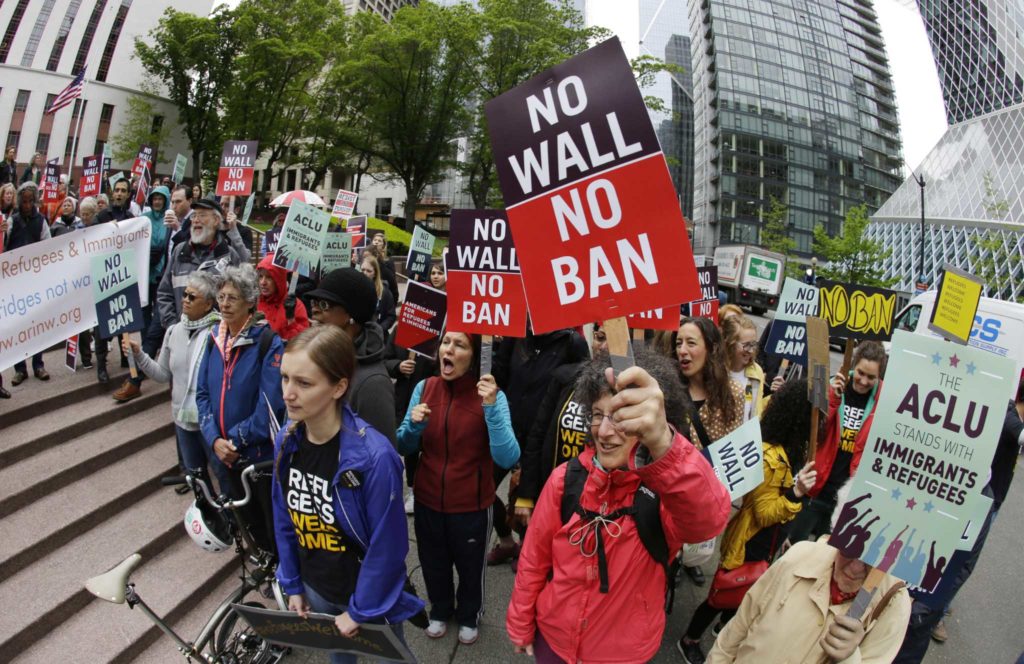
The Supreme Court is letting a limited version of President Donald Trump’s ban on travel from six mostly Muslim countries take effect, a victory for Trump in the biggest legal controversy of his young presidency. The justices will hear full arguments in October in the case that has stirred heated emotions across the nation. In the meantime, the court said Monday that Trump’s ban on visitors from Iran, Libya, Somalia, Sudan, Syria and Yemen can be enforced if those visitors lack a “credible claim of a bona fide relationship with a person or entity in the United States.” Trump said last week that the ban would take effect 72 hours after being cleared by courts. The administration has said the 90-day ban was needed on national security grounds to allow an internal review of screening procedures for visa applicants from the six countries. Opponents say the ban is unlawful, based on visitors’ Muslim religion. The administration review should be complete before Oct. 2, the first day the justices could hear arguments in their new term. A 120-ban on refugees also is being allowed to take effect on a limited basis. Three of the court’s conservative justices said they would have let the complete bans take effect. Justice Clarence Thomas, joined by Samuel Alito and Neil Gorsuch, said the government has shown it is likely to succeed on the merits of the case, and that it will suffer irreparable harm with any interference. Thomas said the government’s interest in preserving national security outweighs any hardship to people denied entry into the country. Some immigration lawyers said the limited nature of the ban and the silence of the court’s liberals on the issue Monday suggested that the court had not handed Trump much of a victory. The White House did not immediately comment. The court’s opinion explained the kinds of relationships people from the six countries must demonstrate to obtain a U.S. visa. “For individuals, a close familial relationship is required,” the court said. For people who want to come to the United States to work or study, “the relationship must be formal, documented and formed in the ordinary course, not for the purpose of evading” the travel ban. The opinion faulted the two federal appeals courts that had blocked the travel policy for going too far to limit Trump’s authority over immigration. The president announced the travel ban a week after he took office in January and revised it in March after setbacks in court. The 4th U.S. Circuit Court of Appeals in Richmond, Virginia, said the ban was “rooted in religious animus” toward Muslims and pointed to Trump’s campaign promise to impose a ban on Muslims entering the country as well as tweets and remarks he has made since becoming president. The San Francisco-based 9th U.S. Circuit Court of Appeals said the travel policy does not comply with federal immigration law, including a prohibition on nationality-based discrimination. That court also put a hold on separate aspects of the policy that would keep all refugees out of the United States for 120 days and cut by more than half, from 110,000 to 50,000, the cap on refugees in the current government spending year that ends September 30. Trump’s first executive order on travel applied to travelers from Iraq and well as the six countries, and took effect immediately, causing chaos and panic at airports over the last weekend in January as the Homeland Security Department scrambled to figure out whom the order covered and how it was to be implemented. A federal judge blocked it eight days later, an order that was upheld by a 9th circuit panel. Rather than pursue an appeal, the administration said it would revise the policy. In March, Trump issued the narrower order. Republished with permission of The Associated Press.
Court likely to question if Donald Trump’s travel ban discriminates

For the second time in a week, government lawyers will try to persuade a federal appeals court to reinstate President Donald Trump‘s revised travel ban – and once again, they can expect plenty of questions Monday about whether it was designed to discriminate against Muslims. A three-judge panel of the 9th U.S. Circuit Court of Appeals has scheduled arguments in Seattle over Hawaii’s lawsuit challenging the travel ban, which would suspend the nation’s refugee program and temporarily bar new visas for citizens of Iran, Libya, Somalia, Sudan, Syria and Yemen. Last week, judges on the 4th Circuit Court of Appeals heard arguments over whether to affirm a Maryland judge’s decision putting the ban on ice. They peppered Acting Solicitor General Jeffrey Wall with questions about whether they could consider Trump’s campaign statements calling for a ban on Muslims entering the U.S., with one judge asking if there was anything other than “willful blindness” that would prevent them from doing so. Monday’s arguments mark the second time Trump’s efforts to restrict immigration from certain Muslim-majority nations have reached the San Francisco-based 9th Circuit. After Trump issued his initial travel ban on a Friday in late January, bringing chaos and protests to airports around the country, a Seattle judge blocked its enforcement nationwide – a decision that was unanimously upheld by a three-judge 9th Circuit panel. The president then rewrote his executive order, rather than appeal to the U.S. Supreme Court, and in March, U.S. District Judge Derrick Watson in Honolulu blocked the new version from taking effect, citing what he called “significant and unrebutted evidence of religious animus” in Trump’s campaign statements. “Again, in this court, the President claims a nearly limitless power to make immigration policy that is all but immune from judicial review,” Hawaii Attorney General Douglas Chin wrote to the 9th Circuit. “Again, he must be checked.” The administration’s lawyers are seeking to persuade the judges that the lower court’s decision is “fundamentally wrong,” and that the president’s order falls squarely within his duty to secure the nation’s borders. The order as written is silent on religion, and neither Hawaii nor its co-plaintiff, the imam of the Muslim Association of Hawaii, has standing to sue, they say – arguments that were rejected in the lower court. The travel ban cases are expected to reach the Supreme Court, but that would likely be cemented if the 4th and 9th Circuits reach differing conclusions about its legality. Because of how the courts chose to proceed, a full slate of 13 judges heard the 4th Circuit arguments last week, while just three, all appointees of President Bill Clinton, will sit in Seattle. For that reason – with the possibility for myriad concurring or dissenting opinions – it could take the 4th Circuit longer to rule, noted Carl Tobias, a law professor at University of Richmond law school in Virginia. Republished with permission of The Associated Press.
Alabama’s senators back new Trump travel ban order
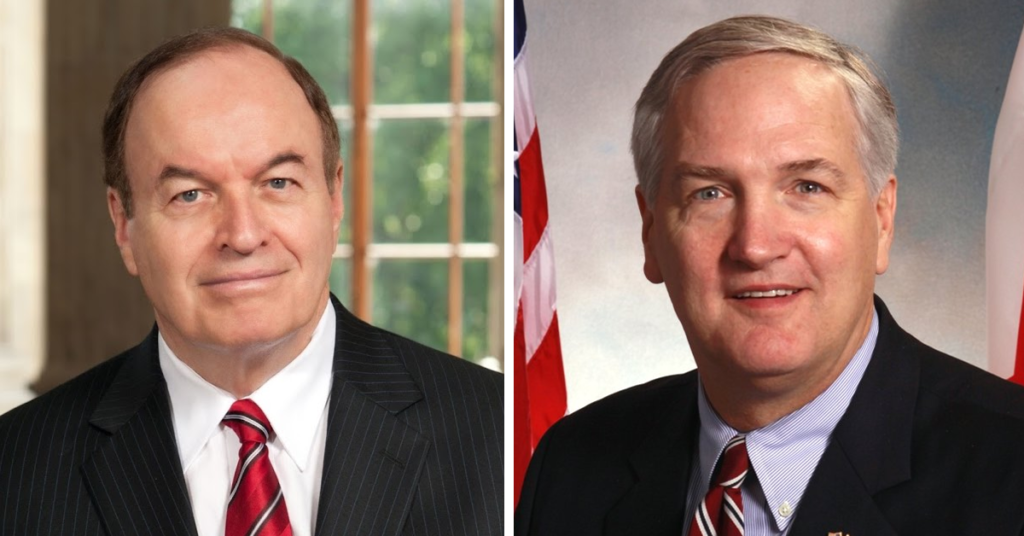
President Donald Trump’s new travel ban executive order received a warm reception from Alabama’s senators this week. U.S. Senators Richard Shelby and Luther Strange praised President Donald Trump‘s revised executive order, which bar new visas being issued to travelers from six countries — Iran, Syria, Somalia, Sudan, Yemen and Libya — for 90 days. Shelby says he’s been a long-time supporter of “a rigorous review of our vetting process” in regards to those allowed to enter the country. “The safety and security of the American people must be a top priority,” Shelby said in a statement. “I have always supported a rigorous review of our vetting process for those who cross our nation’s borders, and I am pleased that President Trump has appropriately modified his executive order to achieve this critical goal. I look forward to working with the Trump Administration and my colleagues in Congress to keep our citizens safe from any individual seeking to enter our nation and do us harm.” Alabama’s newest senator, who replaced Jeff Sessions, Luther Strange calls the new order “a proactive, comprehensive approach.” “Protecting Americans and securing the homeland are solemn obligations of the President,” weighed-in Strange. “The latest executive order takes a proactive, comprehensive approach, and gives us clarity about what steps are being taken to protect our communities. I applaud the President for taking action, and I look forward to working further on keeping America free from violent terrorists.” Trump signed the new order Monday weeks after his initial ban was put on hold by a federal judge and later upheld by an appeals court. The updated order clarifies the implementation of new U.S. visa and immigration protocol, provides resources for enhanced vetting of foreign nationals, and increases transparency in sharing these steps with the American people. It will go into effect on March 16th.
Donald Trump signs new travel ban targeting those seeking new visas
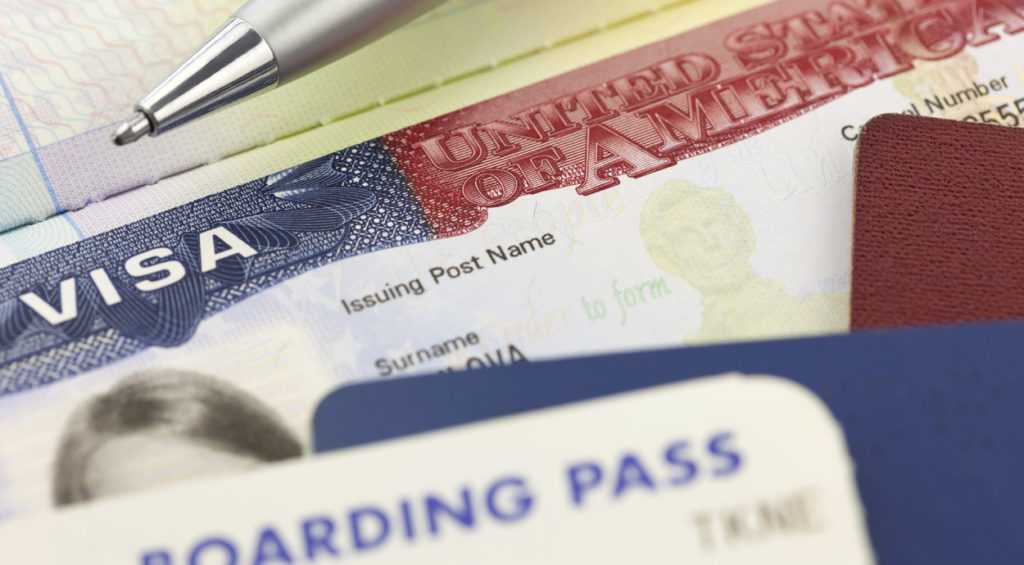
President Donald Trump on Monday signed a new version of his controversial travel ban, aiming to withstand court challenges while still barring new visas for citizens from six Muslim-majority countries and shutting down the U.S. refugee program. The revised travel order leaves Iraq off the list of banned countries but still affects would-be visitors from Iran, Syria, Somalia, Sudan, Yemen and Libya. Trump privately signed the new order Monday while Homeland Security Secretary John Kelly, Secretary of State Rex Tillerson and Attorney General Jeff Sessions formally unveiled the new edict. The low-key rollout was a contrast to the first version of the order, signed in a high-profile ceremony at the Pentagon’s Hall of Heroes as Secretary of Defense James Mattis stood by Trump’s side. White House Press Secretary Sean Spicer was not scheduled to hold an on-camera briefing Monday either, leading to the appearance that the president was distancing himself from the order, which was a signature issue during his campaign and the first days of his presidency. The order also risks being overshadowed by unsubstantiated accusations the president made over the weekend that former President Barack Obama had ordered the wiretapping of his phone during the campaign. The original travel ban caused immediate panic and chaos at airports around the country as Homeland Security officials scrambled to interpret how it was to be implemented and travelers were detained before being sent back overseas or blocked from getting on airplanes abroad. The order quickly became the subject of several legal challenges and was ultimately put on hold last month by a federal judge in Washington state. That ruling was upheld by a federal appeals court. The revised order is narrower and specifies that a 90-day ban on people from the six countries does not apply to those who already have valid visas or people with U.S. green cards. The White House dropped Iraq from the list of targeted countries following pressure from the Pentagon and State Department, which had urged the White House to reconsider, given Iraq’s key role in fighting the Islamic State group. Syrian nationals are also no longer subjected to an indefinite ban, despite Trump’s instance as a candidate that Syrian refugees in particular posed a serious security threat to the United States. In a call with reporters Monday morning, senior officials from Homeland Security and Justice Department said the travel ban was necessary to allow the government to review what more can be done to properly vet would-be visitors and refugees. The officials said 300 people who arrived in the United States as refugees were currently under investigation as part of terrorism-related cases. The officials pointed to those cases as evidence of the need for the travel order, but refused repeated requests to address how many of those people were from the six banned countries or how long they have been in the United States. A fact sheet describing the new order circulated before the new order was announced cites negotiations that resulted in Iraq agreeing to “increase cooperation with the U.S. government on the vetting of its citizens applying for a visa to travel to the United States.” The mere existence of a fact sheet signaled that the White House was taking steps to improve the rollout of the reworked directive. The initial measure was hastily signed at the end of Trump’s first week in office, and the White House was roundly criticized for not providing lawmakers, Cabinet officials and others with information ahead of the signing. Trump administration officials say that even with the changes, the goal of the new order is the same as the first: keeping would-be terrorists out of the United States while the government reviews the vetting system for refugees and visa applicants from certain parts of the world. According to the fact sheet, the Department of Homeland Security will conduct a country-by-country review of the information the six targeted nations provide to the U.S. for visa and immigration decisions. Those countries will then have 50 days to comply with U.S. government requests to update or improve that information. Additionally, Trump’s order suspends the entire U.S. refugee program for 120 days, though refugees already formally scheduled for travel by the State Department will be allowed entry. When the suspension is lifted, the number of refugees allowed into the U.S. will be capped at 50,000 for fiscal year 2017. The new version also to removes language that would give priority to religious minorities. Critics had accused the administration of adding such language to help Christians get into the U.S. while excluding Muslims. “I think people will see six or seven major points about this executive order that do clarify who was covered,” said presidential counselor Kellyanne Conway in an interview with Fox News Channel’s “Fox & Friends.” She said the new order will not go into effect until March 16, despite earlier warnings from the president and his team that any delay in implementation would pose a national security risk, allowing dangerous people to flow into the country. Legal experts say the new order addresses some of the constitutional concerns raised by a federal appeals court about the initial ban, but leaves room for more legal challenges. “It’s much clearer about how it doesn’t apply to groups of immigrants with more clearly established constitutional rights,” said University of Texas law professor Stephen Vladeck. “That’s a really important step.” Removing language that would give priority to religious minorities helps address concerns that the initial ban was discriminatory, but its continued focus on Muslim-majority countries leaves the appearance that the order is a “Muslim ban,” Vladeck said. “There’s still going to be plenty of work for the courts to do,” he said. Republished with permission of The Associated Press.
Donald Trump’s options for restoring travel ban
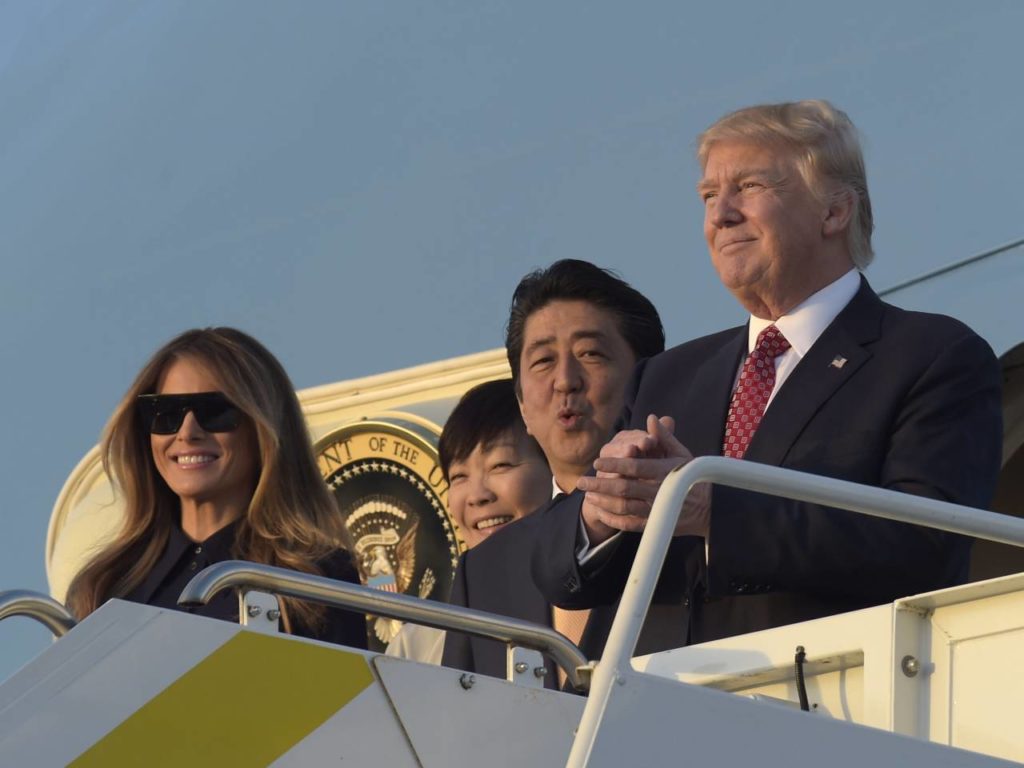
President Donald Trump has promised more legal action after a federal appeals court refused to reinstate his ban on travelers from seven predominantly Muslim nations. Trump tweeted “SEE YOU IN COURT” after the decision came out Thursday, but what he has in mind remains to be seen. Trump said Friday that he has “no doubt” he will win the case in court and told reporters he’s considering signing a “brand-new order” on immigration. The 3-0 ruling means that refugees and people from the seven nations — Iran, Iraq, Libya, Somalia, Sudan, Syria and Yemen — can continue entering the United States for now. The administration has several options on how to proceed. A look at where the legal fight goes from here. REHEARING AT THE APPEALS COURT The Trump administration could decide to ask the 9th U.S. Circuit Court of Appeals to reconsider the three-judge panel’s ruling. But the odds of success seem low, said Margo Schlanger, a law professor at the University of Michigan. She noted that the three-judge panel was unanimous and included a judge chosen by a Republican president. SUPREME COURT APPEAL The government could file an emergency appeal to the Supreme Court and ask the justices to restore the ban. But it would take at least five justices to overturn the ruling from the 9th U.S. Circuit Court of Appeals, and that may be a long shot. The high court still has only eight members since the death of Justice Antonin Scalia — four conservative and four liberal justices. “There are almost surely four votes to deny an emergency request to reinstate the order,” said Peter Spiro, a law professor at Temple University. The last immigration case to reach the justices ended in a 4-4 deadlock last year. That suggests a similar split over Trump’s order, which would let the 9th Circuit ruling stand and keep the freeze in place. WAITING FOR GORSUCH If the Supreme Court declines to intervene right away, the case would remain in the 9th Circuit and ultimately be considered on its legal merits. It also could return to U.S. District Judge James Robart in Seattle, who temporarily blocked the ban after Washington state and Minnesota urged a nationwide hold on the Jan. 27 order. The lower court action so far is temporary and hasn’t resolved broader questions about the legality of Trump’s order. It simply halts deportations or other actions until judges can more fully consider whether the order violates legal or constitutional rights. Allowing the case to play out longer at the appeals court has one advantage: By the time a ruling on the merits comes down, the Senate may have confirmed Judge Neil Gorsuch to the Supreme Court. That may improve Trump’s chances to prevail on appeal. But just how the issue might reach the Supreme Court isn’t clear. Several other challenges have been launched in courts around the country, and the court could opt to wait before stepping in. REVISING THE EXECUTIVE ORDER The White House could amend the executive order to expressly carve out existing green card holders and other people that already have some ties to the United States. Up to 60,000 visas were initially canceled in the wake of the ban, affecting the lives of students, professors and workers. White House counsel Donald McGahn had issued guidance days after the executive order saying it didn’t apply to legal permanent residents of the U.S., but the appeals court said that was not enough. “The government has offered no authority establishing that the White House counsel is empowered to issue an amended order superseding the executive order signed by the president,” the opinion said. Revising the order “shifts the legal boundaries so that it becomes a tougher constitutional target,” Spiro said. The appeals court issued a sharp rebuke to the Justice Department’s argument that the president has the constitutional power to restrict entry to the United States to prevent terrorism, and that courts cannot second-guess that authority. “There is no precedent to support this claimed unreviewability, which runs contrary to the fundamental structure of our constitutional democracy,” the opinion said. Washington state, Minnesota and other states say Trump showed his intent in the presidential campaign when he called for a ban on Muslims entering the country. They also say his order discriminates against Muslims because it provides exceptions for refugees who practice a religion that makes them a minority in their home country. That would favor Christians in the countries affected. The appeals court said the administration failed to show that the order satisfied constitutional requirements to provide notice or a hearing before restricting travel. But it did not rule on whether the order violated religious protections under the First Amendment. Justice Department lawyer Erez Reuveni told a Virginia judge hearing arguments in a similar case on Friday that the administration hasn’t decided what to do. Republished with permission of The Associated Press.
Fed lawyers deciding next step in Donald Trump travel ban fight
Government lawyers fighting to defend President Donald Trump‘s executive order on immigration said Friday that “all options” are being considered after a federal appeals court ruled against the president’s ban on travelers from seven predominantly Muslim nations. A Justice Department lawyer who spoke at a hearing in Virginia said the administration was weighing whether to challenge a 9th U.S. Circuit Court of Appeals ruling that upheld a temporary block on Trump’s ban, saying it was unlikely to survive a legal challenge. “We may appeal. We may not,” attorney Erez Reuveni said. “All options are being considered.” It could appeal the restraining order on Trump’s travel ban to the U.S. Supreme Court or it could attempt to remake the case in the district court. Reuveni was appearing at a hearing before Judge Leonie Brinkema at which the state of Virginia was challenging the ban. The judge did not rule. She noted that “the status quo remains” because of the 9th circuit’s decision and suggested that a well-reasoned ruling would take time and could not be written “overnight.” Michael Kelly, a spokesman for Virginia Attorney General Mark Herring, said Friday’s hearing in a federal court in a Washington, D.C., suburb posed the most significant state challenge yet to Trump’s order. In a statement, he said it “will be the most in-depth examination of the merits of the arguments against the ban.” Lawyers for Herring, a Democrat, are asking the judge for a preliminary injunction barring the Trump administration from enforcing that portion of the Jan. 27 executive order that bars anyone from those countries — Iran, Iraq, Libya, Somalia, Sudan, Syria and Yemen — from entering the U.S. for 90 days. The state is not challenging that portion of Trump’s order suspending entry of refugees for four months. “If the Commonwealth is successful in securing a preliminary injunction, it would indicate that Virginia is likely to prevail on the merits of its challenge to President Trump’s ban, and it will be a more durable injunction that will last all the way through trial — so potentially weeks or months,” Kelly wrote. In a court document filed ahead of the hearing, Virginia’s lawyers challenge the constitutionality of the executive order and say there is “overwhelming evidence” that the executive order “resulted from animus toward Muslims.” Virginia also says the state, its residents and its public universities are harmed. One example it gives: university students and faculty from countries named in the executive order who are in the U.S. on work or student visas can’t leave for fear of not being allowed back in. Until it was temporarily blocked by a federal judge in Seattle a week ago, the ban made headlines amid tearful stories of families separated and lives upended. Among them were two Yemeni brothers whose family sued in Virginia before the brothers, both green card holders, were allowed back into the country. The federal government has since said green card holders will not be barred from re-entering the U.S. In the specific Virginia challenge, lawyers for the federal government wrote in a court filing opposing a preliminary injunction that Virginia doesn’t have the right to challenge the ban — and that the court doesn’t have the power to review the president’s executive order. “Judicial second-guessing of the President’s determination that a temporary suspension of entry of certain classes of aliens was necessary at this time to protect national security would constitute an impermissible intrusion” on his constitutional authority, lawyers Dennis Barghaan and Reuveni wrote. Even if Virginia’s challenge is allowed to proceed, a preliminary injunction is not warranted, the U.S. government lawyers wrote. Republished with permission of The Associated Press.
Donald Trump puts Iran ‘on notice’ after ballistic missile test
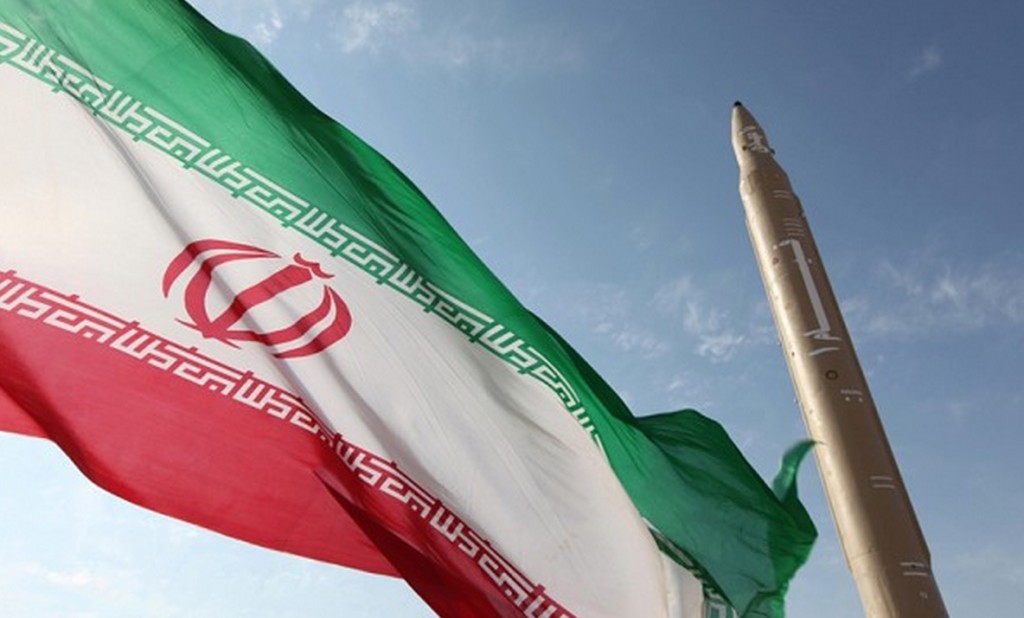
President Donald Trump said Thursday his administration has put Iran “on notice,” echoing comments from his top national security adviser that the U.S. will act against Iran unless it stops testing ballistic missiles and supporting Houthi rebels in Yemen. Trump and his national security adviser, Michael Flynn, didn’t elaborate on what retaliatory actions the U.S. could pursue. Trump tweeted, “Iran has been formally PUT ON NOTICE for firing a ballistic missile. Should have been thankful for the terrible deal the U.S. made with them!” He added in another tweet: “Iran was on its last legs and ready to collapse until the U.S. came along and gave it a life-line in the form of the Iran Deal: $150 billion.” As part of the nuclear deal struck during the Obama administration, Iran received access to an estimated $100 billion of its own money that had been frozen in foreign bank accounts. The U.S. did not give Iran $150 billion. Flynn on Wednesday forcefully denounced Iran’s behavior in his first public remarks since Trump took office. He accused Iran of threatening U.S. allies and spreading instability throughout the Middle East while faulting the Obama administration for doing too little to stop the Islamic Republic. “As of today, we are officially putting Iran on notice,” Flynn said from the White House podium. On notice for what, Flynn didn’t say. Senior Trump administration officials said they were actively considering a “range of options” including economic measures and increased support for Iran’s regional adversaries. The officials, who briefed reporters on condition of anonymity, declined repeatedly to say whether military action is being considered. The warning was an early manifestation of Trump’s promise of a tougher American approach to Iran. Yet administration officials emphasized that their allegations were unrelated to Iran’s obligations under the Iran nuclear deal that President Barack Obama and world leaders negotiated. Though Flynn noted Trump has criticized that deal, officials declined to say whether Trump planned to follow through on his campaign pledge to renegotiate it. “The Obama administration failed to respond adequately to Tehran’s malign actions — including weapons transfers, support for terrorism and other violations of international norms,” Flynn said. The White House also faulted Iran for backing Houthi rebels in Yemen who on Tuesday claimed a successful missile strike against a warship belonging to a Saudi-led coalition fighting to reinstall Yemen’s internationally recognized government. The media arm of the Shiite rebels said the vessel was believed to belong to the Saudi Arabian navy. Administration officials said Iran was providing key support by arming, training and financing the rebels, with a goal of leveraging its relationship with the Houthis to “build a long-term presence in Yemen.” The White House said the goal in putting Iran “on notice” was to signal to Tehran that it needed to rethink its behavior. Flynn said Iran specifically violated the U.N.’s ban on “activity related to ballistic missiles designed to be capable of delivering nuclear weapons, including launches using such ballistic missile technology.” Iran’s Defense Minister Gen. Hossein Dehghan confirmed Wednesday that Iran conducted a missile test, but did not say when the test was carried out or specify the type of missile. He insisted it wasn’t a violation of U.N. resolutions. The U.S. said the test was of a medium-range ballistic missile. It ended with a “failed” re-entry into the Earth’s atmosphere, said a U.S. defense official, who wasn’t authorized to discuss the matter publicly and spoke on condition of anonymity. Reports of the test emerged after Trump signed an executive order last week temporarily suspending immigration from Iran and six other majority-Muslim countries. On one point, the U.S. and Iran agree: The test didn’t violate the nuclear deal itself. Ballistic missile testing wasn’t explicitly included in the 2015 nuclear agreement between Iran and six world powers. But as part of the final negotiations, Iran agreed to an eight-year extension of a U.N. ban on ballistic missile development. The U.N. Security Council later endorsed the agreement, calling on Iran not to carry out such tests. But Iran has flouted the prohibition regularly in the past year-and-a-half, drawing sanctions from the U.S. but also diplomatic cover from Russia. At the request of the U.S., the U.N. Security Council held a session Tuesday to address the missile test. The council referred the matter to its committee on Iran and asked for an investigation. Iran has long boasted of having missiles that can travel 2,000 kilometers (1,200 miles), putting much of the Middle East, including Israel, in range. Such capability would also put U.S. bases in the region in danger. Iran says its missiles are key to deterring a U.S. or Israeli attack. In March, Iran test-fired two ballistic missiles. One was emblazoned with the phrase “Israel must be wiped out” in Hebrew, sparking international outcry. Republished with permission of the Associated Press.
