
Today marks two-year anniversary of U.S. withdrawal from Afghanistan
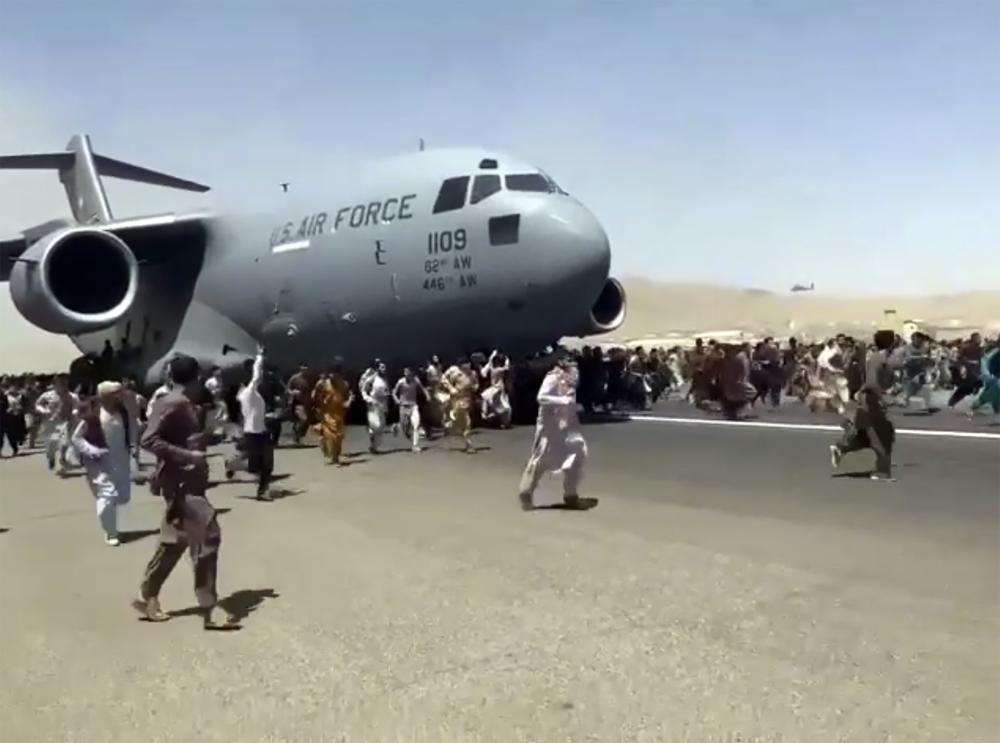
The United States withdrew from Afghanistan two years ago. U.S. Senator Katie Britt (R-Alabama) and Congressman Jerry Carl (R-AL01) marked the occasion with statements on their Twitter accounts. The frantic evacuations of civilians, many of whom had worked for the Allied forces during the war, were halted when 13 U.S. service members were killed by a terrorist bomber. President Joe Biden was widely criticized both for his decision to abandon the war effort and the poorly planned withdrawal from the country. “Today is the two-year anniversary of the Biden Administration’s disastrous withdrawal from Afghanistan,” said Sen. Katie Britt on Twitter. “Despite losing 13 brave Americans and surrendering control of the country to the Taliban, the President continues to push foreign policy built on a foundation of weakness.” “Two years ago today marks President Biden’s botched withdrawal from Afghanistan which resulted in 13 American servicemembers losing their lives,” said Rep. Carl on Twitter. “May we honor the lives of those brave 13 servicemembers and pray for their families during this time.” The war against the Taliban began on September 11, 2001, when terrorists seized control of three large passenger jets and flew them into the two towers of the World Trade Center and the Pentagon. A fourth jet crashed into a field in Pennsylvania when the passengers attempted to take back control of their plane. The attacks were planned and orchestrated by the terrorist group Al Qaeda, who had the protection of the Taliban government in Afghanistan. Nineteen years of war followed, with the U.S. and its allies having a lot of early success but with Taliban insurgents continuing to control wide swaths of the country. Biden, like Donald Trump before him, vowed to get the United States out of Afghanistan. Biden signed a treaty with the Taliban for the U.S. to withdraw by September 11. 2021. The phased withdrawal of U.S. forces resulted in senior Afghan government and military leaders fleeing the country ahead of the withdrawal, and the Afghanistan national army crumbled before U.S. forces had even withdrawn. The Taliban forces picked up hundreds of millions of dollars of U.S. military hardware from the retreating Americans and the fleeing Afghan army. The Taliban had occupied the presidential palace in Kabul. At the same time, the U.S. was still frantically trying to evacuate American civilians in the country, Afghan intellectuals, Afghans who had worked with the allies, citizens of U.S. allies, and Afghan civilians terrified of a return to life under the harsh rule of the Taliban. That evacuation of civilians ended when those 13 soldiers were killed. The Taliban are now entering their third year in power. Taliban official Zabihullah Mujahid recently spoke with the Associated Press about their rule. Mujahid said that the ban on female education will remain in place. A flurry of restrictions now keeps Afghan girls and women from classrooms, most jobs, and much of public life. The Taliban celebrated Tuesday as a public holiday. Women were prohibited from celebrating as their movements outside their homes are strictly limited. Much of the power over the nation now resides in Kandahar, the spiritual capital of the Taliban, where supreme leader Hibatullah Akhundzada lives, rather than the Taliban-led government in Kabul. Mujahid said that Taliban rule is open-ended because it draws legitimacy from Sharia law. “There is no fixed term for the Islamic government,” Mujahid explained. “It will serve for as long as it can and as long as the emir (the supreme leader) isn’t removed for doing something that goes against Sharia.” “There is no need for anyone to rebel,” Mujahid said, claiming that Afghans are united. “Everything will be under the influence of Sharia.” When asked why the Taliban aren’t enlisting Muslim-majority countries with Sharia-based systems to restart female education, he said the Taliban don’t need the help of others. Akhundzada, the supreme leader, is believed to be the leading force behind the classroom ban, which was issued unexpectedly in March 2022. Mujahid acknowledged disagreement among religious scholars on female education and suggested that maintaining harmony among them was more important than getting girls and women back into classrooms. World Vision said the number of people in need of assistance has increased by around 5 million. It said 15 million people will face “crisis” levels of food insecurity this year, with 2.8 million in the “emergency” category, the fourth highest globally. To connect with the author of this story or to comment, email brandonmreporter@gmail.com.
Kabul airport attack kills 60 Afghans, 13 US troops
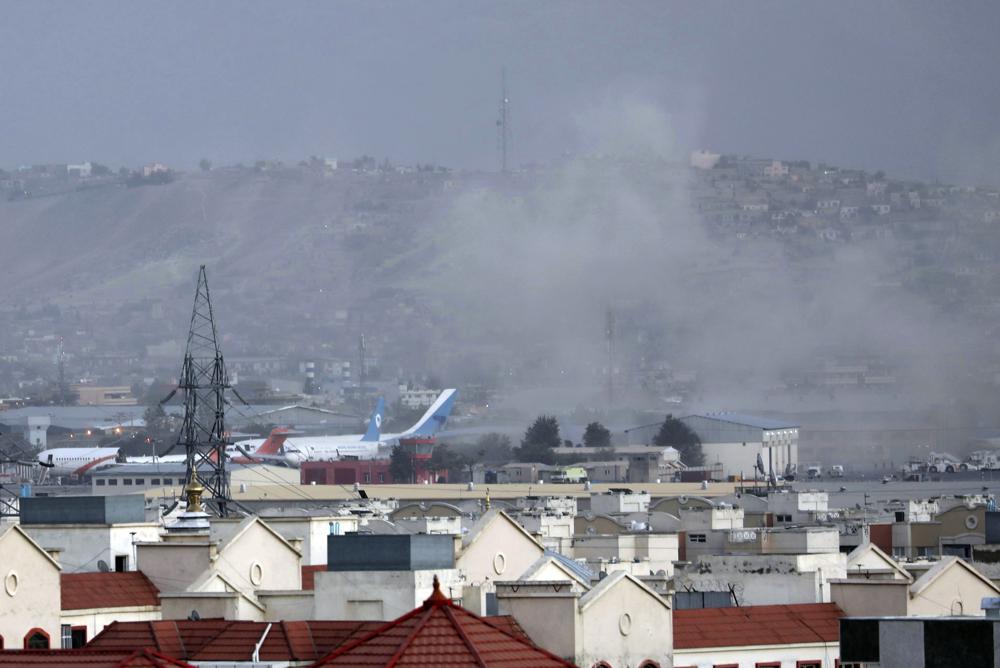
Two suicide bombers and gunmen attacked crowds of Afghans flocking to Kabul’s airport Thursday, transforming a scene of desperation into one of horror in the waning days of an airlift for those fleeing the Taliban takeover. The attacks killed at least 60 Afghans, and 12 U.S. troops, Afghan and U.S. officials said. The U.S. general overseeing the evacuation vowed the United States would “go after” the perpetrators of the bombings and warned that more such attacks are expected. “We are working very hard right now to determine attribution, to determine who is associated with this cowardly attack. And we’re prepared to take action against them,” Gen. Frank McKenzie, head of U.S. Central Command, told Pentagon reporters in a briefing. “Twenty-four-seven. We are looking for them.” Shortly after McKenzie spoke, the Islamic State group claimed responsibility for the killings on its Amaq news channel. McKenzie said the attacks would not stop the United States from evacuating Americans and others, and flights out were continuing. He said there was a large amount of security at the airport, and alternate routes were being used to get evacuees in. U.S. officials said 11 Marines and one Navy medic were among those who died. McKenzie said another 15 service members were wounded. Officials warned the toll could grow. More than 140 Afghans were wounded, an Afghan official said. One of the bombers struck people standing knee-deep in a wastewater canal under the sweltering sun, throwing bodies into the fetid water. Those who moments earlier had hoped to get on flights out could be seen carrying the wounded to ambulances in a daze, their own clothes darkened with blood. The IS affiliate in Afghanistan is far more radical than the Taliban, who recently took control of the country in a lightning blitz and condemned the attack. Western officials had warned of a major attack, urging people to leave the airport, but that advice went largely unheeded by Afghans desperate to escape the country in the last few days of an American-led evacuation before the U.S. officially ends its 20-year presence on Aug. 31. Emergency, an Italian charity that operates hospitals in Afghanistan, said it had received at least 60 patients wounded in the airport attack, in addition to 10 who were dead when they arrived. “Surgeons will be working into the night,” said Marco Puntin, the charity’s manager in Afghanistan. The wounded overflowed the triage zone into the physiotherapy area, and more beds were being added, he said. The Afghan official who confirmed the overall Afghan toll spoke on condition of anonymity because he was not authorized to brief media. Pentagon spokesman John Kirby said one explosion was near an airport entrance and another was a short distance away by a hotel. McKenzie said clearly some failure at the airport allowed a suicide bomber to get so close to the gate. He said the Taliban has been screening people outside the gates, though there was no indication that the Taliban deliberately allowed Thursday’s attacks to happen. He said the U.S. has asked Taliban commanders to tighten security around the airport’s perimeter. Adam Khan was waiting nearby when he saw the first explosion outside what’s known as the Abbey gate. He said several people appeared to have been killed or wounded, including some who were maimed. The second blast was at or near Baron Hotel, where many people, including Afghans, Britons, and Americans, were told to gather in recent days before heading to the airport for evacuation. Additional explosions could be heard later, but Taliban spokesman Zabihullah Mujahid said some blasts were carried out by U.S. forces to destroy their equipment. A former Royal Marine who runs an animal shelter in Afghanistan says he and his staff were caught up in the aftermath of the blast near the airport. “All of a sudden we heard gunshots and our vehicle was targeted, had our driver not turned around, he would have been shot in the head by a man with an AK-47,” Paul “Pen” Farthing told Britain’s Press Association news agency. Farthing is trying to get staff of his Nowzad charity out of Afghanistan, along with the group’s rescued animals. He is among thousands trying to flee. Over the last week, the airport has been the scene of some of the most searing images of the chaotic end of America’s longest war and the Taliban’s takeover, as flight after flight took off carrying those who fear a return to the militants’ brutal rule. When the Taliban were last in power, they confined women largely to their homes and widely imposed draconian restrictions. Already, some countries have ended their evacuations and begun to withdraw their soldiers and diplomats, signaling the beginning of the end of one of history’s largest airlifts. The Taliban have insisted foreign troops must be out by America’s self-imposed deadline of Aug. 31 — and the evacuations must end then, too. In Washington, U.S. President Joe Biden spent much of the morning in the secure White House Situation Room, where he was briefed on the explosions and conferred with his national security team and commanders on the ground in Kabul. Overnight, warnings emerged from Western capitals about a threat from IS, which has seen its ranks boosted by the Taliban’s freeing of prisoners during its advance through Afghanistan. Shortly before the attack, the acting U.S. ambassador to Kabul, Ross Wilson, said the security threat at the Kabul airport overnight was “clearly regarded as credible, as imminent, as compelling.” But in an interview with ABC News, he would not give details. Late Wednesday, the U.S. Embassy warned citizens at three airport gates to leave immediately due to an unspecified security threat. Australia, Britain, and New Zealand also advised their citizens Thursday not to go to the airport. Taliban spokesman Zabihullah Mujahid denied that any attack was imminent at the airport, where the group’s fighters have deployed and occasionally used heavy-handed tactics to control the crowds. After the attack, he appeared to shirk blame, noting the airport is controlled
Joe Biden holds to Kabul August 31 deadline despite criticism
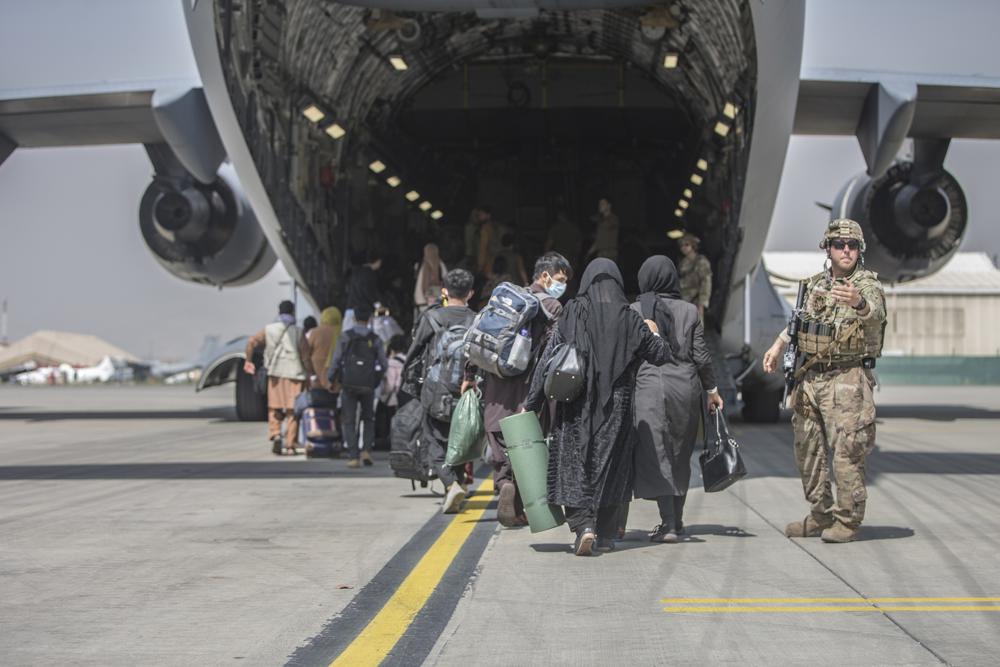
U.S. President Joe Biden declared Tuesday he is sticking to his August 31 deadline for completing a risky airlift of Americans, endangered Afghans, and others seeking to escape Taliban-controlled Afghanistan. The decision defies allied leaders who want to give the evacuation more time and opens Biden to criticism that he caved to Taliban deadline demands. “Every day we’re on the ground is another day that we know ISIS-K is seeking to target the airport and attack both us and allied forces and innocent civilians,” Biden said at the White House, referring to the Islamic State group’s Afghanistan affiliate, which is known for staging suicide attacks on civilians. He said the Taliban are cooperating and security is holding despite a number of violent incidents. “But it’s a tenuous situation,” he said, adding, “We run a serious risk of it breaking down as time goes on.” The United States in recent days has ramped up its airlift amid new reports of rights abuses that fuel concern about the fate of thousands of people who fear retribution from the Taliban and are trying to flee the country. The Pentagon said 21,600 people had been evacuated in the 24 hours that ended Tuesday morning, and Biden said an additional 12,000 had been flown out in the 12 hours that followed. Those include flights operated by the U.S. military as well as other charter flights. Biden said he had asked the Pentagon and State Department for evacuation contingency plans that would adjust the timeline for full withdrawal should that become necessary. Pentagon officials expressed confidence the airlift, which started on August 14, can get all Americans out by next Tuesday, the deadline Biden had set long before the Taliban completed their takeover. But unknown thousands of other foreign nationals remain in Afghanistan and are struggling to get out. The Taliban, who have wrested control of the country back nearly 20 years after being ousted in a U.S.-led invasion after the 9/11 attacks insist the airlift must end on August 31. Any decision by Biden to stay longer could reignite a war between the militants and the approximately 5,800 American troops who are executing the airlift at Kabul airport. In Kabul, Taliban spokesman Zabihullah Mujahid told a news conference the U.S. must stick to its self-imposed deadline, saying “after that, we won’t let Afghans be taken out” on evacuation flights. He also said the Taliban would bar Afghans from accessing roads to the airport while allowing foreigners to pass in order to prevent large crowds from massing. At the Pentagon, spokesman John Kirby said Aug. 31 leaves enough time to get all Americans out, but he was less specific about completing the evacuation of all at-risk Afghans. He said about 4,000 American passport holders and their family members had been evacuated from Kabul as of Tuesday. “We expect that number to grow in coming days,” Kirby said. With the full U.S. withdrawal looming, the Pentagon said several hundred U.S. troops have been withdrawn because they are no longer needed to complete the evacuation mission. Kirby said these are headquarters staff, maintenance personnel, and others. “It will have no impact on the mission at hand,” he said. It’s unclear how many Americans who want to leave are still in the country, but their status is a hot political topic for Biden. Some Republicans bristled Tuesday at the U.S. seeming to comply with a Taliban edict. “We need to have the top priority to tell the Taliban that we’re going to get all of our people out, regardless of what timeline was initially set,” said Rep. Steve Scalise of Louisiana. And Democratic Rep. Adam Schiff of California, chairman of the House Intelligence Committee, told reporters Monday that “it was hard for me to imagine” wrapping up the airlifts by the end of the month. One of the main refugee groups resettling Afghan evacuees in the United States said many people, including some American citizens, still were finding it impossible to get past Taliban checkpoints and crushing throngs outside the airport. “The United States cannot pat itself on the back for a job half-done,” said Krish O’Mara Vignarajah, president and CEO of Lutheran Immigration and Refugee Service. Biden decided in April that he was ending the U.S. war, which began in October 2001. Former President Donald Trump had earlier agreed in negotiations with the Taliban to end the war in May. However, Biden waited until the Taliban had swept to power this month, following the collapse of the U.S.-backed government and its army, to begin executing an airlift. Tragic scenes at the airport have transfixed the world. Afghans poured onto the tarmac last week and some clung to a U.S. military transport plane as it took off, later plunging to their deaths. At least seven people died that day, and another seven died Sunday in a panicked stampede. An Afghan soldier was killed Monday in a gunfight. British Prime Minister Boris Johnson said the Group of Seven nations will not recognize a Taliban government unless it guarantees people can leave the country if they wish, both before and after the August deadline. A day earlier, the director of the U.S. Central Intelligence Agency, William Burns, met with a top Taliban leader in Kabul. The extraordinary meeting reflected the gravity of the crisis and America’s need to coordinate with a Taliban group it has accused of gross human rights abuses. For now, the U.S. military coordinates all air traffic in and out of the Kabul airport, but the Taliban will take over thereafter the U.S. pullout. Meanwhile, a U.S. official said Burns, the CIA director, met with Taliban leader Mullah Abdul Ghani Baradar — an extraordinary moment for the U.S. spy agency, which for two decades targeted the Taliban in paramilitary operations. It was not clear what exactly they discussed. The CIA partnered with Pakistani forces to arrest Baradar in 2010, and he spent eight years in a Pakistani prison before the Trump administration persuaded Pakistan to release him in 2018
