
Joe Guzzardi: Tech workers brace for possible Omnibus job-killer

Like the proverbial bad penny that keeps reappearing, lousy immigration bills are hard to kill off. Consider the EAGLE Act of 2022, also known as Equal Access to Green Cards for Legal Employment, formally recognized as H.R. 3648. The newest proposed legislation is another iteration of the Fairness for High-Skilled Immigrants Act. Although it passed the House by a 365-65 vote, eventually, it stalled in Congress. Introduced by immigration lawyer, amnesty advocate, enforcement foe and expansionist champion Rep. Zoe Lofgren (D-Calif.), the new and the old versions of her proposed legislation both share the same ruinous-to-U.S. tech workers’ feature: the legislation would rob thousands of U.S. tech workers of access to well-paid, white-collar, high-skilled jobs in the science, technology, engineering and math fields, STEM jobs for which they are fully qualified. Along with her like-minded congressional allies that include Rep. Tom Emmer (R-Minn.), who was just elected as House Majority Whip for the 118th Congress and thus became the third highest ranking Republican in the House, Lofgren has scheduled a vote on the EAGLE Act, which has bipartisan support, when Congress returns from its Thanksgiving recess. Briefly explained, the EAGLE Act would dramatically revise portions of the Immigration Act of 1990. Almost any alien who has been on the visa waiting list for at least two years with an approved petition for an employment-based green card could apply for adjustment of his status, which then wouldn’t count against existing numerical caps. Stated another way, employers can sponsor a temporary foreign-born worker for an H-1B nonimmigrant visa and convert that worker to permanent by merely sponsoring him for a green card. Aliens go from temporarily present to permanent residents. With the stroke of a pen, job searches become more challenging for U.S. tech workers – Congress’ twisted idea of sound legislation. The bill also eliminates the per-country caps for employment-based visas, which means that within about a decade, Indian and Chinese nationals will receive virtually all such visas, especially the H-1B; other countries’ nationals would have an uphill climb to obtain a visa. Under current law, no country’s nationals can comprise more than 7 percent of any visa category. This provision ensures that skilled workers from around the globe have an opportunity to come to America. The EAGLE Act, however, seeks to entirely remove all caps from employment-based visas and more than double the existing family-preference visa from 7 percent to 15 percent, a hike that would, because of family reunification, ensure significant population surges. The proposed visa cap elimination is ironic because Lofgren and the EAGLE Act’s cosponsors claim to embrace diversity, but the bill heavily favors Chinese and Indian citizens to the exclusion of most others. Moreover, dependent children of the aliens granted the new status would be allowed to retain their legal standing, a form of amnesty, as dependents of their parents for the duration of the green card application process; they would be protected from aging out while their parents move up in the backlog. An estimated 190,000 minors would be protected. Time was when Democrats purported to care about America’s minority workers. But their empathy toward U.S. workers is long gone and is now redirected to foreign nationals, particularly Chinese and Indians. Blacks, Hispanics, and other minorities aspire to IT jobs, too. But they’ve had little luck in obtaining those coveted STEM jobs. Pew Research found that black workers make up 9 percent of the STEM workforce, while Hispanics also comprise about 9 percent. The low STEM representation among blacks and Hispanics is largely unchanged from 2016. For rational thinkers, few and far between in Congress, a push for liberalized immigration laws and amnesty in light of the border surge and its 2 million-plus encounters in 2022 is beyond the pale. But those sound-of-mind types don’t understand the congressional mindset; nothing stops its amnesty drive. And if the EAGLE Act doesn’t get Senate approval, Lofgren always has the option to attach it to a must-pass Omnibus bill. With the 118th House about to transfer into GOP hands, EAGLE Act supporters view December as their last chance to subvert U.S. tech workers. Joe Guzzardi is a nationally syndicated newspaper columnist who writes about immigration and related social issues. Joe joined Progressives for Immigration Reform in 2018 as an analyst after a ten-year career directing media relations for Californians for Population Stabilization, where he also was a Senior Writing Fellow. A native Californian, Joe now lives in Pennsylvania. Contact him at jguzzardi@pfirdc.org.
House to vote on election law overhaul in response to January 6
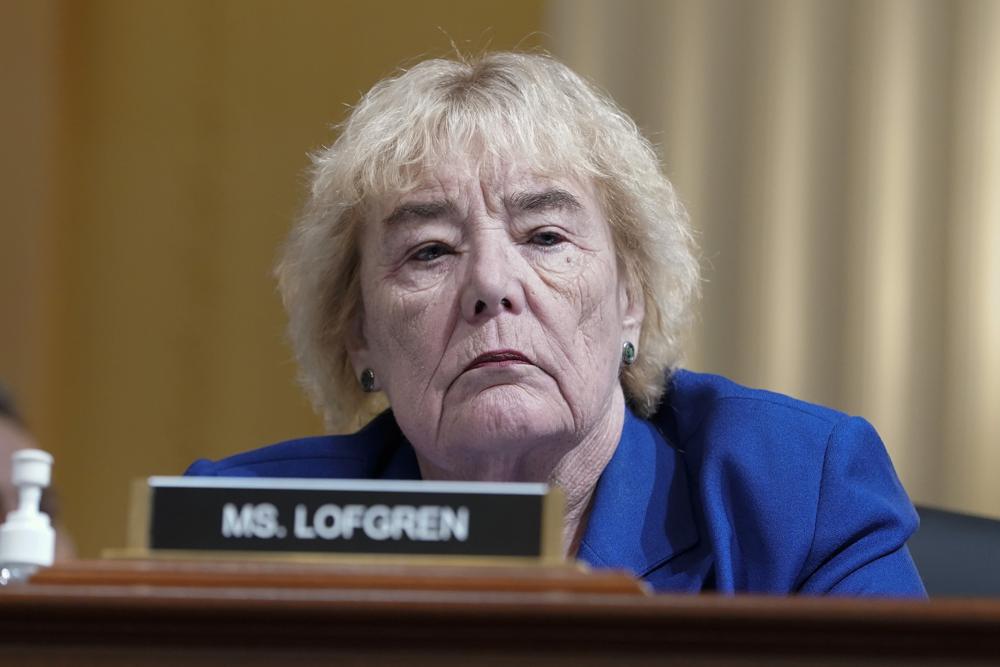
The House pushed ahead Wednesday with legislation that would revamp the rules for certifying the results of a presidential election as lawmakers accelerate their response to the January 6, 2021, insurrection and Donald Trump’s failed attempt to remain in power. The legislation would overhaul an arcane 1800s-era statute known as the Electoral Count Act that governs, along with the U.S. Constitution, how states and Congress certify electors and declare presidential election winners. The House planned a vote on the bill after afternoon debate. While that process has long been routine and ceremonial, Trump and a group of his aides and lawyers tried to exploit loopholes in the law in an attempt to overturn his defeat in the 2020 election. The bill would set new parameters around the January 6 joint session of Congress that happens every four years after a presidential election. The day turned violent last year after hundreds of Trump’s supporters interrupted the proceedings, broke into the building, and threatened the lives of then-Vice President Mike Pence and members of Congress. The rioters echoed Trump’s false claims of widespread fraud and wanted Pence to block Democrat Joe Biden’s victory as he presided over the joint session. The legislation intends to ensure that future Jan. 6 sessions are “as the constitution envisioned, a ministerial day,” said Wyoming Rep. Liz Cheney, a Republican who co-sponsored the legislation with House Administration Committee Chairwoman Zoe Lofgren, D-Calif. Both Cheney and Lofgren are also members of the House committee investigating the January 6 attack. Maryland Rep. Jamie Raskin, another member of the January 6 panel, said during the start of the House debate that the bill would modernize the elections law “to make sure that the will of the people is vindicated at every level.” The bill, which is similar to legislation moving through the Senate, would clarify in the law that the vice president’s role presiding over the count is only ceremonial and also sets out that each state can only send one certified set of electors. Trump’s allies had unsuccessfully tried to put together alternate slates of illegitimate pro-Trump electors in swing states where Biden won. The legislation would increase the threshold for individual lawmakers’ objections to any state’s electoral votes, requiring a third of the House and a third of the Senate to object to trigger votes on the results in both chambers. Currently, only one lawmaker in the House and one lawmaker in the Senate have to object. The House bill would set out very narrow grounds for those objections, an attempt to thwart baseless or politically motivated challenges. The legislation also would require courts to get involved if state or local officials want to delay a presidential vote or refuse to certify the results. The House vote comes as the Senate is moving on a similar track with enough Republican support to virtually ensure passage before the end of the year. After months of talks, House Democrats introduced the legislation on Monday and are holding a quick vote two days later in order to send the bill across the Capitol and start to resolve differences. A bipartisan group of senators introduced legislation this summer, and a Senate committee is expected to vote on it next week. While the House bill is more expansive than the Senate version, the two bills cover similar ground, and members in both chambers are optimistic that they can work out the differences. While few House Republicans are expected to vote for the legislation — most are still allied with Trump — supporters are encouraged by the bipartisan effort in the Senate. “Both sides have an incentive to want a set of clear rules, and this is an antiquated law that no one understands,” said Benjamin Ginsburg, a longtime GOP lawyer who consulted with lawmakers as they wrote the bill. “All parties benefit from clarity.” House GOP leaders disagree and are encouraging their members to vote against the legislation. They say the involvement of courts could drag out elections and that the bill would take rights away from states. The bill is an “attempt to federalize our elections,” Rep. Guy Reschenthaler, R-Pa., said on the House floor. He argued that voters are more focused on the economy and other issues than on elections law. “In my area of Pennsylvania, nobody is talking about this,” Reschenthaler said. Illinois Rep. Rodney Davis, Lofgren’s GOP counterpart on the House Administration Committee, said Tuesday that Democrats are “desperately trying to talk about their favorite topic, and that is former president Donald Trump.” Democrats said the bill was not only a response to Trump but also a way to prevent objections and mischief from all candidates in the future. “If you think that this legislation is an attack on President Trump, you simply haven’t read the legislation because there’s nothing in there attacking President Trump,” Raskin said. “This is about reforming the Electoral Count Act, so it works for the American people.” Republished with the permission of The Associated Press.
January 6 panel: Donald Trump ‘detached from reality’ in defeat
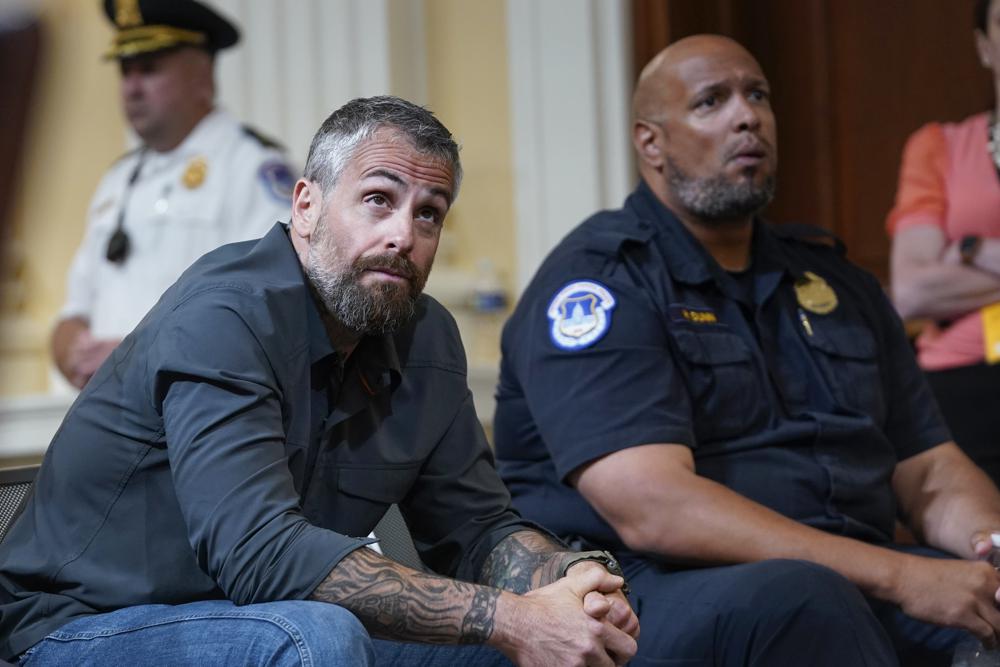
Donald Trump’s closest campaign advisers, top government officials, and even his family were dismantling his false claims of 2020 election fraud ahead of January 6, but the defeated president seemed “detached from reality” and kept clinging to outlandish theories to stay in power, the committee investigating the Capitol attack was told Monday. With gripping testimony, the panel is laying out in step-by-step fashion how Trump ignored his own campaign team’s data as one state after another flipped to Joe Biden and instead latched on to conspiracy theories, court cases, and his own declarations of victory rather than having to admit defeat. Trump’s “big lie” of election fraud escalated and transformed into marching orders that summoned supporters to Washington and then sent them to the Capitol on January 6 to block Biden’s victory. “He’s become detached from reality if he really believes this stuff,” former Attorney General William Barr testified in his interview with the committee. Barr called the voting fraud claims “bull——,” “bogus,” and “idiotic,” and resigned in the aftermath. “I didn’t want to be a part of it.” The House 1/6 committee spent the morning hearing delving into Trump’s claims of election fraud and the countless ways those around him tried to convince the defeated Republican president they were not true and that he had simply lost the election. The witnesses Monday, mostly Republicans and many testifying in prerecorded videos, described in blunt terms and sometimes exasperated detail how Trump refused to take the advice of those closest to him, including his family members. As the people around him splintered into a “team normal” headed by former campaign manager Bill Stepien and others led by Trump confidant Rudy Giuliani, the president chose his side. On election night, Stepien said, Trump was “growing increasingly unhappy” and refusing to accept the grim outlook for his presidency. Son-in-law Jared Kushner tried to steer Trump away from Giuliani and his far-flung theories of voter fraud. The president would have none of it. The back-and-forth intensified in the run-up to January 6. Former Justice Department official Richard Donoghue recalled breaking down one claim after another — from a truckload of ballots in Pennsylvania to a missing suitcase of ballots in Georgia —- and telling Trump “much of the info you’re getting is false.” Still, he pressed on with his false claims even after dozens of court cases collapsed. On Monday, an unrepentant Trump blasted the hearings in his familiar language as “ridiculous and treasonous” and repeated his claims. The former president, mulling another run for the White House, defended the Capitol attack as merely Americans seeking “to hold their elected officials accountable.” Nine people died in the riot and its aftermath, including a Trump supporter, shot and killed by Capitol police. More than 800 people have been arrested, and members of two extremist groups have been indicted on rare sedition charges over their roles in leading the charge into the Capitol. During the hearing, the panel also provided new information about how Trump’s fundraising machine collected some $250 million with his campaigns to “Stop the Steal” and others in the aftermath of the November election, mostly from small-dollar donations from Americans. One plea for cash went out 30 minutes before the January 6, 2021, insurrection. “Not only was there the big lie, there was the big ripoff,” said Rep. Zoe Lofgren, D-Calif. Chairman Rep. Bennie Thompson, D-Miss., opened Monday’s hearing saying Trump “betrayed the trust of the American people” and “tried to remain in office when people had voted him out.” As the hearings play out for the public, they are also being watched by one of the most important viewers, Attorney General Merrick Garland, who must decide whether his department can and should prosecute Trump. No sitting or former president has ever faced such an indictment. “I am watching,” Garland said Monday at a press briefing at the Justice Department, even if he may not watch all the hearings live. “And I can assure you the January 6 prosecutors are watching all of the hearings as well.” Biden was getting updates but not watching “blow by blow,” said White House press secretary Karine Jean-Pierre. Stepien was to be a key in-person witness Monday but abruptly backed out of appearing live because his wife went into labor. Stepien, who is still close to Trump, had been subpoenaed to appear. He is now a top campaign adviser to Trump-endorsed House candidate Harriet Hageman, who is challenging committee vice chair Rep. Liz Cheney in the Wyoming Republican primary. The panel marched ahead after a morning scramble and delay, with witness after witness saying Trump embraced and repeated his claims about the election, although those closest told him the theories of stolen ballots or rigged voting machines were simply not true. Stepien and senior adviser Jason Miller described how the festive mood at the White House on Election Night turned grim as Fox News announced Trump had lost the state of Arizona to Joe Biden, and aides worked to counsel Trump on what to do next. But he ignored their advice, choosing to listen instead to Giuliani, who was described as inebriated by several witnesses. Giuliani issued a general denial Monday, rejecting “all falsehoods” he said were being said about him. Stepien said, “My belief, my recommendation was to say that votes were still being counted, it’s too early to tell, too early to call the race.” But Trump “thought I was wrong. He told me so.” Barr, who had also testified in last week’s blockbuster opening hearing, said Trump was “as mad as I’d ever seen him” when the attorney general later explained that the Justice Department would not take sides in the election. Barr said when he would tell Trump “how crazy some of these allegations were, there was never; there was never an indication of interest in what the actual facts were.” For the past year, the committee has been investigating the most violent attack on the Capitol since the War of 1812, which some believe posed a grave threat to democracy. Monday’s hearing also featured live witnesses, including Chris Stirewalt, a
January 6 committee prepares to go public as findings mount
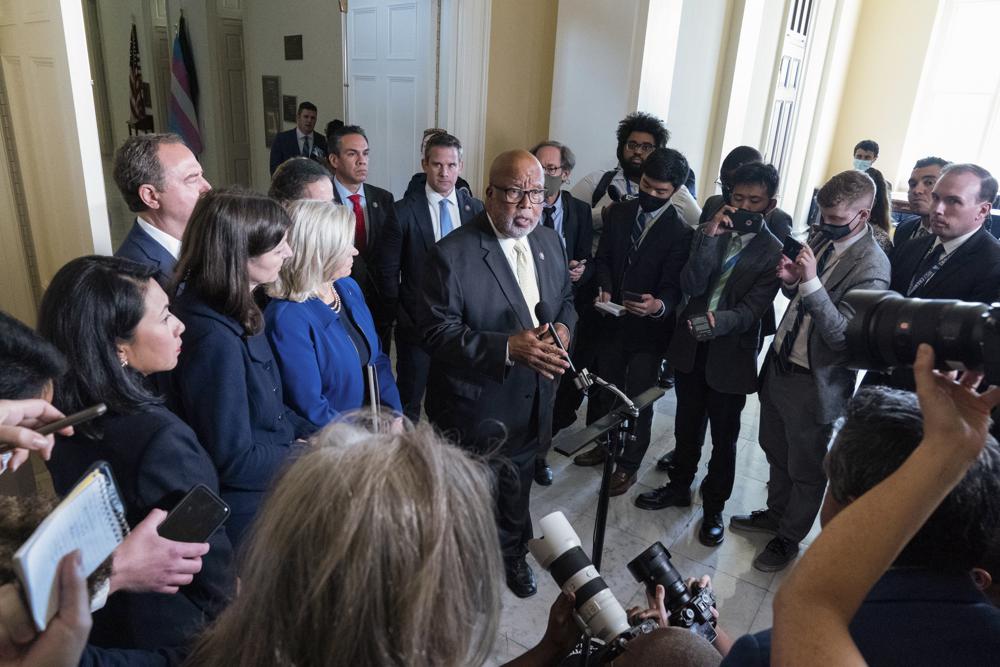
They’ve interviewed more than 300 witnesses, collected tens of thousands of documents, and traveled around the country to talk to election officials who were pressured by Donald Trump. Now, after six months of intense work, the House committee investigating the January 6 insurrection is preparing to go public. In the coming months, members of the panel will start to reveal their findings against the backdrop of the former president and his allies’ persistent efforts to whitewash the riots and reject suggestions that he helped instigate them. The committee also faces the burden of trying to persuade the American public that their conclusions are fact-based and credible. But the nine lawmakers — seven Democrats and two Republicans — are united in their commitment to tell the full story of January 6, and they are planning televised hearings and reports that will bring their findings out into the open. Their goal is not only to show the severity of the riot but also to make a clear connection between the attack and Trump’s brazen pressure on the states and Congress to overturn Joe Biden’s legitimate election as president. “The full picture is coming to light, despite President Trump’s ongoing efforts to hide the picture,” said Wyoming Rep. Liz Cheney, the committee’s vice chairwoman and one of its two Republican members. “I don’t think there’s any area of this broader history in which we aren’t learning new things,” she said. While the fundamental facts of January 6 are known, the committee says the extraordinary trove of material they have collected — 35,000 pages of records so far, including texts, emails, and phone records from people close to Trump — is fleshing out critical details of the worst attack on the Capitol in two centuries, which played out on live television. They hope to fill in the blanks about the preparations before the attack, the financing behind the January 6 rally that preceded it, and the extensive White House campaign to overturn the 2020 election. They are also investigating what Trump himself was doing as his supporters fought their way into the Capitol. True accountability may be fleeting. Congressional investigations are not criminal cases, and lawmakers cannot dole out punishments. Even as the committee works, Trump and his allies continue to push lies about election fraud while working to place similarly minded officials at all levels of state and local government. “I think that the challenge that we face is that the attacks on our democracy are continuing — they didn’t come to an end on January 6,” said another panel member, Rep. Adam Schiff, D-Calif., also chairman of the House Intelligence Committee. Still, the lawmakers hope they can present the public with a thorough accounting that captures what could have been “an even more serious and deeper constitutional crisis,” as Cheney put it. “I think this is one of the single most important congressional investigations in history,” Cheney said. The committee is up against the clock. Republicans could disband the investigation if they win the House majority in the November 2022 elections. The committee’s final report is expected before then, with a possible interim report coming in the spring or summer. In the hearings, which could start in the coming weeks, the committee wants to “bring the people who conducted the elections to Washington and tell their story,” said the panel’s chairman, Rep. Bennie Thompson, D-Miss. Their testimony, he said, will further debunk Trump’s claims of election fraud. The committee has interviewed several election officials in battleground states, including Arizona, Georgia, Michigan, and Pennsylvania, about Trump’s pressure campaign. In some cases, staff have traveled to those states to gather more information. The panel also is focusing on the preparations for the January 6 rally near the White House where Trump told his supporters to “fight like hell” — and how the rioters may have planned to block the electoral count if they had been able to get their hands on the electoral ballots. They need to amplify to the public, Thompson said, “that it was an organized effort to change the outcome of the election by bringing people to Washington … and ultimately if all else failed, weaponize the people who came by sending them to the Capitol.” About 90% of the witnesses called by the committee have cooperated, Thompson said, despite the defiance of high-profile Trump allies such as Steve Bannon and former White House chief of staff Mark Meadows. Lawmakers said they have been effective at gathering information from other sources in part because they share a unity of purpose rarely seen in a congressional investigation. House Republican leader Kevin McCarthy of California, a close Trump ally, decided not to appoint any GOP members to the committee after House Speaker Nancy Pelosi, D-Calif., rejected two of his picks last summer. Pelosi, who created the select committee after Republican senators rejected an evenly bipartisan outside commission, subsequently appointed Republicans Cheney and Adam Kinzinger of Illinois, Trump critics who shared the Democrats’ desire to investigate the attack. “I think you can see that Kevin made an epic mistake,” Kinzinger said. “I think part of the reason we’ve gone so fast and have been so effective so far is because we’ve decided, and we have the ability to do this as a nonpartisan investigation.” Kinzinger said the investigation would be “a very different scene” if Republicans allied with Trump were participating and able to obstruct some of their work. “I think in five or ten years, when school kids learn about January 6, they’re going to get the accurate story,” Kinzinger said. “And I think that’s going to be dependent on what we do here.” Democrats say having two Republicans working with them has been an asset, especially as they try to reach conservative audiences who may still believe Trump’s falsehoods about a stolen election. “They bring to the table perspectives and ability to translate a little bit what is being reflected in conservative media, or how this might be viewed through a
Donald Trump trial could end soon; Lamar Alexander says no to witnesses

A vote on witnesses, expected Friday, could lead to an abrupt end and assured acquittal in only the third presidential impeachment trial in American history.
Republicans could tip Donald Trump trial vote toward witnesses in trial

Any four Republicans could join with Democrats to demand taking more time for testimony.
Senate rejects witnesses in impeachment trial rules

“We have a great case,” Donald Trump said of the ongoing trial.
Buckle up: What to watch as impeachment trial takes off

Despite hopes for a speedy trial, things could last longer depending on Senate moderates.
Donald Trump’s impeachment trial begins, senators vow ‘impartial justice’
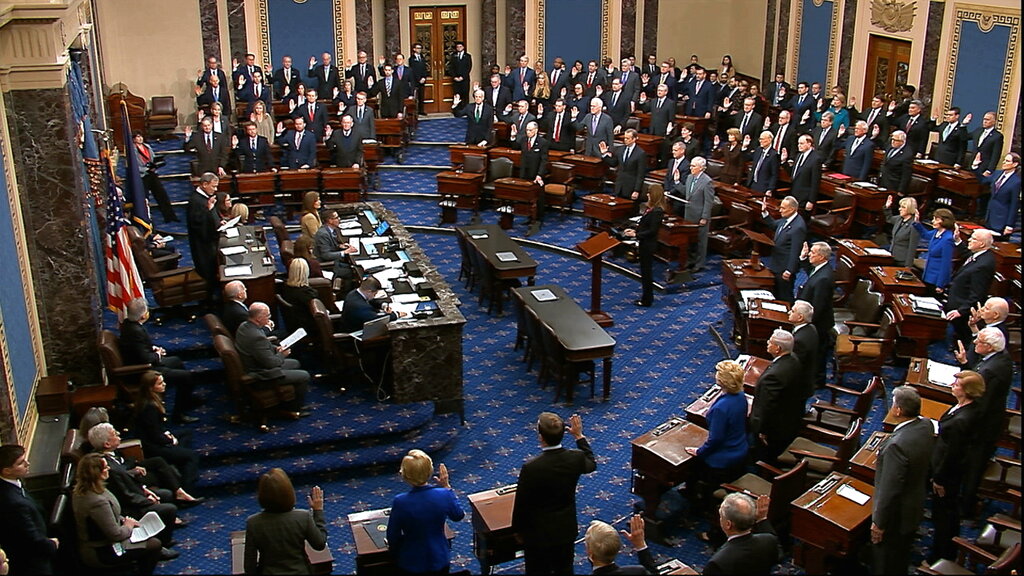
Senators said later that when Roberts appeared the solemnity of the occasion took hold.
House votes to send Donald Trump’s impeachment to Senate for trial
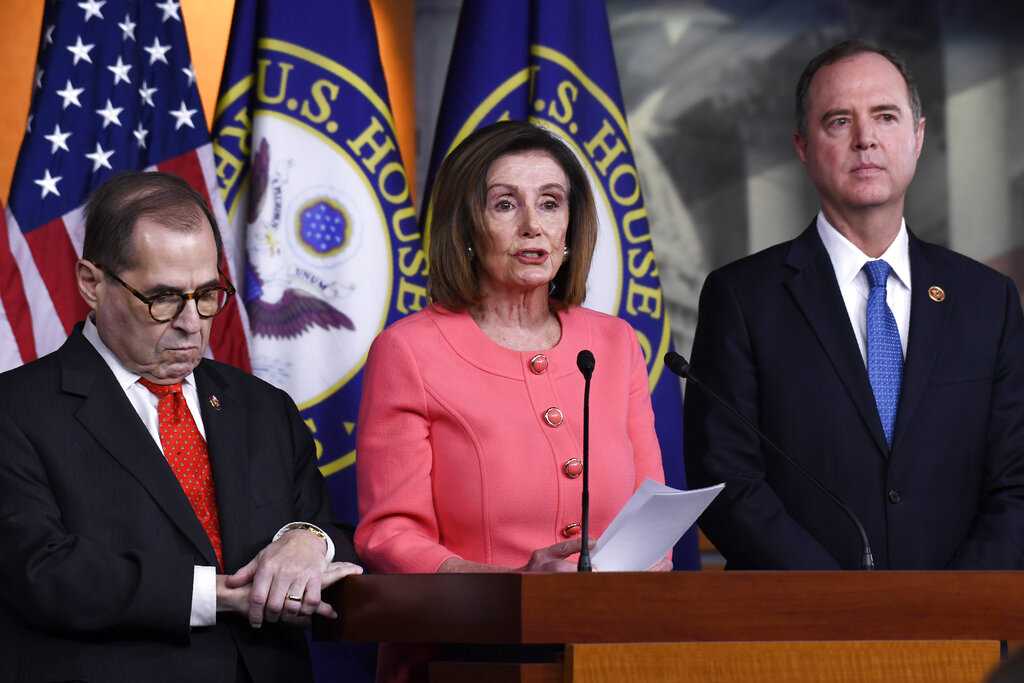
Nancy Pelosi also named impeachment prosecutors for the trial.
