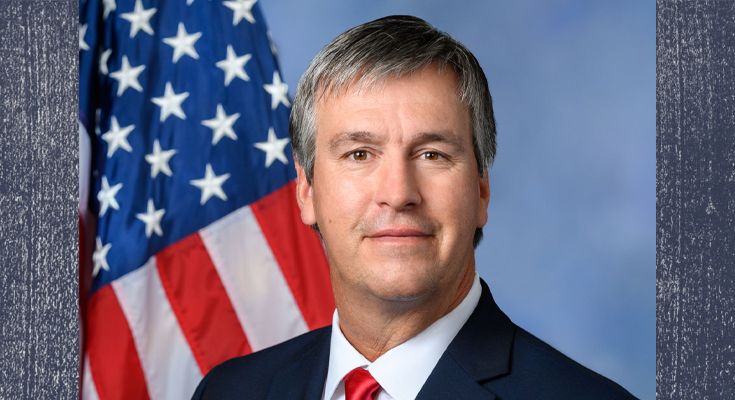
U.S. Sen. Tommy Tuberville spoke on the Senate floor on Tuesday to express his concerns about the lack of domestic pharmaceutical production that has stoked a concerning children’s medicine shortage in Alabama and across the country.
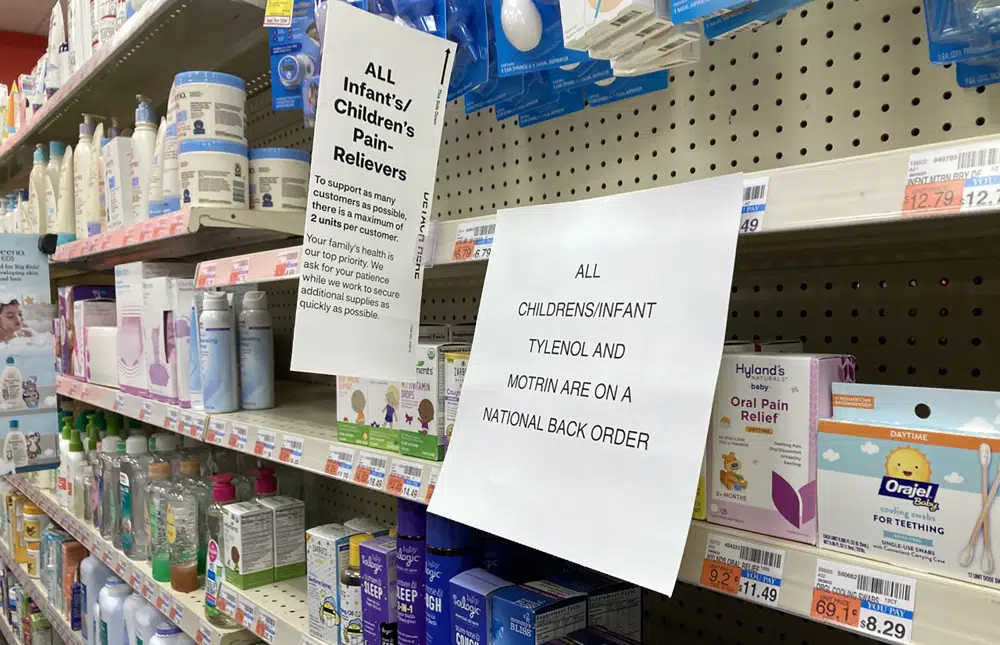
“Right now, many, many communities across our country are facing a huge shortage of children’s pain killers, like Children’s Tylenol, antibiotics, and amoxicillin,” Tuberville said. “We’re in the middle of flu season and [an] unusually bad year for RSV, a virus that can be especially tough for young children. As parents head to pharmacies to get medicine to help their sick kids and make them feel better, they’re seeing very empty shelves across our country.”
“My staff is hearing from folks daily about the problems that they’re seeing trying to find these medicines — both over-the-counter and prescription,” Tuberville continued. “David, a pharmacist from Andalusia, told me, ‘Currently, they cannot order multiple antibiotics commonly used for pediatric patients, including amoxicillin.’ He’s also unable to order pain medicine, like Tylenol and Advil. David was told by his wholesaler that the supply of medications simply does not exist as we speak, and this is in the middle of a very serious cold and flu season throughout our country.”
Tuberville warned, “Worse is what some desperate, but well-meaning, parents are turning to in order to provide their children help, Moms and dads who can’t find kids’ medicines are choosing to give their children smaller doses of adult medication instead. Doctors are warning constantly against this in the strongest possible terms — a warning we should be sharing far and wide. Children’s medicine is specifically designed for the developing of young bodies. Parents with sick children don’t have time to drive town to town to try to find these medicines.”
Tuberville then discussed other supply chain problems and suggested the U.S. needs to start producing these products domestically.
“We need to produce pharmaceuticals in the United States,” Tuberville stated. “The United States has every capability to produce essential goods right here at home. The pandemic showed us the serious — very serious — consequences of depending on imports for things that we need to survive, especially from adversaries like China. Congress and the rest of the federal government should do what we can do to boost domestic production [of] medicine and medical supplies. Along with essential goods like fuel and critical minerals, pharmaceuticals are vital to our national security — because we cannot allow our adversaries to hold their supply over our heads as a bargaining tool.”
“Every year, we have a flu season that hits in the fall,” Dr. Stephen Schondelmeyer, professor of pharmaceutical care and health systems at the University of Minnesota, told ABC News. “This year, though, the flu season — depending on which part of the country you’re in — hit four to eight weeks early, and not only did it start early, but the flu season had several different respiratory illnesses that a person could have caught all at the same time.”
There is a growing list of medications that the Drug Information Service of the University of Utah reports that there is a current shortage problem. These include sodium chloride, lidocaine, dextrose solutions, acetaminophen (Tylenol), albuterol, amino acids, amphetamine, chlorothiazide, diazepam, epinephrine, folic acid injections, gentamicin, glucagon injections, insulin aspart injections, insulin detemir injections, labetalol, levoleucovorin, lidocaine, lisinopril, lorazepam, metoprolol injections, morphine, multiple vitamins for injection, neomycin, olanzapine intramuscular injections, penicillin sodium injections, potassium chloride injections, somatropin injections, sterile water bags, thiamine injections, tramadol, valsartan, vitamin-A injections, vitamin-K injections, zoledronic acid injections and dozens more.
Since joining the Senate, Sen. Tuberville has expressed serious concerns about the U.S. being reliant on foreign countries for essential goods not currently being produced in quantity within our own borders, whether it is medicine, fertilizer, semiconductors, electric transformers, or rare earth minerals needed in the production of electric vehicles, cell phones, and a growing list of defense armaments.
Tuberville represents Alabama in the United States Senate and is a member of the Senate Armed Services, Agriculture, Veterans Affairs, and HELP Committees. He is serving his first term in the United States Senate following decades in coaching.
To connect with the author of this story, or to comment, email brandonmreporter@gmail.com.
Related
Share via: