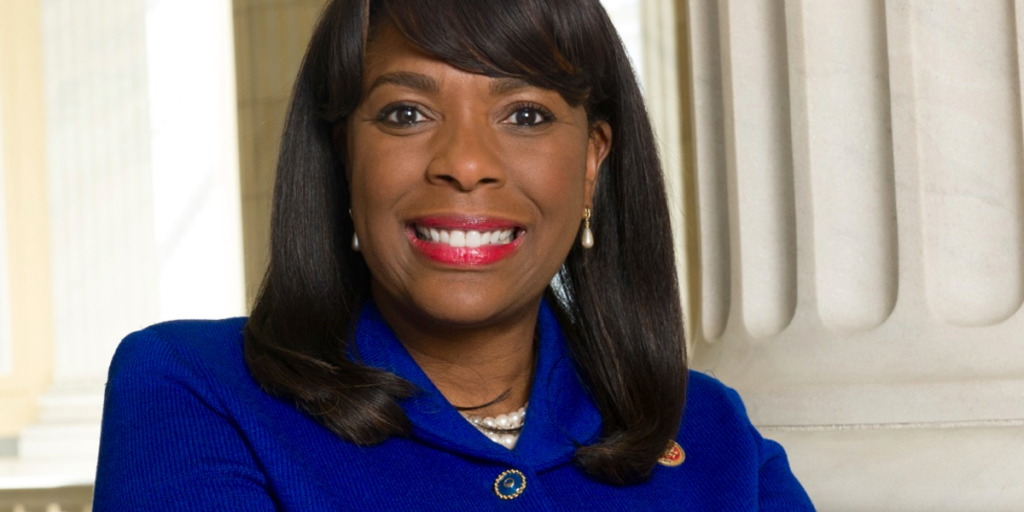
Congresswoman Terri Sewell announced on Friday that she had secured $42,820,760 for fifteen community projects in Alabama’s Seventh Congressional District in the final Fiscal Year 2023 omnibus government funding package. Sewell said that this funding responds directly to some of the most pressing needs in her Seventh Congressional District.
“I am overjoyed to report that over $42 million in direct funding is on its way to Alabama’s 7th Congressional District from this year’s government funding package!” said Rep. Sewell. “My team and I have worked diligently all year to ensure that money for these fifteen projects gets included in the annual funding bill so that we can make our communities safer, stronger, and more prosperous. With this historic funding, we are responding directly to some of our district’s most pressing needs and reversing decades of disinvestment!”
Sewell championed funding for fifteen projects that she says will directly benefit the residents of Alabama’s 7th Congressional District. These include:
Jefferson County
$4,000,000 for the Valley Creek Rails to Trails in Birmingham – Funding will be used to redevelop and construct a 4.57-mile recreation and transportation project for low-income city residents.
$750,000 for the Bethel Baptist Church Family Child Care Center in Birmingham – Funding will be used to construct a multi-purpose community center providing child care and educational support for youth & families in a neighborhood that has experienced economic hardship and overall lack of investment for decades.
$500,000 for the Birmingham-Southern College for experiential learning and civic engagement – Funding will be used to provide meaningful student support in higher education and strengthen the institution’s ability to facilitate placement in high-impact internships and jobs through multiple offerings of the Krulak Institute on campus.
$2,000,000 for the Lovelady Center in Birmingham for facilities and equipment – Funding will be used to rehabilitate two dormitories, each housing 30 individual women. These two separate dormitories will be utilized as part of the intake process of the addiction recovery program.
Montgomery County
$4,000,000 for the City of Montgomery Blight Project – Funding will be used to redevelop blighted properties within the City of Montgomery and revitalize neighborhoods that have historically seen a lack of investment opportunities.
$15,000,000 for the Commercial Vehicle Inspection Gate at Maxwell Air Force Base – Funding will be used to construct a commercial vehicle inspection and entry control facility area. This project will provide perimeter protection and security for Air Force personnel and assets, prevent unauthorized access, and maximize traffic flow.
$6,800,000 for the F-35 Weapons Load Crew Training Facility at the Montgomery Regional Airport (ANG) Base – Funding will be used to construct a Weapons Load Crew Training facility utilizing conventional design and construction methods to accommodate the mission of the facility. This arrangement will improve the ability to train weapons load crews and certify their continued readiness.
Dallas County
$4,000,000 for the Selma Riverfront Multi-plex – Funding will be used to acquire, redevelop, and construct a center for essential public safety services accessible for all members of the community.
$500,000 for the Orrville Public Library – Funding will be used for the construction of a new municipal public library providing access to educational resources for a historically underserved community.
$1,500,000 for the Historic Brown Chapel AME Church Restoration – Funding will be used to stabilize the structure of the building to allow for further restoration of the sanctuary, bell towers, and brickwork.
Marengo County
$1,143,018 for the Tombigbee Healthcare Authority in Demopolis for facilities and equipment – Funding will be used to address many of the ongoing public health issues experienced in our region by providing high schoolers with the opportunity to rotate through the many clinical and non-clinical departments at the hospital.
Wilcox County
$595,041 for the J. Paul Jones Hospital, Camden, AL, for facilities and equipment – Funding will be used to modernize the hospital’s laboratory department to allow seamless communication with other data systems, reducing manual workload.
Clarke County
$1,000,000 for the Health Care Authority Corporation of the City of Thomasville, AL for facilities and equipment – Funding will be used to improve healthcare clinical outcomes in Thomasville and the larger Black Belt area of Alabama. The funding will provide basic and advanced treatments for many who otherwise lack access to such services and are prohibited by costs from traveling long distances to the otherwise closest providers.
Greene County
$521,100 for the Greene County Hospital and Nursing Home in Eutaw for facilities and equipment – Funding will be used to purchase and install two new generators, providing important protections and 24-hour care in the case of an emergency or power outage.
Hale County
$511,601 for the Alabama Emergency Management Agency for Hale County Storm Shelters – Funding will be used to construct six storm shelters in Hale County, Alabama. Many rural areas across Alabama’s Black Belt, including communities in Hale County, do not have access to storm shelters. The construction of these shelters would create a safe location for residents to seek shelter during severe storms.
The twelve-bill government funding package also includes other initiatives championed by Sewell.
“I’m thrilled that this package includes several of my own bills to strengthen and expand access to health care for Alabama’s rural communities,” Sewell said. “I know that these bills will make a big difference for our rural Alabamians and the health care providers who serve them.”
The omnibus includes several health care bills led or co-led by Rep. Sewell.
· H.R. 2454 – Protecting Access to Ground Ambulance Medical Services Act: The bill will ensure that ambulance service providers, including rural providers and those in underserved communities, are able to continue delivering quality critical first responder and health care services. It would extend the current temporary Medicare ground ambulance reimbursement increases of 2% urban, 3% rural, and the super rural bonus payments for five years and would ensure that rural zip codes continue to be classified as rural following the 2020 Census ZIP Code reclassification.
- H.R. 3259 – NOPAIN ACT- Non-Opioids Prevent Addiction in the Nation: The bill will combat the opioid crisis by breaking down barriers to non-opioid pain management for those enrolled in Medicare. Specifically, it will address payment disincentives for practitioners to prescribe non-opioid treatment alternatives in surgical settings by requiring the Centers for Medicare and Medicaid Services (CMS) to place non-opioid treatments on par with other separately paid drugs and devices in Medicare Part B.
· H.R. 2256 – Resident Physician Shortage Reduction Act: The omnibus includes language from Rep. Sewell’s Resident Physician Shortage Reduction Act which will address the nation’s physician shortage by adding 200 Medicare-funded graduate medical education (GME) residency positions.
· H.R. 1887 – Rural Hospitals Support Act: The bill will provide a lifeline to rural hospitals by extending the Medicare low-volume hospital payment adjustment for two years through September 30, 2024.
· H.R. 8892 – Access to Mental Health Services Act: The bill will break down barriers to mental health services, identify gaps in mental health coverage under private insurance, and help mental and behavioral health care providers better treat patients in accordance with best practices.
Rep. Sewell also secured the inclusion of her bill to make it easier for part-time workers to save for retirement.
H.R. 2944 will allow part-time workers to begin saving for retirement sooner by reducing the number of years of service required to make retirement contributions. As women are more likely to work part-time than men, this provision is particularly important for women in the workforce.
Critics of the omnibus spending bill argue that it will add to the debt, worsen inflation, grow government, and make it harder for the private sector to recruit workers as it continues to grow the size and scope of government.
“While there are some good things in the bill, there are way too many bad things for me to support it,” said Congressman Jerry Carl (R-AL01) in a statement on Facebook. “This bill spends billions of taxpayer dollars on things like beefing up the IRS and the U.N., while doing nothing to secure our southern border and stop the flow of deadly drugs into our communities, ease the burden of inflation on hardworking American families or lower the cost of fuel. These should be our top priorities, but this bill simply does nothing to address these issues.”
The package passed the House today by a vote of 225 to 201 along a largely party-line vote. Having previously passed the Senate, it now heads to President Joe Biden’s desk to be signed into law.
To connect with the author of this story, or to comment, email brandonmreporter@gmail.com.
Related
Share via: