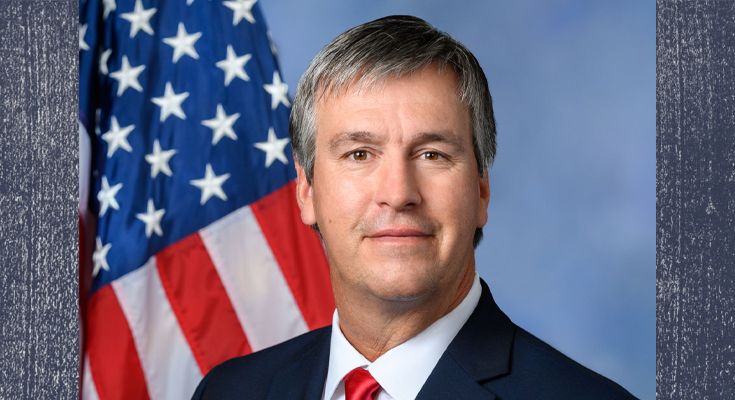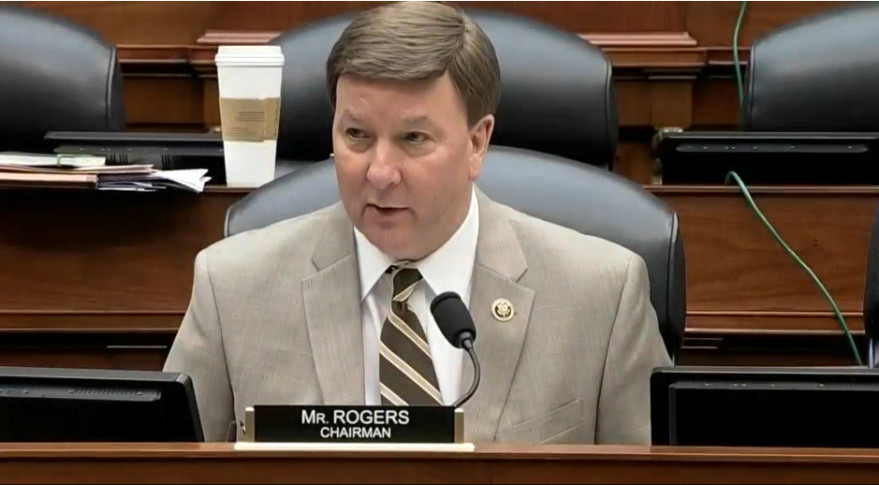
Russian President Vladimir Putin has announced that Russia will not participate in the New START nuclear arms reduction treaty. Congressman Mike Rogers, the Chairman of the powerful House Armed Services Committee, said that Putin’s decision to suspend Russia’s participation in New START should be declared a material breach of the treaty.
“Vladimir Putin’s decision to suspend participation in the New START Treaty should come as no surprise,” Rogers said. “Over the last ten years, he has systematically dismantled nuclear arms treaties with the United States and pursued an arms race. Whether Russia has already broken the treaty’s warhead limitations is not clear, but hoping Russia returns to the fold is not wise, nor is it a strategy. The Biden administration should declare Russia to be in ‘material breach’ of the New START Treaty and direct the Joint Staff and U.S. Strategic Command to accelerate planning in the event Russia breaches New START caps. All options must be on the table, including deploying additional nuclear forces and increasing the readiness of our nuclear triad. We must also accelerate efforts to modernize our nuclear systems, and I again call on the President to abandon his plans to weaken our deterrent, such as canceling the Nuclear Sea Launched Cruise Missile.”
The START Treaty (Strategic Arms Reduction Treaty) limits the number of weapons of mass destruction that the United States and the Russian Federation can deploy.
The new START Treaty limits the United States to just 659 deployed intercontinental ballistic missiles, deployed submarine-launched ballistic missiles, and deployed heavy bombers (the B52, B1, B2, and the new B21 bombers). Russia is limited to just 540 heavy bombers.
Since each launch system can launch multiple warheads on their deployed ICBMs, SLBMs, and heavy bombers, START also limits the number of nuclear warheads the superpowers can have. START limits the U.S. to 1420 warheads, while Russia can have 1549.
The treaty also strictly limits the number of missile launchers, ballistic missile submarines, and heavy bombers the two nations can have – both deployed and non-deployed. The U.S. is limited to only 800, while Russia is limited to only 759.
If the two nations break out of the new START Treaty, that could potentially lead to a renewed nuclear arms race. If so, that puts the U.S. at a disadvantage as much of the Cold War era nuclear weapons-producing capacity of the United States has been allowed to lapse.
The treaty requires Russia and the United States to allow inspection of their nuclear facilities to ensure that both sides comply with the limits. President Putin has not allowed the inspections to occur for months. Putin’s decision to suspend Russia’s participation in the treaty simply makes official what has been the de facto Russian policy for a while. It is not known whether or not suspending the treaty means that Russia is going to break out of the weapons limits set in the treaty or not. Following the announcement, the Russian foreign ministry said the decision is “reversible.”
The Nuclear Sea-Launched Cruise Missile that Rogers referenced is a proposal to reequip many major U.S. cruisers, destroyers, and submarines with nuclear-equipped cruise missiles. During the Cold War, the United States deployed a nuclear SLCM (or SLCM-N) called the Tomahawk Land Attack Missile-Nuclear (TLAM-N). The old nuclear-equipped Tomahawks have since been retired. Proponents argue that the SLCM-N would provide a regionally present, sea-based, survivable option needed to fill a gap in U.S. nuclear deterrence capabilities. Fielding the SLCM-N would require significant costs for the Navy.
Tensions between the United States and Russia have increased since Russia’s invasion of Ukraine and the American decision to arm the Ukrainians.
Mike Rogers is in his eleventh term representing Alabama’s Third Congressional District.
To connect with the author of this story or to comment, email brandonmreporter@gmail.com.
Related
Share via: