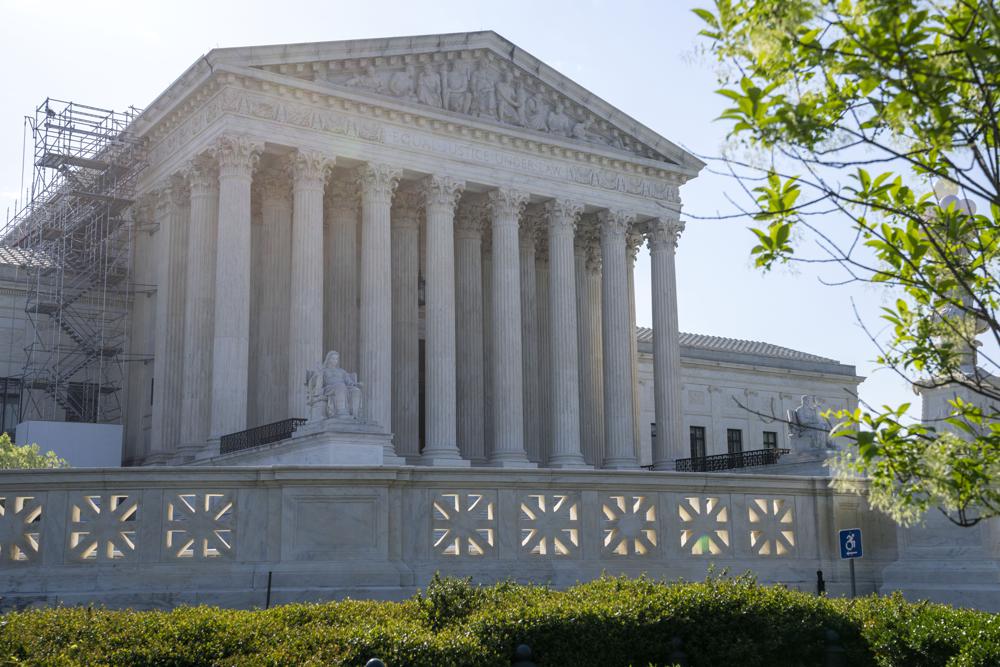
The U.S. Supreme Court, in a 5 to 4 ruling, has rejected Alabama’s Congressional District map in the case of Milligan versus Merrill.
The Supreme Court ruled that the 2021 Congressional redistricting map drawn by the Alabama Legislature likely violates the Voting Rights Act by diluting the power of Black voters.
Alabama is 27% Black, and they vote overwhelmingly Democratic, but Alabama has just one Black Democrat – Terri Sewell (D-AL07) in its congressional delegation. The six other districts are represented by White Republican men.
A three-judge panel of Judges in the Eleventh Circuit Court of Appeals in Atlanta ruled in 2022 that the 2021 redistricting violated the Voting Rights Act. That order was, however, stayed by the Supreme Court until they could review the case themselves. The Court, in Thursday’s decision, ruled that the eleventh circuit was, in fact, correct. This sends the case back to them for review.
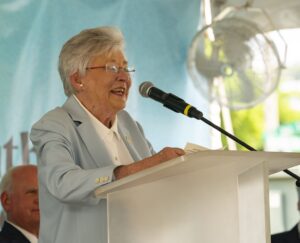
Alabama Today spoke with former State Senator Jim McClendon, who chaired the Joint Committee on Redistricting, and State Representative Chris Pringle (R-Mobile).
“That kind of surprised me,” McClendon said. “We went out of our way to follow every ruling and decision that was made when we made that map.”
McClendon explained that while redrawing the districts will make it more likely that there will be two Black members of the Alabama congressional delegation, it does not make that certain and could even potentially jeopardize the one Black incumbent – Congresswoman Terri Sewell (D-AL07).
“Terri Sewell is at risk,” McClendon said. “We gave her 55% (minority voters).”
McClendon was doubtful that in the 2 to 5 district split, it would be possible to have that high of a minority participation.
To get two majority-minority or at least two districts with a high minority influence will mean splitting Mobile County to put Prichard and the Black parts of Mobile into a district with the Black Belt and Montgomery. That second district will likely run from Tuscaloosa to Bessemer to Birmingham and could run as far north as Huntsville.
“I am sure not sure who is going to draw them (the Legislature or the courts),” McClendon said of the new zoning maps.
The three-judge panel had ordered the Legislature to redraw the maps and warned if the state didn’t, then the Court would. The state ignored the Court and instead pressed ahead with its appeal to the U.S. Supreme Court. The Supreme Court’s decision to stay the ruling meant that the 2022 election proceeded with that now-invalid congressional redistricting map.
At least two of Alabama’s congressional incumbents will likely find themselves in the same district.
If the three-judge panel allows the Legislature to do the Congressional redistricting, then there is likely to be a special session of the Alabama Legislature that will be needed sometime this fall.
The plaintiffs presented two congressional redistricting maps to the Court. It is possible that the Court could simply order the state to adopt one of those two maps rather than preparing a fourth map. Whichever map ultimately is adopted, the 2024 congressional districts will not look much like the current districts.
“There are a bunch of parasite lawyers” involved in redistricting litigation, McClendon said. “This will give them something to work on for two or three years.”
Because Alabama lost the redistricting case, the state will have to pay for the legal fees of the plaintiffs’ lawyers.
McClendon did not run for reelection in 2022, so he has been replaced as the Senate Chair on the redistricting committee by Sen. Steve Livingston (R-Scottsboro).
Chief Justice John Roberts and Justice Brett Kavanaugh joined the Court’s three liberals in the majority.
“As we explain below, we find Alabama’s new approach to §2 compelling neither in theory nor in practice. We accordingly decline to recast our §2 case law as Alabama requested,” Roberts wrote for the majority.
Black Alabamians vote Democratic over 90% of the time, while Alabamians in recent elections vote Republican in excess of 80%. If those trends continue, the new redistricting will make two districts either lean Democrat or very competitive. The other five districts, however, will likely become much more White and likely even more conservative.
To connect with the author of this story or to comment, email brandonmreporter@gmail.com.
Related
Share via: