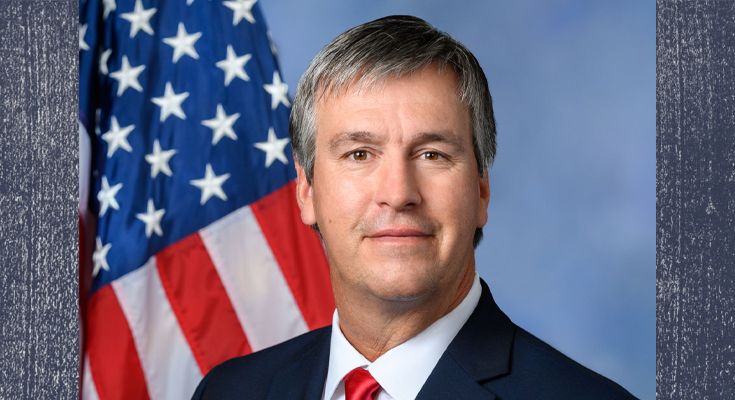
Last week, Rep. Barry Moore introduced the bicameral, bipartisan Forest Data Modernization Act with cosponsor Congresswoman Kim Schrier (D-Washington). The sponsors say that this legislation modernizes the technologies and data collection methods used by the Forest Inventory and Analysis Program (FIA) to meet growing market demand and support sustainable forest management decisions.
“Alabama foresters deserve updated technology and easily accessible data to help meet the demands of a rapidly growing market,” said Rep. Moore. “I am grateful to Rep. Schrier for joining me to introduce legislation that ensures foresters, forestry stakeholders, and the American public have access to standardized, high-quality data to support their decisions.”
“Mitigating risk in our forests has become ever more important with increasing intensity of wildfires and lengthening wildfire season throughout the West,” said Rep. Schrier. “Land managers and fire chiefs need reliable information about forest health to effectively work to prevent fire, mobilize wildland firefighters during fire, and perform forest restoration work afterward. This legislation will strengthen the FIA program to provide critical data needed to prevent and fight fire more effectively.”
United States Senators Bill Cassidy (R-Louisiana) and Jon Ossoff (D-Georgia) have introduced S.1743, the Senate version of this legislation.
The Forest Data Modernization Act specifically provides:
- Data accessibility by requiring the publication of summary statistics every two years and the creation of a fee-for-service program to handle complex data requests.
- Data usability by directing the FIA to measure forest carbon and requiring that clear definitions are provided with FIA data to ensure better interpretability of datasets which would allow the forestry sector to leverage collected data consistently.
- Data collection by recommending consideration of advanced technologies for data collection, such as satellite sensors and computer models that could improve data accuracy and reduce costs, as well as codifying existing surveys on wood use and forest landownership to ensure continued availability of datasets on which forestry stakeholders rely.
- FIA program transparency by requiring the existing FIA strategic plan to be updated, that future updates be made every five years, and that FIA costs and priorities be published annually.
Dave Tenny is the President and CEO of the National Alliance of Forest Owners (NAFO).
“We applaud Representatives Schrier and Moore on the introduction of The Forest Data Modernization Act, which will support private working forests, the communities that depend on them, and the environmental benefits they provide,” said President Tenny. “This bipartisan bill is a significant stride towards bolstering the U.S. Forest Inventory and Analysis (FIA) program, ensuring that private working forest owners receive the accurate and pertinent forest and forest-carbon data they require. Investing in modernizing the FIA program will support the forest stewardship, market innovation, and rural job creation while also promoting the economic, environmental, and climate benefits private working forests provide. The National Alliance of Forest Owners (NAFO) eagerly anticipates collaborating with Representatives Schrier and Moore, as well as the entire Congress, to strengthen forest stewardship through the successful passage of the Forest Data Modernization Act.”
This legislation is endorsed by the National Alliance of Forest Owners, National Association of State Foresters, Society of American Foresters, American Forest Foundation, The Nature Conservancy, Washington State University, Vermont Woodlands Association, Appalachian Mountain Club, Enviva, National Woodland Owners Association, L&C Carbon, Congressional Sportsmen’s Foundation, and Rural Voices for Conservation Coalition.
Over 70% of Alabama is forested – the vast majority of which is under private land ownership. Forestry and forest products, along with agriculture, remain the state of Alabama’s largest industries. Alabama wood is used for products such as paper, lumber, power line poles, plywood, shavings for the poultry and equine industries, particle board, furniture, charcoal, and other construction materials. Alabama’s forests also trap carbon from the atmosphere while providing habitat for a vast cornucopia of birds, mammals, reptiles, amphibians, insects, and more including some endangered species.
Barry Moore is in his second term representing Alabama’s Second Congressional District. He previously served the people of Coffee County in the Alabama House of Representatives from 2010 to 2018. He and his wife operate a small waste management company in Enterprise, where they are natives. Moore is a veteran and a graduate of Auburn University.
To connect with the author of this story or to comment, email brandonmreporter@gmail.com.
Related
Share via: