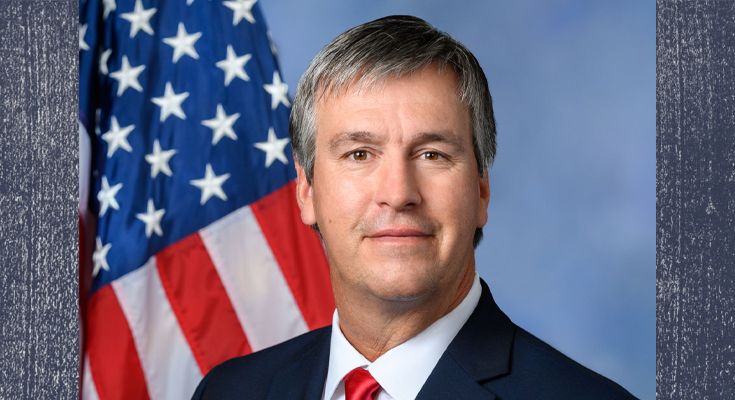
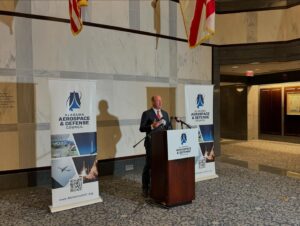
On Tuesday, U.S. Senator Tommy Tuberville (R-Alabama) held a series of town halls with farmers to listen to their concerns. Tuberville serves on the Senate Agriculture Committee, which is in the process of writing the Farm Bill – a five-year bill that sets priorities for agriculture and supplemental nutrition benefits for the country.
Alabama Today joined Tuberville, Alabama Department of Agriculture and Industries Commissioner Rick Pate, and Tuberville’s top agricultural aide Emma Johnson at Snead State Community College in Boaz.
“We are going around talking to people about their problems, what they think should be in the Farm Bill,” Tuberville said. “We have got to take care of our farmers.”
“We have big problems in this country,” Tuberville said.
“They are trying to run the small farmers out,” Tuberville said of the Biden Administration. “They want corporations running things,” Tuberville continued. Tuberville said “just three or four companies” would run each agricultural sector.
Tuberville said the Farm Bill would be about $1.5 trillion over the next five years, with $1.2 trillion for supplemental nutrition assistance programs (SNAP). Just $300 billion of that will be for actual farm programs.
“We need to make sure that we get our share of the pie,” Tuberville said of farm programs that benefit Alabama farmers.
“I know that you are having a hard time getting people to work,” Tuberville said. “It is incredible how much money we are paying people not to work.”
The largest agriculture sector by receipt in Alabama is the poultry sector (primarily hatching eggs and feeding them out to market-weight chickens as broilers). With a $15 billion economic impact, the poultry industry is larger economically than all other agricultural commodities in Alabama combined. Powerful agricultural conglomerates own the chickens and provide the feed, medication, and technical expertise, and the poultry farmers provide the land, labor, and capital investment in the poultry houses. Much of the cattle raised in Alabama are raised on farms that also have chicken houses – the chicken litter waste products going to fertilize the pastures that the cattle are raised on.
“The poultry industry is huge, but if you can’t make a living at it, you are going to get out,” Tuberville said. “We have to save our small farmer. Most people don’t want their kids going into it if they can’t make a profit.”
Emma Johnson explained, “In poultry, it can cost $2 to 3 million (in construction costs) for four (poultry) houses.”
Tuberville said that he is committed to rural broadband and that it is necessary in today’s world.
One poultry farmer told Tuberville that the poultry farmers in past years had invested in refrigeration units to store their dead birds for renderers to pick up to be processed into dog food ingredients.
“Renderers can’t make money,” the farmer explained. The EQUIP program, however, does not provide funds for the incinerators or composters that the poultry farmers need to dispose of those bird carcasses on the farm.
“There just is not any money for the renderers,” the farmer explained. “They don’t want to take that product. There just isn’t any money in it.”
Emma Johnson said, “4% (of the Farm Bill) is for conservation programs.”
“We are for moving away from land retirement programs like the CRP (Conservation Reserve Program),” Johnson said. “There are 27 million acres in the CRP. We want to focus on highly erodible land, not taking grassland or working land out of production.”
Rancher John Hannah complained that current farm programs “will pay for cross fences, but not (property perimeter) fences. They want me to build 3-acre paddocks. I have 100 head. I can’t spend all my time moving cows. I would like to see more common sense,” in those programs.
Hannah said it used to be 66% of the consumer’s dollar for a pound of beef went to the rancher for raising that animal. “Today it has flipped just the opposite where just 33% of consumer dollars go to the farmer.”
“We don’t want to rely on a government handout,” Hannah said. “I want to be an independent farmer.”
Hannah complained that prices for cattle are not fair because too many cattle are locked up by the meatpackers rather than going through the auction barns.
“You have got to open up the market to fair negotiated pricing,” Hannah said.
“We have let it get down to four packers. That is a problem,” Tuberville said.
Commissioner Pate said, “We saw the vulnerabilities during COVID where those four companies have over 80% of the market.”
“We have got $12.5 million” for helping build a meatpacking plant in Alabama, Pate said. “We are going to try to double and triple the meatpacking in Alabama.”
Alabama Today asked Pate about the packing plant the Poarch Creek Band of Indians are building in South Alabama.
“I was there at the groundbreaking,” Pate said. “They have cleared a piece of ground, but they aren’t putting anything up yet.”
Pate expressed concern that the Poarch Creeks’ facility will primarily process their cattle.
“The Indians have a lot of cattle,” Pate said. “I don’t know how much that is going to help the average cattleman.”
“Since Joe Biden has been in office, input costs (for farmers) are up 28%, fertilizer is up over 60%,” Johnson said. “We are trying to address input costs during this Farm Bill.”
“None of us are going to make it if we don’t start drilling for oil again,” Tuberville said. “This country was built on cheap energy.”
“In 2008, I built a poultry house for $108,000 – today, it costs over $600,000 to build the same house I built in 2008,” another poultry farmer said. “I get the same price today for a load out of chickens today as I did in 2008. They are killing the poultry industry.”
A group of farmers and homestead owners from the Chandler Mountain area of St. Clair County were in attendance to express their opposition to a controversial Alabama Power project to build a series of hydroelectric dams on the northern branch of Little Canoe Creek on the St. Clair/Etowah County line. They claim that building the massive facility would cost them their farms.
“Our office has been very engaged with Alabama Power,” Johnson said. “As of now, the study proposals are due later this year. Actual construction would not begin until 2031. They will discover through the study process how many people are impacted.”
“We are in trouble in this country,” Tuberville said. “Elections have consequences. We have an election coming up in a year and a half. If we don’t get somebody in the White House who has a clue, this country is doomed.”
“They would rather you take a check, to be honest, than work for a living,” Tuberville said of the Democrats. “We need some leadership up there. The animals are running the zoo.”
“They want everybody to be controlled by that group in Washington,” Tuberville added. “We wish we had answers for you. We don’t. We know your problems, but we can’t do much unless we get somebody in the White House that has a clue about business.”
“They want to turn us into a European socialist country,” Tuberville concluded.
The farm bill is a package of legislation passed every five years that has a tremendous impact on farming livelihoods, how food is grown, and what kind of foods are produced. The farm bill sets the stage for food and farm systems by covering programs ranging from crop insurance for farmers and healthy food access for low-income families to beginning farmer training to support sustainable farming practices.
“When I came to Washington, I promised Alabama’s farmers that I would be their voice,” said Tuberville in a statement distributed to the press prior to the farm tour. “Agriculture is a vital part of our state’s economy, and it only makes sense that we have a seat at the table for important negotiations like the Farm Bill. Earning a spot on the Senate AG Committee was important to me because Alabama hasn’t had a strong presence on this committee since the late 1990s. Our agriculture and rural communities deserve better than that, and it’s an honor to fight for their priorities and interests. Alabama’s farmers, foresters, and producers shoulder the burden of feeding, fueling, and clothing our nation. Our country not only relies on the current generation of farmers, but we’re depending on the next generation to carry the torch and keep not only the United States but the world food secure. That’s why we need to cut burdensome red tape that inhibits production so that family farms may remain intact for generations to come. Easing this burden has driven my work thus far, and I will continue to keep our farmers front of mind as we draft the 2023 Farm Bill.”
The Tuberville farm listening tour began in Bay Minette in Southwest Alabama that morning at 9:15 am, then went to Headland, Alabama, in Southeast Alabama at midday; before their 3:00 pm tour stop at Boaz in North Alabama. The tour will end on Wednesday at Millbrook in Central Alabama.
Tuberville was elected to the Senate in 2020.
To connect with the author of this story or to comment, email brandonmreporter@gmail.com.
Related
Share via: