On Monday, the Alabama Medical Cannabis Commission (AMCC) heard presentations from farmers seeking to win a cannabis cultivator award.
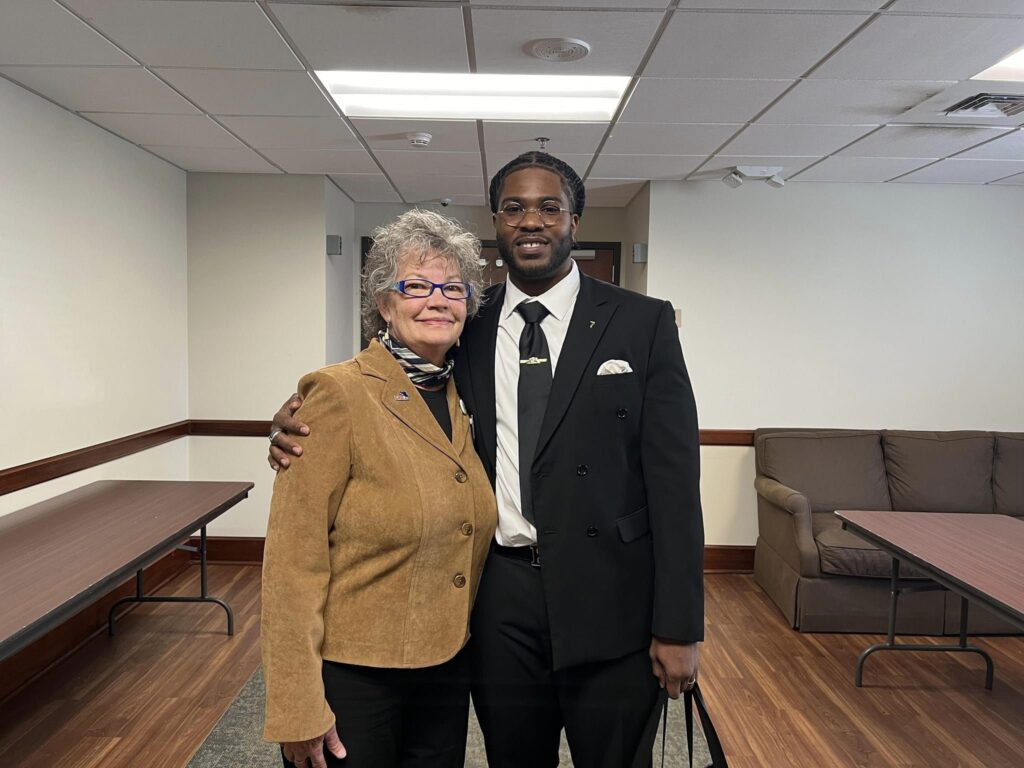
One of those was Antoine Mordican with Native Black Cultivation. Mordican is an Alabama hemp farmer seeking a license from the AMCC.
“I am the CEO of Native Black Cultivation,” Mordican told the Commission. “I am a farmer, an engineer, and an advocate. I spoke in this very room (in 2021) to the Health Committee for passage of the medical cannabis bill.”
“This Commission is diverse,” Mordican said, “25% of the licenses go to minorities.” The legislation requires that 25% of licenses go to minorities – a point that Mordican argued for when it passed the Legislature two and a half years ago.
“I am originally from the west side of Chicago. I came down here in 2009 for an education,” Mordican said. “I have been farming since 2020 growing hemp.”
“I and my ownership team are all residents of Alabama,” Mordican continued. “We have the skills to cultivate a quality product for the state of Alabama.”
“I am a true Alabama-owned company,” Mordican said, alluding to rumors that some applicants are only frontmen for out-of-state marijuana companies. “My company is truly minority-owned. I am the CEO. I do not answer to anyone in my company. That is not true for some of the other applicants.”
“Hopefully we will be considered for a license on Friday, December 1,” Mordican said.
In the previous two rounds of award applications, Native Black Cultivation was denied a permit.
Mordican explained that the AMCC cited him for not meeting its Alabama residency requirements. The AMCC defines an Alabama resident as someone who has lived in the state for 15 years. Mordican began his studies at Alabama A&M in 2009. He has resided in Alabama just a few months over 14 years; thus, he did not qualify as an Alabama entity. Mordican explained that he has addressed that by naming his two partners (both of whom have lived in the state for decades) so that the company fits the AMCC definition of Alabamian owned.
“If you look at the Alabama Medical Cannabis website we have overwhelming public support for our application,” Mordican said. “The people of Alabama have spoken. I think you should take that into consideration.”
“It is critical that we have minority participation in the state,” Mordican said. “We will be an asset for the state and the people of Alabama.”
Marty Schleper, founder and president of Alabama Cannabis Coalition, publicly supported Mordican. Schleper wrote on Facebook, “What an honor and a privilege to be in Room 200 of the Alabama House and hear and see the presentation of Antoine Mordican, a husband and father, and he so deserves a medical Cannabis license in Alabama. Antoine is humble and gracious, he has always impressed me. I am so proud of him and pray that God holds him in the palm of His hand.”
Mordican also urged that HBCUs (Historically Black Colleges and Universities) be involved in the marijuana program.
“Alabama A&M is part of the hemp program,” Mordican said. “Alabama State has been part of the hemp program.”
Mordican explained that his company has two facilities – a small one that he can put into cultivation by the end of the month and a larger one that he will build.
Mordican will utilize hydroponics in his marijuana grow facility.
“I have been working on this for over a decade,” Mordican said. “It started as a research paper in my first year at Alabama A&M. Hydroponics was the way to go. At Native Black Farms, we grow indoors. Everything is grown hydroponically. I have a recirculation system to prevent there from being any waste.”
The AMCC is expected to vote on the cultivator awards on Friday. The previous two rounds of awards were rescinded after failed applicants filed lawsuits objecting to the process, including the scoring of the applications.’
There is a maximum of twelve cultivator licenses that the Commission can award and just twelve applicants. Despite this, Native Black Cultivation was denied in both previous rounds of awards.
The Commission is expected to also vote on the state testing laboratory, marijuana processor, and secure transporter licenses on Friday. Next week, the Commission will hear presentations from applicants for integrated facility licenses. Those license awards will not be made until December 12.
To connect with the author of this story or to comment, email brandonmreporter@gmail.com.
Related
Share via: