
Former Chief Justice Sue Cobb compares pricey judicial races to legalized extortion
The phones rang. The donations flowed. Former Alabama Chief Justice Sue Bell Cobb in 2006 won one of the most expensive judicial races in American history. Cobb, however, is no fan of the pricey system that got her to be the state’s top jurist. The high-dollar races that have judicial candidates dialing for dollars are tawdry, she said, and the donations that judicial candidates must solicit from law firms and businesses that appear in their courtroom are something akin to “legalized extortion.” “To fully achieve the goal of having fair courts, there must be reform in how judges are selected,” Cobb said in an interview with The Associated Press Cobb, who stepped down as chief justice in 2011, has become a national advocate for changing how judges are selected. At one time in history, judges were appointed by kings, Cobb said, and electing judges was seen as a way of letting people decide who would hear cases. “The money now has become the king,” Cobb said. In her 2006 race for chief justice, Cobb initially set a goal of raising $2 million. She said it quickly became clear that more would be needed. She raised and spent $2.6 million. Her opponent, Republican Chief Justice Drayton Nabers raised and spent $5.5 million. That spending ranked as the second most expensive judicial race in American history, according to a report by Justice at Stake, the Brennan Center for Justice at NYU School of Law, and the National Institute on Money in State Politics. “Everything we did was legal and ethical, but that didn’t mean it was right,” Cobb said of her race. Judicial candidates are not allowed to discuss cases when they call seeking donations. Still, Cobb said there is an inevitable unspoken pressure when a judge, or potential judge is seeking a donation from a lawyer, head of a law firm or business owner who will appear in their courtroom. “How do they refuse?” Cobb said. Cobb became a judge at age 25 and resigned as chief justice in 2011 at age 55. During her 30 years on the bench, Cobb said she never witnessed a direct quid pro quo where a judge traded a ruling for a donation. But patterns in rulings become suspect, she said. “When a judge almost always rules the way his backers want him to rule, you would have to question, did that judge arrive at that result in an intellectually honest way or did they not want to displease the people who sent them?’ Cobb said. For years, Cobb has been an advocate on changing how judges are elected. In her resignation speech, she urged the non-partisan elections. Cobb this spring penned a first-person piece for the online news site Politico provocatively titled “I Was Alabama’s Top Judge. I’m Ashamed By What I Had To Do To Get There. How money is ruining America’s courts.” “What former Justice Cobb is saying publicly, is what a lot of judges feel privately but are afraid to say,” said Bert Brandenburg, executive director of the Justice at Stake Campaign. “Judges are pressured now routinely to raise money from parties who then appear before them in court and are pressured to become politicians in black robes who are more accountable to political pressure than they are the law and the constitution,” Brandenburg said. “Every state that elects judges needs to take a hard look at how best to keep insulation around their judges so money is not pressuring them to be accountable to politics instead of the law.” Cobb said the optimum choice would be to have merit-based selection system of judges with giving voters the decision on retention with information made available to voters on the judge’s record. A second choice, she said, would be to make the races nonpartisan, an option that she says cut down on the price tag of races. Ultimately, it is not a matter of party, said Cobb, a Democrat. “Everybody should want – no matter where they come from in life – they should want our courts to be fair, not lean one way or the other,” Cobb said. Republished with permission of the Associated Press.
New laws enacted by the Alabama legislature
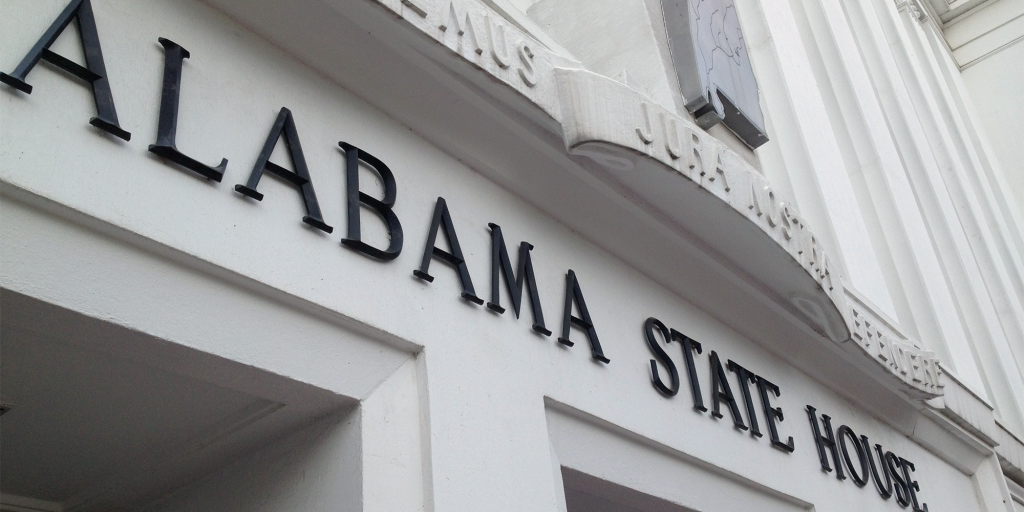
Wondering what bills became law this session? We’ve got a roundup of some of the latest measures enacted by the Alabama legislature. Check these out: House Bill 1, known as the Alabama Student Religious Liberties Act, protects religious expression in schools and bars local boards of education from discriminating against students or parents on the basis of religion. Officers of limited liability companies under House Bill 54 clarifies which jurisdiction can govern a limited liability company. After heated debate, Senate Bill 89, imposes membership, term, and compensation limits on the Birmingham Water Works Board and any other water works board serving customers outside its principal location. House Bill 91 says that as long as a car rental company is licensed as a whole, individual employees do not have to be licensed to sell insurance along with a rental contract. The Secretary of the Alabama Law Enforcement Agency can appoint a Homeland Security Adviser under House Bill 98. Under House Bill 101, 18 is now the age of consent for participating in research conducted by a college or university. Senate Bill 118 revises the citizenship qualifications for CPA certification and reduces the semester and quarter hour education requirements for eligibility to sit for the CPA examination. House Bill 179 outlines eligibility for members of the Credit Union Board of the Alabama Credit Union Administration and the governor’s new authority to approve or nominate members. Restaurants and food retailers will have to post the country of origin of certain products containing catfish, under House Bill 186. House Bill 189 clarifies the roles of the Department of Senior Services commissioner and its 16-member advisory board. A new board will oversee Alabama’s two-year colleges, under Senate Bill 191. House Bill 231 outlines new regulations for heating and air conditioning contractors, including training now available through the Alabama Home Builders Foundation. The Department of Children’s Affairs is now the Department of Early Childhood Education, thanks to House Bill 233. The change reflects new responsibility for developing a comprehensive system of high quality early learning and care. Under House Bill 246, heart defibrillators can only be operated by someone who has completed training in defibrillator use and CPR, including instruction on psychomotor skills and emergency cardiovascular treatment. Want more? Click here for the complete list, including local laws and those enacted earlier in the legislative session.
Jeb Bush’s tough week exposes challenges for his likely 2016 bid

Jeb Bush worked his way through the dim hallway of an Arizona resort for hours, shuttling from room to room and meeting with dozens of Republican officials, many for the first time. He was in need of a political reset. For days, he had offered confusing answers to questions about the war in Iraq. He had disappointed Republicans in Iowa, the leadoff state in the nomination chase. And, for a moment, he had forgotten he wasn’t yet a 2016 presidential candidate. Only weeks earlier, donors willing to give millions to put him in the White House were coming to see him at an opulent Miami Beach hotel. Now it was Bush seeking the private gatherings, on the sidelines of a Republican National Committee meeting. The former Florida governor was trying to recover from what was undeniably his worst week in politics since announcing he was considering a run for the White House. “It’s the one thing you have to learn in a campaign,” said Matt Borges, the Ohio Republican Party chairman, as he emerged from a private session. “How to fall down and get up.” Interviews with dozens of RNC members, Bush donors, early state supporters and strategists show: —concerns with his skills as a campaigner. —unease that his designation as a front-runner has yet to materialize in polls. —worries that while they know the Bush name, they don’t yet know this Bush outside of Florida. “In this cycle, there’s less and less off-Broadway. And for Jeb Bush, there’s no off-Broadway,” said Fergus Cullen, the former chairman of the New Hampshire Republican Party. But none of the Republicans interviewed by The Associated Press said Bush had been irreparably damaged. His name recognition and fundraising operation make him a force in the GOP contest. “But I don’t know anybody who ever said in this cycle there’s an untouchable front-runner,” said Ron Kaufman, a Bush supporter who helped arrange some of the meetings in Arizona. Bush’s tough week began with a Fox News interview that included a question about the Iraq war begun by his brother. When President George W. Bush invaded Iraq in 2003, he cited intelligence that showed the country had weapons of mass destruction. The intelligence later was found to be faulty, and no such weapons were uncovered. Over the course of 72 hours, Jeb Bush said he would have ordered the invasion, based on the intelligence presented at the time; claimed he misunderstood the interviewer’s question; then said he would have done something different but refused to say what that might be. On Thursday, he finally answered the original question. “If we’re all supposed to answer hypothetical questions, knowing what we know now, what would you have done? I would not have engaged. I would not have gone into Iraq,” he said. The episode demonstrates Bush’s determination to chart his own path in a family of presidents and avoid publicly judging the policies his father and brother pursued. “I’m not going to go out of my way to say that my brother did this wrong or my dad did this wrong,” Bush said this past week. “It’s just not going to happen.” Bush’s answers about Iraq prompted a wave of commentary from his likely Republican rivals, each eager to show how they’re different with a not-yet-a-candidate still perceived by many as an early front-runner. “If we don’t learn the lesson in Iraq, you don’t understand the lessons that we should learn also from Libya and Syria,” Kentucky Sen. Rand Paul said in an interview with the AP. Bush’s response also fueled Democrats’ preferred narrative of the former Florida governor: that he’s an apologist for a brother who is viewed favorably by less than a third of Americans six years after leaving office. Arizona Democratic Rep. Ruben Gallego, who fought in Iraq and criticizes the war, said reports that Bush considers his older brother an adviser on Middle East issues “makes me question even more if he has the judgment to be president.” Amid all the talk about Iraq, Bush also slipped up for a moment about his candidacy. He’s not yet formally declared his intention to run for president, and saying he’s still thinking about it keeps Bush on the right side of campaign finance rules. Yet after a town hall-style meeting in Nevada on Wednesday, Bush said, “I’m running for president in 2016,” before quickly catching himself, noting, “if I run.” Kaufman and other Bush supporters concede Bush had a challenging week, comparing his tight knit but still growing political operation to a baseball team in spring training. While Bush has a small number of experienced advisers, his decision to put off his formal entry into the campaign until at least June has left them unable to mobilize quickly and respond to problems. But perhaps more than anything, Bush’s week underscored a quiet concern among some Republicans about a candidate who last ran for office 13 years ago: He’s rusty. “He hasn’t been a candidate for anything for years,” said Tom Rath, a New Hampshire-based Republican who advised former President George W. Bush. By Saturday, Bush was able to joke about the issue, which was missing earlier in the week, a sign of a candidate recovering from a blunder. Told by a voter at a town hall in Iowa he hadn’t slipped up at all in the Fox News interview, Bush fessed up with a line that drew laughs. “I misstepped, for sure. I answered a question that wasn’t asked. That’s just what happened,” Bush said, shrugging. “It was a great answer, by the way. But it wasn’t to the question that was asked.” While Bush’s family name and cadre of wealthy donors fuel the perception he is a front-runner for the nomination, early polling suggests voters in key states aren’t buying into the narrative. But polls this early in a presidential campaign are poor predictors of eventual outcomes, and Bush hopes to regain his stride during a weekend trip to Iowa and stops next week
Obama, First Lady Thinking About Life After White House
Presidential library? Check. Future home? TBD. The decision by President Barack Obama and his wife, Michelle, to build his presidential library in Chicago scratches one item from their to-do list for life after the White House. Remaining decisions aren’t as pressing as where to put the library and likely will come near the end of his term or after he leaves the building in mid-January 2017. Mrs. Obama says that’s a good thing because “we still have a lot to do in these two years, and it’s hard to do this and think about the next steps. I think the time will come when it will feel right to start thinking about what’s next, but until now it’s really about solidifying the work that we’re doing here.” It’s also about not appearing more focused on the future than on their day-to-day responsibilities, says Anita McBride, a veteran of three Republican administrations. “You’re president and first lady for eight years, not six years and five months,” she said. Some of the decision-making that lies ahead for the Obamas: NEW HOME Obama has said daughter Sasha “will have a big vote” in where the family ends up when his term ends, partly because the soon-to-be 14-year-old will still be in high school. (Big sister Malia is expected to be away at college.) Some recent ex-presidents have their homes and libraries in the same city: George H.W. Bush (Houston) and George W. Bush (Dallas). Obama still owns the Chicago home he lived in with his family before he became president, but it’s unclear whether he would return there permanently. Obama spends Christmas in his native Hawaii, but it appears it won’t be his home post-presidency. The White House said Obama was not behind the recent $8.7 million purchase of a Hawaii beachfront home by his friend, Chicago businessman Marty Nesbitt. Nesbitt is chairman of the Barack Obama Foundation, which is raising money to build the library. BOOKS/SPEAKING CIRCUIT Publishing houses will pay millions for the memoirs of the first black U.S. president and first lady. Former President Bill Clinton received a reported $10 million advance for his memoir, “My Life.” His wife, former first lady and 2016 Democratic presidential candidate Hillary Rodham Clinton, is said to have received $8 million for her book, “Living History.” Both Obamas are already published authors. Obama wrote “Dreams from My Father,” “The Audacity of Hope” and “Of Thee I Sing,” a children’s book. Michelle Obama is the author of “American Grown,” about her garden on the South Lawn. Obama agreed in 2004 to write the children’s book as part of a three-book deal with Random House that included “Audacity.” He remains under contract for a nonfiction work that would not be his memoir, to be delivered after he leaves office. Speakers’ bureaus are also likely to court the Obamas. FUTURE CAREERS Obama will be 55 when he leaves office and Mrs. Obama will be 53. Obama has talked about returning to teaching and to the community organizing work he did before politics. (He once taught constitutional law at the University of Chicago.) Obama also says he’ll stay involved with a support program he started for boys and young men of color. He recently announced that a new foundation will continue the program after he leaves office. “I’ll go back to doing the kinds of work that I was doing before, just trying to find ways to help people – help young people get educations, and help people get jobs, and try to bring businesses into neighborhoods that don’t have enough businesses,” Obama said. “That’s the kind of work that I really love to do.” Mrs. Obama plans to stay engaged with her four major initiatives: reducing childhood obesity, helping military veterans and their families, encouraging high school students to attend college or technical school, and educating girls around the world. “I do not have a one- or two-year horizon for this work,” she told a health summit earlier this year. “I have a rest-of-my-life horizon.” FRESH AIR After leaving the White House, Mrs. Obama looks forward to “getting in a car and rolling down the window and just letting the air hit my face. I’m going to spend that first year just hanging out the window.” It’s been years since she’s ridden in a car with the windows down and the “windows in our house don’t open” either, she said. The Secret Service agents who will remain with the Obamas will probably keep the windows shut. Reprinted with permission from the Associated Press.
Know a vet getting the government run around?
Soon our nation will be celebrating Memorial Day. More than a three-day weekend marking the beginning of summer, Memorial Day is time to pay tribute to the soldiers who made the ultimate sacrifice for our nation. It’s also a time to say thank you to our nation’s many vets and our current service members who are still manning the front lines to protect this great nation. Often times our nation’s veterans and military have issues with the federal government and need help. Did you know that you your Congressman and Senators are often your best resource when you can’t get an answer from a federal agency in a timely fashion, or if you feel you have been treated unfairly. For those currently in the military, or their families, experiencing difficulties with the U.S. Department of Defense and/or any of its military branches (Army, Navy, Air Force, Marines, Coast Guard, and the U.S. Merchant Marines), TRICARE, or the Defense Finance and Accounting Service (DFAS) a Congressional office can often intervene and help you receive a fair and timely response to your problem. For veterans, a Congressional office can assist efforts to obtain military records and medals, in answering questions they have concerning eligibility for benefits provided by the U.S. Department of Veterans Affairs (VA), or those who might be having difficulties with the VA Health Care System or the VA claims and appeals process. Offices are also available to assist with a myriad of other constituent services areas that include, but are not limited to: Citizenship and Immigration Services: dealing with USCIS — relating to the process of becoming a U.S. Citizen, how to renew a Permanent Resident (Green) Card Consumer Complaints: complaints about a product or business General Financial and Emergency Assistance: facing financial difficulties and looking for temporary financial assistance Internal Revenue Service: federal tax-related problems, tax-fraud Medicare: problems with Medicare Part A, Medicare Part B, Medicare Part D Prescription Coverage, a Medicare Advantage Plan (also known as Medicare Part C) or CMS Passports: figuring out where you should submit your application, figuring out which application to use, and deciding when you need to submit application to ensure that you get your Passport prior to your travel date Preventing Identity Theft and Fraud: provide information about steps that individuals may take to as a way to proactively protect themselves from identity theft and what can be done to protect your credit information from use in fraudulent ways Small Business Administration: provide information on any available government financing, counseling, and training programs to individuals who are interested in starting or expanding Alabama-based business Social Security Administration: difficulties with the Social Security Administration with obtaining disability benefits, Supplemental Security Income (SSI), retirement or other Social Security-related benefits, or if you simply need some help in obtaining documents If you’re facing an issue with the federal government, don’t hesitate to reach out to your respective Representative or one the Senators for assistance. Alabama’s 1st Congressional District: Rep. Bradley Byrne Alabama’s 2nd Congressional District: Rep. Martha Roby Alabama’s 3rd Congressional District: Rep. Mike Rogers Alabama’s 4th Congressional District: Rep. Robert Aderholt Alabama’s 5th Congressional District: Rep. Mo Brooks Alabama’s 6th Congressional District: Rep. Gary Palmer Alabama’s 7th Congressional District: Rep. Terri Sewell Statewide: Sen. Jeff Sessions State-wide: Sen. Richard Shelby Not sure of your congressional district or who your member is? You can use this easy service to find out.
US says decade-old Gulf oil leak could last another century
For more than a decade, oil has been leaking into the Gulf of Mexico where a hurricane toppled a drilling company’s platform off the coast of Louisiana. Now the federal government is warning that the leak could last another century or more if left unchecked. Government estimates obtained by The Associated Press provide new details about the scope of a leak that has persisted since Hurricane Ivan in 2004. Taylor Energy Co., which owned the platform and a cluster of oil wells, has played down the extent and environmental impact of the leak. The company also maintains that nothing can be done to completely eliminate the chronic oil slicks that often stretch for miles off the Louisiana coast. Taylor has tried to broker a deal with the government to resolve its financial obligations for the leak, but authorities have rebuffed those overtures and have ordered additional work by the company, according to Justice Department officials who were not authorized to comment by name and spoke on condition of anonymity. “There is still more that can be done by Taylor to control and contain the oil that is discharging” from the site, says an Interior Department fact sheet obtained by the AP. Federal regulators suspect oil is still leaking from at least one of 25 wells that remain buried under mounds of sediment from an underwater mudslide triggered by waves whipped up by Hurricane Ivan. A Taylor contractor drilled new wells to intercept and plug nine wells deemed capable of leaking oil. But a company official has asserted that experts agree the “best course of action … is to not take any affirmative action” due to the risks of additional drilling. An AP investigation last month revealed evidence that the leak is far worse than Taylor, or the government, has publicly reported during a secretive response to the slow-motion spill. The AP’s review of more than 2,300 Coast Guard pollution reports since 2008 showed a dramatic spike in sheen sizes and oil volumes since Sept. 1, 2014. That reported increase came just after federal regulators held a workshop last August to improve the accuracy of Taylor’s slick estimates and started sending government observers on a Taylor contractor’s daily flights over the site. Presented with AP’s findings, the Coast Guard provided a new leak estimate that is about 20 times greater than one recently touted by the company. In a February 2015 court filing, Taylor cited a year-old estimate that oil was leaking at a rate of less than 4 gallons per day. A Coast Guard fact sheet says sheens as large as 1.5 miles wide and 14 miles long have been spotted since the workshop. Since last September, the estimated daily volume of oil discharged from the site has ranged from roughly 42 gallons to 2,329 gallons, with a daily average of more than 84 gallons. Some experts have given far greater estimates of the leak’s extent. Based on satellite imagery and pollution reports, the watchdog group SkyTruth estimates between 300,000 and 1.4 million gallons have spilled from the site since 2004, with an annual average daily leak rate between 37 and 900 gallons. Marylee Orr, executive director of the Louisiana Environmental Action Network, said Taylor must be held responsible for stopping the leak “even if it takes 100 years.” “Every American citizen deserves to feel 100 percent confident that the response to this incident was rapid, effective and protective of the environment — and I don’t think we see that at this point,” said Orr, whose group is a plaintiff in a lawsuit filed against Taylor by the New York City-based Waterkeeper Alliance. In 2008, Taylor set aside hundreds of millions of dollars to pay for leak-related work as part of a trust agreement with the Interior Department. The company says it has spent tens of millions of dollars on its efforts to contain and halt the leak, but it hasn’t publicly disclosed how much money is left in the trust. The company sold all its offshore leases and oil and gas interests in 2008, four years after founder Patrick Taylor died, and is down to only one full-time employee. Justice Department officials say the company approached the government concerning the trust fund, but they declined to discuss the terms of its proposal. Federal agencies responded that more work was needed, including installing a more effective containment dome system, the officials said. One official said the company’s proposed resolutions involved trying to recoup money that was still in the trust, but those overtures were rejected. Federal officials declined to comment on the status of any negotiations. A spokesman for the company declined to comment Friday. In response to AP’s investigation, U.S. Sen. Bill Nelson last month called on federal officials to disclose technical data and other information about the leak. A spokesman for the Florida Democrat said Nelson had confirmed with the Interior Department that Taylor “was formally asking to be excused from any further cleanup costs.” “This case illustrates how hurricanes and oil rigs don’t mix,” Nelson said in a statement. “And I’m going to keep doing everything I can to make sure the Interior Department holds this company accountable.” Republished with permission of the Associated Press.
Marco Rubio cashed out retirement before presidential run
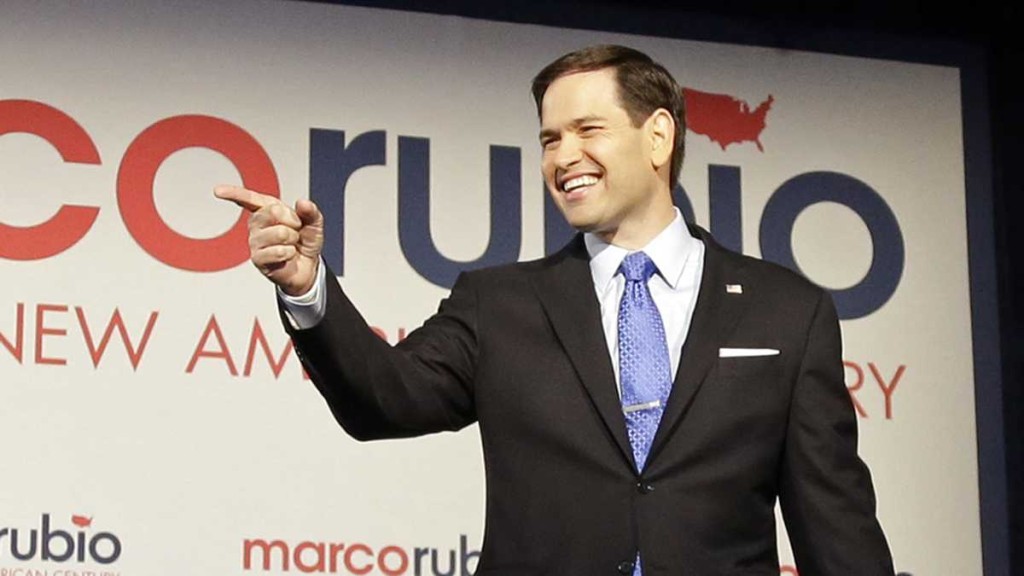
Sen. Marco Rubio cashed out most of his retirement savings while preparing to launch his bid for the Republican presidential nomination, records released Friday show. Rubio, 43, sold six retirement funds in September 2014 for $68,241.09, according to his personal financial disclosure statement. He made the sale even though he apparently had ample cash in the bank: He reported between $100,000 and $250,000 in a checking account and between $50,000 and $100,000 in a money market account at the end of 2014. And, so far in 2015, he estimates he has earned between $100,000 and $1 million from a new book. The son of Cuban immigrants, Rubio formally launched his presidential bid last month with a speech recalling his humble upbringing and about how hard his father, a bartender, and mother, a housekeeper, worked to ensure he could have greater opportunities than they did. For much of his political career, Rubio has struggled with debt. He paid off student loans only after becoming a U.S. senator in 2010 and writing an autobiography that paid him more than $1.1 million in royalties. His latest filings show he owes at least $450,000 on two mortgages and a home equity loan he took out in 2005. Still, the records show Rubio earned $52,000 on top of his $174,000 Senate salary last year from a part-time teaching position at Florida International University and in royalties that apparently come from the second book published in December. For the first time, Rubio also quantified how much his wife, Jeanette, earns, valuing her event-planning business at between $15,000 and $50,000. Jeanette Rubio, a former Miami Dolphins cheerleader, now advises a foundation run by Florida billionaire Norman Braman, who is one of Rubio’s biggest political backers. Her compensation was previously disclosed on Rubio’s forms only as greater than $1,000 per year. Rubio spokesman Alex Conant could not immediately explain why Rubio sold his retirement funds. Stephen Butler, president of Pension Dynamics Company in Lafayette, California, said it is unusual for people Rubio’s age to liquidate retirement savings. It’s usually done to cover a financial emergency, not when someone has a six-figure checking account. “It’s hard to imagine why somebody, especially when they have these other substantial amounts of income, would have had to cash that in,” Butler said, noting Rubio would have had to pay an extra 10 percent in taxes on the sale. “It’s not like he’s desperate and between jobs.” Rubio still qualifies for a pension for his eight years of service in the Florida legislature that will pay him about $1,000 a month when he turns 62, according to his filing. And as a senator he qualifies for a generous federal retirement plan. Rubio also still lists an employee savings plan from Florida International University, where he has taught since 2008, worth between $1,000 and $15,000. Rubio listed between $34,000 and $160,000 invested in special saving funds for his four children’s college education. Rubio’s maximum net worth, outside the value of the Miami house where his family lives, was $355,000 last year, according to an AP analysis of the new records. That may rise quickly: Rubio’s paperwork indicates that so far in 2015 he earned between $100,000 and $1 million off his book “American Dreams,” which describes his plan for helping the working and middle classes. Republished with permission of the Associated Press.
Bill would cut Board of Education from charter school plan

The Alabama State Board of Education, having already suffered a sapping of power this legislative session, could soon be cut from confirming the state’s new charter school commission. Republican champions of charter schools are striking back this week after the state school board on Wednesday refused to confirm a list of nominations for a new charter school commission. The state commission would be designated with hearing appeals of charter school applications rejected on the local level. Board members said they didn’t have enough time to thoroughly vet the list of candidates, saying they felt the process was a set-up. “I thought it was ridiculous,” said Senate President Pro Tem Del Marsh, R-Anniston. “Those members had the information over a week. If they had taken the time to go through it they would have been prepared for the meeting.” Marsh, who sponsored the Senate bill to create charter schools, said delaying confirmations was “irresponsible.” He threatened to take action if the board didn’t act quickly. “I have a bill on my desk that goes to an appointed school board, which I personally would like to see,” he said. “I would like to be very selective and make sure we choose people with proper backgrounds. I’m not saying that these people don’t have it, but when action takes place like what took place the other day it makes me wonder.” Republicans finally passed charter school legislation earlier this session after making it a priority for several years. The day after the board’s meeting, Rep. Terri Collins, R-Decatur, introduced a new bill that would allow nominees to forego board confirmation. The governor, lieutenant governor, Senate president pro tem and speaker of the House each nominate charter school commission members. The bill will be up for a vote in the House Education Policy Committee on Tuesday. Members of the Board of Education said they feel they are under attack more this session than in the past. Other bills this session already have taken away major responsibilities from the state school board. Gov. Robert Bentley signed a bill removing the state’s two-year college system from BOE oversight. Another bill, which died in a Senate committee, would have created term limits for the board’s elected members but would have raised their pay. “In 15 years, we’ve never had such intrusion into the operations of the board until this legislative session,” board member Ella Bell said. “So I just have to take it as their plan to control every process.” House Speaker Mike Hubbard, R-Auburn, said the legislature and the governor tried including the school board in the process by allowing them to appoint members. “Some of the school board members have chosen to ignore their responsibilities under the law in an attempt block classroom innovation and keep thousands of students trapped in underperforming schools offering subpar educations,” he said. “These members are giving their personal prejudices and egos priority over the futures of a generation of public school students.” Board member Stephanie Bell said it would have been difficult to decide the best options without interviewing candidates. Bell said she’s fine with not being included in the process. “I don’t think they really cared,” she said. “Ultimately, I think the goal was to put us in a position where we could be blamed for rejecting names, and when a problem surfaces, with the approval of a charter that had been turned down at the local level, the question will be asked ‘who appointed this group?’” Betty Peters, another board member, also said she is fine with not confirming nominees. “I think that was the correct approach in the beginning,” she said. “Because how in the world would we be considered the appropriate people to just flip a coin and say, ‘I’ll take A or B. Next one. I’ll take A or B’?” Reprinted with permission from the Associated Press.
