
Daniel Sutter: Will public universities privatize?

Many government services have been privatized over the past forty years, from whole enterprises like British Airways to simply contracting with private businesses for services like trash collection and operating cafeterias. My corner of the world, public universities, has witnessed only service privatization, but this may change. And in contrast with cases where conservative politicians have driven privatization, I suspect that a public university will decide to go private. Declining state appropriations for higher education represents the driving factor here. Speculation by higher education observers centers on three leading state universities, Michigan, Virginia, and Colorado, which currently receive 10% or less of their operating budgets from state appropriations. (To be clear, none of these universities have privatization plans today.) A university receiving 10% of its budget from the state would only have to cut costs by 5% and increase other revenues by 5% one time to take state funding to zero. I suspect that administrators can imagine how they might make such cuts and revenue increases. State appropriations to higher education have been falling as a share of government spending and university budgets for 50 years. For instance, the University of Michigan received 80% of its budget from the state in the 1950s. State appropriations fell from 46% to 36% of public university budgets nationally between 1977 and 1996. Appropriations have declined another 16% nationally since 2008 (25% here in Alabama), according to data from Illinois State University. State appropriations now provide less than 20% of the budgets of Troy University and the University of Alabama. Universities remain under state control despite diminishing financial support. For example, Governor Scott Walker and state legislators cut appropriations to the University of Wisconsin by $250 million this year, but also froze university tuition and revoked state law protection for faculty tenure. Eventually administrators and faculty at some state university will decide that state funding is not worth the control, and elected officials will jump at the chance to cut the remaining spending. Reduced state support has coincided with a rapid increase in tuition. Net tuition (posted tuition minus university scholarships and financial aid) at public universities has increased 54% faster than inflation over the past twenty years. State appropriations cannot be blamed for all of this, since net tuition has increased 29% faster than inflation at private universities. The relative quality of flagship state universities has also declined. Fifty years ago, Michigan, Virginia and Wisconsin, along with the Universities of California at Berkeley, Minnesota, Illinois, and North Carolina were among the nation’s top twenty universities. Only one public university made the U. S. News and World Report top twenty in 2014. Federal student aid and Medicaid have dramatically shaped state budgeting since 1965. Medicaid operates under a matching grant formula, under which states receive between $1 and $3 from the Federal government for every $1 they spend on Medicaid. But if states reduce spending on higher education and let tuition rise, many students will receive more Federal aid for students. Lawmakers can bring more federal dollars to their states by shifting appropriations from higher education to Medicaid. Over the last fifty years, Washington has asserted increasing control over state universities. Eligibility for Federal student aid requires compliance with U.S. Department of Education regulations and maintenance of regional accreditation. Any new tax dollars for higher education seem likely to come from Washington as well. President Obama’s free community college plan would rely on Federal dollars. Federal control, I think, is bad for higher education. Competition is the greatest force for ensuring performance, and state-run universities will naturally compete. North Dakota has increased higher education appropriations by 26% since 2008, using oil revenues to gain a competitive edge for the state’s universities. State control allows for experimentation and diversity, which is particularly valuable in scholarly fields. Our state universities have provided millions of people access to a quality education at an affordable price. But state lawmakers providing less funding while insisting on as much control as ever seems unsustainable. Our public universities appear destined to become “state” in name only. Daniel Sutter is the Charles G. Koch Professor of Economics with the Manuel H. Johnson Center for Political Economy at Troy University and host of Econversations on TrojanVision.
Marco Rubio: Donald Trump won’t be Republican nominee
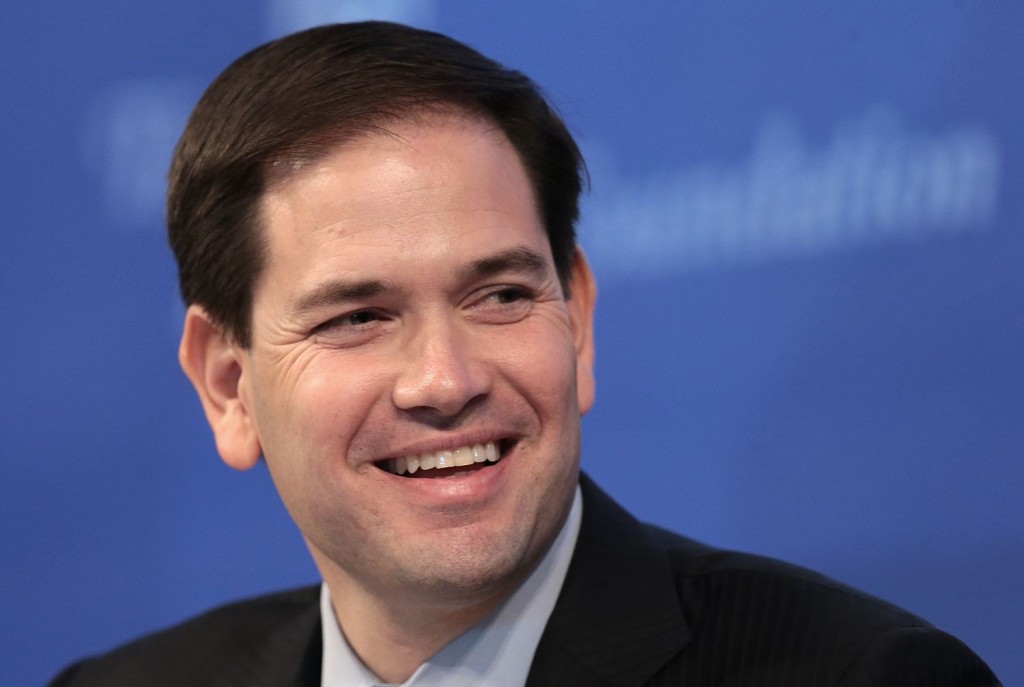
Florida Sen. Marco Rubio says Donald Trump will not be the Republican presidential nominee because his message is not an optimistic one. Rubio has largely shied away from taking on Trump, the billionaire businessman sitting atop polls of the Republican rivals. In recent weeks, candidates such as Kentucky Sen. Rand Paul and former Florida Gov. Jeb Bush have started to go head-to-head with Trump. Rubio’s criticisms Wednesday were measured, even when asked about Trump’s comment that Rubio is “disloyal” and “disrespectful” for running against Bush, who was Rubio’s mentor in Florida politics. “I think our nominee is going to be someone that embraces the future, that understands the opportunities before us, that’s optimistic but realistic about the challenges before us,” Rubio told reporters after a meet-and-greet event in New Hampshire’s North Country. “I’m running for president, I’m not running against anybody,” Rubio said. “I’ll continue to talk about my message.” Speaking to a small crowd outside an auto body shop in a town of roughly 1,200, Rubio focused largely on his message of ushering in a new era of prosperity. He also drew a contrast between his message and Trump’s, which centers on the slogan Make America Great Again. “I understand what he’s trying to say,” Rubio said, “but I would remind him that America is great, and you know why I know America is great? Because ask yourself this question: Who would you trade places with?” Rubio said: “The issue’s not that America isn’t great, the issue is that America has the chance to be greater.” Trump’s rhetoric on immigration in particular has some Republicans worried about the party’s ability to attract support from Hispanic voters, pivotal in the general election. Rubio didn’t answer when asked whether Trump’s comments are hurting that effort. “Ultimately the Republican Party will reach out to all voters based on who our nominee is, and I don’t believe Donald Trump will be our nominee,” he said. Republished with permission of The Associated Press.
Donald Trump dumps insults on questioners, insists on control
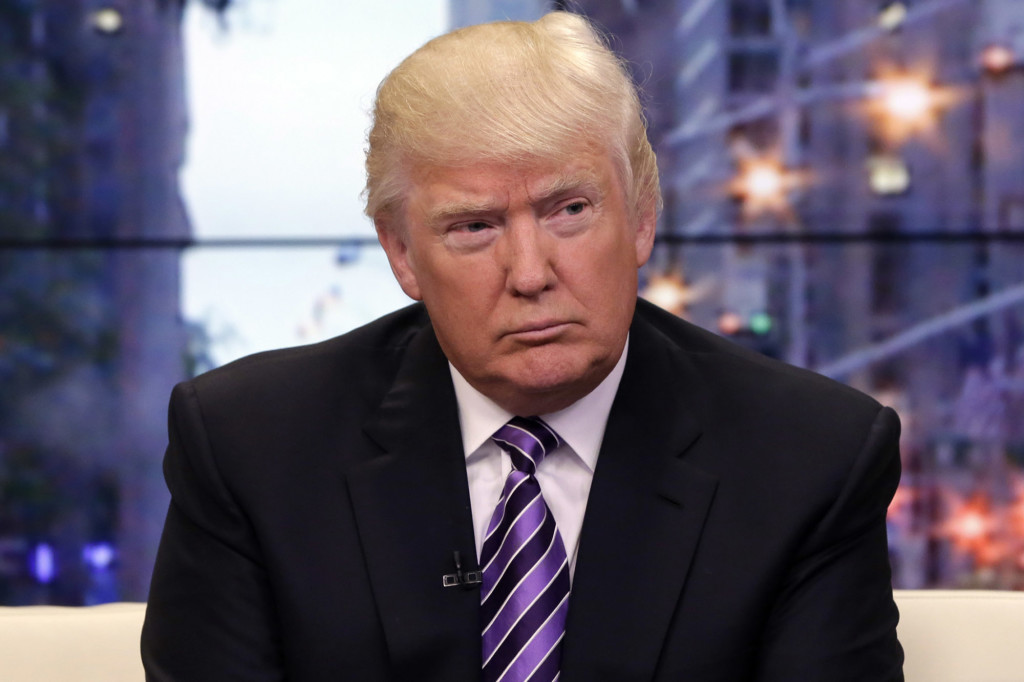
For Donald Trump, the joy of the insult seems as compelling as the art of the deal. Whether his challengers are fellow presidential candidates, the press or others, they are, according to Trump: incompetent, weak, pathetic, disgusting, idiots or the like. He described Democratic presidential contender Martin O’Malley, for example, as acting “like a disgusting, little, weak, pathetic baby.” So far in the rollicking 2016 presidential contest, the billionaire businessman is showing little willingness to dial down his because-I-said-so style to suit the conventions of political campaigns – where the voters are supposed to be the boss. Trump is used to controlling his world like the boss he is. On Tuesday night, he dismissed a Latino reporter from his press conference for demanding to know how Trump intended to deport all 11 million people in the country illegally. “I have a right to ask a question,” said Univision’s Jorge Ramos. “No you don’t,” Trump said. “You haven’t been called.” Trump merely tossed a glance to his left and a bodyguard escorted a protesting Ramos out. Trump’s primacy re-established, he later let Ramos back into the conference and took his question. Count on Trump to react when someone crosses him, even mildly. “When somebody hurts you, just go after them as viciously and as violently as you can,” Trump wrote in his book “How to Get Rich.” In fact, Trump’s reality show campaign is one of the things people like about him. Trump is at the top of the polls in the GOP field, drawing more passion and bigger crowds than his Republican competitors. “It’s totally refreshing,” said Leigh Ann Crouse, 55, of Dubuque, as she waited in a 100-yard-long line Tuesday to see Trump. “He has a backbone, and he cannot be bought.” Here are some examples of Trump’s in-your-face approach to the 2016 presidential contest: —- TRUMP vs JEB BUSH Trump succeeded this week in putting the former Florida governor, whose wife is Mexican-American, on the defense on immigration issues. The two quarreled over the term “anchor baby,” which some find an offensive term to describe children born to people in the U.S. illegally. Bush defended himself by saying he’d been referring to wealthy Asians who come to the U.S. to bear children. That earned Bush a chorus of demands for an apology to Asian people. “Asians are very offended that JEB said that anchor babies applies to them as a way to be more politically correct to Hispanics,” Trump gloated on Twitter. “A mess!” But a true Trumpism requires a personal dig. Trump has repeatedly served that up by calling Bush “low energy” and suggesting “every time you watch him, you fall asleep.” — TRUMP vs JORGE RAMOS: “Go back to Univision,” Trump told Ramos, an anchor for the Spanish-language network. It was the latest salvo in Trump’s conflict with Univision, which began when the network cancelled its contract to broadcast his Miss Universe Organization pageants. Univision said it was responding to Trump’s description of Mexican immigrants as criminals and “rapists” in his June campaign announcement speech. Trump is suing the network for $500 million for breach of contract and defamation – and bragging about it. Five times during the news conference, Trump told Ramos to sit down. When that didn’t work, the billionaire had Ramos hustled out. Letting him back in later, Trump extended an upturned hand toward Ramos and said, “Yes? Good, absolutely. Good to have you back.” Trump complained Wednesday on NBC’s “Today” show that Ramos had been “totally, absolutely out of line” and “ranting and raving like a madman.” “I’m not a bully,” Trump said. “In fact, I think it’s just the opposite way.” — TRUMP vs MEGYN KELLY: Trump’s feud with the popular Fox News anchor began during the first Republican primary debate, when Kelly called Trump out on his previous comments describing women as “pigs” and “dogs.” Convinced that the question was out of line, Trump launched a full-blown campaign to discredit the anchor with a series of insulting tweets and interviews. On CNN, he claimed that she’d had “blood coming out of her eyes, blood coming out of her wherever” during the debate. After what had seemed like a detente with the network, Trump’s vitriol returned this week when Kelly came back from vacation. “(at)megynkelly must have had a terrible vacation, she is really off her game,” he tweeted Monday. He retweeted another comment that referred to her as a “bimbo.” — TRUMP vs LINDSEY GRAHAM: Trump made clear he had zero regard for the rules of political decorum when he proceeded to read South Carolina Sen. Lindsey Graham’s personal cellphone number to a roomful of his supporters after Graham, one of his Republican rivals, called him a “jackass” on TV. The two have continued to spar, with each calling the other an “idiot.” “Come to South Carolina, and I’ll beat his brains out,” a riled-up Graham told CNN on Tuesday, referring to beating Trump in his state’s Republican primary. “I know my state. This is a silly season in politics. He is shallow.” Trump responded with a tweet: “Congrats (at)LindseyGrahamSC. You just got 4 points in your home state of SC-far better than zero nationally. You’re only 26 pts behind me.” — TRUMP vs. FOX NEWS: Fox News is the kind of beast that Republican wannabes rarely take on. Not Trump. “I think they cover me terribly,” he told reporters at the press conference in Iowa, in which he repeatedly railed against his coverage by the network, despite frequent appearances and phone-ins. Trump returned to bashing Kelly this week, and the network chief Roger Ailes engaged. “Megyn Kelly represents the very best of American journalism and all of us at Fox News Channel reject the crude and irresponsible attempts to suggest otherwise,” Ailes said in a statement demanding Trump apologize. “I could not be more proud of Megyn for her professionalism and class in the face of all of Mr. Trump’s verbal assaults,” he added. Trump, meanwhile, shows no
Email Insights: Sen. Clyde Chambliss proposes budget plan
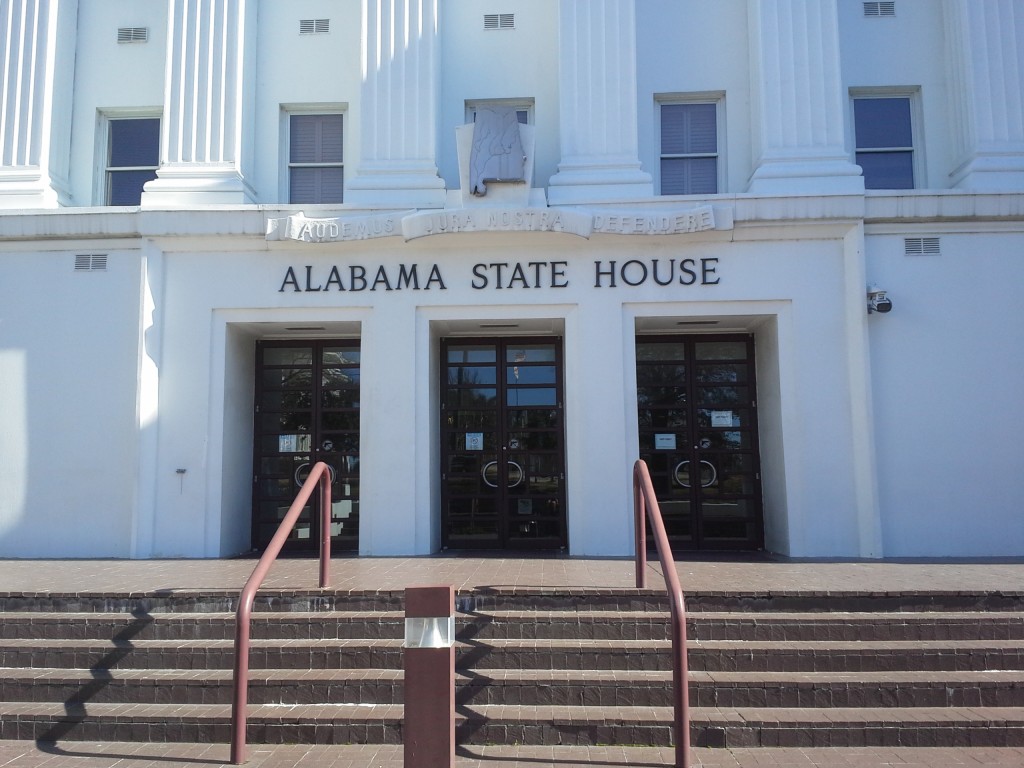
After the failed first special session lawmakers are looking to make sure the second on isn’t a failure as well. Here’s a proposal made by Senator Clyde Chambliss this afternoon. Today, State Senator Clyde Chambliss (R-Prattville) unveiled a comprehensive state budget proposal that will avoid a cut budget for Fiscal Year 2016. Senator Chambliss’ plan also includes long-term, structural reforms to Alabama’s budgeting system that will help stabilize state finances and spur economic growth. “This plan accomplishes two important goals. It will achieve long-term financial stability for the state of Alabama and solve the budget crisis we face this year,” Chambliss said. “Financial stability will lead to more jobs. Alabama’s GDP growth has lagged behind the national average partly because companies are hesitant to locate to a state where there is a budget crisis every single year.” Senator Chambliss proposes solving the immediate problem of the FY2016 budget shortfall by moving the entire use tax from the Education Trust Fund to the State General Fund, which would mean an additional $225 million for the SGF budget. It also includes a permanent removal of the sales tax on certain groceries – raw meat, fruit, and vegetables – saving consumers $70 million annually. To backfill the revenue lost to the ETF, his plan includes new revenue of $226 million to the ETF in the form of taxes on cigarettes, soft drinks, and a change to the business privilege tax. The cigarette and soft drink taxes will immediately sunset after three years to give legislators time to accomplish structural budget reform. Alabama’s chronic fiscal challenges can be solved by Chambliss’ long-term, four-step plan to modernize the budgeting process: Isolate the budgets in the legislative process by splitting the annual legislative session into two, 60 calendar-day sessions. The first session will be for the budgets only. Study and evaluate the spending ineach government department in detail by breaking the SGF budget into parts that fit the existing committee structure. Each committee would be responsible for specific departments and would make a detailed recommendation of necessary funding levels for each department every year. Transfer the use tax to the SGF budget in FY16 so the SGF has a growth tax. Starting with FY19, each year one-third of the use tax’s obligations currently in the ETF would move to the SGF until all obligations have been transferred. Combine revenues beginning with FY17 by splitting only the growth between the two budgets, with 78% going to the ETF and 22% to the SGF, which is the historical split between the budgets over the past 15 years. “It is imperative that we modernize our antiquated budgeting system, and requiring legislators to deal first with the budgets means we won’t tiptoe up to the fiscal cliff every year,” remarked Chambliss. “Providing growth taxes to the General Fund will solve its chronic shortfalls, and revamping our appropriations process will put every state agency under the microscope,” said Chambliss. “If an agency can’t justify every single expense request, there will be cuts in that department to make government more efficient and save taxpayer dollars.”
Florida’s Gus Bilirakis to energy conference: I’ll fight “tooth and nail” against EPA overreach
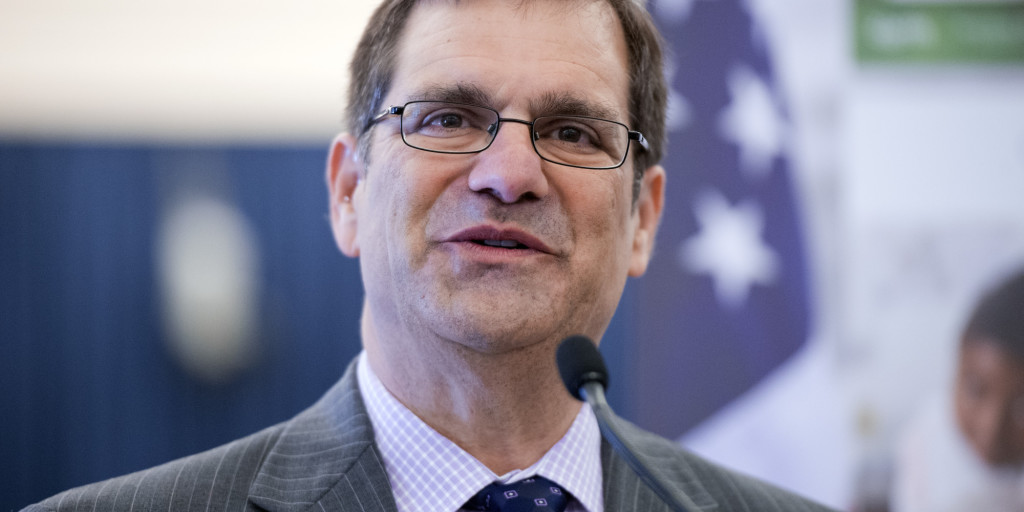
U.S. Rep. Gus Bilirakis addressed a group of energy industry executives and representatives Wednesday in Tampa. 2015 Gulf Coast Energy Forum attendees spent the better part of the morning and afternoon railing against the Obama administration’s EPA and its new proposed regulations to rein in coal-fired power plants before the fifth-term Republican congressman arrived to give the closing remarks. His message: I’m with you. “While we should strive to protect our earth – God’s creation – that goal does not need to be achieved through harsh EPA regulations that increase every constituent’s cost of living” said Bilirakis. “Sadly the Obama administration’s proposed Clean Power Plan is a prime example of a harmful disconnect.” Bilirakis, a member of the House Energy & Commerce Subcommittee, inveighed against the new proposed rules designed to reduce greenhouse gases and air pollution by requiring steep numerical decreases in harmful emissions. “The plan sets unrealistic expectations for carbon dioxide and methane emissions that are already being significantly, and appropriately, curtailed,” said Bilirakis, who represents Florida’s 12th Congressional District. “The new requirements will likely lead to industry adjustments that will naturally lead to higher electricity costs for consumers.” Contra the new federal regulations, Bilirakis pointed to two pieces of legislation passed by the House which await a hearing by the more Democratic-leaning Senate. The “Ratepayer Protection Act” – HR 2042, passed by the House in June – was one remedy prescribed by Bilirakis, of which he was one of 67 co-sponsors. Five of Alabama’s seven House delegates also cosigned the measure: Republicans Mo Brooks, Bradley Byrne, Martha Roby and Mike Rogers plus Democrat Terri Sewell. The entire delegation voted in favor of the bill, which sailed to passage 247-180. “The law allows for the completion of judicial review of any final rule before requiring states to comply with a costly rule,” the Tarpon Springs native explained. By passing the bill, “We are simply protecting families and businesses from significant electricity rate increases or reduced reliability when the rules are not on sound legal ground, or fail to take into account as consequences.” Bilirakis also gestured towards the Architecture of Abundance Act, a multi-year iterative effort by Republicans on the Energy & Commerce Committee that the panel’s website describes as a replacement for “outdated policies rooted in the old ideas of energy scarcity.” Bilirakis drew the approval of one lineman in the crowd who “raised the roof” as he vowed to stand fast against federal meddling in the energy industry. “I promise to keep fighting tooth and nail in Washington, D.C. to make sure the harmful effects of this administration’s proposed rules are not realized.”
GCEF keynoter: America’s future will be forged by steel, not government

The Gulf Coast Energy Forum’s keynote speaker Chuck Schmitt hit a familiar note within the energy industry as attendees finished lunch: the sector is a well-oiled machine calibrated for innovation, and government rules and regulations are drags not only on oil and gas production, but on the nation’s economy as a whole. Schmitt – president of the American branch of Nordic steel producers SSAB and chairman of the American Iron & Steel Institute – told a crowd of around 50 industry interests that federal regulations designed to protect the environment are misguided, if well-intentioned. (“Wishes and good intentions don’t keep the lights on,” quipped Consumer Energy Alliance rep Brydon Ross following the keynote.) Among “the brilliant ideas that come down from Washington” in Schmitt’s parlance is the EPA’s Clean Power Plan, a bugaboo decried by almost every speaker at energy industry conference. “The rules, in my view, give foreign manufacturers a competitive advantage by increasing U.S. electricity costs,” said Schmitt. “We’re concerned with the EPA’s proposed ozone standard could shut down facilities and force manufacturers like ours to cancel expansion plans.” “Even the EPA itself said that its ozone regulation alone could be the most expensive regulation in American history.” Forcing industry to comply with byzantine federal laws, said Schmitt, interferes with the self-interested sustainability practices that occur naturally in an industry that aims to be at the center of American life for generations and is not inherently short-sighted as regulators presume. Steel – the most recycled material in the world – is especially sustainable because it is 98 percent recyclable, Schmitt said. Instead of tweaking domestic energy producers, the government ought to focus on staying competitive with growing emerging markets. “Congress and the [Obama] administration should craft a national energy policy that promotes the development of all domestic energy sources,” said Schmitt. “One of the consequences of international energy competition is includes the net environmental impact that results when advanced domestic industries like ours are displaced by less efficient, less responsible plants.” Schmitt concluded by highlighting his interest group’s ongoing advocacy efforts. “During the most recent congressional district work period, AISI activated our grassroots networks,” Schmitt said, referring to the recess which began this month. “Steelworkers across the country asked their members of Congress to oppose EPA’s plans to unilaterally regulate greenhouse gas emissions for existing and new power plants.” Schmitt was hopeful Congress would listen, and the crowd listening to him in turn gave a collective nod.
Fox News chief: Donald Trump owes Megyn Kelly an apology
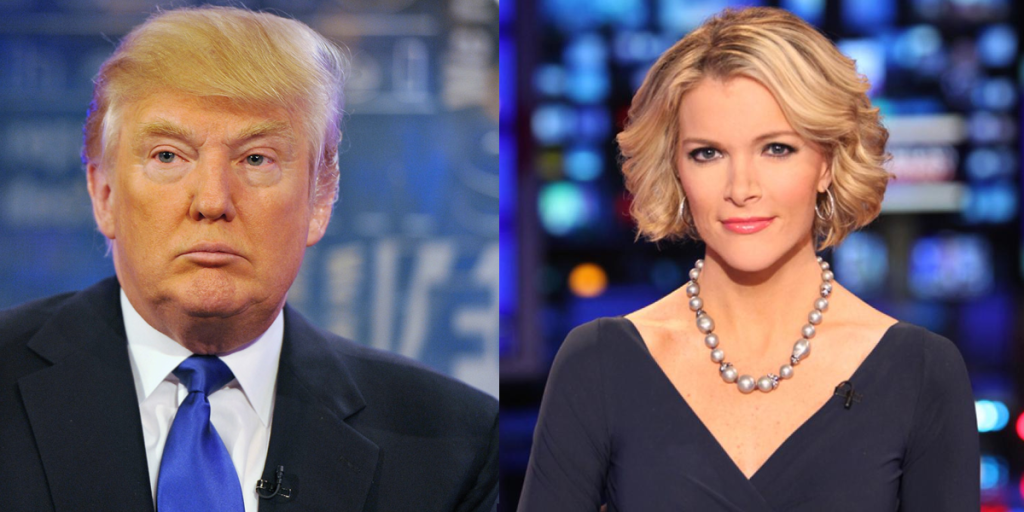
Fox News chief Roger Ailes said Tuesday that Donald Trump owes the network’s Megyn Kelly an apology for an unprovoked Twitter attack that “is as unacceptable as it is disturbing,” but Trump isn’t backing down. The Republican presidential front-runner-turned-TV-critic had welcomed Kelly back from a vacation Monday night by tweeting that he liked her show better while she was away. Trump said Kelly “must have had a terrible vacation” because “she’s really off her game.” He retweeted a message that referred to her as a bimbo. “Megyn Kelly represents the very best of American journalism and all of us at Fox News Channel reject the crude and irresponsible attempts to suggest otherwise,” said Ailes, the Fox News Channel chairman. “I could not be more proud of Megyn for her professionalism and class in the face of all of Mr. Trump’s verbal assaults.” Trump, in a statement, said he disagreed with Ailes and that he doesn’t think Kelly is a quality journalist. “Hopefully in the future I will be proven wrong and she will be able to elevate her standards to a level of professionalism that a network such as Fox deserves.” In a news conference later Tuesday in Dubuque, Iowa, Trump again refused to apologize to Kelly, saying, “She should probably apologize to me, but I just don’t care.” He added, “I think Fox treats me terribly.” Trump has been attacking Kelly ever since her tough questioning of him during the first GOP presidential debate, seen by 24 million people on Fox on Aug. 6. A day after the debate, he said Kelly had “blood coming out of her eyes, blood coming out of her wherever.” That led to a private, clear-the-air conversation between Ailes and Trump two weeks ago, but that clearly hasn’t led to peace. In his tweets, Trump repeated his contention that Kelly, host of a prime-time Fox News show and one of the network’s biggest stars, was sent on an unplanned vacation that ended Monday. Fox said her time off had been scheduled long before the debate. Trump also tweeted that Kelly was afraid to confront a guest, Dr. Cornel West, and that she had “no clue” on immigration. Ailes again backed Kelly for her questioning during the debate, which he said was tough but fair. “Donald Trump rarely apologizes, although in this case, he should,” Ailes said. “We have never been deterred by politicians or anyone else attacking us for doing our job, much less allowed ourselves to be bullied by anyone and we’re certainly not going to start now.” Some of Kelly’s Fox colleagues also came to her defense. Bret Baier, who moderated the debate with Kelly and Chris Wallace, tweeted that “this needs to stop.” Brian Kilmeade said on “Fox & Friends” that Trump’s comments bothered him personally. “We are all friends with Donald Trump, but he is totally out of bounds reigniting that fight,” Kilmeade said. “I don’t know if he’s trying to get ratings out of that or poll numbers, but he’s not going to be successful.” At his news conference, Trump got into another confrontation with a different anchor, Univision’s Jorge Ramos. Trump initially had his security detail remove Ramos from the room, but Ramos returned later to ask some questions about immigration policy. Republished with permission of the Associated Press.
Energy panelists say traditional energy sources will remain front and center
A panel of energy industry experts speaking to attendees at the 2015 Gulf Coast Energy Forum in Tampa said that while a lot of buzz has been generated about alternatives to oil and gas, fossil fuels will remain the indispensable core the world’s energy portfolio for decades, if not longer. Patrick Sullivan from the Mississippi Energy Institute employed a line from his state’s former Gov. Haley Barbour when it comes to both increasing the size of alternative fuels and especially federal mandates to do so. “Before I jump in the back seat with ’em, let’s listen to a few more songs on the radio,” said Sullivan, adding he may have even heard enough. “The fact is that coal and oil are going to remain a major part of the energy portfolio globally, with or without the U.S,” Sullivan continued. “If you just look at where the deposits are in the world, and where the underserved populations are, they’re in places like India and China. And they are investing heavily in these traditional sources of energy. All three panelists who took part in a panel entitled “Unleashing Gulf Energy” echoed the sentiment. Shell oceanographer Dr. Ruth Mullins Perry said government projections show that 9 billion barrels are currently available in the Gulf of Mexico, and that there’s enough untapped oil in the Atlantic to power Florida for 17 consecutive years without buying petroleum from other sources. Allaying concerns that more drilling means more spills, Perry said in the years since the 2011 Deepwater Horizon catastrophe a rigorous “culture of safety” has emerged at her company and others. “If you’re caught texting your driving or if you fall from the stairs and you weren’t using the handrails, you will be fired,” said Perry. “That’s the level of commitment to safety we’ve taken on.” All three panelists also emphasized their reservations about the EPA’s looming Clean Power Plan. “Or as I call it, the ‘Make Electricity More Expensive Plan,” quipped Sullivan. The panel decried what they described as an EPA overreach that, along with the new ‘Waters of the U.S.’ rule – as GCEF partners at the James Madison Institute recently found in a study – vastly increases governmental power over relatively ecologically inert surface water. To him, the question of alternative energy vs. traditional sources was as simple as this: “Ask the consumer; do you want $4 gas or $2.20 gas?” The above disparity can make the difference, said Sullivan, between a worker who earns $50,000 spending 16 percent of their take-home pay on gasoline vs. 9 percent. That gap is something consumers of all persuasions can appreciate, he added. What can advocates of doubling down on traditional sources rather than on alternative energy half-measures? Showing up, said Brent Greenwood of HBW Resources. Particularly at “public comment periods [on regulatory rule-making processes], offshore leasing plans and of course, attending events like the GCEF,” said Greenwood.
The true cost of Donald Trump’s Twitter tirades
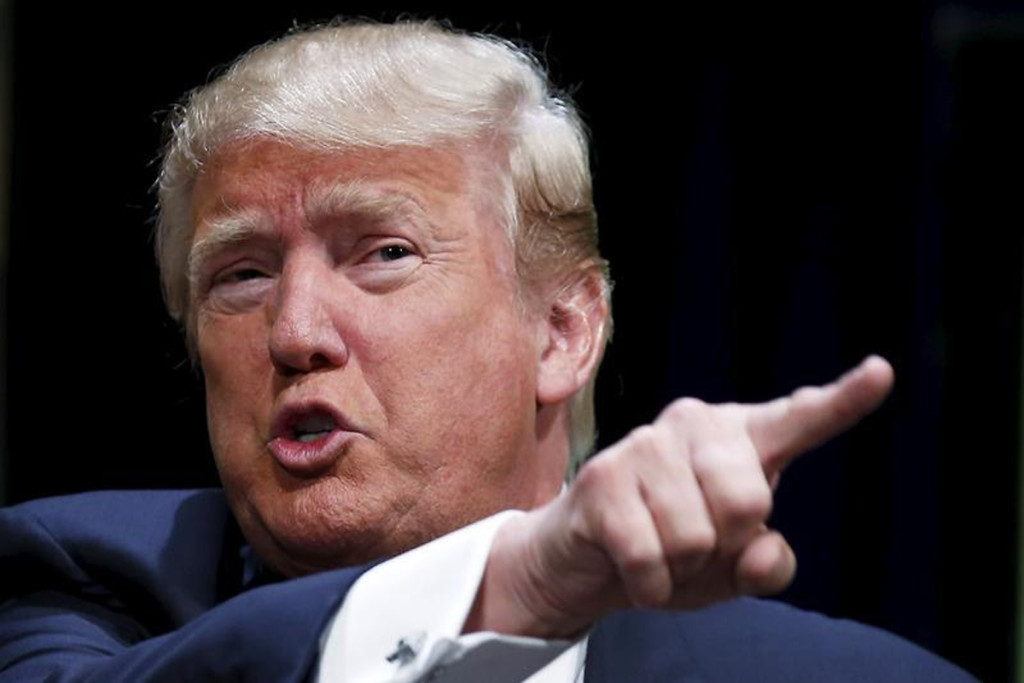
Donald Trump has decided in the mist of a crowded primary to reengage with Megyn Kelly continuing the spat started post debate. First he tweeted, “I liked The Kelly File much better without Megyn Kelly. Perhaps she could take another eleven day unscheduled vacation!” He went on to retweet negative comments about her, including one that called her a “bimbo.” I’ve said all along that Trump isn’t taking his campaign for president seriously and his continued child like antics prove that point. Here’s the thing about Trumps Twitter tirades, such as the one against Kelly, they’re indicative of a bigger problem which is the lack of seriousness and focus of his campaign. Those saying Trump is their first pick are largely responding to his lack of political correctness and the way he doesn’t dance around and sugar coat tough issues. It’s refreshing to hear someone who isn’t afraid to offend the masses. There’s certainly truth to the notion people are too easily offended. What’s worse is not that people are offended but it’s that they act as though the offending party has a responsibility to apologize and change their behavior. Trump is pushing the envelope to do away with political correctness which in some cases should be applauded. I’m offended by Trump’s twitter fights but not because as a woman his name calling of another woman bothers me but because as a conservative who wants to win the next election cycle I know the true cost is in media time lost covering this and not other candidates in the field or what the democrats are doing. Trump needs to keep his eye on the prize and that prize isn’t cheap media coverage but media coverage that matters. He showed he could do that by putting the pressure up on the immigration issue but now he needs to show he can continue to do it on issues that matter.
