
Robert Bentley talks strengths, weaknesses and solutions in annual State of the State address
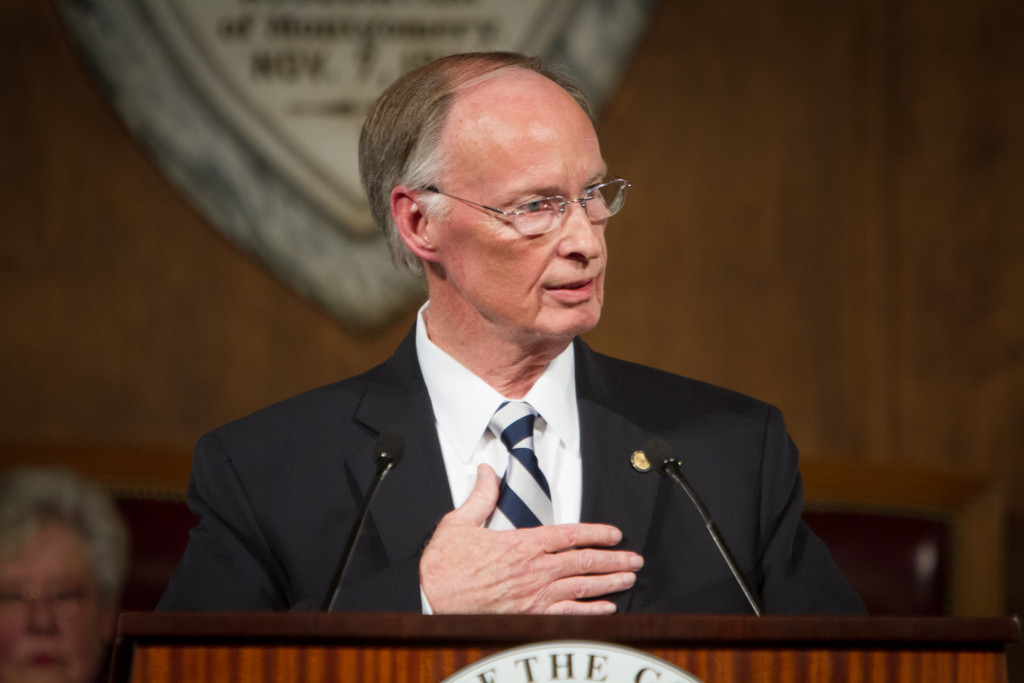
Gov. Robert Bentley gave his annual “State of the State” address Tuesday night before a packed house in the Old House Chamber in the State Capitol. Bentley initiated his address by reminiscing on July 1969, when Alabama was celebrating its 150th year as a state and watching a man land on the moon, noting that it was Alabamians who constructed the Saturn V rocket which took them there. “It was Alabamians who dared to believe they could do the improbable,” Bentley said. Bentley touted Alabama’s achievements in Pre-K education, as well as recent advances in employment throughout the state, noting that roughly 52,000 jobs were added last year resulting in an investment of more than $2 billion from Alabama industries. The first Alabama jetliner will roll off the lines this year, with another 50 to follow next year, as well as the Honda Ridgeline, which will debut at this Sunday’s Super Bowl – all “proudly stamped ‘Made in Alabama.’” The governor also boasted about the current unemployment rate, which is at its lowest point since 2008, and efforts by the Alabama Department of Labor to bring workers and employers face-to-face in Alabama’s neediest communities. He continued by commending Alabama principals and teachers for assisting students in achieving an 89 percent graduation rate. Further, the governor advocated a pay raise for principals, teachers and school support staff, along with all state employees, “no strings attached.” He condemned the actions of the federal government in regards to executive actions on gun laws and refugee resettlement and celebrated the work of veterans and small business owners. He further praised the work of the Alabama Law Enforcement Agency, calling them one of the “most efficient agencies in the state.” The governor then addressed Alabama’s rank as the 6th poorest in the country, adding that the state is “dead last in virtually every quality of life” measurement. “Year after year, Alabama continues to find itself at 48th, 49th and 50th,” Bentley said. “We’re all Alabamians. It’s time we take a hard look at our problems and work toward a solution. To care about Alabama is to care about her people.” The governor then discussed what he called “Great State 2019,” which he said would address “longstanding problems” from health care to prison reform and education. “We will do what we’ve never done before,” Bentley said, referencing an earlier nod to President John F. Kennedy. “Not because it’s easy, but because it’s hard.” Bentley called for increasing the number of children who attend college by creating a scholarship to seek out eligible seventh-grade students, from low-income areas, and mentoring them throughout their education and paying the cost of the student’s two-year college tuition. The governor said the program would be funded through the money saved by “streamlining measures” employed by the state’s community college system. In an effort to “allow business to drive workforce development,” Bentley called for efforts to increase access to technology, specifically broadband internet, in rural communities. He said the first step would be to provide the infrastructure and then allow private companies to provide internet access at reasonable costs. The governor then touched on Alabama’s prison system. “For decades, Alabama’s prisons have become increasingly overcrowded,” Bentley said. “But that’s going to change, beginning now.” Bentley called for permanently closing all of Alabama’s current prisons and replacing them with four new “state of the art” facilities, the construction of which he said would be paid through savings from closing the older, inefficient prisons. The governor further called for better access to doctors and dentists in rural parts of the state, noting that the state is 40th in the nation for doctors per capita and 50th in the nation for dentists. He proposed scholarships, student loan forgiveness and tax credits for students who agree to study medicine or dentistry in exchange for practicing in rural areas. “We accept an impossible challenge,” Bentley said. “We will succeed. This is our moon shot, this is our great state.”
Jeb Bush goes after Donald Trump in 2-minute ad airing in New Hampshire
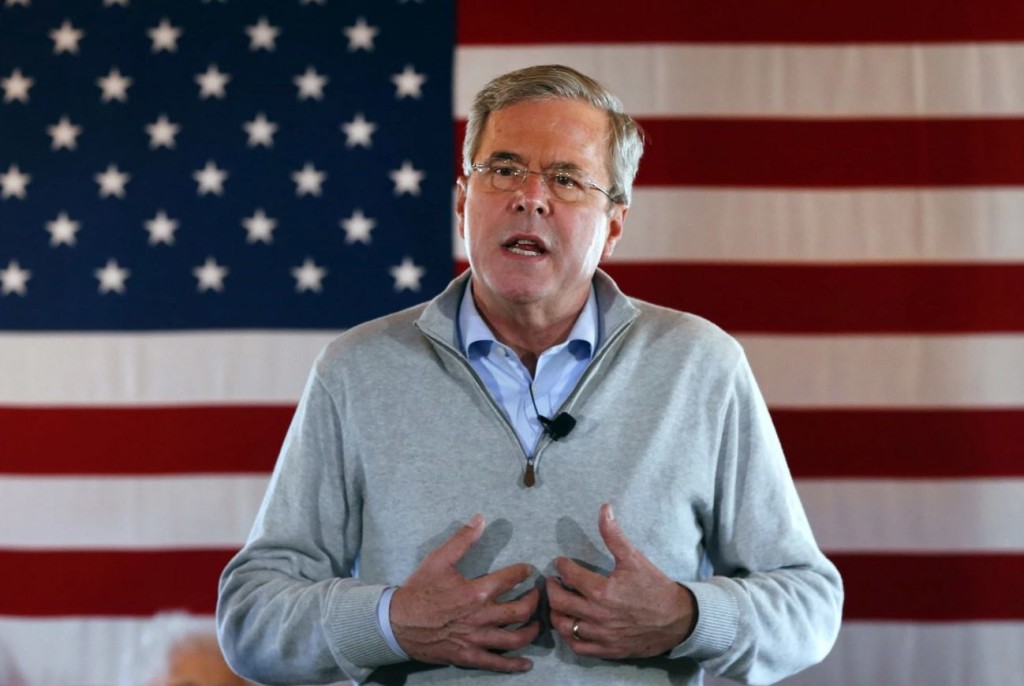
New Hampshire residents better get comfortable. The newest Jeb Bush advertisement hitting the airwaves is a 2-minute spot taking aim at Donald Trump. According to the campaign, the spot, which was first seen on WMUR in New Hampshire, is meant to draw a contrast between Trump’s inflammatory rhetoric with Bush’s record. “I am sick and tired of politicians that find ways to disparage people to make themselves look strong. It is not strong to insult women,” Bush is shown saying during the advertisement, called “Turn off Trump.” “It is not a sign of strength, it is not a sign strength, when you say a POW is a loser because they got caught; John McCain is a hero. It is not a sign of strength to disparage the disabled in this country. It is a sign of deep insecurity and weakness.” The advertisement continues, with Bush telling voters he hopes they want a candidate “who has a heart for the people.” “You all have this incredible opportunity. You have the responsibility of reshaping this race. I have total confidence and belief that you will make the right choice,” he says in the advertisement. “Should I be our party’s nominee I will unite around common purpose and the conservative cause. I will defeat Hillary Clinton and we will restore America’s greatness.” The advertisement will rotate into the campaign’s current New Hampshire ad buy. The New Hampshire primary is Tuesday. Bush is fourth place in New Hampshire, according to recent polling averages.
Roll Tide — Alabama Senate passes resolution commending university’s football victory
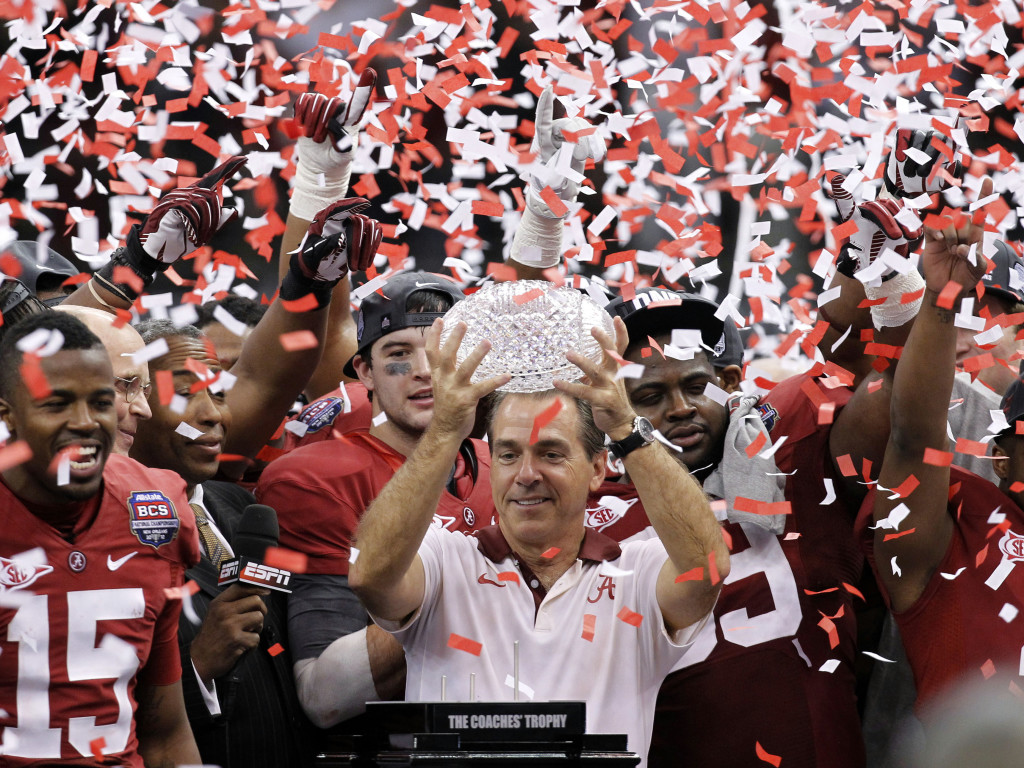
The Alabama Senate Tuesday passed SJR4, which sought to “most highly commend” the University of Alabama football team on winning the 2015 National Football Championship game in January. The resolution, which was unanimously resolved by both Houses, states that the Crimson Tide “showed incredible resourcefulness and resilience” in its 16th championship victory and earned “the right to be proclaimed the number one football team in the nation.” Citing that the victory “was truly a team effort.” A copy of the resolution will be presented to the university for display.
Alabama legislative agenda preview: Feb. 2 – Feb. 5, 2016
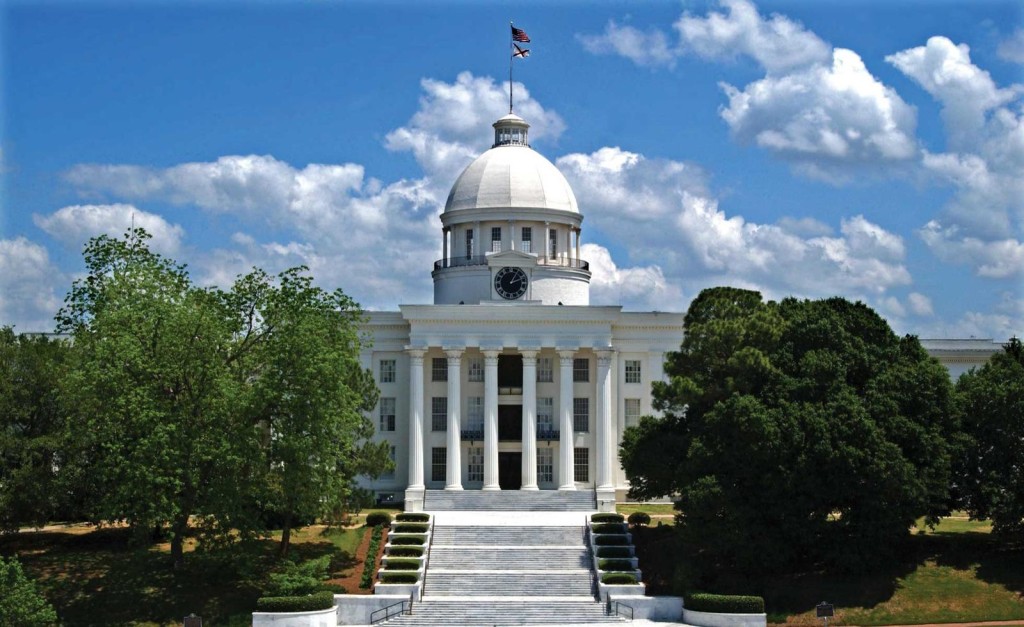
With the first day of Alabama’s Legislative Session about to get under way, legislators have a slew of hefty proposals before them, including bills concerning a state lottery, gun laws, a teacher pay raise, and the always daunting task of balancing the state budget. Legislators will hear from the Alabama Community College System Tuesday for another round of Education Trust Fund Budget concerns. Legislators will also hear from the Legislative Fiscal Office and Finance Department before the start of Tuesday’s 2016 Session. Legislators will hear from a variety of committees on Wednesday, starting with the Senate Judiciary Committee at 9 a.m. Later that day, legislators will hear from the Agriculture, Forestry and Conservation Committee to discuss Senate Bill 58, sponsored by Sen. Tom Whatley (R-Auburn). The bill would specify that the regulation of seeds would be overseen by the Board of Agriculture and Industries and the Commissioner of Agriculture and Industries. The committee would also discuss Senate Bill 62, also sponsored by Whatley, which would authorize the use of bait in the hunting of whitetail deer and feral swine. The Education Policy Committee will also address legislators on Wednesday to discuss Senate Bill 60, sponsored by Sen. Rusty Glover (R-Mobile), which would terminate Common Core curriculum and have the state revert back to “prior courses of study.” Legislators are also scheduled to hear from the Senate Committee on Finance and Taxation Education on Wednesday, though the topics of discussion were unavailable.
Pre-K advocates call for additional $20 million in funding

The Alabama School Readiness Alliance Pre-K Task Force (ASRA) has released its 2016 legislative request for First Class Pre-K funding. The increase would nudge the state’s funding for its “high-quality, voluntary pre-kindergarten” program from $48.5 million to $68.5 million, with a goal to have the program fully funded by 2020. According to a news release, only 20 percent of Alabama’s 4-year-olds have access to the First Class program and the increase in funding would provide an additional 210 classrooms and help to enroll about 3,800 additional students. “We still have a long-way to go before every family that chooses to enroll their child in the state’s high-quality, voluntary First Class Pre-K program will have an opportunity to do so,” Mike Luce, vice chairman of Harbert Management and a co-chairman of ASRA’s Pre-K Task Force, said in the release. “Alabama’s economy is improving and new revenue is expected to be available to fund education priorities. We encourage lawmakers to appropriate some of this increased revenue into expanding access to First Class Pre-K program.” The task force consists of 51 members, all prominent leaders from the business, education, civic, medical, legal, philanthropic, military and child advocacy communities, and first proposed expanding access to Pre-K programs in 2012. Now entering the fourth year of a 10-year campaign to incrementally increase funding until the program is fully funded, the state must appropriate the additional funding if it is going to meet the task force’s target. Last year, the First Class Pre-K system received an increase in funding of $10 million to bring its total funding to $48.5 million. The increase allowed the program to 6 percent more four-year-old students. Further, Gov. Robert Bentley announced more than 200 grants for the program last year, allowing it to reach an additional 3,600 students. A priority of the Bentley administration has been to ensure that all students have access to the program by 2019. Currently, there are no bills slated to come before the legislature addressing Alabama’s Pre-K programs. Alabama’s First Class Pre-K program is managed by the Alabama Department of Early Childhood Education and has been ranked No. 1 in the country for quality by the National Institute for Early Education Research, despite only 20 percent of eligible children having access to the program. The entire recommendation can be viewed at alabamaschoolreadiness.org/recommendations.
State Department of Education seeks increase of $300 million for K-12 budget
Tommy Bice, state Superintendent of the Alabama Department of Education, laid out his department’s budget needs for the upcoming year to the Alabama House Ways and Means Committee and the Senate Finance and Taxation Committee on Tuesday. Bice boasted that Alabama’s graduation rate has climbed steadily from 75 percent in 2012 to 89 percent in 2015 and 70 percent of Alabama students are considered “college and career ready.” A 90 percent goal is set for Alabama’s college and career ready standards and, if met, the “economic output would be $430 million higher” and “Education Trust Fund revenues would be increased by $22 million.” Currently, more than $1 billion in local funding is paying for instructional services, instructional support services, operation and maintenance services, transportation, and general administrative services. By contract, federal funds for those services come out to $446.6 million. A document handed out during the budget hearing noted the disparity of per pupil spending in various counties across the state: In Homewood City, $4,859 is being spent per pupil while only $82 is being spent per pupil in Coosa County. The department’s priorities for the upcoming school year include $70 million for transportation, $70 million for teacher units/class size reduction, $75 million for “other current expenses,” and $54 million for classroom instructional support, such as student materials, classroom technology, library enhancement, professional development, textbooks/content and common purchases. The request for full foundation funding comes in at $269 million, with the option to fund it at $135 million over two years. The department is also seeking a $5.5 million increase in funding for virtual learning, $2.1 million to assist educators in becoming National Board Certified Teachers, and $15 million for arts education. In all, officials are seeking a $334.3 million dollar increase in funding for K-12 over last year’s appropriations for administration services, financial assistance programs and other programs.
Here’s what single women are looking for in presidential candidate
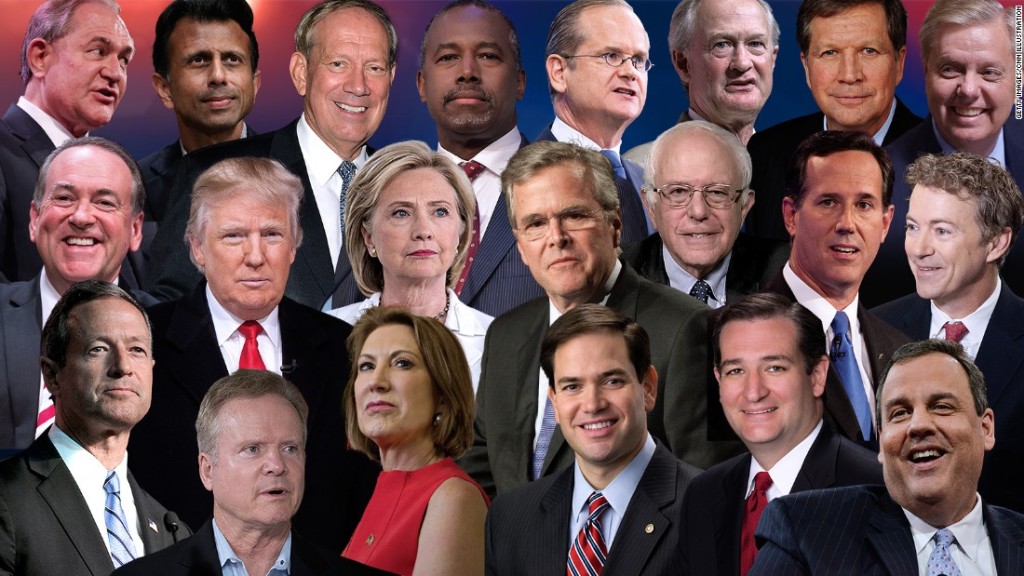
All eyes were on Iowa Monday as the nation’s first political contest of the year garnered national attention with both Republicans and Democrats battling to win the state’s caucuses. Now the campaigns shift their attention to the next battleground states — New Hampshire and South Carolina — where political consultants and staffers are hard at work trying to turn out key voting demographics. One of those is single women. Which begs the question, what exactly is motivating single women to head to the polls in 2016? Perhaps unsurprisingly, reproductive health and equal pay that top the list. According to a new web survey featured in the March issue of Elle magazine, conducted in partnership with the organization American Women, 80 percent of single women would throw their support to a candidate who valued equal pay for equal work, and tax credits and subsidies for child care. Eight in 10 women added, that they’re “much or somewhat more likely” to support a candidate who allows them to “maintain full control over their reproductive health.” “The data revealed what we knew all along,” Kate Black, executive director of American Women told Elle.com. “Women hold political figures, especially presidential candidates, at a higher regard and expect them to hold the highest standards of civility and respect. With presidential primaries approaching in the next few weeks, this data is a worthwhile reminder to all presidential candidates of the influence [that] single women have in deciding elections.” According to the survey, nine out of 10 women they are “almost certain” they’ll show up to vote this year. See more of the findings included in the survey on Elle’s site.
Jeb Bush invokes dad’s Iowa victory as hopeful sign of things to come
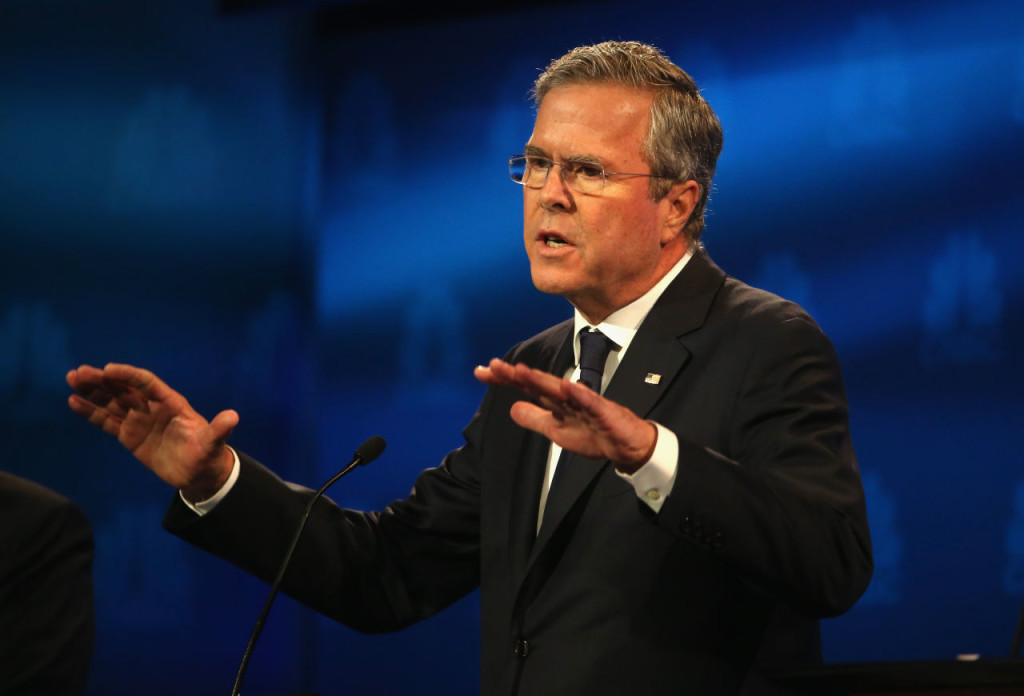
Jeb Bush was never expected to be a serious contender in Iowa, but his paltry total of just 2.8 percent of Iowa caucus voters still has to hurt. That’s after his Super PAC spent nearly $15 million there. The former Florida governor knew the results wouldn’t be pretty. He wasn’t even in Iowa Monday night, instead campaigning at a town hall meeting in New Hampshire. Appearing on “Fox and Friends” early Tuesday, Bush referenced a breaking story from Paris (where French police say five people were arrested with plans to stage attacks on nightspots and leave for Syria), and pivoted to his foreign policy gravitas. “We have a national security threat that is not going to go away, we need someone with a steady hand, someone who can has the backbone to be able to be a commander in chief to lead this country,” he said. Bush refused to play along with Fox anchor Steve Doocy‘s question about what he would do over if he could in Iowa. “I don’t look back,” he said, adding that he looks forward to campaigning in New Hampshire, South Carolina and Nevada. Doocy reminded Bush that the Iowa winner often doesn’t become the GOP nominee, referring to George H.W. Bush‘s surprise victory in 1980. “Yeah, I remember in 1980 we were all excited, with my dad upsettingRonald Reagan in the Iowa caucus. He had big mo, he came here to New Hampshire and it didn’t work out. And many other candidates have the same story.” In fact, it’s been 16 years since Republican caucus-goers here have accurately picked the eventual GOP nominee for president. Some polls have shown Bush with growth in the polls in New Hampshire. The Real Clear Politics average of polls in New Hampshire shows Bush locked in a tight four-man battle for second place, less than a point below Ted Cruz and John Kasich in fourth place with 10.3 percent. All are way behind Donald Trump, however, who dominates currently with a poll average rating of 33 percent.
Department of Education gives states ways to cut standardized testing
The Obama administration is offering states and local school districts a lesson plan of sorts to cut the amount of time that students spend on those fill-in-the-bubble and other standardized tests. The Education Department released guidance Tuesday to states and local school districts outlining different ways they can use existing federal money to reduce testing in the nation’s public schools. It follows a call by President Barack Obama last October to cap standardized testing and complaints by teachers, parents and others that that too many hours are spent “teaching to the test.” In a letter to state school officials, the department details how certain federal money can be used to cut tests. States and districts, for example, could use federal education dollars intended for the development of state assessments to instead conduct audits of their tests to see if they have redundant assessments or low-quality ones that could be eliminated. States also could use federal dollars to develop strategies to improve the quality of current tests or decrease the time students spend taking them, the letter said. “High-quality assessments give parents, educators and students useful information about whether students are developing the critical thinking and problem solving skills they need,” Acting Education Secretary John King Jr. said. “But there has to be a balance, and despite good intentions, there are too many places around the country where the balance still isn’t quite right.” The goal isn’t to do away with standardized tests. Obama, in October, said smart, strategic tests are needed to measure students’ learning and performance in school. But, he said, “we’re going to work with states, school districts, teachers and parents to make sure that we’re not obsessing about testing.” Students spend about 20 to 25 hours a school year taking standardized tests, according to a study last year of the nation’s 66 largest school districts by the Council of the Great City Schools. In all, between pre-K and 12th grade, students take about 112 standardized exams. The council said the testing amounts to 2.3 percent of classroom time for the average 8th grader. Obama has encouraged states to cap testing at 2 percent of classroom time. The 2002 No Child Left Behind education law ushered in a new era of testing in public schools. It required annual testing in reading and math in grades three to eight, and once in high school. Those tests would still be required under a new education law signed by Obama late last year, but states now have more flexibility on how best to assess teachers, schools and students — with measures that consider other factors beyond the test scores. The Education Department highlighted two areas where standardized testing has been eased in schools. In Tulsa, Oklahoma, the district has dramatically cut the overall time spent on district-mandated testing by reducing the frequency of some tests, eliminating one test entirely, and removing district requirements to implement others. Third-graders, for example, had been spending about 1,240 minutes on district-required tests and now will spend 660 minutes on such tests, the department said. Tennessee also is in the process of streamlining some of its state-mandated tests. The new guidance from the department was released via social media, on YouTube at: https://www.youtube.com/watch?v=IYetlSQEBxw . Republished with permission of the Associated Press.
Alabama lawmakers set to begin 2016 legislative session
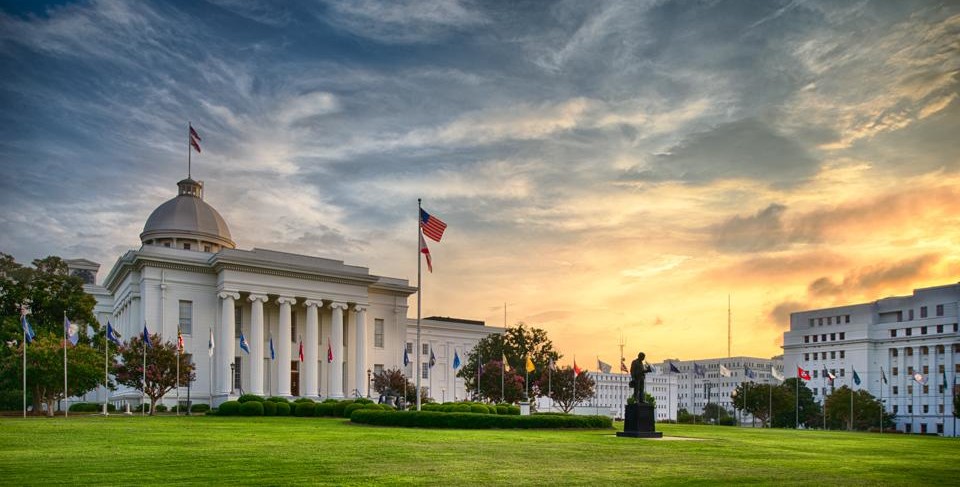
Alabama lawmakers are beginning the 2016 legislative session on Groundhog Day to familiar budget woes, but could see some new debates this session as well. Legislators will hear a budget briefing Tuesday morning that is expected to include bleak outlook for the state’s general fund. Republicans and Democrats have introduced rival proposals to establish a state lottery. Lawmakers are also expected to debate a teacher pay raise and tenure changes for teachers. Lawmakers this session might also consider a gasoline tax to pay for road and bridge construction and a bond issue to replace aging prisons. The session convenes at noon. Gov. Robert Bentley will announce his agenda in his 6:30 p.m. State of the State address. The session could last until mid-May. Republished with permission of the Associated Press.
The day after the big day: What to watch in NH and beyond
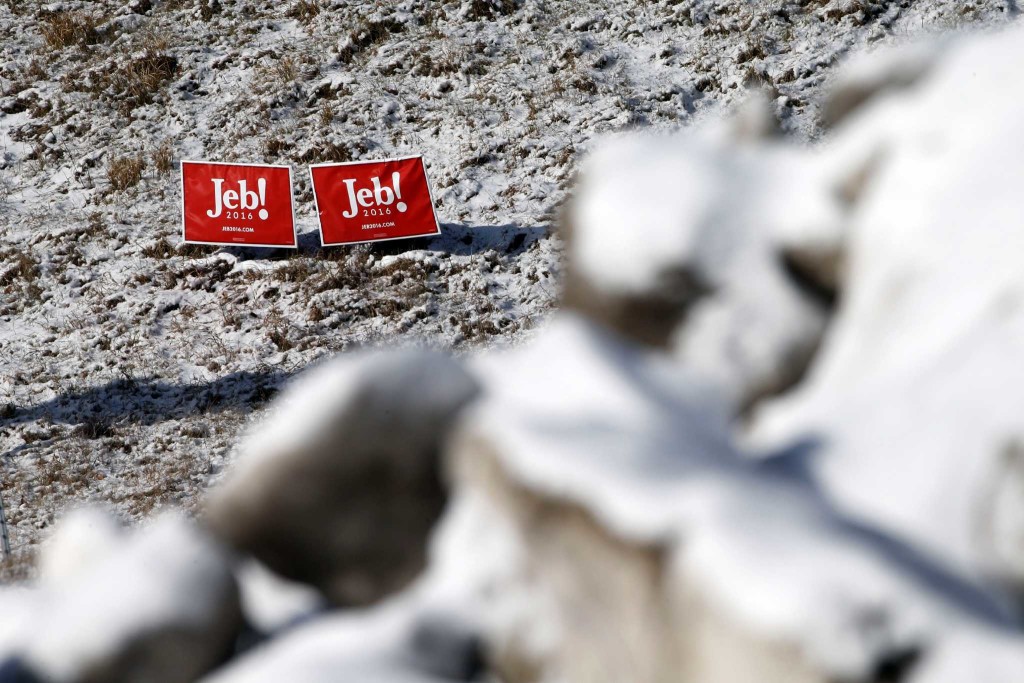
The political suspense isn’t over now that the Iowa caucuses are history. There will be plenty of intrigue to track on the day after, too. What to watch Tuesday: UMM, WHO WON?: The Democratic caucus results were so tight that Hillary Clinton and Bernie Sanders both went to bed unsure who’d won. Will party bigwigs declare a winner Tuesday or simply leave it as a draw? CLAIMING VICTORY: There’s more than one way to define victory. Multiple candidates will try to claim a win simply by exceeding low expectations. Marco Rubio is fashioning his third-place showing as an “important step to winning the nomination.” Rand Paul is trumpeting a “strong top-five finish.” EXIT STRATEGIES: Does Iowa turn into a knockout blow for more bottom-tier candidates? Democrat Martin O’Malley and Republican Mike Huckabee bailed out before midnight on caucus night. More candidates could look for the exits after sleeping on it. SPIN CYCLE – WHY IOWA DOESN’T MATTER: Poor performers in the caucuses will look for ways to play down the importance of Iowa. Ben Carson, for one, complained in his evening speech that he’d been the target of caucus-night dirty tricks. SPIN CYCLE – WHY IOWA MATTERS: Winners and those who exceeded expectations will be happy to play up the significance of the Iowa results. Just how far do they stretch that victory lap? WHERE NEXT? It’s not just where the candidates point their planes, but where they ship all those Iowa staffers who will be packing their bags Tuesday. With New Hampshire just a week away, the state already is flooded with campaign staff and advertising dollars. While most candidates were planting themselves in New Hampshire, Texas Sen. Ted Cruz has stops Tuesday in both New Hampshire and South Carolina; he thinks his conservative message may resonate in the latter state. ADS, ADS, ADS: For Iowans, it’s now safe to turn on the TV; viewers in New Hampshire, beware. From Tuesday forward, presidential candidates and the outside groups helping them are set to spend $11 million on TV and radio ads in the state, according to advertising tracker Kantar Media’s CMAG. By New Hampshire primary night, spending in the state will have topped $116 million. If the month of January is a guide, look for Trump with a side of Trump. Political ads already are popping up in states with later primaries and caucuses: Nevada has $1.7 million in ads scheduled. MONEY CHASE: Beware of inbox overload. Wins and losses have one thing in common: They’re both fundraising opportunities. Expect many breathless emails from the candidates that convert their Iowa performances – fantastic or dismal – into pleas for campaign cash. Iowa winner Cruz had an email out before midnight warning that “I must raise over ONE MILLION DOLLARS in the next 24 hours or I risk wasting our Iowa victory.” ENDORSEMENT CHASE: As candidates exit the race, where do they point their supporters? Donald Trump plans to campaign in Arkansas on Wednesday. Could he be hoping to pick up an endorsement from Huckabee? Republished with permission of the Associated Press.
Iowa Takeaways: Donald Trump can’t meet hype, Hillary Clinton underwhelms
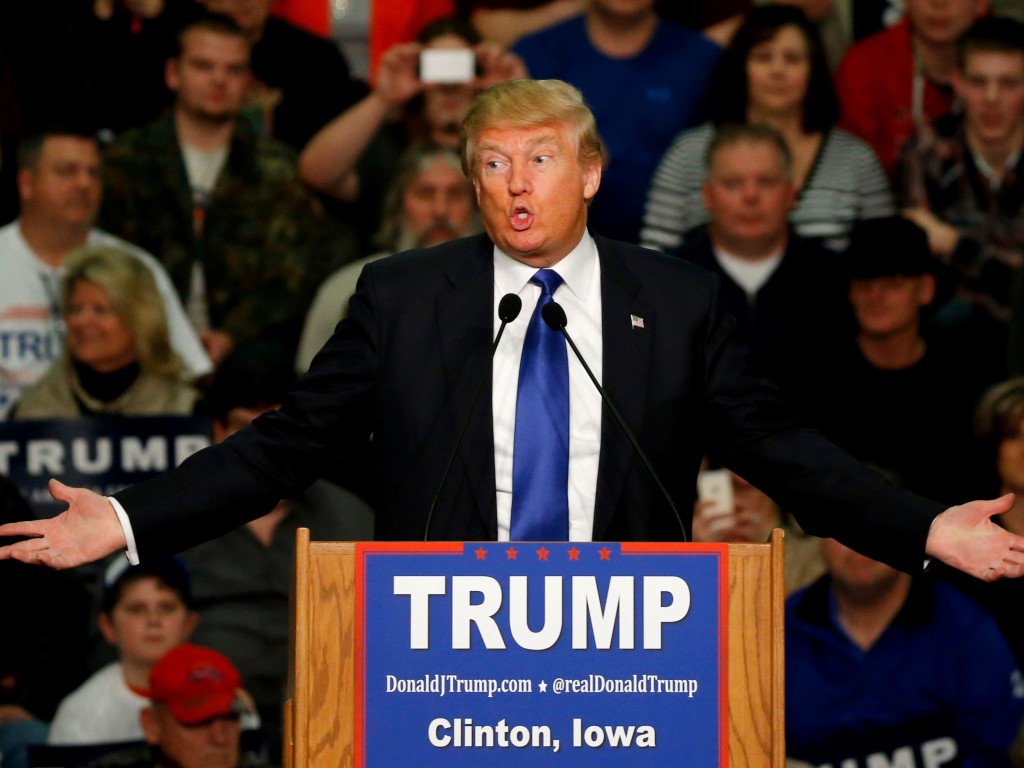
Donald Trump failed to live up to his own hype and finished second to Ted Cruz, but it was a late surge from Marco Rubio that may wind up the as the biggest surprise of the Iowa caucuses. Democrats Hillary Clinton and Bernie Sanders finished in what the Vermont senator termed a “virtual tie,” an outcome that may further embolden her critics even as her team claimed victory. The 2016 presidential contest moves on to New Hampshire, where the nation’s first primary is now just seven days away. To get you started, here are some takeaways from Iowa’s leadoff caucuses: — A HUGE TURNOUT, BUT NOT HUGE ENOUGH FOR TRUMP Before Monday’s contest, the major question about Trump was whether his legion of fans would ultimately become an army of voters. Plenty did, as turnout in the Republican caucuses was up by nearly 60,000 people compared to 2012. The problem for the billionaire businessman was that he still didn’t have enough backers to push past the first-term Texas senator. Trump, a New Yorker through and through, was never well-positioned to win over rural Iowa’s evangelical voters. More than 4 in 10 Republicans arriving at caucus sites said the candidate quality that mattered most in their vote was that the candidate shares their values. Among those who said so, Cruz won the support of nearly 4 in 10, compared to less than 1 in 10 for Trump. Trump will be quick to point out that Iowa backed two deeply flawed GOP candidates in 2008 and 2012, neither of whom went on to win the party’s nomination. Yet he missed an opportunity to deal Cruz a blow that would have made his path to the nomination far easier. — A CLOSE DEMOCRATIC RACE Hillary Clinton’s campaign team declared victory in the early morning hours as they headed to New Hampshire, pointing to her capture of at least 22 delegates to the party’s national convention to Sanders’ 21 – with one left to be decided. But the Iowa results appeared likely to benefit Sanders’ campaign far more than her own. “We came in and we took on the entire political establishment and we fought them to a draw,” said Sanders adviser Tad Devine. “It’s a huge step forward for us. We’re very, very pleased with what happened.” Even before the caucuses, Sanders said he was prepared to compete deep into the spring and fight until the summer convention. He raised $20 million in January and will be well-positioned to build a campaign organization in the lengthy list of states holding contests in March. Still, Iowa has a largely white, liberal Democratic electorate, which will make it difficult for Sanders to argue that he’s a stronger candidate than Clinton to face off against the GOP in the general election. To do so, he’ll need to win over the minority voters who play a major role in upcoming states on the primary calendar, including Nevada, South Carolina and several Southern states that hold contests in March. — IOWA TRUSTED CRUZ By claiming victory in Iowa, Cruz ensures he’ll be a force in the Republican primary contest for weeks to come – if not longer. He moves on to New Hampshire as the favorite of his party’s most conservative voters. Expect him to pick up support from likeminded candidates who underwhelmed on Monday, among them former neurosurgeon Ben Carson and Kentucky Sen. Rand Paul – and former Arkansas Gov. Mike Huckabee, who dropped out of the race. Cruz won with an impressive ground game and beat back brutal attacks from Trump and others about his trustworthiness, the cornerstone of his campaign and his “TRUSTED” slogan. And he’s got built-in advantages that will help him sustain his momentum as the race moves into the spring. Cruz began the year with more money than most of his competitors combined, and after New Hampshire, he’ll be able to spend it in more friendly territory as the GOP race moves into the South. — RUBIO RISING He didn’t win the most votes, but Marco Rubio had a very good night in Iowa. The first-term Florida senator claimed third place, finishing just behind Trump. More importantly, he absolutely dominated his competitors in the mainstream wing of the party, earning more votes than former Florida Gov. Jeb Bush, New Jersey Gov. Chris Christie and Ohio Gov. John Kasich combined. Rubio’s team also proved to be masters of the expectations game. By casting Trump and Cruz as the overwhelming front-runners in recent weeks, Rubio’s strong third place finish exceeded expectations and recent polls alike – which made it feel like a victory of sorts. Republished with permission of the Associated Press.
