
Bill Clinton defends his foundation amid intense scrutiny
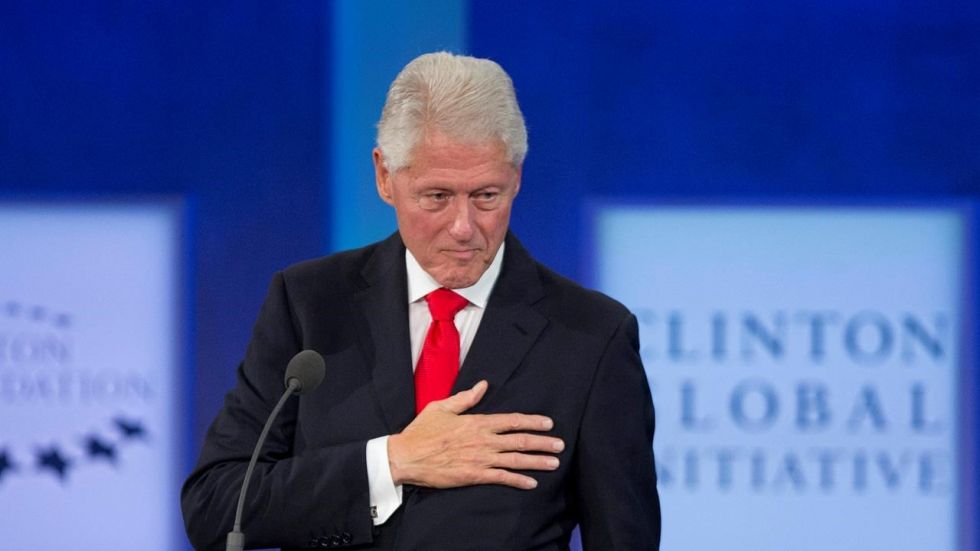
Bill Clinton delivered an emotional defense of his family’s charitable foundation Wednesday, applauding contributors for having “validated hope and possibilities.” The former president spoke at the close of the final meeting of the Clinton Global Initiative, an arm of the broader Clinton Foundation. The annual CGI gathering in New York has brought together an unusual blend of political leaders, philanthropists and celebrities, with participants expected to make specific commitments for projects around the world. This week’s event was held under a cloud of election year questions fueled by Donald Trump, who is locked in a close race against Hillary Clinton. The Republican has accused the Clintons of using their charity to enrich themselves and to give foundation donors greater access to Hillary Clinton as secretary of state. Bill Clinton did not directly address those accusations Wednesday, but aides said he viewed his hour-long address touting CGI’s work as an implicit rebuke to critics. He said the initiative had marked a “profound advance” in global philanthropic efforts and had helped 435 million people in 180 countries. Clinton spent much of his address recalling specific people who have been helped by CGI commitments, including making life-saving drugs more widely available and expanding access to clean drinking water. Clinton has pledged to step down from the foundation’s board if his wife is elected president, a decision he says is as painful as a root canal. He’s ending CGI regardless of the outcome of the election. Trump’s campaign renewed its criticism ahead of the former president’s speech, saying the Clinton Foundation presents “an unprecedented conflict of interest that would badly compromise a Hillary Clinton White House.” The Associated Press found that more than half the people outside the government who met or spoke by telephone with Hillary Clinton while she was secretary of state had given money – either personally or through companies or groups – to the Clinton Foundation. The AP’s analysis focused on people with private interests and excluded her meetings or calls with U.S. federal employees or foreign government representatives. AP’s report was based on Clinton’s formal calendars and daily schedules, the latter of which covered only about half her tenure as secretary. The AP sued the State Department in federal court to obtain the detailed schedules, and the State Department so far has only released half of them. Trump’s own charitable foundation has also faced scrutiny. The Washington Post reported this week that Trump spent more than a quarter-million dollars from the foundation to settle lawsuits that involved his for-profit businesses. Republished with permission of the Associated Press.
Illegal immigration to U.S. has ‘stabilized;’ on the decline in Alabama
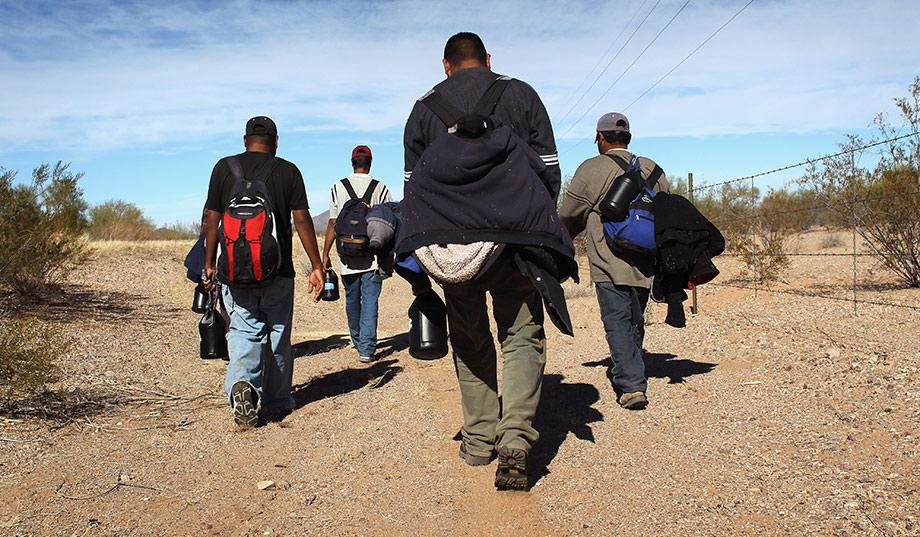
Contradictory to many assumptions, a new report Tuesday revealed the number of unauthorized immigrants in the U.S. has stabilized in recent years after decades of rapid growth. Released by the Pew Research Center, the report shows the population of Mexicans living illegally in the United States has decreased 1.1 million from its peak in 2007 to 5.8 million in 2014. While Mexicans still made up 52 percent of all unauthorized immigrants in 2014, the origin countries of unauthorized immigrants have shifted, with the number from Mexico declining since 2009 and the number from elsewhere rising. The analysis of census and other government data also found that the in Alabama — along with California, Georgia, Illinois, Kansas, Nevada and South Carolina — the illegal immigrant population has declined. In all of the states, the decline was due to a decrease in unauthorized immigrants from Mexico. According to the data, Alabama’s undocumented immigrant population dropped from some 80,000 illegal immigrants in 2009 to 65,000 illegals in 2014. “The number of unauthorized immigrants from all other countries rose in Alabama during those years, but not as much as the number from Mexico went down,” according to the report.
Terri Sewell joins civil rights pioneer in voting rights roundtable discussion
With Election Day less than 50 days away, Alabama 7th District. U.S. Rep. Terri Sewell joined her House and Senate colleagues along with civil rights experts from across the country in a roundtable discussion on voting rights in America. Set in the LBJ Room in the U.S. Capitol Building, Alabama-native and current U.S. Congressman from Georgia, John Lewis lead the open-press discussion, which underscored the importance of having a fully functioning Supreme Court to hearing voting rights cases. Lewis, who worked closely with Martin Luther King Jr.He was the first speaker during the 50th anniversary of the Selma-to-Montgomery march last year, called on the Obama Administration to install federal election observers in polling stations across the United States. “We should ask for federal protection,” Lewis said. “The election can be stolen on Election Day at polling places.” In 2013, the U.S. Supreme Court struck down key provisions of the Voting Rights Act, which required certain states to obtain permission from federal authorities before changing their voting laws. Lewis continued, “This is our time to speak up and speak out to say that we want to see fair and open elections where everyone can participate.” Also participating in the roundtable was: Rep. G.K. Butterfield, Chair of the Congressional Black Caucus Rep. Jim Clyburn Rep. Judy Chu, Chair of the Congressional Asian Pacific American Caucus Senator Dick Durbin (D-IL) Senator Ben Cardin (D-MD) Senator Amy Klobuchar (D-MN) Senator Kirsten Gillibrand (D-NY) Senator Cory Booker (D-NJ) Nancy Zirkin, Leadership Conference on Civil and Human Rights Kristen Clarke, National Lawyers Committee Terry Ao Minnis, Asian Americans Advancing Justice Andrea Senteno, Mexican American Legal Defense and Educational Fund
Mo Brooks urges reevaluation of mass immigration policies

Alabama 5th District U.S. Congressman Mo Brooks took to the House floor Wednesday morning to warn against the risks he believes will be posed to the economy and national security should America continue with its current immigration wave that has persisted the past 40 years. “America’s population has exploded to 321 million people due primarily to 62 million foreign born people plus their minor children,” Brooks explained before his colleagues. “Consistent with the above, the Census Bureau estimates that, within seven years, America’s population will have the highest percentage of foreign born people since the Revolutionary War, adding another 74 million people to America’s population over the next 45 years.” According to Brooks Americans are growing uneasy with the current immigration levels. “Although Americans are supportive or tolerant of legal immigration, they are showing a growing unease in the face of this record-breaking immigration tidal wave that drives up welfare costs, overcrowds schools and hospitals, and increasingly subjects American citizens to growing crime and terrorist attack risk,” Brooks continued. “America must recognize our challenges and opportunities. Hence, we must be much more selective in our immigration policies to ensure incoming immigrants are both self-sufficient and are able and willing to be properly absorbed into American society. If we aren’t, America’s population will explode and America will lose its special place in history.” Watch Brooks’ speech below:
Analysis: Donald Trump proposals would add $5.3 trillion to debt

A new analysis from a nonpartisan group finds that Donald Trump‘s latest tax proposals would increase the federal debt by $5.3 trillion over the next decade, compared with $200 billion if Hillary Clinton‘s ideas were enacted. The Committee for a Responsible Federal Budget looked at Trump’s newly revised tax plan as well as other proposals. However, it says its analysis can’t be certain of the actual size of Trump’s tax plan because his campaign won’t spell out how it will treat certain businesses’ tax liabilities. The committee took a “mid-range guess” between two estimates provided by the nonpartisan Tax Foundation. When Trump introduced his economic plan last week, he vowed that his tax cuts would be paid for partly by triggering record economic growth. The committee was skeptical and presumed they would generate no new growth. Several economists have projected that Trump’s economic agenda — especially his restrictions on immigration and trade — would slow economic growth and possibly cause a recession. Trump has also proposed a sharp increase in spending on the military and veterans. He has proposed some spending cuts, but the committee calculated they wouldn’t come close to balancing the budget. The cost of Clinton’s plan comes largely from her proposals for free college, child care aid and universal pre-K for 4-year-olds. She proposes paying for them with tax hikes on the rich and businesses. Republished with permission of the Associated Press.
Alabama’s first charter school approved for Mobile
Plans to open Alabama’s first charter school have been approved. The Alabama Charter School Commission voted Tuesday to allow the Accel Day and Evening Academy to begin operations in Mobile. The school will serve students at least 16 years of age who have dropped out or fallen behind academically. “What we really want to do is use the charter opportunity as a way to take it to the next scale, to serve the more than 2 -thousand young people down on the Gulf Coast of Mobile who really need this option,” says Jeremiah Newell of the Mobile Area Education Foundation. The Alabama Legislature passed a bill in February 2015 authorizing charter schools, which are publicly funded but have more operational freedom than traditional public schools, for the first time. Alabama was the 43rd state to pass a charter school law. On Tuesday, the 10-member Commission, chaired by former state Superintendent Ed Richardson, interviewed three applicants hoping to start charter schools in their areas. Edge Preparatory School: Based in Huntsville, the school would be primarily intended for students zoned for elementary schools in lower-income areas. Accel Day and Evening Academy: The Mobile Area Education Foundation plans to start this high school for students 16 and older who have dropped out or fallen behind. The Sports Leadership and Management Foundation (SLAM): based in Miami, the school plans to start a school in the Huntsville area for pre-kindergarten through second grade that will use learning programs based on sports themes with a heavy focus on science and technology. Only the Mobile school was outright approved, which is slated to open for the academic year beginning in August 2017. SLAM was conditionally approved, but the Commission says operators must get approval under a federal court order on desegregation. The Commission rejected plans for another charter school in Huntsville.
Alabama in the middle of the pack among states with the most integrated Hispanics

Today, Hispanics are the third fastest-growing minority group behind individuals claiming two or more races. And much of their growth in the past decade-plus has been fueled by natural U.S. births. With immigration taking center stage this election cycle and Hispanic Heritage Month in full swing, the personal-finance website WalletHub conducted an in-depth analysis of 2016’s States with the Most Integrated Hispanics. They found Alabama ranks among the middle of the pack — 22nd out of 50 states and the District of Columbia — when it comes to Hispanic integration. In their analysis, WalletHub analysts compared the 50 states and the District of Columbia to measure how well Hispanics have adapted to mainstream American society relative to where they live across 17 key metrics ranging from “Hispanics’ English proficiency” to “educational attainment” to “homeownership rate.” How Alabama ranked in the major categories analyzed: Cultural & Civic Integration: 51 Educational Integration: 5 Economic Integration: 24 Here’s how Alabama compares to the rest of the country: Source: WalletHub
Hillary Clinton campaign raced through $50 million last month
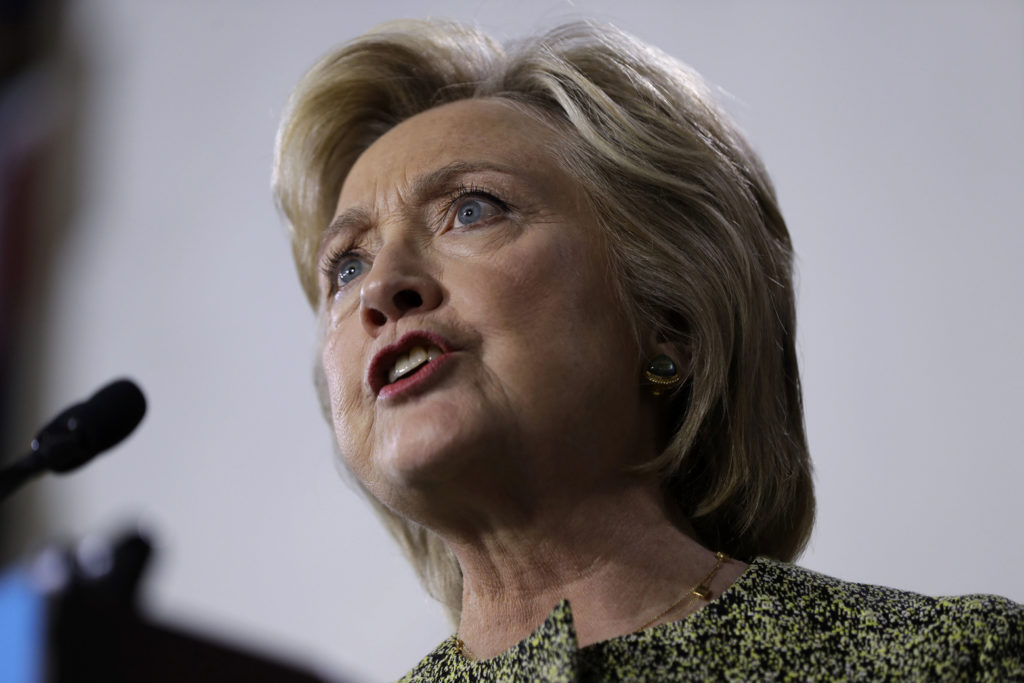
Hillary Clinton spent $645,000 more a day than her opponent Donald Trump last month, but even with her $50 million campaign outlay, she has not been able to pull away from him in the race for the White House. Clinton’s campaign had its most expensive month to date in August, eclipsing its previous monthly high by more than $12 million. And combined, Clinton and the national Democratic Party paid out $78 million in August, while Trump and the Republican National Committee spent about $47 million. While both candidates are raising huge sums from donors, their lopsided spending lays bare the difference in the two major party presidential campaigns. Clinton is running a conventional operation featuring multimillion-dollar ad buys and expansive voter outreach. Trump has kept spending down by enjoying seemingly limitless free media coverage and outsourcing the guts of his voter contact duties to the Republican Party. The spending disparity has also become a favored Trump boast. “Our expenditures on advertising, our expenditures on people, our expenditures on everything are a tiny fraction. And yet we’re minimum tied,” Trump said Tuesday at a rally in Kenansville, North Carolina. “If you can spend less and be winning, that’s a positive thing, right?” Josh Schwerin, a spokesman for the Clinton campaign, said Trump has been “derelict” in building a political operation that would help not only himself but down-ballot Republicans. Four years ago, President Barack Obama and GOP nominee Mitt Romney each raised and spent about $1 billion, a formidable number that Clinton’s national finance director has also set as a benchmark. Much of Clinton’s spending has been eaten up by advertising, which is costing her about $10 million per week. Through August, she blanketed 11 states with 35,714 broadcast television commercials to Trump’s 7,457 in five states, according to Kantar Media’s political ad data. Clinton also has built a robust campaign team of 800 employees who cost a total of about $5 million last month. Even after an August hiring spree, Trump has a far smaller shop of about 130 employees and more than 100 consultants. Among those consultants: Former campaign manager Corey Lewandowski. He parted ways with Trump in mid-June — and was immediately hired as a CNN contributor — but his Green Monster firm received a $20,000 payment for “strategy consulting” Aug. 11, the same amount it has regularly been paid for months. The Trump campaign’s biggest expense for the month was more than $11 million to Giles-Parscale for digital consulting and online advertising. Like Trump, the Texas firm is new to politics. The Clinton campaign’s August fundraising report shows increases in legal and polling expenses, which appear to reflect those firms’ billing cycles. The campaign spent about $450,000 on legal bills and almost $1.3 million on polling. The presidential spending is even more lopsided after factoring in the main super PACs backing each candidate. While the campaigns must adhere to a $2,700-per-person, per-election donation limit, super political action committees can accept unlimited amounts of money. Deep-pocketed Priorities USA spent $20.6 million last month, almost exclusively on Trump-bashing and Clinton-boosting TV, radio and digital. The group also replenished its war chest with a healthy $23.4 million haul. Trump’s outside boosters have so far raised and spent much less money; for example, one group, Great America PAC, spent just $2.6 million in August. Some late help may be on the way: On Tuesday, a group called Future 45 said it has a $5 million commitment from billionaire casino owner Sheldon Adelson and $1 million from members of the Ricketts family to attack Clinton. Clinton’s aides insist their investments will pay off on Election Day. “Battleground states carry that name for a reason: They’re going to be close, from now until Election Day,” campaign manager Robby Mook wrote in a memo to supporters this week. “But we are going to win them because we’ve spent the past year building a superior ground game to communicate our message and turn our people out to vote.” Yet if August finance reports are a guide, her heavy spending is only one piece of the puzzle. The polls have tightened significantly since Clinton benefited from a post-convention bump in early August. Some surveys still show her slightly ahead, but others show an extremely tight race nationally and in key battleground states such as Florida and Ohio. Republished with permission of the Associated Press.
Early ballots: Hillary Clinton sees strength in NC but lags in Iowa
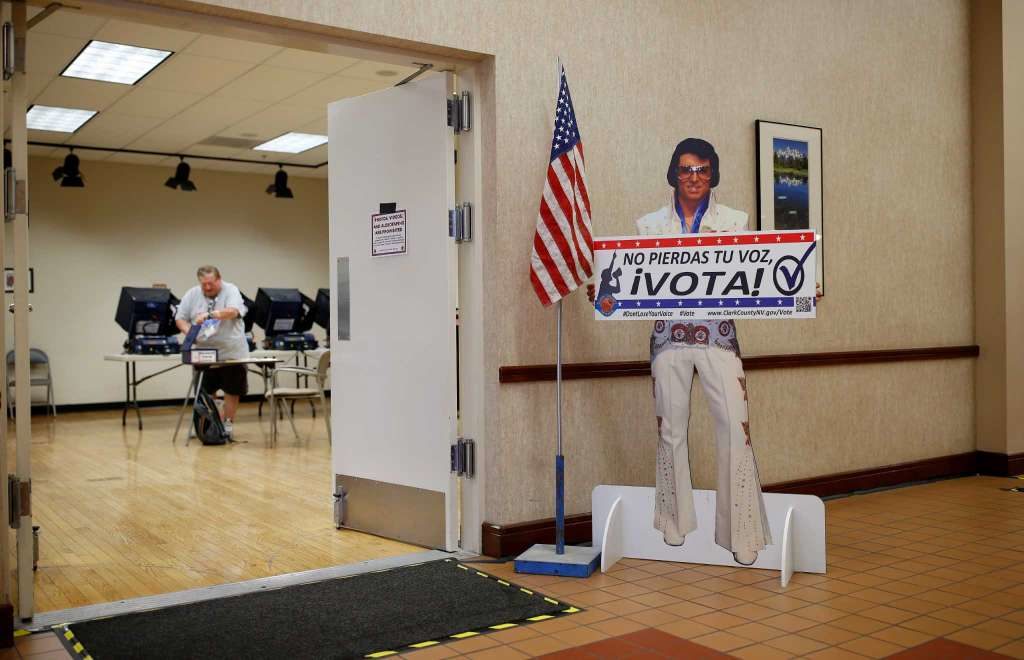
Seven weeks before Election Day, the earliest numbers from advance voting for president show initial strength for Hillary Clinton in swing state North Carolina, good news for Donald Trump in battleground Iowa and a record number of requests for ballots in Ohio. The first early voting figures Tuesday are too preliminary to serve as clear indicators about how the election will go. Still, they are of interest because, unlike polls, they deal with actual voters either casting ballots or taking their first steps to do so. Campaigns are scrutinizing these figures to help guide their strategies. Among those requesting an early ballot in Iowa was Josh Hughes, a 19-year-old sophomore at Drake University in Des Moines. “I’m so ready for the election to be over,” he said, citing negative campaign rhetoric. He plans to vote for Clinton, the Democratic nominee. Many of his classmates — once Bernie Sanders supporters — are opting to wait for now. “The engagement is a little bit lower,” he said. Democrats historically do well in attracting early voters, and Republicans acknowledge their main goal is to avoid deep deficits before Nov. 8. With absentee balloting underway in North Carolina, voting kicks off this week in Georgia, Wisconsin, and Virginia as well as Iowa next week. Four years ago, about 45.6 million people or 35 percent of the electorate, voted early. In North Carolina, a must-win state for Trump, more than 53,000 voters had requested ballots, and 2,939 had been returned, according to data compiled by The Associated Press. That’s up from 47,313 ballots requested during a similar time frame in 2012. Broken down by party, Democrats made up 40 percent of the ballots returned so far compared to 33 percent for Republicans. At this point in 2012, Republicans were running slightly ahead, 43 percent to 38 percent, in ballots submitted. Republican Mitt Romney narrowly won the state that year and it’s difficult to see how Trump could accumulate the 270 electoral votes needed to capture the White House without winning North Carolina. Clinton has sought to energize state Democrats by pointing to a voter ID law passed by a Republican-led legislature that was later struck down by a federal court as racially discriminatory. On Tuesday, the campaign also announced a new radio ad in North Carolina and other battlegrounds aimed at African-American young adults. Trump, meanwhile, was visiting rural parts of the state Tuesday to gin up support among working-class whites. “More than half of North Carolina voters will cast their ballots ahead of Election Day, which is why we have been working tirelessly to give voters all the information they need to make their voices heard,” said Dan Kanninen, the Clinton campaign’s senior adviser for North Carolina. Iowa doesn’t start early voting until Sept. 29, but more than 68,000 people already have requested absentee ballots. Democrats dominate the early requests with 40,476 or roughly 60 percent of the ballots so far, compared to 13,011 or 19 percent for Republicans. But in an indication of softness among Clinton supporters, the numbers from her party are down significantly from 2012, when 92,850 Democrats had requested ballots at this point, compared to 13,635 for Republicans. Obama won Iowa in 2008 and 2012 based on a strong early vote, despite losing the Election Day vote there. The Republican National Committee, which is heading much of Trump’s get-out-the-vote effort, described the early numbers as evidence that Clinton’s campaign is failing to inspire enthusiasm among voters. “The RNC is continuing our historic ground game efforts in Iowa to ensure Republican victories up and down the ticket on Election Day,” said Sean Spicer, chief strategist for the RNC. In Ohio, election officials reported Monday that more than 524,000 voters had submitted absentee ballot applications. That’s up from nearly 485,000 during a similar period in 2012, when a record 1.87 million absentee ballots ultimately were cast by mail and in person, according to the secretary of state’s office. The state did not break down the requests by party affiliation. Of the Ohio requests so far, more than 11,000 are from overseas and military voters, whose ballots will be mailed out this week. Ballots for the other voters will be mailed on Oct. 12. The Supreme Court last week declined to reinstate a period of Ohio early voting in October in which people could register and vote on the same day. That was popular among minority voters. “All Ohioans have many options to cast a ballot,” Ohio Secretary of State Jon Husted said. Republished with permission of the Associated Press.
Company: Pipeline leak fixed, gas line to restart Wednesday
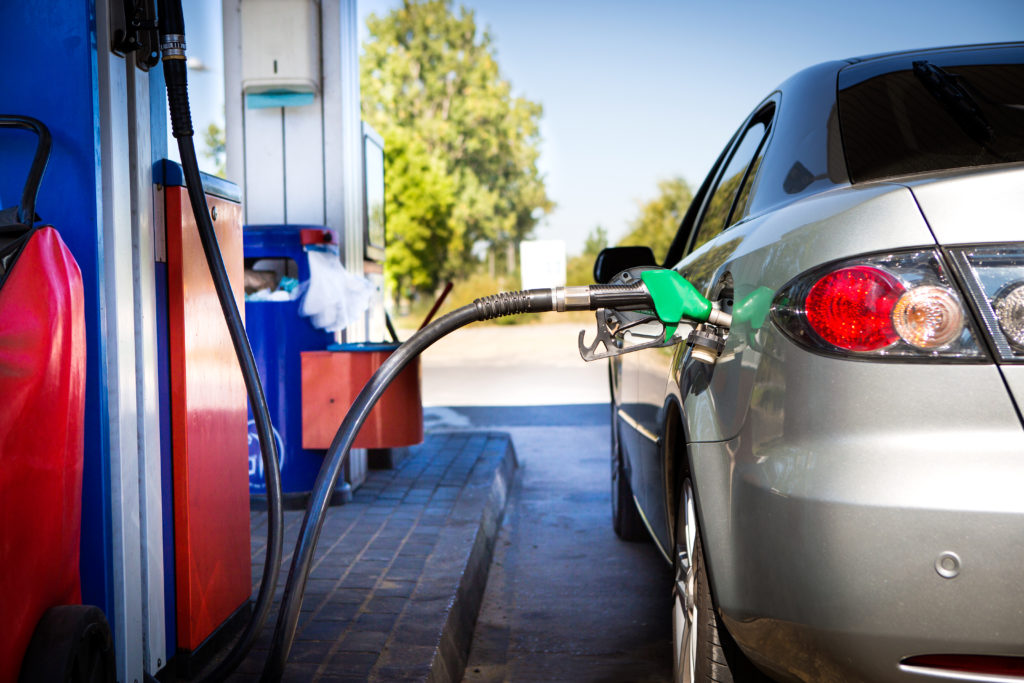
The pipeline company working to repair a leak that led to gas shortages and higher prices for drivers across the South says its bypass repair is complete and it expects to restart its main gasoline line Wednesday. Colonial Pipeline spokesman Steve Baker tells The Associated Press that testing is now being done on the line. Baker said crews have been working around the clock to get fuel to markets, and that it will take a few days for the fuel supply chain to fully recover after the line restarts. “It won’t be something that’s immediately felt at the pump, but I would expect in the next week, you’d see a dramatic improvement versus this week,” said Andy Milton of Mansfield Oil. The 500-foot (152- meter) bypass was needed to move fuel around the leak of its main gasoline pipeline in Shelby County, Alabama. The leak, which spilled 6,000 barrels of gasoline into a detention pond, was detected Sept. 9. Earlier Tuesday, auto club AAA reported that gas prices continue to climb in several southern states after the pipeline leak in Alabama slowed the flow of fuel across the South. AAA reports that in Georgia, Tuesday’s average price for regular gas rose about 5 cents since Monday, to an average $2.36 statewide – up nearly 27 cents over the past week. The price has climbed nearly 7 cents since Monday in the Macon and Augusta areas. South Carolina saw an average price rise of nearly 4 cents from Monday to Tuesday – up nearly 18 cents from a week ago. The Columbia, South Carolina area saw prices rise about 6 cents since Monday. AAA reports Tuesday that Alabama, North Carolina, Tennessee and Virginia also saw prices climb since Monday. Colonial has said it was working “around the clock” to repair the break and supplies have been delivered or are on their way to locations in Alabama, Georgia, Tennessee, South Carolina and North Carolina. The shortage is blamed on a pipeline rupture and leak of at least 252,000 gallons (954,000 liters) of gas in Alabama. Republished with permission of the Associated Press.
