
Study reveals most tax-friendly retirement spots in Alabama

If you’re planning on spending your golden years in the Yellowhammer State, you may want to consider settling down in Tallassee, Wetumpka or Attalla. A new study by financial technology company SmartAsset ranked the top 10 cities across Alabama and these three were deemed the top three best places in for those looking to avoid the pressure of the taxman. For the most part, Alabama is fairly tax-friendly. The study highlights that retirees who own a home in Alabama benefit from some of the lowest property tax rates in the country. On the other hand, sales taxes in Alabama rank as the third highest in the U.S. While that could hurt a senior’s budget, in general retirees in Alabama should have more money to spend as the cost of living in Alabama is about 10% lower than the national average and the state does not tax most types of retirement income. In order to find the most tax-friendly spots to retire, the study compared a fixed income against an array of tax expenses, including income taxes, property taxes, and sales and fuel taxes, to calculate how much of that money would go to paying tax bills. According to SmartAsset, the goal was “to find the areas with the most tax-friendly policies for retirees.” “To do that,” the study says. “We looked at how the tax policies of each city would impact a retiree with a $50,000 income, with a hypothetical retiree getting $15,000 from Social Security benefits, $10,000 from a private pension, $15,000 from retirement savings like a 401(k) or IRA and $10,000 in wages.” Here’s a look at how the top ten tax-friendly retirements spots in Alabama compare: Rank City Income Tax Paid Property Tax Rate Sales Tax Paid Fuel Tax Paid Social Security Taxed? Retirement Tax Friendliness Index 1 Tallassee, AL $6,256 0.29% $766 $291 No 70 2 Wetumpka, AL $6,256 0.29% $880 $274 No 56.28 3 Attalla, AL $6,256 0.51% $766 $306 No 55.08 4 Greenville, AL $6,256 0.42% $842 $313 No 54.43 5 Harvest, AL $6,256 0.33% $842 $377 No 53.92 6 Roanoke, AL $6,256 0.39% $919 $304 No 53.46 7 Meridianville, AL $6,256 0.37% $842 $398 No 52.85 8 Boaz, AL $6,256 0.47% $995 $283 No 51.46 9 Fort Payne, AL $6,256 0.40% $995 $321 No 45 10 Guntersville, AL $6,256 0.38% $1,072 $277 No 51.15
Brick by brick, fundraiser helps carry on legacy at National Voting Rights Museum

The National Voting Rights Museum and Institute (NVRMI) is giving its supporters a chance to leave their legacy in stone. Based in Selma, the NVRMI is selling commemorative bricks to help maintain and improve the facility. Museum board member Louretta Wimberly told AlabamaNews that bricks cost $100 dollars and buying one helps to carry on the legacy of the foot soldiers of the Selma Voting Rights movement. “The brick represent a stone. It means that this is how we came over and now I have an opportunity to continue that growth and that moving forward,” Wimberly said.
Two US officials to attend Fidel Castro’s funeral in Cuba

White House spokesman Josh Earnest says a high-ranking presidential adviser and the top diplomat to Cuba will represent the United States at Fidel Castro‘s funeral. Earnest is emphasizing that the two are not part of a formal delegation to the service, but the appearance of deputy national security adviser Ben Rhodes and Jeffrey DeLaurentis shows a commitment to an “ongoing, future-oriented relationship with the Cuban people.” DeLaurentis is awaiting Senate confirmation to be U.S. ambassador to Cuba. Earnest says Rhodes was already scheduled to be on the island this week. He notes that Rhodes played a leading role in crafting agreements to normalize relations with Cuba. Earnest says Rhodes’ and DeLaurentis’ attendance is “an appropriate way to show respect,” while acknowledging the differences that remain between the two nations. Republished with permission of the Associated Press.
Pentagon chief Ash Carter: Don’t extend stopgap funding through May
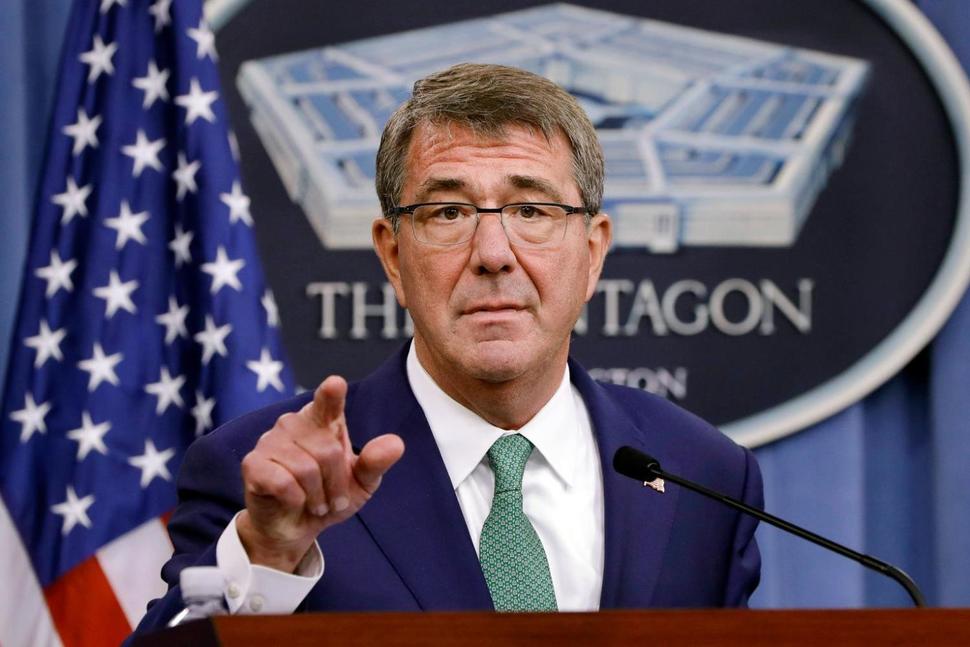
Defense Secretary Ash Carter Tuesday warned Republican leaders in Congress that plans to operate the Pentagon on autopilot through as late as May are “unprecedented and unacceptable.” Carter said such plans would freeze the sprawling department’s budget for too long and harm national security. GOP leaders are negotiating over the duration of a stopgap spending measure to keep the Pentagon and most of the rest of the government operating after the current temporary funding bill expires next Friday. House Republicans initially said the next stopgap measure, called a “CR” in Washington parlance, would run through March 31 but Senate Majority Leader Mitch McConnell, R-Ky., wants a later date because the Senate will be so busy with a crush of business under the incoming Trump administration. “A short-term CR is bad enough, but a CR through May means DoD would have to operate under its constraints for two-thirds of the fiscal year,” Carter said. “This is unprecedented and unacceptable, especially when we have so many troops operating in harm’s way.” McConnell had initially pressed to wrap up the remaining 11 appropriations bills – totaling more than $1 trillion – by the end of this year. But House Speaker Paul Ryan, R-Wis., bowed to the wishes of the incoming administration and demands by conservatives to punt the unfinished legislation into next year. Some Republicans believe they’ll get a better deal next year from Trump than they would from President Barack Obama – including more Pentagon funding and policy “riders” to reverse Obama regulations – but top aides say the legislative outcomes probably won’t be much different. Carter also warned of delays in procurement of new weapons such as transport and attack helicopters, a new in-flight tanker for the Air Force, and a next-generation nuclear submarine. Republished with permission of the Associated Press.
GOP could repeal, before replacing, Obamacare

Congress may vote to repeal President Barack Obama‘s health care law before coming up with a replacement, House Majority Leader Kevin McCarthy said Tuesday. The approach could allow congressional Republicans to take swift action on one of President-elect Donald Trump‘s campaign promises, while putting off the hard part. And while repealing the law could be done with GOP votes alone, any replacement plan would likely require the cooperation of minority Democrats in the Senate, something that will not be easy to come by. “Nothing’s been decided yet but I would move through and repeal and then go to work on replacing,” McCarthy told reporters at the Capitol. “I think once it’s repealed you will have hopefully fewer people playing politics, and then everybody coming to the table to find the best policy.” “We will get started on this right way,” the California Republican added. Without specifying a timeline, McCarthy suggested Congress could vote on a repeal quickly, while putting off the date for it to take effect. As that date neared, McCarthy predicted, there would be political pressure for all parties to come together around a replacement. Six years after the Affordable Health Care Act became law, congressional Republicans have voted dozens of times to repeal it in part or full. But they still haven’t unified behind legislation to replace it, or to ensure that the 20 million people who’ve gained coverage don’t suddenly find themselves uninsured. Now that Trump has won the presidency and Republicans will control both chambers of Congress next year, the GOP will have to deliver. That is certain to be tricky. In one complication, Republicans can use a legislative maneuver called “budget reconciliation” to repeal the health law with a simple majority vote in the 100-member Senate. But to advance a replacement they would likely need 60 votes, requiring some Democrats to go along. Incoming Senate Minority Leader Chuck Schumer of New York has already warned Republicans he will try to turn their efforts to repeal the health law into a political nightmare. “If the rules are that we have reconciliation and we can repeal Obamacare with 50 votes we do it,” McCarthy said. “You can’t replace it with 50 votes, it takes 60. So if you want me to tell you I’m going to do it all in one day, I’ll tell you that, but I don’t believe we can do that.” McCarthy’s comments came the same day Trump announced the selection of fellow House Republican Tom Price of Georgia as his secretary of Health and Human Services. Price helped craft the House GOP plan on health care that was unveiled over the summer, relying on individual tax credits to allow people to buy coverage from private insurers. But the proposal fell far short of a full-scale replacement, leaving key questions unanswered including the size of the tax credits, the overall price tag of the plan, and how many people would be covered. Since the election Trump has endorsed keeping certain popular parts of “Obamacare,” including a provision barring insurers from excluding people with pre-existing conditions from coverage, and another allowing young adults to stay on their parents’ health plans. House Speaker Paul Ryan, speaking Tuesday on WCLO radio in Wisconsin, endorsed keeping those parts of the law. But Democrats insist there’s no way to keep the popular parts of the law without the elements people don’t like, including requirements for most individuals to carry coverage or face tax penalties. Insurers are only able to extend coverage to people with pre-existing conditions by having large groups of customers, including healthy people who don’t cost as much to insure. Republished with permission of the Associated Press.
Terri Sewell applauds $6M UAB grant to train local young adults for 925 high-paying jobs
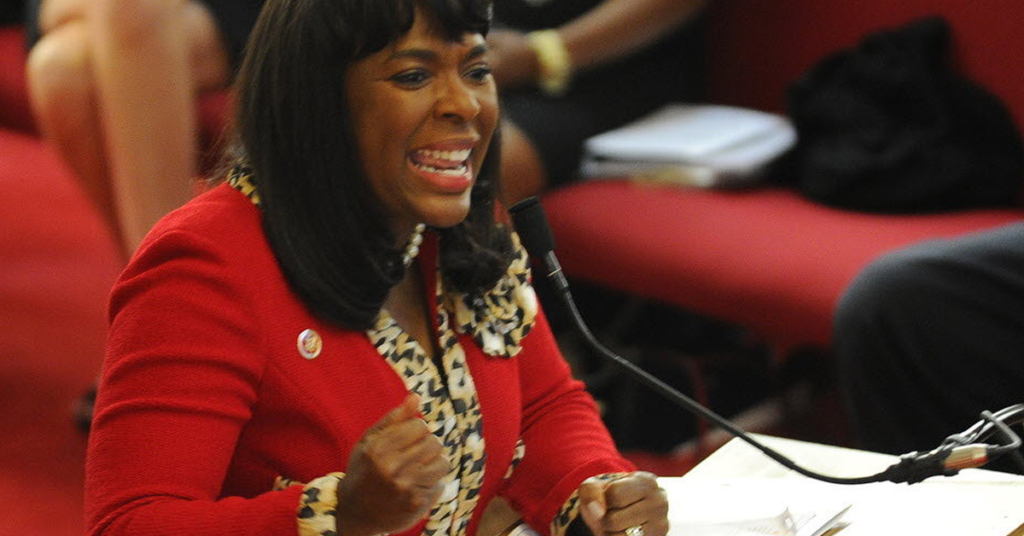
The University of Alabama at Birmingham (UAB) is getting $6 million in federal funding to help train students for in-demand jobs. UAB was one of 23 groups to receive the U.S. Department of Labor‘s America’s Promise grants, a federal program designed to accelerate the development and expansion of regional workforce partnerships committed to providing a pipeline of skilled workers in specific sectors. UAB was the only recipient in Alabama. Alabama 2nd District U.S. Rep. Terri Sewell helped UAB secure grant at the maximum allowed amount of nearly $6 million, which will fund Innovate Birmingham, a broad coalition led by UAB of public, community, business and education leaders committed to fostering economic growth for the region and offering better opportunities for young adults. “Innovate Birmingham’s consortium partners are among the most successful corporate, academic, and non-profit citizens in Alabama, all of whom realize that our national and global competitiveness is only as strong as our local workforce pipeline,” said Rep. Sewell. “With this vital funding from the Department of Labor, Innovate Birmingham will be able to meet the demand of the second fastest growing IT workforce in the country by educating and training 925 Birmingham-area disconnected youth for high-wage, high-demand jobs in the industry.” UAB President and Birmingham Business Alliance Board Chairman Ray Watts says UAB is excited to have the opportunity to help lead this important project that combines education, community service and economic development, touching several key priorities of the institution’s multifaceted mission. “The main focus of this effort is to offer new educational opportunities for the young adults in our community to provide them with training and expertise that will enable them to have prosperous, bright futures,” Watts said. “It will positively change their futures and the futures of their families and communities.” The Innovate Birmingham Regional Workforce Partnership’s program will fuel inclusive innovation for local employers by meeting workforce demand in information technology with sustainable, demand-driven education, training and employment opportunities for area young adults who are disconnected from the labor market. “This is a tremendous opportunity,” said Birmingham Mayor William Bell, “and the City of Birmingham leadership is proud to be among the dedicated team who combined their time, expertise and resources to make a compelling plan that truly embodies the spirit of America’s Promise and will have a great impact in our communities.”
2016 White House Christmas theme: ‘The Gift of the Holidays’

For her family’s final Christmas in the White House, Michelle Obama used the holiday decor to highlight her core initiatives as first lady: military service, education and health. The familiar crowd-pleasers are still part of the annual show: -A towering tree dominates the Blue Room, trimmed as it has been in the past to honor the U.S. military and their families, an issue Mrs. Obama has emphasized. -Larger-than-life replicas of family dogs Bo and Sunny will greet tens of thousands of holiday visitors shortly after they enter through the East Wing. -And no White House Christmas would feel complete without the annual gingerbread version. This year’s replica on display in the State Dining Room weighed in at more than 300 pounds, including 150 pounds of gingerbread covered in 100 pounds of bread dough to form the white exterior. Models of Bo and Sunny sit out front, and Mrs. Obama’s revamped vegetable garden is represented. Downstairs in the library, education is the theme. Ornaments on two trees are written with the word “girls” in 12 languages, honoring the first lady’s “Let Girls Learn” initiative to help countries educate tens of millions of adolescent girls around the world. Other trees in the library are made out of crayons or pencils. Mrs. Obama’s “Let’s Move” anti-childhood obesity is represented by a variety of fruit, to symbolize healthy eating, laid out in the Green and Red Rooms upstairs on the State Floor. Wreaths made of lemons and garlands made of limes decorate Green Room walls; clove-studded oranges, apples and pomegranates are mixed with greens to create wreaths for the Red Room. “This year’s holiday theme is ‘The Gift of the Holidays,’” the first lady said Tuesday afternoon after unveiling the decorations for military families. “We’re going to be celebrating our country’s greatest gifts, with special decorations celebrating our military families.” The theme is also meant to encourage people to reflect on “the true gifts of life,” such as service, friends and family, education and good health, her office said in a statement describing the decorations. More than 90 volunteer decorators from 33 states, the District of Columbia and Puerto Rico began arriving on Thanksgiving to begin the monumental task of decorating the White House, doing everything from hauling boxes and making bows to hanging lights and wreaths and trimming trees. The 19-foot Blue Room tree arrived on Friday, and it took four days to get it ready, said volunteer decorator Patricia Ochan, of Arlington, Virginia. The tree features mirrored ornaments and garland with the preamble to the U.S. Constitution. Besides the Blue Room tree, a second tree downstairs is decorated with gold ornaments in honor of service members who gave their lives for the country. Ochan, a military spouse originally from Uganda, said it was “most exciting” to help decorate the Blue Room tree. “I know how it feels not to have your loved one home with you for the holidays,” she said. Another highlight? Fifty-six Lego gingerbread houses, one for each state and U.S. territory, that are nestled in the branches of the trees in the State Dining Room. A team of Lego builders at the company’s Connecticut offices crafted the houses from more than 200,000 Lego pieces, the White House said. Most of the 70,000 ornaments and other decorations were reused, the White House said. Just 10 percent were new. Republished with permission of the Associated Press.
US Supreme Court seems to favor Texas death row inmate

The Supreme Court seems likely to side with a longtime death row inmate in Texas who claims he is intellectually disabled and thus ineligible to be executed. A majority of justices during arguments Tuesday expressed misgivings with the way the top Texas criminal appeals court evaluates borderline cases of intellectual disability. That court reversed a lower court and ruled that inmate Bobby James Moore was not intellectually disabled. Moore was convicted in the shotgun killing of a Houston grocery store clerk in 1980. The Supreme Court held in 2002 that people convicted of murder who are intellectually disabled cannot be executed. The court gave states some discretion to decide how to determine intellectual disability. The justices have wrestled in several more recent cases about how much discretion to allow. Republished with permission of the Associated Press.
HHS nominee Tom Price opposes Obamacare, backs Medicare vouchers
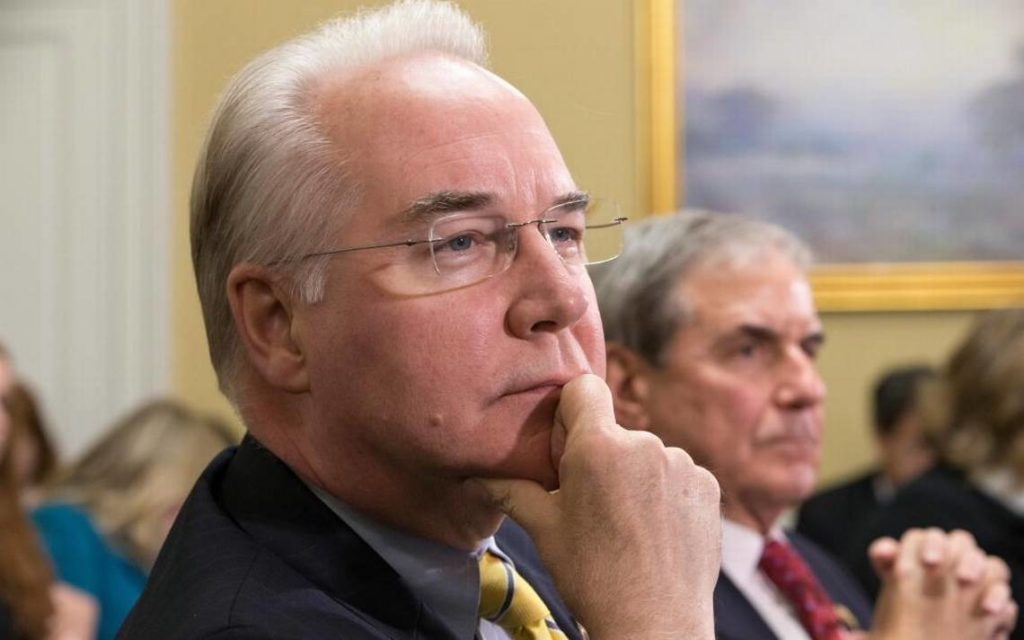
As a congressman, Georgia Republican Tom Price has been thwarted in his hopes to repeal the Affordable Care Act and transform Medicare into a voucher-like program for future participants. Now, as President-elect Donald Trump‘s choice to run the Department of Health and Human Services, Price will wield great power as Trump’s top health policy adviser and preside, Republicans hope, over the dismantlement of President Barack Obama’s signature health care law. Price, 62, carries himself with a surgeon’s confidence and possesses deep knowledge of health policy. He is one of very few Republicans to actually propose a replacement for Obamacare, and promises to be a staunchly conservative voice in Trump’s Cabinet. Price is buttoned down and unfailingly polite, but he is not shy about swinging his elbows in the heat of debate. As chairman of the House Budget Committee, Price emerged as a top advocate of Speaker Paul Ryan’s plan to transform Medicare from a program that supplies a defined set of benefits into a “premium support” model that would, similar to Obamacare, offer subsidies for participants to purchase health care directly from insurance companies. He also wants the Medicare eligibility age to rise to 67. Price also supports, as does Trump, a plan by House Republicans to sharply cut the Medicaid health program for the poor and disabled and turn it over to the states to run. Like Trump and most other Republicans, Price wants federal funding withdrawn from Planned Parenthood, which has come under attack for its practice of supplying tissue from aborted fetuses to medical researchers. Trump has said he opposes GOP plans to provide vouchers for future Medicare beneficiaries and GOP support for the idea has never been tested beyond its inclusion in non-binding budget blueprints. Price’s plan would require people who are now in their late 50s to accept the Medicare subsidies, which critics say would fail to keep pace with inflation and force higher out-of-pocket costs like deductibles and co-payments. Trump named Price on Tuesday and called him “a tireless problem solver and the go-to expert on health care policy, making him the ideal choice” to run HHS. “He is exceptionally qualified to shepherd our commitment to repeal and replace Obamacare,” Trump said. While Republicans are generally united in their desire to repeal Obama’s health law, there’s no consensus on what should replace it. Price has offered a solution that would provide tax credits to subsidize the purchase of individual and family health insurance policies. His proposal would also allow insurers to sell policies across state line, boost incentives for health savings accounts, and create high-risk pools to help individuals afford coverage, while barring assistance for nearly all abortions. It will fall to Price, once confirmed, to be the prime go-between Trump and Capitol Hill Republicans in what are certain to be difficult and complicated negotiations over replacing the health care law. Price serves on the powerful Ways and Means Committee, which has jurisdiction over Obamacare, but he hasn’t been seen as an inside player in much of the panel’s work. The HHS secretary also has great power over the workings of Medicare and Medicaid and the medical profession in general. Price led the House Republican Study Committee, a powerful band of conservative voices, during the first two years of the Obama administration. He lost a close election in 2012 to become the No. 4 Republican in House GOP ranks despite the support of Ryan, a friend and confidante. At the time, Republicans faced criticism for a lack of diversity in their leadership ranks, and GOP leaders like former Speaker John Boehner of Ohio swung behind Rep. Cathy McMorris Rogers of Washington. Democrats reacted with alarm, though they lack the power to block Price because of a change to filibuster rules they orchestrated when controlling the Senate. “Congressman Price has proven to be far out of the mainstream of what Americans want when it comes to Medicare, the Affordable Care Act, and Planned Parenthood,” said incoming Senate Minority Leader Charles Schumer, D-N.Y. “Thanks to those three programs, millions of American seniors, families, people with disabilities and women have access to quality, affordable health care. Nominating Congressman Price to be the HHS secretary is akin to asking the fox to guard the hen house.” Republished with permission of the Associated Press.
Donald Trump taps Tom Price to lead HHS, plans 2nd meeting with Mitt Romney

President-elect Donald Trump moved to fill out his Cabinet Tuesday, tapping Georgia Rep. Tom Price to lead the Department of Health and Human Services. Aides signaled that at least one other Cabinet nomination was imminent. The president-elect appeared to still be torn over his choice for secretary of state. He summoned former Massachusetts Gov. Mitt Romney to New York for dinner Tuesday night to discuss the post for a second time. He was also meeting with Tennessee Sen. Bob Corker, the chairman of the Senate Foreign Relations Committee who was getting new attention from Trump’s team. On Monday, Trump spent an hour with retired Gen. David Petraeus, another new contender. Trump’s decision to consider Romney for the powerful Cabinet post has sparked an unusual public backlash from some of his closest aides and allies. Campaign manager Kellyanne Conway has warned that it would be a “betrayal” to Trump supporters if he selected Romney, who was a fierce critic of the president-elect. Three people close to the transition team said Trump was aware that Conway planned to voice her concerns about Romney in public and they pushed back at suggestions that the president-elect was angry at her for doing so. Even as he weighed crucial Cabinet decisions, Trump appeared distracted by outside forces — or eager to create distractions himself. He took to Twitter early Tuesday to declare that “nobody should be allowed to burn the American flag.” He warned that those who do should face “perhaps loss of citizenship or year in jail!” Trump offered no context for his message. The Supreme Court has ruled that flag burning is protected by the First Amendment. The president-elect spent the weekend tweeting his opposition to a recount effort in up to three states that is led by Green Party candidate Jill Stein and joined by Hillary Clinton‘s team. He also falsely claimed that millions of people had voted illegally in the presidential election and provided no evidence to back up the baseless charge. Trump won praise from Republicans Tuesday for his pick of Price to serve as health and human services secretary. A six-term congressman and orthopedic surgeon, Price has been a leading critic of President Barack Obama‘s health care law. If confirmed by the Senate, he’ll be a leading figure in Republican efforts to repeal the measure. Incoming Senate Democratic Leader Chuck Schumer said Price “has proven to be far out of the mainstream of what Americans want” for programs that help seniors, women, families and those with disabilities. His nomination, Schumer said, is “akin to asking the fox to guard the henhouse.” Trump’s team also announced Tuesday that Seema Verma had been chosen to be administrator of the Centers for Medicare and Medicaid Services. Jason Miller, a transition team spokesman, said at least one other Cabinet post would be announced in the afternoon. He did not elaborate. Transition aides said Trump was likely at least a few days away from a decision on secretary of state. Romney has supposed from Vice President-elect Mike Pence, who is heading the transition efforts. Romney was fiercely critical of Trump throughout the campaign, including his preparedness for the foreign policy and national security decisions that confront a president. Still, he is said to be interested in serving in the administration and held a lengthy initial meeting with Romney before Thanksgiving. Other top Trump allies, notably Conway, have launched a highly unusual public campaign against a Romney nomination. Conway’s comments stirred speculation that she is seeking either to force Trump’s hand or give him cover for ultimately passing over Romney. Former New York City Mayor Rudy Giuliani, a loyal Trump ally, was initially seen as the leading contender to helm the State Department. But questions about his overseas business dealings, as well as his public campaigning for the job, have given Trump pause. Trump is now said to be considering Giuliani to head the Homeland Security Department, according to those close to the transition process. Republished with permission of the Associated Press.
Sens. Bernie Sanders, Elizabeth Warren call research bill gift to drug firms
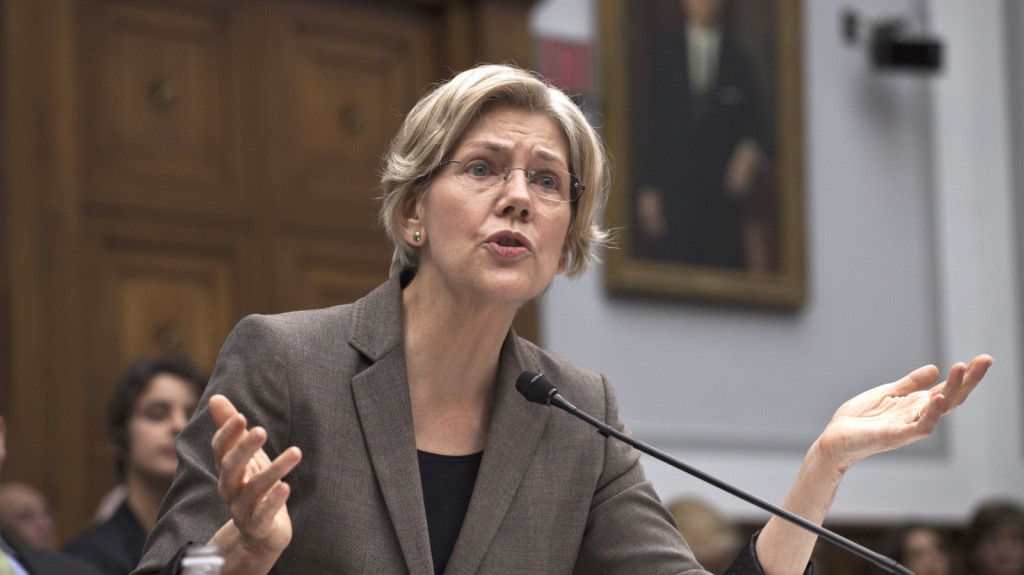
Two of the Senate’s most liberal lawmakers are assailing a $6.3 billion medical research bill as a gift to drug companies, even as Republican leaders prepare to try pushing the measure through the lame-duck Congress. “It’s time for Congress to stand up to the world’s biggest pharmaceutical companies, not give them more handouts,” Sen. Bernie Sanders, I-Vt., said Tuesday in a written statement. The comments by Sanders came a day after Sen. Elizabeth Warren, D-Mass., delivered a ferocious attack on congressional Republicans and Senate Majority Leader Mitch McConnell over the legislation and pushed fellow Democrats to oppose a measure she said “is corrupt, and it is very, very dangerous.” The opposition by Sanders and Warren was noteworthy because it comes as progressives and moderates are struggling over the direction the Democratic Party should take in the wake of its defeats on Election Day. Hillary Clinton lost her White House bid to Republican Donald Trump and Democrats remained in the House and Senate minority, making only small gains in each chamber. In remarks Tuesday to the Senate, Minority Leader Harry Reid, D-Nev., said there is “some angst” among Democrats about the bill and said he was expecting it to be changed, but was not specific. White House spokeswoman Katie Hill voiced support for added research and drug abuse spending but said officials are reviewing the legislation “while conversations continue in Congress.” The House planned to consider the 996-page measure on Wednesday and Senate debate was expected next week, which is expected to be the final week of this year’s post-election Congress. The bill would let the Food and Drug Administration approve drugs and medical devices more quickly and bolster federal mental health programs. It lays plans for $4.8 billion in additional spending over the next decade for cancer, brain and other biomedical research at the National Institutes of Health, $1 billion for grants to states for drug abuse prevention and research and $500 million for the FDA to accelerate its approval procedures. Top Republicans announced the research bill last week, more than a year after the House approved an earlier version by an overwhelmingly bipartisan margin. Sanders and Warren – two of the highest-profile liberals in Congress – both complained that the bill’s money is not guaranteed and must be provided in later legislation by Congress. They also criticized the legislation’s savings, which includes cuts in a public health program under President Barack Obama‘s health care law, reduced payments under Medicare and Medicaid and oil sales from the government’s strategic petroleum reserve. In a Monday speech on the Senate floor, Warren used the populist rhetoric that has made her a hit among progressive voters. All but demanding that her party follow her lead, Warren said, “Republicans will control this government, but they cannot hand that control over to big corporations unless Democrats roll over and allow them to do so.” She said the research bill would “legalize fraud” by reducing the scientific evidence the government needs to approve existing drugs for new uses. She said it would “cover up bribery” by exempting medical companies from publicly reporting some payments they make to doctors. “I cannot vote for this bill. I will fight it because I know the difference between compromise and extortion,” said Warren, who some mention as a potential 2020 presidential contender. Warren also said the bill benefits a Republican donor who backs contentious therapies that are supposed to regenerate cells. She did not name the donor during her speech but said McConnell, R-Ky., has accepted contributions from him. A Warren spokesman said Warren was referring to an April report by Politico that said separate legislation helping companies get approval for stem-cell treatments was backed by Ed Bosarge, a wealthy Texan. The report said Bosarge has donated to McConnell’s political committee and invested in regenerative medicine. A McConnell spokesman declined to comment. McConnell said this month that the overall bill is a major priority for Congress’ lame-duck session and singled out its provisions helping regenerative medicine. Sen. Charles Grassley, R-Iowa, chairman of the Senate Judiciary Committee, said Monday that he wanted the removal of a provision letting companies not report some payments to doctors. Consumer groups have complained that the payments encourage doctors to prescribe those companies’ products. No. 3 Senate Democratic leader Chuck Schumer of New York is also trying to remove that provision, a Democratic aide said. Republished with permission of the Associated Press.
Study finds Alabama energy sector has $13.2 billion impact on economy

Alabama’s energy industry contributes more than $13 billion a year to the state’s economy and at least 124,000 jobs depend on the energy sector, according to a recent economic impact study – the first of its kind in the state. The report, conducted by Auburn University at Montgomery professor Dr. Keivan Deravi and the Energy Institute of Alabama, uses figures from 2015 — from the U.S. Bureau of Economic Analysis (BEA), the U.S Bureau of Labor Statistics (BLS), as well as a small sample of data for Alabama-based utility companies was provided by the Energy Institute of Alabama — in attempt to estimate the economic impact of the energy industry of Alabama on the state’s economy. “Alabama’s energy sector provides the spark that makes the state’s economic engine go. Akin to the consumer who never thinks of what goes into making the lights come on at the flick of a switch, those of us in the energy business were never certain of the exact economic impact provided by the industry,” said former Alabama Speaker of the House Seth Hammett, who now serves as the chairman of the new nonprofit Energy Institute of Alabama. “That has changed.” Hammett continued, “This study spells out just how important the industry is to our state. Behind the numbers are hard-working Alabamians who help keep the lights on, keep the vehicles rolling and ensure our homes are cool in the summer and warm in the winter.” The study determined 124,000 Alabama jobs depend on the energy business, that the state’s General Fund and Education Trust Fund receive $385 million in tax dollars from the energy sector each year, and that the electricity production component of the industry has a $8.24 billion impact. “Reliable, affordable energy is vitally important to businesses and manufacturers in our state and seeking to come to Alabama,” said George Clark, president of Manufacture Alabama. “This study brings into focus how fortunate we are to have a vibrant energy sector and one that understands how cooperation with business and industry makes for a better state for all of us.”
