
Kay Ivey disbands several Bentley-era commissions, task forces, councils
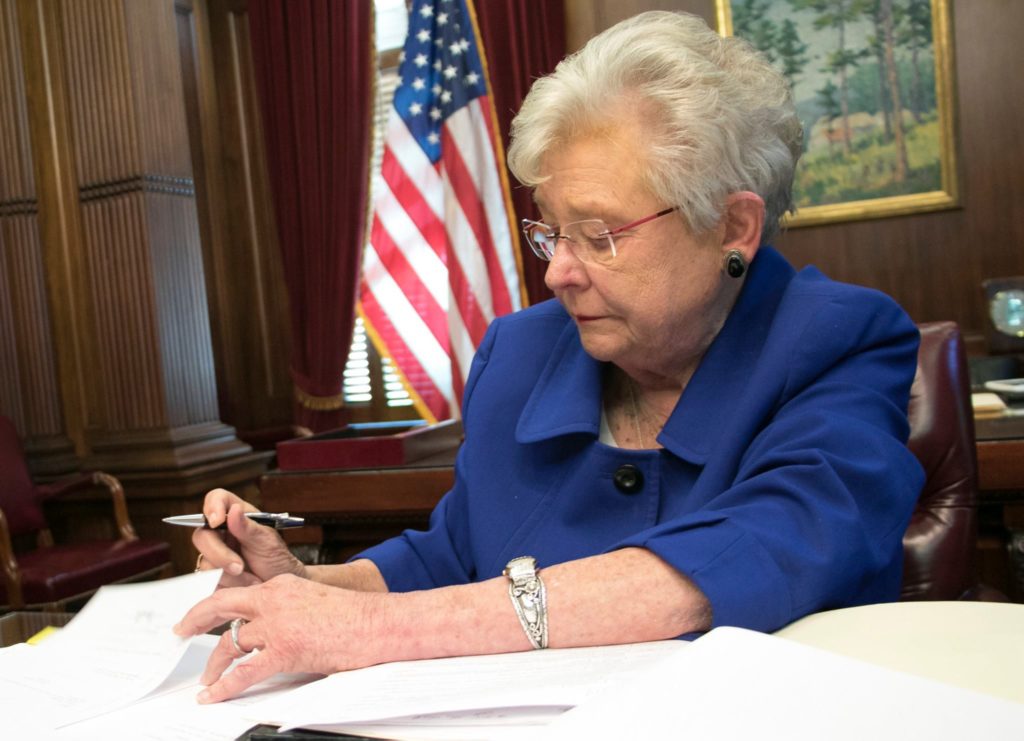
Several task forces, councils and commissions created by the Robert Bentley administration were disbanded on Wednesday by Governor Kay Ivey. In signing Executive Order 3, Ivey did away with 18 task forces, councils and commissions including the Alabama Advisory Council on Gaming and the Grocery Tax Task Force. “I believe strongly that my role is to make decisions and lead, not kick the can down the road. I am choosing to tackle some of the issues that have previously been sent before a task force,” Ivey said of her decision. “I will work closely with members of the legislature in the days ahead to address the very important issues facing our state. She continued, “Since the first day I took office, I have been committed to efficiency in government, cutting bureaucratic red-tape, and saving tax-payer resources; removing these groups, many of which have either completed their work or have become inactive, is just a part of that process.” In May, Ivey and her legal team began to review established commissions and task forces to determine which ones were “needed and necessary.” Full list of disbanded groups: Alabama Advisory Council on Gaming (established Oct. 3, 2016) Alabama Commission on Improving State Government (established Jan. 25 2011) Alabama Consumer Credit Task Force (established June 14, 2016) Alabama Economic Development Alliance (established July 18, 2011) Alabama Forest Recovery Task Force (established May 5, 2011) Alabama Human Resources Task Force (established August 14, 2015) Alabama Health Care Improvement Task Force (established April 6, 2015) Alabama Health Insurance Exchange Study Commission (established June 2, 2011) Alabama Industrial Energy Advisory Team (established May 9, 2014) Alabama Medicaid Pharmacy Study Commission (established June 6, 2013) Alabama Small Business Advisory Council (established September 15, 2014) Alabama Solid Waste Management Task Force (established September 15, 2016) Governor’s Commission on Coastal Insurance (established April 6, 2011) Governor’s College and Career Ready Task Force (established January 15, 2013) Grocery Tax Task Force (established Feb. 21, 2017) Health Literacy Partnership (established April 20, 2016) Law Enforcement Stakeholder Task Force (established June 21, 2012) Tax Exemption Advisory Council (established August 19, 2015)
Mo Brooks raised $298,000 for U.S. Senate primary in second quarter
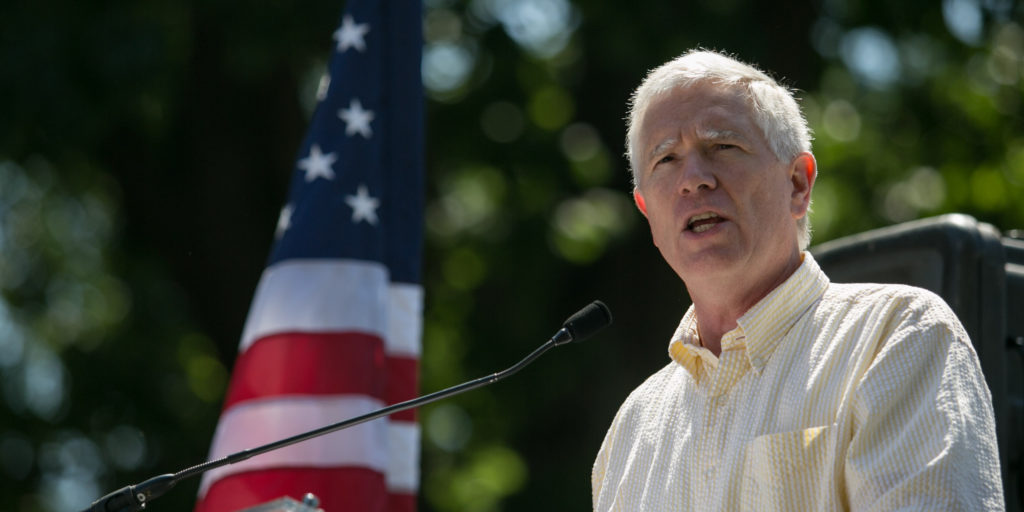
Republican U.S. Rep. Mo Brooks added another $300,000 in contributions to his campaign account between the beginning of April and the end of June, putting him more than $600,000 ahead of sitting Sen. Luther Strange in cash on hand. Since April 1, the CD 5 Republican has raised $298,000 for his campaign account, including $255,000 from individuals and $42,000 from political committees. The candidate also spent about $105,000 during the second quarter, leaving him with nearly $1.4 million in his campaign account on July 1. The 92-page filing shows dozens of small-dollar donors giving to the campaign, with many chipping in multiple times over the three-month period. Among the committees who backed Brooks are Airbus, Alabama Power Co Employees PAC, Birmingham-based Balch & Bingham LLP, Honeywell International, and the Lockheed Martin Employees PAC. Brooks also picked up contributions from Georgia Republican U.S. Rep. Austin Scott and Arizona Republican U.S. Rep. Paul Gosar. Spending included more than $30,000 in fundraising commissions for web-based donation platform Transaxt, $16,090 for consulting from the Precision Campaign Group, and $10,400 for ad production through Steinborn Films. Strange, who was appointed to the Senate by former Alabama Gov. Robert Bentley, has not yet filed his report for the quarter, though through the of March, the former Alabama Attorney General had $763,612 on hand. The Republican Primary for the Senate seat was originally set for 2018, but new Gov. Kay Ivey moved the election forward to Aug. 15, with the general election to follow on Dec. 12.
Dom Gentile withdraws from Senate race, endorses Mo Brooks
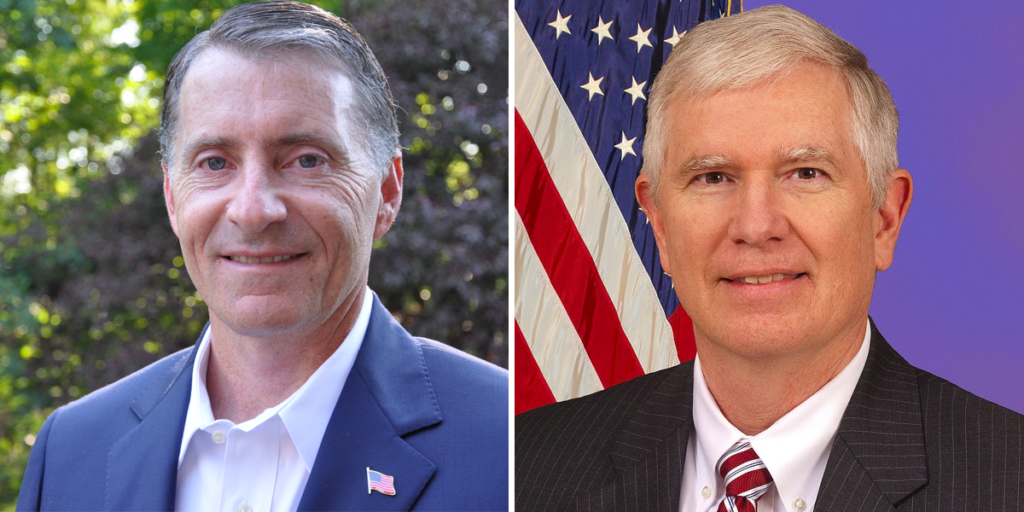
Birmingham businessman Dominic “Dom” Gentile, who entered Alabama’s U.S. Senate in hopes of shaking-up the status quo, withdrew his candidacy on Monday and urged his supporters to back Alabama 5th District U.S. Rep. Mo Brooks. “Two weeks ago my family was hit with a complex issue that I don’t yet have my head around and I must learn more about. My wife of 29.5 years was diagnosed with a rare form of breast cancer,” Gentile explained at a press conference with Brooks Monday afternoon in Birmingham. “It is time for me to spend my time by her side, fighting to help her and others stricken by this nasty disease. So I am immediately withdrawing from the US Senate race, and will be taking the fight to cancer.” Gentile says during the race he had the oppounity to get to know the other candidates running, but only Brooks meets his “extremely high” standards. Gentile continued, “If you are looking for a rare breed of US Senator with true conservative principles who will get the government out of your way. If you are looking for an ethical family man who will represent our state with dignity. If you are looking for a Senator who is smart as a whip and who will work hard for you. If you are looking for a Senator with a huge heart who is guided by the principles of God… Then Mo Brooks is your man.” Brooks offered his prayers to the Gentile family, as he thanked Dom for his support. “Martha and I are very sorry to hear of Karen Gentile’s illness and send her our prayers for a full recovery. Our family has experienced breast cancer so I have some understanding of what Karen and Dominic Gentile are going through,” said Brooks. “It has been an honor to compete with Dominic Gentile during this Senate campaign and to receive his endorsement. It means a lot.” Watch the announcement below:
Conservation groups sue feds to protect Red Snapper, promote reform
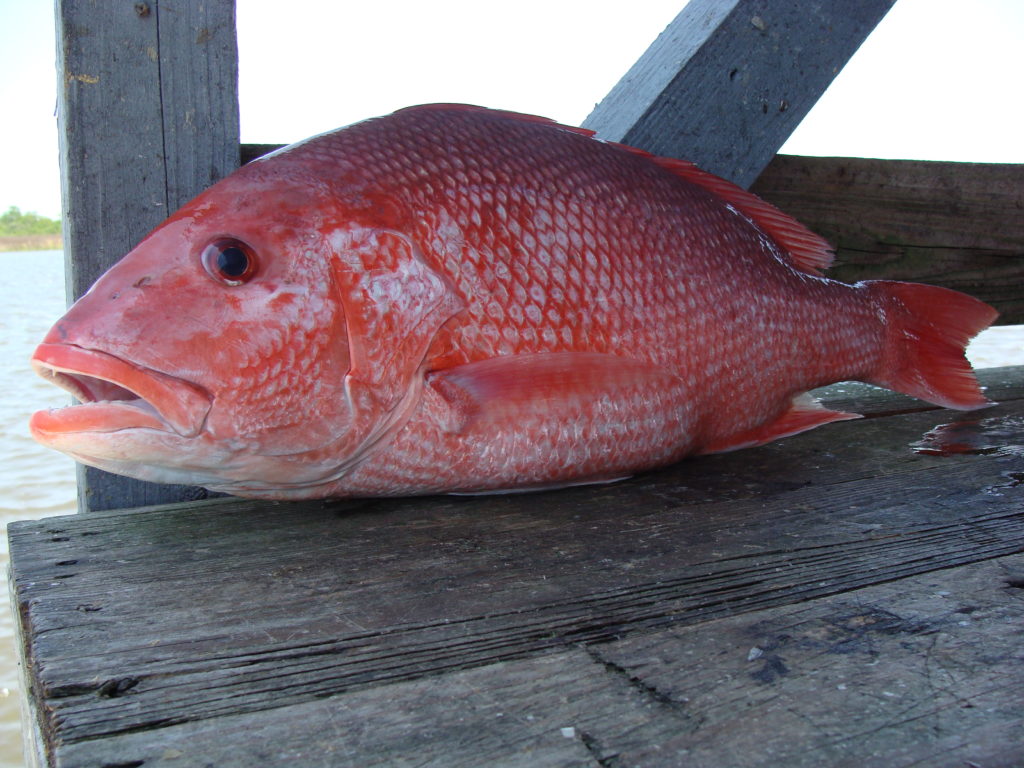
Two environmental groups are suing the Trump administration for extending the red snapper season in federal and state waters within the Gulf of Mexico this year. The Environmental Defense Fund and Ocean Conservancy filed a lawsuit on Monday in the U.S. District Court for the District of Columbia against a U.S. Department of Commerce June decision that allowed recreational anglers to fish for red snapper in federal and state waters for 39 weekend days Friday through Labor Day. According to the groups, the decision “puts red snapper recovery at risk, jeopardizing fishing businesses and recreational fishing for the species. It also violates several provisions of federal law.” “The way we manage recreational red snapper fishing stinks, and saltwater anglers like me are demanding change,” said Robert Jones, Director of Environmental Defense Fund’s Gulf of Mexico Oceans Program. “The recovery of the species is an incredible opportunity. I was recently offshore from Galveston and the water is teeming with red snapper. But instead of anglers and recreational fishing businesses reaping the benefits, we are stuck in a downward spiral of failure. This lawsuit is about catalyzing change.” Jones continued, “Year-round state-water seasons combined with minuscule federal seasons suffocate our access to the best offshore fishing grounds. And I sure as heck don’t want to return to the days when my dad and I could barely find a red snapper due to decades of overfishing. What we demand is innovative, solutions-oriented reform that harnesses new approaches like Louisiana’s LA Creel program, gives us flexible access, and ensures that future generations of Americans can enjoy the thrill of catching red snapper.” The extended season came after the NOAA Fisheries in May approved a recreational season of three days — June 1-3, which fishing enthusiasts decried as being far too short. Alabama lawmakers quickly took action reaching out to federal officials to lengthen the season, which was the shortest ever in the Gulf of Mexico. After extensive debate on both the Gulf Coast and Capitol Hill, the Department of Commerce approved the extended season. According to the lawsuit, Commerce Secretary Wilbur Ross and two federal agencies — the National Marine Fisheries Service and the National Oceanic and Atmospheric Administration — were listed as the defendants.
Tuition to increase for Alabama Community College System students
Students attending Alabama’s 25 two-year colleges will see tuition rise 1.4 percent in the upcoming academic year. The Alabama Community College System‘s board of trustees approved tuition rates per credit hour to increase $2 to $119 for Alabama residents and $234 for nonresidents. Students at Marion Military Institute and the Alabama Technology Network will not be affected by the tuition increase. Trustee chairman Al Thompson called the rate hike “modest” saying it’s part of an annual adjustment first established by the Alabama Board of Education. More than 83,000 students are enrolled within the state’s two-year college system.
Bradley Byrne: Rebuilding, reforming, and repairing our military
There is no greater responsibility of the federal government than to provide for the safety and security of the American people. I have found myself making this point over and over again throughout my short time in Congress. With the wide range of issues under debate here in Washington, some of my colleagues seem to forget that our most basic responsibility as outlined in the Constitution is to “provide for the common defense” of the American people. That is exactly what we did last week when the House passed the National Defense Authorization Act (NDAA) by a strong bipartisan vote of 344 to 81. As you may remember, this is the bill that authorizes funding and sets policy for the entire United States military. Needless to say, it is a critically important piece of legislation that Congress must pass each year. As a member of the House Armed Services Committee and Vice Chairman of the Seapower Subcommittee, I was able to play a key role in the bill as it moved through our Committee and then to the House floor for a vote. The bill is especially important this year given President Donald Trump’s pledge to grow our military. Our bill increases total military spending by 10% over last year’s levels, which will help reverse the severe readiness crisis that has been plaguing the military. Consider these numbers: thirty years ago, the Fiscal Year 1988 NDAA represented 27.3% of total federal outlays and 5.2% of projected GDP. This year’s bill authorizes funding for the military at $688.3 billion, which is 16.8% of total federal outlays and 3.4% of projected GDP. We are spending less proportionally today on our military despite the fact that we face a wider range of threats across the globe. That should be troubling to every American. Thirty years ago our nation’s military faced only one serious threat: the Soviet Union. There was no ISIS or al Qaeda or other radical Islamic terrorist organization threatening the United States. Iran was not an existential threat to the American people. North Korea wasn’t developing nuclear weapons and ballistic missiles. China was not on the radar as it relates to military power. We weren’t worried about cyberattacks or cyber espionage. The threat environment today is incredibly complex, and we must ensure that our military funding is in line with the realities of the threats we face. This year’s NDAA is a big step in that direction. The bill increases the size of the Army, Navy, Air Force, Army Guard and Reserve, Naval and Air Reserve, and Air Guard. It also provides for the procurement of critical military aircraft, ships, and equipment while also setting money aside for maintenance and repairs to current military resources. Important to our area, the bill authorizes the construction of three more Littoral Combat Ships (LCS), which are built in part by Austal USA in Mobile. It is critical that the bill support three ships because that is the number necessary to keep the shipyard operating at full speed and keep the cost of the ships down. Given the nuclear and ballistic missile threat posed by North Korea, the bill boosts our nation’s missile defense programs. A number of important cyber security provisions and reforms related to the space domain are also included in the bill. In an effort to support our service members and their families, the bill authorizes a 2.4% pay raise for our troops. It also includes significant provisions related to military health care, housing, and benefit programs. All told, this bill will help ensure the safety and security of the American people through rebuilding, repairing, and reforming our nation’s military. • • • Bradley Byrne is a member of U.S. Congress representing Alabama’s 1st Congressional District.
On Message: Democrats say they must do more than talk Russia

As Democrats look to reverse Republicans’ monopoly control in Washington and the GOP advantage in state capitals, the party is still looking for a crisp, simple message for voters. Here’s a look at what some Democrats say about the party’s pitch: — “We know that we can be an America that works for everyone, because we believe that our diversity is our greatest strength. … And we believe that when we put hope on the ballot we do well, and when we allow others to put fear in the eyes of people we don’t do so hot,” Tom Perez, chairman of the Democratic National Committee. — “We need to be talking about impeachment constantly. … If you’re an elected Dem & you’re not talking impeachment or 25th amendment then find a new party,” Scott Dworkin, senior adviser to Democratic Coalition Against Trump, on Twitter. — “We’re advising groups to pay attention to Russia, but the bottom line is they’re trying to take your health care away. That should be the focus. Eye on the prize,” Ezra Levin, co-founder of Indivisible. — “I focus a lot on good-paying jobs, student loan issues, health care and the effort to repeal the Affordable Care Act. Those are the issues that are at the top of (voters’) minds. … I don’t think (the Russia investigation) has to interfere with our conversation about every day matters in people’s lives,” Jason Crow, Democratic candidate in Colorado’s 6th Congressional District. — “Voters are getting plenty about the Russia story, and they don’t need candidates’ help making that case. … I think it’s a fundamental mistake to make this election a referendum on impeachment. That means it’s not an election on a health care bill that will raise premiums and take more than 22 million people off of their health care,” Zac Petkanas, Democratic strategist, former aide to Hillary Clinton. — “We will both defend the integrity of our democracy (on the Russian investigation) and we will defend access to health care for tens of millions of people. The resistance is big enough and sophisticated enough to track both of those urgent and important issues,” Anna Galland, executive director of Moveon.org Civic Action. — “All of that (on Russia) is going to come out, and if a politician was lacking in courage and never did anything about it, I think they will pay dearly for it, and they should. … But if you’re a governor candidate next year, you’re a lot smarter saying, ‘Here’s what I’m going to do about jobs and education and wages’ than weighing in every day on issues outside your control.” David Pepper, Ohio Democratic Party chairman. — “We need to be able to explain what we’re for just as emphatically as who we are against. … Voters need to hear you talking about them more than they hear you talking about yourself, your opponent or the president.” Mayor Pete Buttigieg of South Bend, Indiana. Republished with permission of The Associated Press.
More hurdles as Senate again delays vote on GOP health bill
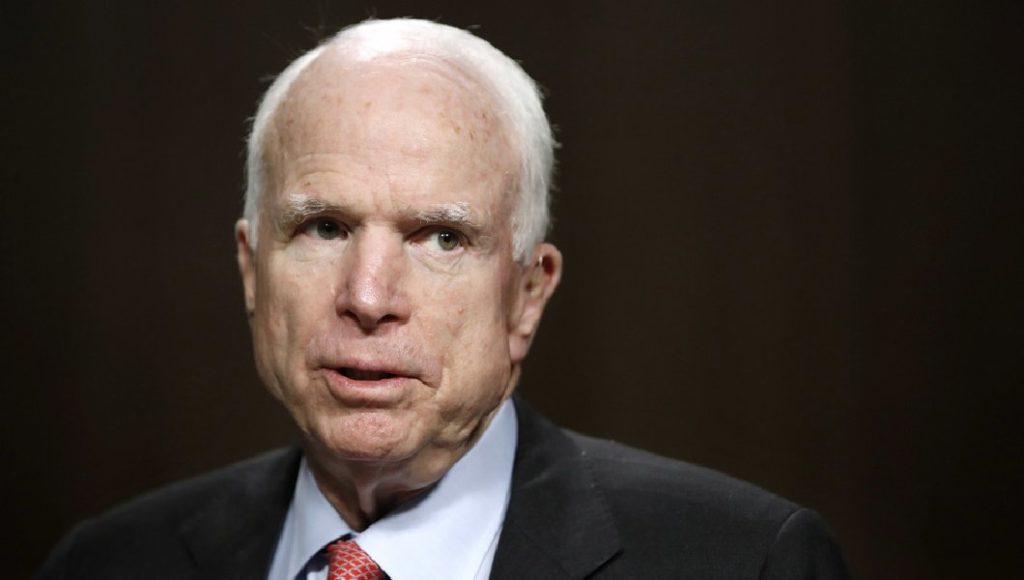
The Senate delayed a highly anticipated vote this coming week to repeal and replace the nation’s health care law after Sen. John McCain‘s announced absence due to surgery, an enormous setback as time dwindles for Republicans to pass the signature legislation after years of promises. The decision by Senate Majority Leader Mitch McConnell late Saturday came not long after McCain’s office disclosed that he had undergone surgery to remove a blood clot from above his left eye. He’s expected to be out for the week, recovering in Arizona. Adding to the uncertainty, the Congressional Budget Office also indicated on Sunday it no longer expected to release its analysis on Monday on the estimated cost and scope of insurance coverage under the latest GOP bill, which has the support of President Donald Trump. The No. 2 Senate GOP leader, John Cornyn of Texas, said he still expected the Senate to move quickly, holding a vote as soon as McCain returns. But amid growing public unease over the bill, some Republicans suggested the delay will make McConnell’s task of winning enough support even harder. In a Senate divided 52-48 between Republicans and Democrats, McConnell can lose no more than two GOP votes and still prevail. “There are about eight to 10 Republican senators who have serious concerns about this bill. And so at the end of the day, I don’t know whether it will pass,” said moderate Sen. Susan Collins, R-Maine. She has made clear she would vote against the bill, citing proposed cuts to the Medicaid health program for the poor and elderly. Sen. Rand Paul, R-Ky., who is also opposed, said doubts also are increasing among Republicans who want to see a fuller repeal of the Affordable Care Act. “The longer the bill’s out there, the more conservative Republicans are going to discover that it’s not repeal,” he said. The White House said Sunday that Trump was “monitoring what’s going on with health care” but did not otherwise weigh in on the growing uncertainty. “We wish Sen. McCain a speedy recovery,” said Helen Aguirre Ferre, director of media affairs. McConnell last week had refashioned the legislation to attract additional GOP votes. The new package added language letting insurers sell discount-priced policies with minimal coverage aimed at winning over conservatives, and revised funding formulas that would mean federal money for states including Louisiana and Alaska – home to four GOP senators who are uncommitted on the measure. But the health care legislation was already hanging by a thread. McCain’s absence meant it would become impossible for the majority leader to round up the votes needed this week to proceed on the bill. It was the second time that McConnell was forced to call off a planned vote, even with heavy lobbying by Trump administration officials. A vote was postponed last month also due to limited support. Democrats are unanimously opposed to the bill, as are the nation’s major medical groups and insurers. “While John is recovering, the Senate will continue our work on legislative items and nominations, and will defer consideration of the Better Care Act,” McConnell, R-Ky., said on Saturday. He has already said the Senate will work through the first two weeks of the August recess, citing a need to finish a slate of unfinished business. McConnell did not indicate when he would aim to return to the health care bill, but Cornyn made clear Sunday that moving quickly is important. “I believe as soon as we have a full contingent of senators, that we’ll have that vote,” he said. Cornyn acknowledged that if the Senate is unable to attract enough GOP votes that it will “keep trying” but will eventually have to come up with a different plan. “We’re willing to do what we can to shore up the system now, to stabilize it to make health care available to people now, but we want reforms to go along with it,” he said. The Senate bill, like legislation the House passed earlier, repeals mandates requiring individuals to carry insurance and businesses to offer it, and unravels an expansion of the Medicaid program enacted under President Barack Obama‘s law. Analyses of the earlier version of the Senate bill found it would result in more than 20 million additional uninsured Americans over a decade compared to current law. The newest version attempts to attract conservative support by allowing insurers to offer skimpy coverage plans alongside more robust ones, but also reaches out to moderates by adding billions in help for the opioid crisis and to defray high costs for consumers. In Phoenix, Mayo Clinic Hospital doctors said McCain underwent a “minimally invasive” procedure to remove the nearly 2-inch (5-centimeter) clot and that the surgery went “very well,” a hospital statement said. McCain was reported to be resting comfortably at his home in Arizona. Pathology reports on the clot were expected in the next several days. McCain, 80, is a three-time survivor of melanoma. Records of his medical exams released in 2008 when he was the GOP candidate for president showed that he has had removed precancerous skin lesions, as well as an early stage squamous cell carcinoma, an easily cured skin cancer. Cornyn appeared on NBC’s “Meet the Press,” Collins was on ABC’s “This Week” and CNN’s “State of the Union,” and Paul was on “Fox News Sunday” and CBS’ “Face the Nation.” Republished with permission of The Associated Press.
