
Alabama’s 2018 U.S. House elections poised to be more competitive than last
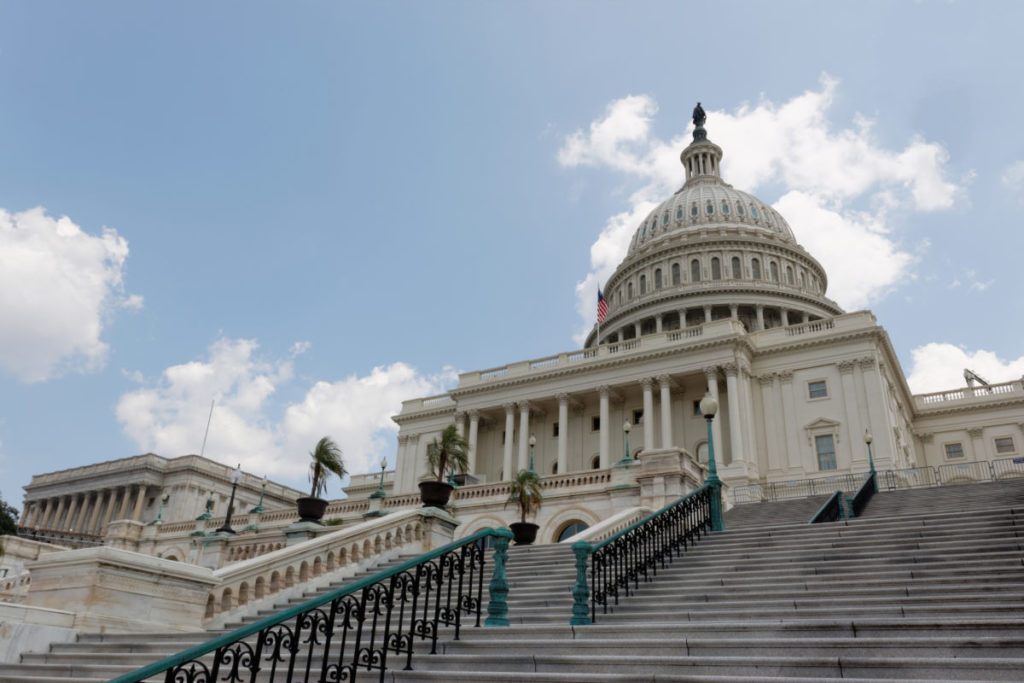
The qualifying for congressional races in Alabama ended at 5 p.m. Friday, and one thing’s for sure: Alabama voters will have plenty of choices in the 2018 elections. Republican incumbents Bradley Byrne (AL-01), Mike Rogers (AL-03) and Gary Palmer (AL-06) will advance to the Nov. 6 general election without a primary challenge. Robert Aderholt (AL-04) and Mo Brooks (AL-05) will each face off with one other Republican challenger. Meanwhile four-term U.S. Rep. Martha Roby (AL-02) will face off against a sea of Republican primary challengers — four. Democratic incumbent Terri Sewell (AL-07) is Alabama’s only candidate who not only has no primary challenger, but no challenger in the general election as well, making her the Yellowhammer State’s only incumbent guaranteed to advance to the next Congress. 2018’s lineup is a stark contrast from 2016, when Bryne, Aderholt and Sewell all ran unopposed. In total, both parties will be well represented in the June 5 primary elections, as the GOP has put up 12 candidates, and the Democrats 11. Here’s who’s qualified to the run for the U.S. House of Representatives in 2018: (by district and party, in alphabetical order) District 1 Republican Bradley Byrne (incumbent) Democrats Robert Kennedy, Jr. Lizzetta Hill McConnell District 2 Republicans Tommy Amason Bobby Bright Rich Hobson Barry Moore Martha Roby (incumbent) Democrats Tabitha Isner Audri Scott Williams District 3 Republican Mike Rogers (incumbent) Democrats Mallory Hagan Adia McClellan Winfrey District 4 Republicans Robert Aderholt (incumbent) Anthony Blackmon Democrats Lee Auman Rick Neighbors District 5 Republicans Mo Brooks (incumbent) Clayton Hinchman Democrat Peter Joffrion District 6 Republican Gary Palmer (incumbent) Democrat Danner Kline District 7 Republican N/A Democrat Terri Sewell (incumbent)
The 2018 race to the Alabama governor’s mansion: final list of who’s in
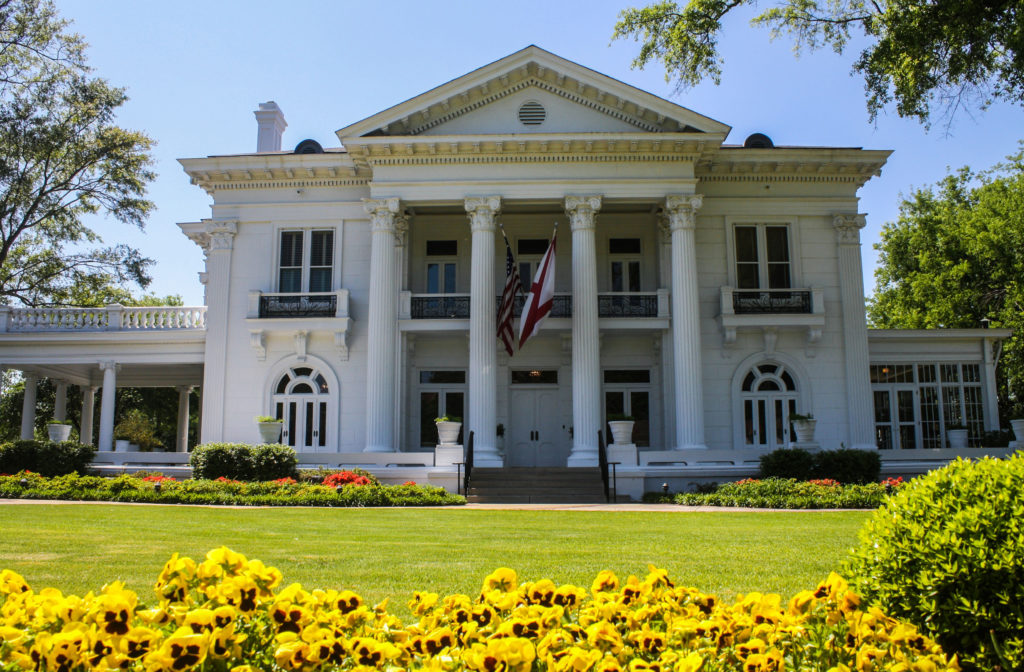
The 2018 race to the Alabama’s governor’s mansion is heating up with a whopping 12 candidates qualifying to run — six Republicans and six Democrats. Here’s who’s in the running: *all candidates presented in alphabetical order by political party Republicans Tommy Battle: the current Huntsville Mayor. Slade Blackwell: State Senator from Mountain Brook, Ala. Scott Dawson: an American author, preacher, and the founder of the Scott Dawson Evangelistic Association Bill Hightower: State Senator from Mobile, Ala. Kay Ivey: the current governor who assumed the helm of the Yellowhammer State following former Gov. Robert Bentley‘s resignation in February 2017. Michael McAllister Democrats Jason Childs: a truck driver from Oxford, Ala. Christopher Countryman: a marriage equality activist Sue Bell Cobb: former state Supreme Court Chief Justice, James Fields: from Hanceville, Ala. Walt Maddox: Mayor of Tuscaloosa Anthony White: Ordained minister and small business owner from Dothan, Ala. Who’s out David Carrington: the Jefferson County Commissioner dropped out of the race. Twinkle Andress Cavanaugh: the Public Service Commission President flipped to the lieutenant governor’s race in August 2017. Stacy Lee George: a state correctional officer and former Morgan County Commissioner dropped out of the race. John McMillan: the State Agriculture Commissioner filed notice on Dec. 12, 2017 he would run for state treasurer instead of governor. Josh Jones: Birmingham businessman, did not qualify The 2018 gubernatorial election will take place on November 6, 2018. The winner will be sworn into office on January 21, 2019.
Gary Cohn: Building a stronger America

A Nation’s infrastructure is a measure of its greatness. It affects everyone’s quality of life and ability to succeed. That is why President Donald J. Trump unveiled a plan this week calling on Congress to pass legislation giving Americans a network of vital infrastructure that will make them proud, strong, and safe. The President developed this plan after meeting with and listening to Members of Congress, governors, mayors, county officials, and business leaders throughout the past year. His plan of action will increase investment, streamline permitting, strengthen rural America, and modernize our workforce. He wants to do it differently than previous efforts to improve our infrastructure, and he wants to get it right. Our infrastructure is broken. The average driver spends 42 hours per year sitting in traffic, missing valuable time with family and wasting 3.1 billion gallons of fuel annually. Nearly 40 percent of our bridges predate the first moon landing. And last year, 240,000 water main breaks wasted more than 2 trillion gallons of purified drinking water—enough to supply Belgium. The President’s plan addresses this by calling for a $1.5 trillion total investment—including $200 billion in Federal funds—over 10 years that will fix our broken public works, create good jobs that pay good wages, restore our competitive edge, and unleash transformative projects to propel our Nation’s infrastructure into the 21st century. In the past, the Federal Government politically allocated funds for projects, leading to waste, mismanagement, and misplaced priorities. The answer to our Nation’s infrastructure needs is not more projects selected by bureaucrats in Washington, D.C. Instead, the President’s plan designates half of its $200 billion for matching funds to stimulate State, local, and private investment. Rather than telling governors and mayors what to do, we will partner with them as they invest in the most pressing projects in the highest-need places. And where it makes sense, we will move old infrastructure off the Government balance sheet and into private investment. President Trump’s infrastructure plan will focus one-quarter of its Federal funds on rural projects to rebuild roads, deliver clean water, expand broadband, and supply affordable and reliable power to neglected corners of our Nation. While the Federal Government owns a relatively small percentage of the Nation’s infrastructure, it regulates all major projects through the Federal environmental permitting process. This over-regulation has led to virtual unanimity on both sides of the political aisle that the project permitting process in this country is unacceptable. The President’s plan tackles this problem by replacing sequential agency analysis with concurrent reviews, with just one Federal agency leading—and accountable for—the permitting process. By eliminating redundant decision making, we can reduce the planning and permitting process from ten years to two without in any way compromising the environment. This is not only good government, it is good economics. By one estimate, further delaying needed infrastructure investments will cost our economy over $3.7 trillion. Strengthening and investing in the Nation’s infrastructure should not be done without doing the same for the American worker. This Administration is committed to helping more individuals access affordable, relevant, quality education and skills-development that leads to full-time work and long-term careers. Among other things, the President is calling on Congress to expand Pell Grant eligibility to high-quality, short-term programs and to reform licensing requirements for individuals seeking an infrastructure project job. This investment in building a stronger America is for everyone. It is for parents concerned about the quality of drinking water. It is for the small business owner working to move goods to market. And it is for the single-mom on her daily commute. It is about improving the lives of American citizens—one truckload of concrete, one I-beam of steel, and one length of cable at a time. The President has crafted a plan for making these dreams a reality. Now is the time for Congress to deliver to the American people the infrastructure they deserve. ••• Gary D. Cohn is the Director of the National Economic Council.
Birmingham-based XpertDox raises $1 million in funding
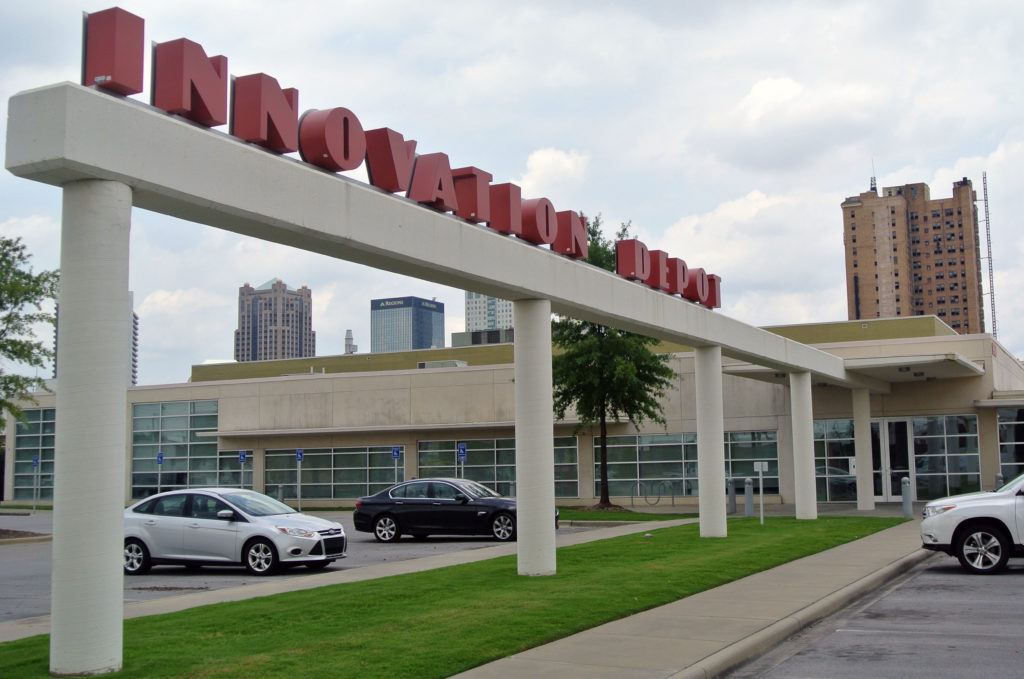
XpertDox, a Birmingham-based startup has closed a $1 million seed funding round. Led by a group of private investors based in Birmingham, Ala. with coordination from the Birmingham Business Alliance, the company will use the money to advance its technology platform and add talent to its team. XpertDox, which is located in Innovation Depot, leverages big data to improve patient access to health care and accelerate patient recruitment into clinical trials. Enabled by a proprietary algorithm, XpertDox has mapped more than 6,000 diseases, 4,500 hospitals, 18,000 clinical trials and all one million doctors in the United States, all to help patients find the best care for their disease. “The closing of this financing represents a significant milestone for XpertDox,” said Dr. Sameer Ather, president and CEO of XpertDox and a cardiologist, researcher and professor at the University of Alabama at Birmingham. “This funding will allow us to continue to invest in the business, enhancing our capabilities to assist patients in finding the best doctor, hospital or clinical trial for their condition.” “Funding is essential for high-growth startup companies like XpertDox to grow here in Birmingham,” added Devon Laney, president and CEO of tech incubator and accelerator Innovation Depot. “Locally raised funds for a startup are a sign that our ecosystem is getting stronger and that investors in our own backyard are recognizing the potential of backing our entrepreneurs.” Ather has worked extensively with, among others, the Birmingham Business Alliance to advance XpertDox’s corporate development goals. “We are grateful for the support we have received from the Birmingham business community and are dedicated to expanding our operations here,” Ather said. Jon Nugent, Vice President of Innovation and Technology at the Birmingham Business Alliance, applauded XpertDox’s recent success. “We are proud to have XpertDox in Birmingham and look forward to continuing to work with Dr. Ather and his team,” Nugent said.
UA, Naval Observatory partnership to improve precise timing education
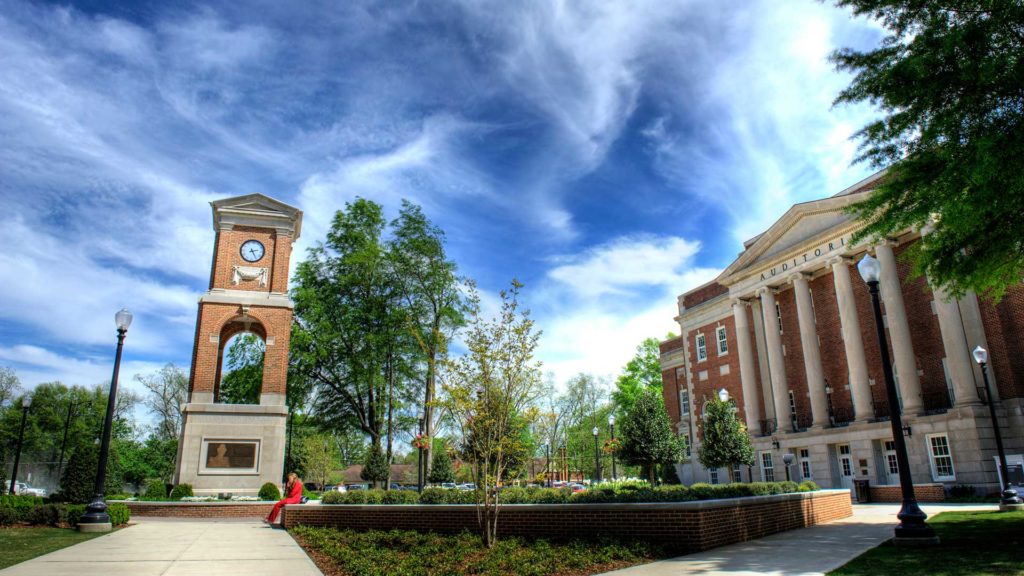
By: Stephanie Kirkland | Director of College Relations The University of Alabama has partnered with the United States Naval Observatory to train UA students in precise timing and time interval technology, which is used in highly precise atomic clocks on which the U.S. military, financial sector, GPS satellites and power grids rely. The partnership will involve an interdisciplinary program drawing on resources from the College of Arts and Sciences and the College of Engineering. It positions UA to be one of the few universities in the world training students in the field. “We’re looking forward to helping the precise-time community get qualified graduates that can make positive contributions right from the start,” said Paul Koppang, director of the USNO Clock Operations Division. “Right now, basically, people are trained on the job when they get there. Another thing this will do is also provide awareness to students that this is a possible career path for them.” Through the partnership, USNO will assist UA in developing curriculum related to precise timing; send staff to present lectures and seminars; loan or donate equipment; offer tours and demonstrations of facilities; and provide academic and career advice to students. UA will develop curriculum to begin training students for future careers in precise timing and will create teaching and research labs with the equipment provided by the USNO. Already, UA’s department of physics and astronomy has developed, and is seeking approval of, concentrations in precision timing for their masters and doctoral degrees. “What’s interesting about this technology is the public doesn’t really know that it exists,” said Dr. Andrew Lemmon, a UA assistant professor of electrical and computer engineering. “But if it stopped working—if atomic clocks that use this technology ceased to operate—everyone would very quickly know about it because things like online financial transactions, GPS and the power grid would be severely disrupted.” But not only are atomic clocks and precise-timing technology important to modern life; they are also used to provide timing for U.S. military installations worldwide. Yet over the last two decades, the number of U.S. experts in precise timing have dwindled. “Nearly all sectors of our economy rely on this silent infrastructure working perfectly in the background of our daily activities, yet the number of experts in the field supporting those activities, and our economy with it, number only a few dozen nationwide,” said Dr. Adam Hauser, a UA assistant professor in the department of physics and astronomy. One type of atomic clock used by the U.S. Department of Defense, called a hydrogen maser, uses the properties of hydrogen atoms to provide a timing reference that is approximately a billion times more stable than time provided by traditional mechanical clocks. Hydrogen masers are made in only one place in the United States, Tuscaloosa, which is how UA faculty got involved. Through a collaborative research program with Microsemi, the company that makes hydrogen masers, Lemmon was able to visit the USNO and learned about their concerns of a dwindling talent pool. Several conversations later, the partnership was born. “We are excited to offer our students the opportunity to receive training in this crucial and growing field,” Lemmon said. This story originally appeared on the University of Alabama’s website.
Hank Sanders, Alabama’s longest-serving state senator, won’t seek 10th term
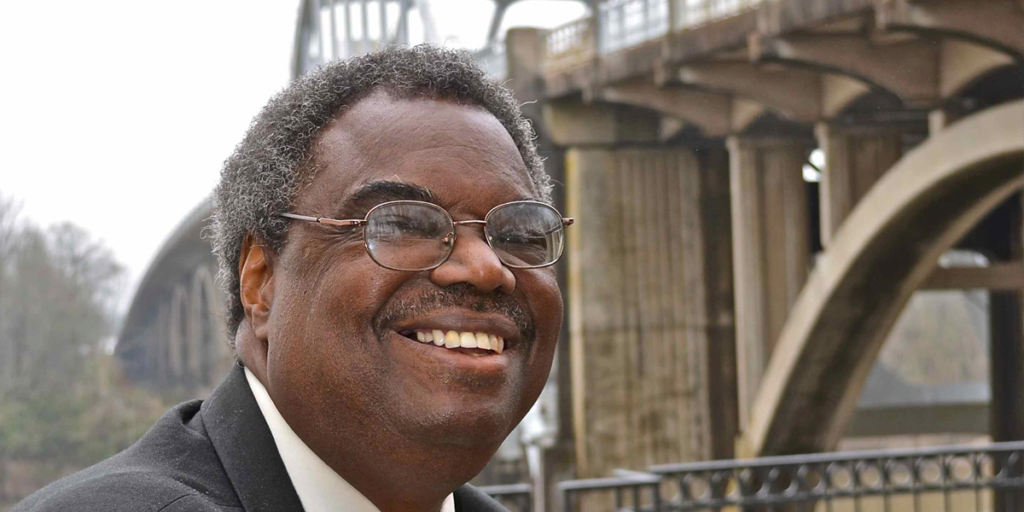
After qualifying to run for re-election, Alabama’s longest-serving state senator, Selma-Democrat Hank Sanders has decided not to seek a 10th term in office. Sanders made announcement in a statement Saturday afternoon. “Some time it is time. Some time we do not realize it is time until something special happens. I had thought that I would run to serve one more term in the Alabama State Senate, and I qualified to run in January,” Sanders said. “However, when I took off 24 hours for our 48th wedding anniversary a couple of weeks ago, I began to realize what a heavy load I carry. I realized that when you cannot get 24 hours away except for your wedding anniversary, then it is time to reevaluate.” Sanders said he came to the conclusion that he did not want to run on Friday, Feb. 9, the last day to qualify to run. “I came to the conclusion that I did not want to have to wait for another anniversary over a long period of years to get away for 24 hours,” Sanders explained. Sanders, 75, has served as senator for District 23 since 1982. Sanders’ daughter Malika Sanders-Fortier has decided she will run for the seat left empty by her father. “I asked my daughter Malika Sanders-Fortier if she would consider qualifying and running for the Senate District 23 seat. We discussed it, and she said yes. I felt great because Malika has my spirit,” Sanders continued. “She is a lawyer, a mother, and is dedicated to lifting the community. I am convinced that she can carry on as well as I could, and I will not have to struggle to take 24 hours for another anniversary or other special occasion.” According to a list of candidates that have qualified to run for Senate District 23, Sanders-Fortier has also qualified. No other candidates, from either major parties, have qualified to run. Sanders said he will fulfill the remainder of his current term withdraw his candidacy in the coming days. “I will withdraw my candidacy for the Democratic Primary in the coming days, and I will serve out the remainder of this term, which is approximately nine months,” Sanders added. Read Sanders full statement below: Some time it is time. Some time we do not realize it is time until something special happens. I had thought that I would run to serve one more term in the Alabama State Senate, and I qualified to run in January. However, when I took off 24 hours for our 48th wedding anniversary a couple of weeks ago, I began to realize what a heavy load I carry. I realized that when you cannot get 24 hours away except for your wedding anniversary, then it is time to reevaluate. I thought and prayed on it. On February the 9th, I came to the conclusion that I did not want to have to wait for another anniversary over a long period of years to get away for 24 hours. I asked my daughter Malika Sanders-Fortier if she would consider qualifying and running for the Senate District 23 seat. We discussed it, and she said yes. I felt great because Malika has my spirit. She is a lawyer, a mother, and is dedicated to lifting the community. I am convinced that she can carry on as well as I could, and I will not have to struggle to take 24 hours for another anniversary or other special occasion. I have run for elective office at least a dozen times, and I have served in the Alabama State Senate in District 23 for nearly 35 years. I will withdraw my candidacy for the Democratic Primary in the coming days, and I will serve out the remainder of this term, which is approximately nine months. I want to express my heartfelt thank you to the people for electing me to serve on so many occasions. It has been my honor to serve in the Alabama Senate, and I will continue to serve, even when I am not in elected office.
Bradley Byrne: Transparency and accountability in Congress
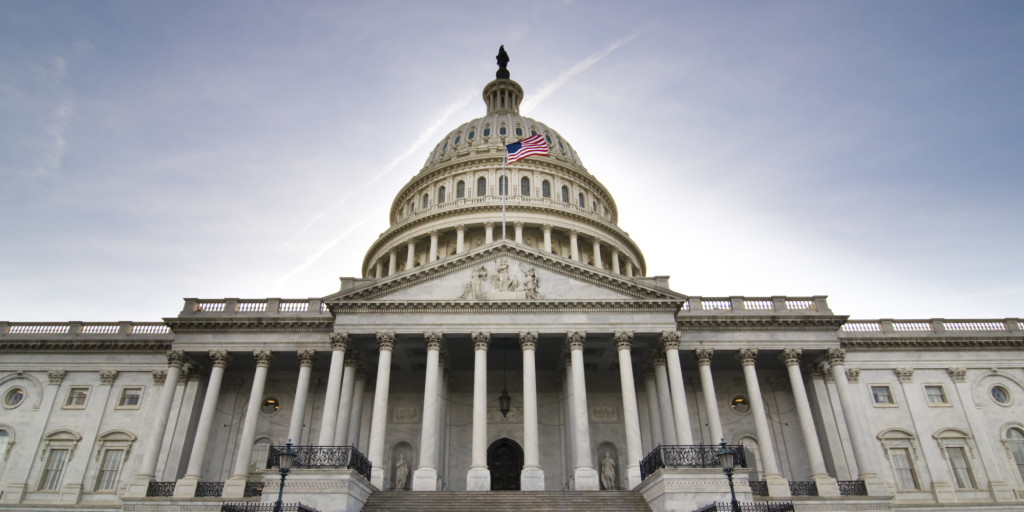
Last year, the country was shocked to learn terrible stories of sexual harassment taking place in the halls of Congress. The stories themselves were horrific, but even worse was the fact that some Members of Congress used taxpayer money to pay settlements. Prior to coming to Congress, I worked for thirty years as a labor and employment attorney in Alabama, so I have a background in these issues. I advised clients on how to prevent sexual harassment and how to navigate the process if a harassment claim was made. Quite frankly, I was shocked to see how complicated the Congressional process for handling sexual harassment and other employment law claims was. Even worse, I was flabbergasted to learn that Members of Congress were able to use taxpayer money to pay the settlements and the information was held secret from the American people. The process was so fundamentally different from how businesses in the private sector have handled sexual harassment and other employment law claims for decades. It just did not make sense. Congress should not have special perks or benefits that other Americans don’t have. So, I reached out to the House Administration Committee and some of my colleagues to work on legislation to fix the problem and ensure a fair and transparent process. I worked hand-in-hand with a number of my colleagues from the other side of the aisle to solve the problems and bring the Congressional workplace into the 21st Century. One of my biggest partners in the effort was Congresswoman Jackie Speier. We had a conservative, Republican congressman from Alabama working to solve the problem with a liberal, Democrat congresswoman from California. It was a truly bipartisan effort. The bill makes numerous reforms to the process of handing harassment and other employment law claims, and you may be surprised at just how commonsense many of the changes are. Most important, the bill ensures that Members of Congress, not taxpayers, are responsible for paying out sexual harassment settlements. No longer will a congressman be able to use taxpayer money to settle a harassment claim. Eqaully important, the bill increases transparency by requiring that basic information about any sexual harassment or other claims be made public so the American people are fully aware of what is happening in Congress. The American people should know about such claims and settlements related to their elected officials. The current process for settling a claim is overly complicated and tends to unfairly favor the accused. Our bill creates a fairer and simpler process for employees to file an employment law claim and for the claim to be resolved. The bill creates an office of employee advocacy to ensure staff has access to legal counsel, just as congressmen are provided. The process is also simplified to make the claims process smoother, faster, and fairer. The bill also paves the way for every Congressional office to have a clearly defined anti-harassment and anti-discrimination policy, and all Members of Congress and staff will be required to take part in anti-harassment training. These reforms alone will result in greater awareness. Finally, our plan prohibits Members of Congress from engaging in a sexual relationship with any staff member under their supervision and makes clear that sexual harassment is a violation of the Code of Official Conduct and will not be tolerated. At the end of the day, our effort is all about ensuring Members of Congress are held accountable and do not get any special benefits or exceptions. I am proud to have helped craft this landmark, bipartisan legislation, and I will continue working to ensure transparency in our government. • • • Bradley Byrne is a member of U.S. Congress representing Alabama’s 1st Congressional District.
