
Alabama reacts to Jeff Sessions actions against sanctuary cities

On Wednesday, Attorney General Jeff Sessions announced an official lawsuit against the state of California over its sanctuary city policies. The lawsuit argues that the state of California is violating the U.S. Constitution by maintaining its laws and policies that prohibit the federal government from enforcing immigration laws and punishing illegal immigrants who commit crimes. “I’m afraid this is an embarrassment to the proud state of California,” Sessions said during a news conference announcing the lawsuit. Here are the reactions from Alabama politicians: Alabama 1st District U.S. Rep. Bradley Byrne (via Facebook:) Glad to see Attorney General Sessions and President Trump going tough against sanctuary cities. It is absurd that cities are allowed to blatantly ignore our nation’s immigration laws. There must be consequences for these reckless and dangerous actions Alabama 2nd District U.S. Rep. Martha Roby in a statement: I have consistently advocated against dangerous sanctuary laws like those seen in California, and I am proud that we now have leadership at the Department of Justice that is committed to fighting these reckless policies instead of rewarding them and turning a blind eye. Attorney General Jeff Sessions’ has made the right decision to put California on notice. I firmly believe this action is an important step toward cracking down on sanctuary cities that endanger the American people and violate our nation’s laws. Alabama 3rd District U.S. Rep. Mike Rogers (via twitter:) I agree, AG Sessions, this is completely unacceptable. https://t.co/tondT0ZXsD — Mike Rogers (@RepMikeRogersAL) March 7, 2018
‘Accidental shooting’ at Birmingham high school kills teen girl; 2 others hurt

One Birmingham, Ala. student has died following an “accidental” school shooting during dismissal on Wednesday Birmingham City Schools confirmed in a statement. Huffman High School was briefly placed on lockdown as police were called to the scene. Students were later released and police are continuing to investigate the circumstances of the shooting. Wednesday evening, Birmingham Police Chief Orlando Wilson confirmed one female student, 17, died on the way to the hospital, and a male student, also 17, is in critical but stable condition. According to AL.com an adult victim was treated and released at the scene. Birmingham Mayor Randall Woodfin held a press conference at the school at 5:45 p.m., less than two hours after the incident. “I just want to remind all of us, that we lost a person today. Not just a person, but a student. But I’m quickly reminded this is not just a student, but someone’s daughter. Someone’s niece, someone’s best friend, someone’s granddaughter we lost,” Woodfin somberly said at the press conference. “This is a 17 year old who 30 days from now would be 18. A graduating senior who had been accepted into college already. Who had aspirations and dreams to be a nurse.” Woodfin continued, “We’re not just talking about some person, we’re talking about losing a part of our future. Our hearts are heavy, but I think it’s really important to find a way to mourn with this family and wrap our arms around the Huffman High School community.” Wednesday evening, Gov. Kay Ivey responded to the tragic news. “I am saddened to learn about the death of the Huffman High School student. I am praying for the family of this young lady who has tragically lost her life way too early,” said Ivey. “Every life is precious and, even though this was an accident, it reaffirms that there is no place for students to have firearms or other weapons on campus.” “My heart is breaking tonight for those hurt and killed in the shooting today at Huffman High School,” Alabama 7th District U.S. Rep. Terri Sewell posted on Facebook. “As we continue to learn more, please pray with me for the victims and their families.” The Birmingham City Schools statement below:
House approves change in ethics law for economic developer
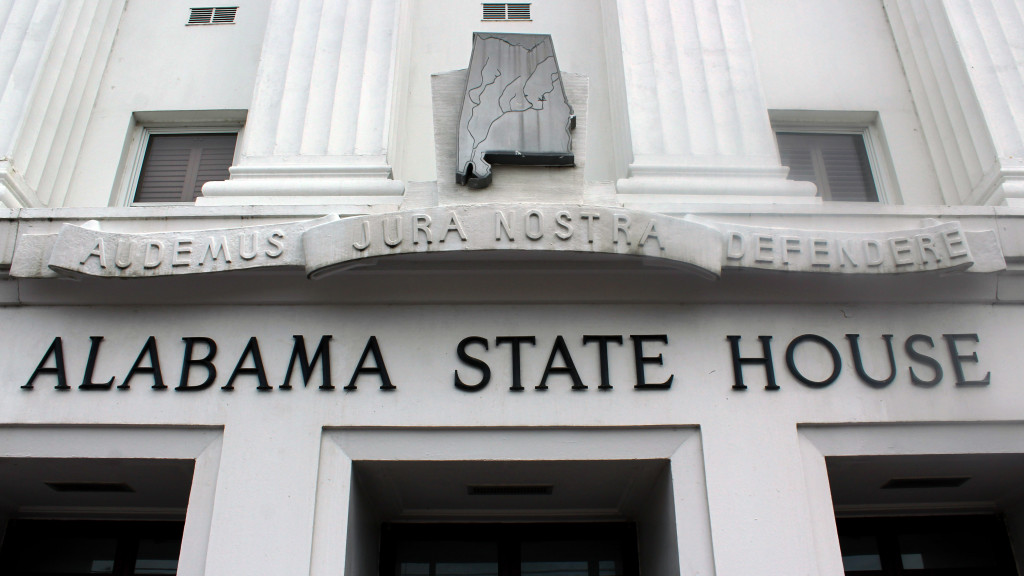
Alabama lawmakers passed a proposed ethics law change that would exempt economic development activity from the rules governing lobbyists. The House of Representatives approved the bill 78-7 after three hours of heated debate on Tuesday. Proponents of the bill said it was necessary for development while its critics argued it rolled back the current ethics law to mitigate corruption. Republican State Rep. Ken Johnson, who sponsored the bill, said companies are getting scared away from Alabama at the prospect of having representatives register as lobbyists when seeking economic incentive packages. He said none have had to register yet, but it is a concern. The bill defines an economic developer as a professional employed part or full time in economic development or trade promotion who would be certified by the state’s ethics commission. Public officials could not get paid as lobbyists or be certified as developers. It also allows information about economic deals to remain confidential for five years. Lobbyists are required to register with the Alabama Ethics Commission and report their activities. Johnson said there were concerns about the gray area between economic development work and lobbying. Democrats who opposed the bill criticized Johnson’s bill as a rollback of the ethics law and potentially a “get out of jail free card” for lawmakers. “Is this just a backdoor way of reinstating the good old boy system?” asked Rep. A.J. Campbell, a Democrat. “If we said all people needed to register because this is the way it needs to be cleaned up, then why is it changed?” In 2016, former House Speaker Mike Hubbard was convicted of ethics violations including using his public office to obtain business and promote clients. In 2017, Rep. Oliver Robinson, a Democrat, pleaded guilty to taking a bribe for using his legislative position to oppose the Environmental Protection Agency’s prioritization and expansion of a north Birmingham Superfund site. “You know we’ve had a history through the years, we’ve had people convicted of selling their vote,” said Rep. Mary Moore, a Democrat from Birmingham. “They’ve been doing a lot of economic development and getting wealthy too. People are getting extremely wealthy off of packages in this house.” Johnson countered that there was an amendment specifying that lawmakers would not be exempt from the ethics law. A comprehensive ethics law reform proposed in the Senate was pushed to next session to be potentially handled by an ethics law task force. Some House members suggested considered all the changes together next year, but Johnson said it couldn’t wait. “Do we want to lose jobs this year?” he said. The bill now moves for consideration in the Senate. Republished with permission of The Associated Press.
Scott Dawson says Kay Ivey’s new school safety task force is no substitute for action

On Tuesday, Gov. Kay Ivey unveiled her new “Smart on Safety Initiative” to enhance school safety and security during a press conference at the State Capitol. But her Republican primary opponent, Evangelist Scott Dawson says Ivey’s task force is no substitute for action as “task force” is government code for doing nothing. “Establishing another task force is no substitute for action and when it comes to the safety of Alabama children, decisive leadership from the state’s highest office is absolutely necessary. I won’t kick the can to another task force. Task force is government code for doing nothing,” Dawson state in a statement. “With the Alabama Legislature’s last day in session being April 23rd, the council’s report deadline will be too late for action. Today’s announcement has every appearance of campaign theater, not sound public policy and leadership.” Dawson continued, “When Kay Ivey assumed office after the resignation of Governor Robert Bentley, she disbanded 18 task forces which she claimed had been ineffective and promised to ’make decisions’ not ’kick the can.’” ”As a parent with two kids who attended public school in Alabama I don’t want Alabama to be the last to implement a safe method for arming school personnel for the protection of teachers and students. We need action today. Nineteen other states have passed legislation allowing for some form of a security program for school personnel to coordinate with law enforcement and qualify to carry a firearm incognito. In 2013, the State Legislature enacted a local law for Franklin County, Ala. that allows suitable teachers, school personnel, and locals to volunteer to be trained as Reserve Deputy Sheriffs and carry firearms on school grounds in Franklin County. Dawson envisions the state safely implementing a similar program statewide. ”I envision Alabama schools allowing teachers who volunteer, and are properly trained, qualified, and deputized to provide armed protection for our schools in coordination with local law enforcement,” added Dawson. “Their names would be kept confidential—reported only to the superintendent and local law enforcement—and they would receive bonuses for their participation.” ”Kay Ivey’s indecision on a significant issue like this is a clear example to the people of Alabama that she will be more of the same in Montgomery and in this instance our children’s lives are being placed in jeopardy while the Governor restores the Bentley tradition of do-nothing task forces.”
Jeff Sessions: California immigration policy defies common sense
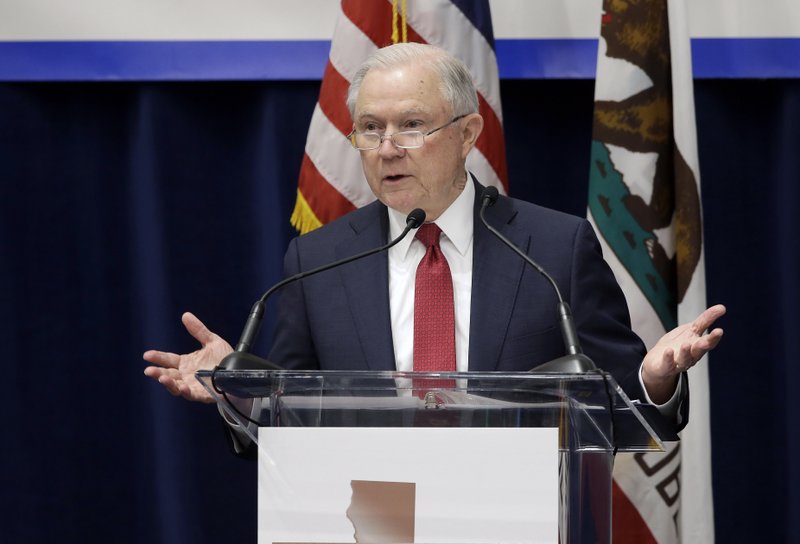
California Gov. Jerry Brown denounced U.S. Attorney General Jeff Sessions for coming to the state to speak about a lawsuit targeting policies that limit cooperation with federal immigration authorities, saying Wednesday it was unprecedented for him to “act more like Fox News than a law enforcement officer.” Shortly after Sessions’ speech to law enforcement officials, the Democratic governor accused the attorney general of lying and trying to appease President Donald Trump. “What Jeff Sessions said is simply not true and I call upon him to apologize to the people of California for bringing the mendacity of Washington to California,” Brown told reporters. Sessions said several California state laws prevent U.S. Immigration and Customs Enforcement officers from making deportation arrests and singled out elected officials for their actions. He had particularly strong words for Oakland Mayor Libby Schaaf, who issued an unusual public warning last month about an immigration operation. “How dare you?” he said of Schaaf at a California Peace Officers Association meeting in Sacramento. “How dare you needlessly endanger the lives of law enforcement just to promote your radical open borders agenda?” The Justice Department, in a federal lawsuit filed Tuesday in Sacramento, is challenging three California laws that bar police from asking people about their citizenship status or participating in federal immigration enforcement activities. “It wasn’t something I chose to do, but I can’t sit by idly while the lawful authority of federal officers are being blocked by legislative acts and politicians,” Sessions said, straying from his prepared remarks. More than a dozen attendees in a room of about 200 people gave the attorney general a standing ovation. The lawsuit is the latest salvo in an escalating feud between the Trump administration and California, which has resisted the president on issues from taxes to marijuana policy and defiantly refuses to help federal agents detain and deport immigrants. U.S. Immigration and Customs Enforcement has said it will increase its presence in California, and Sessions wants to cut off funding to jurisdictions that won’t cooperate. “I say: Bring it on,” said California Senate President Pro Tem Kevin de Leon, a Los Angeles Democrat who wrote the so-called sanctuary state bill. Democratic Assembly Speaker Anthony Rendon was among those suggesting that Sessions shouldn’t come at all. The lawsuit was filed as the Justice Department also reviews Schaaf’s decision to warn of an immigration sweep in advance, which ICE said allowed hundreds of immigrants to elude detention. Schaaf said Tuesday that the city would “continue to inform all residents about their constitutional rights.” The California laws were passed in response to Trump’s promises to sharply ramp up the deportation of people living in the U.S. illegally. One prohibits employers from letting immigration agents enter worksites or view employee files without a subpoena or warrant, an effort to prevent workplace raids. Another stops local governments from contracting with for-profit companies and ICE to hold immigrants. Justice Department officials said that violates the Constitution’s supremacy clause, which renders invalid state laws that conflict with federal ones. The Supreme Court reinforced the federal government’s primacy in enforcing immigration law when it blocked much of Arizona’s tough 2010 immigration law on similar grounds. The high court found several key provisions undermined federal immigration law, though it upheld a provision requiring officers, while enforcing other laws, to question the immigration status of people suspected of being in the country illegally. In this case, California “has chosen to purposefully contradict the will and responsibility of Congress to protect our homeland,” Homeland Security Secretary Kirstjen Nielsen said in a statement. Sessions, who has blamed sanctuary city policies for crime and gang violence, spoke Wednesday to groups representing police chiefs, sheriffs, district attorneys, narcotics investigators and the California Highway Patrol. Only the California State Sheriffs’ Association actively opposed the so-called sanctuary law. Dozens of demonstrators chanted “stand up, fight back” and “no justice, no peace” outside the hotel where the meeting was held and some blocked traffic on a major thoroughfare. A heavy police presence was on hand. Demonstrator Henry Gordon of Sacramento said he hopes Sessions gets the message that Californians will resist efforts to separate families and deport immigrants. Becerra, who is up for election in November, said sanctuary policies increase public safety by promoting trust between immigrant communities and law enforcement, while allowing police resources to be used to fight other crimes. “We’re in the business of public safety, not deportation,” he said. Republished with permission form the Associated Press.
Watchdog report: Failed VA leadership put patients at risk
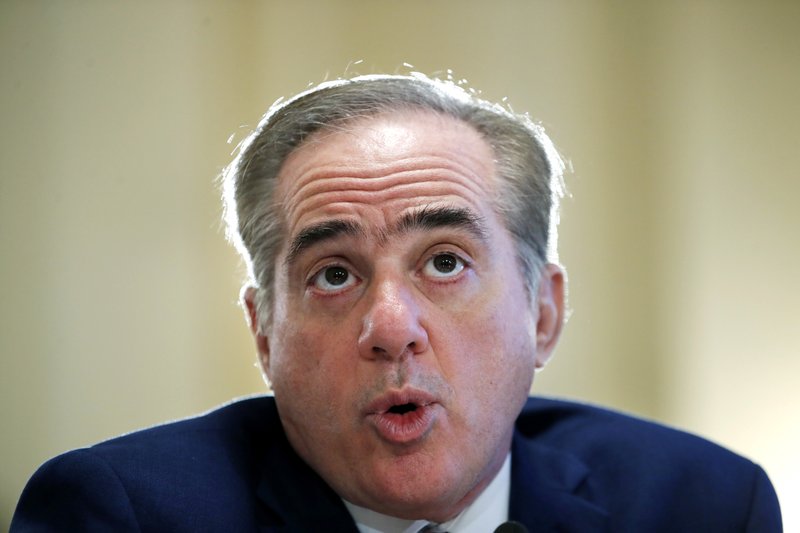
As a top Veterans Administration official in the Obama administration, current Secretary David Shulkin took no action to fix longstanding problems of dirty syringes and equipment shortages that put patients at risk at a major veterans hospital, according to an investigation released Wednesday that finds “failed leadership” and “climate of complacency” at agency. The 150-page report by the VA internal watchdog offers new details to its preliminary finding last April of patient safety issues at the Washington, D.C., medical center. Painting a grim picture of communications breakdowns, chaos and spending waste at the government’s second largest department, the report found that at least three VA program offices directly under Shulkin’s watch knew of “serious, persistent deficiencies” when he was VA undersecretary of health under former President Barack Obama from 2015 to 2016. Shulkin, who was elevated to VA secretary last year by President Donald Trump, told government investigators that he did “not recall” ever being notified of problems. The findings are the latest in a series of problems coming to the light at the VA under Shulkin, who has been struggling to keep a grip on his job since a blistering report by the inspector general last month concluded that he had violated ethics rules by improperly accepting Wimbledon tennis tickets and that his then chief of staff had doctored emails to justify his wife traveling to Europe with him at taxpayer expense. He also faces a rebellion among some VA staff and has issued a sharp warning to them: Get back in line or get out. “I suspect that people are right now making decisions on whether they want to be a part of this team or not,” he said last month. The latest IG investigation found poor accounting procedures leading to taxpayer waste, citing at least $92 million in overpriced medical supplies, along with a threat of data breaches as reams of patients’ sensitive health information sat in 1,300 unsecured boxes. No patient died as a result of the patient safety issues at the Washington facility dating back to at least 2013, which resulted in costly hospitalizations, “prolonged or unnecessary anesthesia” while medical staff scrambled to find needed equipment at the last minute as well as delays and cancellations of medical procedures. The report also noted improvements made at the Washington facility since the IG’s first report in April, when Shulkin replaced the medical center’s director and pledged broader improvements. Still, VA inspector general Michael Missal cautioned of potential problems without stronger oversight across the VA network of more than 1,700 facilities. “Failed leadership at multiple levels within VA put patients and assets at the DC VA Medical Center at unnecessary risk and resulted in a breakdown of core services,” Missal said. “It created a climate of complacency … That there was no finding of patient harm was largely due to the efforts of many dedicated health care providers that overcame service deficiencies to ensure patients received needed care.” In the report, Shulkin responded that he had expected issues involving patient harm or operational deficiencies to be raised through the “usual” communication process, originating from the local level and regional office to VA headquarters in Washington — and that it apparently didn’t happen. While the IG did not make specific conclusions on whether Shulkin actually was warned by direct subordinates, it broadly faulted an “unwillingness or inability of leaders to take responsibility for the effectiveness of their programs and operations,” and cited a “sense of futility” at multiple levels in bringing about improvements. In its written response to Wednesday’s report, the department generally agreed to implement recommendations for improved health procedures at the Washington facility and pledged a “reliable pathway” for local VA and regional officials to report high-priority concerns to senior leadership at VA headquarters. “It was difficult to pinpoint precisely how the conditions described in this report could have persisted at the medical center for so many years,” Missal wrote. “Senior leaders at all levels had a responsibility to ensure that patients were not placed at risk,” he said. Shulkin has maintained White House support despite the travel controversy. He has acknowledged some mistakes in the handling of the trip and said he relied too much on the judgment of his staff to ensure full compliance with travel policies. He has since said he reimbursed the $4,000 plane ticket for his wife. His chief of staff, Vivieca Wright Simpson, has left the agency. Several major veterans organizations are standing behind him as the best guardian of the VA amid a planned overhaul of the Veterans Choice program, a Trump campaign priority aimed at expanding private care outside the VA system. Major veterans groups are wary of an aggressive Choice expansion as a potential threat to the viability of VA medical centers, which it sees as best-suited to treat battlefield injury such as post-traumatic stress disorder. Republished with permission from the Associated Press.
George Barber retires from Alabama Coal Association, Patrick Cagle to take over

Official, March 1, 2018 the Alabama Coal Association‘s (ACA) president George Barber has retired. According to its website, ACA was formed in 1972 by a small number of surface mining companies who recognized the need for a unified voice to cope with the modern-day issues that impact so dramatically on the mining industry, the ACA now represents firms that produce 92% of all coal produced in the State of Alabama. Barber has been a staunch defender of coal and of coal miners. In 2013, when environmental groups throughout Alabama accepted nearly $3,000,000 from outside interests to fight Alabama’s coal industry and those it employes Barber fought back. He has been active nationally in supporting coal jobs and developed the Coal Jobs Counts initiative highlighting the number of men and women in Alabama directly and indirectly affected by the industry. The Coal Association participates in a national program to host an annual Mine Rescue Contest, this year will be the 42nd such event in Alabama. Barber took over the role of president seven years ago on an interim basis and continued to serve in that role until his decision to retire. He has also been a member of the board of directors and is a past chairman of the board. “I enjoyed my time there and working with our member companies on the variety of issues which have confronted the industry in the past several years,” Barber said. “I am looking forward now to just sitting back at my place on the river and enjoying the peace and quiet.” Taking over is Manufacture Alabama contract lobbyist and former Executive Director of the Jobkeeper Alliance, Patrick Cagle of Montgomery, Ala. “We are pleased to have Patrick joining the coal association as its new president,” said Walt Scheller, a member of the Alabama Coal Association Board of Directors. “The background and experience he brings related to coal issues will make him a valuable asset to the association. We wish George well in his retirement and we thank him for his steady guidance of the association during some difficult years for the industry. George has always been a true friend of coal.” Cagle, who has worked with the association on legislative matters in the past, has more than 10 years of experience in navigating Alabama’s political landscape. As executive director of JobKeeper Alliance, a 501c(4) nonprofit whose mission is to protect and create quality jobs, he previously worked hand-in-hand with the coal industry to oppose onerous, job-killing regulations. “I think my legislative and regulatory experience has prepared me to be an effective advocate for Alabama’s coal industry,” Cagle said. Cagle is an avid outdoorsman and a member of the Conservation Advisory Board, which assists the Alabama Department of Conservation and Natural Resources with the formation of hunting and fishing regulations. “One of my goals as the new president of the Alabama Coal Association is to ensure that elected officials, community leaders and the general public have a greater understanding of the Alabama coal industry and its benefits to our communities and our state,” Cagle added. “Not only is Alabama coal a valuable resource in terms of energy production, but its use in steel making and as an export commodity make it of further value in helping to offset trade imbalances at the national level.”
Walt Maddox announces universal first-class pre-k proposal
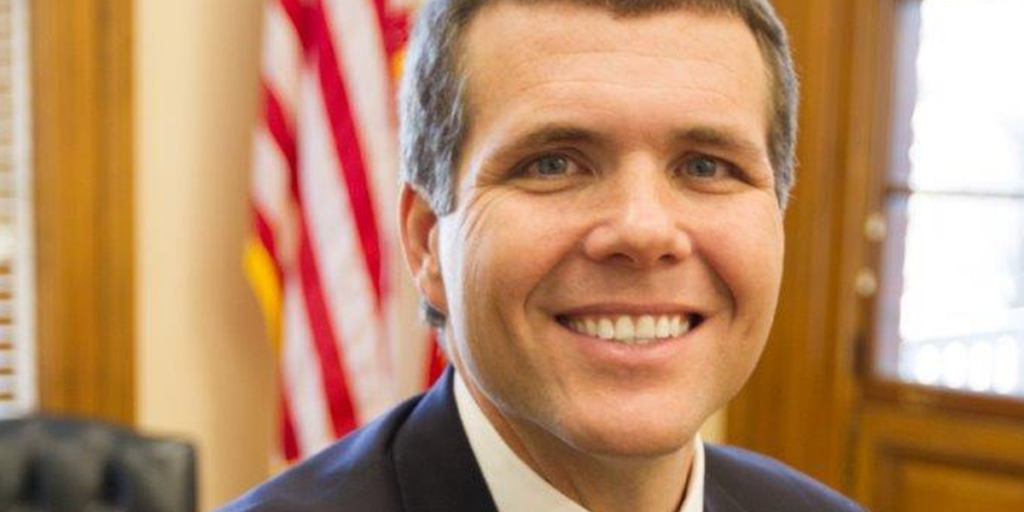
Last month, Tuscaloosa Mayor and Democratic gubernatorial candidate Walt Maddox unveiled a plan for a statewide education lottery — dubbed the Alabama Education Lottery (AEL) — to help create a 21st Century educational system to help prepare Alabama’s children for competition in the technological age. On Tuesday, Maddox revealed the second component in his lottery plan: a universal first pre-k class. “Pre-K is proven to significantly improve school performance throughout a child’s entire academic career, including lowering grade repetition, higher scores on achievement and comprehension tests, less likely to be placed in special education, more likely to graduate high school, and more likely to go to college,” said Maddox. “And, research shows that for every dollar spent on quality Pre-K, the state saves $2.00 to $4.00 in educational costs later on.” Alabama has been nationally recognized for its First-Class Pre-K Program, but only 30 percent of Alabama’s four-year-olds have access. “As governor, I will propose that $90 million of the Alabama Education Lottery proceeds fund the remaining 70 percent of the costs to fully fund The First-Class Pre-K. The first round of investments will expand to academically at-risk four-year-olds with the goal of universal pre-k by 2024.” If elected Governor, Maddox would propose the AEL to the state Legislature. If passed, there would then be a constitutional amendment to be voted on in November 2020 by the people of Alabama.
House approves safety legislation after tragic grease trap drowning

Following the tragic death of a little girl falling into a grease trap last year, the State House on Tuesday evening passed unanimously passed a bill that endeavors to prevent future such accidents. Introduced by Auburn-Republican state Sen. Tom Whatley, SB258, the Sadie Grace Andrews Act requires food establishments to put locking or otherwise secure covers on grease traps. The bill passed the House by a vote of 99-0. Whatley introduced the bill following the death of the bill’s namesake when she fell into a grease trap outside Bruster’s Ice Cream in Auburn, Ala. in October. Surveillance camera footage showed Sadie playing with two of her siblings when she fell through the lid into the 6-foot-deep tank. She was unresponsive when she was found a few minutes later and was unable to be revived. “I think this bill will prevent another needless tragedy under these circumstances,” Whatley said when he introduced the bill. The Sadie Grace Andrews Act cleared the Senate on Feb. 13. The bill now moves back to the upper chamber for a concurring vote before it heads to Gov. Kay Ivey‘s desk for review and to be signed into law. Should the bill become law, food establishments will have no more than six months to comply with the requirements of the bill. Failing to comply will result in a $500 civil penalty to be assessed by the Alabama Department of Public Health (ADPH). Every day the violation is not corrected, it will result in an additional civil penalty. All moneys received from the penalties will be deposited in the State Treasury to the credit of the ADPH to be used for the administration and enforcement of the law.
