
Alabama education board chooses Eric Mackey for state superintendent
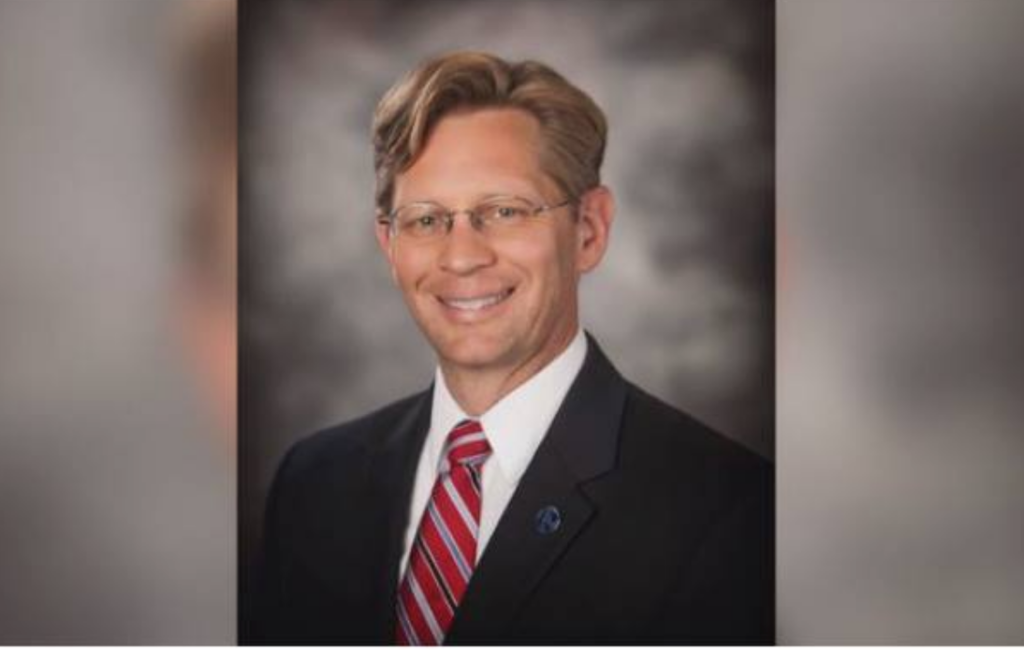
The director of Alabama’s superintendent association, Eric Mackey, was chosen Friday as the state’s new education superintendent in a tight vote clouded by an ongoing lawsuit between a candidate and a state education board member. Mackey beat out Hoover City Schools Superintendent Kathy Murphy and Jefferson County Superintendent Craig Pouncey. A fourth finalist, former Texas Education Commissioner Robert Scott, dropped out of the running Friday morning. Mackey is a former teacher, principal and city superintendent who has served as the executive director of the School Superintendent Association of Alabama since 2010. He said his top priority will be to find an “assessment that fits right” on top of addressing unequal funding between rural and urban areas and school safety concerns. Members of the Alabama State Board of Education voted for Mackey after three hours of interviews with the three finalists in Montgomery on Friday. There were five votes for Mackey and four for Pouncey. After the vote was announced, board member Ella Bell raised the concern that Pouncey has an ongoing lawsuit against another member Mary Scott Hunter and others saying he was victim to a scheme that kept him from getting the job two years ago. Before the 2016 vote, someone anonymously gave board members a packet of information, including internal department emails, accusing Pouncey of getting state staff to write his 2009 dissertation when he was with the department. Pouncey said the accusation was untrue. A subsequent department report found that employee statements cleared Pouncey. Hunter did not recuse herself from the vote, saying she was fair and impartial. She voted for Mackey. Bell, who voted for Pouncey, said she wanted to initiate a lawsuit because without Hunter’s vote there could have been a run-off. “She shouldn’t be able to vote in this because it’s understood they have an adversarial relationship,” Bell said. Alabama Gov. Kay Ivey, who serves as board president, said she had not spoken to any attorneys about the legal question but she was not aware of any rule where the chair could tell a board member to recuse him or herself. The board was seeking a replacement for former Superintendent Michael Sentance, who resigned in September after one year and one day on the job. Sentance stepped down after receiving a poor performance evaluation. A search firm whittled a field of more than 40 applicants to seven semifinalists, who were voted by the board down to the finalists. On Friday, each finalist was asked the same nine questions in an hour-long interview. Questions covered how to make students job-ready, creating a framework for assessment, ensuring equal funding between rural and urban schools and spearheading state interventions to help failing schools like is currently happening in Montgomery. Ivey said “this is the most important decision that this board will make in our terms.” She said she voted for Mackey because of his support for her “Strong Start, Strong Finish” initiative and his focus on teaching students computer science and coding. “I believe Dr. Mackey will serve us well and we will see forward thinking results,” she said. In his interview, Mackey expressed a desire to stay long-term – at least eight or ten years – in the role. Ivey said “that would suit me fine.” Mackey will start May 14. Republished with the permission of the Associated Press.
Scott Dawson calls for investigation of all Alabama abortion clinics
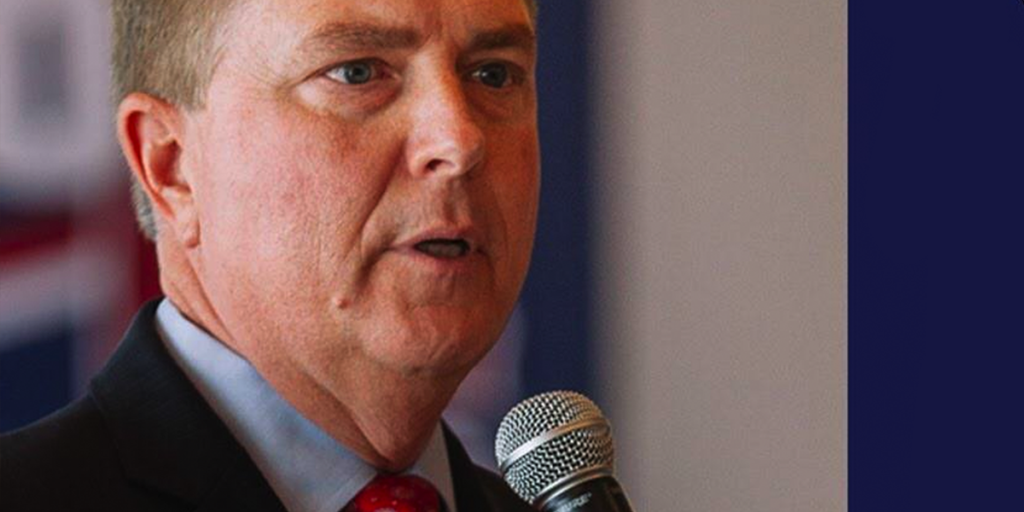
Gubernatorial candidate Scott Dawson called for the investigation of all Alabama abortion clinic’s on Friday; after it was reported that a Montgomery abortion clinic failed to report potential sexual abuse 13 year-old patient. According to AL.com, the girl first visited the clinic in January 2016 and gave the clinic a birth date in July 2000, which would have made her 15. Two weeks later when she returned to have the abortion she brought her birth certificate showing that she was born in July 2002, meaning she was actually 13 at the time the abortion was performed. The girl had a second abortion in April of 2017, when she was 14 years old. In January of this year, the Alabama Department of Public Health (ADPH) sent an inspector to interview the director of the clinic who verified the information and only reported the patient and both abortions to ADPH after the inspection. The clinic has since provided the ADPH with a complete correction plan to revise how it obtains and reviews information from minors. “The news coming out of Montgomery breaks my heart and the apathy exhibited by our Montgomery politicians is angering,” declared Dawson. “When a 13-year-old child—with non-English speaking parents—is given an abortion, without a third-party counselor and no suspicion of sexual abuse and no report, we know Montgomery needs new leadership. Where is law enforcement? If this were a public school employee who had failed to report potential sexual abuse, they would be without a job and under investigation.” Dawson said as Governor he will immediately call for a full investigation of all abortion clinics across the state. “As Governor, I will immediately call for full investigation of all abortion clinics in the State of Alabama and at minimum, I will see to it that the Department of Public Health is held accountable to enforce their own rules, and that entities operating like this will be closed,” explained Dawson. “In Alabama, we treasure all human life—the born, the unborn, and certainly 13-year-old children who may need to be rescued from an abusive situation. Just because a clinic can legally murder, doesn’t mean they get a pass on the laws of this state.” Dawson faces Incumbent governor Kay Ivey, Huntsville mayor Tommy Battle, and State Sen. Bill Hightower in the June 5 Republican primary.
