
Here’s everyone the NRA has endorsed in the 2018 election cycle

An endorsement from the NRA‘s Political Action Committee, the NRA Political Victory Fund (NRA-PVF), can be a game changer for many candidates. “When provided with the facts, the nation’s elected officials will recognize that “gun control” schemes are an infringement on the Second Amendment and a proven failure in fighting crime” says the fund. “The importance of this premise lies in the knowledge that, as one U.S. Congressman put it: ‘The gun lobby is people.’” The NRA-PVF makes its decisions based on voting records, public statements and their responses to their NRA-PVF questionnaire. Here are the candidates who the NRA has endorsed, who they believe will stand up for Alabamian’s Second Amendment rights: Statewide races Governor: Kay Ivey Attorney General: Steve Marshall Agricultural Commissioner: Gerald Dial State Senate Races District 4: Paul Bussman District 6: Larry Stutts District 8: Steve Livingston District 10: Mack N. Butler District 12: Del Marsh District 21: Gerald H. Allen District 22: Tom Butler State House Races District 10: Mike Ball District 12: Corey Harbison District 14: Tim Wadsworth District 16: Kyle South District 22: Ritchie Whorton District 23: Tommy Hanes District 31: Mike Holmes District 33: Ronald G. Johnson District 45: Dickie Drake District 48: Jim Carns District 49: April Weaver District 65: Elaine Beech District 88: Jeremy Arthur District 105: Chip Brown
Report: 2017 projects generate nearly 15,500 new jobs across Alabama
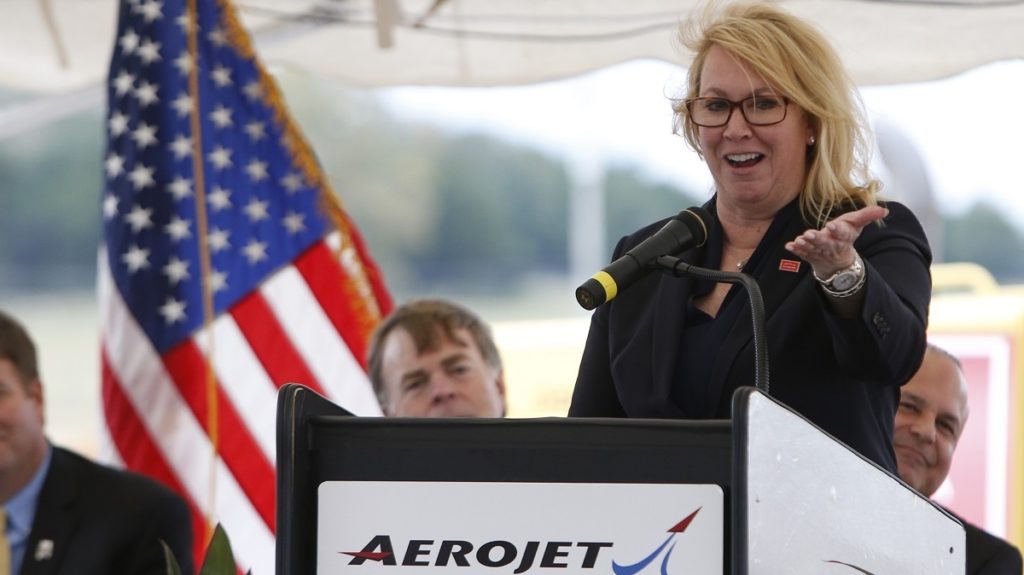
Companies planning new facilities or expanding existing operations in Alabama announced nearly 15,500 new jobs and more than $4.4 billion in capital investment during 2017, according to a comprehensive report detailing economic development activity in the state last year. The 2017 New & Expanding Industry Report, released by Gov. Kay Ivey and the Alabama Department of Commerce, shows that key industrial sectors such as automotive and aerospace continue to expand. The important forest product and food production sectors also turned in strong performances last year. “I’m committed to creating high-paying jobs that transform the lives of Alabamians and bring new levels of prosperity to communities across the state,” Ivey said. “For Alabama to continue our recent success of job creation, it’s vitally important that we continue to pursue 21st-century jobs for our people. “Momentum is on our side, and I will continue leading the charge in helping every Alabama family achieve their goals,” she said. Key findings in the report include: Alabama’s economic development efforts resulted in securing 317 projects last year, resulting in 15,465 new and future jobs and $4.41 billion in new capital investment. Those totals exceed 2016’s figures – 14,707 jobs and $4.2 billion in investment. Jefferson led all Alabama counties in job growth from 2017 projects, with 2,200 anticipated jobs. Rural Dallas County led in new capital investment in 2017, with $556.2 million. Alabama attracted foreign direct investment from 16 countries, generating 3,391 new and future jobs, as well as more than $1.2 billion in investment. South Korea was the top source for jobs, with 1,216 anticipated positions. The momentum from a solid 2017 in economic development in Alabama has carried over into this year. Already in 2018, the state has landed major projects including a Toyota-Mazda auto assembly plant that will create 4,000 jobs in Huntsville and a Kimber firearms factory that will create 366 jobs in Troy. “We’re going to be energetically pursuing more of these projects because we want to bring jobs home to Alabama,” Ivey said. Goal: job creation Greg Canfield, secretary of the Alabama Department of Commerce, said the 2017 results outlined in the report align with the priorities of Accelerate Alabama 2.0, the state’s updated economic development growth plan. “Our economic development strategy has centered on developing longstanding relationships with high-caliber companies from the U.S. and around the world so that they will put down roots in the state and grow through expansions over many years,” Canfield said. “Our primary goal is to create top-quality jobs and meaningful opportunities for people all across the state.” The largest 2017 project, based on jobs created, was Aerojet Rocketdyne’s expansion in Huntsville. The California-based company is building a new manufacturing facility for its AR1 rocket engine and relocating many functions related to its defense business to Alabama, creating a total of 800 jobs. Other large job-creating projects included: Autocar announced plans to open an assembly facility for heavy-duty work trucks in Birmingham, creating 746 jobs. Walmart announced that it will open an import distribution center in Mobile with 550 jobs. Mercedes-Benz broke ground on a Global Logistics Center in rural Bibb County that will be staffed with 502 workers. (The automaker also announced plans for a battery plant, but the dimensions of that project are not yet final.) John Soules Foods plans to create 500 jobs in Chambers County as it expands its production capacity. Project breakdown A detailed look at the 2017 New & Expanding Industry Report shows that a majority of the projects involved expansions of existing facilities in Alabama. There were 256 expansion projects last year, involving $2.7 billion in capital investment and 8,367 anticipated jobs. The 61 projects involving new facilities are expected to create almost as many jobs – 7,098, according to the report. New capital investment tied to these projects approached $1.7 billion. Following Jefferson, the top counties for project-related job creation in 2017 were: Madison: 1,828 Montgomery: 1,056 Mobile: 797 Chambers: 585 Counties ranking behind Dallas for the most new investment were: Morgan: $516.3 million Madison: $492.2 million Mobile: $339.1 million Bibb: $281.5 million Republished with the permission of the Alabama Newscenter.
Where did Donald Trump’s claim of an FBI mole come from?

President Donald Trump and his supporters are circulating an explosive theory: The FBI, they say, may have planted a mole, or “spy,” inside the 2016 campaign to bring him down. The unverified allegation has lit up conservative media and earned space on Trump’s Twitter feed just as special counsel Robert Mueller enters his second year in the Russia probe. But where did the allegation come from? The AP takes a look at what we know so far and how Trump has used similar claims in the past to try to discredit the Russia investigation. The ‘Wiretap’ Trump and his supporters have long floated the idea of an opposing “deep state” at the Justice Department and the FBI, including allegations that President Barack Obama ordered wiretaps on his phones during the election. The Justice Department denied such a wiretap, and House intelligence committee Chairman Devin Nunes, an ardent Trump supporter, later confirmed that an Obama-ordered wiretap never existed. But like many conspiracy theories, it appeared to grow out of a less sensational truth: U.S. surveillance on foreign officials — a common practice in the world of spycraft — likely picked up what’s called “incidental” communications with Americans in Trump’s orbit. That included former national security adviser Michael Flynn’s discussions with Russia’s ambassador to the U.S. during the presidential transition. The Mole At issue now isn’t a wiretap, but the identity of a top-secret FBI informant who allegedly helped investigators on the Russia probe. Trump and his lawyer, Rudy Giuliani, say they suspect the FBI planted someone inside the campaign as a setup. “Reports are there was indeed at least one FBI representative implanted, for political purposes, into my campaign for president,” Trump tweeted early Friday. “It took place very early on, and long before the phony Russia Hoax became a ‘hot’ Fake News story. If true – all time biggest political scandal!” This claim actually isn’t new for Trump supporters either. But it seemed to find new life after news reports confirmed the existence of a confidential source in the Russia investigation. The conservative National Review suggested the puzzle pieces all point toward a mole, attracting Trump’s attention. “If so, this is bigger than Watergate!” Trump tweeted. What We Know Last August, Glenn Simpson of Fusion GPS, who compiled opposition research on Trump, told a Senate panel that former British spy Christopher Steele relied on an “internal Trump campaign source” to compile his now-famous Trump dossier. A person familiar with Simpson’s testimony told the AP at the time that he did not mean to suggest the FBI had a direct source of information from within the Trump campaign. Then last week, The Washington Post reported on the existence of a U.S. citizen who had provided intelligence to the CIA and FBI in the Russia probe. The source had become of particular interest to Nunes, whose committee was quick to dismiss any allegations of collusion between Trump associates and Russia. According to the Post, the Justice Department clashed with Nunes and refused his request for specific details on the person. On Wednesday, The New York Times seemed to lend credence to the idea by reporting that “at least one government informant” met several times with former Trump campaign advisers George Papadopoulos and Carter Page. On Friday, the Times expanded its description, saying the informant is an American academic who teaches in Britain and was sent by the FBI to talk to Papadopoulos and Page because they were suspected of having “suspicious contacts” linked to Russia. What We Don’t Know A person who provides information to investigators wasn’t necessarily planted by authorities. The person could have been someone already working with Trump’s campaign before they agreed to provide information. Or it could be someone who wasn’t affiliated with the campaign and just interacted with people around it. The FBI and Mueller have been extraordinarily tight-lipped about the investigation, providing few public clues to what sources they are relying on or where the probe is headed. Trump and his lawyer, Giuliani, acknowledge they don’t have the answers either. But that hasn’t stopped them from floating the mole theory as a way of undercutting Mueller’s work as an attempt by liberals to bring down the president. Giuliani said in a Friday interview on CNN’s “New Day” that he doesn’t know for sure what happened — and the president doesn’t either. But “for a long time, we’ve been told that there’s been some kind of infiltration,” he said. Republished with the permission of the Associated Press.
CIA’s Gina Haspel can tap undercover work in Russian operations
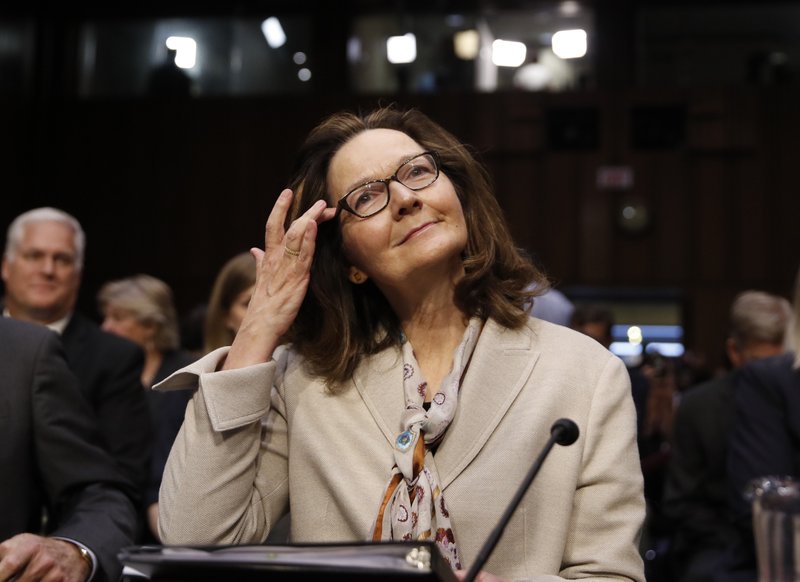
Scrutiny of the 33-year spy career of new CIA director Gina Haspel has focused on her undercover role in the harsh interrogation of suspected terrorists, but she cut her teeth in intelligence operations against Russia. She’s sure to tap that latter experience as she takes over at the nation’s premier intelligence agency at a time of rising tension with Moscow. President Donald Trump has characterized it as worse than during the Cold War, and it’s been aggravated by investigations into Moscow’s interference in the election that brought Trump to power. The 61-year-old Haspel, confirmed by the Senate this past week as the CIA’s first female director, began her career in the mid-1980s when the Soviet Union was in its twilight. Even after the communist power disintegrated, U.S. and Russian spy services held to Cold War mode. Haspel worked in the shadows to counter Kremlin efforts to infiltrate the U.S. government. Russia has been a priority target throughout her career. That was clear when former Sen. Evan Bayh, D-Ind., introduced Haspel at her Senate hearing: “She is a clear-eyed, hard-nosed expert on Russia,” he said. Haspel, an Air Force brat from Ashland, Kentucky, joined the CIA in January 1985 when she was 28. At the time, then-CIA Director William Casey was working to counter Soviet expansion, curtail Moscow’s influence, win the Cold War, and bolster up U.S. intelligence operations. She didn’t become a reports officer, analyzing information from the field; that was the most likely career track for a woman in the CIA at that time. Instead, Haspel chose to be a case officer out in the streets, meeting assets and collecting intelligence. Details of Haspel’s career are sketchy because much of it remains classified, including places where she was posted, but the CIA has provided an overview. Her first posting was in Africa, where she had a memorable encounter with Mother Teresa. On her return, Haspel spent time learning Russian and Turkish. By then, the Berlin Wall had fallen and the Soviet Union was about to break apart. Frosty relations between Washington and Moscow warmed. Within a few years, President Bill Clinton was trading jokes with Russian leader Boris Yeltsin in what was dubbed the “Boris and Bill” show. But the CIA saw a continuing threat from Russian intelligence. “The Soviet Union collapsed, but their intel services did not collapse,” said former senior CIA official Dan Hoffman, who knows Haspel well and agreed to talk to The Associated Press about her career. “They were still running penetrations of the U.S. government.” The CIA also knew it had a KGB mole in its midst, but it wasn’t until February 1994 that Aldrich Ames was arrested. The turncoat had disclosed the names of Russians who had been helping the CIA. Several were later executed. The arrest of Ames and other double agents underscored the need for a strong counterintelligence capability “and that means recruiting Russians,” said Hoffman, who was finishing his first tour in Moscow when Haspel was working in Russian operations. “That was what we were doing.” Haspel would go on to serve as deputy group chief of Russian operations in the CIA’s Central Eurasia Division, which manages Russian spy cases around the world and efforts to target and develop potential sources, according to John Sipher, who replaced Haspel in that position. Those involved in Russian operations at the end of the 1990s had a front row seat to a time of great transition in Russia, said retired senior CIA official Mark Kelton, who also worked with Haspel on Russia. Vladimir Putin, a KGB agent, had moved to Moscow, becoming acting president of Russia on the last day of 1999 when Yeltsin resigned. “Russia is a formidable, strategic challenge now so understanding where these people came from and how they got where they are is crucially important,” Kelton said. “The Russian services remain the most professional adversaries we face.” In all, Haspel has spent 17 of her 33 years in the agency overseas. Kelton said her ability to synthesize information quickly was “quite impressive” and she also ably handled the “rough school” of Russian operations. “There wasn’t a lot of wasted time on small talk,” Hoffman said about Haspel’s demeanor. “That’s not her style. She was just right down to business — let’s get the job done.” In addition to Russia, Haspel also was deeply involved in the CIA’s fight against terrorism. As station chief in an undisclosed country in Eurasia, she helped in the successful arrest of two al-Qaida associates linked to 1998 bombings of U.S. embassies in Kenya and Tanzania that killed 158 people, including 12 Americans. Their capture also led to the seizure of computers containing details of a terrorist plot, according to a U.S. intelligence official with knowledge of the incident. The official was not authorized to publicly discuss the case and spoke only on condition of anonymity. After 9/11, Haspel joined the CIA’s Counterterrorism Center, and it was during this time that she supervised a secret site in Thailand where suspected terrorists were subjected to harsh interrogation, including waterboarding, which simulates drowning. Her work in the program drew impassioned protests from human rights activists and other critics and made her confirmation vote the closest for any CIA director in seven decades. One of the detainees at that site was Abd al Rahim al-Nashiri, a Saudi accused in the bombing of the U.S. Navy destroyer Cole off the coast of Yemen that killed 17 American sailors. Al-Nashiri is aware that Haspel was picked to lead the CIA, according to Dr. Sondra Crosby, who met with him this past week at the U.S. military prison at Guantanamo Bay, Cuba, where he’s been detained since 2006. Crosby, who has treated 20 people tortured in the fight against terrorism, including two at CIA secret sites, is happy that Haspel has pledged not to allow the CIA to engage in the use of such harsh interrogation techniques again. Still, she’s wary. “Mr. al-Nashiri is probably the most severely damaged person
White House pushes ahead with Mideast peace plan
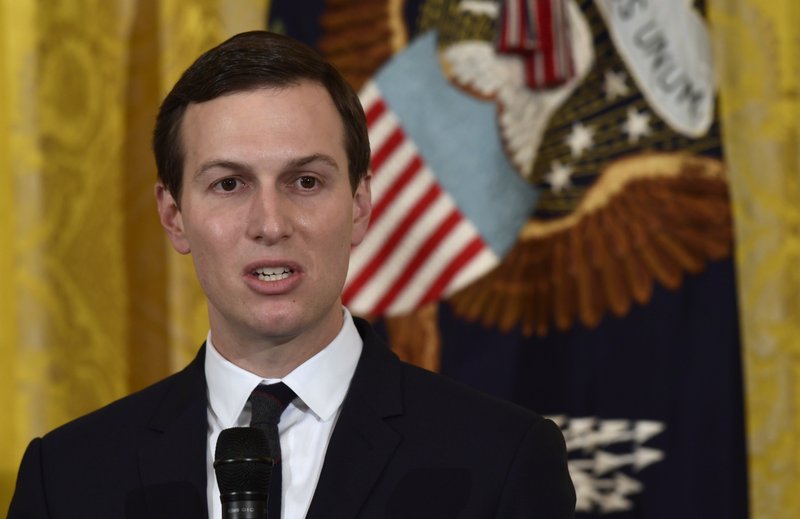
The Trump administration is aiming to roll out its much-hyped but long-delayed Middle East peace plan next month amid signs it may further alienate the Palestinians by slashing millions of dollars in funding for humanitarian and development projects in the West Bank and Gaza. Five U.S. officials and a congressional aide say the administration intends to release the peace plan in mid- to late-June, shortly after the end of the Muslim holy month of Ramadan, although they cautioned that the timing could slip depending on developments in the region. They say the plan’s main authors — President Donald Trump’s son-in-law and senior adviser Jared Kushner and Trump’s special envoy for international negotiations Jason Greenblatt — have already begun quietly briefing select allies and partners on elements of the proposal. Yet any Palestinian willingness to even consider the plan would require conditions to improve and anger to subside considerably in the coming weeks, an unlikely scenario as the Palestinians say evidence of one-sided Trump giveaways to Israel continues to pile up. U.S. allies in Europe and the Persian Gulf also have felt compelled to criticize the administration for its approach. Ostensibly, Trump would need buy-in from those same countries to build enough momentum for any peace plan to succeed. The administration has been resisting congressional demands to fully close the Palestine Liberation Organization office in Washington because Greenblatt and Kushner want to keep that channel open in case the Palestinians are open to re-entering negotiations with Israel based on the plan. The office was ordered closed by former Secretary of State Rex Tillerson last November, but has been allowed to stay open for limited purposes under the administration’s interpretation of the law requiring it to be shut down in the absence of peace talks. The prospect of Palestinian interest in the peace proposal appears dim, however, particularly since Palestinian leader Mahmoud Abbas recalled the mission’s chief earlier this week to protest Monday’s opening of the new U.S. Embassy in Jerusalem. The embassy move is said to have contributed to violent protests in Gaza that were met with deadly force from Israel. Nearly 60 Palestinians were killed Monday by Israeli forces, drawing condemnations and calls for restraint from Europe and elsewhere. The U.S. declined to join those calls and, while regretting the loss of life, opposed efforts at the U.N. to open an international investigation into the violence. Trump’s recognition of Jerusalem as Israel’s capital, the embassy move and the administration’s unreserved defense of Israeli Prime Minister Benjamin Netanyahu’s policies have alienated and angered the Palestinian leadership, which accuses the administration of abandoning its role as a neutral arbiter in the conflict. Saeb Erekat, the chief Palestinian negotiator, said any deal needs to be between the Palestinians and Israel — not the United States. “I don’t need Jason Greenblatt. I don’t need Kushner,” Erekat said. “It’s our lives.” That sense of betrayal may deepen significantly this summer as millions of dollars in U.S. assistance to the Palestinians appears likely to be cut and the funds re-allocated to other regions. That money has been on hold since last year and existing funding for some projects will start to run out in just months if it is not approved in the next two weeks. If that does not happen, the State Department and the U.S. Agency for International Development will have to notify aid recipients that continued U.S. funding is not forthcoming and those programs will begin to be shut down. Local staffers would be laid off and U.S. officials running the projects would be reassigned elsewhere. Of $251 million in U.S. aid planned for the Palestinians in 2018, only $50.5 million has been reported spent, according to the government’s online tracker, www.foreignassistance.gov. The remaining more than $200 million is currently on hold, a figure that does not include an additional $65 million in frozen U.S. assistance to the U.N. Relief and Works Agency, which provides services to Palestinians in the West Bank, Gaza, Jordan and Lebanon. The U.S. aid pays for programs on education, health, good governance and democracy promotion as well as disaster preparedness and security. For several months the White House has been sitting on State Department and USAID recommendations to spend at least some of the money, according to the officials. Three officials said there is no indication those recommendations will be acted upon any time soon despite appeals from lawmakers and even expressions of concern from Israel, which sees value in the assistance especially in the security sector. One official said there was “an overwhelming lack of urgency” about making a decision on the funding. The other two said there was no sign that the end-of-May timeframe would be met. “The administration is currently reviewing U.S. assistance to the Palestinians,” USAID said in a statement to The Associated Press. “USAID is in discussions with all affected implementing partners on the status of the review, and is working closely with the interagency, as the administration concludes its review.” At immediate risk are between five and 10 of the some 20 USAID projects in the West Bank and Gaza, along with proposed new initiatives, the officials said. Without a quick decision those will run out of money by the end of 2018, they said. Nearly all of the others will run out of money in early 2019 unless the U.S. funding is unblocked, they said. Republished with the permission of the Associated Press.
