
State Commerce Department wins President’s ‘E’ Award for supporting Alabama exports
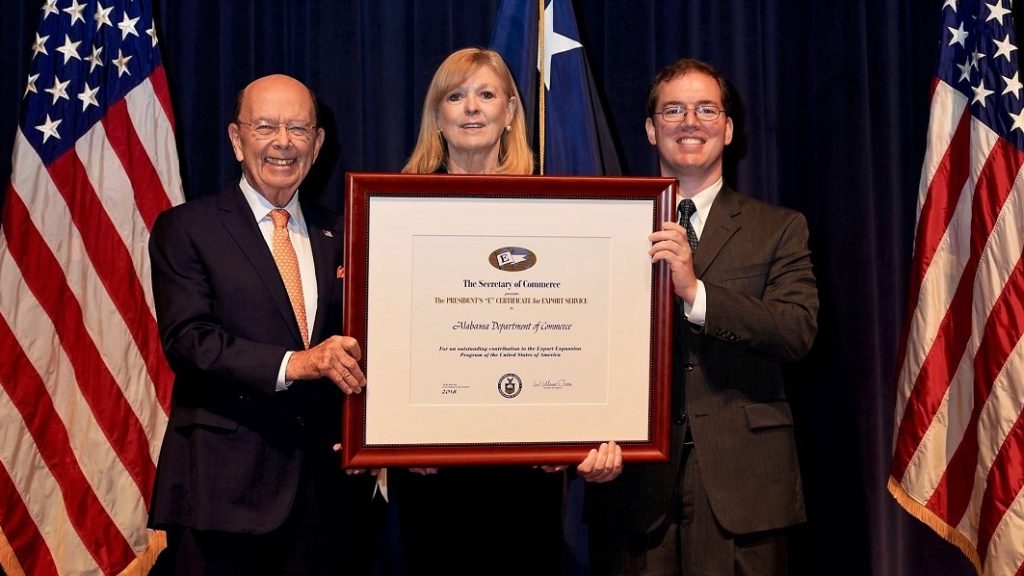
U.S. Secretary of Commerce Wilbur Ross today presented the Alabama Department of Commerce with the President’s “E” Award for Export Service, the highest recognition an organization can receive for contributing to the expansion of U.S. exports. At a ceremony in the nation’s capital, Ross said the Alabama Department of Commerce has demonstrated a sustained commitment to increasing exports. “The ‘E’ Awards Committee was very impressed with the department’s formation of the Export Alabama Alliance,” he noted. “The department’s contributions to the export growth of Alabama companies through international trade missions were also particularly notable. “The Alabama Department of Commerce’s achievements have undoubtedly contributed to national export efforts that support the U.S. economy and create American jobs,” he added. Alabama companies exported a record $21.7 billion in goods and services during 2017, led by shipments of motor vehicles, chemicals, primary metals, minerals, aircraft components and paper products to 189 foreign countries. Alabama’s exports have surged 21 percent since 2011 and 50 percent over a decade, reflecting a long-term growth trend. “We are extremely honored to receive the President’s ‘E’ Award,” Alabama Commerce Secretary Greg Canfield said. “Alabama companies are creating good-paying jobs as a result of exporting their products throughout the world, and exports of goods and services continue to be an economic engine that spurs job creation and economic investment.” Finding markets The Alabama Department of Commerce’s Office of International Trade helps businesses across the state identify and penetrate foreign markets for their homegrown products. Over many years, the office has staged a series of trade and business development missions to countries around the globe, most recently to Argentina and Ecuador in April. “The Alabama International Trade program has proven to be a tremendous resource for the state’s small and medium-sized companies,” said Hilda Lockhart, director of Commerce’s Office of International Trade. “Assisting them in finding international markets for Alabama-made products is the key to growing exports and jobs at home. “Receiving this prestigious award validates the hard work that all members of the Export Alabama Alliance have accomplished since it was formed in 2004,” she added. The Export Alabama Alliance is a seamless network of international trade agencies with the fundamental objective of helping Alabama companies expand their business internationally. Lockhart and Beau Lore, an international trade specialist in the Office of International Trade, were on hand at the U.S. Department of Commerce’s Herbert C. Hoover building on Constitution Avenue to receive the award. Supporting jobs In total, Ross honored 43 U.S. companies and organizations from across the country with the President’s “E” Award for their role in strengthening the U.S. economy by sharing American ingenuity in foreign markets. U.S. companies are nominated for the “E” Awards through the U.S. Commercial Service, part of the department’s International Trade Administration (ITA). With offices across the United States and in embassies and consulates around the world, the ITA lends its expertise at every stage of the exporting process. U.S. exports totaled $2.33 trillion in 2017, accounting for 12 percent of U.S. gross domestic product. Exports supported an estimated 10.7 million jobs nationwide in 2016, according to the most recent ITA statistics. Republished with the permission of the Alabama Newscenter.
Will the real Kay Ivey please speak up? The wide divide between Ivey’s official and campaign messages
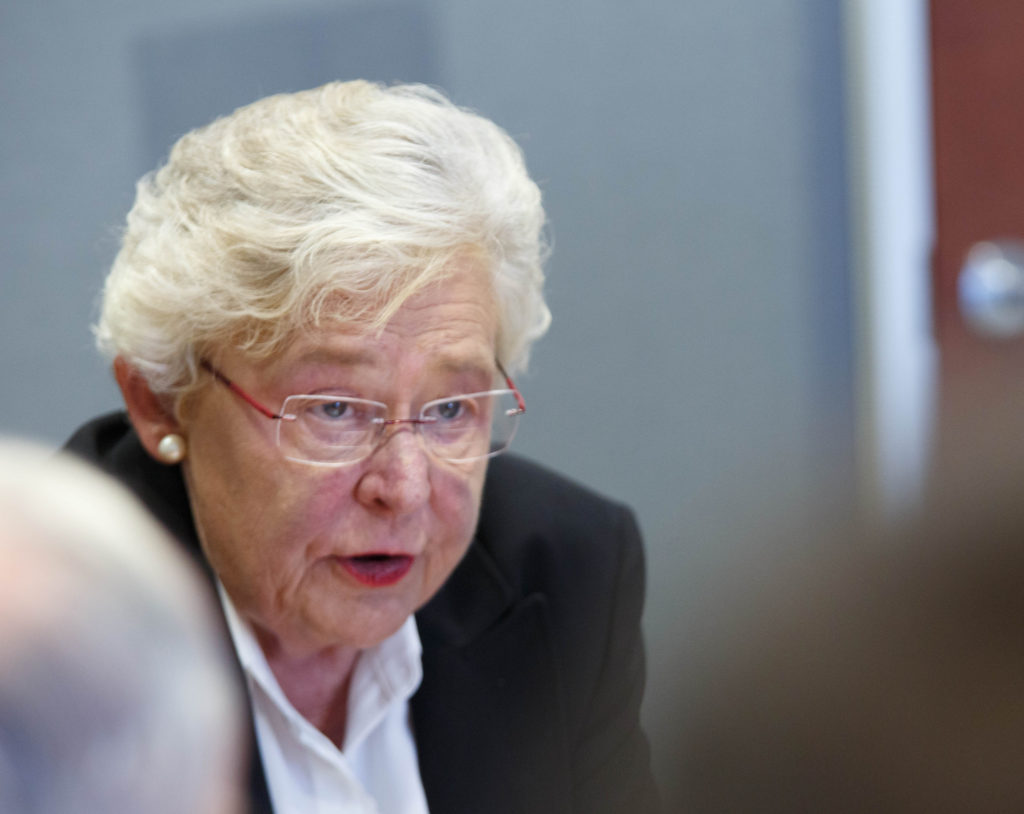
Politicians everywhere would kill for Governor Kay Ivey‘s approval ratings. She is amongst the most popular governors in the nation. Just last month, a poll showed Ivey as the third highest ranked governor, with a 67% approval rating. With numbers like that, at this point all she has to do is not screw up royally to keep both her seat and her popularity in tact. Which begs the question: why, oh why, can’t her office stop fumbling the football on easy asks? Several months ago Alabama Today detailed the painstaking efforts it took to get the names of the governor’s appointees since taking office. If you’re curious they can be found here. What we do with the data once we get it is simple — we post the list. Heck, we don’t even give commentary. We just provide the public with information we believe they should have. We’ve posted gubernatorial appointments since our site began years ago. Governors everywhere release their appointees, usually celebrating their diversity and experience. It’s a no-brainer or at least it should be. Here’s how it should work, just as it did when Bentley was governor: A media outlet (in this case Alabama Today) emails the governor’s communication staff and says, “Hey, can we have your appointments?” then the same day or a day or two later they respond with the list. Bam. Media outlet posts list. It’s that simple. Ivey’s campaign has centered its messaging around her bringing accountability and transparency back to Montgomery. She went so far to take what the Anniston Star called a TRANSPARENCY PLEDGE when she first took office in 2017. It was pretty simple, let’s see here: “The Ivey administration will be open, it will be transparent, and it will be honest.” Well that seems pretty direct. So why did a list that Governor Robert Bentley’s office produced overnight take 61 days for Ivey’s office to produce? And why, oh why after finally producing them and telling us that they have a new process so that they can turn them around quicker, are we here again now 4 weeks and 4 days from the time I most recently requested them? Not only do I not have a list after emailing the Press Secretary Daniel Sparkman (4x times) and Communications Director Josh Pendergrass (3x) then looping in the Chief of Staff Steve Pelham on the third and fourth follow up emails, we’re getting crickets. That’s right, not even so much as an acknowledgement email. So when the Governor promised transparency and accountability was it only to media outlets she and her staff like? Is that one’s who don’t run commentary on how hard it is to get simple information? Or was it my asking about her Bentley hold-overs that earned me the silent treatment? Or am I simply making excuses for the fact the Governor herself doesn’t want the public to see who she’s appointed to boards and commissions? Has she been making appointments that are controversial and she doesn’t want that to come out two weeks before an election? It’s important to remember Ivey kept professional communications consultants on through her transition and initial months in office citing the need for their expertise. Those same consultants are now her campaign team, along with a highly (if not over) qualified communications director, Debbee Hancock who’s experience make both the staff in the governors office look like amateurs. That brings us to the final possibility, the governor’s official office simply doesn’t have the competency levels needed to understand that they’re not hurting me personally by not giving our publication information, but that they’re hurting the governor herself? They represent Governor Ivey. They are her voice. No one is getting up on Election Day to vote for Daniel Sparkman or Josh Pendergrass, but people going to the polls will note when a candidate doesn’t fulfill their promises and/or hides information from them and that’s exactly what Ivey is doing at this moment by refusing to disclose her appointments (and her elusive schedule). Ivey has two teams and currently two diametrically opposed positions on transparency and accountability. Let’s hope the strong voice in the governors ear is the one that gives the people what she has promised and the Ivey administration will be open, it will be transparent, and it will be honest moving forward. Maybe even as soon as today since we checked back with them on appointments this afternoon; we’ll keep you posted. More to come on this topic before the election.
Auburn’s Jr. MANRRS Leadership Institute helps students discover agriculture, natural resources fields
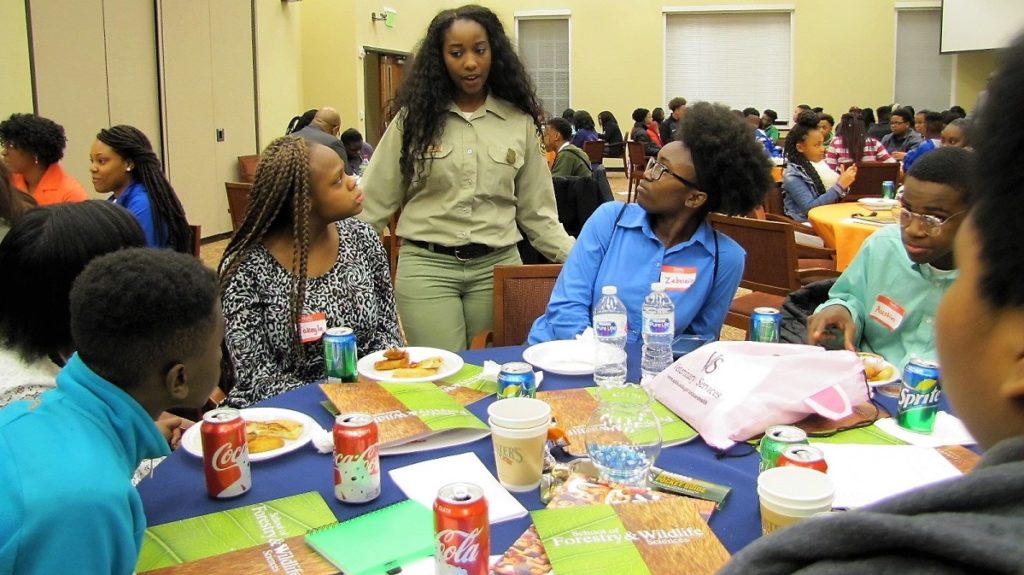
Auburn University is helping minority youth to discover first-hand how agriculture, engineering, technology and natural resources relate to the world around them and to experience the excitement of academic excellence, leadership, technical development and teamwork. AU’s School of Forestry and Wildlife Sciences recently hosted the first Alabama Jr. Minorities in Agriculture, Natural Resources and Related Sciences Leadership Institute, or MANRRS, to stimulate interest in science, technology, engineering, agricultural and mathematics fields. It was attended by 132 students from 40 schools across the state. MANRRS is a national program with chapters at colleges and universities throughout the country. Created to support long-term academic success and leadership development of minorities, the Jr. MANRRS program serves to encourage junior high and high school students to attend college and pursue degrees in agriculture, natural resources and related sciences. For those minority students wishing to pursue forestry and natural resources management degrees at Auburn, the School of Forestry and Wildlife Sciences offers generous scholarships through the African American Alumni Endowed Scholarship and the Resource Management Service Annual Scholarship. In addition to increasing and expanding the awareness of young people regarding career choices and possibilities, Jr. MANRRS provides a networking opportunity that includes meeting new people, making contacts and creating a foundation for professional relationship building. “We wanted the students to know that there are many career choices and to get a chance for them to explore those career opportunities with varying professionals,” said Michelle Cole, an outreach coordinator with the School of Forestry and Wildlife Sciences and co-adviser for Auburn’s MANRRS and Jr. MANRRS. Some of the activities included a team-building exercise, an impromptu speaking contest, a dress-for-success presentation and a college prep awareness forum. “Our goal was for the students to learn about science and how it relates to everyday life and how it could be fun,” Cole said. Brenda Allen, School of Forestry and Wildlife Sciences assistant professor of urban forestry and faculty adviser for Auburn’s MANRRS and Jr. MANRRS, said she believes Jr. MANRRS is a good way to teach and strengthen leadership skills in students that can be used in all aspects in their lives. “At the same time we are also introducing them to science, technology, engineering and mathematics, also known as the STEM disciplines,” Allen said. Brandi Douglas, whose daughters attended the Jr. MANRRS Leadership Institute, believes the experience was very beneficial. “As a parent, I loved watching my girls branch out into leadership positions and learn new and exciting concepts. As an educator, I appreciated the value of the learning experiences that they received at the conference. It had a positive impact on my girls, and I’m sure they will use what they learned while attending,” she said. Lillian Douglas, a fifth-grade student at Prattville Middle School, said she was so inspired by Jr. MANRRS that she is considering starting a program at her own school. “I would probably want to start a Jr. MANRRS at my school because of the fact that a lot of people at my school love planting, they love animals, and I believe that it will be, like, a really fun thing for me and my classmates and my peers to do,” she said. The program was made possible with the support of LaRay Martin Transportation, Marcus Washington, Toyota Motor Manufacturing of Alabama, USDA Veterinary Services and Weyerhaeuser, and its major sponsors, Auburn’s College of Agriculture and the School of Forestry and Wildlife Sciences. Exhibitors who participated in the event included Auburn’s Office of Admissions and Outreach, the College of Agriculture, the College of Sciences and Mathematics, the School of Forestry and Wildlife Sciences, the American Institute of Certified Public Accountants, Army Corp of Engineers, National MANRRS organization and the U.S. Forest Service. Because this year’s Jr. MANRRS Leadership Institute was so successful, Cole said there are plans to make it an annual event that will rotate among the three chapters in the state. Although established to benefit minorities, MANRRS offers opportunities for all students. Republished with the permission of the Alabama Newscenter.
Jim Zeigler uses royal wedding as bait for cost-effective ad-buy

During the early morning hours on Saturday while tens of thousands of Alabamians were up and watching the royal wedding, Alabama State Auditor Jim Zeigler launched his first campaign ad of 2018. The 30-second ad titled, “Why Are Montgomery Politicians Fighting against Jim Zeigler?” highlights Zeigler’s actions challenging what he calls “waste, mismanagement and corruption.” Text of the Zeigler spot: Why are Montgomery politicians fighting against Jim Zeigler? Because Zeigler is a State Auditor who fights corruption and wasteful spending. Zeigler stands for us, the taxpayers. Not for Montgomery politicians. Jim Zeigler filed the initial ethics complaint against Robert Bentley and challenged no-bid contracts. Zeigler has a consistent record of fighting misuse of taxpayer money. Vote Jim Zeigler, a State Auditor for us. Zeigler chose to run the ad from 2:00 – 6:00 a.m. because he has “a limited campaign budget and must use every way to get more bang for the buck.” “We knew that TV spots at 2 to 6 a.m. Saturday are cheap,” Zeigler explained. “We also knew that thousands of folks who are not normally up and watching TV would tune in for the wedding. The decision to run the wedding ads was a no-brainer.” Zeigler says the TV audience for the royal wedding was especially heavy with female voters. The spot, which began 17 days before the June 5 primary, will run through election election eve. Watch Zeigler’s ad below:
Alabama Democratic Conference endorses Walt Maddox for governor
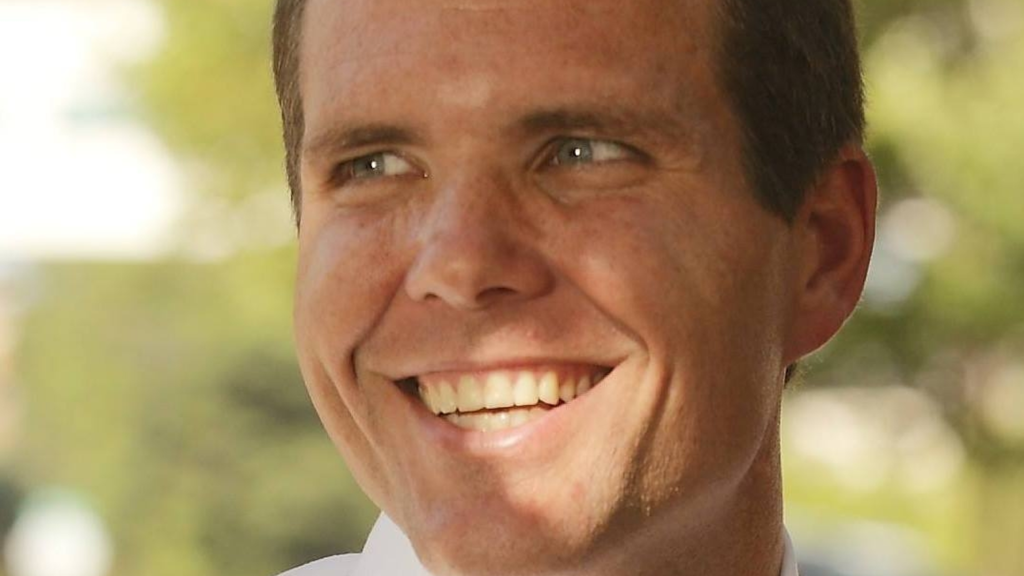
Longtime Tuscaloosa mayor and Democratic gubernatorial hopeful Walt Maddox on Saturday was endorsed by the Alabama Democratic Conference (ADC). Maddox said he is honored to have the endorsement of the predominantly African-American group. “I’m honored to receive the endorsement of the Alabama Democratic Conference. I’m humbled by the trust and confidence ADC has placed in my campaign for Governor,” said Maddox. “The ADC endorsement is vital if a candidate hopes to have any chance of winning the Democratic primary.” Maddox says no candidate has ever won the democratic primary without the endorsement of ADC and New South, since 1960. “I have been honored to receive the endorsement of many distinguished Alabamians, elected officials, community leaders, unions and political organizations. Today’s endorsement by ADC along with the endorsement we received from New South and those many others place my campaign on a trajectory for victory on June 5,” Maddox concluded.” New South endorsed Maddox last month. Both groups traditionally conduct get-out-the vote efforts for candidates they endorse. In the June 5th Democratic primary, Maddox will face former state Supreme Court Chief Justice Sue Bell Cobb, along with Christopher Countryman, James Fields, Doug Smith and Anthony White. The winner will go on to face the Republican nominee in the general election, to be selected among: Gov. Kay Ivey, Tommy Battle, Bill Hightower, or Scott Dawson.
Alabama Power parent company selling Gulf Power, gas assets in $6.5B deal
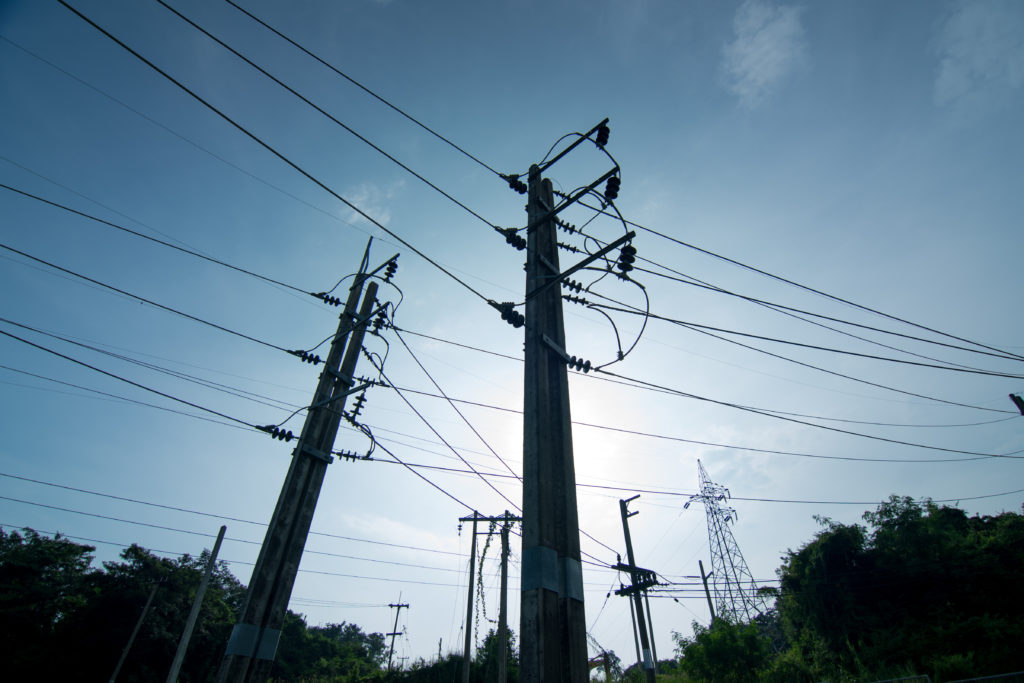
Atlanta-based Southern Company on Monday it plans to sell Gulf Power, which serves almost half a million people across Northwest Florida, from the Alabama border, to the Apalachicola River, to the Gulf coast, to NextEra Energy, the parent company of Florida Power & Light. NextEra will also purchase gas utility Florida City Gas and its interests in the Oleander and Stanton natural gas plants from Southern as part of the deal. Southern said the $6.5 billion deal would benefit its stockholders, “while entrusting the customers of these exceptional franchises to a high-quality utility company that has a well-established presence in the state.” “This sale provides Southern Company the opportunity to deliver great value to our organization, bolster our financial profile and continue to build the future of energy as one of America’s premier energy companies,” said Thomas Fanning, chairman, president and CEO of Southern Company. Along with Gulf Power, the Southern Company owns many subsidiaries including Alabama Power, Georgia Power and Mississippi Power. The company is building the first nuclear power plant in the United States in decades and the transaction proceeds will cut growing debt. The deal is expected to be complete by the first half of 2019, contingent on approval from federal regulators.
US issues steep list of demands for nuclear treaty with Iran
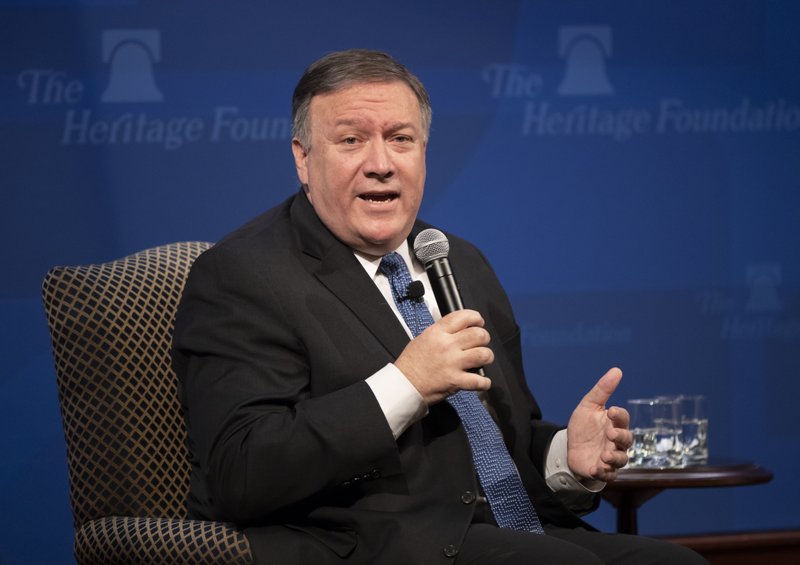
The United States on Monday issued a steep list of demands to be included in a nuclear treaty with Iran to replace the deal scuttled by President Donald Trump and threatened “the strongest sanctions in history” if Iran doesn’t change course. Drawing sharp contrasts with the 2015 deal, Secretary of State Mike Pompeo said a stronger pact should require that Iran stop enrichment of uranium, which was allowed within strict limitations under the previous deal. Iran would also have to walk away from core pillars of its foreign policy, including its involvement in Syria, Yemen, Lebanon and Afghanistan. “This list may seem long to some, but it is simply a reflection of the massive scope of Iranian malign behavior,” Pompeo said. “America did not create this need for changed behavior. Iran did.” Pompeo vowed that Trump’s approach would ensure “Iran has no possible path to a nuclear weapon, ever.” As he called for a better agreement to constrain Iran’s activities, he said the U.S. would “apply unprecedented financial pressure” to bring Tehran back to the table. “These will end up being the strongest sanctions in history by the time we are complete,” Pompeo said at the conservative Heritage Foundation in his first major policy speech since taking over as top diplomat. At the same time, Pompeo offered Iran a series of dramatic potential U.S. concessions if it agrees to make “major changes.” Under a new agreement, the U.S. would be willing to lift all sanctions, restore full diplomatic and commercial ties with Iran, and even support the modernization of its economy, Pompeo said. “It is America’s hope that our labors toward peace and security will bear fruit for the long-suffering people of Iran,” Pompeo said. Still, Pompeo’s list of 12 requirements included many that Iran is highly unlikely to consider. He said Iran must allow nuclear “unqualified access to all sites throughout the country,” Pompeo said, alluding to military sites that were off-limits under the 2015 deal except under specific circumstances. To that end, he also said Iran must declare all previous efforts to build a nuclear weapon, reopening an issue that the U.N.’s International Atomic Energy Agency has already deemed a closed matter. Pompeo also demanded that Iran cease from a range of activities throughout the Middle East that have long drawn the ire of the U.S. and its allies. He said Iran must end support for Shiite Houthi rebels in Yemen, “withdraw all forces” from Syria, halt support for its ally Hezbollah and stop threatening Israel. Iran must also “release all U.S. citizens” missing in Iran or being held on “spurious charges,” he said. Taken together, the demands would constitute a wholesale transformation by Iran’s government, and they hardened the perception that what Trump’s administration really seeks is a change in the Iranian regime. A longtime Iran hawk, Pompeo has spoken positively about regime change in the past, but in his confirmation hearing last month he sought to soften that stance. Laying out Trump’s new approach Monday, Pompeo said he couldn’t put a timeline on how long the strategy might take. “At the end of the day, the Iranian people will get to make their choice about their leadership,” Pompeo said. “If they make the decision quickly, that would be wonderful. If they choose not to do so, we will stay hard at this until we achieve the outcomes that I set forward today.” In another departure from the Obama administration’s approach, Pompeo said that “a treaty is our preferred way to go.” Former President Barack Obama did not seek a Senate-ratified treaty with Iran because of the dim prospects for getting approval from a Republican-run Congress. Pompeo’s speech came after Trump earlier this month infuriated U.S. allies in Europe by withdrawing from the 2015 deal brokered by President Barack Obama, Iran and world powers. Europeans allies had pleaded with Trump not to scuttle that deal and are now scrambling to keep the deal alive even without the U.S. But the Trump administration has held out hope that those same allies will put aside that frustration and work with the U.S. to ramp pressure back up on Iran through sanctions in a bid to bring Tehran back to the negotiating table for a stronger deal. Pompeo said he understood that Trump’s decision “will pose financial and economic difficulties for a number of our friends.” But he warned them that the U.S. planned to follow through with threats to punish European companies that continue doing business with Iran that is allowed under the deal but will violate reimposed U.S. sanctions. “I know our allies in Europe may try to keep the old nuclear deal going with Tehran. That is their decision to make,” Pompeo said. “They know where we stand.” Republished with permission from the Associated Press.
Donald Trump to DOJ: Investigate whether FBI infiltrated campaign
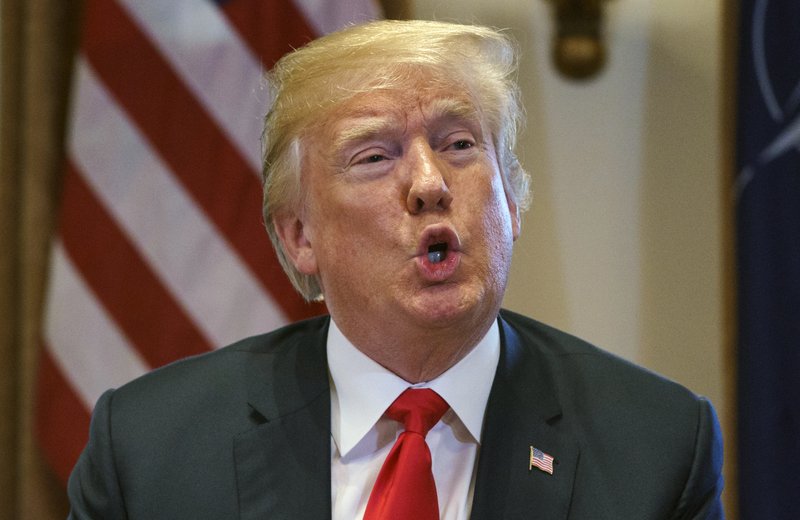
President Donald Trump said he will “demand” that the Justice Department investigate whether the FBI infiltrated his presidential campaign, an extraordinary order that came hours before his legal team said the special counsel indicated the investigation into the president could be concluded by September. Trump tweeted Sunday: “I hereby demand, and will do so officially tomorrow, that the Department of Justice look into whether or not the FBI/DOJ infiltrated or surveilled the Trump Campaign for Political Purposes – and if any such demands or requests were made by people within the Obama Administration!” Trump’s demand puts further pressure on the Justice Department, which later Sunday asked its inspector general to expand an existing investigation into the Russia probe by examining whether there was any improper politically motivated surveillance. It comes as the White House tries to combat the threat posed by special counsel Robert Mueller’s investigation into potential ties between Russia and the Trump campaign. The president’s lawyer, Rudy Giuliani, said Mueller recently shared a timetable that suggested his probe could end by Sept. 1 if Trump were to sit for an interview in July, which is the legal team’s new working plan. “We said to them, ‘If we’re going to be interviewed in July, how much time until the report gets issued?’” Giuliani told The Associated Press on Sunday, referring to the report Mueller is expected to issue to Congress at the conclusion of his investigation. “They said September, which is good for everyone, because no one wants this to drag into the midterms.” Giuliani said he did not want a repeat of what happened in 2016, when FBI Director James Comey announced in the campaign’s final days that he was reopening the investigation into Hillary Clinton’s use of a private email server, a decision Democrats believe cost Clinton the race. Giuliani, the former mayor of New York, also said Mueller’s team indicated that the entire probe could end by September, not just its investigation into potential obstruction of justice. “This would be the culmination of the investigation into the president,” Giuliani said. The special counsel’s office did not respond to a request for comment. It is not certain that Trump will sit for an interview with Mueller, though the president has publicly said he would. Giuliani said a decision would not be made until after Trump’s summit with North Korean leader Kim Jong Un in Singapore, which is slated for June 12. Giuliani said Sunday the two sides “were getting closer” to agreeing on the parameters on a potential interview but would not put the odds of it happening at better than 50/50. Giuliani’s apparent attempt to publicly pressure Mueller on the timeline amid interview negotiations came just hours after Trump’s demand for a new inquiry, which moved beyond his usual blustery accusations of institutional wrongdoing and into the realm of applying presidential pressure on the Justice Department, a move few of his predecessors have made. Trump made the order amid days of public venting about the special counsel investigation, which he has deemed a “witch hunt” that he says has yielded no evidence of collusion between his campaign and Russia. In response, the Justice Department moved Sunday to defuse a growing confrontation with the White House by asking its watchdog to investigate whether there was inappropriate surveillance. It was not immediately clear if that move would satisfy Trump, or if any further demands could lead to a confrontation with FBI Director Christopher Wray or Deputy Attorney General Rod Rosenstein, who is overseeing the Mueller investigation. Rosenstein released a statement Sunday saying, “If anyone did infiltrate or surveil participants in a presidential campaign for inappropriate purposes, we need to know about it and take appropriate action.” The Justice Department probe had begun in March at the request of Attorney General Jeff Sessions and congressional Republicans. Sessions and the lawmakers had urged Inspector General Michael Horowitz to review whether FBI and Justice Department officials abused their surveillance powers by using information compiled by Christopher Steele, a former British spy, and paid for by Democrats to justify monitoring Carter Page, a former campaign adviser to Trump. Horowitz said his office will look at those claims as well as communications between Steele and DOJ and FBI officials. Trump did not elaborate on the promised “demand,” which he included in one of a series of tweets he sent throughout the day Sunday. On Saturday, Trump tweeted, “If the FBI or DOJ was infiltrating a campaign for the benefit of another campaign, that is a really big deal.” He said only the release or review of documents the House Intelligence Committee is seeking from the Justice Department “can give conclusive answers.” Rep. Adam Schiff of California, the senior Democrat on the House Intelligence Committee, called Trump’s claim of an embedded spy “nonsense.” “His ‘demand’ DOJ investigate something they know to be untrue is an abuse of power, and an effort to distract from his growing legal problems,” Schiff tweeted. “Never mind that DOJ has warned that lives and alliances are at risk. He doesn’t care.” Trump’s extraordinary demand of the Justice Department alarmed many observers, who felt it not only violated presidential protocol but also could have a chilling effect on federal law enforcement or its use of informants. Giuliani defended the president’s actions. “As the president’s lawyer, I can’t be concerned on what effect it may have,” he said. “To me, there’s not much of a difference between an informant’s ongoing collection of information in a surreptitious way or a spy. “If this guy was an FBI implant into the campaign,” Giuliani said, “that’s as offensive as Watergate.” The New York Times was the first to report that the FBI had an informant who met several times with Trump campaign officials who had suspicious contacts linked to Russia. Giuliani said the information discovered by the source should eventually be made public and released to Congress, even if the source’s identity is kept confidential. The GOP-led House Intelligence Committee closed its Russian
2018 midterms show start of Democratic scramble for 2020
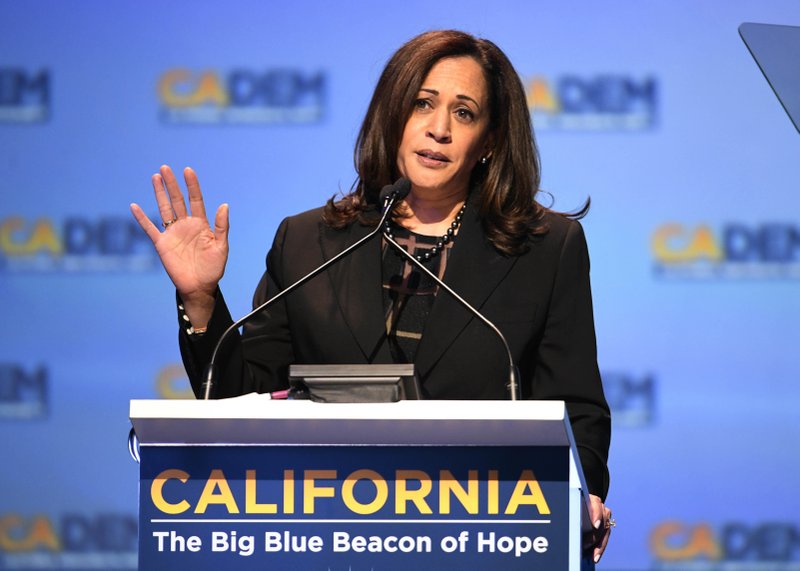
Look closely enough at the 2018 midterm campaign and you’ll see the stirrings of a Democratic scramble to reclaim the White House from President Donald Trump. The leading players — from established national figures such as former Vice President Joe Biden and Sens. Bernie Sanders and Elizabeth Warren to up-and-comers including Sen. Kamala Harris — don’t necessarily put it that way. But the potential 2020 candidates are making the rounds, raising and distributing campaign cash among fellow Democrats, endorsing candidates and meeting political activists. Their movements reflect competing strategies for establishing their reputations and shaping a party that lacks a clear leader and consistent message in the Trump era. For senators trying to get better known, a primary goal is proving fundraising strength and party loyalty, without necessarily taking sides in the larger fight between the left and moderates who split on the minimum wage, health insurance and other issues. “I just want to do whatever I can” to help Democrats win, Harris said at a recent stop in Georgia, where she was campaigning and raising money for Stacey Abrams’ race for governor. It is part of an aggressive effort for the freshman senator from California. She’s raised $3.5 million for her Senate colleagues and the Democratic Senatorial Campaign Committee, plus what she helps candidates such as Abrams raise directly when she appears with them, and at the end of April Harris had nearly a $1 million balance in the political action committee that she uses to back other Democrats. Warren boasts that she’s raised $15 million for other Democrats since her 2013 election. The Massachusetts senator faces a re-election campaign this fall, but not as tough a race as confronts 10 colleagues running in states where Trump won. Like Harris, Warren and New Jersey Sen. Cory Booker have aided those senators. Warren is also helping other branches of the party: a transfer of money to House Democrats’ campaign committee, $5,000 for every state party and $175,000 spread across state legislative campaigns in contested states. Democratic and Republican campaign veterans say such contributions and fundraising trips aren’t explicitly about future campaigns. “We’re not playing 3D chess,” says Harris spokeswoman Lily Adams, who describes the senator’s priority as “building our numbers in the Senate” for the final two years of Trump’s term, while looking for strong women and minority candidates. (Abrams would be the first female African-American governor in U.S. history.) Operatives also insist there are no quid pro quos, though Republican presidential campaign veteran Rick Tyler says, “These guys are out there accumulating chits.” Tyler worked for Texas Sen. Ted Cruz’s 2016 White House campaign. Cruz was among the conservatives who traveled the country before his campaign, endorsing like-minded conservatives and raising money. Trump’s improbable rise obliterated that groundwork, but Tyler said it’s nonetheless a necessary part of a national campaign, because prospective presidents build their networks and test messages as they meet activists and voters beyond their personal bases. Harris, for example, is noticeably avoiding most early presidential nominating states — no trips to Iowa or New Hampshire so far. Because 10 Senate Democrats must seek re-election in states Trump won, her travels do put her in some of the pivotal states in the battle to control the Senate. She’s been to Ohio five times for Sen. Sherrod Brown, twice to Michigan for Sen. Debbie Stabenow and once to Florida for Sen. Bill Nelson. She has a June trip planned for Wisconsin Sen. Tammy Baldwin. Warren has been to Ohio at least four times this campaign season and traveled to Michigan and Wisconsin, among others states. Those states helped give Trump the presidency. They also could prove important as primary states in an extended nominating fight that could materialize with a large field and Democrats’ proportional distribution of nominating convention delegates. Sanders, the Vermont independent whose insurgent presidential campaign in 2016 emboldened the Democrats’ left flank, is perhaps the most unabashed of the potential 2020 group about using this year’s midterms to put his preferred policy stamp on the Democratic Party. A prolific small-dollar fundraiser, he no longer has to prove he can raise money or draw a crowd. “I have been very critical about the business model of the Democratic Party,” Sanders told The Associated Press. He said his travel to 28 states since Trump took office and his endorsements in federal and state races are part of his promised “political revolution” intended to advance ideas like a $15 minimum wage, tuition-free college and universal health insurance. Sanders bet on liberal challenger Marie Newman in her unsuccessful House Democratic primary battle against conservative Rep. Dan Lipinski in Illinois. But Sanders scored a notable win Tuesday in Pennsylvania when his pick for lieutenant governor, John Fetterman, finished with a surprise primary victory. Biden is at the opposite end of Democrats’ identity battle. His endorsement list and fundraising itinerary are replete with state party dinners, events for sitting Democratic senators and rallies for candidates running as moderates, at least in tone, if not in policy preference. “I love Bernie, but … I don’t think 500 billionaires are the reason we are in trouble,” Biden said at a recent Brookings Institution speech about his priorities for the middle class. Biden’s aides say he’s willing to help any Democrat get elected, but the native of Scranton, Pennsylvania, who loves to wax eloquent about his working-class upbringing is in demand to campaign for Democrats running in GOP-leaning places. He headlined fundraisers and campaign rallies for first-year Alabama Sen. Doug Jones and new Pennsylvania Rep. Conor Lamb, who won among voters who had sided overwhelmingly with Trump in 2016. Biden’s next planned campaign venture is to North Carolina on behalf of Democrat Dan McCready, a veteran trying to win a suburban Charlotte House district that wasn’t competitive two years ago. Certainly, many Democratic hopefuls around the country are accepting help from multiple would-be presidents, and the alignments don’t always follow cleanly along the party’s philosophical battle lines. Abrams has campaigned as a liberal,
Bradley Byrne: Appreciation for law enforcement

Each day, law enforcement officers leave the safety of their homes not knowing if they will pass back through their own front doors at the end of the work day. They leave their families behind to ensure the safety of our loved ones at schools, in neighborhoods, and on the roadways. There is never enough we can do to show our appreciation for their work. These men and women often go far beyond their official job descriptions. Even when they are not wearing the uniform, law enforcement officers play a significant role in our neighborhoods, schools, and churches. They even serve as positive role models for our children. I have had the chance to ride along with some of our local law enforcement officers and witness firsthand the challenges they face on the job. Law enforcement officers encounter dangers on the job that do not exist in other professions. It shocked me to realize that even a task as routine as a traffic stop can turn hostile, and in some cases, even deadly. That is why each year we celebrate National Police Week, which gives us an opportunity to reflect on the hard and dangerous work our nation’s law enforcement officers do daily. Police Week attracts people from across the country to our nation’s capital for memorial services, parades, and vigils in honor of our men and women in blue. Police Week also serves as a time to pay our respects as a nation to those whose end of watch came too soon. I recognized National Police Week by speaking on the floor of the House of Representatives to honor these brave men and women and remember the life of one of our very own who was killed in the line of duty just four months ago. Mobile Police Officer Justin Billa paid the ultimate sacrifice after being shot and killed while responding to a domestic violence call on February 20th, 2018. In such a time of immense grief, we saw our community rally together to support the family and friends of fallen Officer Billa. The impact of his death was felt throughout the United States, as officers and first responders from across the country traveled to Mobile to pay their respects. To remember our fallen heroes and honor all of those in law enforcement, the House of Representatives passed several pro-law enforcement bills last week. The Protect and Serve Act of 2018 toughens federal penalties against people who intentionally target law enforcement officers in attacks, including ambushes. Additionally, we passed the Justice Served Act of 2018, which provides funds to prosecute cold cases that are solved by breakthrough DNA evidence, including backlogged rape kits. This bill will strengthen our criminal justice system by making sure that newly-tested evidence is used to prosecute unsolved cases, thus ensuring violent criminals are brought to justice. From legislation to prevent attacks on our officers to providing funding for additional resources, we are working to ensure these dedicated individuals have the tools they need to do their jobs and keep us safe. Let us not forget that we sleep soundly at night due to the sacrifices our law enforcement officers make out on the streets. We owe these individuals far more than our thanks for the services they provide. I ask you to join me in showing your appreciation for the law enforcement officers in Southwest Alabama for living a life of service. May we honor them each and every day. • • • Bradley Byrne is a member of U.S. Congress representing Alabama’s 1st Congressional District.
