
Congressional Democrats take Donald Trump to court over foreign favors

Lawyers representing nearly 200 Democrats in Congress plan to argue in federal court Thursday that President Donald Trump is violating the Constitution by accepting foreign state favors without first seeking congressional approval. The case argues that the president has received foreign government favors, such as Chinese government trademarks for his companies, payments for hotel room stays and event space rentals by representatives of Saudi Arabia and Kuwait, and proceeds from Chinese or Emirati-linked government purchases of office space in Trump Tower. Ethics experts say the constitutional emoluments clause was created by the Founding Fathers to ensure that government officials act with the interests of the American public in mind instead of their own pocketbooks. Since then, it has been applied to the lowest of government of officials up to the president without a court challenge. “This argument on Thursday will essentially put to the test the proposition that no one is above the law, not even the president,” said Sen. Richard Blumenthal, a Connecticut Democrat who is leading the effort. “He’s thumbed his nose at the plain text and in doing so he’s thumbed his nose at the American people.” Unlike prior presidents, Trump chose not to divest from his assets and he remains the owner of the Trump Organization, a sprawling business empire with 550 entities in more than 20 countries that include branded hotels, golf courses, licensing deals and other interests. His Washington, D.C., hotel just steps from the White House has become a magnet for foreign governments, including groups tied to Kuwait, Bahrain, Turkey, Malaysia and Saudi Arabia. The District of Columbia case is one of three that argues the president is violating the emoluments clause, which bans accepting benefits from foreign governments unless a majority of both houses of Congress consent. But Thursday’s case is different in that the plaintiffs in the suit — members of Congress — are mentioned in the clause itself, and they believe that Congress not only has a right but is required, as part of their jobs, to weigh in on potential emoluments such as a $6.5 million condo purchase by the Qatari government or a Chinese-government owned company’s investment in a project that will include a Trump-branded hotel and golf course in Indonesia. “These members of Congress are injured every time the president accepts a foreign government benefit, whether that benefit is a trademark from China or proceeds from a government buying space in a Trump property,” said Brianne Gorod, the nonprofit Constitutional Accountability Center’s chief counsel who will argue the plaintiffs’ case Thursday. Separate emoluments cases in Maryland and New York are based on a claim of competitive standing, arguing that the president’s businesses are being used by lobbyists, government officials and political groups to curry favor with Trump, and thus have an unfair advantage over other businesses. The New York case was dismissed and is being appealed. Justice Department lawyers have argued that such business activity, including hotel room stays, isn’t an emolument. Thursday’s arguments before U.S. District Court Judge Emmet Sullivan will be solely focused on whether the lawmakers have standing to sue the president by showing they’ve suffered harm from the alleged violation of the clause. In papers supporting the plaintiffs’ suit, nearly two dozen former national security officials, including Madeleine Albright and Chuck Hagel, said that “allowing private business deals with foreign governments to go undisclosed, unapproved, and unmonitored creates substantial danger that national security or foreign policy decisions (could) be motivated by something other than the public’s interest.” The Justice Department, which has filed for dismissal of the case, declined to comment. Its lawyers argued in court papers that the 198 Democrats suing the president are not being injured by him at all but by their colleagues in Congress, who have refused to take up the emoluments issue. The Trump Organization did not respond to a request for comment. “The enforcement of the emoluments clause is the only way we can preserve our ability to do our job,” Blumenthal said. “If Congress does not have standing, no one does.” Republished with the permission of the Associated Press.
2018: Year of the Woman in Alabama politics, primary update

If there ever was a “Year of the Woman” in Alabama, it’s 2018. Following the national trend, more Alabama women are stepping up to run for political office as a major party candidate than ever before, according to the Center for American Women and Politics at Rutgers University. But how did the female candidates fare in the June 5 primaries? Below is a list of women who prevailed in their races. Statewide Executive Office Currently only two women serve in statewide elected executive positions — Gov. Kay Ivey and Alabama Public Service Commission President Twinkle Andress Cavanaugh. But after last night’s election results, those numbers could change in November. Governor Gov. Kay Ivey (Republican candidate) triumphed over her three male opponents, and will face Walt Maddox in November’s general election. Lt. Governor Twinkle Andress Cavanaugh (Republican candidate) will face Will Ainsworth in a runoff election, July 17. Secretary of State Heather Milam (Democratic candidate) won her primary election, and will face John Merrill in the November general election. Alabama Court of Civil Appeals Christy Olinger Edwards (Place 1, Republican candidate) won her spot over Michelle Manley Thomason, another female republican candidate. U.S. Congress Currently only two women represent the Yellowhammer State in the United States Congress — 2nd District U.S. Rep. Martha Roby and 7th District U.S. Rep. Terri Sewell. Five other women ran for office in U.S. house races. Alabama 2nd District in the U.S. House of Representatives Rep. Martha Roby (incumbent, Republican candidate) was forced into a runoff set for July 17 with former Rep. Bobby Bright. Tabitha Isner (Democratic candidate) won the democratic primary for the 2nd district and will face either Roby or Bright in November. Alabama 3rd District in the U.S. House of Representatives Mallory Hagan (Democratic candidate) won the democratic primary for the 3rd district and will face incumbent Mike Rogers in the November general election. Alabama 7th District in the U.S. House of Representatives Rep. Terri Sewell (incumbent, Democratic candidate) was the only candidate in her race. State Legislature Amy Wasyluka (Democratic candidate) won the State Senate District 2 race Deidra Willis (Democratic candidate) won the State Senate, District 7 race Vivian Davis Figures (Democratic candidate) won the State Senate, District 33 race Laura Hall (Democratic candidate) won the State House District 19 race Barbara Bigsby Boyd (Democratic candididate) won the State House District 32 race Debbie Hamby Wood (Republican candidate) won the State House District 38 race April Weaver (Republican candidate) won the State House District 49 race Louise “Lulu” Alexander (Democratic candidate) won the State House District 56 race Rolanda Hollis (Democratic candidate) won the State House District 58 race Mary Moore (Democratic cadet) won the State House District 59 race Juandalynn Givan (Democratic candidate) won the State House District 60 race Elaine Beech (Democratic candidate) won the State House District 65 race Pebblin Walker Warren (Democratic candidate) won the State House District 82 race Pat “Patsy” Jones (Democratic candidate) won the State House District 83 race Adline C. Clarke (Democratic candidate) won the State House District 97 race
House GOP factions at odds as immigration showdown nears

Leaders of opposing House GOP factions are convening with Speaker Paul Ryan on Wednesday as Republican leaders try to prevent passage of legislation that would protect young immigrants in the country illegally from deportation by providing them with a path toward citizenship. The speaker fears the bill being pushed by GOP centrists for the immigrants known as “Dreamers” would be so popular with Democrats that it would be easily approved in the House, an election-year embarrassment for Republicans who mostly view the approach as amnesty. Instead, Ryan is taking on the daunting task of trying to craft an alternative that could win the support of conservatives. It’s a tough sell ahead of a looming deadline for possible votes. Still, Ryan was upbeat Wednesday that the legislation being developed behind closed doors could hit a sweet spot to please opposing groups within the Republican majority. “I feel good about the kind of conversations we’re having,” Ryan said. The policy and politics of the immigration standoff are complex, even more so in an election year when House control is at stake and the conservative and centrist factions in the House majority have different priorities as lawmakers campaign back home. President Donald Trump is staying out of the fray for now, leaving House Republicans on their own to try to resolve their differences. “The speaker desperately wants to get something we can coalesce around,” said Rep. Chris Collins, R-N.Y., a Trump ally. Centrist Republicans have pushed the issue forward by relying on an unusual process to collect signatures from lawmakers on a so-called discharge petition. The group is a couple of signatures shy of forcing a vote on its preferred bill over leadership’s objections. The centrists, whose elections in the fall could determine majority control of the House, are anxious to show voters back home that they have tried to resolve the uncertainty facing the young immigrants. They largely represent districts in California, Florida, New York and other states with larger immigrant populations than those of their conservative colleagues. Some face stiff challenges from Democratic candidates. Trump announced he would end the Obama-era Deferred Action for Childhood Arrivals program, which allowed nearly 700,000 young immigrants to obtain permits to work and temporarily stay in the U.S. But the program largely continues temporarily, pending an unresolved legal battle. Conservative Republicans, who hold influence as the biggest block in the House GOP majority, are opposed to any special path to legal status for the young people unless it comes with other measures they favor. They want to beef up border security, clamp down on workplace employment verification and impose fresh limits on legal immigration by family members. Rep. Mark Meadows, R-N.C., a leader of the conservative House Freedom Caucus, said Wednesday that talks are in the “final stages,” but he doesn’t think there is a deal yet. Some lawmakers want Trump to use his negotiating power to help strike a deal on legislation that he would sign. “We don’t want to waste our time,” said Rep. John Faso, R-N.Y., who joined in the petition effort. “At the end of the day, he has to get involved.” Others, though, said it’s better for Republicans to work it out themselves, for now. “Goodness gracious, he’s played a big role,” said Rep. Mark Walker, R-N.C., leader of the conservative Republican Study Committee. “This is what he campaigned on.” Republished with the permission of the Associated Press.
SEUS-Canada Alliance to kick off joint meeting in Mobile

Business leaders from across Canada and the Southeastern U.S. will gather in Mobile this week to seek new trade and investment opportunities and continue to build on already strong partnerships. The 11th Annual Southeastern United States – Canadian Provinces (SEUS-CP) Alliance Conference kicks off today in the Port City, with more than 240 participants from the public and private sectors expected to attend. Alabama’s role as host of the conference is a chance to showcase the state, as well as the entire Southeastern U.S., as a premier place to do business, said Greg Canfield, secretary of the Alabama Department of Commerce. “We are excited to welcome the SEUS Canada delegates and show off the dynamic global business community that is flourishing in Mobile and across the state,” he said. “At the same time, we’re eager to find new areas of common ground where we can build partnerships, fuel investments and create jobs in U.S. and Canadian communities.” Vibrant partnership Canada is a Top 5 foreign investor in Alabama. Since 1999, Canadian companies have poured more than $2.5 billion in capital investment in Alabama, creating an estimated 5,700 jobs, according to Commerce data. Meanwhile, the country also figures prominently in the overall SEUS region, which along with Alabama includes Georgia, Mississippi, Tennessee, North Carolina and South Carolina. Two-way trade between Canada and the SEUS states topped $50 billion in 2017. Top Southeastern exports include transportation equipment, machinery, computer and electronic products and chemicals, while top Canadian imports in the region are chemicals, transportation equipment, machinery, plastics and rubber products. Mobile is thrilled to host SEUS Canada, said Bill Sisson, president and CEO of the Mobile Area Chamber of Commerce. “Mobile is home to more than 50 international investments, contributing to our city’s diversified economy,” he said. “During the past few years alone, we’ve been proud to welcome Canadian companies Danby Products and Canfor Southern Pine, with both companies expanding operations here. And most recently we’ve celebrated the new partnership between Airbus and Bombardier. “We look forward to continued alliances with Canada and look forward to welcoming this prestigious group to Mobile,” Sisson added. Mobile, Alabama’s Port City, will host the 11th annual SEUS-CP Alliance conference. (contributed) Shared interests The conference is designed to incorporate business-to-business matchmaking that will facilitate new international partnerships, said Hilda Lockhart, director of the Commerce Department’s Office of International Trade. “These meetings are convened to help small-to-midsize businesses find an export path to Canada and vice versa,” she said. “The Alabama companies that are serving as the anchors for these matchmaking meetings certainly represent some of the state’s premier industries. The industry sectors highlighted at this conference include transportation, energy, and information and communications technology. “All Alliance members are heavily involved in one or more of these sectors, thus enabling companies to participate and meet with possible business partners,” she added. Lockhart said conference sessions will address key topics of interest to both Canada and the U.S., including increased energy demands prompted by the rise of electric vehicles and the challenges of adapting to the technology transformations of the Fourth Industrial Revolution. Workforce development is always a popular topic at the annual conference, and this year’s keynote speaker is Cam Marston. He is an author, columnist, blogger and lecturer who will address how generational demographics are changing the business landscape. “Of course, the conference will engage in talks about trade and investment opportunities and examine upcoming trends to expand our two-way business relationship and how we all stand to gain by further strengthening our partnerships with one another,” Lockhart said. “This is what we believe makes the SEUS-CP annual conference a success and achieves the goal of the Alliance – advancing economic ties and exchange of innovative technologies.” This story originally appeared on the Alabama Department of Commerce’s Made in Alabama website. Republished with permission from the Alabama NewsCenter.
Women of Influence: Autism Society of Alabama VP Dr. Caroline Gomez
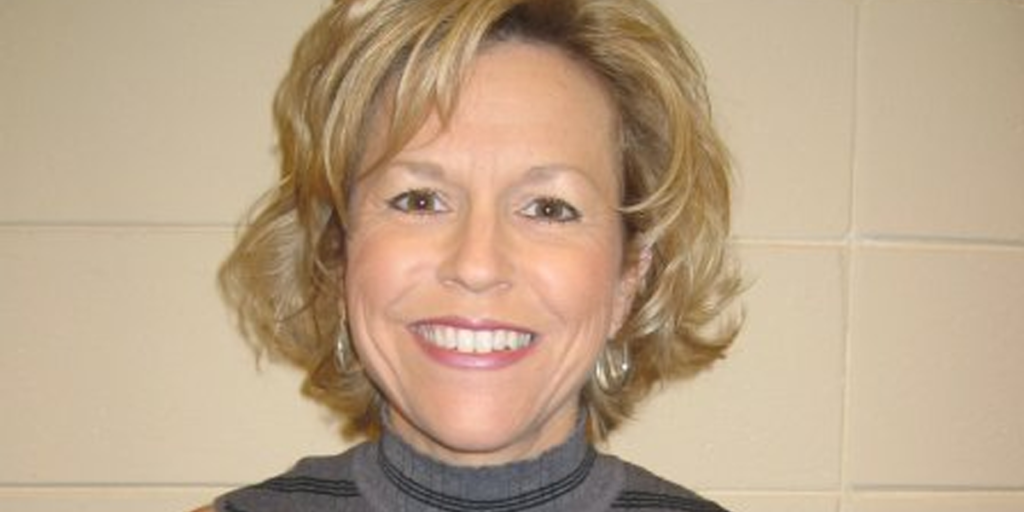
Dr. Caroline Gomez is an Autism Spectrum Disorder (ASD) sage; working within the ASD community for over three decades, Gomez is determined to advise, guide, and work directly with those who would help and serve individuals with ASD. A Miami-native, Gomez spent most of her college and working career in the Yellowhammer state. Receiving her first degree, a bachelors in Special Education, from Troy University in 1983, she worked as a special education teacher at several schools within in the state until 1987. She then moved back to Florida for a brief stint as an elementary school teacher and team leader, before moving to Texas to begin working on her Master’s degree in Special Education, (including an Autism specialization) at Our Lady of the Lake University in San Antonio, Texas. Earning her Master’s degree in 1995, Gomez moved across the pacific to Tachikawa, Japan where she worked as an English instructor for the Yokogawa Engineering Corporation while also working as an Autism Inclusion Consultant at the Yakota Elementary school on the Yakota Air Base. Continuing her education even further, Gomez moved back to the state of Alabama to earn her Ph.D. in Rehabilitation & Special Education, with a specialization in Autism, from Auburn University. While working on her Ph.D., Gomez continued to work with several different schools, and a mental health center until she started her own private practice in 2001, Autism Diagnostics, Consultation, and Training which she still maintains today. But she didn’t stop there, we’re only in the early 2000’s, and she only gets more impressive from here on in… In 2003 she earned her Ph.D, and became the co-director of the Auburn University Autism Center, overseeing and delivering several programs and services including: a model demonstration site for best practice education for children with ASD training for families, teachers, and related professionals outreach consultation services research opportunities relative to effective intervention strategies for children with ASD In 2007, Gomez took a position as Director of the Autism Hope Center in Georgia until 2009, when she relocated back to the Yellowhammer state. That year, Gomez was named the first ever Autism State Coordinator for the state. There, she led the Alabama Interagency Autism Coordinating Council and worked with then-Gov. Bob Riley to meet recommendations set forth by the Alabama Autism Task force. She continued to work as the state coordinator for two years, before jumping back into the private sector in 2011 to work as an autism diagnostic and consultation specialist at Glenwood Mental Health, Inc. in Birmingham, where she provided and planned program recommendations to Alabama school systems, a position she has held to this day. Gomez was also awarded the Resolution Honoring Professional Achievement by the Alabama State Senate, the same year. In 2012, Gomez added Adjunct Professor at the University of Alabama in Birmingham to her already impressive resume, and became a full-on Professor, teaching online courses, at the American Public University System in 2013, a position which she still maintains to this day. During all of her long work history, Gomez has somehow managed to serve on several boards including the: National Network of Autism Training and Technical Assistance Programs (NATTAP) (2009-2015) Alabama Disabilities Leadership Coalition (2010- current) Lee County Autism Resource and Advocacy (2014- current) Alabama Annual Autism Conference Planning Committee (2007-current) Autism Society of Alabama (2004-2009; 2012- current) This year Gomez was selected to serve as Vice-President for the Autism Society of Alabama, a title she also held in 2009. She is a truly remarkable woman, who has spent a majority of her lifetime leading and encouraging others to serve those that some of us, whose lives are not affected by ASD, might forget; and was kind enough to answer some of Alabama Today’s questions about her life, work, and influences. How have other women influenced your success? I have been fortunate to have extraordinary women mentor me throughout my career. Dr. Consuelo Bossey at Our Lady of the Lake University in San Antonio Texas encouraged me to become an expert in autism spectrum disorder (ASD). At the time, the ASD prevalence rate was 1 in 500 children. Today, the ASD prevalence rate is 1 in 59 children. Dr. Bossey’s urging became my life’s work. Dr. Samera Baird, Auburn University Professor Emerita, guided me with patience and enthusiasm through my doctoral program and a national research project to identify earliest indicators for ASD. I truly want to be just like her when I grow up! However, I will always admire and adore two strong women above all others. My mother, Rita Crawford, has always been my example and pillar of strength. She raised four children with little support and no complaint all while assuaging any of our worries. My great aunt, El Notaro, who had to drop out of school to work after the 8th grade, proudly earned her high school diploma at age 65. She epitomized tenacity and grace in the face of adversity, even after losing both of her legs. My mother and Aunt El were strong women who told me I could do anything, and I believed them! What shaped your desire to work with special needs kids, specifically children with autism? I honestly always wanted to be a teacher. My two younger sisters could not escape my practice for my future career. I was also drawn to children with challenges. My first year as a special education teacher was exciting and terrifying. Special education had only been a federal mandate for seven years and to say that I was not prepared would be an understatement. However, I was always willing to raise my hand and ask for help when needed and I have continued that practice. That willingness gave me had the opportunity to learn from experts in other fields like speech-language pathology and occupational therapy. When I began my special education teaching career, the prevalence rate for ASD was 1 in 2,500 children. ASD was so rare that it was never mentioned in my undergraduate special education program. Darius, a three year old in my first classroom, introduced me
Japan’s Prime Minister to meet Donald Trump ahead of U.S.-North Korea summit

Japanese Prime Minister Shinzo Abe, unable to meet North Korea’s leader himself, is heading to Washington to try to make sure President Donald Trump doesn’t overlook Japan’s security and other concerns at the unprecedented U.S.-North Korea summit next week. Abe will have less than two hours to make his points to Trump at the White House on Thursday, before both go to Canada for a G-7 summit on Friday and Saturday, and the American president then flies to Singapore for his June 12 meeting with North Korean leader Kim Jong Un. Japan, which relied on the U.S. for its post-World War II diplomacy and security, has been absent in the recent burst of engagement with North Korea. Chinese President Xi Jinping and South Korean President Moon Jae-in have both met Kim twice, as Abe waits his turn to raise Japan’s concerns directly. “I want to make sure to be on the same page with President Trump ahead of the first ever U.S.-North Korea summit so we can push forward nuclear and missile issues, and most importantly the abduction problem, and make for a successful summit,” Abe told reporters before leaving for the airport. Abe doesn’t want Trump to strike a compromise that would leave Japan exposed to shorter-range missiles that do not threaten the U.S. mainland or that relieves pressure on North Korea before it takes concrete steps toward complete denuclearization. He is expected to ask Trump once again to raise with Kim the fate of Japanese abducted by the North in the 1970s and 1980s. “It wouldn’t be my style to have to ask the U.S. for help on the abduction issue,” said Hitoshi Tanaka, a former diplomat and head of a think tank, the Institute for International Strategy. “It’s embarrassing that a state leader has to ask another leader in resolving the sovereignty of his people.” While in Washington, Abe will also likely press Trump to remove Japan from U.S. steel and aluminum tariffs, as well as express his opposition to threats of sharply higher U.S. tariffs on imported automobiles. Abe said he will show at the G-7 summit his full backing for Trump on North Korea, but he will urge everyone to take leadership in promoting free and fair trade rather than escalating disputes. Japan hopes to hold talks with North Korea after a successful Trump-Kim summit. Abe has said he is open to meeting with Kim, but only if it would lead to resolving the abduction issue. He said Japan would then normalize ties and provide economic aid as rewards for a North Korean commitment to both denuclearization and resolution of the abduction issue. Japanese analysts agree that if Abe’s turn to meet Kim comes, it would be at the very end of a long process as Trump and other regional leaders deal with North Korea’s denuclearization. “Japan eventually should develop its own diplomacy to deal with North Korea independently to resolve its problems, including the abductions,” said Atsuhito Isozaki, a Keio University professor specializing in North Korea. He said that economic aid or financial compensation for Japan’s 35-year colonization of Korea could be attractive, but noted that North Korea now has other potential sources of assistance. “Japan’s economy does not stand out in northeast Asia as it did 16 years ago,” he said, when Pyongyang and Tokyo last tried to negotiate a normalization of ties. Without Japan’s help, North Korea has arranged a summit with the U.S. and possible economic cooperation from South Korea, he said this week at a briefing for media. After a 2002 summit between then-Prime Minister Junichiro Koizumi and North Korean leader Kim Jong Il, North Korea acknowledged abducting 13 Japanese and allowed five of them to visit Japan, though they then stayed, angering North Korea. Japan says at least 17 Japanese were abducted and possibly more. Japanese officials are scrambling to get information on the Trump-Kim summit. Chief Cabinet Secretary Yoshihide Suga said Japan will dispatch diplomats to Singapore to try to get the latest updates. After his last meeting with Trump in April, Abe said the two leaders were in complete agreement on North Korea policy, namely to keep sanctions in place until Pyongyang takes concrete action toward verifiable and irreversible denuclearization. Concerns have since grown in Japan that Trump may be prioritizing holding a summit rather than the goal of full denuclearization. Abe, who has played tough on the North, also worries that a growing reconciliatory mood between the two Koreas may prompt leniency toward Pyongyang. Trump’s recent statement that he doesn’t want to keep using the phrase “maximum pressure” against North Korea reinforced those fears. Republished with the permission of the Associated Press.
Trustees report warns Medicare, Social Security finances worsening

Medicare will run out of money sooner than expected, and Social Security’s financial problems can’t be ignored either, the government said Tuesday in a sobering checkup on programs vital to the middle class. The report from program trustees says Medicare will become insolvent in 2026 — three years earlier than previously forecast. Its giant trust fund for inpatient care won’t be able to fully cover projected medical bills starting at that point. The report says Social Security will become insolvent in 2034 — no change from the projection last year. The warning serves as a reminder of major issues still languishing while Washington plunges deeper into partisan strife. Because of the deterioration in Medicare’s finances, officials said the Trump administration will be required by law to send Congress a plan next year to address the problems, after the president’s budget is submitted. Treasury Secretary Steven Mnuchin said in a statement that there’s time to fix the problems. “The programs remain secure,” Mnuchin said. Medicare “is on track to meet its obligations to beneficiaries well into the next decade.” “However, certain long-term issues persist,” the statement added. “Lack-luster economic growth in previous years, coupled with an aging population, has contributed to the projected shortages for both Social Security and Medicare.” Social Security recipients are likely to see a cost of living increase of about 2.4 percent next year, said government number-crunchers who produced the report. That works out to about $31 a month. At the same time, the monthly Medicare “Part B” premium for outpatient care paid by most beneficiaries is projected to rise by about $1.50, to $135.50. Both the cost-of-living increase and the Medicare outpatient premium are not officially determined until later in the year, and the initial projections can change. More than 62 million retirees, disabled workers, spouses and surviving children receive Social Security benefits. The average monthly payment is $1,294 for all beneficiaries. Medicare provides health insurance for about 60 million people, most of whom are age 65 or older. Together the two programs have been credited with dramatically reducing poverty among older people and extending life expectancy for Americans. Financed with payroll taxes collected from workers and employers, Social Security and Medicare account for about 40 percent of government spending, excluding interest on the federal debt. But demands on both programs are increasing as America ages. Unless lawmakers act, both programs face the prospect of being unable to cover the full cost of promised benefits. With Social Security that could mean sharply reduced payments for retirees, many of whom are already on tight budgets. The report said the total annual cost of Social Security is projected to exceed total annual income in 2018 for the first time since the Reagan era, meaning the program will have to tap into reserves. For Medicare, insolvency would mean that hospitals, nursing homes and other providers of medical care would be paid only part of their agreed-upon fees. Medicare is widely seen as a more difficult problem that goes beyond the growing number of baby boomers retiring. It’s also the unpredictability of health care costs, which can be jolted by high-priced breakthrough cures, and which regularly outpace the overall rate of economic growth. The Cabinet secretaries for Treasury, Health and Human Services, and Labor usually participate in the annual release of the report, along with the Social Security commissioner, and take questions from reporters. None of those top officials was present Tuesday; an aide cited scheduling conflicts. The four top officials serve as the Social Security and Medicare trustees, along with two independent trustees who are supposed to represent the public. The public trustees are usually more candid, but those posts remain unfilled. President Donald Trump campaigned on a promise not to cut Social Security or Medicare, but he hasn’t offered a blueprint for either program. Democrats, meanwhile, want to extend the social safety net by spending more on health care and education. Advocates for the elderly said Tuesday there should be no cuts to Social Security benefits. But federal deficits keep rising, and the recent Republican tax-cut bill is expected to add to the debt. Last year’s tax law, which cut taxes on Social Security benefits, helped exacerbate the shortfall. So too did repeal of the individual mandate in so-called Obamacare, which promises to increase the number of people without health insurance and therefore Medicare payments for uncompensated medical care. Higher deficits mean less maneuvering room for policymakers when the day of reckoning finally arrives for Social Security and Medicare. In principle, the U.S. is supposed to be paying forward its Social Security and Medicare obligations by building up trust funds to cover future costs. That money is invested in special government securities, which also collect interest. But when the money is actually needed to pay for benefits, economists say a government deep in debt could be hard pressed to make good. Republished with the permission of the Associated Press.
Twinkle Cavanaugh will face Will Ainsworth in July runoff for Lieutenant Governor
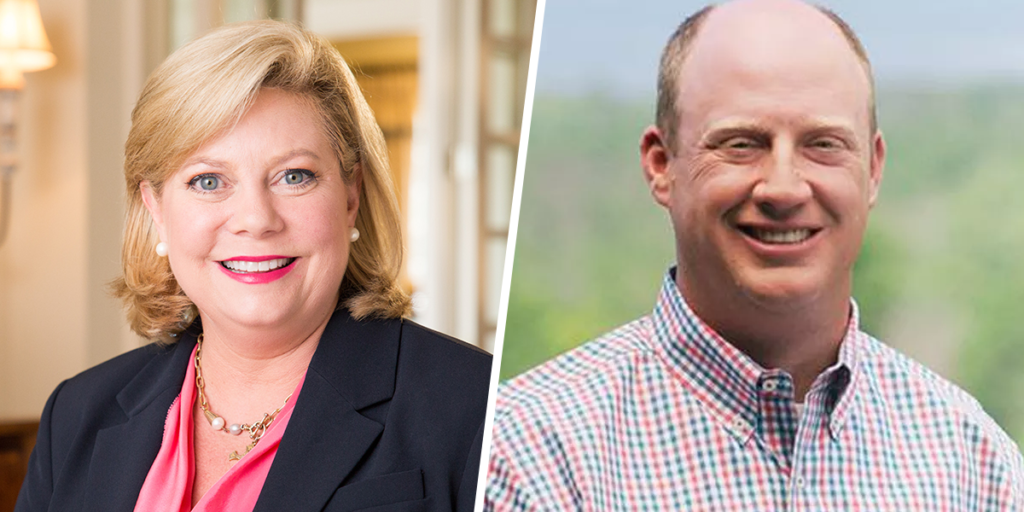
The current President of the Public Service Commission and an outgoing State Rep. are headed for a runoff in July in the race to be Alabama’s next Lieutenant Governor. Guntersville-Republican State Rep. Will Ainsworth finished second to Montgomery’s Twinkle Cavanaugh in Tuesday’s Republican primary for Lieutenant Governor. Ainsworth took home 36 percent of the vote compared to Cavanaugh’s 43 percent. The third candidate, Rusty Glover, received 19 percent of the vote. The results move the top two vote-getters to a runoff as no candidate won 50 percent or more of the vote in order to outright win the nomination. Cavanaugh said she’s looking forward to traveling to all 67 counties again in the runoff. “What a night! Thank you to everyone who voted today and all of our tremendous supporters! We couldn’t have done it without you!,” Cavanaugh posted on Facebook. “Looking forward to traveling to all 67 counties again and working harder than ever in the runoff. Together, we will build a brighter Alabama!” “Over the last year, we’ve taken on the crooked career politicians in Montgomery and stood up for conservative values. Tuesday’s results show that we’re on the right track,” said Ainsworth following news of the runoff. “Alabamians’ continued dedication to conservative values inspires me, and I am grateful for the support of conservatives in every city, town and crossroads across our state. We’ve taken on the career politicians and we’ve made great strides, but the fight for Alabama’s future is not over.” The runoff is set for July 17. The office of Lieutenant Governor While some voters know much about the office of Lieutenant Governor, current Gov. Kay Ivey attributes her time in the position as what prepared her to take over the Governorship last April. As written in state law, the Lieutenant Governor is the President of the Senate and is entitled to vote in the event of a tie, much like that of the Vice President of the United States. They are also vested with certain prescribed legislative duties, powers, and responsibilities.
SBA List declares victory as pro-life women advance in Alabama primaries

The national pro-life group Susan B. Anthony List (SBA List) celebrated as its endorsed candidates in Alabama — Gov. Kay Ivey, Twinkle Cavanaugh, and 2nd District U.S. Rep. Martha Roby —advanced in their respective primaries. Ivey outright won the Republican party’s nomination and moves to the general election on Nov. 6. Meanwhile Cavanaugh, in the race for Lieutenant Governor, and Roby in the race to continue representing the 2nd District in the.S. House of Representatives, will both move to runoff election scheduled to take place on July 17. “We congratulate Governor Kay Ivey on her primary win. We also congratulate Twinkle Cavanaugh and Congresswoman Martha Roby on advancing in their races,” said former Congresswoman Marilyn Musgrave, SBA List’s Vice President of Government Affairs. “These three outstanding candidates form a pro-life ‘dream team’ for Alabama, one of the most solidly pro-life states in the nation. They will stand up to the extreme abortion lobby, fight to protect unborn children and their mothers, and keep Alabama taxpayers out of the abortion business. As an organization with a special calling to promote strong pro-life, pro-woman leaders, we are proud to see them advance and encourage Alabama voters to support them.” Ivey is a founding member of SBA List’s Pro-Life Women’s Caucus who was first endorsed by SBA List Candidate Fund in 2010. Cavanaugh is president of Alabama’s Public Service Commission, an important role ensuring taxpayers’ confidence in local government. Previously, she was the first woman to serve as chair of the Alabama Republican Party. Roby was one of the first to speak out on the House floor to raise awareness of Planned Parenthood’s role in the harvest and sale of aborted babies’ body parts for profit. She has fought to redirect taxpayer funding from Planned Parenthood, the nation’s largest abortion business, to comprehensive health care alternatives. She is also a co-sponsor of the Protecting Life and Integrity in Research Act of 2017, which would ban federal funding for research using fetal tissue from abortion victims. Recently, she spoke in support of the Pain-Capable Unborn Child Protection Act. She also co-sponsored the Born-Alive Abortion Survivors Protection Act and managed floor debate on the bill. Susan B. Anthony List and its partner super PAC, Women Speak Out spent more than $18 million in the 2016 election cycle, visiting more than 1.1 million homes in battleground states to defeat Hillary Clinton and maintain a pro-life Senate. SBA List is dedicated to pursuing policies and electing candidates who will reduce and ultimately end abortion. To that end, SBA List emphasizes the education, promotion, mobilization, and election of pro-life women. SBA List is a network of more than 630,000 pro-life Americans nationwide.
Rematch: Jim Zeigler, Miranda Joseph to face-off, again, for State Auditor position
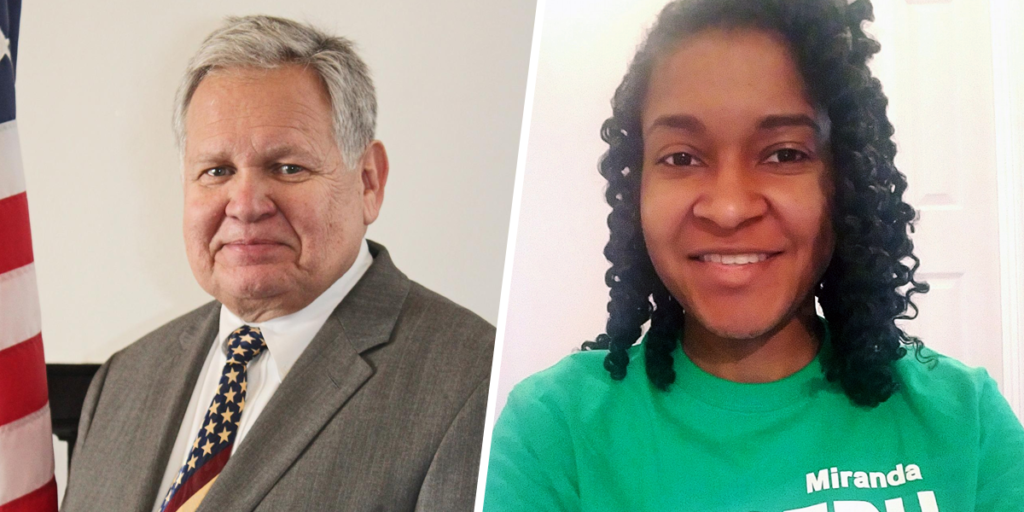
Incumbent State Auditor Jim Zeigler ran circles around his opponents on Tuesday at the ballot box, taking home 55 percent of the vote. His closest opponent, Stan Cooke garnered 33 percent of the vote, meanwhile Elliott Lipinsky only took home 12 percent. Zeigler acknowledged his opponents following his victory. “My honorable opponents, Stan Cooke and Elliott Lipinsky, worked hard. They made excellent speeches. They were good guests on talk shows. They made insightful points, and I was listening,” said Zeigler. “In the general election campaign and the second Zeigler administration, I intend to take a new approach toward my political opponents and those who disagree with my actions. I have figured out that my critics are well meaning. They are watching. I will now view my critics as consultants to create a better State Auditor’s office. I will listen to their points – and learn. And these consultants are free. They do not have to be paid by me or by the taxpayers. This new viewpoint can lead to a much-needed paradigm shift in American politics. Zeigler’s primary victory means he will now face Democratic challenger Miranda Joseph in the November 6 General Election. Joseph automatically advanced to the General, as she faced no primary opponent. Zeigler previously defeated Joseph in 2015. He has held the position ever since. “I look forward to the November general election campaign against a serious Democratic nominee with a strong resume,” Zeigler added. The office of State Auditor The State Auditor’s office is tasked with providing accountability to the taxpayers of Alabama by maintaining accurate records of all personal property valued at $500 and above, as well as items deemed sensitive in nature. As well as serving as only check and balance between the Comptroller’s Office and the State Treasury.
ALGOP Chairman Terry Lathan weighs-in following primary election results
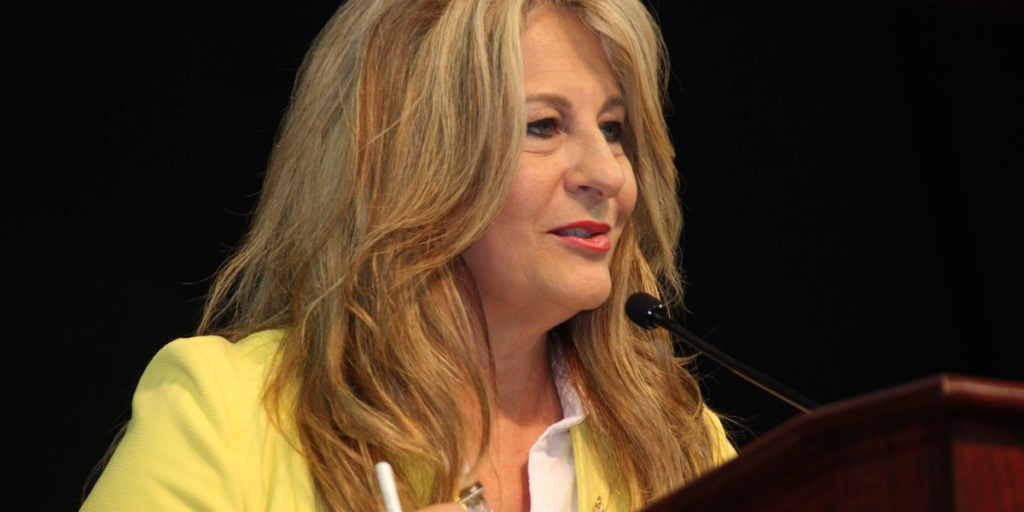
Following Tuesday’s primary’s across the state, Alabama Republican Party (ALGOP) Chairman Terry Lathan offered her congratulations to the candidates. “Congratulations to our Alabama Republicans who won their races Tuesday. We are proud of our strong ALGOP candidates for venturing in to the arena of patriot service and running for office,” Lathan said in a statement. “It is not an easy task, but it is important to remember they are protecting Alabama from liberal progressive actions while highlighting solid conservative policies.” She continued, “Congratulations to Governor Kay Ivey on strongly securing the Republican nomination for Governor of Alabama. At the time of this release, Governor Ivey’s vote totals were more than the entire Democratic Gubernatorial field combined.” Lathan went on to encourage Republican voters to participate in the July 17th runoff elections. “We encourage Republicans to join us one more important time, Tuesday, July 17th, to finish choosing our November general election team,” Lathan added. “A vote for an Alabama Republican is a vote for fiscal responsibility, 2nd Amendment rights, tax cuts, strong border security, pro-life legislation, emphasis on our education system and a continued strong economy. These ARE the values that Alabama voters hold and want to see in our state.”
John McMillan handily wins GOP nomination for State Treasurer
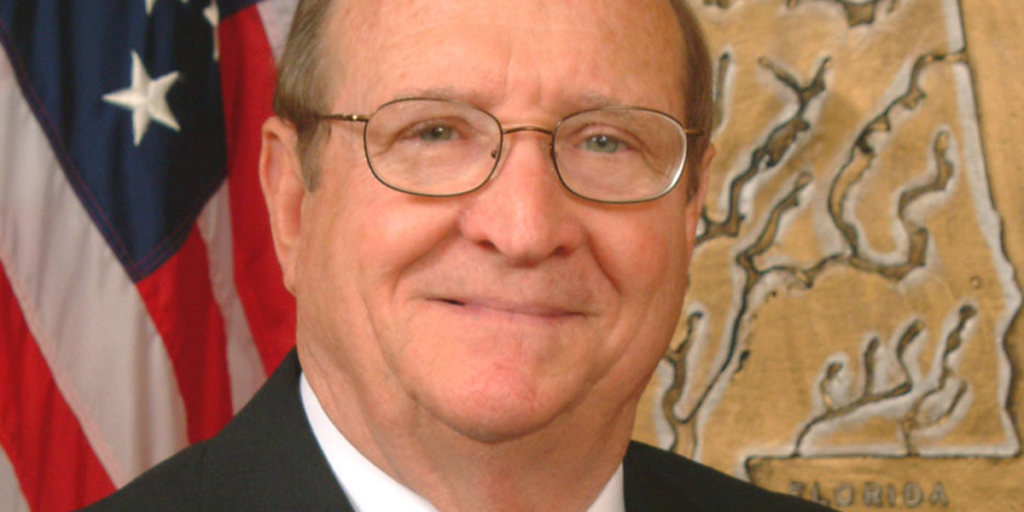
Longtime state lawmaker and current second-term Commissioner of Agriculture and Industries, John McMillan, will be moving to a new office in November — he won the GOP nomination for Alabama State Treasurer on Tuesday and with no Democratic challenger, he will assume the office. McMillan handily bested his two opponents — David Black (21 percent) and Stephen Evans (18 percent) — taking home 61 percent of the vote Tuesday night. The office of State Treasurer The Alabama State Treasurer acts as the head banker for the State of Alabama, handling deposits, withdrawals, redemptions of state warrants, and investments of state funds.
