
Birmingham City Council meeting highlights: June 26, 2018
During the Birmingham City Council Meeting on June 26 2018, the City Council voted on the following items: An Ordinance “TO FURTHER AMEND THE ZONING DISTRICT MAP OF THE CITY OF BIRMINGHAM” (Case No. ZAC2017-00012) to change zone district boundaries from R-3, Single Family District to MUL, Mixed Use Low District, filed by Wayman Newton, representing the owners, Waynew Global Holdings, LLC, for the properties located at 1301 and 1303 20th Street North situated in the NE¼ of Section 26, Township 17-S, Range 3-West, and the hearing of all interested parties. Was this item approved? Delayed six weeks What does this mean? The Public Hearing for this item will now be set for the August 7th City Council Meeting. The proposed use for the location is for professional offices. The City’s Long Range Land Use Plan identifies the property as Residential Low, a land use designation most comparable to the existing zoning district, therefore, the rezoning request is Not Consistent with the Plan.The applicant met with The Druid Hills Neighborhood Association at its regularly scheduled meeting on October 23, 2017 to review the proposed project, no official vote was taken. The applicant met again with the neighborhood association at its regularly scheduled meeting on February 26, 2018 to address the concerns of the residents regarding his request. The neighborhood reviewed the proposed request and voted “To Not Recommend Approval” of the proposed rezoning request. Zoning Advisory Committee Action: The Zoning Advisory Committee met at its regularly scheduled meeting on March 6, 2018 and voted to Not Recommend approval of the applicant’s request, and the Planning & Zoning Committee met on May 17th and voted to not recommend the item. Next steps: For more information, please contact the Office of the City Council at 205.254.2294 A Resolution appointing two (2) members to the Jefferson County Intellectual and Developmental Disabilities Authority one (1) term expiring April 1, 2021 and one (1) term expiring April 1, 2023.Was this item approved? Yes What does this mean? The City Council voted to re-appoint Dr. Jayne Ness and Eve Graham to the Jefferson County Intellectual and Developmental Disabilities Authority. The Authority holds a contract with the Alabama Department of Mental Health for Targeted Case Management for adults with a primary diagnoses of an Intellectual Disability. Currently, the Authority serves over 700 individuals, 95% of whom are adults, and 5% of whom are children. A total of 487 of those live in supported residential settings operated by the Authority’s provider, while others live independently or with families. Next steps: For more information, please contact the Office of the City Council at 205.254.2294 An Ordinance “TO FURTHER AMEND THE GRANTS FUND” for the fiscal year ending June 30, 2018, appropriating $20,808.00 to Fire Department, Community Foundation of Greater Birmingham (CFGB) per grant award received to purchase a vehicle. Was this item approved? Yes What does this mean? This appropriation is for a grant to purchase a vehicle to support the Birmingham Fire and Rescues Department’s CARES program, also known as their “Prevention through Intervention” initiative. The program works to reduce the frequency of return ER visits by educating residents about preventative healthcare, instead of patients simply being discharged, not having a primary care doctor to follow up with, and repeating that costly cycle over and over again. The objective of the “Prevention through Intervention” program is to decrease the dependency on emergency services through patient education, patient advocacy, community collaboration, and progressive policy change.” For more information on the program, please read: https://medium.com/@bhamcitycouncil/budget-and-finance-committee-recap-3-12-18-5bcca9111377 Next steps: For more information, please contact the Office of the City Council at 205.254.2294. ••• Meeting highlights provided by the Birmingham City Council Public Information office.
Bradley Byrne leads colleagues in opposition to Baldwin County immigration site
Alabama 1st District U.S. Rep. Bradley Byrne on Tuesday lead a group of colleagues from Alabama and Florida in sending a letter to urge the Department of Homeland Security (DHS) and the Department of Defense (DOD) to halt efforts to house illegal immigrants at two Navy outlying airfields in south Baldwin County, Alabama. In a letter to Secretary of Defense James Mattis and Secretary of Homeland Security Kirstjen Nielsen, the Members of Congress outlined why the lack of infrastructure at the airfields and the unique coastal environment make the sites completely unacceptable for housing. “I appreciate my Alabama and Florida colleagues joining me to express our serious concerns about any proposal to house illegal immigrants in Baldwin County,” Byrne said of the letter. “I am hopeful our concerns will be taken seriously and this flawed idea will be taken off the table, just like it was back in 2016.” Within the Alabama delegation, the letter was signed by all the Republican House Members: 4th District U.S. Rep. Robert Aderholt, 5th District U.S. Rep. Mo Brooks, 6th District U.S. Rep. Gary Palmer, 2nd District U.S. Rep. Martha Roby, and 3rd District U.S. Rep. Mike Rogers. The full text of the letter can also be found below. Dear Secretary Mattis and Secretary Nielson: We write to express strong opposition to the consideration of Naval Air Station Whiting Field’s Naval Outlying Field (NOLF) Silverhill in Silverhill, Alabama and NOLF Wolf in Orange Beach, Alabama as detention facilities for illegal immigrants detained from the U.S. southern border as these locations cannot adequately meet the needs of housing and sustaining migrants. While the Department of Homeland Security (DHS) has not formally asked the Department of Defense (DOD) for assistance to house migrants, it has come to our attention that DHS is working with DOD to develop a plan to house immigrants in temporary tent structures, including the possibility of using the above-mentioned sites. These locations are undeveloped military airfields. They lack even basic infrastructure, such as running water, housing, or restroom facilities, to provide even rudimentary needs for detained immigrants. Given this lack of infrastructure, individuals would be housed in tents and potentially exposed to disease carrying insects that are prevalent in the coastal environment. There are also serious natural hazards that should be taken into consideration at these sites. The Gulf Coast region is prone to severe weather including hurricanes, tornadoes, flash floods, thunder storms, severe heat waves, and high humidity. These natural hazards could present serious risks to those housed at these facilities, particularly to those housed in tent structures, as well as the personnel responsible for overseeing the facilities. Additionally, having to evacuate an additional 25,000 individuals from the airfields would place a further strain on what is already a complex hurricane evacuation system. This is not the first time a proposal has been made to use these airfields to house illegal immigrants. In 2016, the Obama Administration ultimately abandoned a similar effort to use these sites after intense pushback from Congress and local officials. During that discussion, based upon similar arguments, the House of Representatives passed an amendment to the annual Military Construction and Veterans Affairs Appropriations bill (H.R. 4974), which barred funds in the bill from being used to modify a military installation in the United States to provide temporary housing for unaccompanied alien children. H.R. 4974, with the amendment included, passed the House on May 19, 2016, by a bipartisan vote of 295 to 129. It is our sincere hope that the Trump Administration will come to the same conclusion that these airfields are not a legitimate option to house illegal immigrants. To be clear, we look forward to working with the Trump Administration to ensure that our nation’s immigration laws are fully enforced and to stem the flow of illegal immigrants at our nation’s southern border. As we work together, we hope you can assure us that the naval airfields in Baldwin County will not be used to house illegal immigrants.
Jim Zeigler asks DHS to cancel plan to house illegal detainees in Baldwin County
Time reported on Friday it had obtained an internal document that details the U.S. Navy’s plans to construct “temporary and austere” tent cities to house 25,000 illegal immigrants in the Yellowhammer State at two abandoned airfields — Navy Outlying Field Wolf in Orange Beach and Navy Outlying Field Silverhill — and Alabama State Auditor Jim Zeigler is trying to stop them. Zeigler, a resident of nearby Mobile County, sent a formal request to the U.S. Department of Homeland Security (DHS)Secretary Kirstjen Nielsen asking her to cancel the plans to construct two tent cities in Baldwin County. Zeigler says the plan is “terribly flawed.” He cited four problems with the plan: The area is a hurricane zone. “This area is a hurricane zone,” said Zeigler. “A tent city in a hurricane zone is dangerous for the detainees and the staff. It would be difficult and costly to quickly evacuate the detainees when a hurricane heads our way, which happens frequently. This site is totally inappropriate for the intended purpose.” High temps and humidity. Zeigler continued, “The area has high temperatures and humidity. There will be no air conditioning in a tent city. Other geographical areas are available without the heat and humidity. The site selection authority needs to be fired.” It’s near the state’s booming tourist industry. “The area is in or near Alabama’s booming tourist industry and highest revenue-generating area,” Zeigler explained. “Tourism and revenues would be adversely affected by these sites. Optional areas are available that are isolated and are not vital to tourism and revenue generation.” Security. “Security is a continuous problem with a sprawling tent city in a residential area,” Zeigler added. “Escapees can commit crimes in the nearby neighborhoods. Isolated areas are available that would not have this problem.”
Meet your presumed new Agricultural Commissioner Rick Pate

Incumbent Agricultural Commissioner John McMillan announced in January that he would not be seeking reelection, opting for a run for State Treasurer instead. Four candidates stepped up to the plate seeking election in the June 5 primary, with former state Sen. Gerald Dial and Lowndesboro Mayor Rick Pate both garnering enough support to tip the race into a a runoff election. The runoff race took a dark turn when Dial began hurling insults at Pate and lying about him in a campaign ad. But the negative campaign strategy didn’t work, Pate won the runoff election with nearly 57 percent of the vote. Now, facing no Democratic challenger in the November general election, Pate has presumably won has race, and will become Agricultural Commissioner in 2019. With that in mind, here are the five things you need to know about Rick Pate: 1. He’s a cattle breeder and farmer. Pate’s father, Harold Pate was an award winning cattle farmer, and charter member of the National Cattlemen’s Association. “Pate is said to have done more over a longer period of time to promote and advance Charolais cattle in Alabama than any other individual,” said Auburn University. His son, candidate Rick Pate is now one of the owners and operators of the Pate Charolais farm, a Charolais cattle farm and breeder in Lowndesboro, Ala. 2. He’s been the Mayor of Lowndesboro since 1997 First elected in 1997, Pate has been the mayor of Lowndesboro, a town with a population of 107, since 1997. Under Pate’s leadership the town, southwest of Montgomery, has more than $1.2 million in cash reserves. In fact, the town operates a water system, which has twice been named the second-best-tasting water by the non-profit Alabama Rural Water Association. 3. He holds a bachelors degree in Horticulture. Pate attended the University of Auburn’s agricultural school, and earned a bachelors degree in Horticulture. Growing up, and spending nearly all of his life on a farm, has given him an affinity for farmers, and their lifestyle. “When I was approached about running for commissioner of agriculture and industries, I saw it as an opportunity to serve our state and promote the agricultural community that I know from my upbringing,” Pate said announcing his campaign. 4. He owns an award-winning landscaping business. Pate has built Pate Landscape Co., Inc. into an award winning, profitable business over 36 years. It currently employs 23 people. The firm has completed projects such as the Bryant-Denny Stadium Expansion in Tuscaloosa, AU School of Nursing & Pharmacy, Wetumpka WindCreek Casino and Hyundai Motor Manufacturing in Montgomery. 5. He holds several positions in the Alabama Republican Party. Not only a member of the Alabama Republican Party, Pate is vice-chair of the Lowndes County Republican Party and serves as the Lowndes County Place 1 member of the Alabama Republican Executive Committee.
Alabama politicians, groups react to Supreme Court decision on Donald Trump’s travel ban
The Supreme Court of the United States ruled in favor of the Trump Administration’s travel ban, which prohibits travel from seven countries: Libya, Syria, North Korea, Iran, Somalia, Yemen and Venezuela. In a 5-4 decision, the court reversed an injunction that had — until December 2017 — prevented the Trump administration from using the Travel Ban 3.0 as a basis for denying visas to foreign nationals from the affected countries. Here are their reactions (in order received/seen online): Terry Lathan | Chairman of the Alabama Republican Party (ALGOP) The Constitution has clearly given a president the authority to implement executive orders. The travel ban pertaining to several countries was in that scope. This is not a policy on discrimination- it is a policy on the security of our nation. Chief Justice John Roberts was correct when he authored that the ruling was ‘squarely within the scope of presidential authority’ under our federal laws. We applaud the Supreme Court’s decision on this matter. Alabama 3rd District U.S. Rep. Mike Rogers: I was thrilled today to see the Supreme Court uphold President Trump’s travel ban. It is a huge win for the safety of the American people and our national security. President Trump is exactly right that we must fully vet people from these countries before even considering to allow them into the United States. Keeping Americans safe is one of the highest duties of the government and this was absolutely the right decision. Alabama 5th District U.S. Rep. Mo Brooks: I applaud the Supreme Court for finding that President Trump has authority to take such actions as are necessary to protect American lives from terrorism risks. America is safer as a result. The President’s legal authority on immigration and national security in this instance is clear. The liberal, judicially activist 9th Circuit, the most error-prone and reversed circuit court of appeal, unnecessarily put American lives at risk when it undermined the President’s Constitutional authority to protect Americans. I am pleased the Supreme Court overturned the 9th Circuit’s liberal, activist, and unconstitutional overreach. I fully supported President Trump when he issued the Travel Order Proclamation and I fully support the President’s continued actions to protect American lives. Today’s decision is a win for the Rule of Law. Alabama 7th District U.S. Rep. Terri Sewell: Today’s Supreme Court ruling upholding the Muslim travel ban takes our country in the wrong direction. America was built on the promise of freedom and opportunity for immigrants of all backgrounds, regardless of religion. Trump’s own statements on the purpose of his Muslim ban are evidence of the religious discrimination that his Muslim ban is founded on. While the President has authority to protect our national security, promoting blatant religious discrimination only undermines our interests abroad and our security at home. Trump’s Muslim ban does not make our country safer. Instead, it weakens our fight against terror by handing extremists a tool for recruitment and alienating Muslim partners around the globe. Additionally, the ban robs our nation of the economic input of immigrants, who are business owners, community leaders, students, and workers in our communities. Policies that discourage foreign investments in and partnerships with our country should be rejected by all who care about the long-term standing of the United States as a global leader. It is time for this Congress to hold the Trump Administration accountable for its dangerous, anti-family, anti-immigrant policies. CAIR-Alabama | Executive Director Khaula Hadeed Today’s decision deeply impacts Muslim communities and communities of color. This is not the first time the Court has been wrong on a decision. In Korematsu the Court permitted the incarceration of thousands of people based on their Japanese ancestry. In this case, Trump set out to ban Muslims from entering the country and the Court permitted him to do so. This decision empowers the president and future administrations to discriminate on the basis of religion. Randall Woodfin | Mayor of Birmingham America was founded by immigrants. It was built by immigrants. Yet the Supreme Court’s travel ban ruling undermines an entire group of people based on their religious beliefs. This is not who we are. America was built on the idea that people from all walks of life could come together and live in harmony. President Trump’s statements over the past few years demonstrate purposeful intent to deny our Muslim brothers and sisters the rights enjoyed by everyone within our borders. Birmingham taught the world the meaning of equality and tolerance. This is not it.
Funeral services set for AG Steve Marshall’s wife, Bridgette
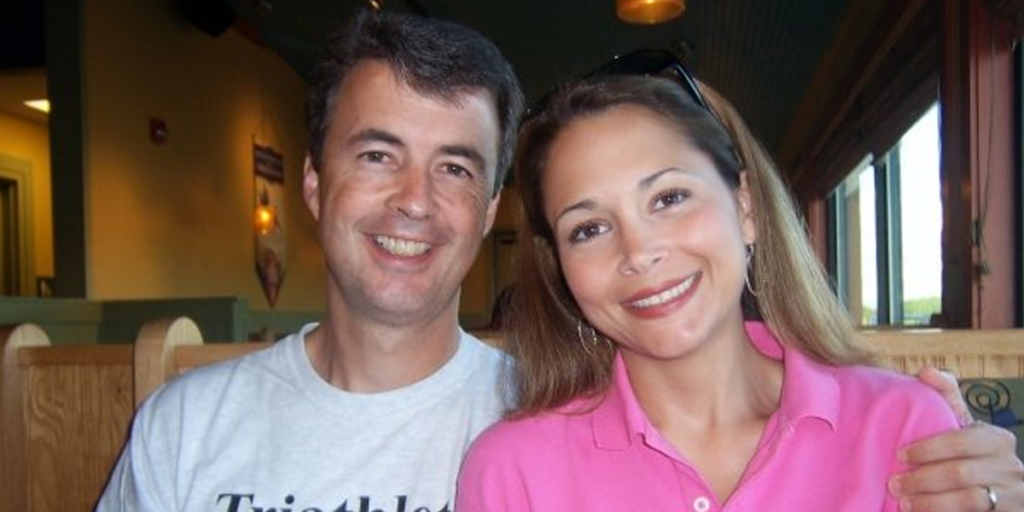
Funeral services have been set for Attorney General Steve Marshall‘s wife Bridgette Gentry Marshall who passed away Sunday morning. The service will be held Friday, June 29 at the McRae Funeral Home Chapel in Boaz, Ala. at 10 a.m. Her visitation is scheduled for Thursday from 5 p.m. to 8 p.m. at the same location. According to Marshall’s office, Bridgette passed after a long-time struggle with mental illness. Mrs. Marshall was born in Boaz, Alabama on June 6, 1973 to Billy Wayne and Linda Walls Gentry. She was a homemaker and active hospice volunteer. Mrs. Marshall is survived by her husband: Steve Marshall of Albertville, Daughter: Faith Marshall (Bailey Simmons) of Albertville, Parents: Wayne and Linda Walls Gentry of Asbury, Brothers: Brian and April Gentry and Brandon and Christie Gentry all of Albertville. Nieces and Nephews: Katheryn Lipscomb, Brooke Gentry, Caleb Gentry and Anslei Gentry. She was preceded in death by her nephew: Austin Gentry. In lieu of flowers the family suggests donations to the Shepherd’s Cove Hospice, 408 Martling Road, Albertville, Ala. 35951.
Five things you need to know about Gerald Dial
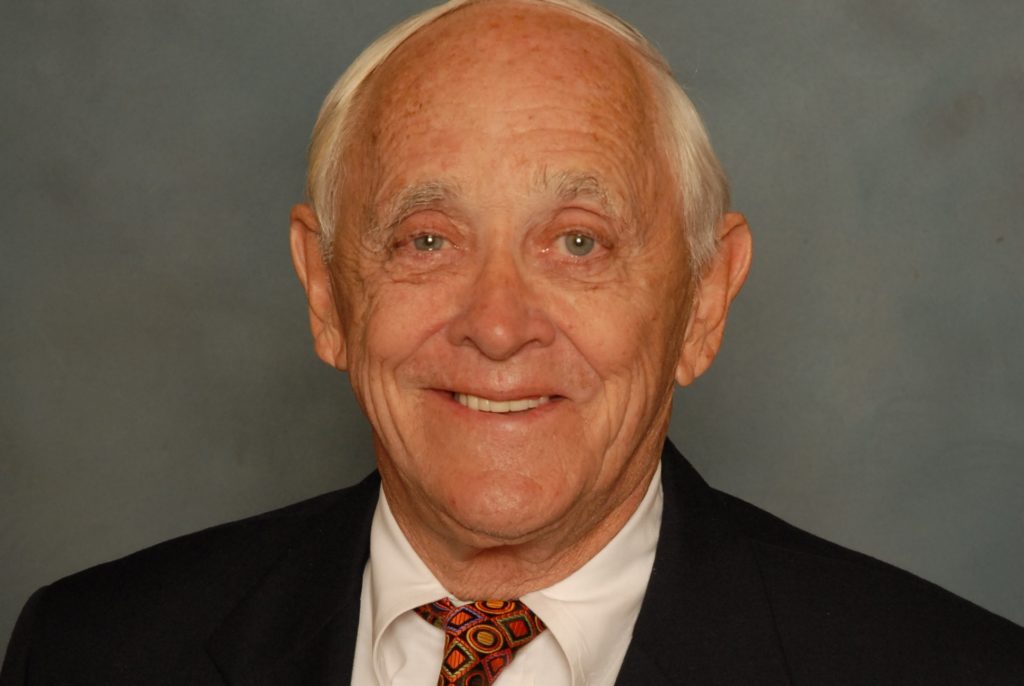
The primary elections are over, but some highly sought spots still remain open due to the primary races resulting in runoffs. One of those races is for the Commissioner of Agriculture and Industries seat. Incumbent Agricultural Commissioner John McMillan announced in January he would not be seeking reelection, opting for a run for State Treasurer instead. Four candidates stepped-up to the plate seeking election in the June 5 Republican primary. Former state Sen. Gerald Dial and Lowndesboro Mayor Rick Pate both garnered enough support to tip the race into a a runoff election set for July 17. With that in mind, here are the five things you need to know about Gerald Dial: 1. He served 37 years in the military, retiring in 1997 as an Assistant Adjutant General of the Alabama National Guard Dial joined the Alabama National Guard in 1959, over the course of his 37 year career in the military he attended the Alabama Military Academy and the Engineering Officers Basic Course. In 1968 he also completed the rigorous training required to become a United States Army Ranger, and was ranked as the Assistant Adjutant General of the Alabama National Guard when he retired in 1997. 2. He served in the state legislature as both a senator and a representative. In 1974 Dial was elected to serve as a Representative to the Alabama House, a position he held for one term. After his term as a representative, Dial sought election to the Alabama State Senate District 13 in 1983 and won. He then held his position until 2006 coming back to the race in 2010 to win the district back. This year, instead of seeking re-election, he’s joined the race for Agricultural Commissioner citing his 44 years of service in the Alabama Legislature as enough experience for the job. 3. He’s currently one of the President’s pro tempore at Troy University. Then governor Guy Hunt appointed Dial to the Troy University Board of Trustees in 1991 where he now serves as President pro tempore for Area 5. “Sen. Gerald Dial is one of the best public servants that I have met throughout my life in Alabama,” Troy Chancellor Dr. Jack Hawkins Jr. told the Trojan News Center. “For 26 years he has served as a member of the Troy University Board of Trustees and he has served well. Leadership in its truest sense is about pulling people together and focusing them in a common direction. Sen. Dial is the essence of a servant leader and one of whom we can all be proud.” 4. He was appointed by former governor Bob Riley to serve as the Executive Director of the Alabama Rural Action Commission. Dial served as the Executive director of the Alabama rural action commission from 2007 to early 2018, he was appointed for the position by then governor Bob Riley. According to his campaign website, while serving in this position, Dial “helped secure grants for infrastructure improvements, rural broadband initiatives, and community development.” 5. He financed his campaign through his timber business Pate, Dial’s opponent claimed he was the only farmer in the primary race, but Dial says that’s not true. “I am a farmer as well,” Dial told AL.com. “I financed my campaign off of timber.”
Downtown Birmingham linear park the focus of upcoming public meetings

A proposal to create a mile-long linear park underneath the rebuilt Interstate 59/20 elevated highway through downtown Birmingham is generating excitement among city and community leaders. The proposal is in the conceptual stage, and is expected to be unveiled for community discussion before two meetings next month. Officials emphasize that nothing is firm and that community residents will be encouraged to provide ideas about what should go in the public space. The improvements to Interstate 59/20 will include the space underneath the roadways. (Michael Sznajderman / Alabama NewsCenter) The linear park would run for 10 blocks underneath the widened highway from 15th Street to 25th Street North – starting near the Civil Rights District and ending just beyond the Uptown entertainment district, east of the Birmingham-Jefferson Convention Complex (BJCC). In comparison, Birmingham’s popular Railroad Park, while significantly wider, is only four blocks long. State transportation officials and others participating in the process say the new public space is possible because of the way the elevated highway will be rebuilt. For example, the rebuilt interstate will have no vehicle exit or entrance ramps along the 10-block stretch, making the space below the highway more inviting for pedestrians and public activities. Enhanced lighting that can change color, similar to the 14th and 18th Street tunnels near Railroad Park, also promises to make the proposed linear park more pleasant. The new highway design removes hundreds of support columns that disrupt the space beneath the existing elevated highway. Instead of the existing spans that have columns every 65 feet, the new design will have columns 165 feet apart. The seamless design of the new highway is expected to eliminate much of the highway noise, including the “thump-thump” heard now as trucks rumble over seams between spans. The ongoing improvements to Interstate 59/20 includes 10 blocks through downtown where officials want to build a linear park and public space. (Alabama Department of Transportation) Officials said no plans are locked down for what could occupy the linear spaces underneath the new highway. Among ideas being floated are everything from a carousel, to athletic fields, to fountains and performance and event spaces. Art installations could be part of the mix. Birmingham-based Barge Design Solutions is working on the concepts. Barge has been involved in park, greenway and large landscape-design projects, including a 3-mile extension of the Tennessee Riverpark in Chattanooga, Tennessee, and the renovation of Rhodes Jordan Park in Gwinnett County, Georgia. Consulting with Barge is New York-based Biederman Redevelopment Ventures, which was part of the team responsible for important public projects around the country, including renovated Bryant Park in New York City and Klyde Warren Park in Dallas. One element already exciting to local officials and community leaders is how a linear park could provide pedestrian connections downtown – potentially linking attractions and institutions, including the BJCC, Uptown and the Sheraton and Westin hotels; the Birmingham Museum of Art, Boutwell Auditorium and Linn Park; the Alabama School of Fine Arts and its theater; and the Birmingham Civil Rights National Monument and its multiple historic sites. A linear park has the potential to be an attraction itself, providing a walkable connector between downtown and the institutions and neighborhoods just north of Interstate 59/20, which has been a physical barrier for decades. Also being discussed are potential names for the linear park. Working with Barge on branding concepts is Birmingham-based public relations firm O2 Ideas. The firm is expected to unveil a potential name for the park before the public involvement meetings, scheduled for July 17 at Boutwell Municipal Auditorium and July 24 at the Birmingham CrossPlex. There will be three sessions on both days, from 10 a.m. to noon, noon until 2 p.m., and 5 p.m. to 7 p.m. A website is being developed where details will be provided. More information is expected to be posted soon at www.dot.state.al.us. Click on “I-59 Public Space.” Republished with permission from the Alabama NewsCenter.
Parker Snider: Three years after Obergefell
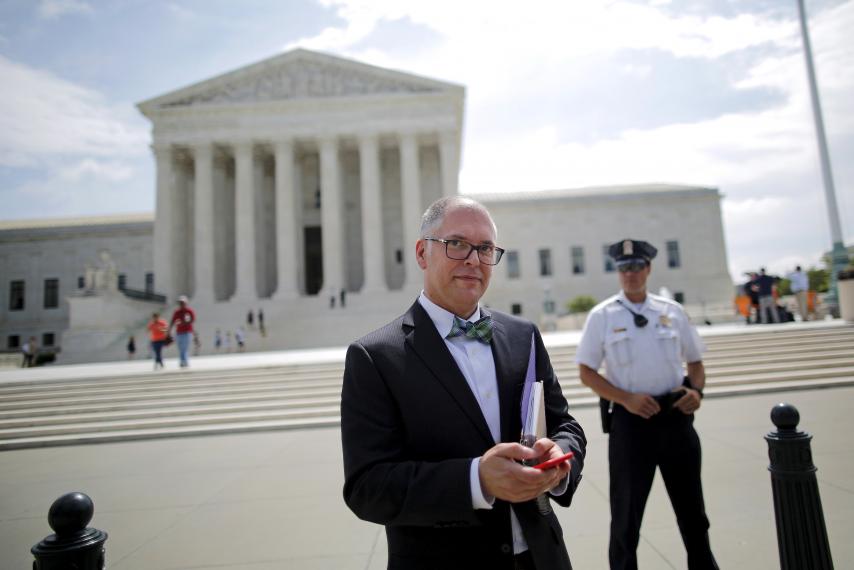
In June of 2015, same-sex marriage became legal in all fifty states. The Supreme Court ruled in the Obergefell v. Hodges case in favor of Jim Obergefell, whose marriage in Maryland was not recognized in Ohio. Unexpected to most, exciting to some and alarming to others, the Obergefell ruling was hailed as monumental, final, and as historic as Brown v. Board of Education or Roe v. Wade. It’s been three years now. A lot hasn’t changed: Alabama is still good at football, Tom Cruise is still making Mission Impossible movies, and our state’s U.S. House of Representatives delegation is still legislating. Some things, however, have changed – including the public opinion of gay marriage. From 2015 to 2017, the percentage of Americans that favored same-sex marriage increased from 55 to 62 percent. What was in 2012 opposed by most Americans is now accepted by almost two-thirds of Americans. That number won’t be going down any time soon. The approval rate of same-sex marriage by millennials is just shy of 75% and still increasing. Same-sex marriage faces most of its opposition in those born before 1946, and even that approval rate is nearing the 50% mark. Clearly, same-sex marriage is approaching complete normalization in the United States. What is less clear, though, is the further impact—beyond the legalization of same-sex marriage—this normalization will have on the future. Conservative pundits everywhere asked the “what’s next?” question concerning same-sex marriage before Obergefell, suggesting polygamy and the surely-to-be-legalized ability to “marry a turtle” (a direct quote from Sean Hannity). Regardless of whether these suggestions are likely, I tend to look to Europe to see what social movement might come next to America instead of the musings of political personalities. In Europe, polygamy and animal marriage is still illegal. What is happening in Europe, however, is a disturbing movement against religious liberty. For example, the Council of Europe determined in 2007 that their definition of human rights must supersede “any religious principle”, creating clear problems for both Christians and Muslims who would refuse to officiate a same-sex marriage. France’s burqa ban, a law disallowing Muslim women from wearing certain religious clothing, is still on the books, and the Court of Justice of the European Union recently ruled that many private employers can ban religious symbols from the workplace. Even more worrisome is the fact that Ireland’s prime minister recently promised that many Catholic hospitals will be forced to provide abortions. Unfortunately, we already see shadows of the European reality within our borders. Attempts to force Christian bakers to create cakes for same-sex marriages, nuns to pay for birth control, and Christian colleges to approve of same-sex relationships demonstrate that Americans must be ready to protect religious liberty. One year after the Obergefell ruling, in the summer of 2016, I stumbled upon Jim Obergefell. He, along with others, was a witness in a House Oversight Committee Hearing I was attending. I was, admittedly, surprised to be in the same room as the man largely responsible for the legalization of same-sex marriage and somewhat apprehensive to the idea of speaking with him. In my interactions with him, however, Mr. Obergefell did not seem to be an anti-Christian warrior but instead a gracious and kind man. To my surprise and confusion, I saw no desire in him to eliminate Christianity or even any animosity towards Christians. Meeting Jim Obergefell showed me something important: most people are not fighting against something, but for something. They’re not angry, they’re hopeful, and genuinely trying to make the world a better place. That reality is a gift for those of us who want a solution. Three years after Obergefell, Americans should expect conflicts between religious liberty and the right to same-sex marriage created in 2015. When they come, we must work not towards a binary win-lose solution but for one that allows these two foundational American principles—religious liberty and individual freedom—to flourish together. ••• Parker Snider is Policy Relations Manager for the Alabama Policy Institute (API). API is an independent, nonpartisan, nonprofit research and educational organization dedicated to strengthening free enterprise, defending limited government, and championing strong families. If you would like to speak with the author, please e-mail communications@alabamapolicy.org or call (205) 870-9900.
Richard Shelby: Senate approves funding for critical national priorities
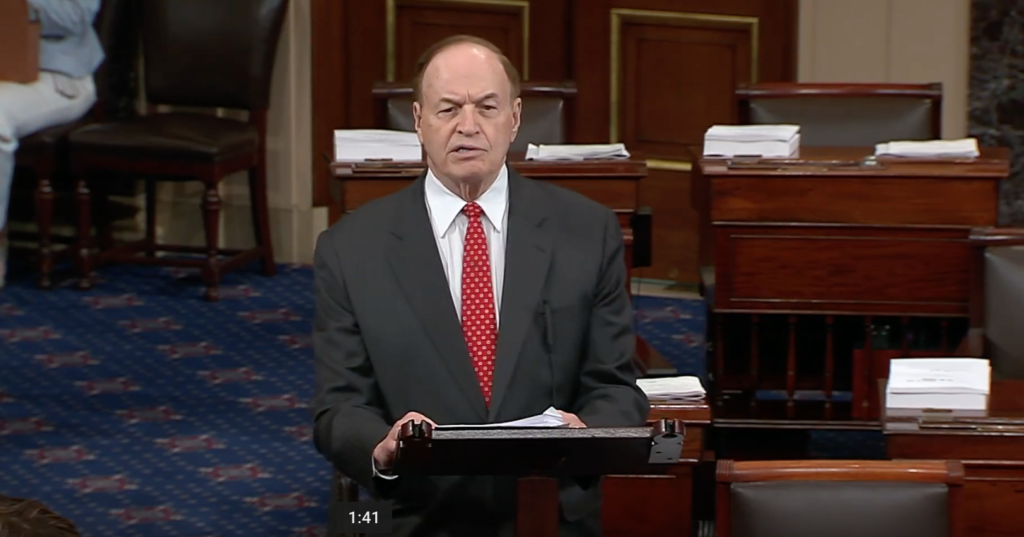
On Monday, the U.S. Senate overwhelmingly approved a $145 billion spending bill for critical national priorities — including funding for Energy and Water Development, Military Construction and Veterans Affairs, and the Legislative Branch for the next budget year — which Senators hope marks the end to a pattern of partisan funding battles. Alabama U.S. Sen. Richard Shelby, chairman of the Senate Committee on Appropriations, called the passage of H.R. 5895 the result of strong bipartisan work. “Following months of strong bipartisan work in the Senate, we have approved a package of three appropriations bills through regular order,” said Shelby. “Through an open and fair amendment process, the Senate has displayed its ability to stay the course and move funding bills in a manner that benefits the American people.” The funding measure, which is the first FY2019 appropriations legislation passed by the Senate, was approved vote of 86-5. The package provides a total of $145.64 billion in discretionary funding, with the majority of this funding supporting our national defense and veterans. Shelby continued, “I am pleased that the Senate has passed this important legislation, marking the first set of funding bills that represent our renewed framework for success. These responsible, targeted investments will help advance American energy security, support our nation’s water infrastructure, and ensure maximum readiness and warfighting capability for our troops. The measure also takes steps to increase the safety of those working in and visiting our Capitol complex. Further, the legislation includes record-level discretionary funding for the VA to provide essential health care and benefits for our servicemembers and veterans.” Prior to the vote for passage Shelby spoke on the Senate floor regarding his support for the legislation. Watch his remarks below:
Atlanta’s Gray Television to buy Montgomery’s Raycom Media in $3.6B deal

TV station owner Gray Television Inc. has set a $3.6 billion deal to buy Montgomery, Ala.-based Raycom Media Inc. — a merger that would create the third-largest television broadcast group in the country behind Sinclair and Nexstar. The deal announced Monday marks Gray’s transformation from a small, regional broadcaster into a leading media company with nationwide scale based on high-quality stations with exceptional talent in 92 markets. According to a statement, the companies say the combined company will have more than 140 television stations. “Today we announce the transformation of Gray Television into a true leader in the broadcast television industry,” said Hilton H. Howell, Jr., Gray’s chairman, president and CEO. “Combining our company with the excellent Raycom stations and the superb Raycom employees will create a powerhouse local media operation. Together, this new portfolio of leading local media outlets will excel at what they do best, which is to provide the local news that local communities trust, the entertainment and sports content that viewers crave, and the incredible reach that advertisers demand.” Howell will become executive chairman and co-chief executive officer after the deal closes. Meanwhile Raycom President and CEO Pat LaPlatney will become Gray’s president and co-chief executive officer. “We are thrilled to be joining Gray Television as we share the same core values of journalistic excellence and community service,” added LaPlatney. “Together, we will be a stronger, more impactful force for our audiences, advertisers, and communities.” The transaction is expected to close in the fourth quarter of 2018, pending customary closing conditions and regulatory approvals.
After major departures, Business Council of Alabama plans for its future

Following a wave of high-profile member-company departures, the Business Council of Alabama Board of Directors met via conference call Monday to be apprised of the ongoing work of its Executive Committee the last several months to implement its plan for the transition and succession of executive leadership at the organization. “Today’s meeting brought the Board up to date on the efforts to identify a high-quality, dynamic leader and on-board that individual by September 1, 2018, but not later than January 1, 2019,” said BCA Chairman Perry Hand. “Throughout this process, it’s always been about what’s in the best interest of the organization as a whole and not just meeting arbitrary deadlines. Our organization has never had a smooth transition of power, and it’s imperative that we get this right.” Last week, Alabama’s largest health insurer Blue Cross and Blue Shield of Alabama (BCBSAL) joined Alabama Power, Regions Bank and PowerSouth Energy Cooperative in leaving the BCA due to dissatisfaction with BCA’s leadership under President and CEO Billy Canary. The selection committee, which is comprised of members of the Executive Committee, will begin their work immediately to identify and hire an individual to lead the organization into the 2019 legislative session and into the future. Former BCA Chairman Carl Jamison was named chairman of the selection committee. Other members of the selection committee are BCA 2017 Chairman Jeff Coleman, BCA 2018 Chairman Perry Hand, BCA Vice Chairman Denson Henry, BCA Executive Committee Member Wayne Hutchens, and BCA 2016 Chairman Tommy Lee. Members of the transition committee were also named. The transition committee is tasked with overseeing all the tasks essential to a successful transition of power, including the on-boarding process for a new president and CEO. “The BCA has achieved major successes through the years under the leadership of Billy Canary and the entire team at the BCA” added 2017 BCA Chairman Jeff Coleman. “There is definitely more work to do, which is why the BCA is focused on being a catalyst to bring growth and prosperity to our great state. We are currently in the middle of an election year that will see a new Legislature elected – a Legislature that will have to develop effective solutions for infrastructure, education, and health care, to name a few. As an organization that respectfully represents over 1 million working Alabamians, we are strongly committed to the work ahead of us to move Alabama forward.” On May 21, the BCA Executive Committee adopted a formal Transition and Succession Plan, the first in the organization’s 33-year history. The plan established guidelines to provide for an orderly transition of leadership. Monday, the BCA Board of Directors accepted that plan with unanimous support.
