
NRA-ILA ask members to show Doug Jones their support of Brett Kavanaugh
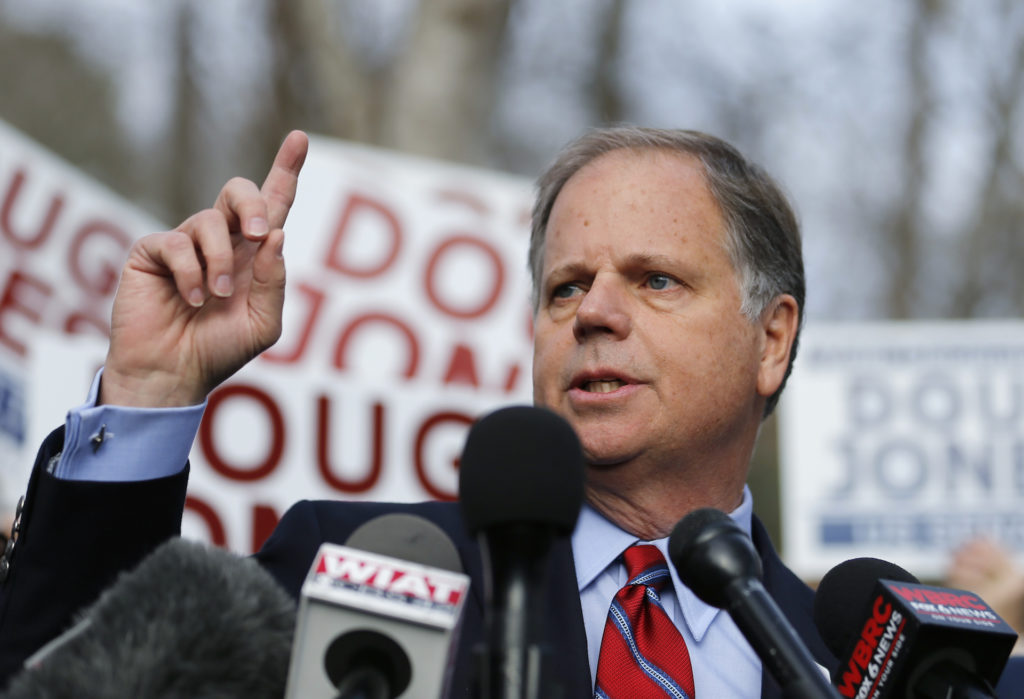
The National Rifle Association’s political arm the Institute for Legislative Action (NRA-ILA) is joining the many voices calling for U.S. Senator Doug Jones to support Brett Kavanaugh, President Donald Trump‘s nominee to the U.S Supreme Court. Alabama’s senior senator Richard Shelby announced his support last week saying, “After speaking with Judge Brett Kavanaugh, I am confident that he is principled, intelligent, and a steadfast supporter of the rule of law,” said Shelby. “He is highly-qualified for this role and exhibits strong, conservative values and an unwavering commitment to our Constitution. I have no doubt that Judge Kavanaugh will uphold the principles on which our nation was founded. “Confirming Judge Kavanaugh is one of the most important things we will do during this Congress. I look forward to supporting his nomination to serve on our nation’s highest court, and I urge my colleagues to do the same,” Shelby continued.” Jones has previously said he was keeping an open mind on if he’d support or oppose the candidate. Since then he’s received pressure from both sides of the fight including from Obama’s own “Organizing for America” who weighed in asking Jones to oppose the nomination. The NRA-ILA is asking people to sign the following pledge which can be found on their website: Federal: Contact Your Senator and Urge Them to Confirm Brett Kavanaugh to the US Supreme Court. The confirmation of Brett Kavanaugh is a major step in securing a pro-Second Amendment majority on the Supreme Court for a generation. Let your U.S. Senators know that you support the confirmation of Brett Kavanaugh to the U.S. Supreme Court and that you, along with the NRA’s six million members and tens of millions of Second Amendment supporters, will be watching the confirmation process closely. We have a responsibility to secure our right to self-defense as well as protect the Second Amendment rights of future generations. Sen. Chuck Schumer and the gun control lobby have vowed to prevent Judge Kavanaugh’s confirmation. That is why we need you and every pro-Second Amendment supporter to contact your U.S. Senators today and urge them to vote to confirm Judge Kavanaugh to the U.S. Supreme Court. What you need to know about Brett Kavanaugh: He will faithfully execute his oath to the Constitution and protect our constitutional right to keep and bear arms. He is an outstanding choice to fill Justice Anthony Kennedy’s seat on the Court. He has demonstrated his clear belief that the Constitution should be applied as the framers intended. He has supported the fundamental, individual right to self-defense embraced by Justice Antonin Scalia in the historic Heller decision. In 2011, he filed a dissenting opinion in a case challenging D.C.’s “assault weapon” ban and restrictive firearm registration requirement. In a well-reasoned opinion closely following the Supreme Court’s guidance in Heller, he found both the ban and registration requirement to be unconstitutional. In 2016, he voted to leave in place an order striking down D.C.’s restrictive carry law. In 2017, he voted to leave in place a panel decision that found D.C.’s “may-issue” carry law violated the Second Amendment. This vote led to D.C. adopting its current “shall-issue” concealed carry process. Judge Kavanaugh has an extensive and impressive legal resume. He completed his undergraduate and law degree at Yale University, clerked on the Supreme Court and served in the Bush administration. Throughout his career, Kavanaugh has fostered and built lasting relationships with key conservative figures who fight to protect and defend the Second Amendment. Tell your U.S. Senators you will be watching how they vote on this nomination and will be keeping their vote in mind when deciding how to cast your vote in the next election! Encourage your family, friends, and fellow firearm owners to contact their senators as well.
New U.S. slap against China: Tighter curbs on tech investment

Already threatened by escalating U.S. taxes on its goods, China is about to find it much harder to invest in U.S. companies or to buy American technology in such cutting-edge areas as robotics, artificial intelligence and virtual reality. President Donald Trump is expected as early as this week to sign legislation to tighten the U.S. government’s scrutiny of foreign investments and exports of sensitive technology. The law, which Congress passed in a rare show of unity among Republicans and Democrats, doesn’t single out China. But there’s no doubt the intended target is Beijing. The Trump administration has accused China of using predatory tactics to steal American technology. “As a policy signal, it speaks with a very loud voice,” said Harry Clark, head of the international trade practice at the law firm Orrick. “Leading decision makers and Congress are very concerned about technology transfer to China.” The Trump administration has already imposed tariffs on $34 billion in Chinese exports, is preparing taxes on a further $16 billion and has threatened to target an additional $200 billion of Beijing’s exports and maybe still more. As part of the same punitive campaign, Trump had initially ordered the Treasury Department to draft investment restrictions aimed specifically at China. But in late June, Trump decided instead to back Congress’ effort to tighten existing investment restrictions and export controls on all countries, rather than China alone. The new law strengthens reviews of foreign investment by the existing Committee on Foreign Investment in the United States, or CFIUS, which is led by Treasury Secretary Steven Mnuchin. The committee can now review any investments that grant foreigners access to a U.S. company’s high-tech trade secrets. Before the change, such reviews were done only when a foreigner gained control of a company. The new law also gives the committee oversight of real estate deals that are deemed to pose a national security risk by putting foreigners in “close proximity” to government offices and military bases. The legislation will also crack down on deals that appear structured to evade such oversight. Congress is also directing the committee to go beyond specific cases to identify patterns in foreign investment — if, for example, Chinese companies are acquiring a specific technology — and to work with U.S. allies that share its concerns about Beijing’s high-tech ambitions. “Treasury can now share information,” said Rod Hunter, a partner at the Baker McKenzie law firm and a former White House economic adviser. “They used to have to do all kinds of backflips and workarounds with allied governments to deal with this sort of issue.” The new law also strengthens the Commerce Department’s oversight of high-tech exports. Government agencies will identify sensitive “emerging and foundational technologies” that will be subject to tougher export controls. Hunter said he thought the stricter oversight of high-tech exports could potentially impose a bigger impact on China than the tariffs the Trump administration has imposed on Beijing’s exports to the United States. Still, the new measures could burden U.S. companies that will find it harder to attract Chinese investment or to share with Chinese partners or customers technology that the U.S. government might deem sensitive. “It could be that we’re pushing American tech firms out of China,” said Derek Scissors, China specialist at the conservative American Enterprise Institute. The crackdown reflects a sharp reversal in U.S. attitudes toward Chinese investment. From virtually nothing in 2000, Chinese direct investment in the United States (including new plants and offices and acquisitions of American companies) reached a record $46 billion in 2016, according to the Rhodium Group research firm. Chinese investors sank money into U.S. companies involved in artificial intelligence, robotics and blockchain technology, which is used to do business in cryptocurrencies. U.S. policymakers began to worry about what the Chinese were up to, especially after leaders in Beijing made their ambitions clear: They intend to nurture homegrown Chinese companies that will contend for global dominance in such fields as electric cars, robotics and medical devices. In March, the Office of the U.S. Trade Representative reported that Chinese investors were using money provided by Beijing to outbid private companies and pay above-market rates for technology and talent. And last year, a Defense Department report sounded the alarm about China obtaining technology that could have military uses. “The line demarcating products designed and used for commercial versus military purposes is blurring,” said the report from the Pentagon’s Defense Innovation Unit Experimental. It noted that virtual-reality gaming was becoming as sophisticated as what the armed forces use for battlefield simulations and that facial recognition technology used in social media can track terrorists. Even before the new law, U.S. reviews of Chinese investments were becoming stricter. In January, the government effectively blocked the acquisition of the Dallas-based money transfer service MoneyGram by the Chinese firm Ant Financial. Its concern was that the deal would give China access to the financial records of millions of Americans, including members of the military. The result has been a deepfreeze in direct Chinese investment in the United States: It tumbled 36 percent last year to $29 billion. In the first half of this year, such investment dropped to its lowest level in seven years — $1.8 billion — down 90 percent from the first six months of 2017, according to Rhodium Group. Republished with the permission of the Associated Press.
Real talk about breastfeeding for World Breast Feeding Week
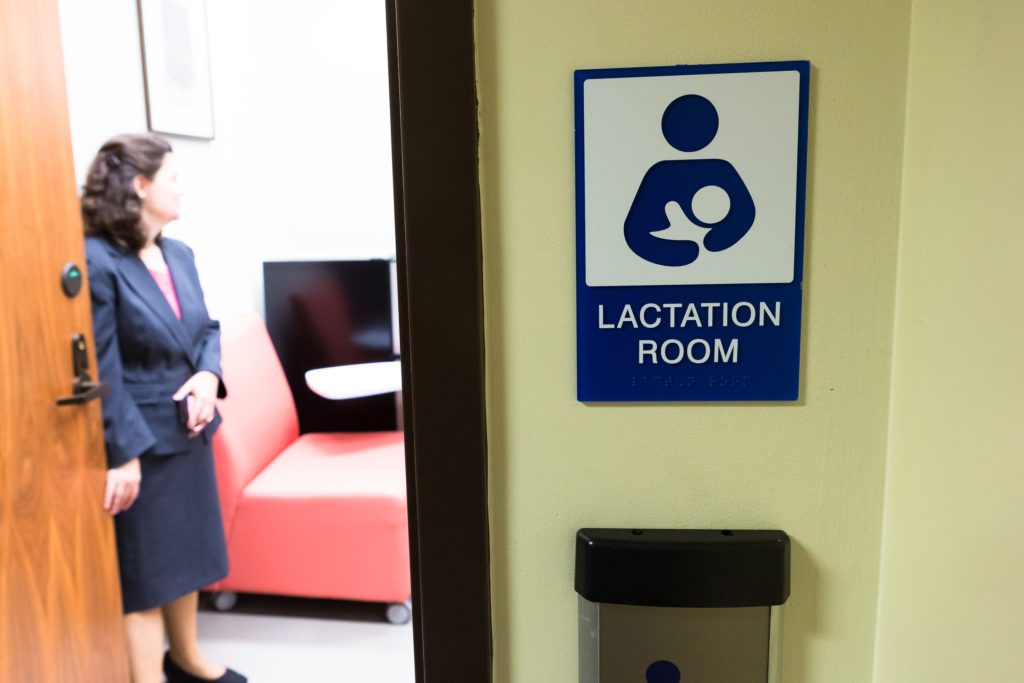
It’s #WorldBreastFeedingWeek brought to you by the World Alliance for Breastfeeding Action (WABA). Didn’t know that was a thing? Well don’t feel bad, neither did I until I started seeing blog and social media posts on the subject. I usually skip honoring the majority of themed days/weeks/months (especially since there’s just so many to keep up with these days) but breastfeeding is important to me and it should be important to society as a whole so let’s talk about it a little. My hope is that the more people talk openly about breastfeeding the more society stops shaming and putting obstacles in the way of nursing mothers and their growing babies. We as a society need to be encouraging and welcoming to mothers who choose to breastfeed. We should promote businesses and employers who are supportive of breastfeeding mothers and finally we should all take a stand to ensure that the legal rights of breastfeeding mothers are protected. Did you know that most states including Alabama there are laws that protect the rights of nursing mothers to nurse in public? The law here is pretty specific – anywhere a mother can legally be she can legally breastfeed. Note it doesn’t say, anywhere she can be she can breastfeed so long as it doesn’t offend anyone. It doesn’t say she can breastfeed as long as she’s covered up. It says anywhere she can be she can nurse. Section 22-1-13 Breastfeeding children in public or private locations. A mother may breastfeed her child in any location, public or private, where the mother is otherwise authorized to be present. According to WomensHealth.Gov a project of the U.S. Department of Health and Human Services, 24 U.S. states and territories provide legislation related to supporting nursing women at work. They also highlight federal law protecting mothers, specifically mothers in the workplace. According to HHS, “The federal Break Time for Nursing Mothers law requires some employers to provide basic breastfeeding accommodations for some nursing mothers at work. These include a functional space and time for women to express milk each time they need to express.” Before I get into my personal story and thoughts on breastfeeding let me start saying that “Fed is Best“. I’ve seen and heard of mothers who want to breastfeed more than anything but can’t for any number of reasons out of their control. I’ve also known mothers who never had any interest or desire to nurse. Hospitals these days can be very aggressive in pushing breastfeeding and mothers can be so scared of formula that they allow their newborns to starve not realizing that it’s even happening. Feed your babies, it’s that simple. There’s no one right way to do anything in motherhood and that includes how you feed your baby. So long as you’re providing a physically and emotionally safe, nurturing and loving environment for your child(ren) do it your way momma and don’t you dare worry about what others say and do. I breastfed my daughter for 14 and months and my first son for 20. With my third child on the way breastfeeding is something I’m most looking forward but it’s also the thing I’m dreading most. Breastfeeding is both physically and emotionally draining and never let anyone lie to you and say it’s not. To exclusivy breastfeed, pump and manage all that comes with both means working 24/7 in the earliest and already most trying times of motherhood. There’s no doubt if I’m physically able I will nurse again, it was how I personally felt best bonded with both kids. Don’t get me wrong though, I know many incredible moms who never nursed and you’d know no difference between their relationships with their children and me with mine. Will I make it a year which was my previous goal for the other two? I don’t know. I’m not even putting the pressure on myself at this point to guess. Breastfeeding is a beautiful experience and every time I see mother’s shamed for doing it in public I feel instant defensiveness. On the other hand while working on this message I fought over which of the two breastfeeding photos I can find (out of thousands of me and the kids that have been taken over the years) to use on the post ultimately deciding not to use one of me at all. The public shaming and sexualization associated with images of women breastfeeding is wrong! I resent it. You should resent it too. If you’re one of those people offended by nursing mothers you need to reevaluate your own conscious. This is a woman feeding her child the way God (or evolution if that’s your thing) provided. It is one of those natural god given gifts that a few loud critics have tried to taint with cries against the indecency of it. Which is partially why I suppose there’s a week to share stories and spread awareness for it at all. For those objecting to public nursing: I’ve heard all the points of view and the fact is nothing has convinced me to hide as I did frequently in my early days. Now I do it anywhere and everywhere, with or without a cover depending on a number of circumstances including the weather, the babies mood, timing, if I have a cover with me, who’s around, and others but the fact is I believe without doubt women have a right to breastfeed anywhere they want to and however works best for them. Are you afraid of the sexuality of a breastfeeding woman? That’s your problem not hers. I can promise you that there’s not a mother in the world with a hungry child who’s sole purpose for nursing is to lead men astray. Are you afraid of your children seeing it? Teach them how normal and natural it is and then teach them that staring is impolite. Let’s all do better. Oh and the next time you see a momma feeding her baby however she’s doIng it if
Congress passes legislation to lessen burdensome occupational licensing

In late July, Congress passed the Strengthening Career and Technical Education for the 21st Century Act aimed at helping states begin long overdue occupational licensing reforms. As describes in an article by the Washington Examiner, the bill includes the New HOPE Act, “which allows governors to use existing federal funds for technical education to review licenses or certifications that pose an unwarranted barrier to entry into the workforce and do not protect the health, safety, or welfare of consumers.” Alabama 1st District U.S. Rep. Bradley Byrne was a co-sponsor of the bill and instrumental in its passing. In a floor speech Byrne told his fellow representatives, “we have a skills crisis in our country. We actually have more job openings than we have unemployed Americans. This is keeping our economy from reaching full potential. “So how we do solve this problem? Well, a big way is through expanding career and technical education programs. As the demands of the workforce continue to change and become more complex, these programs are critical to building the workforce of the 21st Century,” Byrne continued. The original purpose of these licenses was to protect consumers from those who would offer them a bad or unsafe product or service; but over time license requirements became more extensive, costly, and now cover a numerous amount of vocations. The Alabama Policy Institute (API) released a report in January detailing how detrimental, and costly occupational licensure is to Alabama. According to the report, ”Alabama licenses a total of 151 occupations, covering over 432,000 Alabama workers, which represents over 21 percent of the state’s labor force.” “We estimate the total initial costs of occupational licensure, excluding the educational costs, to be $122 million. Annual license renewal costs both workers and consumers (who often pay for these costs in increased prices) $45 million total,” the report continued. “This bill won’t get nearly the attention it deserves, but this is a huge, bipartisan victory for students, businesses of all sizes, and the American people,” Byrne said in a press release. “By improving our nation’s career and technical education programs, we can better meet the demands and realities of the 21st Century economy and put more Americans to work.”
Could hard-right Supreme Court haunt GOP? History says maybe
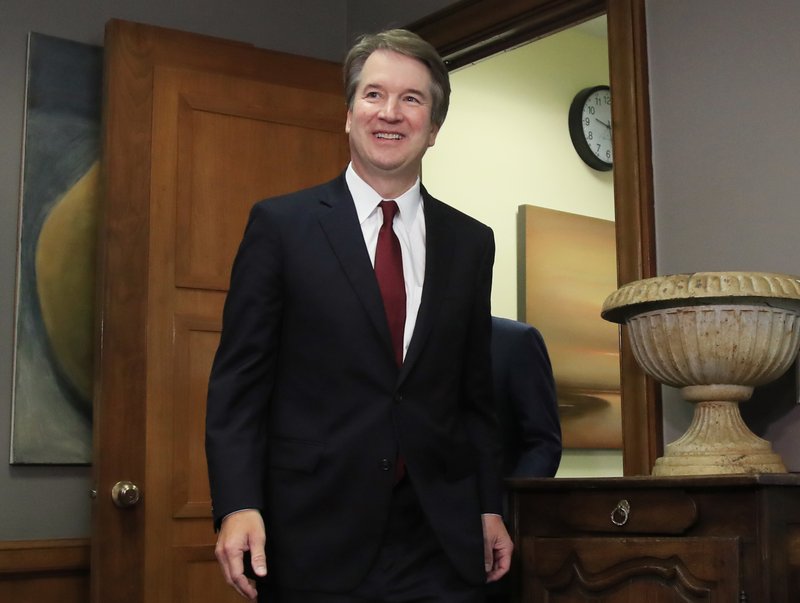
Be careful what you wish for. That’s the history lesson for Republicans eagerly anticipating Brett Kavanaugh’s ascension to the Supreme Court, which could cement conservative control of the court for a generation. The GOP may ultimately pay a political price. When and how steep? That depends on how momentous the issues and how jolting the decisions, according to legal scholars who’ve studied the high court’s impact on electoral politics. The past century is replete with cautionary tales for political parties that rejoice when the Supreme Court’s ideology turns their way. That track record, coupled with today’s intensifying partisanship, suggests that when it comes to high court nomination fights, both sides should be careful what they wish for. “In a democracy, what matters is winning votes,” said Michael Klarman, a Harvard Law School professor who has studied constitutional history. “And you shouldn’t trust the courts to win your battles for you, because there’s going to be a backlash if they go too far, too fast.” Such words of caution won’t have a discernible impact on senators, who have little incentive to abandon their own or their parties’ ideological preferences. “I’ll vote to confirm Kavanaugh and I’ll take my chances,” said No. 2 Senate GOP leader John Cornyn of Texas. But since Kavanaugh’s confirmation could tip the court decisively to the right for years, the past consequences of some such shifts are instructive. In the 1930s, a conservative Supreme Court knocked down many of President Franklin D. Roosevelt’s New Deal programs aimed at hoisting the country out of the Depression. Statutes letting industries and unions set wages and prices, raising farm income and regulating the coal industry were declared unconstitutional, as was a New York minimum wage law. That helped fuel a 1936 FDR landslide that also gave Democrats 76 Senate and 334 House seats, Election Day majorities neither party has ever matched. The triumph paved the way for congressional control that Democrats didn’t relinquish until after World War II. The Warren Court’s liberal decisions of the 1960s helped power Richard Nixon’s law-and-order rise to the White House in 1968. Rulings buttressing criminals’ rights, like the Miranda vs. Arizona decision requiring authorities to inform arrested people of their rights, provided potent ammunition for Nixon at a time of racial unrest and growing crime rates. “Some of our courts in their decisions have gone too far in weakening the peace forces as against the criminal forces in this country and we must act to restore that balance,” Nixon said in his acceptance speech 50 years ago this week at the Republican national convention in Miami Beach, Florida. The 1973 Roe v. Wade case legalizing abortion has been backed by strong majorities of Americans but spurred the rise of the anti-abortion movement and helped galvanize political involvement by Christian conservatives. Both remain vital factors in American politics and a driving force for the GOP. The disconnect between the court’s ideological leanings and voters’ preferences occurs because justices are appointed for life. With turnover on the bench infrequent, the court’s views often lag behind the election results of the presidents and senators who pick them. “Over the long course of time, the court follows broader political trends,” said Thomas Keck, a Syracuse University political scientist who studies the Supreme Court and political movements. “But it doesn’t tend to turn as quickly as the elected branches” of government. Kavanaugh’s nomination could be pivotal. He would replace the retiring Anthony Kennedy, who’s been the nine-member court’s swing vote on issues including same-sex marriage, corporate campaign contributions and gun rights. Yet Kavanaugh’s confirmation wouldn’t guarantee that the court would veer firmly rightward because forecasting justices’ long-term viewpoints is historically tricky. Chief Justice Earl Warren, a GOP California governor appointed by President Dwight Eisenhower, steered one of the most liberal courts in history. Anthony Kennedy was appointed by conservative icon President Ronald Reagan but protected abortion rights. Chief Justice John Roberts was selected by President George W. Bush but cast the decisive tally preserving Obama’s health care law. But there will inevitably be numerous opportunities for the court to address politically searing issues. In its coming term alone, the justices might face cases about special counsel Robert Mueller’s investigation of Russian intrusion in the 2016 presidential race, religious liberty and sexual orientation. Future cases could emerge over curtailing Obama’s health care statute, revoking protections against deporting young immigrants and curbing abortion rights — issues that galvanize conservative and liberal voters alike. Joseph Ura, a political scientist at Texas A&M University, says the impact of a sharp, rightward court shift could be felt quickly enough to affect a Trump re-election bid in 2020, if not sooner. In a 2014 study, Ura used computer modeling to compare five decades of important court decisions to the public mood. He concluded that there is a quick backlash against shifts in the court’s ideology that lasts about two years before eroding, followed by a slight, longer-term swing toward the justices’ viewpoints. Ura’s guidance to Democrats, should a Kavanaugh confirmation produce high-profile court decisions invalidating liberal programs? “My advice to them is to campaign on this,” he said. Republished with the permission of the Associated Press.
Jim Ziegler calls attention to rise in Board of Adjustment claims due to failed STAARS contract

The Alabama Board of Adjustment, a little-known government entity within the state is responsible for filling one very specific, very important need: making sure those wronged by the state recieve compensation. According to their website, “Under the Alabama Constitution, the State of Alabama is, in most circumstances, immune from lawsuits seeking monetary damages; consequently, the Board of Adjustment represents the only remedy for individuals or businesses seeking payment for damage done by the State of Alabama.” State Auditor Jim Ziegler says that most of the claims the board has seen in recent years are due to the states illegal issuing of flawed software. He sued over the contract in a lawsuit recently dismissed by the state Supreme Court on technical grounds that state law currently doesn’t address circumstances like this one. That hasn’t stopped Ziegler from pointing out the ramifications of the flawed system. In 2018 the state received 1920 claims and only fufilled 1343, paying out just over $14.7 million. However, in 2017 the board recieved 2738 claims, fulling 1934 and shelling out over $40.6 million in the process. “The reason for this increase was one thing – the flawed “STAARS” software which the Bentley administration bought in violation of state bid laws,” State Auditor Jim Zeigler told Alabama Today. “Not only was the STAARS software bought illegally, it was terribly flawed. State Agencies could not pay their bills. State agencies could not even pay each other.” The STARRS software was implemented in October of 2015 as a way to process, approve, and repay vendors across the state. Many vendors have not recieved the money owed them, despite the state agencies’ being willing and able to pay them. Zeigler and the Board of Adjustment heard three claims in July alone in which the vendors have not been paid in over a year, according to the Montgomery Advertiser. Zeigler filed a suit against former Governor Robert Bentley, Acting Finance Director Bill Newton, and CGI, the STAARS software vendor in 2016, and after years of litigation the Ivey administration finally cancelled the remainder of the contract. But Zeigler is still seeking retribution, “my request for restitution to taxpayers from the vendor has been dismissed by the State Supreme Court, My attorneys are now preparing a request for rehearing,” Zeigler told Alabama Today. “With the STAARS contract canceled, the number of claims has fallen down to previous levels becasue the unpaid bills, are getting paid,” Zegiler continued.
Cahaba Beach Road project causing contention between ALDOT and environmental groups

Environmental groups in the Birmingham area have joined together to keep ALDOT‘s Cahaba Beach Road project from being built. The new road would stretch across the Little Cahaba River from U.S. 280, allowing over 8,000 cars a day to travel across an environmentally sensitive area, and cost anywhere from $10 million to $20 million WBHM reported. According to Save the Cahaba, the river is vital for the areas drinking water as the Little Cahaba River is the connection between the Lake Purdy reservoir and the main Cahaba River. “The road would bring Highway 280 cut-through traffic across our drinking water source and is intended to open this sensitive area to private development,” Save the Cahaba said. “This would increase risks from construction, urban runoff, forest loss, heavy traffic, and a direct spill into the drinking water for the Birmingham area.” But ALDOT and other civil engineers say the road will cut down on travel time, improve access to roads on both sides of the river, and improve connectivity between U.S. 280 and the Liberty Park area. According to ALDOT’s “next steps” listed on the project’s website; they will be conducting several different environmental analysis before proceeding with the project. ALDOT is considering several alternatives, including not building the road at all. On Tuesday, ALDOT is conducting a public involvement meeting which several groups, including The Cahaba River Society, Cahaba Riverkeeper, Alabama Rivers Alliance and Southern Environmental Law Center have committed to attend. During the meeting ALDOT representatives are expected to update the attendees on plans for the road, and answer any questions. According to WBHM, anyone interested in the project may comment and indicate whether or not they would like the new road to be built.
Kay Ivey to Alabama economic developers: “Momentum is on our side.”
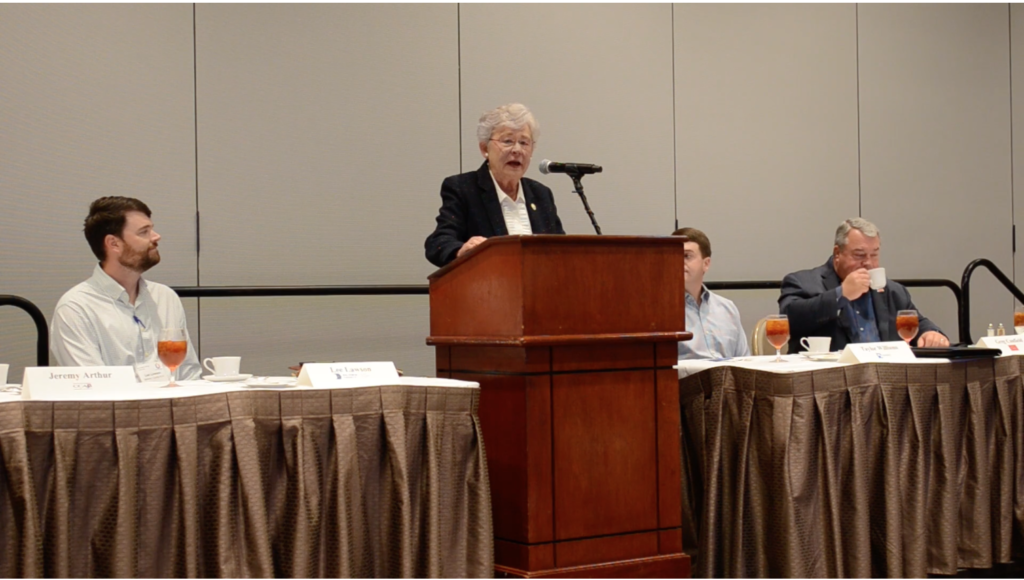
Alabama’s two main economic development leaders urged state economic developers to continue to evolve and advance to help keep the momentum Alabama has enjoyed in landing and expanding industry. Alabama Gov. Kay Ivey and Alabama Commerce Secretary Greg Canfield addressed the 2018 Summer Conference of the Economic Development Association of Alabama Monday. Both had much to brag about. Alabama’s economy has roared back since the Great Recession a few years ago to post the lowest unemployment in state history and some of the biggest names in business now — or soon will — have significant operations in the state. Gov. Kay Ivey addresses the 2018 EDAA Summer Conference from Alabama NewsCenter on Vimeo. Consider: Alabama unemployment in October 2009 was 11.8 percent. In May 2018, it was 3.9 percent. Alabama’s gross domestic product (a measure of total economic output) was 2.5 percent in 2009. In 2017, it was 3.3 percent. In 2017, the state announced economic development projects with $4.4 billion in capital investment that will create an estimated 15,456 jobs. Monday, AIDT, the state’s lead workforce training department, announced it is working a record number 135 projects with 30,000 jobs. Alabama Commerce Secretary Greg Canfield shared his cautious optimism with leaders at the Economic Development Association of Alabama summer conference. (Mike Tomberlin/Alabama Newscenter) “Times have gotten better. The strategy is paying off,” Canfield said. “But we’re not yet where we want to be.” Ivey credited economic developers at the local level across the state with helping achieve the success. “These jobs are in large cities like Mobile and Birmingham, but they’re also in smaller towns like Brewton and Bridgeport,” she said. “We’ve celebrated announcements and groundbreakings with companies like Google and Facebook and Boeing and with some growing companies, too, like Kimber Firearms and AutoCar. Y’all, momentum is on our side and I want Alabama to be every company’s first choice for their location.” Ivey said corporate CEOs from around the world tell her they are successful in Alabama because of the quality and productivity of their employees in the state. Part of keeping the momentum the governor talked about is gearing economic development toward the jobs and businesses of the future. “We’re really focused a lot on technology and innovation, the growth of entrepreneurship,” he said. “It’s really about growing the knowledge economy in Alabama that will support the industry that’s here.” Canfield said the state is about to get a major tool to work with in that regard. Alabama EPSCoR, which represents research universities and private institutions like Southern Research and HudsonAlpha, is close to unveiling a gamechanger. “EPSCoR is putting together and about to launch a digital database that’s searchable so that economic developers and site consultants and companies who want to be able to find out where they can link their product development and their own internal research with that of public universities or private research institutions, they will actually be able to go into this database and if they want to find something like who is doing research right now on composite materials, who is doing research on nickel alloys in the aerospace sector, who is doing additive manufacturing and powder alloy research in technology development? They can actually go in and be linked to the specific researchers doing that work, not just at the university level, but at the researcher level,” Canfield said. “So at the state level, we will be able to provide that connectivity. This will really help us advance economic development to the next level.” Canfield’s optimism is due, in part, to education at all levels of the state (K-12, community colleges and universities,) along with worker training initiatives working closely to complement each other’s efforts. “I think the state has never been better aligned in terms of workforce preparedness,” he said. “That terminology really includes everything from education – the academic side of education but also skills development and certifications – anything that’s industry-specific, industry-recognized and equips Alabamians with the right tools necessary to be able to do the right jobs.” With that alignment, Ivey wants to ensure education and worker training are looking ahead to what’s needed. “We’ve got a great workforce, but we have got to keep the pipeline full with folks trained with higher skills to meet the jobs that we know are coming, and some of them are already here,” Ivey said. Many of those next-generation jobs will be in aerospace. Ivey said the state delegation’s recent efforts at the Farnborough International Air Show are paying off. “Even more good news may be on the horizon for Alabama,” she said. “I’m proud of what Airbus and Bombardier are doing to finalize their plans to create a second assembly line in Mobile for the A220 series. And, also, Leonardo is still in the running to be awarded the contract from the United States Air Force to build the T-100 trainers. Y’all, if Leonardo is successful and gets that contract, there are going to be 750 new jobs in Macon County. That is huge.” Canfield, too, is hopeful for the state’s chances on the T-100 trainer. “I am so eager to hear positive news for Tuskegee and Macon County,” he said. Ivey said watching Alabamians get good-paying jobs is the true goal of economic development. “All of this good news gives me great hope about our fine state,” she said. “We all want Alabamians to be able to achieve their dreams, live in a safe environment, have a quality of life and create a reputation for the state of Alabama that is envied worldwide.” Greg Canfield at the 2018 EDAA Summer Conference from Alabama NewsCenter on Vimeo. Republished with the permission of the Alabama Newscenter.
Tabitha Isner says Russians tried hacking her campaign website

Tabitha Isner, the Democratic candidate in Alabama’s 2nd Congressional District, said Monday that Russian hackers appeared to have made more than a thousand attempts to break into her campaign website last month. Isner said there were 1,400 attempts to break into the website over two days in July. The attempts were discovered after the web hosting company reported a sudden surge of traffic to the campaign website around the time of the GOP runoff in the district. “He did some digging and found not just a high level of traffic, but a high level of brute force attacks … The majority of those came from Russian IP addresses,” Isner said. The reported hacking attempts come after the nation’s intelligence chiefs warned earlier this year that Russia remains interested in disrupting U.S. elections after a multipronged effort to interfere two years ago. Isner, a minister and business and policy analyst, is challenging Republican Rep. Martha Roby, a four-term incumbent, in the midterm election. Isner said she has no idea why her campaign was targeted. “It may just be too that they are just trying to waste my time and give me one more thing I have to worry about,” Isner said. She said the hackers were attempting to log in manually to the site, appearing to just guess at credentials. The attempts were unsuccessful, but her campaign reported the activity to the Federal Bureau of Investigation as well as the Democratic Congressional Campaign Committee. Isner said the FBI has been back in touch with her campaign. “They are going to talk to me about it. I don’t know what they are going to do about it,” Isner said. Thomas Loftis, a spokesman for the FBI’s Mobile office, said Monday that the FBI cannot confirm the existence or absence of an investigation. Isner said the DCCC can offer software for encryption of email and messaging, but said her campaign would not be discussing anything “terribly secretive.” “It’s hard to know what is worth pursuing. We are a relatively small campaign,” Isner said. Republished with the permission of the Associated Press.
