
Parker Snider: Learning fiscal responsibility from the fall of MoviePass

One year ago, a relatively-unknown company announced that, for a monthly fee of $9.95, subscribers could see one movie a day without paying anything at the box office. That’s right – even though the average movie ticket in the U.S. is $9 – a $9.95 monthly subscription could get you into 31 movies. Since last August, three million film-goers have subscribed to MoviePass, the company offering this seemingly too-good-to-be-true service. Profitability aside, the service worked. Many subscribers did, in fact, see movies day after day. Blockbusters like the 8th Star Wars film were viewed repeatedly by fans and, as loyal subscribers became the most company’s most potent salesmen, MoviePass’ subscription rate skyrocketed. Things didn’t stay rosy forever, though. The weekend before eventual $2 billion-earner Avengers: Infinity War hit theatres in late April, MoviePass conveniently announced that they would no longer allow repeat viewings of one movie. This was the beginning of the end. In the weeks following, MoviePass declared a slew of changes to their service, including blackouts of popular movies and surcharges to other films that, at times, were more expensive than buying a ticket without MoviePass (i.e. an $8 surcharge for a $5 movie). In late July, MoviePass subscribers found the system unavailable and customer service unresponsive. The company, as expected, finally ran out of cash. Although MoviePass was able to secure another loan to stay above water, the company’s future is in serious doubt. As of publication, the stock of MoviePass parent company Helios & Matheson Analytics is trading at a lowly $0.07. The best way to learn, some say, is from failure. Alabama residents and lawmakers alike, therefore, should learn from the demise of MoviePass. The lesson? The importance of fiscal responsibility. Fiscal responsibility first demands a healthy sense of realism. MoviePass lacked realistic expectations and now needs another “another $1.2 billion”, according to CNN. The truth is that our public policy discussions are full of MoviePass-like hopes: ideas that are well-intentioned but simply lack realistic expectations. A system of government-sponsored “basic income”, in which residents receive generous sums of money for living expenses, is one recent example of this type of idea. Fiscal responsibility also requires honesty. Unlike MoviePass’ perhaps-knowingly deceptive relationship with its customers, policy-makers with accurate understandings of finance and economics must be honest – off and on the campaign trail – about the financial viability of certain public policies. Lofty campaign promises made in full view of a different post-election reality do nothing but increase expectations and, when these expectations aren’t met, decrease trust in government. The problem is that, like MoviePass, giveaway ideas like these become popular fast, and often for good reason. These proposals are hopeful, compassionate, and promoted by people who genuinely believe they will work. Often, however, the “how” gets ignored, those who understand the likelihood of failure stand silent, and the project collapses. Instead of giving credence to unrealistic and unlikely proposals, Alabama residents and lawmakers should realistically and honestly engage public policy ideas that have the potential to succeed, not just for an official’s time in office, but in the long run. These ideas may be not be as dramatic or fashionable as MoviePass, but they just might work. ••• Parker Snider is Manager of Policy Relations for the Alabama Policy Institute, an independent, nonpartisan, nonprofit research and educational organization dedicated to strengthening free enterprise, defending limited government, and championing strong families.
Cam Ward: A thank you note to Alabama’s teachers

My oldest daughter just turned sixteen. She’s driving, and as a dad, it’s a thrilling, but scary moment in life — this week, she started the tenth grade, and the reality is that during the school year, she spends nearly as much time at school as she does around her mom and me. For young people like my daughter, those hours at school are shaped primarily by their fellow students and their teachers. If everything turns out right, a young person will enter Alabama’s schools around the age of five or six, and by the time they graduate at seventeen or eighteen, they will have a solid grasp of the fundamentals of mathematics, history, American and English literature, biology, and chemistry, among other subjects. We entrust teachers with the awesome responsibility of educating our young people about the basic structure of the universe – to understand and reason through, for instance, the process of photosynthesis – so that they can think analytically when confronted with any type of problem. That’s an incredible responsibility; and to teach such important knowledge to students who, well, haven’t yet achieved full impulse control, is no small task. We trust our teachers to impart knowledge and facts, but we also expect our teachers to model virtuous behavior before our young people, because knowledge isn’t the same thing as wisdom, and we want our kids to become responsible adults. The best teachers can not only clearly communicate lessons on the history of the Civil Rights movement, but can also talk about, and model in person, the virtues of courage and perseverance that animated heroes like Rosa Parks. Facts are stubborn things, as the British Prime Minister Margaret Thatcher once said, and what she meant by that is that the world is governed by certain unalterable truths, including, for instance, the truth that a free market economy lifts more people out of poverty than socialism does. Teachers turn this knowledge into wisdom by showing students the link between effort and reward: the harder you work, the better grades you will get, and the harder you work once you graduate, the more opportunities you will have in the workplace. Great teachers impart knowledge and model wisdom, and often they do so at a great cost to themselves: growing up, the best teachers I had were the ones who were willing to stay a few minutes after class to answer my fifteenth question how to solve a quadratic equation. Many teachers often sacrifice time and effort beyond what’s required — the clock often begins before eight, rarely stops at five, and every hour in-between is dedicated to their craft. As a state senator, I am committed to ensuring that our schools are well-funded and that our teachers are competitively paid. Nothing is more important to the future of Alabama than supporting education policies that work — and as in business or sports, personnel is policy. I am grateful to the great teachers we have, and I promise to always have your back in Montgomery. Thanks for all that you do — the impact that you will have this school year on my daughter and thousands of other students is life-changing. ••• Cam Ward represents District 14 in the Alabama State Senate, which includes all or parts of Shelby, Bibb, Chilton, Hale, and Jefferson counties. He serves as Chairman of the Senate Judiciary Committee. Follow him on Twitter: @SenCamWard
Ed Henry pleads not guilty to medical kickback scheme
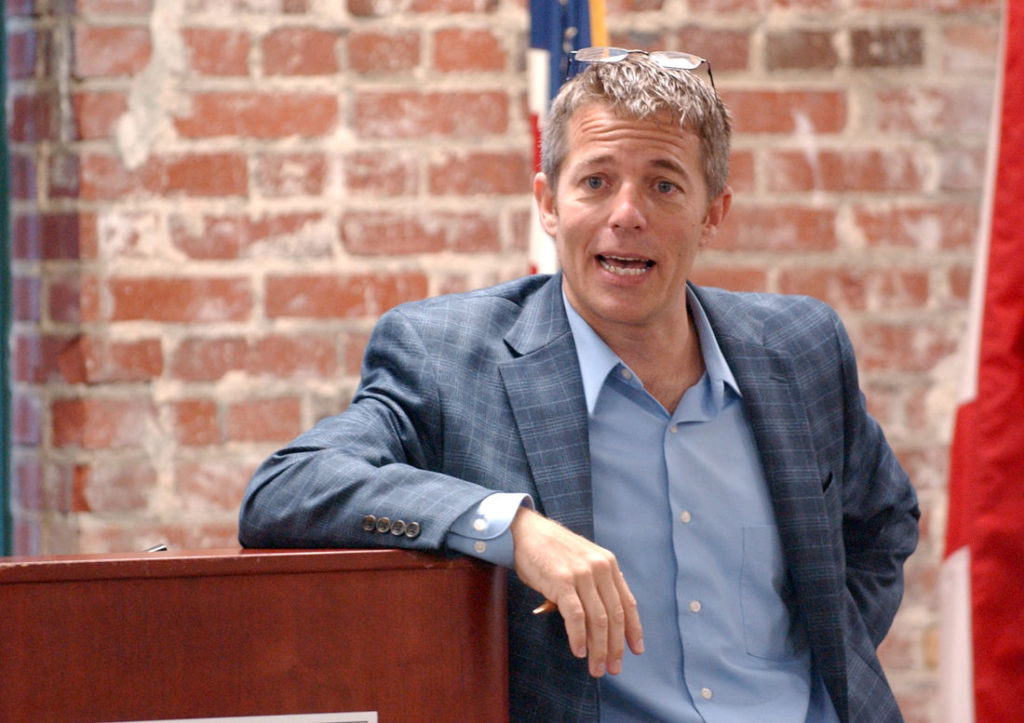
Hartselle-Republican, State Rep. William “Ed” Henry, 47, found himself indicted in May, arrested on charges stemming from his alleged role in a medical kickback scheme. Henry pleaded not guilty during an arraignment on Wednesday morning, maintaining the innocence he’s claimed since his indictment. “I’ve always been as open and transparent as possible,” Henry posted on Facebook in June. “My goal was to help patients, and I did. Using a program established and promoted by Medicare, I helped chronically ill patients and saved the taxpayers’ money. For that, I have been charged with multiple Felonies.” “The travesty in all of this is that a program that Medicare designed and implemented and has proven saves them money to care for the most chronically ill is going to be put in jeopardy by the actions of the government in this case,” Henry told the court during his arraignment AL.com reported. From 2015 through 2017, Henry was an owner, and CEO of a health care company, MyPractice24, Inc. (MyPractice24). His company provided non-face-to-face chronic care management services to Medicare beneficiaries who had two or more chronic conditions. Using contracts with primary care physicians the doctors would pay Henry’s company to provide these chronic care management services to the doctors’ patients, the company would provide the services, the doctors would bill Medicare for the services, and then the doctors would pay Henry’s company a share of the reimbursements received from Medicare. In 2016, Henry entered into an agreement with Dr. Gilberto Sanchez, a Montgomery physician who has subsequently pleaded guilty to drug distribution, health care fraud, and money laundering charges. Under that agreement, MyPractice24 would provide various kickbacks to Dr. Sanchez and his staff in return for the providers at Dr. Sanchez’s practice referring Medicare beneficiaries to MyPractice24 for chronic care management services. The indictment charges Henry with one count of conspiring to pay kickbacks and to defraud the United States, one count of conspiring to commit health care fraud, five counts of health care fraud, and money laundering charges. If convicted of the most serious offense, Henry faces a maximum sentence of 10 years in prison, significant monetary penalties, asset forfeiture, and restitution.
Prosecutors wrapping up case at Paul Manafort fraud trial
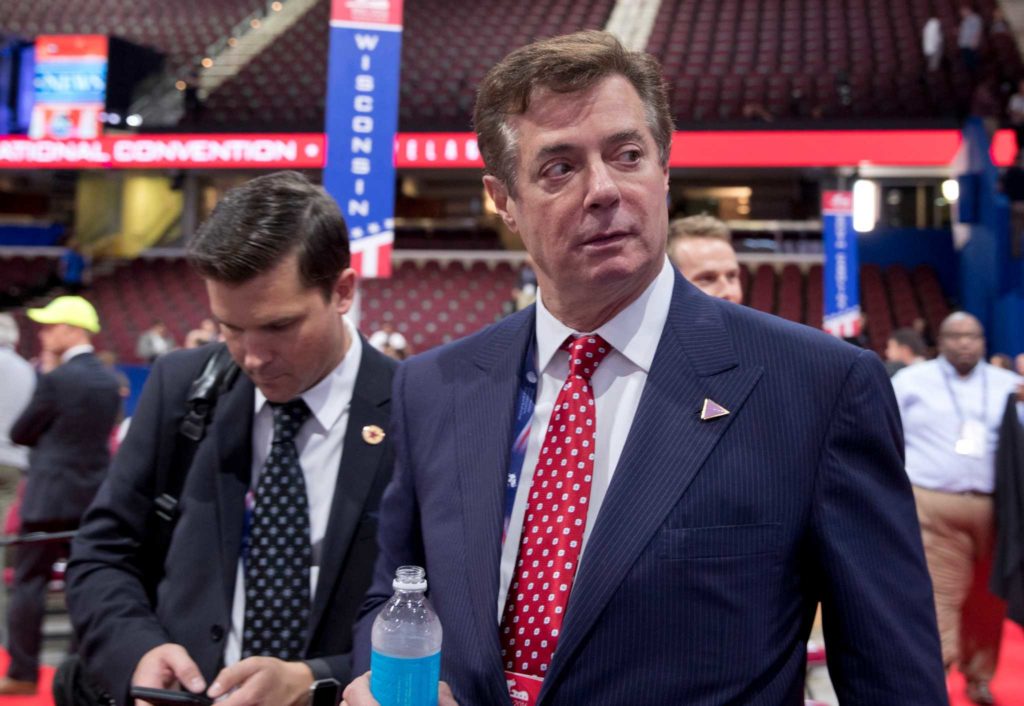
Prosecutors were poised Friday to wrap up their case against former Trump campaign chairman Paul Manafort, but the sometimes dramatic proceedings hit some unexpected delays after court opened. Judge T.S. Ellis III called a recess without explanation after huddling with attorneys from Special Counsel Robert Mueller’s office and Manafort’s lawyers for more than 20 minutes. Later after bringing court back into session, he strongly reminded jurors that they weren’t to discuss the tax evasion and bank fraud case with anyone. It was a hiccup as prosecutors headed toward resting their case against Manafort, proceedings that have been sometimes dramatic and featured tense exchanges with Mueller’s prosecutors. Earlier Friday, the prosecutors asked Ellis III to correct an earlier statement in which the judge suggested they were wasting the court’s time. On Thursday, prosecutors questioned a loan officer for Citizen’s Bank of New York, asking about Manafort’s 2016 loan application that the bank rejected. Ellis III interjected: “You might want to spend time on a loan that was granted.” Prosecutors said Ellis’ crack “misrepresents the law” regarding bank conspiracy and “is likely to confuse the jury.” Ellis did not immediately comment on the motion. The developments came after weeks of testimony that was sometimes tedious and based on bank and other records. Some spectators who had waited in line to attend the proceedings were seen falling asleep during a meticulous accounting of transactions, emails and ledgers that form the foundation of the case against Manafort. President Donald Trump’s campaign manager was a longtime political operator in Washington and elsewhere, right up to 2016 when the real estate magnate him as his campaign chairman. The prosecution is Mueller’s first of the investigation into Russian meddling in the presidential election, but neither Manafort nor his former protege Rick Gates has been charged in connection with their Trump campaign work. Though substantive, untelevised and far from a Trump-style reality show, the trial has featured some drama when star witness Gates testified against his former boss. Gates said he helped Manafort commit crimes in an effort to protect Manafort’s finances. Defense attorneys called Gates a liar interested in avoiding jail time under a plea deal. Gates was forced to admit embezzling hundreds of thousands of dollars from Manafort and an extramarital affair. When the two were first brought face-to-face in the courtroom, Manafort’s gaze bore down on his former protege and rarely wandered. Testimony was replete with examples of Manafort’s lavish lifestyle and allegedly falsified documents, including loan applications. Melinda James, a Citizens Bank mortgage loan assistant, testified that Manafort told the bank that a New York City property would be used as a second residence, but she found it listed as a rental on a real estate website. That distinction matters because banks regard loans for rental, or investment, properties as riskier and may impose restrictions, including on how much money they’re willing to lend. Jurors saw an email from Manafort to his son-in-law, Jeffrey Yohai, in which he advised him that an appraiser was looking to schedule a visit to the property. “Remember, he believes that you and Jessica are living there,” Manafort wrote in the email, referencing his daughter. The prosecution has called more than 20 witnesses, including Gates, and introduced a trove of documentary evidence as they’ve sought to prove Manafort defrauded banks and concealed millions of dollars in offshore bank accounts from the IRS. Along the way, they’ve not only faced an aggressive defense team but tongue-lashings, and a rare walk-back, from Ellis. The judge has subjected the prosecution to repeated scolding over the pace of their questioning, their large amount of trial exhibits and even their facial expressions. But on Thursday, Ellis told jurors he went overboard when he erupted at prosecutors a day earlier for allowing an expert witness to remain in the courtroom during the trial. “Put aside my criticism,” Ellis said, adding, “This robe doesn’t make me anything other than human.” Republished with the permission of the Associated Press.
Alabama Dept. of Veterans Affairs plans Supermarket of Veterans Benefits

Alabama veterans will soon have the opportunity to “shop” for benefits and services at the “Supermarket of Veterans Benefits” (SVB). Scheduled for Friday, August 24, from 9 a.m. to 3 p.m. at the Houston County Farm Center Complex in Dothan, Ala., Vets and their dependents will have the chance to sit down face to face with state and federal officials to ask questions about their eligibility for veterans benefits. The Alabama Department of Veterans Affairs (ADVA) —t he state government agency established for the purpose of advising, counseling and assisting veterans and their families in receiving their earned benefits under the vast, frequently changing and complex framework of veterans laws — is hosting the SVB. The free event provides information about many veterans benefits as well as directs veterans to community agencies that can assist. “There are many agencies that provide benefits and services to veterans, and this is a great opportunity for veterans to learn about many of them in one day,” said Clyde Marsh, ADVA Commissioner. “Since we began this program, we have assisted thousands of veterans and their families receive their earned benefits.” “Any veteran that hasn’t applied for a benefit, we want them to attend this supermarket of veterans benefits,” Lynda Jenkins, District III manager, said. “Because personally there is nothing I like more than getting money from the federal government for veterans.” In addition to the ADVA (dependents’ scholarship program and state veterans homes), some of the other agencies represented will include the U.S. Department of Veterans Affairs (Montgomery Regional Office and VA Health Care); Ft. Rucker (Military Retirement Services, Army Community Service/Army Relief and Wounded Warrior Program); Bay County Vet Center; vocational rehabilitation; WireGrass 2-1-1; WireGrass Food Bank; Education Services; First Choice Hospice; Home Instead; and the Southern Alabama Regional Council On Aging. The VA Health Care agency will provide free health screenings. For more information about the SVB event, the public can contact the Houston County Veterans Service Office at (334) 677-4749, or the Alabama Department of Veterans Affairs at (334) 242-5084.
For now, Army suspends discharges of immigrant recruits

The U.S. Army has stopped discharging immigrant recruits who enlisted seeking a path to citizenship — at least temporarily. A memo shared with The Associated Press spells out orders to high-ranking Army officials to stop processing discharges of men and women who enlisted in the special immigrant program. “Effective immediately, you will suspend processing of all involuntary separation actions,” read the memo signed July 20 by Acting Assistant Secretary of the Army for Manpower and Reserve Affairs Marshall Williams. The disclosure comes one month after the AP reported that dozens of immigrant enlistees were being discharged or had their contracts cancelled. Some said they were given no reason for their discharge. Others said the Army informed them they’d been labeled as security risks because they have relatives abroad or because the Defense Department had not completed background checks on them. In a statement Thursday, Army Lt. Col. Nina L. Hill said they were stopping the discharges in order to review the administrative separation process. The decision could impact hundreds of enlistees. “We continue to abide by all requirements to include completing a thorough background investigation” on all recruits, she said. The Army has reversed one discharge, for Brazilian reservist Lucas Calixto, 28, who had sued. Nonetheless, discharges of other immigrant enlistees continued. Attorneys sought to bring a class action lawsuit last week to offer protections to a broader group of reservists and recruits in the program, demanding that prior discharges be revoked and that further separations be halted. A judge’s order references the July 20 memo, and asks the Army to clarify how it impacts the discharge status of Calixto and other plaintiffs. As part of the memo, Williams also instructed Army officials to recommend whether the military should issue further guidance related to the program. Margaret Stock, an Alaska-based immigration attorney and a retired Army Reserve lieutenant colonel who helped create the immigrant recruitment program, said Wednesday the memo proves there was a policy. “It’s an admission by the Army that they’ve improperly discharged hundreds of soldiers,” she said. “The next step should be go back and rescind the people who were improperly discharged.” Discharged recruits and reservists reached Thursday said their discharges were still in place as far as they knew. One Pakistani man caught by surprise by his discharge said he was filing for asylum. He asked that his name be withheld because he fears he might be forced to return to Pakistan, where he could face danger as a former U.S. Army enlistee. The reversal comes as the Defense Department has attempted to strengthen security requirements for the program, through which historically immigrants vowed to risk their lives for the promise of U.S. citizenship. President George W. Bush ordered “expedited naturalization” for immigrant soldiers after 9/11 in an effort to swell military ranks. Seven years later the Military Accessions Vital to the National Interest program, known as MAVNI, became an official recruiting program. It came under fire from conservatives when President Barack Obama added DACA recipients — young immigrants who were brought to the U.S. illegally as children — to the list of eligible enlistees. In response, the military layered on additional security clearances for recruits to pass before heading to boot camp. The Trump Administration added even more hurdles, creating a backlog within the Defense Department. Last fall, hundreds of recruits still in the enlistment process had their contracts canceled. Government attorneys called the recruitment program an “elevated security risk” in another case involving 17 foreign-born military recruits who enlisted through the program but have not been able to clear additional security requirements. Some recruits had falsified their background records and were connected to state-sponsored intelligence agencies, the court filing said. Eligible recruits are required to have legal status in the U.S., such as a student visa, before enlisting. More than 5,000 immigrants were recruited into the program in 2016, and an estimated 10,000 are currently serving. Nearly 110,000 members of the Armed Forces have gained citizenship by serving in the U.S. military since Sept. 11, 2001, according to the Defense Department.’ Republished with the permission of the Associated Press.
Five things you need to know about Bob Vance
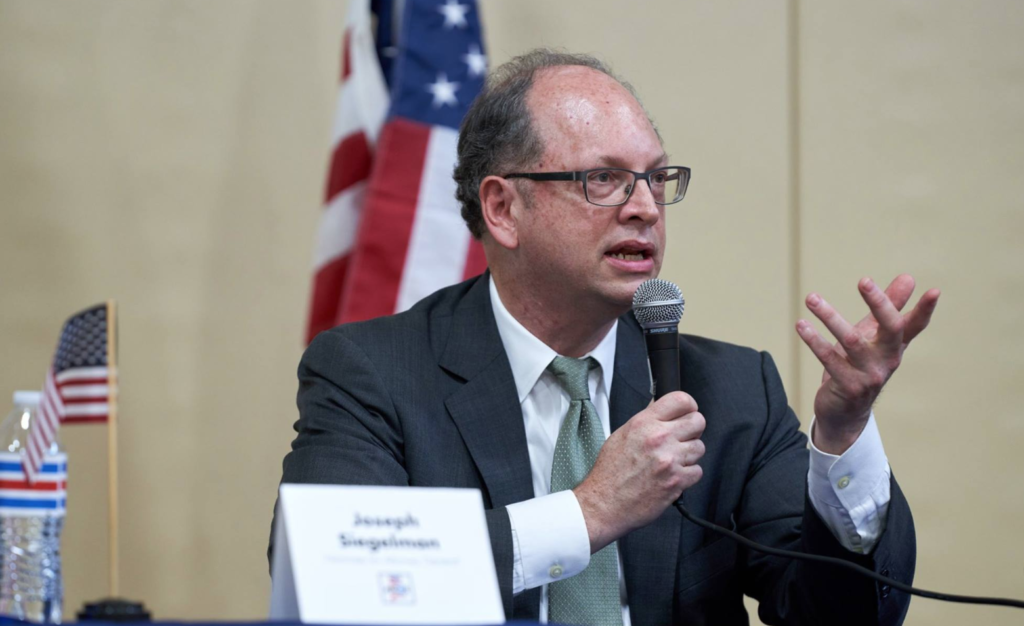
Now that the runoff elections are over, voters are turning their attention to the November General Election less than 90 days away. In the race for Chief Justice, Democratic nominee Judge Bob Vance ran without opposition in the June 5 primary. Now he moves to the General Election, facing Republican nominee Associate Justice Tom Parker. With that in mind, here are the five things you need to know about Bob Vance: 1. Worked as a lawyer for 16 years before becoming a judge Vance attended the University of Virginia School of Law, returning to Birmingham in 1986 to join the law firm of Johnston Barton Proctor Swedlaw & Naff. There, he focused his practice on several forms of litigation, including commercial and class action defense and employment cases, according to his campaign website. 2. He’s been a Circuit Judge since 2002 Vance was appointed to fill a vacancy in the Jefferson County Circuit Court in 2002 – and it stuck. 3. He ran for re-election in 2004, 2010 and 2016 — without opposition. Since his appointment in 2002, Vance has sought re-election to the seat three times, running without opposition. As a Circuit Judge, Vance has presided over numerous civil actions cases including: medical malpractice, automobile accident disputes, and workers’ compensation claims. 4. He’s run for this seat before In 2012, Vance entered what he knew was going to be an uphill battle for the Chief Justice seat, running against former Chief Justice Roy Moore. Although he knew the fight to the top would be tough, Vance came within 4 points of beating Moore. “We have gotten our message out effectively. We have competed against a very well-known opponent in a very red state, and we have fought down to the wire, and I am proud of our efforts in that regard,” Vance told AL.com. 5. He’s the son of Robert S. Vance, former chairman for the Alabama Democratic Party Robert S. Vance was the Chairman for the Alabama Democratic Party in the mid 1960’s. “He was very much a supporter of the Civil Rights Movement,” Bob Vance told AL.com. “He got involved in politics and eventually he was elected as chair of the Alabama Democratic Party, I believe in 1966.” In 1989, Robert Vance received a package, he brought it inside, and placed it on the table in front of his wife. As he opened the package a pipe-bomb exploded across the kitchen, killing Vance, and severely injuring his wife. “At first I was angry. I was angry and frustrated,” Vance continued. “And of course for a while I had those questions. Who did this, Why did he do it?” In 1991 Walter Leroy Moody was convicted of killing Vance, Moody himself was executed by the state of Alabama earlier this year.
2018 statewide election ad roundup: August 10 edition

The November 6 general election is less than 100 days away and Alabama’s candidates have taken to the internet and the airwaves with campaign ads in hopes of swaying Yellowhammer State voters to their side. This week, only Democratic gubernatorial candidate Walt Maddox released a new ad. Maddox has called Governor Kay Ivey to debate him several times, and each time she’s dismissed his proposals saying; “When he finishes debating himself he can talk.” In the ad, an announcer addresses an empty debate podium labelled “Kay Ivey,” asking wether or not she stands by her position of Maddox being inconsistent and non-committal on several issues including abortion, gun control, and confirming Brett Kavanaugh as a new Supreme Court Justice. The empty podium never answers; leaving the announcer to ask “Governor Ivey? Governor?” Maddox then responds to the question himself, securing his positions on all issues. “I am a pro-life democrat,” Maddox says. “Being pro-life means that we must also invest in our healthcare and education systems.” “I believe in the second amendment, and like most Alabamians I believe in universal background checks,” Maddox continues. “And when it comes to Judge Kavanaugh, lets let the United States Senate do their job. Lets trust in Doug Jones and Richard Shelby to make the decision they were sworn to do.” Gubernatorial ads Democrat Walt Maddox: Title: Debate Topic #1: Abortion, Gun Control, and U.S. Supreme Court Published: August 9, 2018 Tone: Assertive
Personnel Note: Patrick Murphy takes over as President of EDAA
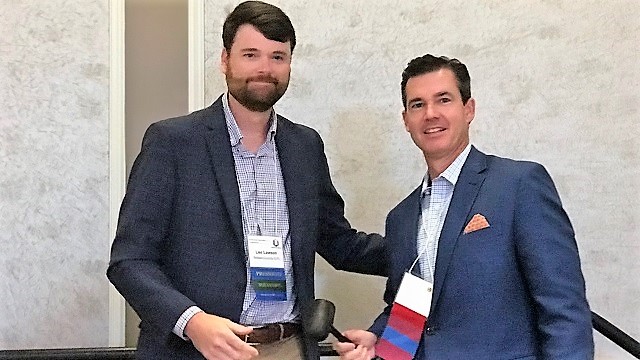
The head of economic development at Alabama Power has been named the new president of the organization representing those who practice the profession that is behind job growth and investment in the state. Patrick Murphy, vice president of Business, Sales and Economic Development at Alabama Power, received the gavel Wednesday as president of the Economic Development Association of Alabama at the organization’s 2018 Summer Conference. Lee Lawson, president and CEO of the Baldwin County Economic Development Alliance, is outgoing president. Murphy said he steps into the role at a time when he feels it’s important to emphasize the work that economic development professionals do throughout the state. “Economic development is a local issue,” Murphy said. “It is done, performed locally and regionally, by people in the communities. Our goal this year is to highlight that a little bit better.” Murphy said Alabama’s economic development success over the past couple of decades has been due in large part to the teamwork among the state, regional, local and private-sector economic developers. “This is not a weekend job and it’s not something you can do after hours,” Murphy said. “We can’t create the demand, but it’s important for us to create the awareness.” Jim Searcy is the executive director of EDAA. He said the organization is made up of 475 professionals throughout the state. He said EDAA seeks to represent those professionals with networking, education and advocacy that support the important work they do for the state. “Economic development used to be kind of a ‘mother and apple pie’ issue and it’s obviously something that is critical for the future of the state,” Searcy said. “One of the things that has been kind of disconcerting to us is that economic development has taken some hits to the meaning of that term and it’s been kind of lessened.” Patrick Murphy elected new president of Economic Development Association of Alabama from Alabama NewsCenter on Vimeo. Searcy said EDAA will be leading a public relations effort to improve and capture the true meaning of economic development. He said it’s not incentives and ribbon cuttings, it’s the work that goes into convincing business leaders that they will have the most success in a community in Alabama. “When you ride by an industrial facility or you ride by a commercial facility and you see all of those cars in the parking lot, they’re not just cars, those are lives that have been changed through economic development,” Searcy said. One key issue the organization faces is the need for legislation preventing economic developers from being listed as lobbyists in the state. While they were successful in getting such language passed in this year’s legislative session, that law sunsets in April 2019, putting pressure on EDAA to get a permanent fix early in the new session. “We’ve got to get a permanent fix,” Searcy said. “If we do not fix it, it will hurt Alabama’s competitiveness.” Should economic developers be defined as lobbyists, they would lose the confidentiality that comes with working with companies conducting site searches in multiple states, putting Alabama at a disadvantage. “Our competitor states – whether it’s Georgia or whether it’s Tennessee or whether it’s Ohio or California – were starting to use that against us,” Searcy said. “It just goes without saying that economic developers aren’t lobbyists. We advocate for better schools. We advocate for better infrastructure – transportation, broadband. We advocate for all of that because that makes the communities, it makes the state more competitive to go after projects. But we’re not lobbyists and that’s the clarification we’re looking to do legislatively in the next session.” In addition to Murphy as the new president, EDAA voted Megan McGowen-Crouch, city of Auburn Deputy Economic Development director, as second vice president; Brooks Kracke, president of NAIDA, as secretary and treasurer; and added board members Jeff Rabren of Regions Bank, Mike Swinson of Spire and Tanya Maloney of the city of Heflin. Republished with the permission of the Alabama Newscenter.
Alabama public schools take action to bring God back to campus

As students returns to classrooms across the state, a new law is allowing schools to bring God back to Alabama public schools. And the Blount County school board is positioned to become the first system to take action. “In God We Trust” has been the official motto of the United States since 1956 and back in March, the State Legislature passed HB228: The National Motto “In God We Trust” Act, which allows the national motto to be placed on government agencies and offices, in and on public buildings, including public school classrooms across the state. Blount County Superintendent Rodney Green told AL.com a policy could be drafted within the next month. But first they school board must consult an attorney. “You would think that something that passes the Legislature won’t be challenged in the courtroom but we all know that it can and probably will,” said Green told AL.com. Other schools across the Yellowhammer State are expected to follow.
Alabama AFL-CIO backs Judge Bob Vance for Chief Justice
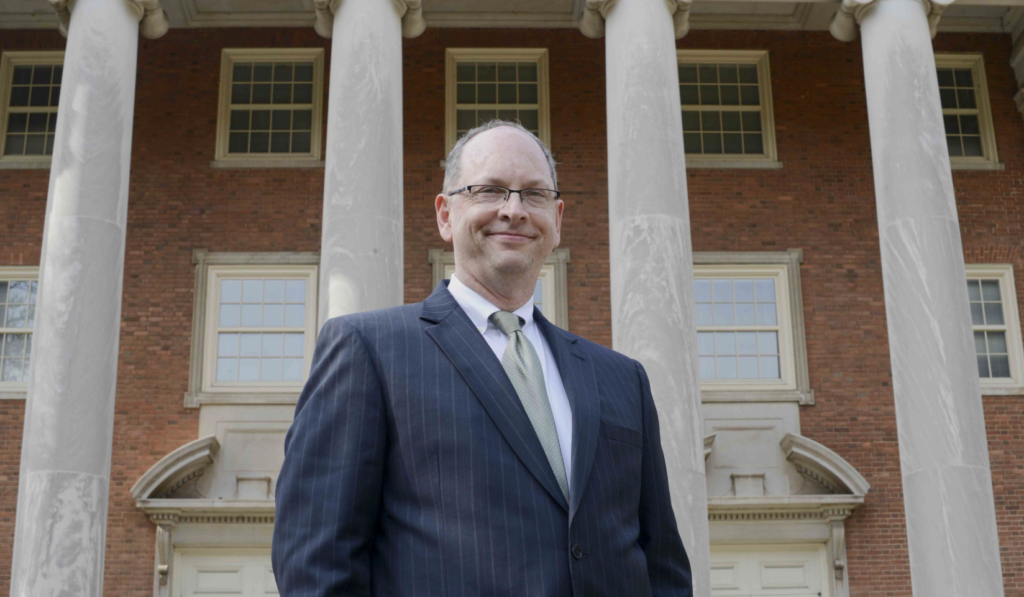
The AlabamaAmerican Federation of Labor and Congress of Industrial Organizations (AFL-CIO) — a pro-labor union group that advocates for social and economic justice and working to vanquish oppression and make Alabama communities better for all people—regardless of race, color, gender, religion, age, sexual orientation, or ethnic or national origin — endorsed Judge Bob Vance, Democratic candidate for Chief Justice of the Alabama Supreme Court, for the November 6 general election this week. Vance spoke at the AFL-CIO Candidate Forum in Montgomery, Ala. on Thursday, August 2 about the issues facing the Alabama court system and the need for better funding to address these challenges. He also stressed the need for the courts to serve all Alabamians, regardless of income, race, or religion, and he pledged to stand above political rancor and divisiveness. Vance said he is honored to receive Alabama AFL-CIO’s endorsement. “The advocacy the organization provides on behalf of working families across our state is of the utmost importance,” Vance said.
Scandal-tarnished ex-governor touts record on new website
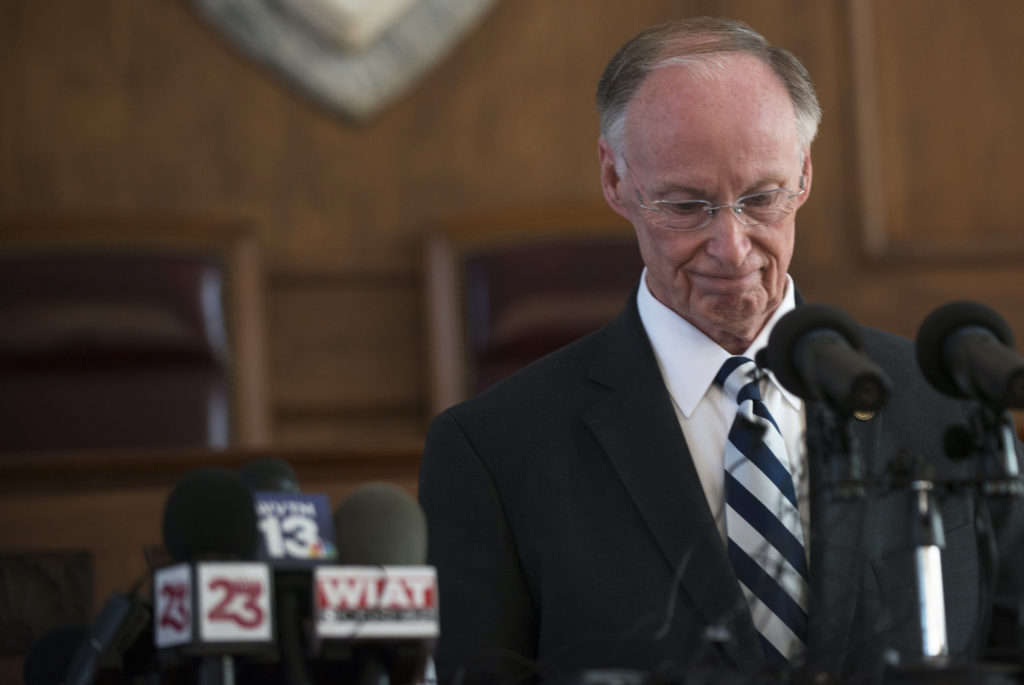
Former Alabama Gov. Robert Bentley is attempting to revive his battered reputation on social media after his administration ended in scandal. The ex-governor has launched a “Bentley for Alabama” website, promoting his six-year record in office — and reactivated his social media accounts to assist the effort. The website discusses positive achievements such as his promise to not take a state paycheck until the unemployment rate significantly declined. Bentley told The Associated Press on Wednesday that he started the site as “a historic record of our administration.” “Bentley for Alabama is a continuation of the hard work that was done by everyone in my administration. The initiatives we started are so important and this is a way for us to keep issues like job creation, Pre-K Expansion and rebuilding prisons in the forefront,” Bentley wrote in an email. “I love serving the people of Alabama. The greatest honor of my life was serving as governor. I enjoyed public service in the House for eight years and then as governor,” he added. The site so far does not appear to address Bentley’s resignation last year in a cloud of scandal. Bentley stepped down while facing both an ethics investigation and calls for his impeachment in the Alabama Legislature. The actions against him were prompted largely by allegations that he had an affair with a top aide. The governor agreed to step down and plead guilty to misdemeanor campaign-finance violations. His resignation came the same day that lawmakers opened impeachment hearings. Posts on the Facebook page drew a mix of positive and negative comments. “Go away,” one commenter wrote. Since leaving public office, Bentley has returned to his dermatology practice in Tuscaloosa. The website, which depicts a positive portrayal of his time in office while ignoring the negative, has the feel of a fan page or a campaign page. While Bentley’s plea deal said he would not seek office, Bentley did not rule out a return to politics when asked if that was what he was considering. “If there are new places where I can serve our people, and if God opens those doors, I’ll serve wherever I can,” Bentley wrote. Republished with permission from the Associated Press.
