
Brett Kavanaugh, accuser say they’re ready to testify, but how?
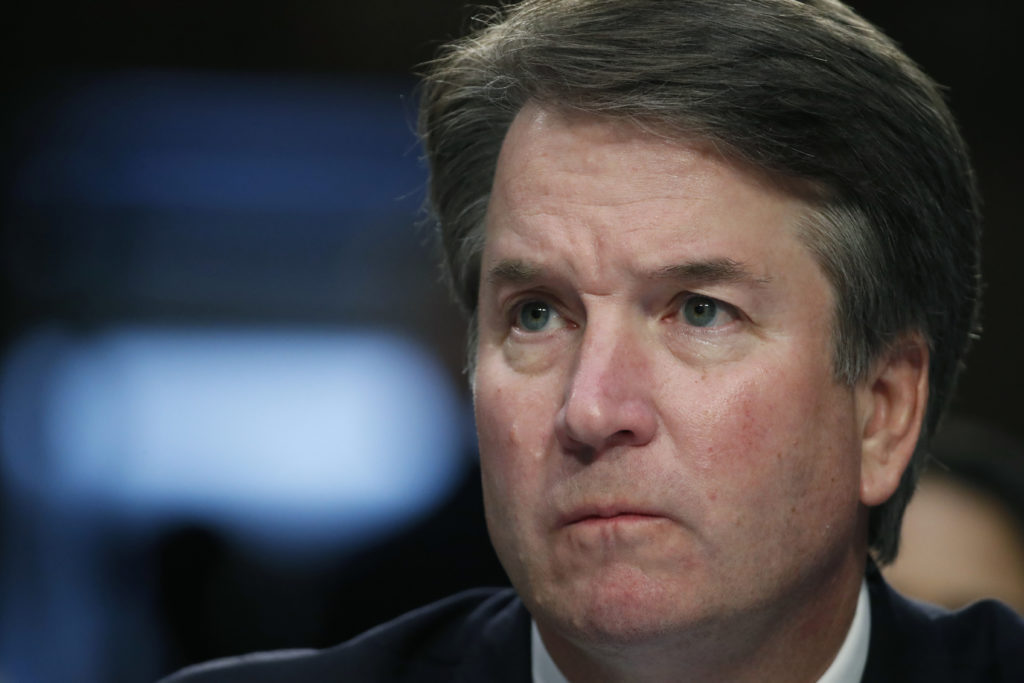
Brett Kavanaugh and the woman accusing him of a decades-old sexual assault both indicated Monday they would be willing to testify to a Senate panel as the confirmation of President Donald Trump‘s Supreme Court nominee shifted from seemingly painless to problematic. However, top Republicans seemed to be trying to limit any new testimony by Kavanaugh and his accuser, Christine Blasey Ford, to telephone interviews. Senate Judiciary Committee Chairman Chuck Grassley said he was trying to arrange to hear Ford in “an appropriate, precedented and respectful manner.” The Iowa Republican said standard procedure for late-breaking information would involve follow-up phone calls with “at least” Kavanaugh and Ford. No. 2 Senate GOP leader John Cornyn of Texas backed him, lauding Grassley for seeking a process that “respects confidentiality.” Kavanaugh was seen arriving at the White House, with no immediate reason given, while all 10 Democrats on the Senate Judiciary Committee wrote to Grassley asking him to postpone a scheduled Thursday vote on the nominee to give the FBI more time to investigate. Democrats and some Republican senators have expressed concern over Ford’s private-turned-public accusation that a drunken Kavanaugh groped her and tried to take off her clothes at a party when both were teenagers at high schools in suburban Maryland. Kavanaugh released a new statement calling the allegation “completely false” and saying he “had no idea who was making this accusation until she identified herself” on Sunday to The Washington Post. “I am willing to talk to the Senate Judiciary Committee in any way the committee deems appropriate to refute this false allegation, from 36 years ago, and defend my integrity,” Kavanaugh said. Debra S. Katz, the attorney for the accuser, said Ford was willing to tell her story publicly to the Judiciary panel but no lawmakers had yet contacted her. Katz denied that Ford, a Democrat, was politically motivated. “She believes that if it were not for the severe intoxication of Brett Kavanaugh, she would have been raped,” Katz told NBC’s “Today.” Explaining Ford’s initial reluctance to come forward, Katz said, “No one in their right mind regardless of their motives would want to inject themselves into this process and face the kind of violation that she will be subjected to by those who want this nominee to go though.” The Judiciary Democrats, in their letter to Chairman Grassley of Iowa, said serious questions have been raised about Kavanaugh’s “record, truthfulness and character.” Currently a judge on the Court of Appeals for the District of Columbia, widely viewed as the nation’s second most powerful court, Kavanaugh seemed to be on a smooth confirmation track until the new allegation emerged. Kavanaugh, 53, “categorically and unequivocally” denied the allegation when it came out anonymously last week. “This has not changed,” said White House spokesman Kerri Kupec on Monday. “Judge Kavanaugh and the White House both stand by that statement.” Still, White House counselor Kellyanne Conway said of Ford: “She should not be insulted. She should not be ignored. She should testify under oath, and she should do it on Capitol Hill.” Conway, who said she had discussed the situation with Trump, said both Ford and Kavanaugh should testify, but made clear it was up to the Judiciary Committee. She said Sen. Lindsey Graham had told her it could happen as soon as Tuesday and the White House will “respect the process.” Stressing that Kavanaugh had already testified and undergone FBI background checks, Conway said: “I think you have to weigh this testimonial evidence from Dr. Ford and Judge Kavanaugh along with the considerable body of evidence that is already there about the judge’s temperament and qualifications and character.” Initially the sexual misconduct allegation was conveyed in a private letter, without revealing Ford’s name. With a name and disturbing details, the accusation raised the prospect of congressional Republicans defending Trump’s nominee ahead of midterm elections featuring an unprecedented number of female candidates and informed in part by the #MeToo movement. Ford said Kavanaugh and a friend — both “stumbling drunk,” she says — corralled her in a bedroom at a Maryland party in the early 1980s when she was around 15 and Kavanaugh was around 17. She says Kavanaugh groped her over her clothes, grinded his body against hers and tried to take off her one-piece swimsuit and the outfit she wore over it. Kavanaugh covered her mouth with his hand when she tried to scream, she says, and she escaped when the friend, Mark Judge, jumped on them. Kavanaugh attended a private school for boys in Maryland while Ford attended a nearby school. A split over the nomination seemed to be emerging among the GOP. Two committee Republicans — all on the GOP side are men — Jeff Flake of Arizona and Lindsey Graham of South Carolina, said they wanted to hear more from Ford. Flake went as far as to say he was “not comfortable” voting for Kavanaugh for the time being. A potential “no” vote from Flake would complicate the judge’s prospects because Republicans control the committee by just 11-10. A Republican not on the committee, Bob Corker of Tennessee, said the vote should be postponed until the committee heard from Ford. GOP Maine Sen. Susan Collins tweeted that she wanted Kavanaugh and Ford to both testify under oath to the committee, but when she was contacted Sunday by CNN she wouldn’t say if the vote should be postponed. Grassley said that so far, the Judiciary committee’s top Democrat, Dianne Feinstein of California, has refused to help schedule telephone interviews. A committee spokesman had said Sunday that Grassley was trying to arrange those phone calls but only for aides to Grassley and Feinstein before Thursday’s scheduled vote. The allegation against Kavanaugh first came to light late last week in the form of a letter that had been for some time in the possession of Feinstein, the top Democrat on the committee and one of its four female members. On Sunday, the Post published an interview with Ford. “I thought he
FEMA Chief, former Alabama leader, Brock Long faces multiple investigations
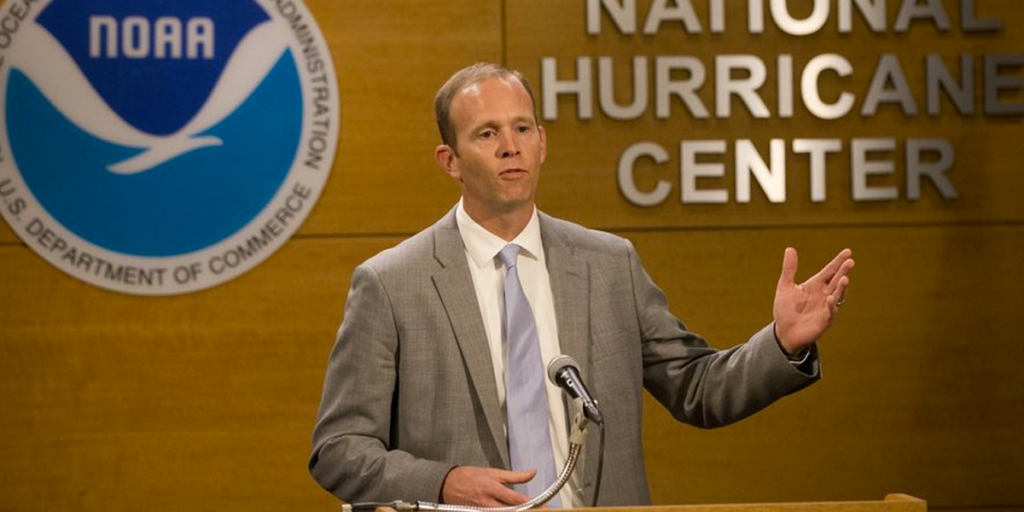
A Department of Homeland Security (DHS) inspector general (IG) investigation into Federal Emergency Management Agency (FEMA) Chief Brock Long, is being referred to federal prosecutors to determine whether or not criminal charges should be pursued, the Wall Street Journal reported Monday afternoon. Meanwhile, House Republicans are launching an investigation of their own into the FEMA Chief’s alleged actions. News broke last week of allegations against Long, the former director of the Alabama Alabama Emergency Management Agency (AEMA), for misusing government cars. According to POLITICO, who originally broke the story, “Long started using a staff driver to get him home to North Carolina at the beginning of his tenure at FEMA last year. On the weekends Long spent in North Carolina, aides were put up in a hotel at taxpayer expense, according to one of the current officials.” House investigation South Carolina-Republican U.S. Rep. Trey Gowdy, chairman of the House Oversight and Government Reform Committee, heard last week’s news and on Monday wrote Long a letter requesting documentation and other pertinent information related to his use of government vehicles. Gowdy gave Long a deadline of Oct. 1. “Official travel on the part of federal employees must be ‘by the most expeditious means of transportation practicable’ and ‘commensurate with the nature and purpose of the employee’s duties,’” Gowdy explained in the letter to Long. “This does not include using government-owned or government-leased vehicles for exclusively personal reasons.” Specifically Gowdy asked Long to: Identify each time you have used a government-owned or government-leased vehicle during your tenure at FEMA for personal reasons. For each usage, please provide the names of all FEMA staff who accompanied you, destinations, accommodations, dates of use, purpose, and cost of each trip. Produce policies relating to the use of government-owned or government-leased vehicles. All documents and communications referring or relating to FEMA employees being tasked with accompanying you on trips to or from North Carolina. Long denies any wrong-doing. “I would never intentionally run a program incorrectly,” Mr. Long told reporters during a call last Thursday. “Doing something unethical is not in my DNA.” He briefly addressed the investigation during a Thursday FEMA briefing as well. “Bottom line is, we’ll continue to fully cooperate with any investigation that goes on and own up to any mistakes and push forward and keep going,” he said. “I would never intentionally run a program incorrectly,“ Long added. “Doing something unethical is not part of my DNA and it is not part of my track record in my whole entire career. We will work with the OIG.”
Tuskegee University Vet School decries ‘false accusations’
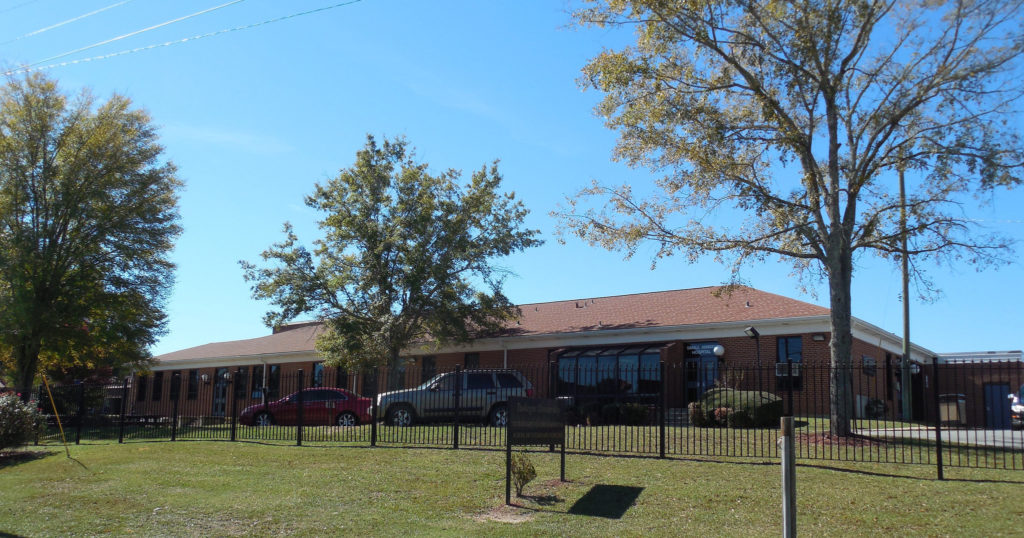
In a story published earlier this month, Alabama Today covered the concerns of Stop Pound Seizure In Alabama, a Facebook group dedicated to change pound seizure laws. The article was in response to a recent effort by the group to bring attention to and stop pound seizures from the Russell County-Phenix City Animal Shelter to Tuskegee University. The University is now pushing back to get their side of the story out to the public. This is not the first time the University has responded to the accusations surrounding their practices. In March of this year they released a detailed statement addressing the public’s concerns. Among the claims animal activists have made is that Tuskegee University Vet School says is false is that it receives “hundreds” of live animals from the Russell County-Phenix City Animal Shelter each year, so that students can practice various surgeries on them and then kill them. The membership of the Tuskegee University Institutional Animal Care and Use Committee told Alabama Today via an email statement, they do in fact receive animals from the shelter, “the relationship is not a secret.” “The animals obtained are abandoned according to Alabama Law 3-1-13. The Russell County/Phenix City shelter provides public notice of strays, abandoned animals and surrenders on its website. Pictures as well as intake information are provided for each animal, with the shelter’s hopes of reuniting owners with their pets,” the Committee explained. “Contrary to the information provided in the article, Tuskegee University receives far less than hundreds of these animals per year to which the article alluded.” No number has been confirmed by the shelter or the university. The Alabama statute referenced by the university specifically states: Section 3-1-13 Right of officers, etc., of humane societies to take charge of and care for neglected or abused animals; written notice to owner from whom animal taken; lien for expenses for care and keeping of animal. Any duly authorized officer or employee of a recognized humane society shall have the right to take charge of any animal which is sick or disabled due to neglect or is being cruelly treated or abused and to provide care for such animal until it is deemed to be in suitable condition to be returned to its owner or to the person from whose custody such animal was taken. The officer so taking such animal shall at the time of taking the animal give written notice to the owner or person from whose custody it was taken. The necessary expenses incurred for the care and keeping of the animal after such notice by the humane society shall be a lien thereon and, if the animal is not reclaimed within 10 days from the giving of such notice, the humane society may sell the animal to satisfy such lien. If the humane society determines that the animal cannot be sold, it may cause the animal to be otherwise disposed of. (Acts 1961, Ex. Sess., No. 84, p. 2001.) The Committee called the claims of “inside information” regarding the treatment of the animals by the activist group “false.” In their statement they say, “The ‘inside information’ stated in the article is false. For those animals the university does receive, university clinicians and students strictly follow the guidelines of the Animal Welfare Act, actively considering the alternatives, reduction, replacement and refinement during review of Animal Use protocols.” The claims against the university were that: Inside information from concerned individuals say the dogs are kept in poor conditions, no socialization or enrichment, fed only 1 cup of food per day, regardless of size (because they don’t live long enough to starve to death), and given no medical care for any injuries they may arrive with or develop while being held. These helpless dogs, family pets, are already terror-stricken from their time at the pound, then hauled to Tuskegee in their dog trailer and stuffed into cages where the smells and sounds of death surround them. Then they are cut on and killed. According to the Committee, all animals are kept according to U.S. Dept. of Agriculture’s Animal Plant Health Inspection Service/Office of Laboratory Animal Welfare (USDA/APHIS/OLAW) regulations, which cover transportation, handling, and socialization, feeding, health care and housing. The Committee further explained how the Tuskegee University Institutional Animal Care and Use Committee (IACUC), which is under strict supervision from USDA, reviews animal use protocols and stringently enforces those protocols that are in use. And when it comes to the accusations that their students are “killing the animals”, the Committee explained, “animals are not killed they are humanely euthanized while under general anesthesia.” The university’s March statement covered this more in depth saying: On occasion, the college partners with area impound facilities to euthanize stray, abandoned and runaway animals that have exceeded the holding periods these facilities provide for owners to claim these animals. Alabama Code 3-7A-8 authorizes these facilities to destroy or dispose of these impounded animals when not claimed by their owners within seven days. When these animal-holding facilities find it necessary to euthanize its unclaimed, impounded animals, they contact the college, which in turn carries out the scheduled euthanasia at no charge to the facility or compensation to the university. These facilities attest to making every effort to connect these animals with their owners, which includes scanning for microchips (if present) or any identifying tattoos or marks. The unfortunate fact is that every year in the U.S., there are over 6.5 million dogs and cats in animal shelters. Of this number, over 65 percent are euthanized after being held for seven to 10 days without being adopted or finding a new owner. As part of the college’s agreements with animal-holding facilities, veterinary medicine students and faculty socialize, feed and care for these animals prior to their scheduled euthanasia. Animals are fully anesthetized for any teaching procedure that is part of the students’ clinical experience — all the while under the direct supervision of the college’s surgical faculty. Accusation against vet student for animal-related crime The veterinary school has found itself further under fire for alleged
Delta Regional Authority invests $1.1M to strengthen Alabama’s economy, infrastructure

Delta Regional Authority (DRA) — a federal-state partnership created by Congress in 2000 to help create jobs, build communities, and improve lives through strategic investments in economic development in 252 counties and parishes across eight states — Chairman Chris Caldwell along with Governor Kay Ivey on Monday announced the DRA will invest $1.1 million to enhance workforce training and development, help create technology jobs and deliver safe drinking water to the Black Belt region. DRA’s investments, along with other public and private partners, will bring a total of $13.4 million in new investments to Alabama. “Our investments support vital infrastructure improvements that will strengthen economic development, lead to new jobs, boost workforce training and development, and deliver safe drinking water to improve the lives of folks in the Black Belt,” said Caldwell. “This is just one example of DRA’s commitment to building infrastructure that will make Alabama more competitive.” Summary of DRA’s statewide investments: 7 projects DRA investments: $1,157,066 Total investments: $13,421,555 Jobs created: 300 Workers trained: 100 Families affected: 3,052 “The Delta Regional Authority’s SEDAP program works hand in hand with the priorities of my Administration. Each day, with every decision, I am working to enhance the quality of life for all Alabamians,” Ivey added. “I am grateful for the partnership of the DRA and other public and private partners to invest $13.4 million to seven improvement projects in our Black Belt region. When we invest in infrastructure, workforce development and business projects, we are investing in our people.” Alabama economic development projects DRA investments are made through its States’ Economic Development Assistance Program (SEDAP), the agency’s main federal funding program that invests in basic public infrastructure, transportation infrastructure, workforce development, and small business and entrepreneurship projects. CITY OF BREWTON: New Technology Park. DRA Investment: $300,000. Total Investment: $5 million. Brewton is converting the former Dogwood Hills Golf Course, a city-owned property, into a new Brewton Technology Park to support its first project and tenant, an information technology company that is projected to bring 300 new jobs to the community. The business also will provide training for those workers. DRA’s investment will allow the purchase and installation of sewer mains, water lines and other infrastructure development to support a 30,000-square-foot facility. About 2,732 families will gain improved water and sewer service as a result of the investment. TOWN OF MIDWAY: Medical Clinic and Pharmacy. DRA Investment: $200,000. Total Investment: $302,165. Midway will revitalize and improve the old Merritt School, which has experienced significant deterioration since it closed in 2011. The 30,000-square-foot building will be renamed the Merritt Community Complex and include a medical clinic and pharmacy to increase access to healthcare and promote wellness. CITY OF MARION: Water Infrastructure. DRA Investment: $185,936. Total Investment: $6.1 million. DRA’s investment will be combined with a $5.9 million investment from the U.S. Department of Agriculture to deliver safe drinking water to 125 families in the Perry County community. Area residents now get their drinking water from wells that are susceptible to contamination. TOWN OF AKRON: Wastewater Infrastructure. DRA Investment: $155,000. Total Investment: $161,565. DRA’s investment will provide sanitary sewer service to 185 families by upgrading deteriorating equipment and infrastructure. Improving wastewater treatment will help sustain a senior center, fire station, post office, local store and six churches that serve the community. CITY OF CAMDEN. Water Infrastructure. DRA Investment: $125,000. Total Investment: $184,661. To get safe drinking water today, families have to travel to neighbors’ homes or to a roadside faucet to fill up containers with water. This investment will deliver safe drinking water to the homes of these 10 Camden families who live along Willie Powell Road. CITY OF MONTGOMERY. Workforce Training and Development. DRA Investment: $105,050. Total Investment: $1,475,676. The Alabama Forestry Foundation’s continuing initiative to prepare, recruit and train rural students so they can gain jobs in the industry is being supported by DRA’s investment. The foundation is working with K-8 teachers to improve math and science skills for students and promote career opportunities. The foundation also is working on the high-school level to implement a certification program for students and to give them a basic understanding of the jobs available in the forestry industry. About 100 individuals are projected to be trained in programs that are being implemented in 20 of Alabama’s 67 counties. CITY OF SELMA. Infrastructure Improvements. DRA Investment: $86,080. Total Investment: $86,080. DRA’s investment will support the emergency removal and replacement of corrugated metal pipe along a drainage easement in the LaForet Estates subdivision. The deteriorating pipe has created five sinkholes, presenting a danger to families living in the area.
What they’re saying: Alabama delegation reacts to DRA $1.1M investment into state

On Monday, the Delta Regional Authority (DRA) — a federal-state partnership created by Congress in 2000 to help create jobs, build communities, and improve lives through strategic investments in economic development in 252 counties and parishes across eight states — Chairman Chris Caldwell along with Governor Kay Ivey announced the DRA will invest $1.1 million to enhance workforce training and development, help create technology jobs and deliver safe drinking water to the Black Belt region. Here’s what the Alabama congressional delegation has to has about the investment: U.S. Sen. Richard Shelby: Delta Regional Authority is dedicated to improving Alabama’s infrastructure and economy by providing this critical funding throughout the Black Belt region. The projects made possible by these investments will drive job creation, enhance workforce training, and ensure our state’s ability to compete on a national stage. I am proud of the work DRA is doing and look forward to collaborating with Chairman Caldwell and his staff on projects that support and benefit Alabama. U.S. Sen. Doug Jones: The Delta Regional Authority’s investments will support critical workforce and infrastructure needs in these Alabama communities. The updates to water and wastewater systems are especially important to make sure folks have safe drinking water and healthy homes for their families. I applaud the DRA for continuing its long-standing commitment to providing greater economic opportunity and a higher quality of life in every corner of Alabama. 1st District U.S. Rep. Bradley Byrne: I am grateful to the Delta Regional Authority for their continued investment in rural Alabama. Specifically, the Brewton technology park project will help bring more high-tech, good-paying jobs to Alabama. Despite what you may hear, rural America is continuing to thrive and grow, and that is a testament to organizations like the Delta Regional Authority who continue to invest and support our rural communities. 2nd District U.S. Rep. Martha Roby: The Delta Regional Authority’s sizable investment in workforce development will spur continued economic growth, create new jobs, and train a skilled workforce to fill these jobs. I am grateful for DRA’s commitment to growing Alabama’s economy while making sure our state is a great place to live for all people, and I am eager to see the improvements delivered. 7th District U.S. Rep. Terri Sewell: The investment announced today by the Delta Regional Authority is going to have a powerful impact for Alabama’s working families. By bringing more resources and better opportunities to Alabama’s Black Belt, we are empowering rural families to build a better life for themselves and their communities. Thank you to DRA and to the public and private partners who have made a continued commitment to expanding and strengthening public infrastructure in Alabama.
Bradley Byrne introduces legislation to make schools safer
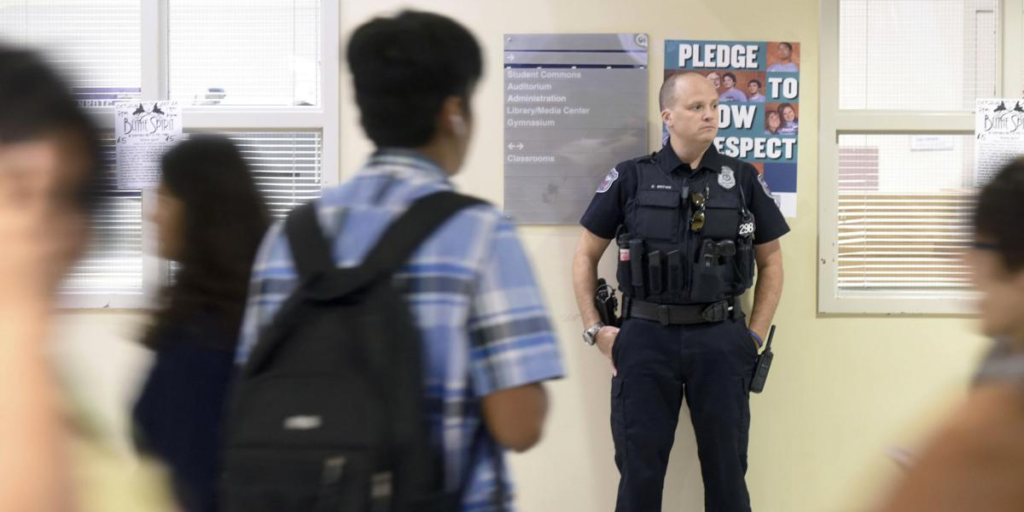
Schools nationwide will soon be safer for students, teachers, and faculty if Alabama 1st District U.S. Rep. Bradley Byrne has anything to say about it. A member of the House Education and the Workforce Committee, Byrne recently introduced the Make Schools Safer Act to provide school officials with better information regarding school safety. His bill requires the Director of the Institute of Education Sciences — part of the U.S. Dept. of Education, an the nation’s leading source for rigorous, independent education research, evaluation and statistics — to include studies and resources relating to school safety and mental health as part of the What Works Clearinghouse, which is available to educators, counselors, and principals. “School safety should be a priority for every level of government,” said Byrne. “While I do not want the federal government to mandate how schools protect their students, I believe it is appropriate for the federal government to provide high quality research and information to schools about the best practices for keeping students safe, coordinating with law enforcement, and identifying at-risk students. My bill offers a simple yet profound step toward making our schools safer.” The new studies and resources will focus on educating appropriate school personnel on techniques for identifying students who may need assistance, collaborate with health care professionals, state and local law enforcement, youth organizations, and parents to implement procedures to assist students. By making resources available, Byrne’s legislation endeavors to allow schools to select the approach that works best for them, rather than prescribing a one-size-fits-all solution from the federal government. Read Byrne’s bill below:
Bradley Byrne: Setting our funding priorities

I know this may be hard for you to believe, but there was a major, bipartisan victory in Congress last week that failed to gain any of the attention it deserved. I want to highlight some of the progress we made last week and explain why it should matter to those of us back in Alabama. Last week, both the House and the Senate passed a funding bill that covered three very important parts of our government: military construction and veterans services, energy and water development, and Legislative Branch operations. I am pleased to see us passing targeted funding bills instead of waiting until the last minute to pass a massive omnibus funding bill. Over the last few years, the House has been able to pass funding bills only to see the process stall out in the Senate. Thankfully, since Alabama Senator Richard Shelby became Chairman of the Senate Appropriations Committee, the process has actually been moving again in the Senate. This has allowed us to focus on passing the smaller funding packages that are targeted toward our priorities. So why is this funding bill important? Obviously funding for the Department of Veterans Affairs (VA) is important for our state given the large number of veterans that call Alabama home. The bill includes the largest dollar amount in funding for the VA in our nation’s history. This means the VA will have the resources necessary to take care of our veterans, hire high-quality employees, and cut back on the claims backlog. There have been serious issues at the VA over the last few years, so I am pleased the funding bill dedicates more for the VA inspector general. This money will allow for stronger accountability at the VA as we work to make sure no veteran is left behind. The bill also includes funding for military construction programs in Alabama and across the country. As we work to rebuild our nation’s military, we must not forget about our military infrastructure. This funding includes money set aside for military housing programs. If we are to retain the best and brightest in our military, we need to ensure they have first class facilities. Next, the funding bill sets aside funding for the Army Corps of Engineers. Those of us in Southwest Alabama know the important work the Corps does on a daily basis to keep our waterways open and navigable. This is important to those of us who like to spend time on the water for recreational purposes, but it is especially important for our economy since so much of our commerce is conducted on waterways. Just consider the Port of Mobile and the important commerce that goes in and out of that Port each day. Under this funding bill, the Corps will receive $7 billion for navigation projects, the Harbor Maintenance Trust Fund, and to help with flood prevention and restoration projects. This money is very important for our country, but especially important for our state. Finally, the bill funds our nation’s nuclear security strategy by dedicating money to support our nation’s nuclear weapons and the Navy’s nuclear reactors. The bill sets aside money to ensure nuclear weapons do not fall into the wrong hands and funding to prevent against cyberattacks. Our national security must always be the top priority. As you can see, this commonsense government funding bill is good for our country and Alabama. I was pleased to see it pass the House on a strong vote of 377 to 20, and I hope we can keep up the positive momentum to continue getting the job done for the American people. • • • Bradley Byrne is a member of U.S. Congress representing Alabama’s 1st Congressional District.
42 tapped for Leadership Tuscaloosa class of 2018
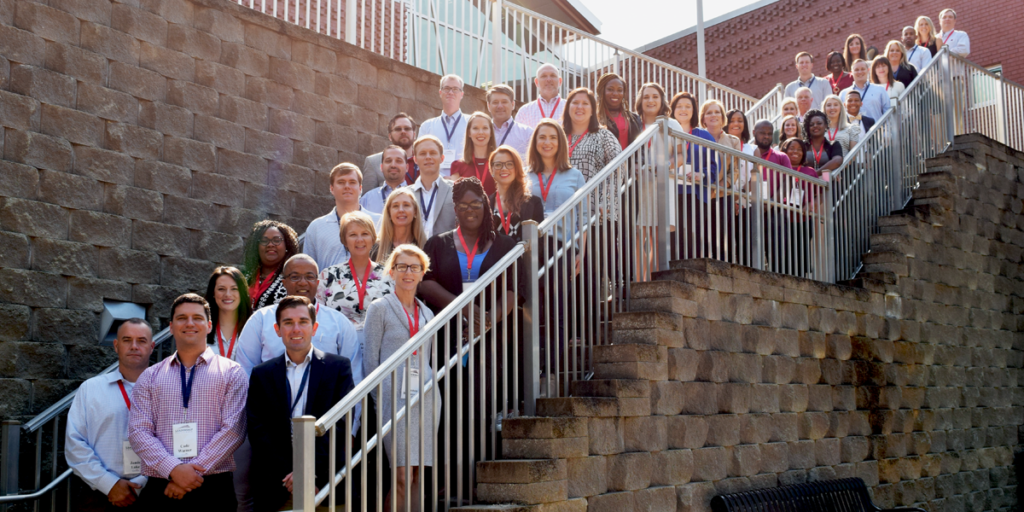
Forty-two people have been selected for the 2018-19 class of Leadership Tuscaloosa, a nine-month leadership development program. Sponsored by the Chamber of Commerce of West Alabama and the University of Alabama System, the program is designed to make each selected participant more aware of and sensitive to the wide range of needs and opportunities in the community through shared experiences with a cross section of highly capable fellow citizens. Using field trips and interaction with community decision-makers, the program broadens understanding of issues facing our community. The class is comprised of 42 individuals chosen from a cross section of occupations through an interview process conducting by the Leadership Tuscaloosa Alumni Association. Concetta Odongo of Michelin BF Goodrich will serve as the Chair for this year’s class. She is a 2015 graduate of Leadership Tuscaloosa and an active member of the Leadership Tuscaloosa Alumni Association. Class members for 2018-19: Bibby Bailey, American Red Cross Shannon Biddlecome, Broadway Pizza Jewitt Bradley, Community Service Programs of West Alabama Daniel Bradshaw, Tuscaloosa Association of Realtors James Carpenter, City of Northport Mac Chambers, Frontier Enterprises Vikki Chavis, The University of Alabama Laura Chism, Dorroh & Mills, P.C. Erica Cochran, Hospice of West Alabama Jesse Crane, First Federal Bank Wade Dailey, Wells Fargo Bank Stacey DeLoach, Ward Scott Architecture Lourn Evans, Michelin BF Goodrich Tanner Funk, Alabama One Credit Union Erica Grant, The Charm District/Tuscaloosa City School Board of Education Nicole Hampton, Rosen Harwood, P.A. Amy Henderson, Shelton State Community College Savannah Howell, City of Tuscaloosa Dan Johnson, JamisonMoneyFarmer PC Elliott Jones, Raymond James & Associates Quin Kelly, Jr., Stillman College Jamie Lake, Insuresoft, Inc. Javelin Lewis, Community Service Programs of West Alabama Hannah McPhillips, The DCH Foundation Pam Mixon, The University of Alabama Holly Morgan, The University of Alabama Adrian Newson, DCH Health System Kelly Norstrom, Tuscaloosa City School System Danny Owen, Tuscaloosa Tourism & Sports Alison Phillips, Parker Towing Kyle Phillips, Bryant Bank Quinton Poole, United Way of West Alabama Mason Primm, StressCrete, Inc. Lillian Roberts, Shelton State Community College Anna Kay Springer, Hamner Real Estate Charlie Taylor, The University of Alabama System Delshonda Thomas, The Arc of Tuscaloosa County Caitlin Tubbs, Hamner Real Estate Cade Warner, The Westervelt Company LaTonya Washington, Alabama Community Care Vadonna Williams, Tuscaloosa’s One Place Cyndee Worrall, Echols, Taylor & Associates, PC.
Alabama wants more money for school security, transportation, nurses
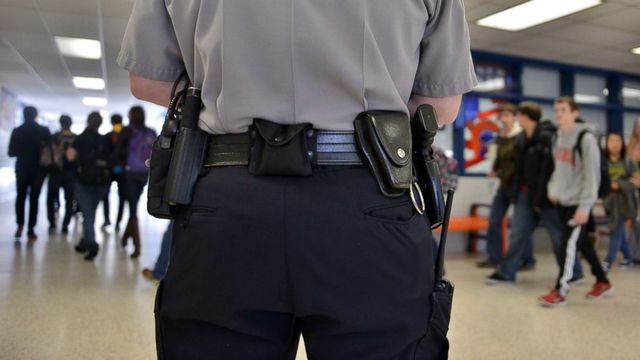
The Alabama Department of Education wants more money for school security and other programs next year. The Montgomery Advertiser reported that State Schools Superintendent Eric Mackey said Thursday he wants more money for reading and math programs, as well as for pre-kindergarten special education. Mackey said additional funding is also needed for transportation and school nurses. Mackey told the state board of education that the $30 million for school nurses would not add one nurse in Alabama. He said state funding for the nurses would free up local money for other programs. Mackey has not put together a formal budget request yet. He says the proposals came from priorities recommended by school board members and superintendents. The legislature reconvenes in March and will consider a new education budget. Republished with permission from the Associated Press.
Doug Jones: ‘Hit the pause button’ on Brett Kavanaugh’s confirmation vote
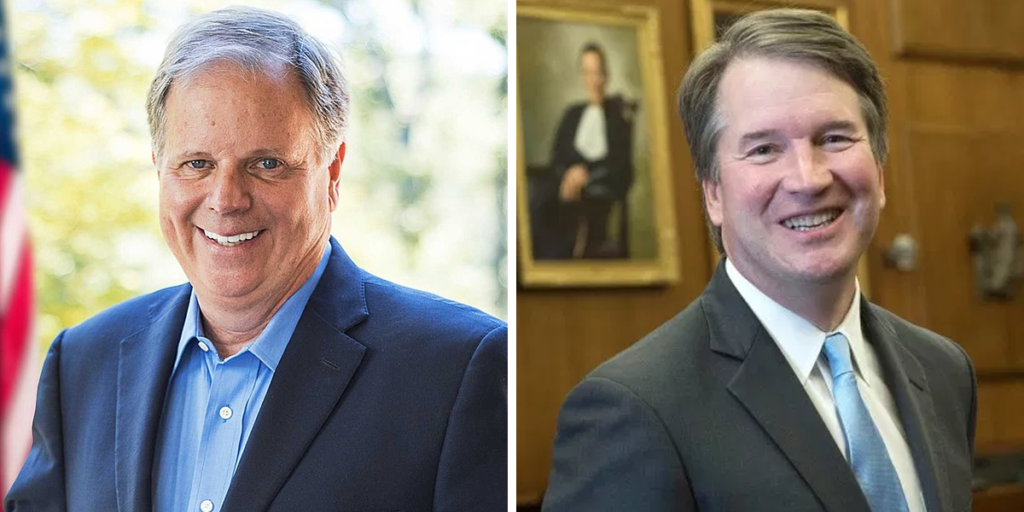
Alabama’s newly elected U.S. Sen. Doug Jones says the U.S. Senate ought to “hit the pause button” on vote to confirm President Donald Trump‘s U.S. Supreme Court (SCOTUS) nominee Brett Kavanaugh. Jones made the comment via Twitter Sunday evening after the woman who accused Kavanaugh of sexually assaulting her during their teenage years identified herself in a report from The Washington Post on Sunday afternoon. Christine Blasey Ford, a psychology professor in Northern California, said Kavanaugh tried to “attack [her] and remove [her] clothing” during a party when both of them were high school students in Maryland in the early 80s. Jones tweeted, “We cannot rush to move forward under this cloud.” “This was a very brave step to come forward. It is more important than ever to hit the pause button on Kavanaugh’s confirmation vote until we can fully investigate these serious and disturbing allegations. We cannot rush to move forward under this cloud,” Jones tweeted. This was a very brave step to come forward. It is more important than ever to hit the pause button on Kavanaugh’s confirmation vote until we can fully investigate these serious and disturbing allegations. We cannot rush to move forward under this cloud. https://t.co/SIHzdnnOFJ — Doug Jones (@SenDougJones) September 16, 2018 Kavanaugh, in a statement Monday, called the allegation “completely false.” The White House said it stood by Kavanaugh’s previous denial of any such incident.
TechBirmingham helps kids prepare to join digitally literate workforce

Every second Sunday of each month, Luke Robinson, 15, and his dad, Jason, travel about 80 miles from Winfield to the McWane Science Center in downtown Birmingham to participate in TechBirmingham’s coding class. The Robinsons are motivated to travel for two hours and devote another hour and a half on Sunday afternoons not only because of the lack of youth-oriented coding camps in Winfield but also because Luke is interested in computer animation. “I’m pretty passionate about computers,” Luke said. “Back home, they don’t really have any coding classes like this. This is my opportunity to do coding with other people.” Young people like Luke are taking advantage of coding camps and classes that will position them for careers in a world that’s becoming more high-tech. Computer coding — which involves writing programming language that makes computer software, apps and websites operate — is considered one of the fastest-growing fields in the job market. Computer coding “We need a digitally literate workforce,” said Deon Gordon, president of TechBirmingham. “In a lot of ways, every company now is a tech company.” “A lot of people 30 years ago thought we were going to be taken over by robots,” said Nicole Mubarak, director of Women Who Code Birmingham. “But we’ve been taken over more by software as opposed to hardware.” TechBirmingham’s Kids Code class teaches and encourages students to learn and experiment with computer code. (Frank Couch/The Birmingham Times) Because most companies and businesses rely heavily on computer software, the need for coding analysts and specialists is not just limited to jobs in the tech industry. “So many banks, insurance companies and health care providers are concerned about protecting the privacy of their clients’ information, they need to learn how to encrypt their important data,” said Christina Smith, TechBirmingham’s science, technology, engineering and mathematics (STEM) coordinator. TechBirmingham’s coding class, offered since 2015 at McWane, is designed to encourage digital literacy among children in grades three through 12. The free class, offered on the second Sunday of each month from 1:30 p.m. to 3 p.m., operates during the school year. Nearly 40 students participated in its August class. “What we want to do is give all kids access to the skills they’ll need for future jobs,” Smith said. “A lot of it is just learning basic coding skills and the fundamentals, the foundations of what they’re going to need if they want to pursue a career in computer software engineering.” Wave of the future Jajuana Smith of Birmingham said her 10-year-old son, Jalen, had taken a coding class previously, but he didn’t connect with the instructor’s personality and teaching style. She wanted to rekindle his interest before he lost it, so she brought him to the TechBirmingham class. “I needed him to get back in there,” she said. “I need him to grow with it because technology is the wave of the future. You have to be well versed in a lot of things for the new market. Technology is going to be on every career path no matter what you do. I need him to have a strong foundation, so if that’s what he chooses to do, he can do it.” During the coding class, students were divided into two groups. In one class, students learned basic coding encryption; in the other, they learned to use the basic language of Java to build apps. Students work on computer coding during a Kids Code class at McWane Science Center. (Frank Couch/The Birmingham Times) In Jalen’s class, he and another student learned how to crack a simple code. “I really like the fact that you get to interact with other people, meet new friends and still figure something out,” he said. “I’ve done coding, but I’ve never tried to crack a code.” In the app-development class, students created apps to produce music accompanied by dancing tigers and robots. Eight-year-old Sofia Aelterman was disappointed because she couldn’t get her robot to perform popular dance moves. “We were trying to make the robot dab (popularized a few years ago in music by songs like ‘Look at My Dab’ by Atlanta hip-hop group the Migos and in sports by NFL star Cam Newton), but it just wouldn’t dab. It wouldn’t floss, either (another dance that’s performed by characters in video games like Fortnite). We’ll get it next time,” she said. Mubarak, who serves as a volunteer instructor with TechBirmingham’s coding class, said incorporating coding with fun activities keeps kids engaged and sparks their interest. One exercise involved letting students create an app that flushed their homework down a toilet. “The kids get really creative,” she said. “They start seeing what they can do, they get their minds into it and that’s what they come up with — exploding homework and homework that flushes down the toilet. I just look at them and say, ‘Virtually, this is fine. In reality, don’t do it.’” For more information about TechBirmingham and its coding class, visit www.techbirmingham.com or contact Christina Smith at christina@techbirmingham.com. For more information about Women Who Code, visit womenwhocode.com/birmingham or follow them on Twitter @WWCBirmingham. This story originally appeared in The Birmingham Times. Republished with permission from the Alabama NewsCenter.
Barack Obama’s return: good or bad for Democrats?
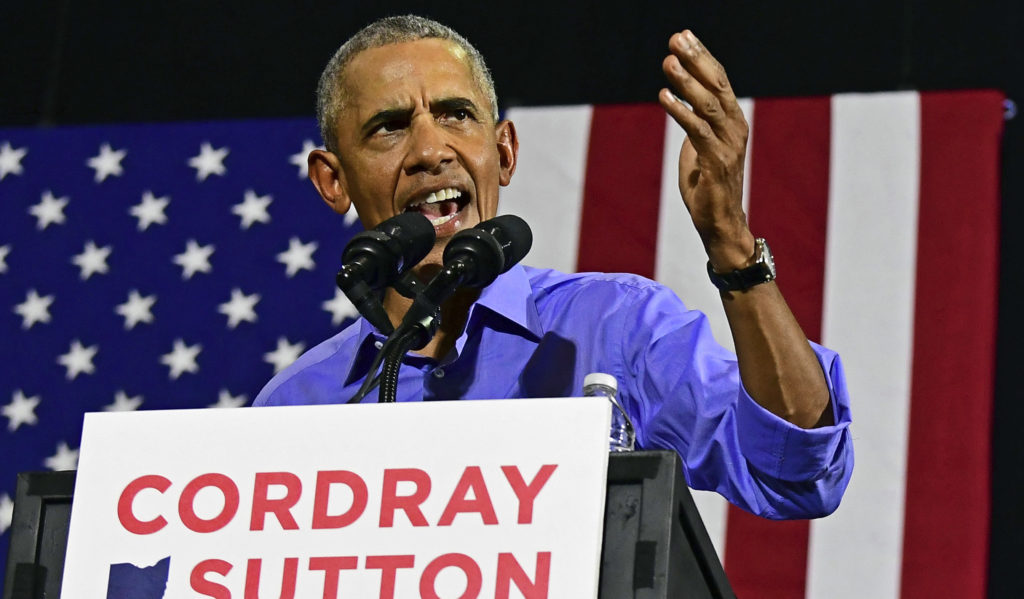
Nearly two years out of the White House, former President Barack Obama is facing another political test. To the delight of many Democrats, he’s stepped back into the fray that former presidents often try to avoid, campaigning for Democratic candidates ahead of the midterms and blasting the political culture of the Trump era. He attracted a large, adoring crowd this past week in Ohio and will be in Pennsylvania on Friday campaigning for Democratic Sen. Bob Casey. But Obama’s return poses challenges for both the former president and his party. For one, Obama has struggled to turn admiration for him into votes when he’s not on the ballot. Democrats lost significant ground in the 2010 and 2014 midterms and his enthusiastic campaigning for Hillary Clinton didn’t carry her across the finish line in 2016. Perhaps more importantly, Obama’s public re-entry into politics could serve as a motivating factor for Republicans, potentially handing the GOP a gift at a time when they face an uphill battle to maintain their grip on Congress. “This is perfect for us,” said Rep. Lou Barletta, the Republican challenging Casey for the Senate seat. “It will energize Republicans as a reminder.” The former president will also “energize those blue-collar Democrats who worried about their jobs under Obama and went out to vote for Donald Trump,” Barletta added. For their part, Democrats say an Obama visit is a huge boon. Massive crowds give candidates and the party a chance to organize, update contact lists, motivate new donors and boost volunteerism. Michael Halle, the campaign manager for Richard Cordray, the Democratic candidate for governor in Ohio, said Obama’s visit sent a message about the stakes of the race, which could have implications for redistricting and voting rights in the future. “First and foremost, it’s important for the people who live in Ohio,” he said. “But secondly, there are also significant national implications, and I think the (former) president weighed those in making the decision.” An aide to the former president said Obama is aware that he does not have a strong record of aiding Democrats in midterm elections and that his presence can have the effect of galvanizing Republican voters. The aide said Obama would take a strategic approach to the midterm races and pointed to the light footprint that the former president kept earlier in his post-presidency. That’s when he recorded a get-out-the-vote robocall for Democrat Doug Jones, rather than travel to Alabama to appear with Jones ahead of his upset Senate victory. The aide cast the decision as an example of how Obama could still lend his voice in a part of the country where he is less popular. The aide lacked authorization to discuss publicly Obama’s thinking and spoke on condition of anonymity. Scott Mulhauser, who served as Vice President Joe Biden‘s deputy chief of staff during the 2012 election, said Obama left office as the “most admired man in the country, and his popularity has only increased since.” “Part of his success is being strategic in his approach to campaigning — coordinating with campaigns to maximize his impact and minimize any blowback, stumping where it makes sense and avoiding where it doesn’t,” Mulhauser said, noting Obama’s role in the Jones campaign. “He’s rightfully out on the trail for certain campaigns, taking a pass on others and recording calls and sending emails on behalf of those that want to use him and his popularity in a targeted manner.” In Pennsylvania, Obama returns to a state he carried twice but that swung to Trump in 2016. The state features critical contests for Congress and governor. Rep. Dwight Evans of Philadelphia, where Obama will campaign, said that the former president’s presence will be important for his ability to motivate African-American voters, college-aged voters and the poor. “I think that he can help Democrats, and I think it needs to be really targeted,” Evans said. Both African-Americans and college-age voters were crucial to Obama’s victories in 2008 and 2012, and because Obama was the first black president, Evans said, “he can say some things to the African-American community that cannot be said by anybody else.” While in Philadelphia, Obama will fundraise for Senate Democrats in general and in particular, Casey, who was among Obama’s earliest Senate backers when he sought the Democratic presidential nomination in 2008. While Obama’s full schedule is taking shape, aides say he is weighing how to best engage on behalf of Democratic candidates across the nation. Earlier this year, he endorsed more than 80 Democrats across more than a dozen states, and aides say a second wave of endorsements is expected this fall. Brenda Boots, 42, who attended the Ohio rally, said Obama is a welcome presence and hoped he would inject the governor’s race with new life. “How could he hurt?” she asked. “I don’t think he could hurt.” Republished with permission from the Associated Press.
