
Brett Kavanaugh’s accuser wants FBI probe before she testifies
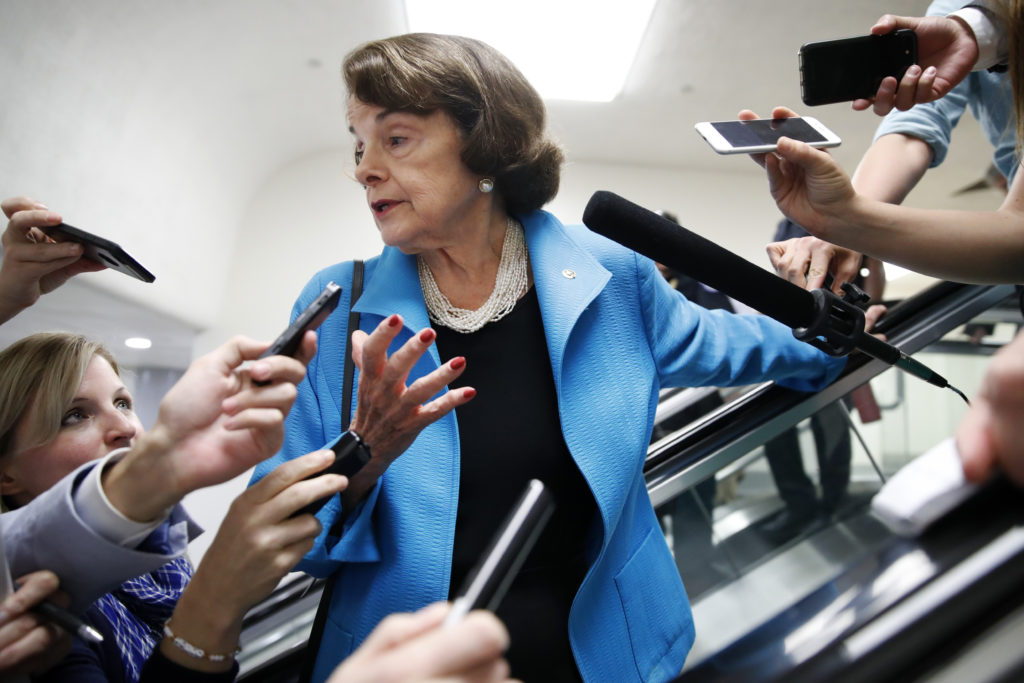
Christine Blasey Ford wants the FBI to investigate her allegation that she was sexually assaulted by Supreme Court nominee Brett Kavanaugh before she testifies at a Senate Judiciary Committee hearing next week, her lawyers said in a letter sent Tuesday to the panel. The lawyers wrote that Ford, who is now a college professor in California, wants to cooperate with the committee. But in the days since she publicly accused Kavanaugh of the assault when they were teens at a party 35 years ago, the lawyers said, she has been the target of “vicious harassment and even death threats.” Her family has relocated, they said. An FBI investigation “should be the first step in addressing the allegations,” the lawyers wrote in the letter, which was obtained by The Associated Press. The development comes after President Donald Trump showered sympathy on his embattled nominee and as Senate Republicans and Democrats fought determinedly over who should testify at a high-stakes hearing on the allegation just six weeks before major congressional elections. Trump has already rejected the idea of bringing in the FBI to reopen its background check of Kavanaugh. Should he order such a review, it would likely delay a confirmation vote until after the election. Republicans hope to have Kavanaugh confirmed by Oct. 1, the start of the next Supreme Court term. Meanwhile, Republicans are suggesting that Ford, whose allegations have upended Kavanaugh’s nomination — the committee’s vote was already pushed from Thursday to likely next week — will have one chance to testify, and one chance only. “Monday is her opportunity,” Senate Majority Leader Mitch McConnell, R-Ky., said Tuesday, a line that was echoed by other Republicans throughout the day. McConnell expressed confidence that Kavanaugh would be confirmed. “I’m not concerned about tanking the nomination,” he said. “We should proceed as planned,” said Sen. Orrin Hatch of Utah, a key Republican on the panel. The furious jockeying over Ford’s testimony underscores the political potency so close to an election that will decide control of both the House and Senate, not to mention the confirmation of a conservative justice likely to serve on the high court for decades. Democrats complain that Ford was not consulted before the hearing was announced. They also want more witnesses besides Kavanaugh and Ford, hoping to avoid what they said would turn into a “he-said-she-said” moment. The lawyers for Ford predicted the hearing, as now scheduled, “would include interrogation by senators who appear to have made up their minds” that she is “mistaken” and mixed up. But Democrats also said Tuesday they were planning to attend the hearing even if Ford did not show up. Sen. Dick Durbin, D-Ill., said he had “a lot of questions” for Kavanaugh. “A simple denial is not the end of questioning.” As Democrats press for more time to investigate, Republicans have been careful to say that Ford should have her chance to speak, and they have stressed that they are willing to move Monday’s hearing behind closed doors, if she prefers. “Were planning on a hearing Monday. It can be open. It can be closed, whatever Ms. Ford wants,” said Sen. John Kennedy, a member of the Judiciary panel from Louisiana. “We’re ready to hear anything she has to say. I am, anyway, and I think most of us are.” GOP Sen. Bob Corker of Tennessee — among a handful of Republicans who insisted on hearing from Ford before voting — said it would be a “shame” if Ford didn’t show up to testify. But he suggested Republicans will not bend from their offer of a hearing Monday. “That would be quite something if she decided she did not want to testify,” Corker said. “I’d assume the committee would then move on as they should.” One witness the Democrats want to hear from is Kavanaugh’s high school friend Mark Judge, who Ford said was in the room when she was assaulted. Kavanaugh has denied Ford’s allegation, and Judge says he doesn’t remember any such thing. “More to the point, I never saw Brett act in the manner Dr. Ford describes,” Judge said in a letter to the panel. The risks of a public hearing starring the all-male lineup of Republicans on the committee could be high. Republicans said late Tuesday they were considering hiring outside attorneys, presumably including women, to question the witnesses. But that may be moot if Ford declines to appear. Kavanaugh, 53, was at the White House on Tuesday for a second straight day, but again did not meet with Trump. The president said he was “totally supporting” Kavanaugh and felt “terribly” for him and his family. “I feel so badly for him that he’s going through this, to be honest with you, I feel so badly for him,” said Trump, who has himself faced numerous accusations of sexual harassment that he’s denied. “This is not a man that deserves this.” The No. 2 Senate Republican leader, John Cornyn of Texas, was one of the few Republicans who openly questioned Ford’s version of events. He called the allegations a “drive-by attack” on the judge’s character. “There are gaps in her memory,” Cornyn said. “She doesn’t know how she got there, when it was and so that would logically be something where she would get questions.” Criticism like that fed a Democratic narrative that the GOP’s handling of Ford could jeopardize that party’s election prospects in the age of #MeToo, the response to sexual abuse that has torched the careers of prominent men. “Now this is really what #MeToo is all about, if you think about it,” said Sen. Dianne Feinstein of California, the top Judiciary Committee Democrat. “That’s sort of the first thing that happens, it’s the woman’s fault. And it is not the woman’s fault.” Meanwhile, Kavanaugh has been calling Republican senators, including Kennedy, who said the nominee was committed to moving forward. “He’s not happy, he’s upset,” Kennedy said. “He said very clearly and unequivocally, ‘This did not happen.’” Ford went public with her
It’s a trap! Why conservatives shouldn’t take the bait defending against the left’s many false narratives
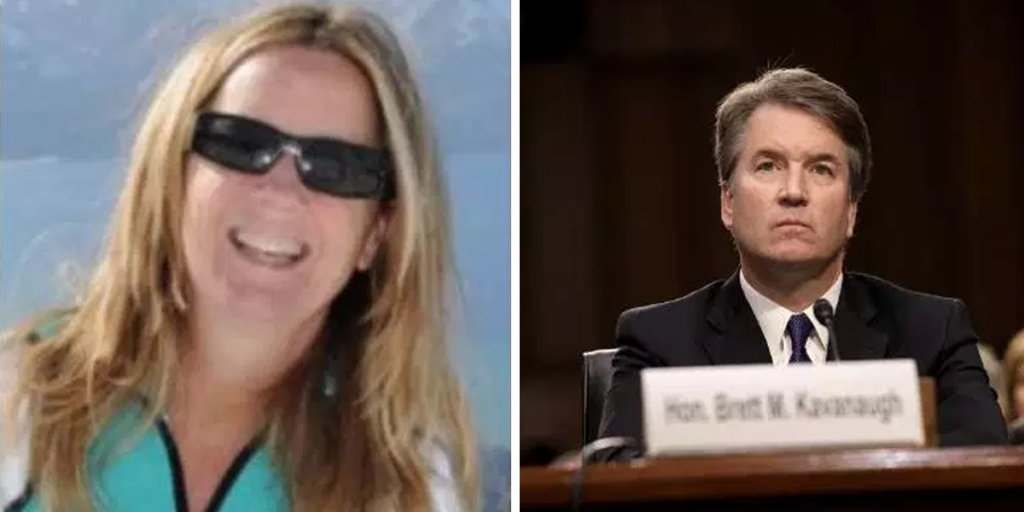
The left loves to set up conservatives to defend against the false narratives they’ve concocted. I can’t even count the number of them that I see or hear any given day. If you support and defend the second amendment — you must support murder, crime and mass shootings and those who commit them. If you don’t support Obamacare — you want all sick people to die. If you want to restructure Medicare — you must want to push granny off a cliff. If you support and defend the life of the unborn — you don’t believe in women’s health or their rights. If you’re for changing SNAP guidelines or other forms of welfare reform, even for able bodied adults — you want the poor and disabled to go hungry and live in the streets. If you want to secure our borders or enforce immigration laws — you’re for the inhumane treatment of others and you’re probably racists too. I could go on and on. The list of unfounded accusations against the humanity of conservatives are endless. Now the left has found another narrative they want to push — support anyone who comes forward with an unsubstantiated claim of sexual assault or misconduct or be accused of sanctioning such behavior. It started during Donald Trump’s campaign but reached a fever pitch when Roy Moore found himself facing decades old accusations of sexual misconduct. If you question an accusers story, their timing or their motive then you’re sanctioning the behavior they’re accusing a candidate, or in this case the nominee, of doing. This week, as I’ve listened to talk-radio, and read some of my favorite columnists and conservatives on Twitter when they respond to the accusations made against Brett Kavanaugh, I’ve spent the whole time on pins and needles. All I can think is be careful with your words: Don’t do it! Don’t step in the trap! Tread lightly with your observations and even the way you present and question facts because their are those out there just waiting for someone to say something they can use to paint everyone who supports Kavanaugh as insensitive to a very sensitive topic. It’s infuriating. We should be able to ask questions, demand answers, use facts and history as points of reference in defense of the accused. In the Kavanaugh case, much like the Moore case, there are more questions than answers but we’re suppose to let one woman destroy the life’s work and reputation of a man who hundreds have spoken out in support of. We should be able to address these questions without fear of attack on our own character. We should encourage it and I do, but I still say: be careful folks. Don’t let yourselves get pinned into a situation where you’re making light of the accusation. Donald Trump Jr. walked right into the trap with his twitter meme. View this post on Instagram Oh boy… the Dems and their usual nonsense games really have him on the ropes now. Finestein had the letter in July and saved it for the eve of his vote… honorable as always. I believe this is a copy for full transparency. 🤣🇺🇸🤣🇺🇸🤣 #politics #maga A post shared by Donald Trump Jr. (@donaldjtrumpjr) on Sep 15, 2018 at 12:30pm PDT He didn’t address the accusations, but instead was seen as dismissive of them. We can do better. Keep your argument more on the point that this type of behavior that the judge is being accused of is predatory. You don’t find someone who is a bad 17 year old drunk who nearly committed sexual assault able to go the rest of their life without ever having an incident again. And thats’ what this woman would have us believe — that she was on the verge of a violent, sexual attack that was only thwarted by a friend of his in the room (who has discredited her accusations). You don’t find that kind of behavior to be isolated. In this incidence we find a lifetime of service by Kavanaugh that is spotless. Speak to the issues. Speak to her inability to recall facts. Speak to the inconsistencies in her story. Speak to the way that the left is trying to weaponize these charges without any proof or substantiating information. Just be careful and remember that there’s nothing the left loves more than to paint everyone on the right as sexists, racists, cold hearted individuals and the truth to many means nothing.
Senate defense spending bill means big bucks for Alabama

Senate lawmakers passed the FY2019 Defense Appropriations Act on Tuesday, which gives American troops a raise while strengthening the military and boosting national security, all the while providing critical funding for defense priorities throughout the state of Alabama. The bill, which was passed by a vote of 93 – 7, provides $674.4 billion to continue rebuilding our nation’s military, an increase of $19.8 billion above the Fiscal Year 2018 level for Pentagon funding, and $178.1 billion for the Departments of Labor, Health and Human Services, and Education and Related Agencies for investments in critical medical research, opioid abuse prevention and treatment, and education. This includes $39.1 billion for the National Institutes of Health (NIH), and increase of $2 billion, and $3.8 billion to combat the opioid crisis, and increase of $206 million. “This is the most significant step we have taken yet,” said Alabama’s senior Senator Richard Shelby, chairman of the Senate Appropriations Committee and its Subcommittee on Defense. “For the first time in a decade, we are sending a Defense spending bill to the President’s desk on time. Returning to regular order has required us all to sacrifice and work together for the good of the process.” Shelby pointed out the defense bill also provides critical funding for defense priorities across Alabama. “We must approve defense appropriations legislation to fund military readiness, procurement, and testing — all of which are required to keep U.S. military forces the best trained, equipped, prepared, and strongest force in the world,” Shelby added. “This historic legislation further highlights Alabama’s strong national defense capabilities and provides our state with the opportunity to continue producing essential tools to support our men and women in uniform. I am confident that this legislation will allow our defense programs to remain of the highest caliber.” Following passage in the House, which is expected to vote on the legislation next week, the package will be sent to the President’s desk for his signature. Provisions impacting Alabama Provisions impacting the production and use of missiles and helicopters in the Wiregrass region: An additional $95 million for Future Vertical Lift research, which will help accelerate development of helicopters flown at Fort Rucker. $10 million to upgrade Navy MH-60 Seahawk helicopters. $1.0 billion for Terminal High Altitude Area Defense (THAAD) missiles. $111 million for Long Range Anti-Ship Missiles (LRASMs). The measure also encourages the Navy to evaluate the capabilities and costs of a surface-launched LRASM. $307 million for Joint Air-to-Ground Missiles (JAGMs). $663 million for Joint Air-Surface Standoff Missile (JASSMs), which recently made its debut in strikes on Syria in response to their use of chemical weapons. $484 million for Hellfire missiles, which are made in Troy and used for training at Fort Rucker. $254 million for Javelin missiles for the Army and Marine Corps. Provisions impacting North Alabama: Army Research: $11.1 billion for investments in transformational technologies to address modern and future Army war-fighting needs. Missile Defense: $10.4 billion for the Missile Defense Agency (MDA), including $1.1 billion to support urgent MDA unfunded priorities and emergent threats. The measure included $191 million for Standard Missile Improvements, which are built in Decatur, and supports work done by MDA at Redstone Arsenal and many local companies. Directed Energy: $184 million in additional funding to further develop directed energy technology and transition these activities to both offensive and defensive capabilities. Hypersonics: $664 million in additional funding to support and accelerate offensive and defensive hypersonics research and prototyping efforts. Cyber: $306 million in additional funding to expand and accelerate cyber research across the Department of Defense, including $127 million for Army cybersecurity research efforts and $116 million in Missile Defense Agency cybersecurity enhancements. The bill encourages the enhanced use of cyber red teams to address cyber intrusions that threaten our weapons systems, an area of particular excellence for Huntsville. Space: $200 million in additional funding for Evolved Expendable Launch Vehicle (EELV) development efforts to ensure assured access to space. United Launch Alliance (ULA), which builds rockets in Decatur, continues to be seen as the most reliable and capable space launch provider. Advanced Shipbuilding Capabilities: $15 million to establish North Alabama as a center for classified, high power large-scale electron beam welding. This technology is critical to new Navy Columbia-class submarines and many high-performance aerospace systems such as hypersonic reentry vehicles, scramjet missiles, and rocket and jet engine turbo-machinery. Small Glide Munitions: An additional $15 million to integrate Small Glide Munitions onto on Unmanned Aerial Systems. This highly successful weapon is used by Special Operations Command and built in Huntsville. Provisions impacting Anniston: $276 million for Hydra rockets, which are built in Anniston and fired from Army and Marine Corps helicopters. Funding for Army Vehicles that are overhauled and maintained at Anniston Army Depot (ANAD): $2.5 billion to continue modernizing M1 Abrams tanks; $393 million for Stryker vehicles, including an additional $94 million to support increased Stryker DVH A1 conversions; An additional $110 million for Paladin Integrated Management artillery vehicles; and $18 million in additional funding for M88A2 Hercules Improved Recovery vehicles. Provisions impacting Mobile’s shipbuilding industry: Two additional Littoral Combat Ships (LCS). One additional Expeditionary Fast Transport (EPF) ship. An additional $700 million in Advance Procurement for LPD and LHA amphibious ships. Watch Shelby’s remarks prior to the Senate vote:
With declassification, Donald Trump preps latest Russia probe punch

President Donald Trump has opened a new front in his efforts to discredit the origins of the Justice Department’s Russia probe, with the White House saying he will declassify a trove of documents and publicly release text messages of former FBI officials after calls from a small group of his Republican allies in Congress to do so. The declassification announcement came as part of Trump’s continued efforts to undermine special counsel Robert Mueller‘s probe in the wake of the guilty plea of his former campaign chairman, Paul Manafort, and amid the ongoing grand jury investigation into a longtime associate, Roger Stone. The president also made the decision as he dealt with a separate firestorm surrounding his Supreme Court nominee, Brett Kavanaugh, and a sexual assault allegation. It was unclear how soon the documents would be released. The White House on Monday evening announced that Trump would declassify a portion of a secret surveillance warrant application and also direct the Justice Department to release text messages and documents involving several top Justice Department and FBI officials whom he has attacked over the last year, including former FBI Director James Comey. “Really bad things were happening, but they are now being exposed. Big stuff!” Trump tweeted Tuesday morning. In comments later at the White House, the president said he wants “total transparency,” returning to his usual refrain that the Russia investigation is a “witch hunt.” “The things that have been found over the last couple of weeks about text messages back and forth are a disgrace to our nation,” he said, adding: “I think it’s a good thing because we should open it up for people to see.” The move comes after a small group of Republicans in Congress, all staunch allies of Trump, held a news conference last week asking him to declassify the documents. Democrats criticized the effort, saying the GOP lawmakers were trying to discredit the Justice Department in an effort to protect Trump from Mueller’s investigation. Trump made a similar move in February when the White House, over the objections of the FBI and intelligence community, cleared the way for the Republican-led House intelligence committee to release a partisan memo about the surveillance warrant on former Trump campaign adviser Carter Page. Democrats weeks later released their own memo. The disclosures were unprecedented given that surveillance warrants obtained from the secret court are highly classified and are not meant to be publicly disclosed, including to defendants preparing for or awaiting trial. White House press secretary Sarah Huckabee Sanders announced Trump’s latest decision in a written statement Monday evening, saying the president had directed the Office of the Director of National Intelligence and the Justice Department to declassify the documents. Those departments have since said they have begun a declassification review of the materials. According to the White House, Trump declassified 21 pages of the 101-page June 2017 application to renew a warrant obtained under the Foreign Intelligence Surveillance Act, or FISA, to monitor Page’s communications in 2016. Those pages only make up a small part of the 412 pages of FISA applications and court orders related to Page released by the FBI earlier this year in heavily redacted format. The June 2017 application was the last of four filed by the Justice Department in support of FISA court orders allowing the monitoring of Page. His communications were monitored for nearly a year starting in October 2016. According to the redacted version, three of the declassified pages involve information included in a section titled “The Russian Government’s Coordinated Efforts to Influence the 2016 U.S. Presidential Election.” That section includes reference to potential coordination between people associated with Trump’s campaign and the Russian election interference effort. The other 18 pages appear to relate to information the government submitted that came from former British spy Christopher Steele before the presidential election. Steele was a longtime FBI informant whose Democratic-funded research into Trump ties to Russia was compiled into a dossier that has become a partisan lightning rod since its publication in January 2017. Besides the FISA applications pages, the president is declassifying all FBI reports documenting interviews in connection with the Page surveillance warrant and those documenting interviews with senior Justice Department official Bruce Ohr, who was in contact with Steele. According to Sanders’ statement, Trump also directed the Justice Department to publicly release in full the text messages of Comey, Ohr, former acting FBI Director Andrew McCabe, former FBI lawyer Lisa Page and former FBI special agent Peter Strzok that are related to the Russia investigation. The declassification decision and order for public release of the documents was quickly praised by Trump allies in Congress and attacked by Democrats. “Transparency wins. This is absolutely the right call from @POTUS,” said Rep. Mark Meadows, a North Carolina Republican, on Twitter. Meadows, who had pushed for the documents’ release, said it will allow the American people to decide “what happened at the highest levels of their FBI and Justice Department.” And the No. 3 Republican in the House, Louisiana Rep. Steve Scalise, tweeted that Trump made the right call. “Americans deserve the truth about these egregious actions by government officials,” Scalise said. But Rep. Adam Schiff of California, the ranking Democrat on the House intelligence committee, called Trump’s decision a “clear abuse of power” intended to advance a “false narrative” to help in his defense from Mueller’s probe. Schiff said the FBI and the Justice Department had said releasing the documents would cross a “red line” because doing so would compromise sources and methods. Rep. Elijah Cummings of Maryland and Rep. Jerrold Nadler of New York, the ranking Democrats on the House Oversight and Judiciary committees, said in a statement that Trump’s actions were a “direct and frantic response” to Manafort’s recent guilty plea and cooperation agreement with Mueller. Republished with permission from the Associated Press.
Richard Shelby, Doug Jones concur on key vote to combat opioid epidemic ravaging Alabama

With the support of both Alabama senators, the U.S. Senate on Monday passed sweeping, bipartisan legislation aimed at combating the nation’s deadly opioid epidemic. The legislation, H.R. 6: The Opioid Crisis Response Act of 2018, combines three major bills that, together, aim to improve federal coordination of the opioid response, increase access to treatment, improve coordination of care, invest in non-opioid pain-killer research, and stop the flow of synthetic drugs into our country. It also reauthorizes funding and provides additional flexibility to states as they respond to the crisis. It passed by a vote of 99 – 1. “I am proud to have supported this significant legislation that will aid in combatting a crisis that is affecting nearly every community in the nation,” said Alabama’s senior Senator Richard Shelby. “We have worked in a bicameral, bipartisan effort to fight the dangerous opioid epidemic and present viable solutions for prevention. I look forward to getting this bill to the President’s desk for his signature.” “The opioid crisis has taken hold in every corner of our nation, and while we have seen some strides to turn that tide, we need to take an all-of-the-above approach to combatting this deadly epidemic,”said Jones, a member of the Senate Health, Education, Labor, and Pensions (HELP) Committee. “I was proud to support a comprehensive legislative effort through my work on the HELP Committee and I am glad to see several of the provisions I supported early on have been included in the final bill.” Last Thursday, the Senate and House Appropriations Conference Committee came to an agreement on H.R. 6157, which includes $3.8 billion for opioid funding, an increase of $206 million above the Fiscal Year 2018 enacted level. Alabama’s ongoing struggle with opioids Alabama is at Ground Zero in the opioid overdose crisis — last year the state had the highest national number of opioid prescriptions, more than the state’s total population, according to a report by insurance provider Blue Cross Blue Shield. According to a July study conducted by Harvard University, two Alabama Congressional Districts rank among the top five districts with the highest opioid prescription rates in the U.S. Alabama’s 4th Congressional District has the highest prescription rate in the country. Whereas Alabama’s 1st Congressional District has the 5th highest rate.
Rauf Bolden: Competing for employees in Orange Beach

The balance between available jobs and job openings keeps the economy rolling. Having more jobs than people to fill them is a problem, creating issues with employee retention, but there is a fix. Businesses are moving to Orange Beach, providing jobs, but finding employees to work is a struggle. Orange Beach’s Comprehensive Plan of 2006 had the resident population at 5330, compared to 5850 in 2015, according to the US Census Bureau. The data indicates that the thriving tourist economy is driving business growth, but growth of the resident population has stagnated. Businesses must recruit employees from north of the bridge, requiring workers to pay the toll, incurring an additional cost of $875 per year, just to take the job. Demographics in Orange Beach may give us a hint at why we have a shortage of resident workers. The median household income for Orange Beach in 2014 dollars was $57,750, and the per capita income in 2014 dollars was $35,908, according to Quick Facts at the US Census Bureau. Perhaps it is just too expensive for the average-wage earner in Baldwin County to live and work in Orange Beach. Creating competition between employers, seeking employees who will put up with the commute, and paying the toll. Balancing work, wages, commute, benefits and family is the primary focus of all Mayors, according to the National League of Cities web site. Underlining our previous demographics are 2016 home prices, averaging $512,536 in Orange Beach versus $238,891 in Baldwin County, according to Andrew Hart of Gulf Shores Re/Max in an email, making it difficult for employees to afford housing on the island. Across the bridge a couple of large developments are opening, including a 90,000 square foot Event Center in Foley, and the OWA Amusement Park Complex, spanning 500 acres with rides, restaurants, a hotel and amenities. Several hundred employees man these facilities, draining talent from the pool that previously fed Orange Beach. Businesses are locating to Orange Beach. On the other hand you have a shortage of labor, putting supply and demand pressure on wages and benefits, especially in the hospitality sector. Accepting the fact that real estate prices will continue to rise on the island, developing a plan to retain the employees who live off island is important, incentivizing a way for them to stay employed and not migrate north of the bridge to jobs located closer to their homes. The biggest obstacle to planning employee retention is managerial awareness that a retention problem exists. According to SHRM (Society for Human Resource Management), new-employee training costs 16 percent of annual salary for low-paying jobs, 20 percent for mid-range, and 213 percent for Executive or Director positions. Losing talent costs money. Grants can indirectly subsidize employee retention, because the Grant winners will need to buy goods and services from local businesses. The following BP Grants ($63 Million) were Awarded for the Environment in 2016, according to The Alabama Department of Environmental Management website. Fisheries and ecosystem monitoring in marine waters and the Gulf of Mexico: about $4.4 million; Bon Secour-Oyster Bay wetland acquisition: about $12.5 million; Dauphin Island conservation acquisition: about $3.5 million; Lightning Point acquisition and restoration, Phase I: about $6 million; Fowl River watershed restoration, coastal splits and wetlands project, Phase I: about $1 million; Gulf Highlands (Gulf Shores) Conservation Acquisition – approximately $36 million. When the government injects millions into the local economy it creates jobs, the people supplying goods and services to these projects will benefit. What if the business owner has trouble finding enough people to work? He or she will have to raise wages and benefits to attract suitable candidates, lowering margins, putting the business at risk of not being able to fulfill their obligations. The reality of a reduced labor pool is something all managers in Orange Beach must plan for. Employee retention is a key objective in planning for future growth. Let’s look at the cost of losing an employee from another angle, factoring in what it costs to train their replacement. “These include the costs of both the supervisor and employee’s time during on-the-job training; instruction materials, equipment and time for formal training; and the cost of a mentor’s time, if a mentoring system is in place,” said Tess C. Taylor author of The Cost of Training New Employees for the Automatic Data Processing web site. Some espouse I can get anyone to do that job. That thinking dismisses the cost of training, mentoring, and shadowing a fellow employee, as well as today’s low-unemployment rate. During the past decade unemployment rates stressed job opportunities, the time of boom-to-bust from 2000 to 2010 along the Alabama Gulf Coast is an example. Putting unemployment at four percent in 2000, 6 percent in 2002, 5 percent in 2004, 4 percent in 2006, 6 percent in 2008, 10 percent in 2010, understanding we had Hurricane Ivan in 2005, a property bubble in 2006, a recession from 2007-2009, and an oil spill in 2010, according to John Coughlan of the Monthly Labor Review. In April 2017, the unemployment rate in Baldwin County was a low 3.9 percent, according to Economic Research from the Federal Reserve in St. Louis, making suitable hires harder to find, making it easier for prospective hires to be selective, finding work closer to home. Employers competing for good people have gone digital, quietly hustling recruits through email blasts. The complexity sets in, realizing there are more jobs in Orange Beach than there are people to do a good job. Simply replacing employees is costly for the bottom line, calculated as a percentage of yearly salary, according to the Center for American Progress web site. Research gives us data and the data indicates that retaining employees, in the present fiscal climate through salary and benefit adjustments is in the best interest of your business, municipality, or school. That is the fix. ••• Rauf Bolden is retired IT Director at the City of Orange Beach, working as an IT & Web Consultant on the Beach Road.
SPLC asks judge to rule Alabama’s prison system in contempt over mental health staffing

The Southern Poverty Law Center (SPLC) is asking U.S. District Judge Myron Thompson to hold the Alabama Department of Corrections (ADOC) in contempt for failing to meet deadlines for increasing mental health staffing. “Adequate staffing is critical to address the mental health needs and secure the safety of the prisoners in ADOC’s care,” said Maria Morris, senior supervising attorney at the SPLC. “Time and time again, ADOC has failed to meet court-ordered deadlines to fill essential staffing positions. We have no confidence that ADOC is doing all it can to hire enough staff to care for prisoners with mental illnesses. We are asking the court to rule ADOC in contempt for continuing to fail to meet these court-ordered deadlines.” In the summer of 2017, Thompson ruled Alabama’s psychiatric care of state inmates is “horrendously inadequate” and in violation the U.S. Constitution’s ban on cruel and unusual punishment. In February, he set deadlines in May, June and July for increasing mental health staff, which the ADOC has failed to do. On Friday, Thompson issued an order requesting a hearing to begin Tuesday at the federal courthouse in Montgomery, Ala. to give ADOC the opportunity to show they should not be held in contempt. Parties ruled to be in contempt can face fines and, in some cases, jail time. SPLC is asking here that a monitor be appointed to oversee how ADOC is progressing and to keep the Court and the Plaintiffs informed.
Chip Hill: Kay Ivey ‘wrong on the law,’ says payments to Robert Bentley were appropriate
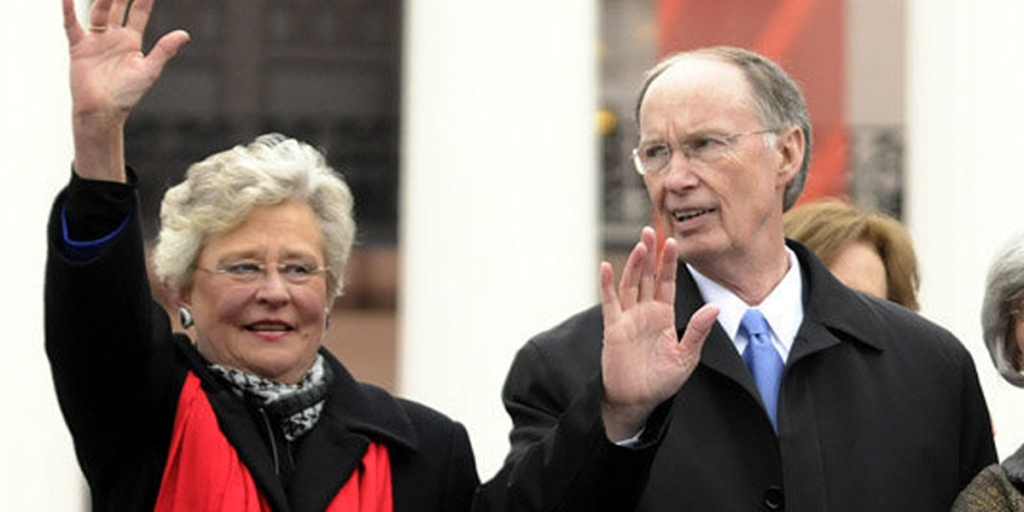
Last week, we were all disturbed to learn that our tax dollars are being used to pay Robert Bentley’s lawyers in a case that heaped national shame and embarrassment on Alabama – and resulted in Kay Ivey assuming the office of Governor. In an al.com article, Ivey’s said the payments to Bentley were “appropriate.” Kay Ivey is wrong! We are paying Robert Bentley’s lawyers when we don’t have to. The law cited by Kay Ivey clearly states that there are limits to what must be paid when legal action is brought about by a governor’s willful, criminal misconduct. Robert Bentley’s shameful conduct certainly qualifies as willful misconduct. To date taxpayers have shelled out nearly 300k for Robert Bentley’s legal fees and that total could increase quickly and drastically. The Alabama taxpayer has been paying Bentley’s legal fees when in fact those payment could have legally STOPPED in 2017. (See below) Kay Ivey either has a fundamental lack of understanding about the law, or she has gone out of her way to continue to pay the legal fees of Robert Bentley for immoral conduct that resulted in her being appointed Governor, when the state was not required to do so. At a minimum, Kay Ivey has not made any attempt to stop the payments to Bentley, nor has she made any effort to explain or address the law she incorrectly says forces the state to pay Bentley. “There are too many unanswered questions surrounding this entire situation,” said Walt Maddox. “If she won’t debate or face the people and answer their questions, Kay Ivey must address this, and explain why we have been paying Robert Bentley’s lawyers when we didn’t have to. The last time a governor refused to debate or be fully transparent, the state ended up in one of its worst political scandals. We are paying hundreds of thousands of dollars for what we didn’t know Robert Bentley was hiding then, and the Bentley payments she approved but failed to disclose, proves we don’t know what else Kay Ivey is hiding now.” Why Kay Ivey should stop defending Robert Bentley in court According to law, the State of Alabama should not be paying lawyers to defend former Governor Robert Bentley in the lawsuit filed by former Secretary of the Alabama Law Enforcement Agency, Spencer Collier. Collier was fired by Bentley in 2016 because he wouldn’t cover up Bentley’s affair with Rebecca Caldwell Mason. However, the State of Alabama is paying Bentley’s legal fees through a taxpayer funded self‐ insurance program called the General Liability Trust Fund, or GLTF, which provides liability coverage to state officials pursuant to Ala. Code §36‐1‐6.1 and Guidelines established by the Director of Finance. The GLTF provides defense and indemnity only for “acts or omissions committed by the covered employee while in the performance of their official duties in the line and scope of their employment.” (The GLTF treats elected and non‐elected officials as “employees” for purposes of coverage.) It excludes coverage for personal misconduct outside the line and scope of official duties. The lawsuit as originally filed against Bentley included nine counts, alleging wrongful termination, defamation, invasion of privacy, and conspiracy. On Nov. 9, 2017 the Court ruled on Bentley’s motion to dismiss, holding that the wrongful termination claims were based on official conduct occurring in the line and scope of Bentley’s duties as governor, and consequently would be dismissed on immunity grounds. That immunity determination depended on the same “official versus personal conduct” issue that determines coverage under GLTF. The Court order was very careful to say that the remaining claims that weren’t being dismissed were based on Bentley’s personal misconduct that occurred outside the line and scope of the governor’s official duties. Therefore, after the court’s ruling, the lawsuit now includes only claims based on Robert Bentley’s personal misconduct. Accordingly, Bentley should be required to defend himself like the rest of us would, availing himself would of any personal liability insurance he may have. Amazingly, however, even though the lawsuit has consisted only of personal misconduct claims ever since the 2017 ruling, and even though personal misconduct is not covered under GLTF, the state of Alabama continues to pay lawyers hundreds of thousands of dollars to defend Robert Bentley. And of course that’s on top of over $1 million it cost to investigate his wrongdoing in the first place. Gov. Kay Ivey should end this fiasco immediately, and pursuant to her powers in §121 of the Alabama Constitution demand a written explanation from the Finance Director and Attorney General as to why it went on this long. In Riley v. Cornerstone (2010), the Alabama Supreme Court ruled that the governor is the ultimate authority as CEO of state government to control the state’s legal interests, even over the Attorney General. In this case, the state’s only legitimate legal interest in the Bentley case is to get out of it and leave the former governor to defend himself. ••• Chip Hill is the Communications Director on the Walt Maddox for Governor campaign.
Korean leaders meet in Pyongyang for potentially tough talks

South Korean President Moon Jae-in began his third summit with North Korean leader Kim Jong Un on Tuesday with possibly his hardest mission to date — brokering some kind of compromise to keep North Korea’s talks with Washington from imploding and pushing ahead with his own plans to expand economic cooperation and bring a stable peace to the Korean Peninsula. Kim gave the South Korean president an exceedingly warm welcome, meeting him and his wife at Pyongyang’s airport — itself a very unusual gesture — then riding into town with Moon in an open limousine through streets lined with crowds of North Koreans, who cheered and waved the flag of their country and a blue-and-white flag that symbolizes Korean unity. The made-for-television welcome is par for the course for Moon’s summits with Kim. Hours after his arrival, Moon began an official summit with Kim at the ruling Workers’ Party headquarters. The two were joined by two of their top deputies — spy chief Suh Hoon and presidential security director Chung Eui-yong for Moon, and Kim Jong Un’s powerful sister, Kim Yo Jong, and senior Workers’ Party official Kim Yong Chol for the North Korean leader, according to Moon’s office. At the start of their meeting, Kim thanked Moon for brokering a June summit with U.S. President Donald Trump. “It’s not too much to say that it’s Moon’s efforts that arranged a historic North Korea-U.S. summit. Because of that, the regional political situation has been stabilized and more progress on North Korea-U.S. ties is expected,” Kim said, according to South Korean media pool reports and Moon’s office. Moon responded by expressing his own thanks to Kim for making a “bold decision” in a New Year’s speech to open a new era of detente and send a delegation to the South Korean Winter Olympics in February. Even though tens of thousands of people had witnessed Moon’s drive into the city with their leader, the arrival was not broadcast or even mentioned on the evening and night news on North Korea’s central television network. The North often holds off reporting stories until it has had time to review and edit the video for maximum propaganda impact. The results of the talks weren’t immediately available. Seoul officials earlier said they would focus on how to achieve denuclearization of the Korean Peninsula, decrease military tensions along their border and improve overall ties. The North’s media said the talks would reaffirm their commitment to Korean peace, unity and prosperity. During a conversation at the Paekhwawon guest house where Moon was to stay, Kim said North Koreans hope diplomacy will yield positive results. “I think it was our people’s wish that we come up with good results as fast as we can,” Kim said, according to the media pool reports. Moon responded that “Our hearts are fluttering, but at the same we have heavy hearts,” and added, “We have built trust and friendship between us, so I think all will be well.” The two are to meet again on Wednesday. More than in their previous encounters, when the mere fact of meeting and resuming a dialogue was seen as a major step forward, Moon is under pressure to leave Thursday with some concrete accomplishments. One of Moon’s objectives — and one that also interests Kim — was clear from the people he took with him. Traveling on Moon’s government jet was Samsung scion Lee Jae-yong and other business leaders, underscoring Moon’s hopes to expand cross-border business projects. Currently, however, all major joint projects between the Koreas are stalled because of U.S.-led sanctions. But the nuclear issue was sure to cast a shadow over negotiations on joint projects. Before leaving Seoul, Moon vowed to push for “irreversible, permanent peace” and for better dialogue between Pyongyang and Washington. “This summit would be very meaningful if it yielded a resumption of North Korea-U.S. talks,” Moon said Tuesday just before his departure. “It’s very important for South and North Korea to meet frequently, and we are turning to a phase where we can meet anytime we want.” But as Moon arrived, the North’s main newspaper lobbed a rhetorical volley at Washington that could make Moon’s job all the more delicate, blaming the United States alone for the lack of progress in denuclearization talks. “The U.S. is totally to blame for the deadlocked DPRK-U.S. negotiations,” the Rodong Sinmun said in an editorial, using the initials of the North’s formal name, the Democratic People’s Republic of Korea. It said Washington is “stubbornly insisting” that the North dismantle its nuclear weapons first, an approach “which was rejected in the past DPRK-U.S. dialogues,” while failing to show its will for confidence-building “including the declaration of the end of war which it had already pledged.” While signaling his willingness to talk with Washington, Kim’s strategy has been to try to elbow the U.S. away from Seoul so that the two Koreas can take the lead in deciding how to bring peace and stability to their peninsula. North Korea maintains that it has developed its nuclear weapons to the point that it can now defend itself against a potential U.S. attack, and can now shift its focus to economic development and improved ties with the South. Rarely do the North Korean official media even mention the word denuclearization. Talks between the United States and North Korea have stalled since Kim’s meeting with Trump in Singapore in June. North Korea has taken some steps, like dismantling its nuclear and rocket-engine testing sites, but U.S. officials have said it must take more serious disarmament steps before receiving outside concessions. Trump has indicated he may be open to holding another summit to resuscitate the talks, however. For Kim, the timing of this week’s summit is good. North Korea just completed an elaborate celebration replete with a military parade and huge rallies across the country to mark its 70th anniversary. China, signaling its support for Kim’s recent diplomatic moves, sent its third-highest party official to those festivities. That’s important because
