
Martha Roby delivers ‘pro-life’ speech on House floor
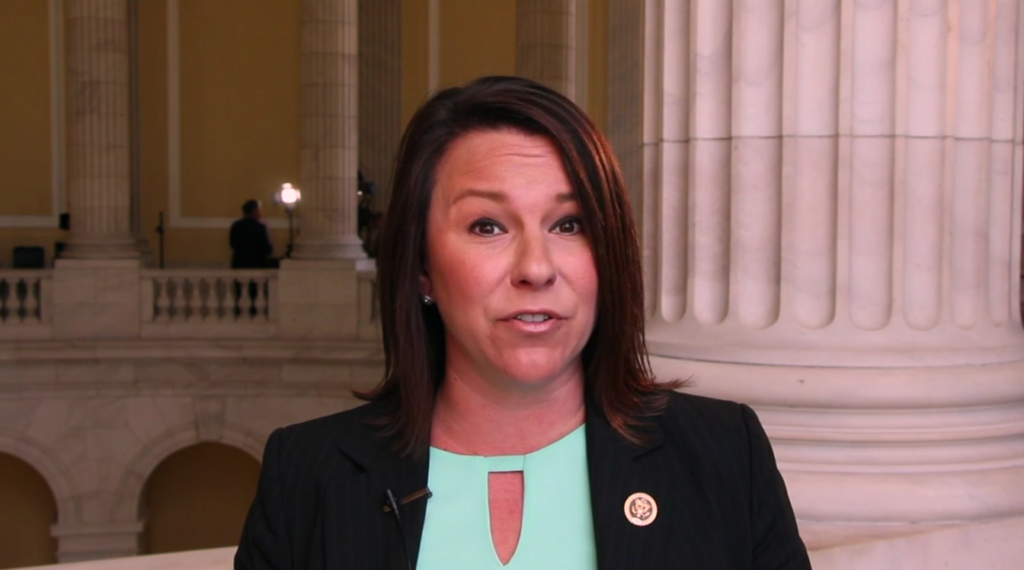
Alabama 2nd District U.S. Rep. Martha Roby took to the House floor today to encourage those taking part in Friday’s March for Life, which commemorates the 45th anniversary of the Roe v Wade decision. Roby said, “I want to take this opportunity to send a message to the thousands of pro-life marchers, especially those from Southeast Alabama I have the privilege of representing in Congress: Thank you for your dedication to this most worthy cause. “It is our responsibility to speak out for those who cannot yet speak for themselves. I am deeply grateful for your commitment to this incredibly important duty, and I, along with my pro-life colleagues here in Congress, stand with you.” Roby is an outspoken pro-life advocate. As a member of the House Appropriations Committee she voted against a budget that would allow funds to be used for abortion and research on human embryos. In a statement last July, she said, “I am also in a strong position fight against funding from being steered towards programs or organizations that I adamantly oppose. Recently when the Appropriations Committee approved our Labor, Health and Human Services, Education, and Related Agencies (Labor-HHS) Fiscal Year 2019 funding bill, I had the opportunity to speak up for those who cannot speak for themselves: the unborn.” Roby is endorsed by National Right to Life, an anti-abortion organization. As the oldest and largest organization of it’s kind in the United States, they work through education, legislation, and political action. In 2018, Alabama passed a pro-life Constitutional Amendment that focused on the sanctity of life. The amendment is “to declare and otherwise affirm that it is the public policy of this state to recognize and support the sanctity of unborn life and the rights of unborn children, most importantly the right to life in all manners and measures appropriate and lawful; and to provide that the constitution of this state does not protect the right to abortion or require the funding of abortion.” The 45th annual March for Life will take place on the National Mall in Washington, D.C. and feature pro-life speakers before the march takes place. There will also be a March for Life in Mobile, Ala. on Friday morning Watch Roby’s remarks below:
Airbus to invest $300 million on new Mobile plant, will create over 400 new jobs

Governor Kay Ivey on Wednesday joined leaders of Airbus, top local officials and others at the Mobile Aeroplex at Brookley for a groundbreaking ceremony to launch construction of the company’s new A220 aircraft manufacturing facility. The plane-maker will invest $300 million and create 400 jobs in the new facility located in Mobile, Ala., which will sit beside an existing assembly line for its A320 passenger jet. The new assembly line will satisfy the strong and growing U.S. demand for the A220 aircraft, the newest offering in Airbus’ commercial aircraft product line, and create 432 full-time jobs in Mobile. “This is a great day for Mobile and for Alabama,” Ivey said. “Airbus’ growth plans will not only create new jobs for Alabamians but also strengthen the bonds that have developed between the global aerospace company and our state. Alabama has a long history in flight and, as this project shows, a bright future in the aviation industry.” Airbus CEO Tom Enders led the celebration and welcomed attendees including Airbus and other industry executives, Airbus manufacturing employees, state and national dignitaries, and local community leaders. Jeff Knittel, Chairman and CEO of Airbus Americas, said that Airbus’ expansion in the United States reflects the company’s growing partnerships with customers, as well as with American supplier-partners and the communities in which the company operates across the U.S. “Our partnerships are growing again with the addition of an A220 manufacturing facility that will employ some 400 more employees at full rate,” Knittel explained. “Together we’ve already put Mobile on the map in the world of global aviation, and together we are making a new mark for the future.” Production timeline Aircraft production is planned to begin in Q3 2019, with first delivery of a Mobile-assembled A220 aircraft scheduled for 2020. The new A220 production facilities will be complete by next year. Greg Canfield, secretary of the Alabama Department of Commerce, said that the A220 assembly line project represents an important milestone for the state’s robust and expanding aerospace sector. “Airbus’ decision to launch production of A220 aircraft at a new assembly line in Mobile will act as a powerful catalyst for sustained growth in an industrial sector that is key to Alabama’s future,” Secretary Canfield said. “Airbus’ expanding presence in the Mobile aerospace cluster will spark significant job creation and spur additional aerospace investment in the region for many years.”
Grades are out on Alabama schools

The annual chance-for-success index from Education Week was released Tuesday with Alabama schools ranking near the bottom. This index looks at criteria around early foundations, school years, and adult outcomes for students and is the first of three measures Education Week uses to create their annual Quality Counts rankings. While the average grade for a state is a C, Alabama schools received a C minus, giving them a ranking of 45 of 51, which is in keeping with US News & World Report’s ranking of 47. In early foundations, the state received a B minus (ranked 39th), a D plus for school years (45th), and a C for adult outcomes (42nd). With a score of 73.4, the state is up 3.2 points over last year, when Alabama received a score of 70.2 (also a C minus). Statewide, things are looking better. District-level grades for the 2017-18 school year were up over those of 2016-17, bringing Alabama schools to an overall B grade, up from a C plus the previous year. Alabama Superintendent Eric Mackey stated in a prepared release, “Overall, we are pleased with the academic growth that we see across the state. It is a testament to the dedication of our teachers, principals, and all those who support their work that student performance continues to rise. As state superintendent, I am grateful for these hardworking individuals in our local schools who improve the trajectory of children’s lives every day. We believe that our best days and highest levels of achievement lie ahead of us, not behind, and we look forward to working with our state policymakers and lawmakers in 2019 to make sure that we are providing ever better resources and supports for our schools.” Five years ago, Alabama introduced the Alabama Accountability Act, a tax-credit scholarship program that serves low-income students and those from failing schools. While data shows that test results are similar for students taking advantage of this program and students in district schools, there is not a continuity of data between public and private schools, making comparison difficult. AL.com reports that suggestions to make these comparisons more useful would require legislative action.
GOPAC again names State Sen. Greg Reed to Legislative Leaders Advisory Board
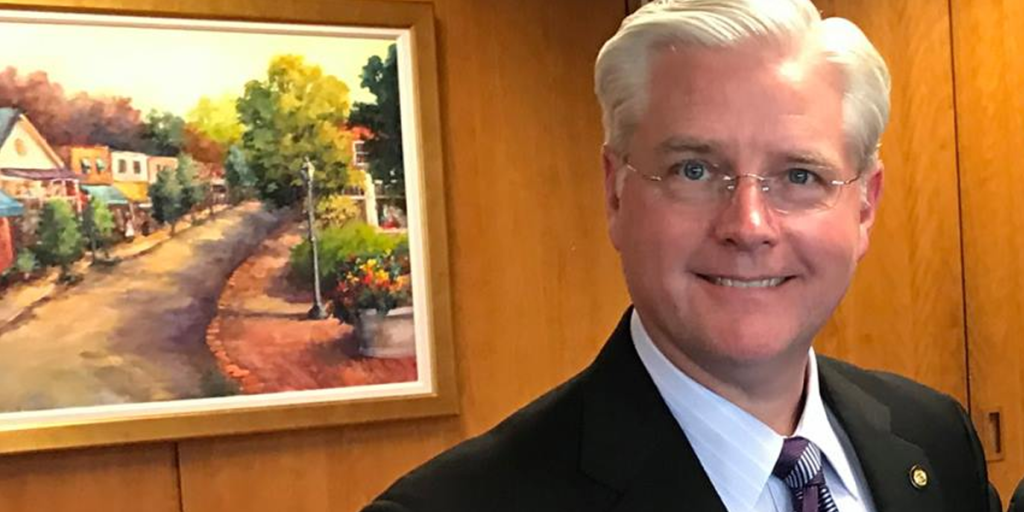
Jasper-Republican, State Senate Majority Leader Greg Reed on Wednesday was named to GOPAC’s — which recruits and trains Republicans running for office and leadership positions and advocates for “conservative principles to create jobs and make government more effective and efficient” — 2019 Legislative Leaders Advisory Board. Reed has been tapped for the position for the second year in a row. “Our Advisory Board Members are essential in our efforts to educate and elect leaders focused on Americans’ personal and economic security,” said GOPAC Chairman David Avella. Members of the Legislative Leaders Advisory Board promote ideas they are championing by addressing elected officials, candidates and members at GOPAC events and via its digital program. In addition, they nominate a promising state legislator for the Emerging Leaders Program and provide updates on key legislative and political developments. Membership is a one-year term.
Bradley Byrne introduces Constitutional amendment to impose term limits on Congress

Alabama 1st District U.S. Rep. Bradley Byrne proposed a Constitutional amendment on Wednesday that would impose term limits on members of both houses of Congress. House Joint Resolution 25 would amend the Constitution to limit Congressional service to six two-year House terms and two six-year Senate terms, or twelve years in each case. “Seats in Congress belong to the American people, not any single elected official,” explained Byrne. “Our Founding Fathers never expected individuals to make a career out of Congressional service, and term limits will allow us to keep fresh blood and ideas in the halls of Congress. “When I first ran for Congress, I pledged to support term limits, and I remain committed to that promise. I urge my colleagues in Congress to support this legislation to ensure the power remains with the people, not the government.” In April of last year, President Donald Trump voiced his support for term-limits for members of Congress. I recently had a terrific meeting with a bipartisan group of freshman lawmakers who feel very strongly in favor of Congressional term limits. I gave them my full support and endorsement for their efforts. #DrainTheSwamp — Donald J. Trump (@realDonaldTrump) April 30, 2018 Byrne cosponsored similar amendments in the 113th, 114th, and 115th Congress. Watch Byrne discuss his support for term limits:
AG nominee William Barr seeks to assure senators he won’t be a Trump loyalist
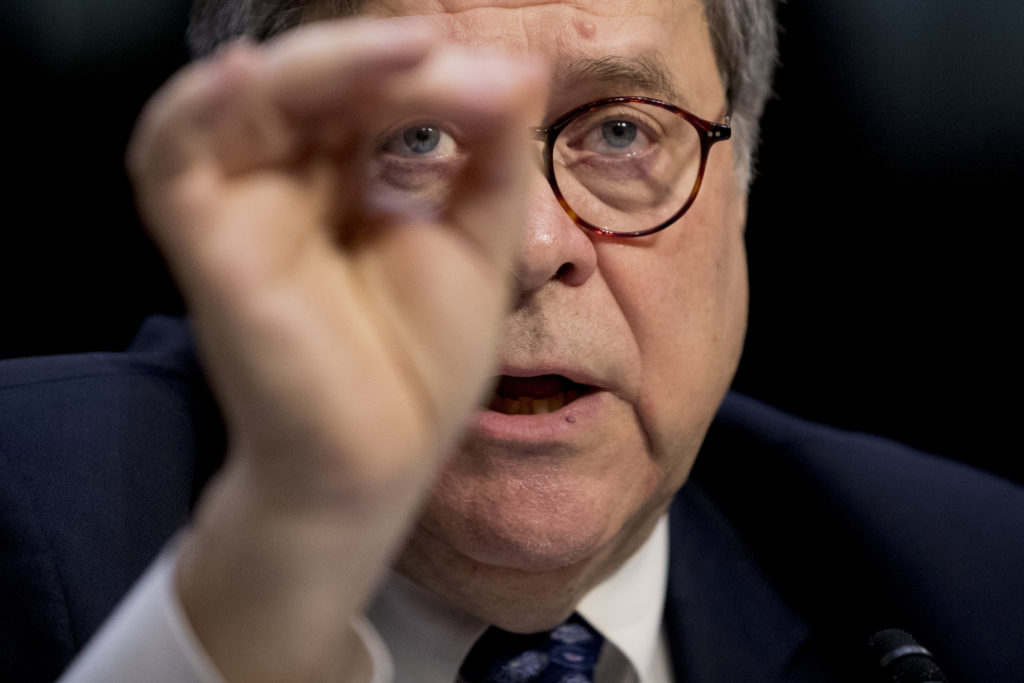
Vowing “I will not be bullied,” President Donald Trump‘s nominee for attorney general asserted independence from the White House, saying he believed that Russia had tried to interfere in the 2016 presidential election, that the special counsel investigation shadowing Trump is not a witch hunt and that his predecessor was right to recuse himself from the probe. The comments by William Barr at his Senate confirmation hearing Tuesday pointedly departed from Trump’s own views and underscored Barr’s efforts to reassure Democrats that he will not be a loyalist to a president who has appeared to demand it from law enforcement. He also repeatedly sought to assuage concerns that he might disturb or upend special counsel Robert Mueller‘s investigation as it reaches its final stages. Some Democrats are concerned about that very possibility, citing a memo Barr wrote to the Justice Department before his nomination in which he criticized Mueller’s investigation for the way it was presumably looking into whether Trump had obstructed justice. Sen. Dianne Feinstein of California, top Democrat on the Senate Judiciary Committee, told Barr the memo showed “a determined effort, I thought, to undermine Bob Mueller.” The nominee told senators he was merely trying to advise Justice Department officials against “stretching the statute beyond what was intended” to conclude the president had obstructed justice. Though Barr said an attorney general should work in concert with an administration’s policy goals, he broke from some Trump talking points, including the mantra that the Russia probe is a witch hunt, and said he frowned on “Lock Her Up” calls for Hillary Clinton. Trump has equivocated on Russian meddling in the 2016 election and assailed and pushed out his first attorney general, Jeff Sessions, for recusing because of his work with the Trump campaign. Barr stated without hesitation that it was in the public interest for Mueller to finish his investigation into whether the Trump campaign coordinated with the Kremlin to sway the presidential election. He said he would resist any order by Trump to fire Mueller without cause and called it “unimaginable” that Mueller would do anything to require his termination. “I believe the Russians interfered or attempted to interfere with the election, and I think we have to get to the bottom of it,” Barr said during the nine-hour hearing. He said that, at 68 years old and partially retired, he felt emboldened to “do the right thing and not really care about the consequences.” If a president directs an attorney general to do something illegal, he said, an attorney general must resign. “I will not be bullied into doing anything that I think is wrong by anybody, whether it be editorial boards or Congress or the president,” Barr said. Consumed by the partial government shutdown, Trump remained out of sight at the White House but also kept an eye on the news coverage of the hearing and told aides he was pleased with how Barr was handling himself, said two White House officials and a Republican close to the White House who spoke on condition of anonymity because they were not authorized to discuss internal conversations. On other topics, Barr echoed in part Trump’s hardline immigration stance and said the Justice Department would not go after marijuana companies in states where the drug is legal. He also would not rule out jailing reporters for doing their jobs, saying he could envision circumstances where a journalist could be held in contempt “as a last resort.” Barr’s hearing continues Wednesday with a lineup of character witnesses, including former Attorney General Michael Mukasey. Barr’s confirmation is likely, given that Republicans control the Senate. Even some Democrats have been looking to move on from acting Attorney General Matthew Whitaker, who declined to remove himself the Russia probe and has faced scrutiny over his private dealings. But he nonetheless faced skeptical questions from Democrats over whether he could oversee without bias or interference the remainder of Mueller’s probe. Feinstein said the nominee’s past rhetoric in support of expansive presidential powers “raises a number of serious questions about your views on executive authority and whether the president is, in fact, above the law.” Barr, responding with a more moderate view, said he believed a president who ordered an attorney general to halt an investigation would be committing an “abuse of power” if not necessarily a crime. Barr said under questioning from Sen. Chris Coons, a Delaware Democrat, that he wouldn’t interfere with a Mueller request to subpoena Trump for his testimony “if there was a factual basis.” But he also said he saw no reason to change Justice Department legal opinions that have held that a sitting president cannot be indicted. Barr called Mueller a friend of 30 years and said “it is vitally important” that Mueller be allowed to complete his investigation. “I don’t believe Mr. Mueller would be involved in a witch hunt,” he said when asked by the panel’s Republican chairman, Sen. Lindsey Graham of South Carolina. The special counsel is required to report his findings confidentially to the Justice Department. Barr said he then expected to produce his own report to Congress and said it was his goal to release as much information as possible to the public, though he stopped short of a direct pledge. He also noted the Justice Department does not typically disclose information about people it decides not to prosecute. He disclosed having discussed Mueller with Trump during a meeting in 2017 when Barr declined to join his legal team. He said he and his wife had been “sort of looking forward to a bit of respite and I didn’t want to stick my head into that meat grinder.” Trump wanted to know what Mueller, who worked for Barr when he led the Justice Department between 1991 and 1993, was like. “He was interested in that, wanted to know what I thought about Mueller’s integrity and so forth and so on,” Barr said. “I said Bob is a straight shooter and should be dealt with
Judge dismisses Selma Mayor Darrio Melton’s lawsuit against city council

A judge has dismissed an Alabama mayor’s lawsuit against his city’s council, the latest development in a power struggle over who can appoint department heads and control spending. The Selma City Council passed an ordinance removing Mayor Darrio Melton’s authority to appoint a police chief, fire chief and tax collector. The council then overrode Melton’s veto, leading him to sue in October. The disagreement stems from two potentially conflicting sections of state code. The Montgomery Advertiser reports Mayor Darrio Melton and his attorney said Monday that they plan to appeal the decision, which Melton says transfers executive powers to the city council. City Council President Corey Bowie said the judge’s decision substantiates the ordinance. Melton also gave a state of the city address Monday, criticizing the council and media. Republished with permission from the Associated Press.
Steve Flowers: What will our Congressional districts look like after the 2020 Census
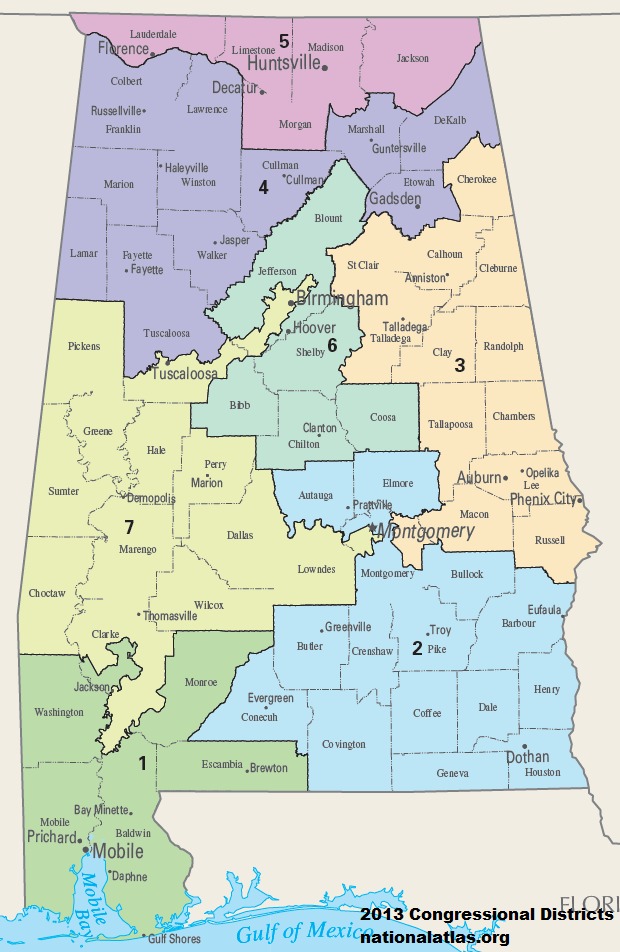
Preparations are being made to take the 2020 Census. This process is not just a fun game to spell out demographic changes and interesting tidbits about us as Americans. It is a very important mandate dictated by the Constitution. The number of people counted determines how many seats each state has in Congress. Thus, it is taken every 10-years. The Country has been changing, demographically, over the last decade, as it always has over the course of history. The states of California, Texas and Florida continue to grow exponentially. All Americans, not just older ones, seek the sun. They like a sunny, warm climate. That is why our neighboring state of Florida is and has been for decades America’s growth state. Last week I visited with you about our 1940’s Congressional Delegation. At that time we had nine seats. We lost one after the 1960’s census. We lost another after 1980. We are projected to lose another one after this upcoming Census of 2020. We now have seven seats. It is predicted that we will only have six after next year. We most certainly will lose one to California if they are allowed to count illegal immigrants. The State Legislature is constitutionally designated as the drawer of lines of congressional districts for each respective state. Currently, we have six Republican seats and one Democratic seat. If indeed we drop from seven to six Congressional districts, how will it shake out. The census will reveal that Huntsville and North Alabama have been our growth spots. Alabama’s population continues to move toward the northern tier of the state. Two out of every three Alabamians live in Birmingham, Hoover, and Tuscaloosa north. The Black Belt continues to lose population. The census will also reveal quite a disparity of financial prosperity. It will show that the same Black Belt counties are some of the poorest areas of the country and conversely Huntsville will be one of the most prosperous. So who are the winners and losers under Congressional redistricting? You start with one premise. You have to have one majority minority African American district. The federal courts have mandated this edict. Therefore, Congresswoman Terri Sewell’s district is sacred. It now is very large, geographically. It will become even larger. The district will take in most of the African American population in Birmingham, Tuscaloosa and Montgomery, and the entire Black Belt stretching from south of Birmingham and Tuscaloosa all the way to Mobile. It will be a big geographic district and be numbered district six rather than seven. This leaves us with five Republican districts and six incumbent Republicans. Therefore, who gets the short end of the stick. A cursory look says the odd person out is Martha Roby in the second district. However, our current delegates have already come up with a plan to save everybody. Mo Brooks, the Congressman from Huntsville, will choose to move up or out in 2022. He is assuming that Senator Richard Shelby retires at age 88. Therefore, Brooks will see his fast-growing Tennessee Valley district divided and delved out to a plan that grows the districts north, which complies with the growth pattern. Our senior and most seniority laden Congressman, Robert Aderholt, will opt to stay in Congress rather than risk a run for the Senate. This is a very wise and prudent move for him and the state. He has over 24-years in seniority and is in line to be Chairman of the House Appropriations Committee. He will move north and pick up part of the Huntsville area and he will cut Gadsden loose. Mike Rogers will move north and pick up Gadsden and all of northeast Alabama, which is a more natural fit for him with his native Anniston area. Rogers’ move north will allow him to abandon Auburn-Opelika, which in turn allows Roby’s district to exist primarily like it is with the population centers of East Montgomery, Elmore, Autauga, and the Wiregrass and Dothan and that district will add Auburn-Opelika. The current 6th District of Jefferson-Shelby represented by Gary Palmer will remain essentially the same. Its upscale suburbs will make it one of the most Republican in the nation. The last district seat of Mobile-Baldwin will remain intact and will still be District 1. However, the tremendous growth of Baldwin will require that the district only contain Mobile and Baldwin. The cadre of rural counties north of Mobile that are currently in the District will have to be cut loose to probably go to the Black Belt district. The current 1st District Congressman, Bradley Bryne, is running for the U.S. Senate in 2020. However, his replacement will be a conservative Republican. See you next week. ••• Steve Flowers is Alabama’s leading political columnist. His weekly column appears in over 60 Alabama newspapers. He served 16 years in the state legislature. Steve may be reached at www.steveflowers.us.
